5 Ways to Maximise Your Proposal Success Rate (Without Competing on Price)
Maximize proposal success rates by leveraging FigsFlow analytics. Discover how our data-driven insights can enhance your proposal outcomes and improve success

You spend an hour on a proposal, send it, and hear nothing. A week later the prospect signs with someone else, and you tell yourself they went cheaper. Most of the time, they did not. They went with the firm that was easier to say yes to. Your proposal success rate has far less to do with your fees than with how the proposal is built and how you follow it up.
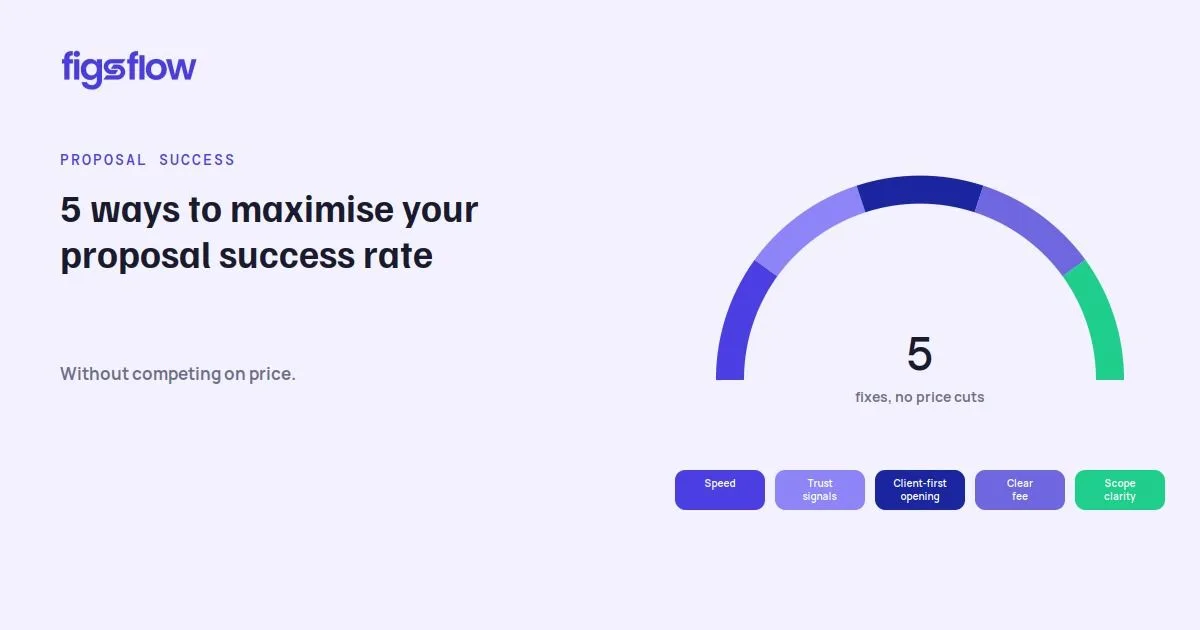
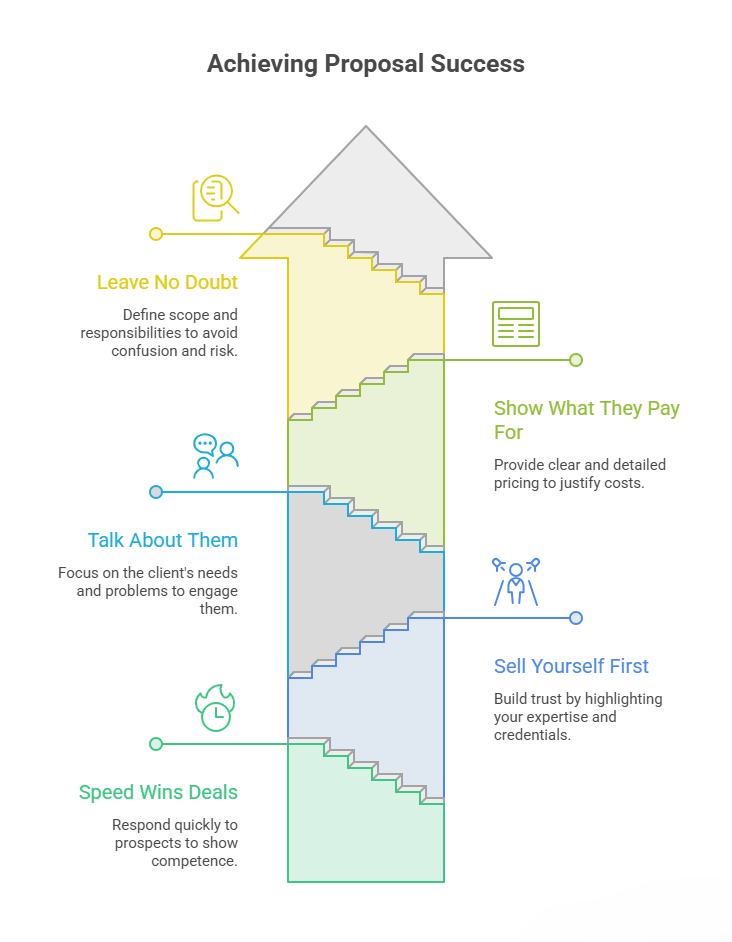
The reasons proposals fail are predictable, and every one is inside your control. Respond before the client cools. Earn trust before they reach the price. Make the figure impossible to misread. Close the scope gap. Lead with their problem, not your service.
This article takes each in turn, shows what it costs you, and hands you the fix. Get all five right and you win more without ever touching your fees.
The Mistakes Quietly Costing You Clients
Five mistakes do most of the damage. A slow follow-up, trust that arrives too late, a price the client misreads, a scope with a visible gap, and a proposal all about you instead of them.
Each is a habit, which is why it keeps costing you until you fix it. And it is invisible from your side. The client spots something that does not sit right, hesitates, and walks, but the reason never reaches you. So the same five ride along on the next proposal, and the next. The sections below turn each one into a fix.
Five Ways to Lift Your Proposal Success Rate
None of these require a price cut. They require you to remove whatever makes a client hesitate, and to track which proposals win so you can do more of what works.
1.Speed Wins More Deals Than You Think
A prospect is keenest the moment they ask you to quote. That interest fades a little each day. Take five to ten working days and the client has often gone quiet, gathered rival quotes, or lost the urge to decide at all.
The best firms reply inside two to three working days for standard work. Speed is not just convenience, it reads as competence. A quick reply says you are organised, the client matters, and you will be just as responsive once the work starts. A slow quote says the opposite. If you fumble the simple job of sending a price, the client quietly wonders how you will cope with their actual accounts, the deadlines, and the work that really gets messy.
The fix is to stop rebuilding every proposal from scratch. A blank document makes speed impossible. A template you fill in minutes makes two to three days routine.
2.Sell Yourself Before the Number
When a prospect reaches your fee with no reason to trust you yet, they compare your number to the other one on their desk, and the lower one wins. You were never in a value conversation. You were in a price comparison, and you put yourself there.
Think about what they are weighing up. They are not buying a tax return, they are handing a stranger their finances and hoping it goes well. That runs on confidence, not cost. So build it early. The name and face of their accountant, the body that regulates you, a few clients who look like them. By the time they reach your fee, the question shifts from “can I afford this” to “can I afford to get this wrong with someone cheaper”.
So, treat trust as a section, not a signature line. Name the accountant who will run the account and their qualification, your regulatory body, and how long you have done this. Add two or three short client results, how many businesses like theirs you look after, and the industries you know well. Keep it brief. A prospect skimming the proposal should answer two questions in seconds. Who am I dealing with, and who else has trusted them. Answer those before the fee and the price lands very differently.
3.Start by Talking About Them
Most proposals open by talking about the firm. Your services, your packages, your credentials. It all matters, but it answers a question the client has not asked yet. They dig through it to find the bit about their own situation, and by then they have half switched off. It reads like a brochure, not a reply.
Flip the order. Open with the problem they came to you with. The landlord lost in the new digital filing rules. The contractor still smarting from last year’s penalty. The owner who has outgrown their bookkeeper. Name it in their words, then move into what you do about it. When the first line makes them think “that is exactly me”, they read the rest with their guard down, because you listened before you sold.
It costs nothing, and almost no firm bothers. One short paragraph at the top that names their problem, then leads straight into how you fix it.
4.Show Them Exactly What They Pay For
A correct price still loses the deal if the client cannot read it. One gross figure with no breakdown invites the question you never get to answer. What am I actually paying for, and is the VAT already in there?
Pricing clarity is the single heaviest factor in whether a proposal converts. Show the net, the VAT, and the gross. State the billing frequency plainly, monthly or quarterly or annual. Justify each line so the client sees what sits behind the number instead of guessing. Vague fee wording does the same damage as a wrong figure, because uncertainty reads as risk.
The fix is structure. A clear fee table beats a paragraph every time.
What a Clear Fee Table Looks Like
A client should read your price in ten seconds, no calculator needed. That means a table, not a paragraph. Here is the same quote, shown the way that converts.
| Service | Net | VAT | Gross | Billed |
|---|---|---|---|---|
| Annual accounts and tax return | £1,200 | £240 | £1,440 | Annually |
| Bookkeeping | £85 | £17 | £102 | Monthly |
| VAT returns | £75 | £15 | £90 | Quarterly |
Everything sits in one place. The client sees what each service costs and when they pay for it, so a monthly fee never gets mistaken for an annual one. Hand someone a lump sum with nothing behind it and they stall, trying to work out what it covers. Hand them a breakdown like this and the yes comes easily.
5.Leave No Doubt About the Scope
If the client cannot tell where your job ends and theirs begins, that uncertainty feels like risk, and risk makes people pause. The samem vague wording lets the work creep wider later, so it costs you twice. Once when they hesitate to sign, and again when you end up doing more than the fee covers.
So close the scope. Name the deliverables, the filing targets, the Companies House and HMRC deadlines you own, and what you are explicitly not doing. Say what the client must provide, in what format, and by when. Draw that line cleanly and they can say yes without quietly wondering what they have missed.
How FigsFlow Closes Each Gap
Every one of the five fixes comes back to the same thing. Build the proposal properly and send it fast. That is exactly what FigsFlow does, on all five fronts at once.
It builds a branded, priced, client-ready proposal in under sixty seconds, so a two to three day turnaround becomes your default, not a stretch. Templates pull your credentials, regulatory body, and social proof into every proposal automatically, so the trust and proof a client wants is always there. The pricing module lays out net, VAT, and gross with the billing frequency, so the figure cannot be misread. And proposal-only mode lets you send the quote first, then follow with the compliant engagement letter once they commit, closing the scope and naming the next step.
Want to see where your proposals are losing clients before you send another? Start a free trial of FigsFlow and build your next one against all five fixes at once.
FURTHER READING
Create Winning Business Proposals Through FigsFlow | Guide
The Secret Weapon to Draft the Best Proposals | FigsFlow
5 Steps to Faster Bookkeeping Proposals | FigsFlow
Reasons Your Accounting Proposal Is Losing You Clients
Conclusion
Your proposal success rate is decided before the client reaches the price, not at it. Respond while interest is high, build trust before the fee, lead with their problem, make the number readable, and close the scope.
Get these wrong and you lose deals you should have won, blaming a price that was never the problem. Get them right and the same proposals start converting.
Before you send the next one, ask yourself two things. Would I sign this, and would I know what to do next?