
Invoice clients early, and you risk looking presumptuous. Invoice late, and you’re funding the job yourself, chasing payment after delivery, staring at debt you may never recover.
So, what’s exactly the right time to invoice clients?
Before work begins. That’s standard professional practice. You win the deal, you invoice the client, and while that’s in motion, you run your AML and KYC checks. Once payment is through and the client is verified, you start the actual work.
Here’s exactly how to do that, what terms to set, and why this protects your firm.
What Does It Mean to Invoice Clients?
An invoice is a legal document that requests payment for services rendered. But beyond requesting payment, it does three things most firms overlook:
- starts the legal clock on your payment terms,
- establishes your professional standing in the client relationship, and
- sets the tone for every billing interaction that follows
When Should Accountants Invoice Clients: Before or After work?
The moment the engagement letter is signed is the right time to invoice. Your client has committed, the scope is agreed, and the price is already on the table. That’s the moment to raise the invoice, run your AML and KYC checks, and wait for both to clear before you open the file. By the time you’re ready to start work, you have a verified, paying client.
That said, the right billing model depends on the type of service you’re delivering. One approach won’t fit every engagement.
Upfront in Full
Best for fixed-fee compliance work: self-assessment, tax returns, and one-off accounts preparation. The client knew the price from the proposal. The scope is clear. Collect before you open the file.
Deposit Plus Completion
Best for first-time clients or project work where the scope could shift. Fifty percent upfront, fifty percent on delivery. This one change alone eliminates most of the receivables problem that quietly cripples firms that bill retrospectively.
Milestone Billing
Best for longer advisory or restructuring engagements. Tie invoices to deliverable stages, not calendar dates. Six weeks of advisory work before a single invoice goes out is a cash flow risk that milestone billing removes entirely.
Monthly Recurring
Best for bookkeeping and ongoing compliance retainers. Invoice clients on the first of the month, collect via direct debit.
How to Invoice Clients: 4 Simple Steps
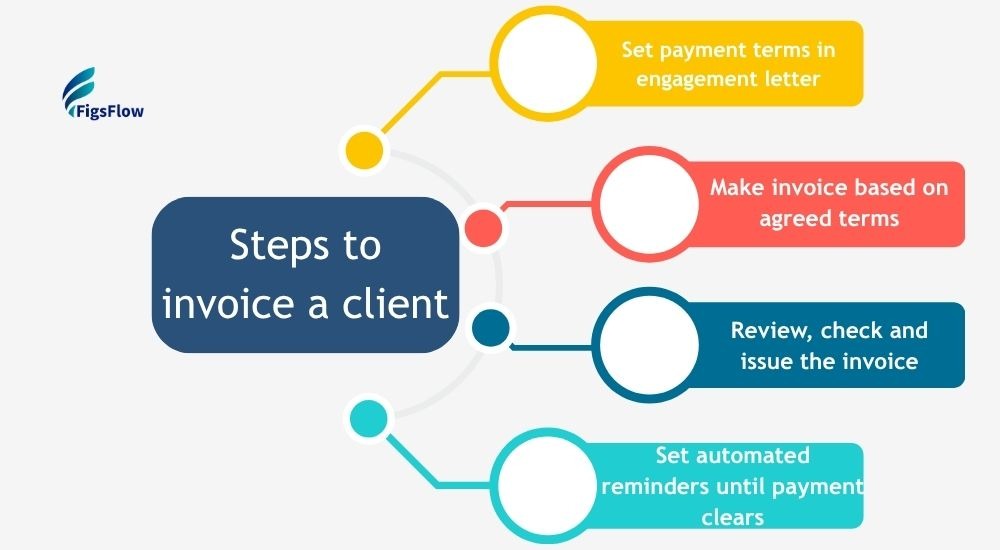
Invoicing starts before the work does. You set your payment terms, conditions, and timing in the engagement letter. Once it’s signed, you confirm the billing contact, raise the invoice immediately, and set automated reminders until the balance is cleared.
Here is how it looks in practice.
Set Payment Terms in the Engagement Letter
Spell out when invoices will be issued, what payment method is expected, the deadline, and what happens if payment is late. If it is not in there, you are negotiating it later from a weaker position.
Once Signed, Make an Invoice as Agreed
The engagement letter already has the scope, price, and terms. The invoice should reflect exactly what was agreed upon there. No ambiguity, no surprises for the client.
Review & Issue the Invoice
Check the billing contact, the amount, the due date, and the payment method before it goes out. Missing any of these gives the client’s accounts team a reason to pause processing.
Set Automated Payment Reminders
Do not rely on manual follow-up. Set reminders to trigger at three days before the due date, on the due date, and at intervals after if unpaid. Each reminder should include the outstanding balance and a direct payment link.
What Are the Right Payment Terms for Accounting Clients?
It depends on the service, but common payment terms include due on receipt for fixed compliance work, direct debit on the first of the month for ongoing retainers, milestone-tied invoicing for project and advisory work, and full upfront payment for any first engagement with a new client.
Here is what the terms actually look like.
Fixed Compliance Work
Due on receipt or within seven days. The fee was agreed upfront, the scope is clear, and there is nothing to dispute.
Ongoing Retainer
Direct debit on the first of the month, built into the engagement letter as a condition of the retainer, not a preference. Clients who pay by direct debit never become late payers.
Advisory or Project Work
Milestone-tied, not calendar-tied. Define the trigger for each invoice in the engagement letter: “Invoice 2 is raised on delivery of the draft report.”
First Engagement with a New Client
Upfront, always. You do not know this client yet. Frame it in the engagement letter as your firm’s standard process, and almost no client will push back.
A Note on Net 30
Net 30 is a payment term that gives clients 30 days from the invoice date to settle the balance. It made sense when payments moved by post and cheques took days to clear. With BACS transfers clearing in one to three working days, there is no operational reason for a 30-day window on a fixed-fee tax return from a client you have already onboarded.
Which Day of the Week is Best for Sending Invoices?
Monday before 8 am and Tuesday before the working day starts are the strongest days to send an invoice. Your invoice lands at the top of the inbox at the moment the recipient is clearing their morning backlog with fresh attention. It gets seen, logged, and actioned before the day takes over.
Friday is the worst. The recipient sees it, tells themselves they will deal with it on Monday, and by Monday, it is buried under everything that accumulated over the weekend. That one day of timing adds a week to your average payment time for no reason other than habit.
For recurring retainers, pick a day and stick to it. Clients who receive their invoice on the same day each month begin to anticipate and prepare for it. Predictability conditions prompt payment.
Don't Wait for The Right Day!
If you are invoicing upfront or on signing, send it the moment the engagement letter comes back. The best time to invoice is as soon as the trigger occurs. Day of the week only matters when you have flexibility over timing, such as milestone or retainer billing.
When Should You Follow Up on an Unpaid Invoice & What to Say?
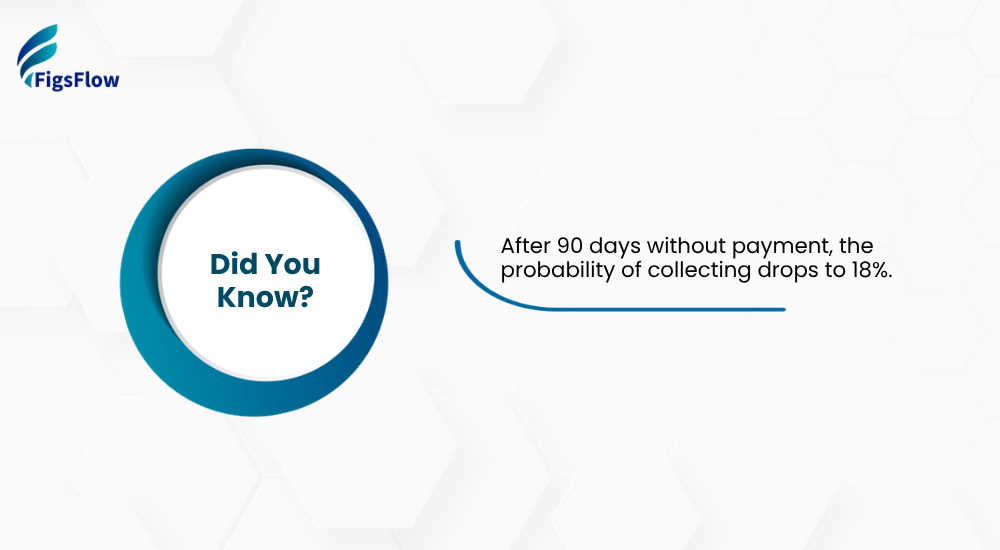
You should follow up on an unpaid invoice as soon as it is due. Yes, you risk coming across as presumptuous, but after 90 days without payment, the probability of collecting drops to 18%. And in most cases, it is not even a refusal to pay. Clients are busy, the invoice slipped down their inbox, and a gentle nudge is all it takes.
Ideally, you would not wait until that day at all.
Most invoicing software offers automated reminders. Set one up for a week before the due date, two days before, and on the day itself. If the invoice remains unpaid after that, send a gentle reminder email or follow up with a call. And for one-off clients, it is a good idea not to deliver the work until payment has cleared.
What Are the Best Practices for Sending Invoices to Clients?
You issue an invoice, start the work, and before the due date the invoice is paid in full without you having to follow up on your own. Then you deliver the work. That is actually possible, and most well-run firms are already doing it.
Here is how you get there.
Consistent Schedule
Decide when to invoice clients for each service type and stick to it. Clients who know when to expect an invoice are more prepared to pay it. Inconsistency creates friction.
Recurring Invoices for Retainer Clients
Set these up once in your accounting software and let them run. A monthly bookkeeping client should never require you to manually create an invoice. If you are doing that, you are spending time on admin that software should be handling.
Multiple Payment Methods
The easier it is to pay, the faster it gets paid. Bank transfer is standard. Direct debit for retainers is ideal. Some clients prefer a card. Offering options removes the excuse of inconvenience.
Automated Reminders
Set them before you need them. A reminder three days before the due date is not chasing. It is a good service. Most late payments are not deliberate. They are forgotten.
The Goal: Automate Everything
You win a deal, and an invoice is formed automatically based on what was agreed in the engagement letter. You review it, send it, and custom reminders handle the rest. For recurring clients, payment is collected via direct debit without anyone lifting a finger.
How to Close the Gap Between Signing & Invoicing
You can close the gap between signing and invoicing by raising the invoice the same day the engagement letter is signed, based on what was already agreed in it. It removes the manual step, keeps everything in motion, and reduces any friction between winning the client and getting paid.
Most firms have a gap because of a handful of common factors:
- manual client setup in accounting software
- no defined invoice trigger in the engagement letter
- unclear billing contacts
- Simply the wrong payment terms for the service type
Any one of these adds days. Most firms are carrying several at once.
Look at these factors across your firm. Better yet, ask clients directly. What made them pay late? What would make payment easier on their end? That ground-level knowledge is more useful than any system change. Fix what clients tell you, not what you assume, and the gap narrows faster than any process overhaul will deliver.
Conclusion
Accountants should invoice clients on signing, before work begins. It keeps cash moving, removes the risk of bad debt, and signals to the client that your firm runs a tight ship.
That said, it is not a one-size-fits-all answer. When you invoice depends on the type of work you are delivering and the client in front of you.
The good rule of thumb is to match the billing model to the engagement. Upfront in full for fixed-fee compliance work: self-assessment, tax returns, and one-off accounts preparation. Deposit plus completion for first-time clients or project work where the scope could shift. Milestone billing for longer advisory engagements, tied to deliverables.
Frequently Asked Questions (FAQs)
An invoice is a formal document requesting payment for services provided. For accountants, it also starts the legal clock on your payment terms and creates a paper trail for both parties. It is the document that sets the tone for how professionally your firm manages its finances.
On signing. Your client has committed, the scope is agreed, and the price is on the table. Invoice at that moment, run your AML and KYC checks, and start work only once both are cleared. You begin every engagement with a verified, paying client.
Upfront for most fixed-fee services. It protects your cash flow, removes the accounts receivable problem, and bills at the point of peak client commitment. Retrospective billing after completion makes collection harder and gives the client no financial stake in the engagement.
Net 30 means the client has 30 days from the invoice date to settle the balance. For most accounting services, it is too long.
Billing is the broader process of managing payments owed. Invoicing is the specific step within it where you formally request payment. In practice, invoicing triggers the billing cycle. Get the invoice out on signing, and the rest of the billing process follows a predictable sequence.
There is no legal deadline, but the longer you wait, the harder collection becomes. After 90 days without payment, the probability of collecting drops to 18%. Best practice is to invoice on signing or within 24 hours of the agreed trigger.
Most accounting software lets you create recurring invoice templates that generate and send automatically on a defined schedule. Set the amount, frequency, billing contact, and payment method once during onboarding. For direct debit collection, connect a payment provider so funds are collected each month without the client needing to act.