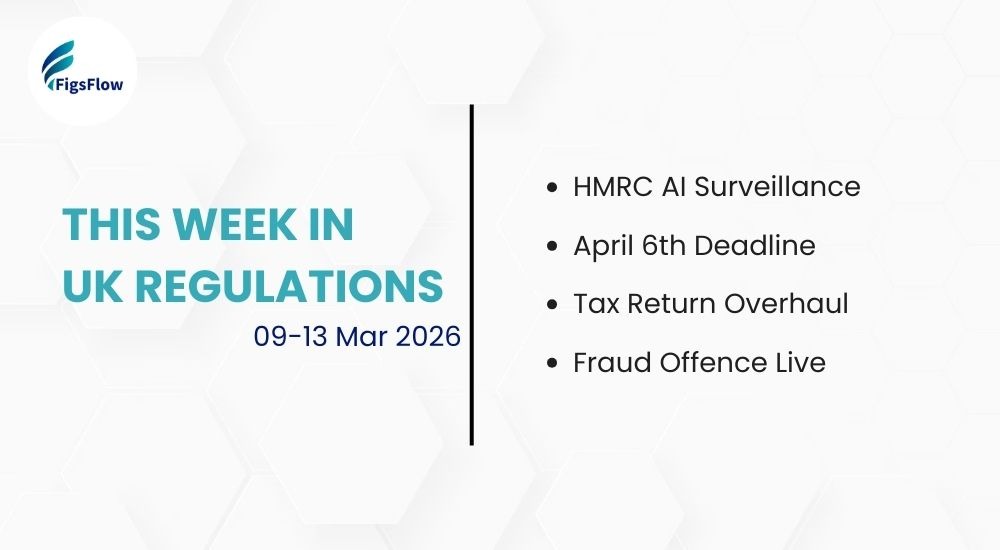

Three weeks to April 6th, a live HMRC surveillance programme, a structural overhaul of company tax returns, and a new corporate criminal offence. For a mid-March week, that is a significant amount landing at once.
Below is what happened, why it matters, and what it means for your practice.
HMRC Is Now Watching Social Media
HMRC has confirmed it is using artificial intelligence to monitor the public social media activity of taxpayers as part of criminal fraud investigations. The system works by cross-referencing tax returns and financial data against what people post publicly online, looking for inconsistencies that suggest undeclared income.
The tax authority says robust safeguards are in place and that the practice is limited to criminal cases. But a detail in its updated privacy policy is worth noting: the language has shifted from guaranteeing “human judgement” in decisions to guaranteeing only “human involvement.” For accountants advising clients, that distinction matters.
A client publicly posting about significant purchases while declaring modest income could trigger an automated flag. Practitioners may want to factor clients’ digital footprints into compliance conversations, and be prepared to challenge enquiries where automated systems have drawn the wrong conclusion.
Three Weeks to the Compliance Cliff
April 6th brings three simultaneous changes that affect a significant portion of most UK practice client bases.
MTD for ITSA: Your Landlord Clients May be in Scope Without Knowing It
Sole traders and landlords with gross qualifying income above £50,000 come into scope on April 6th. Gross income, not net profit, determines eligibility. Clients with high mortgage costs who assumed they fell below the threshold may be wrong. HMRC is using 2024/25 figures to determine mandation, with the first quarterly update due by 7 August 2026.
The Cost of Selling a Business Just Increased by £80,000
Business Asset Disposal Relief rises from 14% to 18%. A client disposing of a business at the £1 million lifetime limit will pay £180,000 in tax compared to £100,000 in 2024. Anti-forestalling provisions are active for arrangements structured purely to lock in the lower rate.
Inheritance Tax Relief Has Doubled, But the Small Print Matters
The threshold for full Agricultural and Business Property Relief has been raised to £2.5 million following a government concession in December 2025. The allowance is transferable between spouses. But assets above £2.5 million attract only 50% relief, and AIM shares are excluded from the higher threshold entirely, receiving 50% relief from the first pound.
Company Tax Returns Are Getting an Overhaul
HMRC has launched a consultation on standardising the format of company tax returns. The proposal would introduce a fully prescribed, tagged format for computations submitted alongside the CT600, replacing the current system, which HMRC says has produced too much inconsistency in how similar information is presented.
A mandatory online filing requirement for amended company tax returns is also proposed, ending the option to submit amendments by post. HMRC says postal amendments increase the risk of errors and processing delays.
The implementation timeline runs through to late 2028, with a collaborative development phase beginning in April 2026 and a live pilot running through the year before enforcement starts. HMRC is also consulting on enforcement options for non-compliant software providers.
The consultation closes 2 June 2026.
The Fraud Offence You Cannot Afford to Ignore
A new corporate criminal offence for failure to prevent fraud is now in force in the UK. Under the Economic Crime and Corporate Transparency Act 2023, organisations can be held criminally liable if a fraud committed by an associated person benefits the organisation and the organisation cannot demonstrate it had reasonable prevention procedures in place.
The offence applies to organisations meeting at least two of the following: more than 250 employees, turnover above £36 million, or total assets above £18 million. Smaller organisations are not directly in scope but may face new expectations through contracts and supply chains with larger clients.
Chartered accountants are well placed to support organisations in reviewing their fraud prevention arrangements, given that internal controls and financial oversight sit within their professional expertise.
Conclusion
The thread running through all four stories this week is the same: the gap between compliant and caught out is narrowing.
HMRC has AI watching. April 6th is three weeks away. A criminal fraud liability is live. The practitioners who wait for clients to ask the right questions are already behind.
This week is a good reminder that in accounting, the quieter the headlines feel, the more is usually moving underneath.