Contact usGet Started
Sandeep Subedi

Sandeep Subedi

Compliance Writer · FigsFlow

Sandeep reads Finance Acts so you do not have to. Specialising in UK taxation and compliance, he writes guidance for accounting firms that is accurate, direct, and mercifully free of the phrase 'it is important to note.' At FigsFlow, Sandeep covers AML, engagement letters, MTD, and the latest regulatory shifts across UK accounting.

Published entries

Image: AML Acronyms Definitions A Reference Guide for UK Accountants

8/29/2026

AML Acronyms & Definitions Every UK Accountant Should Know

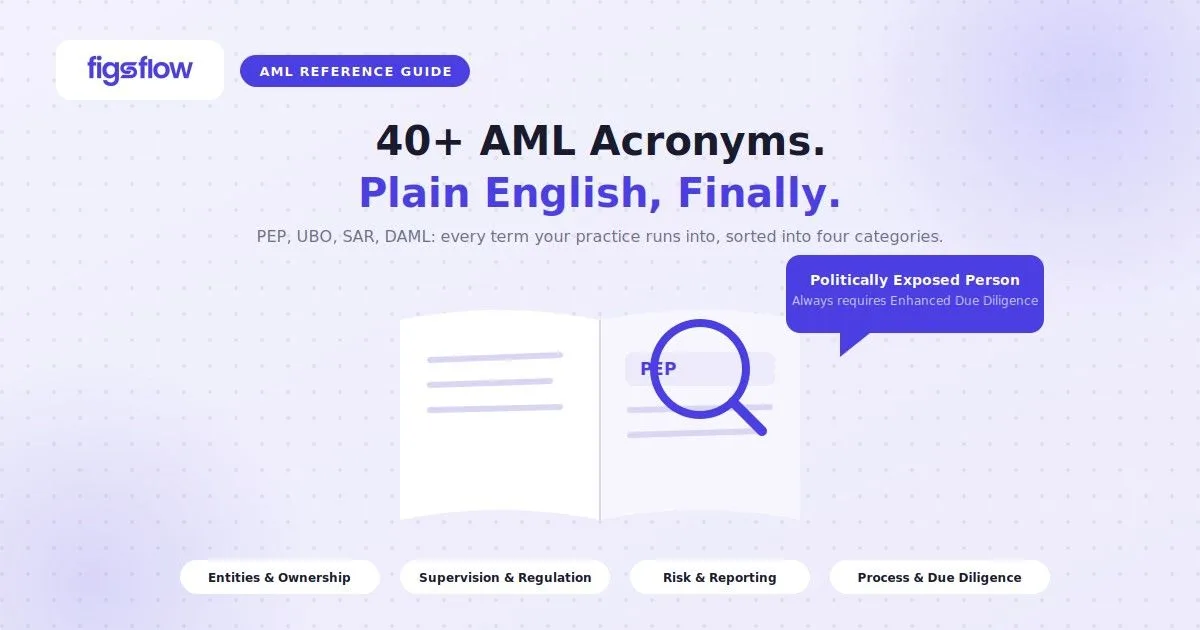
AML Acronyms & Definitions Every UK Accountant Should Know AML Acronyms & Definitions Every UK Accountant Should Know How to use this guide AML Acronyms: Entities and Ownership AML Acronyms: Supervision and Regulation AML Acronyms: Risk and Reporting AML Acronyms: Process and Due Diligence Helpful Resources Conclusion PEP, PSC, UBO, DAML, MRZ. AML guides throw a lot of shorthand around, and most of it lands without explanation. This guide fixes that. Every key AML acronym and term, written in plain English, arranged across four categories: entities and ownership, supervision and regulation, risk and reporting, and process and due diligence. Scan the category you need, find the term, move on. You can bookmark it, print it, or save it to your desktop and keep it to hand at all times. Use this as your practice’s one-stop reference for AML terminology. Instead of sending your team through countless guidance documents and regulatory PDFs to find what a term means, point them here. New team member joining? Walk them through this before anything else. Junior staff encountering a term during onboarding or a risk review? This is their first stop, not a Google search. Refreshing your team’s AML awareness? Work through a category at a time. Spotted a term in HMRC correspondence or a supervisory notice you don’t recognise? Find the category, scan down, done. The four categories cover the full picture: who your clients are and who sits behind them, the bodies and laws that govern your obligations, how risk is assessed and escalated, and the practical checks your team carries out every day. These terms describe who your client is, who controls them, and what sits behind the structure. AML Acronyms / Terms Definition BO (Beneficial Owner) The real person who ultimately owns or controls a client. Where a client is a company, you're looking for the individual or individuals who actually pull the strings, whether through shareholding, voting rights, or other means of control. KCA (Known Close Associate) Someone with a close financial or business relationship with a Politically Exposed Person. This could mean jointly owning an entity with a PEP, or being the sole owner of an entity set up for a PEP's benefit. Nominee A person who holds something, shares, assets, or a directorship on behalf of someone else. The nominee is the name on the register. The person behind them is the one you need to identify. PEP (Politically Exposed Person) Someone who holds, or has held, a senior public position. This includes government ministers, senior judges, senior military officers, directors of state-owned companies, and heads of international organisations. The concern is that public roles can create opportunities for corruption, so PEPs always require Enhanced Due Diligence. The label also extends to their immediate family and known close associates. PSC (Person with Significant Control) The individual or individuals who can meaningfully influence or control a UK company. Companies are required to keep a PSC register at Companies House. When your CDD turns up information that doesn't match what's on the register, you're required to report that discrepancy. RCA (Relative or Close Associate) A family member or close associate of a PEP. The same enhanced due diligence requirements that apply to the PEP apply to their RCAs as well. Shell Company A company that exists on paper but has no real operations, staff, or physical presence in the country where it's registered. Some legitimate holding structures use them, but they're also a common feature of money-laundering arrangements because they obscure who actually owns what. UBO (Ultimate Beneficial Owner) The natural person at the very top of an ownership chain. When you peel back layers of corporate structure, the UBO is the human being who ultimately owns or controls the client. Your CDD obligation is to identify and verify this person, not just the entity you're directly dealing with. These are the bodies, laws, and frameworks that set the rules your practice operates under. AML Acronyms / Terms Definition MLR 2017 Regulations The main rulebook for AML compliance in the UK. Sets out what regulated businesses, including accountants, bookkeepers, and tax advisers, must do to prevent money laundering and terrorist financing. AAT (Association of Accounting Technicians) A professional body and approved AML supervisor for accounting technicians in the UK. If you're an AAT member, AAT is responsible for overseeing your AML compliance. ACCA (Association of Chartered Certified Accountants) A global accountancy body and one of the approved AML supervisors for UK accountants. ACCA members follow ACCA's AML guidance, which sits within the broader CCAB framework. ATT (Association of Taxation Technicians) An approved AML supervisor for tax practitioners in the UK. CCAB (Consultative Committee of Accountancy Bodies) The collective voice of the UK's main accountancy bodies. CCAB publishes the Anti-Money Laundering, Counter-Terrorist and Counter-Proliferation Financing Guidance for the Accountancy Sector, the primary practical guidance document for UK accounting practices. CIMA (Chartered Institute of Management Accountants) A professional body and approved AML supervisor for management accountants. CIPFA (Chartered Institute of Public Finance and Accountancy) A professional body focused on public finance and an approved AML supervisor within the CCAB framework. FATF (Financial Action Task Force) The international body that sets the global standards for fighting money laundering, terrorist financing, and proliferation financing. Most national AML legislation, including the UK's, is built around FATF's framework. FATF also maintains lists of countries with weak AML controls, which directly affects how you assess risk for clients with connections to those jurisdictions. FCA (Financial Conduct Authority) The UK's financial services regulator. Not the primary AML supervisor for most accountancy practices, but relevant where your firm carries out regulated financial activities. HMRC (HM Revenue and Customs) Acts as the AML supervisor for accountants and tax advisers who aren't supervised by a professional body. If you're not a member of an approved body like ICAEW or ACCA, HMRC is the body you answer to for AML compliance. ICAEW (Institute of Chartered Accountants in England and Wales) One of the UK's main chartered accountancy bodies and a primary approved AML supervisor. ICAEW members are subject to ICAEW's AML monitoring and are expected to follow the CCAB guidance. ICAS (Institute of Chartered Accountants of Scotland) The professional body for chartered accountants in Scotland, and an approved AML supervisor within the CCAB framework. OFSI (Office of Financial Sanctions Implementation) The HM Treasury body responsible for making sure UK financial sanctions are actually applied. If a client appears on a sanctions list, OFSI is the body that governs what you can and can't do. Every UK business, not just regulated ones, has obligations here. OPBAS (Office for Professional Body Anti-Money Laundering Supervision) Sits within the FCA and keeps an eye on the professional body supervisors, ICAEW, ACCA, AAT, and the rest, to make sure they're supervising their members consistently. POCA (Proceeds of Crime Act 2002) The law that defines money laundering offences in the UK. Three main offences are relevant to accountants: concealing or disguising criminal property; becoming involved in an arrangement that facilitates money laundering; and acquiring or using criminal property. POCA also creates the obligation to report suspicions and the offence of tipping off. TA 2000 (Terrorism Act 2000) The legislation that creates terrorist financing offences in the UK. Sits alongside POCA in the MLTPF framework. As a regulated practice, your reporting obligations extend to suspected terrorist financing, not just money laundering. These terms cover how you assess, classify, and escalate risk within your practice. AML Acronyms / Terms Definition CPF (Counter-Proliferation Financing) The obligation to make sure your services aren't being used to help fund the development or acquisition of weapons of mass destruction. Sits alongside counter-terrorist financing as part of the broader MLTPF framework, and has become more prominent in UK AML guidance in recent years. CRR (Client Risk Rating) The risk level you assign to a client after completing your risk assessment. Usually expressed as low, medium, or high. The rating determines how much due diligence you apply, how frequently you review the client, and whether EDD is needed. CTF (Counter-Terrorist Financing) The obligation on regulated businesses to prevent their services being used to fund terrorist activity. A parallel obligation to AML, governed by TA 2000 alongside the 2017 Regulations. DAML (Defence Against Money Laundering) Previously called Consent. If you know or suspect that continuing to act for a client would make you complicit in a money laundering offence, you can apply to the NCA for a DAML before proceeding. You do this by filing a SAR and flagging that consent is required. Work on the relevant activity must stop while you wait for a decision. If the NCA doesn't refuse within 7 working days, the DAML is deemed granted. High-Risk Third Country A country that HM Treasury has identified as having significant weaknesses in its AML and counter-terrorist financing controls. Any client with a connection to one of these countries automatically triggers EDD, regardless of anything else about their profile. MLTPF (Money Laundering, Terrorist and Proliferation Financing) The umbrella term covering all three financing offences your practice is required to guard against. Used throughout the CCAB guidance to capture AML, CTF, and CPF together. Moratorium Period If the NCA refuses a DAML request, you have a 31-day moratorium period during which the relevant activity must stop. Law enforcement can use this window to take action. Courts can extend it up to 186 days. NRA (National Risk Assessment) The government's periodic assessment of money laundering and terrorist financing risks across different sectors of the UK economy. As a regulated practice, you're expected to be aware of the risks the NRA identifies for the accountancy sector and to reflect them in your own risk approach. SAR (Suspicious Activity Report) The formal report you submit to the NCA when you know or suspect a client or transaction is connected to money laundering or terrorist financing. Filing a SAR as soon as suspicion arises is a legal obligation. Not filing one when you should is a criminal offence. STR (Suspicious Transaction Report) An alternative term for SAR, more commonly used in international FATF guidance. In the UK, the correct term is SAR, but you'll encounter STR in cross-border or global compliance contexts. TFS (Targeted Financial Sanctions) Sanctions aimed at specific named individuals or entities, requiring you to freeze their assets and refuse to make funds or services available to them. TFS obligations apply to all UK businesses, not just regulated ones, and are administered by OFSI. Tipping Off Tipping off is the offence of disclosing to a client, or anyone connected to them, that a SAR has been filed or that a money laundering investigation is underway. Even an accidental disclosure counts. If a DAML has been requested and a client asks why work has paused, that conversation needs very careful handling. These are the practical checks and procedures your practice carries out when taking on and managing clients. AML Acronyms / Terms Definition AML Check Screening a client against sanctions lists, PEP databases, and other relevant sources to identify any red flags before or during a business relationship. An AML check is one part of the broader CDD process. CDD (Customer Due Diligence) The process of finding out who your client is, verifying that identity, and understanding what they do and why they want your services. EDD (Enhanced Due Diligence) A more thorough version of CDD applied to higher-risk clients. Where standard CDD establishes who a client is, EDD goes further: examining the background of the engagement, the source of their funds, and the purpose of specific transactions. It's mandatory for PEPs, clients linked to high-risk third countries, and any client or transaction flagged as elevated risk. IDV (Identity Document Verification) The process of confirming that a client's identity documents are genuine and actually belong to them. Can be done manually or through electronic tools. Electronic IDV is faster and increasingly the norm, but the obligation to properly verify identity remains the same either way. KYC (Know Your Client) The overall process of building a clear picture of who your client is before and throughout the relationship. KYC covers identity, the nature of their business, their source of funds, and why they need your services. It's the foundation that CDD is built on. MRZ (Machine-Readable Zone) The two lines of text at the bottom of a passport that contain the holder's details in a format machines can read. Electronic ID verification tools use the MRZ to check document authenticity and extract identity data accurately, reducing the risk of human error in manual checks. Ongoing Monitoring The requirement to keep a watching brief on your client relationship throughout its life. You're looking for transactions or behaviour that doesn't fit what you know about the client. How often and how deeply you monitor should reflect the client's risk rating. Risk Assessment The structured process of evaluating how much MLTPF risk a client presents. You consider things like who they are, where they're based, what industry they're in, and what services you're providing. The outcome feeds directly into the CDD approach you take. Separately, your practice also needs to carry out a firm-wide risk assessment each year. SDD (Simplified Due Diligence) A lighter-touch version of CDD for clients assessed as genuinely low risk. The checks are still required; it's the depth and timing that can be adjusted. If suspicion arises at any point, SDD provisions fall away immediately, and full CDD or EDD applies instead. The definitions in this guide are plain-English explanations intended for everyday reference. They’re not substitutes for the legal definitions. The one AML mistake that can land you in court before you realise you’ve made it – Tipping Off in AML: Penalties & Prevention The SAR guide UK accountants actually need – Suspicious Activity Reporting: Key Insights for Businesses What UK accountants are required to do on AML and identity verification right now – 2025 Anti-Money Laundering ID Check Guide for Accountants in UK – FigsFlow The quiet AML obligation UK accountants are most likely to overlook – Counter Proliferation Financing (UK Accountants Guide) Stop guessing what EDD requires. Here’s the full checklist – Free Enhanced Due Diligence Checklist The 2017 Regulations – The Money Laundering, Terrorist Financing and Transfer of Funds (Information on the Payer) Regulations 2017 AML compliance isn’t going anywhere, and neither is the language that comes with it. The terms in this guide sit behind almost every client you take on, every risk decision you make, and every obligation your practice carries under the 2017 Regulations. You can print this page, pin it up, and share it with your team. The next time a term comes up in a client file, a supervisory notice, or a piece of HMRC correspondence, you’ll know exactly where to look. aml-acronyms-and-definitions aml acronyms and definitions page Page

Image: Disengagement Letter What to Include When to Send It How to Generate One in Seconds By FigsFlow

8/27/2026

Disengagement Letter: What to Include, When to Send It & How to Generate One in Seconds

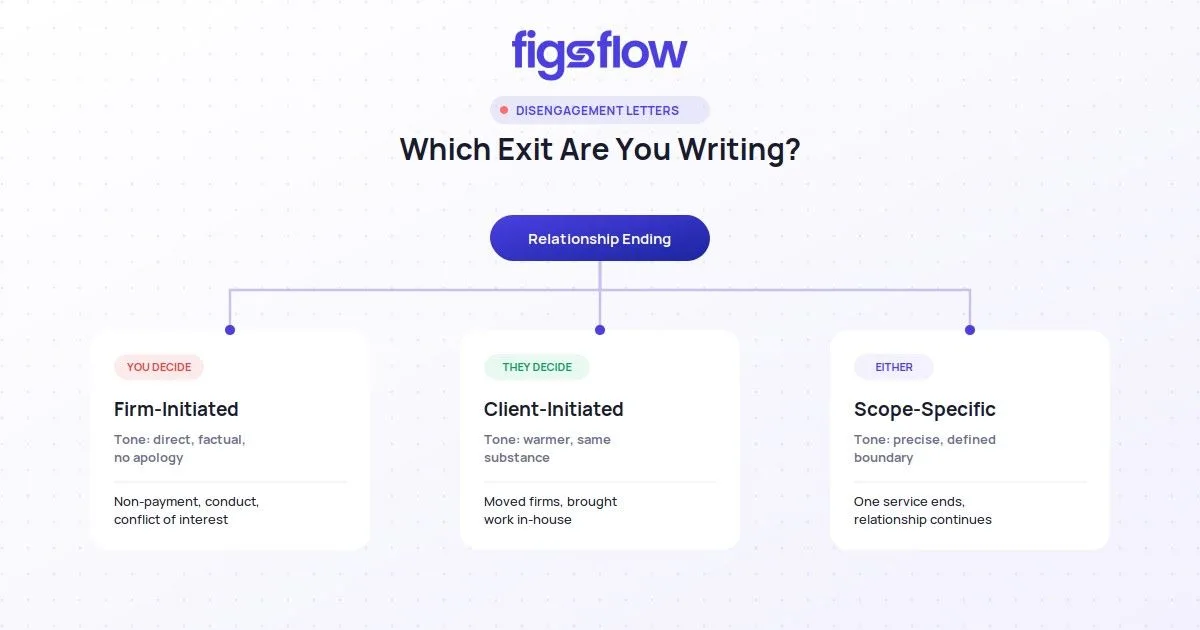
Disengagement Letter: What to Include, When to Send It & How to Generate One in Seconds Disengagement Letter: What to Include, When to Send It & How to Generate One in Seconds What Is a Disengagement Letter? Types of Disengagement Letter Firm-Initiated Disengagement Client-Initiated Disengagement Scope-Specific Disengagement When You Should Send a Disengagement Letter When You Don't Need to Send a Disengagement Letter What Happens If You Don't a Disengagement Letter The AML Trap: What Your Disengagement Letter Cannot Say What Every Disengagement Letter Must Include Free Disengagement Letter Templates How to Create a Disengagement Letter Fast Create Disengagement Letter with FigsFlow 1024x463 Resources Worth Bookmarking Conclusion Frequently Asked Questions(FAQs) What is the purpose of a disengagement letter? What should a disengagement letter include? How do you write a disengagement letter? How do you politely terminate a client relationship? What are the risks of not sending a disengagement letter? Does a client have to sign the disengagement letter? Can I withhold client files if fees are unpaid? How long should I keep records after disengagement? Two situations. A client leaves you. Or you need to leave them. Both uncomfortable. Both inevitable. And both require the same thing before you walk away: a disengagement letter. A disengagement letter is a formal notice ending the professional relationship between an accountant and their client. It confirms what work is complete, what isn’t, who owes what, and where your liability stops. Here’s exactly what goes in it, when to send it, and how to generate a compliant one in seconds. A disengagement letter is a written notice from an accounting firm to a client formally ending their professional relationship. It documents the termination date, summarises completed work, clarifies outstanding responsibilities, addresses final billing, and confirms how records will be transferred. It is not optional. It is not a formality. It is your primary protection the moment a client relationship ends. Think of it this way. Your engagement letter defined what you agreed to do. Your disengagement letter defines where that agreement stops. Without it, there is no clean line. Work bleeds past the termination date. Clients assume you are still responsible. Disputes arise over who owes what and who owns what. Professional indemnity claims follow. One letter. Written well. Sent promptly. That is the difference between a clean exit and a costly one. Not all disengagement letters are the same. The situation determines the type, the tone, and what you include. Type Who Initiates Tone Key Focus Firm-initiated You Direct, factual Business decision, no apology Client-initiated The client Warmer Proper exit documentation Scope-specific Either Precise What ends, what continues You are ending the relationship. The reasons vary. Non-payment Persistent non-cooperation Conflict of interest A client whose conduct puts your firm at risk. A practice restructure that means you are no longer taking on certain work. Whatever the reason, you are in control of the timing and the wording. Your letter should be direct, factual, and free of apology. You made a business decision. The letter confirms it professionally. Your client is leaving. They have found another firm, decided to bring the work in-house, or simply moved on. In this scenario, your letter is warmer in tone but identical in substance. You still need to confirm the termination date, outstanding work, fees, and records transfer. The client’s leaving does not remove your obligation to document the exit properly. Sometimes, only part of the engagement ends. A client may stop using your bookkeeping service but keep you for tax. Or they may conclude a one-off project with no ongoing work to follow. A scope-specific disengagement letter ends a defined service without terminating the entire relationship. It needs to be precise about exactly what is ending and what continues. If a client relationship is ending in any form, you need to send a disengagement letter. The sooner it is issued, the cleaner the separation. Here are the situations that require one: A client formally notifies you that they are moving to another firm You are ending a relationship due to non-payment or persistent late payment A conflict of interest has emerged that makes continuing the engagement inappropriate A client’s conduct, whether uncooperative, dishonest, or legally questionable, has made the relationship untenable Your firm is restructuring and no longer offering services that a client relies on A fixed-term or project-based engagement has reached its natural end You are retiring, selling your practice, or transferring your client book to another firm In every one of these scenarios, the disengagement letter is not a courtesy. It is a professional obligation, and it is worth revisiting alongside your MTD engagement letter if you are re-papering clients this year. Both ICAEW and ACCA treat it as best practice, and failure to issue one is a common source of complaints to both bodies. Good to Know: When does a disengagement letter actually become valid? A disengagement letter becomes effective on the date it is issued or the date specified in the letter, not when it is signed. ICAEW is clear on this: even if a client refuses to sign or return it, the fact that the letter was sent is sufficient to uphold your firm’s position in any dispute. A client signature adds weight and confirms receipt, but you are not waiting on it for your liability to end. State the effective date clearly in the letter and keep proof that it was sent. You do not need a disengagement letter when there is no ambiguity about your responsibilities and no outstanding work or fees. This includes: A client who has gone inactive with nothing unresolved A service that is temporarily paused with a clear intention to resume A one-off engagement where the deliverable and final invoice mark a clean end Just ask yourself: Is there any ambiguity about whether you are still responsible for this client’s affairs? If the answer is no, you do not need one. If you do not send a disengagement letter, your liability does not end. You remain professionally exposed to complaints, missed deadline claims, and indemnity issues until you can prove the relationship was formally closed. Without a letter, that proof does not exist. Here is what that looks like in practice: Your Liability Does Not Stop. It stops on the day you can prove you communicated the end of the engagement. Without a letter, that proof does not exist. Complaints Have Nowhere to Land But on You. A client who later claims you missed a deadline or gave incorrect advice during a period you believed you were no longer acting has a genuine basis for complaint. Professional Clearance Becomes Messy. When a new accountant sends a clearance request, you need a disengagement letter on file to support the position you communicate in your response. Your Insurer Will Ask for It. If a claim arises, your professional indemnity insurer will want to see the letter. Without one, your position is immediately weaker. The mess at the end is almost always a consequence of the ambiguity at the beginning. A disengagement letter is the line that separates your responsibility from your former client’s. If you are disengaging a client due to suspicious activity, your letter cannot reference that suspicion. It cannot hint at it, allude to it, or use any language a reasonably informed client could interpret as an indication that a report has been filed. Here is why that matters. Under section 333A of the Proceeds of Crime Act 2002 , tipping off is a criminal offence. It occurs when you disclose to a client that a Suspicious Activity Report has been made, or that a money laundering investigation is underway, in a way that is likely to prejudice that investigation. You disengage. You state that you are no longer able to act. You do not give the real reason. When the new accountant sends a professional clearance request, you are permitted to share relevant facts, though not to confirm a SAR was submitted. The profession uses specific coded language here. ACCA’s recommended wording signals to the incoming accountant that they should ask more questions without disclosing anything to the client. If you are in any doubt about how to handle a SAR-related disengagement, contact your professional body's ethics helpline before you send anything, and review your firm's wider money laundering obligations. Getting this wrong is not a paperwork error. It is a criminal offence. Regardless of the type or the circumstances, every disengagement letter needs to cover the same ground. Here is what that looks like. Effective Date The exact date on which your services end. Not “shortly” or “at the end of the month.” A specific date. This is the line your liability stops at. Scope of Disengagement Which services are ending? If it is everything, say so. If it is specific services only, name them. Ambiguity here is where disputes begin. Summary of Completed Work What have you done up to the termination date? Brief, factual, and referenced to the original engagement terms. Outstanding Work What remains incomplete, and who is now responsible for it. If you will complete certain tasks before the termination date, say so explicitly. If you will not, say that too. Final Billing Outstanding fees, payment deadline, and how to settle. A vague reference to “amounts outstanding” creates room for dispute. Records Transfer How and when you will return or transfer the client’s documents. Non-payment of fees is not a legitimate reason to withhold client records. Fee disputes are a separate matter pursued through separate channels. Liability Disclaimer A clear statement that your firm accepts no responsibility for matters arising after the termination date. Confidentiality Reminder Both parties retain confidentiality obligations after the relationship ends. Saying so in writing reinforces that and protects you. Confirmation of Receipt Ask the client to acknowledge receipt. This is your evidence that they received and understood the notice. Whether you are ending a relationship with a sole trader, a limited company, or a long-standing client, the letter needs to be right. A missed clause or a vague termination date is all it takes to leave your firm exposed. The template below is built for UK accountants and covers every required section: effective date, services ending, outstanding work, final billing, records transfer, HMRC notification, and client acknowledgement. Download it, add your firm details, and it is ready to send. There are three ways to create a disengagement letter. You can write one from scratch or adapt a template like the one provided earlier in this guide. You can feed the full context into an AI tool like ChatGPT and have it draft one for you. Or you can use a specialised tool like FigsFlow, which generates a fully compliant, client-specific letter in seconds, the same way it handles the rest of your MTD client onboarding . Each approach works, but they are not equal. Let’s take a look at how FigsFlow helps you craft a disengagement letter. FigsFlow has disengagement letter generation built directly into the platform. When a client relationship ends, you do not open a new document or search for a template. You go to the client’s proposal, hit the disengagement button, and the letter is generated in seconds. FigsFlow pulls context directly from the original engagement, the services agreed, the proposal number, the dates and the terms, and builds a letter tailored to that specific client and that specific engagement. With over 100 accounting services covered, the letter auto-adjusts to whatever is in scope. From there, you review, make any final adjustments, and send it to the client in a single click. The whole process takes under two minutes. The letter is compliant, contextual, and ready to go. ACCA’s official guidance on ending client relationships, covering your obligations around records transfer, professional clearance, and what to do when a SAR is involved – Disengagement process for corporate clients | ACCA Global ICAEW’s official helpsheet on disengagement letters, including guidance on structure, content, and sample wording to help members issue compliant, comprehensive letters – Disengagement letters | Practice helpsheets | ICAEW FigsFlow’s step-by-step walkthrough of the engagement letter drafting process, covering what belongs in each section, UK compliance requirements, and how tools like FigsFlow can automate the entire workflow from service selection to e-signature – A Complete Guide to Drafting Engagement Letters | FigsFlow FigsFlow’s foundational guide to engagement letters for UK accountants, explaining what an LoE is, its key legal and regulatory elements, common drafting mistakes, and how it differs from a contract or proposal – Understanding the Basics of Engagement Letters | FigsFlow How you end a client relationship says as much about your practice as how you begin one, covered in our guide on the four-act client workflow . The firms that handle both without chaos are the ones that scale. The ones that don't are still untangling exits from three years ago. How you end a client relationship says as much about your practice as how you begin one. The firms that handle both without chaos are the ones that scale. The ones that don’t are still untangling exits from three years ago. Book a demo and see for yourself how FigsFlow handles your entire client onboarding process, disengagement included. A disengagement letter formally ends the professional relationship between an accountant and their client. It confirms what work has been completed, what remains outstanding, and where your liability stops. Without it, you have no documented proof that the relationship ended, leaving you exposed to complaints, claims, and professional body scrutiny. Every disengagement letter should cover the effective date, scope of services ending, summary of completed work, outstanding matters, final billing, document transfer arrangements, and a liability disclaimer. Depending on the circumstances, you may also include a reason for disengagement and any critical upcoming deadlines the client needs to be aware of. State clearly that the engagement is ending and include a specific termination date. Summarise completed work, outstanding obligations, and final fees. Address how records will be transferred. Keep the tone professional and factual regardless of the circumstances. Or use FigsFlow to generate a compliant letter in seconds without starting from scratch. Have the conversation first, then follow it with the letter. Keep the letter factual and professional. You are not required to apologise or over-explain. State what is ending, when, and what happens next. Firm-initiated exits do not need to be warm, but they should never be hostile. Your liability does not end until you can prove the relationship was formally closed. Without a letter, you have no documented basis to defend against complaints about missed deadlines or incorrect advice. Your professional indemnity insurer will ask for it if a claim arises. Both ICAEW and ACCA cite failure to disengage properly as a common source of complaints. No. A signature is best practice and confirms receipt, but it is not required for the letter to be valid. ICAEW guidance confirms that even if a client refuses to sign, the fact that the letter was sent is sufficient to uphold your firm’s position in a dispute. Always keep proof of sending. No. ACCA’s guidance is explicit: non-payment of fees is not a legitimate reason to withhold records that belong to the client. Financial accounts, tax records, and documents the client commissioned must be returned. Outstanding fees are a separate matter pursued through separate channels, not by holding documents to ransom. Under Anti-Money Laundering regulations, you are required to retain evidence of client identity for five years from the date the relationship ends. Your wider client file should be kept for at least seven years to cover potential complaints, claims, or subject access requests under data protection legislation. Image: Create Disengagement Letter with FigsFlow 1024x463 disengagement-letter-guide-uk disengagement letter guide uk page Page

An infographic illustrating the Four-Act Client Workflow.

8/27/2026

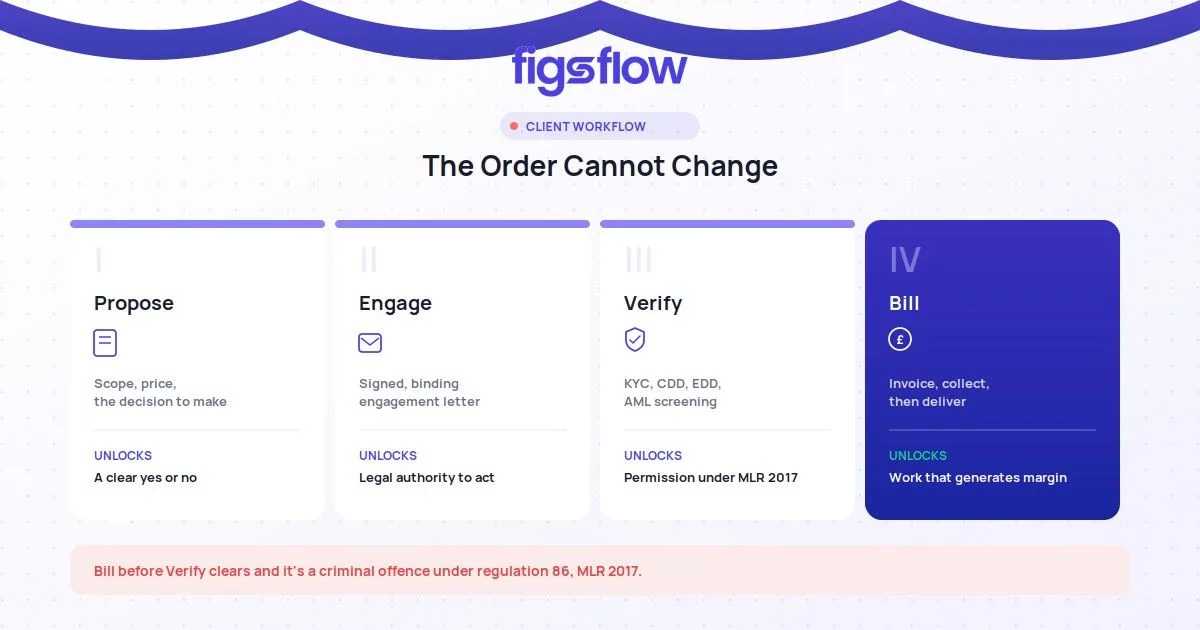
Propose, Engage, Verify, Bill. The Four-Act Client Workflow

Propose, Engage, Verify, Bill. The Four-Act Client Workflow Propose, Engage, Verify, Bill. The Four-Act Client Workflow The Four-Act Client Workflow Act One, Propose Act Two, Engage Act Three, Verify Act Four, Bill Conclusion See the four-act client workflow run end to end. Frequently Asked Questions (FAQs) What is a client workflow in accounting? Can you bill a client before AML verification? What is the right way to onboard a client? Quick quiz before we start. What comes first, AML verification or the invoice? If you said invoicing, you have just described the most expensive mistake in client onboarding. Verification comes first. Billing a client before they clear AML means taking money from someone you might have to decline. Now three more: Do you have a standard client workflow written down? Is it practical enough that your team actually follows it? Do you know the risk you carry when they don’t? If any answer is no, and for most firms at least one is, you have a problem. There is a fix, and it has a name. More on that at the end. First, the workflow itself: propose, engage, verify, bill. One order, and no skipping. By now you probably know the four acts already, even if you have never named them. You propose your services and the terms of engagement. You engage the client with a legally binding signature. You verify the client is who they claim to be. Then you invoice for the service, on the terms the engagement set. Here is what each act does and what it unlocks. Act What it does What it unlocks 1. Propose Sets scope, price, and the decision the client is making A clear yes or no 2. Engage Converts the yes into a signed, binding engagement Legal authority to act 3. Verify Runs KYC, CDD, EDD, and AML screening Permission to proceed under MLR 2017 4. Bill Invoices, collect payment, then delivery begins Work that generates margin Most firms run client workflows in the wrong order or let billing/invoicing take over the verification. It’s not fatal on its own, as you can always terminate the engagement if anything looks suspicious and file a Suspicious Activity Report (SAR). But if you act on or deliver the services before verification clears, it is a criminal offence under regulation 86, MLR 2017 , and can lead to: Up to two years’ imprisonment on conviction on indictment, a fine, or both Civil penalties from HMRC and the FCA on top A narrow defence only: you must show you took all reasonable steps and exercised all due diligence, which is hard to argue when you delivered first and checked later So why overtake a step, when following the order keeps you safe? This is where you send the proposal and the engagement letter to the client. It is you saying: I will do this and this, for this much, on these terms. The proposal can be verbal, written, or in any other form. All of them work. The engagement letter is different. It has to be written, and well documented. Going beyond the workflow, this is the act that makes or breaks the offer. To make yours count, you have to: Build an offer no one would deny Respond while the interest is still hot Remove every friction from saying yes Make it visually outstanding Include a clear call to action We have covered how to make each of these happen in our post, Reasons Your Accounting Proposal Is Losing You Clients . This is where you enter into a legally binding contract with the client. It follows Act One, and it is done when the client signs your engagement letter. The signature can be electronic or on paper. Either works, but it has to be there, and the process has to be well documented — see our guide on whether e-signatures on engagement letters are valid in the UK . Without a signed letter you have an interested party, not a client, and no defined basis on which to act. An electronic signature closes the act cleanly: The client signs the moment they accept, no printing, posting, or scanning The timestamp records exactly when the engagement became binding The audit trail is what you stand on if a scope or fee dispute arrives later That signed record matters at the next act, because verification runs against a client you are now legally engaged to act for. We have covered how a legally binding e-signature worksand what makes one stand out in our post, Everything Accountants Need to Know About Electronic Signatures, KYC & AML . This is where you verify the client is who they claim to be. Under the Money Laundering Regulations 2017, you cannot proceed with an engagement until due diligence is done. There is no exemption for a client who feels low-risk or who came through a trusted referral. This step includes: KYC: collect and confirm who the client is CDD: verify that identity against a reliable independent source AML check and sanctions screening: run the client against sanctions and PEP lists Customer Risk Rating: classify the client on the AML result and your firm’s risk appetite EDD: extra scrutiny where the rating comes back high risk If something looks suspicious at any point, you also have an obligation to file a Suspicious Activity Report (SAR) and to keep records for at least five years from the end of the engagement. Billing is the fourth gate, and it earns its place last for a reason. By the time you invoice, the proposal has defined the fee, the engagement letter has made it binding, and verification has confirmed you can legally act. The firms that struggle with cash flow are usually the ones that deliver first and bill later. They finish the work, raise an invoice, then chase it for sixty days while the next quarter piles up. Reverse it: Raise the invoice and set up the payment method at the point of engagement Capture a direct debit mandate or card subscription when the client signs, so the first collection is scheduled before delivery begins For recurring work, this removes invoice chasing entirely This only works because the prior acts were clean. The fee is defensible because the proposal tied it to a deliverable, the client cannot dispute the charge because the engagement letter recorded their agreement, and you are billing a verified client, not one who might fail AML after you have taken their money. Propose, engage, verify, bill. That is the client workflow, four acts where each one opens the next, and none should open early. Run them in order, and you never start work on an unsigned letter or bill a client you have not verified. Run them out of order, and every gap becomes a dispute, a delay, or a reportable exposure. So before your next client signs, ask yourself: does every fee tie to a deliverable, does work ever start before the letter is signed, and has anyone been invoiced before AML cleared? If any of those makes you pause, it is the sequence that needs fixing, not the effort. FigsFlow does all four acts, propose, engage, verify, bill, plus more, in a single connected workflow. It takes less than five minutes per client to run the lot. Book a demo and see for yourself. Book a Demo A client workflow is the repeatable sequence a firm uses to take on and serve a client: propose, engage, verify, bill. Each step unlocks the next. A proposal sets scope and fee, an engagement letter makes it binding, verification clears AML, and billing collects payment before delivery. You can, if the client has already signed the engagement, because you can still terminate and file a SAR. But delivering the service before verification clears is a criminal offence under regulation 86 of the MLR 2017, carrying fines, civil penalties, and up to two years’ imprisonment. Onboard in four ordered steps: propose, engage, verify, bill. Send a proposal setting the scope and fee, get the engagement letter signed, complete KYC and AML verification, then invoice and set up payment before delivery. Each step unlocks the next, so running them in order keeps you compliant and protected. four-act-client-workflow four act client workflow page Page

Anti-Money Laundering and financial Crime

8/27/2026

AML Compliance & Financial Crime Prevention: A Guide for UK Accountants

AML Compliance & Financial Crime Prevention: A Guide for UK Accountants AML Compliance & Financial Crime Prevention: A Guide for UK Accountants What is Anti Money Laundering and Financial Crime in the UK? The UK's AML Regulatory Framework The Proceeds of Crime Act 2002 The Money Laundering Regulations 2017 (MLR 2017) The Sanctions and Anti-Money Laundering Act 2018 Who Must Comply with AML Regulations? Core Anti Money Laundering And Financial Crime Obligations for Accountants Customer Due Diligence (CDD) Money Laundering Reporting Officer (MLRO) Record Keeping Suspicious Activity Reporting Staff Training Key Financial Crime Risks Accountants Face Building an Effective AML Compliance Programme Senior Management Commitment Firm-Wide Risk Assessment Written Policies & Procedures Leverage Technology Empower Your MLRO Independent Review Dynamic Client Risk Ratings Common Challenges & How to Overcome Them Additional Resources Conclusion Need Help with Identity Verification? Frequently Asked Questions (FAQs) What is financial crime? How do I report financial crime in the UK? Who investigates financial crime in the UK? What are the stages of money laundering? How do you know if someone is laundering money? What is considered money laundering in the UK? How do accountants check for money laundering? Are you certain your Anti Money Laundering and Financial Crime compliance is actually up to standard? Most accountancy firms assume they’re meeting their obligations. They’re performing client checks, keeping records, maybe even filing SARs. But scratch beneath the surface and the picture changes. Incomplete risk assessments, inadequate training records, outdated policies, and gaps in customer due diligence. These compliance failures can cost you a million in fines and penalties. For UK accountancy firms, Anti Money Laundering and Financial Crime compliance is not just a regulatory requirement, it is a core professional responsibility. But don’t worry. In the next 14 minutes, you’ll learn everything you need to stay compliant with UK AML obligations and prevent financial crime. Sounds good! Let’s dive in. KEY TAKEAWAYS All UK accountancy firms providing services like bookkeeping, tax advice, and audit work must comply with the Money Laundering Regulations 2017, regardless of firm size HMRC is the primary AML supervisor for accountants, with enforcement powers including fines up to £1 million and criminal prosecution for serious breaches Core obligations include conducting risk assessments, performing customer due diligence, appointing an MLRO, maintaining records for five years, and submitting suspicious activity reports Enhanced due diligence is required for high-risk clients, including PEPs, those in high-risk jurisdictions, and complex ownership structures Financial crime risks specific to accountants include tax evasion facilitation, fraudulent financial statements, layering of illicit funds, and involvement in sanctions evasion An effective compliance programme requires senior management commitment, clear policies, regular staff training, and technology to support screening and monitoring Common challenges include identifying beneficial owners in complex structures, keeping pace with regulatory changes, and balancing compliance requirements with client service Anti Money Laundering And Financial Crime compliance is a legal obligation for all UK accountancy firms under the Money Laundering Regulations 2017 To understand Anti Money Laundering And Financial Crime, UK accountants must be clear on how money laundering and wider financial crime risks affect their professional obligations. Anti Money Laundering and Financial Crime refers to the laws, controls, and procedures UK firms must follow to prevent money laundering, fraud, sanctions evasion, and other financial offences. Anti-money laundering compliance sits at the intersection of regulatory obligation and professional responsibility for UK accountants. What is Money laundering? Money laundering is the process of making illegally obtained money appear legitimate through three distinct stages: placement (introducing illicit funds into the financial system), layering (moving money through various transactions to obscure its origin), and integration (reintroducing the money into the legitimate economy). Your services can be exploited by criminals seeking to legitimise illicit funds. Managing client accounts, preparing financial statements, advising on tax structures, and facilitating transactions all create opportunities for money laundering. The UK Government estimates that hundreds of billions of pounds are laundered through the UK economy annually, with accountancy firms representing a key control point in preventing this activity. What is Financial Crime under Anti Money Laundering and Financial Crime rules? Financial crime is any illegal act involving money or financial systems to obtain financial gain, avoid financial obligations, or facilitate other criminal activity. It includes money laundering, terrorist financing, fraud, bribery, corruption, and sanctions evasion. A client might ask you to structure transactions that facilitate tax evasion, prepare accounts that misrepresent a company’s financial position, or unknowingly involve you in moving funds for a designated person under UK sanctions. The National Crime Agency (NCA) estimates that serious and organised crime costs the UK over £37 billion annually , with hundreds of billions still laundered through the UK economy. UK financial institutions have faced record fines, including Nationwide Building Society’s £44 million penalty for failures in anti-financial crime systems in late 2024, showing zero tolerance from regulators. The consequences of Money Laundering and Financial Crime are severe. UK Financial institutions have faced fines ranging from £17 million to £29 million for failures in money laundering controls. For accountancy firms, similar breaches can result in unlimited fines, criminal prosecution with up to 14 years imprisonment, and reputational damage that can end a practice. HMRC is the main supervisory body for AML compliance in the UK accountancy sector, and the framework is built around three key pieces of legislation. This framework exists to prevent Anti Money Laundering And Financial Crime across the UK financial system, including the accountancy profession. Who Regulates AML in the UK? HMRC supervises AML compliance for UK accountants and can impose penalties, conduct inspections, issue warnings, and refer cases for prosecution. The Office of Financial Sanctions Implementation enforces financial sanctions separately. Simplify your AML compliance process with FigsFlow’s powerful tools for seamless verification. Start Free Trial Explore AML Software · See Pricing This Act criminalises money laundering and makes it illegal to acquire, use, or possess criminal property. For accountants, the critical provision is your legal duty to report suspected money laundering when you have reasonable grounds for suspicion. Failing to report is a criminal offence. MLR 2017 establishes the specific compliance requirements that accountancy firms must follow. This includes conducting customer due diligence, maintaining records, appointing a nominated officer, conducting risk assessments, and implementing policies and procedures. These regulations were amended in 2019 to add enhanced due diligence requirements and beneficial ownership verification obligations. This Act gives the UK Government powers to impose financial sanctions independently. You cannot provide services to designated persons without appropriate licences, and you must screen clients against the UK Sanctions List. Breaching sanctions is a criminal offence punishable by fines up to £1 million or imprisonment up to seven years. Economic Crime and Corporate Transparency Act (ECCTA 2023) The Economic Crime and Corporate Transparency Act (ECCTA 2023) introduce a new ‘Failure to Prevent Fraud’ offence, effective from September 1, 2025. This offence requires accountants to implement reasonable procedures to prevent fraud or face liability. Additionally, Companies House now mandates identity verification for directors and Persons with Significant Control (PSCs). Accountants can assist in meeting these requirements as Authorised Corporate Service Providers (ACSPs). The Money Laundering Regulations cast a wide net across the accountancy profession. Anyone providing regulated services falls within the scope of compliance requirements, regardless of whether you’re a sole practitioner, small practice, or large firm. Regulated services include: preparing tax returns, providing tax planning advice, auditing, bookkeeping, maintaining financial records, forming companies, acting as a company director or secretary, providing registered office services, and acting as a trustee. Even if you only occasionally provide these services, you’re subject to the full scope of AML requirements. The regulations apply based on the services you provide, not your job title or qualifications. A bookkeeper providing tax advice faces the same requirements as a chartered accountant. A consultant helping clients with financial structuring must comply just as a traditional accounting practice must. Professional bodies, including ICAEW, ACCA, and CIMA, supervise their members who provide these services. If you’re not a member of a professional body, HMRC supervises you directly. Both routes carry identical obligations. Limited exceptions exist for employees working within a single organisation who don’t provide services to external clients. These exceptions are interpreted strictly, and most accountancy professionals fall within the regulatory scope. If you’re in scope, you must register with your supervisory authority, implement all required controls, and maintain ongoing compliance. Failing to register is itself a breach that can result in enforcement action. Enforcement Data by Supervisor: In the financial year 2024/25, HMRC conducted over 2,000 AML interventions and increased formal enforcement actions (fines, warnings, prosecutions) by 400% year-on-year. A significant number of penalties (£3.2 million total in 24/25) were issued for basic administrative failures, not just active money laundering involvement. Your obligations under the Money Laundering Regulations follow a structured approach that requires consistent implementation across every client engagement . The starting point is a firm-wide risk assessment that identifies and evaluates the money laundering and terrorist financing risks your practice faces. This assessment must consider: the types of clients you serve, the services you provide, the delivery channels you use, the geographical areas where you operate, and The transactions you facilitate. What Are the Key AML Obligations for Accountants? Your core obligations include conducting a firm-wide risk assessment, performing customer due diligence on all clients, appointing a Money Laundering Reporting Officer (MLRO), maintaining detailed records for five years, reporting suspicious activity to the National Crime Agency, and providing regular staff training. Each obligation has specific requirements, and failure to comply can result in criminal prosecution. Before establishing a business relationship, you must verify your client’s identity using reliable, independent documentation. For individuals, confirm their name, date of birth, and address through documents like passports or driving licences. For corporate clients, identify beneficial owners (individuals owning more than 25 percent of shares or voting rights) and verify their identities. The regulations distinguish between standard, simplified, and enhanced due diligence. Standard CDD applies to most relationships and requires identity verification, understanding the business relationship purpose, and ongoing monitoring. Enhanced due diligence is mandatory for high-risk scenarios, including politically exposed persons, clients from high-risk countries, and complex ownership structures. Every accountancy firm must appoint a nominated officer, commonly called a Money Laundering Reporting Officer . The MLRO is responsible for receiving internal reports of suspicious activity, making decisions about whether to submit suspicious activity reports to the National Crime Agency, maintaining oversight of the firm’s AML compliance, and serving as the contact point with supervisory authorities. The MLRO must have sufficient seniority, independence, and resources to fulfil this function effectively. You must maintain records of all customer due diligence measures, including copies of identification documents, verification data, and risk assessments, for five years after the business relationship ends. Transaction records must be kept for five years after the transaction completes. These records must be sufficient to enable reconstruction of individual transactions and to provide evidence to supervisory authorities and law enforcement agencies if required. Suspicious activity reporting creates a legal obligation that overrides client confidentiality in specific circumstances. When you know or suspect that a person is engaged in money laundering or terrorist financing, and that knowledge or suspicion comes to you during business, you must make a report to the National Crime Agency through their online SAR system. The nominated officer typically submits these reports, but any staff member who forms a suspicion has an obligation to report it internally to the MLRO. Failure to report is a criminal offence carrying potential imprisonment. Staff training must be provided to all relevant employees to ensure they understand their obligations, can recognise potential money laundering or terrorist financing, know the firm’s internal procedures, and understand how to report suspicions. Training should be tailored to roles, with client-facing staff receiving more detailed instruction than back-office personnel. Regular refresher training is essential as the regulatory landscape evolves. In 2025, AML compliance must go beyond basic tick-box exercises. Firms must establish active governance by implementing a continuous review process for risk assessments and AML policies. Additionally, source of funds (SOF) and source of wealth (SOW) documentation is now under increased scrutiny, especially for high-net-worth clients and those from high-risk jurisdictions. Failure to document SOF/SOW could lead to severe compliance issues. Accountancy firms face distinct financial crime risks that differ from those encountered by banks or other regulated sectors. Understanding these specific threats helps you focus your compliance efforts where they matter most. Tax Evasion Facilitation – Clients may pressure you to prepare accounts that understate income, overstate expenses, or misrepresent transactions. They might ask you to structure arrangements to avoid tax obligations or create offshore entities without legitimate business purpose. Complex Ownership Structures – Clients using multiple companies, partnerships, trusts, and offshore entities can obscure beneficial ownership. Criminals deliberately create complexity to hide their involvement, and your due diligence must identify when structures don’t make commercial sense. Cash-Intensive Businesses – Restaurants, retail operations, and car washes present inherent risks because cash transactions are difficult to verify. Clients in these sectors may use your services to integrate illicit cash into apparently legitimate business revenues. Sanctions Evasion – Designated persons subject to asset freezes may use intermediaries or complex structures to circumvent restrictions. Your client might not be designated directly, but could be owned or controlled by someone who is. Professional Enablers – Criminals target accountants to legitimise their activities, understanding that having reputable professionals prepare accounts lends credibility to their operations. Maintaining healthy scepticism and conducting thorough due diligence protects you from being unwittingly used. Recognising these industry-related risks allows you to implement targeted controls and remain vigilant for red flags specific to your client base and service offerings. AI-enabled fraud is becoming a significant threat, with criminals using AI technologies to create synthetic identities and fake documents. Accountants must be aware of these emerging fraud risks and employ advanced tools to detect fake documents. Additionally, sanctions evasion is becoming increasingly sophisticated, with criminals attempting to circumvent sanctions through complex ownership structures. It is essential for accountants to ensure robust screening against the UK Sanctions List to avoid severe penalties, including unlimited fines or imprisonment. An effective programme to prevent Anti Money Laundering and Financial Crime must be embedded into everyday practice, not treated as a one-off exercise. An effective compliance programme isn’t built on paperwork alone. It requires genuine commitment from senior management, practical procedures that staff can actually follow, and systems that make compliance manageable rather than overwhelming. Your Roadmap to Building an Effective AML Compliance Programme Start with senior management commitment → Conduct a firm-wide risk assessment → Develop written policies and procedures → Leverage technology → Empower your MLRO → Implement independent review → Use dynamic client risk ratings See below for a detailed explanation of each component. Partners or directors must demonstrate active engagement with AML compliance and allocate sufficient resources. This means regular discussion of AML matters in management meetings, ensuring the MLRO has authority, and making clear that client revenue never takes precedence over compliance obligations. Your risk assessment should be documented, reviewed at least annually, and updated whenever significant changes occur. Identify higher-risk client types, services, delivery channels, and geographical exposures, then explain how you’ll mitigate these risks. Generic templates won’t suffice. Your procedures should cover client onboarding with clear steps for identity verification , ongoing monitoring with defined triggers for review, suspicion reporting with guidance on recognising red flags, record keeping with retention periods, and training appropriate to different roles. Customer due diligence platforms can verify identities electronically, check against Politically Exposed Persons (PEP) and sanctions lists, and provide adverse media screening. These tools reduce manual effort, improve accuracy, and create audit trails demonstrating your due diligence. The MLRO requires sufficient time allocation to fulfil responsibilities effectively. They must have protected time for compliance activities, receive regular reports on onboarding activity, maintain oversight of higher-risk clients, and serve as the point of contact for supervisory authorities. An independent audit of your compliance programme should occur at least annually. The audit should test whether policies are being followed, review client files for adequacy of due diligence, and examine whether suspicious activity reporting is functioning effectively. Each client should be assigned a risk rating at onboarding based on client type, services provided, geographical connections, and ownership complexity. Higher-risk clients require enhanced due diligence and more frequent monitoring. Risk ratings should be reviewed whenever significant changes occur. In 2025, firms must leverage RegTech to integrate real-time screenings with Companies House and sanction lists. This automation reduces the risk of human error and ensures compliance. Additionally, annual training is no longer enough; firms must adopt ongoing, micro-training sessions that focus on emerging threats like AI-enabled fraud and sanctions evasion. Even well-intentioned accountancy firms encounter practical obstacles in implementing AML compliance . Understanding these common challenges and having clear strategies to address them helps you maintain effective controls without overwhelming your practice. Challenge How to Overcome It Identifying beneficial owners in complex structures Map the structure systematically, working up through each layer. Request trust deeds and constitutional documents that identify settlors, trustees, and beneficiaries. Verify identities at each level and determine whether anyone exercises control beyond their formal ownership stake. When clients resist providing this information, it's a red flag that should prompt serious consideration of whether you can take on the engagement. Keeping pace with regulatory changes Subscribe to HMRC's email alerts for supervised businesses. Join professional body compliance update services. Attend at least one compliance-focused seminar or webinar annually. Build relationships with peers for informal knowledge sharing. Balancing compliance obligations with client service Explain the regulatory context clearly at the outset. Integrate due diligence into your onboarding process so it's standard rather than intrusive. Use efficient tools that minimise the burden on clients while meeting your obligations. Clients who strongly resist reasonable due diligence requests are likely higher risk. Managing the cost of compliance Build compliance costs into your fee structures. Explain to clients that regulatory compliance is non-negotiable. Invest in efficient systems that reduce ongoing manual effort. Remember that compliance is now a fundamental cost of operating an accountancy practice, like professional indemnity insurance. Dealing with ambiguous situations Document your decision-making process clearly. Discuss borderline cases with the MLRO or a compliance colleague. Remember that submitting a SAR protects you even if the suspicion was unfounded. It's far better to over-report than to fail to report when you should have. Identifying complex beneficial ownership structures can be challenging, but the new Companies House features introduced by the ECCTA will simplify this process post-November 2025. Use these tools for mandatory identity verification to ensure clarity in ownership structures. To keep pace with regulatory changes, subscribe to updates from HMRC, FCA, and GOV.UK and implement a compliance management system to stay informed and compliant. HMRC Anti-Money Laundering Supervision : Detailed guidance for accountancy service providers , including registration information, compliance expectations, and case studies illustrating common issues. ICAEW Anti-Money Laundering Guide : Sector-specific guidance with practical advice tailored to accountancy firms, available to members. List of AML Regulators in the UK : Complete list of AML regulations and regulators for accountants, bookkeepers, and tax advisers How to Screen Sanctions in the UK : Complete UK Sanction Screening Guide 2025/26 for professionals and businesses How to Write an AML Policy : Complete Guide to write an effective AML policy for accounting and bookkeeping firms in the UK AML compliance for UK accountants isn’t optional. The regulatory framework will continue to evolve, enforcement will remain vigorous, and the consequences of non-compliance will stay severe. But compliance doesn’t have to be overwhelming. By understanding your obligations clearly, building systematic processes, investing in appropriate technology, and maintaining active engagement with your responsibilities, you can protect your firm while serving clients effectively. Your role in preventing financial crime matters. Every time you verify a client’s identity properly, assess risk thoughtfully, or report suspicious activity appropriately, you’re helping to protect the integrity of the UK’s financial system and your profession. Failing to control Anti Money Laundering and Financial Crime risks exposes UK accountancy firms to regulatory action, criminal liability, and lasting reputational damage. Strong controls around Anti Money Laundering and Financial Crime protect not only your firm, but the integrity of the UK financial system. Learn how to conduct proper customer due diligence and streamline your identity verification process. Read the Complete Guide → Financial crime is any criminal conduct involving money or financial services. This includes fraud, dishonesty, money laundering, terrorist financing, bribery, corruption, sanctions evasion, and misconduct in financial markets. If you’re a victim of fraud, report it to Action Fraud at actionfraud.police.uk. In Scotland, report to Police Scotland. Also, notify your bank immediately. Accountants must report suspected money laundering to the National Crime Agency through the SAR online system. Several agencies investigate financial crime depending on the type. The Serious Fraud Office handles complex fraud cases. The National Crime Agency investigates money laundering and serious organised crime. HMRC investigates tax-related financial crimes. Local police forces handle lower-level fraud. Money laundering occurs in three stages: placement (introducing illicit funds into the financial system), layering (moving money through transactions to hide its origin), and integration (reintroducing the cleaned money into the legitimate economy). Warning signs include unusual transaction patterns with no clear business purpose, reluctance to provide identification or business information, complex ownership structures that obscure beneficial owners, cash-intensive businesses with inconsistent revenues, and clients from high-risk jurisdictions without a clear reason for using UK services. Money laundering includes acquiring, using, or possessing criminal property, concealing or disguising criminal property, and converting or transferring criminal property. This covers activities like moving funds through multiple accounts, using shell companies to hide ownership, and transferring money to jurisdictions with weak AML regulations. Accountants conduct customer due diligence by verifying client identity through documents like passports or utility bills, identifying beneficial owners who control more than 25% of a company, understanding the source of funds and wealth, assessing the client’s risk level, and monitoring transactions for unusual patterns. aml-compliance-financial-crime-prevention-a-guide-for-uk-accountants aml compliance financial crime prevention a guide for uk accountants page Page

A person smiling and gesturing OK with a pen among documents.

8/27/2026

FigsFlow vs Your Current System: What It Does Differently for Proposals and Engagement Letters

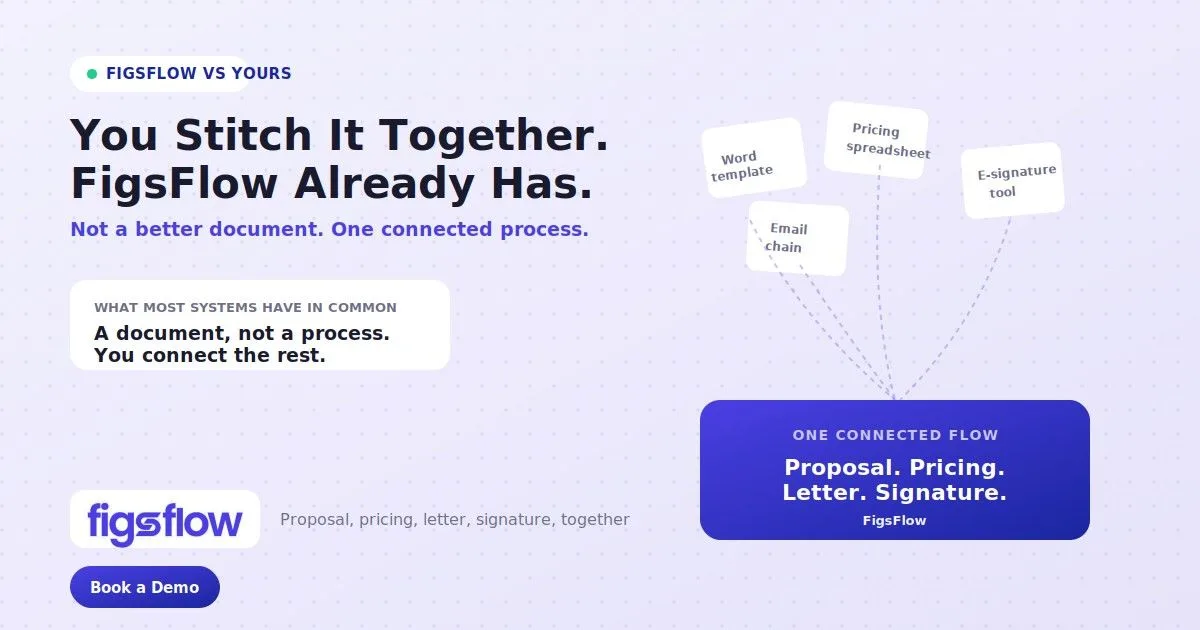
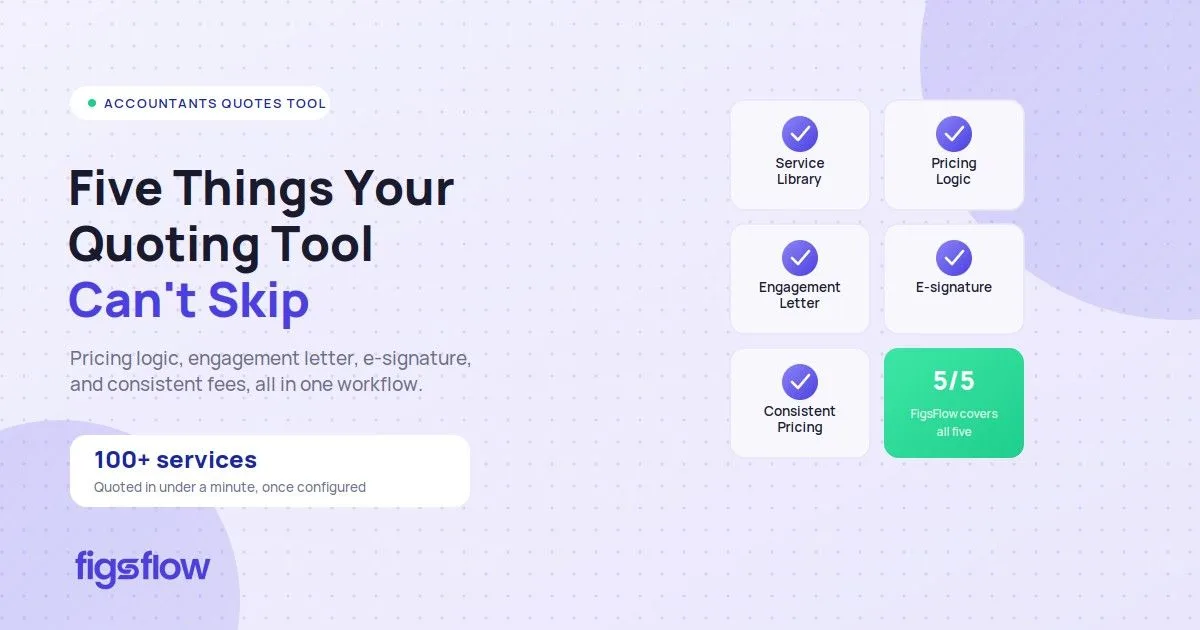
FigsFlow vs Your Current System: What It Does Differently for Proposals and Engagement Letters FigsFlow vs Your Current System: What It Does Differently for Proposals and Engagement Letters Most Systems Let You Send a Document. FigsFlow Builds the Whole Process. Your Pricing Is Probably an Estimate. FigsFlow Makes It Exact. You Choose What to Send. FigsFlow Makes Sure It Is Always Right. Most Systems Send a Document. FigsFlow Sends an Experience. What This Looks Like Side by Side Conclusion You Have Questions. We Have Answers. A lot of you have been asking recently how FigsFlow compares to your current system. It’s a fair question and we want to answer it properly. Here’s the honest answer first. You use dozens, if not hundreds, of tools across your practice. A single blog post cannot compare FigsFlow to all of them. But most systems have a lot in common, and what we can do is show you exactly what FigsFlow does differently and why it matters for your proposals, your engagement letters, and ultimately your ability to win and retain clients. We’ll keep it as short as possible. Let’s start with the most basics. Think about how your current system actually works when a new prospect comes in. Your proposal lives in a Word template somewhere. Your pricing gets worked out separately, in your head, on a spreadsheet, or in a calculator you built yourself years ago. Your engagement letter is a different document entirely. And your signature process is either a separate e-signature tool, a printed form, or an email chain that eventually resolves itself when the client gets around to it. None of these pieces talk to each other. You are the one connecting them every single time, manually, for every single client. FigsFlow is built as one connected workflow. Proposal, pricing, engagement letter, and e-signature all sit inside the same platform and move together. You configure the service once for that client, and everything generates from that single point. No stitching. No switching between tabs. No wondering whether the engagement letter you sent matches the proposal the client already signed. That is the foundational difference. And everything else builds from there. Most systems, whether that is a Word template, a basic proposal tool, or a spreadsheet, rely on you to input a number you have decided somewhere else. The pricing logic lives in your head and gets pasted in manually. Which means it is, at best, a well-informed estimate. FigsFlow’s advanced pricing calculator works out the fee automatically in under a second based on actual inputs. Transaction volume, quarters behind, income sources, applicable tax standard, complexity of the engagement. It updates in real time as you configure the service. Catch-up fees for clients whose records are behind are pre-configured and already built into the proposal before anything goes out. You are not adding them as an afterthought. They are part of the document from the start. The number in your proposal is not an estimate. It is a calculated, defensible figure you can stand behind if a client questions it. And when a prospect sees pricing that is clearly structured and fully explained rather than a round number that appeared from nowhere, it tells them something about how you operate before the engagement has even begun. This is something most systems do not give you. With FigsFlow, you are not locked into sending a fixed set of documents every time. You choose what each client situation actually requires. Some clients need a full proposal with pricing and an engagement letter together. Some are existing clients who simply need a new engagement letter for an additional service. Some are prospects at an earlier stage who need to see the proposal first before anything formal goes out. FigsFlow handles all three. You can send the proposal only, the engagement letter only, or both together in a single send, depending on where the client is in the process and what makes sense for that relationship. This matters more than it sounds. Sending a full engagement letter to a prospect who has not yet agreed to your fees is a friction point that kills momentum. Sending just a proposal to an existing client who already knows your firm and simply needs to formalise a new service is unnecessary admin for both sides. Having the flexibility to match the document to the moment, backed by a CRM built for accountants , is how professional firms operate. FigsFlow builds that flexibility in by default. What your prospect receives from your current system is probably a PDF attached to an email. They download it, scroll through it, try to understand the pricing, and then work out how to sign and return it. Multiple steps. Multiple moments where they can lose interest, get distracted, or decide the whole thing feels like more effort than it is worth. What a prospect receives from FigsFlow is a clean, professional branded email with their name and their proposal ID on it. One button takes them to their secure portal. Everything is there waiting for them. The proposal, the engagement letter if included, the full fee breakdown, every service named, VAT and gross total visible in plain figures. They can preview everything before committing to anything. Nothing is hidden and nothing needs decoding. When they are ready to sign, they draw, type, or upload their signature from whatever device they are on. Phone, tablet, laptop. No printing. No scanning. No follow up email from you asking if they received it. On your end, you can see in real time exactly who has viewed the document and who has signed, through the signatory initials icon in the platform, alongside the same AML and KYC checks that keep the client compliant once they've signed. You know where things stand without sending a single chasing message. The difference between a PDF attachment and a client portal is the difference between a transaction and a first impression. A new prospect just had a great discovery call with you. Here is what happens next in both scenarios. With your current system, you open a Word template, update the client name and service details, work out the pricing manually, format everything into a PDF, write a covering email, and send it. A day or two later, once you have had time to prepare it, the engagement letter follows as a separate email with a separate attachment. The client has to sign both, return both, and hope they come back to you before the momentum from the call wears off. With FigsFlow, you import the client, configure their service package, and the pricing calculates automatically. You choose whether to send the proposal only, the engagement letter only, or both together depending on what this client needs right now. You preview everything in one panel, make any adjustments, and send it live in minutes. The client receives one professional email, clicks through to their portal, and signs from their phone that evening. One scenario ends with you waiting. The other ends with a signed client. That is what is different about FigsFlow. And that is what most systems have in common that FigsFlow simply does not. Want to see what happens after the signature? We have mapped out the complete MTD client onboarding journey inside FigsFlow, from the first proposal all the way through to automated payment collection. Read the full guide: Streamline Your MTD Client Onboarding Journey | FigsFlow We said we would keep this short and show you what is different. The difference is not one feature. It is that FigsFlow treats your proposals and engagement letters as a connected, professional, client facing process rather than a set of documents to be assembled separately and hoped across the finish line. Your current system probably does a lot of things well. This is just the part it is most likely missing — see how it compares to a dedicated AML and onboarding platform . Not scripted ones. Real ones. Book a demo and let's talk through exactly what FigsFlow can do for your practice, accountant to accountant, at a time that works for you. Book a Demo → figsflow-vs-your-system-for-proposals-and-loe figsflow vs your system for proposals and loe page Page

An illustration of a checklist with a person using a laptop.

8/27/2026

Client Onboarding Checklist for Accountants, Bookkeepers & Tax Advisers (Free Download)

Client Onboarding Checklist for Accountants, Bookkeepers & Tax Advisers (Free Download) Client Onboarding Checklist for Accountants, Bookkeepers & Tax Advisers (Free Download) What Is a Client Onboarding Checklist & Why Do You Need One Client Onboarding Checklist for Accountants (Free Download) Client Onboarding Checklist for Bookkeepers (Free Download) Client Onboarding Checklist for Tax Advisers (Free Download) What Each Checklist Covers How to Use These Checklists in Your Practice Helpful Client Onboarding Resources Conclusion Frequently Asked Questions What is client onboarding? What is a client onboarding checklist? Is client onboarding part of KYC? Do bookkeepers need to complete AML checks when onboarding clients? When is Enhanced Due Diligence required during client onboarding? Onboarding a new client involves more moving parts than most practitioners account for. There is the engagement letter, identity checks, anti-money laundering compliance, risk assessment, and, depending on the outcome, Enhanced Due Diligence before any work begins. Miss one step, and you are not just behind on admin. You have a compliance gap that regulators will find before you do. This post gives you three profession-specific client onboarding checklists, each free to download and ready to use on your next client. Pick the one that fits your role, work through it from top to bottom, and every step is covered. A client onboarding checklist is a structured record of every step your practice completes before a new client engagement begins. It covers identity verification , anti-money laundering checks, risk assessment, due diligence, and the administrative setup required to actually start the work. Most practices do most of these things. The problem is doing them consistently, in the right order, and with a record that proves it happened. Here is why that record matters: It satisfies your legal obligations. The Money Laundering Regulations 2017 require regulated firms to carry out Customer Due Diligence on every new client before establishing a business relationship. A completed client onboarding checklist is the most straightforward way to demonstrate that the obligation has been met. It replaces memory with a process. If your onboarding process lives in someone’s head or across a chain of emails, it is not a process. It is a habit. Habits are inconsistent, and inconsistency is exactly what a compliance review will expose. It protects you when things are disputed. When a disagreement arises over scope, fees, or what was agreed at the outset, a completed onboarding file is the clearest record you have. It shows what was discussed, what was signed, and what checks were carried out before work began. It makes your practice scalable. A checklist any team member can follow means onboarding does not depend on who is available. Every client gets the same standard, regardless of who handles the file. Accounting practices take on clients across a wider range of entity types than most other professional services firms. A sole trader, a limited company, an LLP, and a trust each require a different engagement letter, a different set of identity documents, and, in some cases, a different risk profile from the outset. This checklist is built around that reality. It confirms entity type early, prompts professional clearance from the previous accountant before work begins, and walks through KYC, AML, risk assessment and Enhanced Due Diligence in the right sequence. It then moves into practice setup: accounting software access, bank feed connection, filing deadlines, and a clear split of responsibilities between the firm and the client. Download the Client Onboarding Checklist for Accountants and use it on your next new client. Bookkeeping engagements vary more than almost any other professional service. One client wants full-service monthly bookkeeping, including payroll and VAT returns. Another wants quarterly reconciliation only. The scope changes, and if the engagement letter does not reflect exactly what was agreed, the bookkeeper ends up doing work with no fee agreement behind it. This checklist puts scope definition first, before anything else moves forward. It then covers KYC and AML checks, risk assessment, and EDD where required, followed by systems setup: software access, bank feeds, VAT scheme confirmation, payroll setup if in scope, and the receipt capture process. It closes with a workflow agreement that sets out what the client provides, when they provide it, and how communication works throughout the engagement. Download the Client Onboarding Checklist for Bookkeepers and build a consistent process from day one. Tax advisers deal with a layer of onboarding that accountants and bookkeepers do not always face to the same degree. Before any advice is given or any correspondence sent, HMRC agent authorisation needs to be in place. Acting without it creates problems with HMRC and exposes the adviser to liability. Yet it is one of the most commonly delayed steps in tax onboarding. This checklist addresses that directly. It confirms HMRC agent authorisation is submitted and received before any client-facing work begins. It also prompts a review of the client’s tax history, including any open enquiries, outstanding liabilities or previous penalties, before the adviser forms a view. Filing deadlines across Self Assessment, the CGT 60-day reporting window, Corporation Tax and VAT are all logged at the outset, so nothing is missed in the first weeks of the engagement. Download the Client Onboarding Checklist for Tax Advisers and start every engagement on solid ground. All three checklists follow the same client journey that well-run practices already use. The difference is that they turn that journey into a repeatable process with a record at every stage. The pathway looks like this: Step 1: Send the engagement letter. The client reviews it, agrees to the scope and fees, and signs. Nothing moves forward until this is in place. Step 2: Run KYC and AML checks. Identity is verified, documents are reviewed, and the client is screened against sanctions lists and PEP databases. You receive a result. Step 3: Assess the risk. Based on the KYC and AML outcome, you assess the client against your firm's risk appetite and assign a rating: low, medium or high. Step 4: Apply the right level of due diligence. A low or medium rating means standard due diligence applies, and onboarding proceeds. A high rating triggers Enhanced Due Diligence, which must be completed and signed off by senior management before the engagement goes any further. Step 5: Set a review date and close the file. Onboarding is complete, but the client's risk profile is not forgotten. A review date or trigger condition is logged so the file is revisited when circumstances change. That is the path every compliant practice follows. These checklists make sure your firm follows it consistently, and that every step is on record when someone asks to see your process. Download the client onboarding checklist that fits your role and save it somewhere accessible before your next client comes in. How you use it depends on how your practice is structured. If one person handles client onboarding, assign the checklist to them at the point the engagement letter goes out. They work through it stage by stage and sign it off when every step is complete. It stays with the client’s file. If onboarding is split across multiple people, copy the checklist into your client’s working folder, whether that is a shared drive, a client Excel file, or your practice management system. Each person marks their steps as done when completed. Nobody closes the file until every stage has a tick against it. Either way, no client gets marked as fully onboarded until every stage is signed off, and that includes referred clients, low-risk clients, and clients who feel familiar from day one. Here’s A Simplest & Reliable Way to Onboard MTD Clients: Streamline Your MTD Client Onboarding Journey | FigsFlow Streamline Your Client Onboarding in AML & KYC with FigsFlow: AML & KYC in Client Onboarding | FigsFlow These 5 Client Onboarding Mistakes Are Hurting Your Business Growth: 5 Client Onboarding Mistakes Costing You Clients How to Talk About Fees Without Losing Clients: What Is the Best Pricing Model for Accountancy Firms? Price Your Bookkeeping Services Without Guesswork: Bookkeeping Pricing Made Easy for UK Accountants | FigsFlow Onboarding does not need to be complicated. It needs to be consistent. A new client should receive the same thorough process whether they come through a referral, a cold enquiry, or a marketing campaign. The partner who has been in practice for twenty years and the team member who joined last month should follow the exact same steps, produce the same records, and close the file the same way. That consistency is what protects your practice when a regulatory review comes, when a client disputes scope, or when someone new picks up a file and needs to understand what was done and why. It is also what allows a practice to grow without onboarding quality, depending on who happens to be available. Download the checklist that fits your practice and use it on your next client. Client onboarding is the process of bringing a new client into your practice in a structured and compliant way. It means understanding who you are doing business with, verifying their identity, assessing the risks involved, and putting the right paperwork and checks in place before any work begins. A client onboarding checklist is a structured list of steps a practice completes before formally taking on a new client. It covers everything from the engagement letter and identity verification to AML checks, risk assessment and due diligence, ensuring nothing is missed, and every step is recorded. KYC is one stage within the broader onboarding process. It is the part where you verify who your client is through identity documents and address verification. Onboarding also includes AML checks, risk assessment, engagement letters and due diligence, all of which sit around and beyond the KYC stage. Yes. Bookkeepers providing bookkeeping services as a business fall within the scope of the Money Laundering Regulations 2017. They are required to carry out Customer Due Diligence, including identity verification and AML screening, before taking on any new client, regardless of how small or straightforward the engagement appears. Enhanced Due Diligence is required when a client is assessed as high risk following the standard risk assessment. It involves additional verification steps, including source of funds and source of wealth, and must be approved by senior management before the engagement proceeds. free-client-onboarding-checklist free client onboarding checklist page Page

A man in an office setting giving a thumbs up while holding a file.

8/27/2026

Pricing Software for Bookkeepers: How to Quote Services Professionally

Pricing Software for Bookkeepers: How to Quote Services Professionally Pricing Software for Bookkeepers: How to Quote Services Professionally Key Points Summarised for Busy Readers What Is Pricing Software for Bookkeepers? What's Wrong with Manual Pricing? What Good Pricing Software for Bookkeepers Looks Like Run Away From These Software Types Introducing FigsFlow: Best Pricing Software for Bookkeepers Beyond Pricing: What FigsFlow Offers Additional Resources Conclusion Discover Figsflow's Powerful Pricing Features Do you hesitate before quoting prices? That awkward pause when a client asks, “How much”? You’re not alone. Half of UK bookkeeping practices still wing their pricing, hoping they’ve got it roughly right. But here’s the good news: you’ll be ahead of them in the next 6 minutes. In this guide, you’ll discover how pricing software for bookkeepers eliminates guesswork, ensures every quote is profitable, and lets you respond to enquiries in seconds instead of hours. Pricing software automates quote calculations using your costs, profit margins, and UK industry rates in under one second It integrates directly with engagement letters and proposals, creating a seamless workflow from enquiry to signed client Manual pricing typically costs practices 15-20% in lost margins, plus 40+ hours monthly in wasted admin time Good pricing software for bookkeepers is a practice management software that can handle everything related to client onboarding, not some generic bookkeeping software FigsFlow provides automated pricing specifically for UK accountants, bookkeepers, and tax advisers with built-in AML compliance Pricing software for bookkeepers calculates what you should charge clients for bookkeeping services. It takes three inputs: your firm’s operating costs, your target profit margins, and current UK market rates. The output is an accurate quote in under a second. Pricing Software vs Bookkeeping Software Bookkeeping software handles the work you do for clients after they’ve signed. Pricing software handles everything before that: calculating fees, creating proposals, and drafting engagement terms, which is also where a solid client onboarding checklist earns its keep. You configure it once with your cost structure and margin targets. After that, every quote accounts for overhead allocation, staff costs, and market positioning without manual calculation. The software ensures you never forget to include software subscriptions, professional indemnity insurance, or partner review time when pricing client work. Manual pricing consumes 1-2 hours per proposal. For practices handling 20 monthly enquiries, that’s 40 hours, a full week of productive time spent on spreadsheets instead of client work — time that could go into growing the practice instead. The real damage: Speed kills deals. Clients expect responses within hours. While you’re calculating costs, competitors send polished proposals. Accuracy degrades. Forgotten software costs, miscalculated overhead, outdated hourly rates. Each error reduces profitability. Consistency disappears. One partner quotes £1,500 for annual accounts, another quotes £1,200 for identical work. Clients notice. Margins suffer. UK practices using manual pricing operate at 15-20% lower profit margins. On £300,000 revenue, that’s £45,000-£60,000 lost annually. Professionalism drops. Slow responses, spreadsheet exports, disconnected onboarding. Clients compare your amateur proposal against enterprise-quality competitors. Manual pricing costs more than time. It costs profit, clients, and credibility, and it is one of several client onboarding mistakes that quietly erode margin over a full year. Good pricing software is simple. It takes into account six variables and removes pricing anxiety completely. Firm cost allocation. Fixed costs like software subscriptions, PI insurance, and rent get distributed proportionally across every client quote. Profit margin control. Set target margins by service type. The software enforces them automatically unless you override. Industry benchmarking. Current UK market rates built in. You price competitively without guesswork or research. Automatic discounts and VAT. Client-specific discounts and VAT calculations happen instantly. No manual adjustments needed. Manual override capability. Strategic clients, complex cases, and special circumstances need flexibility. Override any calculation when business judgment requires it. Engagement letter integration. Quotes flow directly into professional proposals with terms and compliance built in. Configure it once, quote with confidence forever. This same principle applies to pricing bookkeeping services specifically , where catch-up work and transaction volume need their own logic. Every vendor claims to be the perfect pricing solution. Here’s how to spot the pretenders: Template libraries with manual fill-ins Separate systems for pricing, proposals and engagement letters Industry average calculators with no cost inputs Non-UK software adapted for this market FigsFlow is purpose-built for UK accounting practices, tax advisers, and bookkeepers. It solves the pricing problem by combining automated calculation with integrated practice management: proposals, engagement letters, AML compliance, and client onboarding in one platform. FigsFlow follows a simple two-step approach to set your pricing: Step 1: One-Time Setup (10 minutes) Input your practice costs: software subscriptions, PI insurance, salaries, rent, and overhead expenses. Define service categories with typical scope and parameters. Set target profit margins per service type. Configure your cost structure once, and the system handles calculations automatically from there. Step 2: Quote Generation (30 seconds per client) Select services from your pre-configured list: bookkeeping, accounts preparation, VAT services, payroll. Configure service parameters using dropdown menus: monthly transaction volume, quality of existing records, and cloud accounting software usage. The pricing calculator displays real-time fees as you make selections. Adjust pricing manually if circumstances warrant it: apply percentage or fixed discounts, add notes for special arrangements. The right panel shows monthly, quarterly, and annual pricing with automatic VAT calculations. FigsFlow is a complete client onboarding platform handling everything from initial proposals through compliance checks to signed agreements. Here’s what it offers beyond service pricing: Professional Proposal Generation AML Compliance Module Secure Document Collection Complete Audit Trails HubSpot CRM Integration Centralised Dashboard This sits alongside a full client onboarding checklist so pricing never operates in isolation from the rest of the engagement. All this is yours at zero cost for the next 30 days. Take full advantage of automated onboarding, compliance checks, and engagement letter generation without commitment. Try FigsFlow for Free What Winning CPA Firms Do Differently- What Top CPA Firms Know About Pricing (That You Don’t) How Can Accountants Communicate Value Effectively- Communicate Value in Service Pricing [Crucial Principles] Value-Based Pricing for Accounting Firms- Value-Based Pricing: Charge What You’re Worth | FigsFlow Automate Engagement Letter- Stop Wasting Hours: Automate Engagement Letters with FigsFlow Automate Client Onboarding- Stop Losing Clients: FigsFlow Fixes Client Onboarding | FigsFlow Clients today expect instant responses and professional proposals. When you hesitate to quote prices or request adjustments later, it damages trust. It raises questions about your competence before you’ve even started work, and it makes getting client documents quickly that much harder later on. Good pricing software solves this problem. But not every vendor delivers what they promise. Many overcomplicate simple workflows or charge enterprise prices for basic features. Our wider review of pricing software for accountants covers how the main options compare. So, we present you the FigsFlow: the ultimate pricing software for Bookkeepers, Tax advisers, and Accountants. Streamline your pricing process and boost profitability with tools built for UK accountants, tax advisers, and bookkeepers. Explore Features pricing-software-for-bookkeepers-and-accountant pricing software for bookkeepers and accountant page Page

Image: How Companies House is Helping Businesses Prepare for Identity Verification What FigsFlow Can Do

8/27/2026

How Companies House is Helping Businesses Prepare for Identity Verification & What FigsFlow Can Do

How Companies House is Helping Businesses Prepare for Identity Verification & What FigsFlow Can Do How Companies House is Helping Businesses Prepare for Identity Verification & What FigsFlow Can Do Key Points at a Glance What Is Companies House Identity Verification How Companies House Is Helping Businesses Through the Transition Direct Communication to Registered Companies Online Guidance and Resources Support Through Business Organisations A Dedicated Technical Helpline The Transition Period What Happens If You Do Not Comply How FigsFlow Helps Accountants With Identity Verification for Clients Get Started at Zero Cost Helpful Resources & Links for 2026 Verification Final Thoughts Frequently Asked Questions (FAQs) How do I verify my identity with Companies House? Do all company directors need to verify their identity? What happens if I don't verify my identity by the deadline? When is my verification deadline? Is the verification process complicated? If you are a company director or person with significant control, identity verification has been a legal requirement since 18 November 2025, introduced under the Economic Crime and Corporate Transparency Act. It sits alongside your firm's existing Companies House advanced search workflow for verifying company data more broadly. If you want a full breakdown of what identity verification is, who needs to verify, deadlines by role, and how to complete the process step by step, we have covered all of that separately. Read our complete guide: Companies House Identity Verification Guide This article focuses on something different. It covers what Companies House has put in place to help businesses get through this change without unnecessary stress, and how FigsFlow helps accountants manage the identity and AML checks they need to run for their clients. Identity verification became a legal requirement on 18 November 2025 under the Economic Crime and Corporate Transparency Act The 18 November 2025 date opened a 12-month window for existing directors and PSCs to get compliant. It was not an immediate deadline Companies House opened early access to verification on 8 April 2025, and more than one million people completed the process before the mandatory start date Support includes direct email communications, step-by-step videos, guidance documents, and a dedicated technical helpline FigsFlow helps accountants run AML and identity checks on clients as part of the same onboarding workflow Identity verification is a legal requirement under the Economic Crime and Corporate Transparency Act 2023. It requires every director, person with significant control, and other qualifying role holders to confirm who they are before acting on behalf of a UK company. The requirement came into force on 18 November 2025. Once verified, Companies House issues you a unique 11-character personal code. That code is personal to you, not tied to any specific company. If you hold multiple directorships, one verification covers all of them. It is worth noting that completing the identity check and submitting your personal code are separate steps. The check gives you the code. You then need to provide it through the appropriate filing or service to formally connect your verified identity to each role you hold. Companies House opened early access to verification on 8 April 2025, giving businesses several months to get ahead before the requirement became mandatory. More than one million people verified during that early period. The approach since then has been to reduce friction wherever possible, through targeted communication, accessible guidance, and a 12-month window for existing role holders to comply. Since 4 March 2024, all companies have been required to hold a registered email address with Companies House. That address is now the primary channel for identity verification updates. Rather than generic reminders, the emails include specific action steps, relevant deadlines, and direct links to guidance based on each company’s situation. If your registered email address belongs to your accountant or agent, it is worth checking that those communications are being passed on to you, and that your firm's HMRC agent registration details are up to date too. Companies House has published comprehensive guidance through a dedicated website that has received over 700,000 visits. The content is role-specific, breaking down the process for directors, PSCs, and ACSPs separately. There are short explainer videos, worked examples, and FAQs alongside the written guidance. None of it assumes you already know how the process works. To reach business owners who may not be actively monitoring Companies House directly, the guidance was distributed through the Federation of Small Businesses, ICAEW, and other professional networks. The information reached people through the organisations and advisers they were already in contact with. Companies House set up a separate helpline specifically for GOV.UK One Login issues. This is distinct from the general Companies House contact line, so technical queries get to the right team without delay. The most practical support measure is the rollout structure itself. Existing directors and PSCs have until 17 November 2026 to comply. Companies House has been clear that this 12-month window exists so businesses can get organised properly, not at the last minute. The table below summarises the full support offering: Support Type What You Get Early Access Voluntary verification open from 8 April 2025 Direct Communication Emails to registered company addresses with specific steps and deadlines Online Resources Dedicated guidance website with videos, FAQs, and factsheets Document Guidance Clear lists of acceptable ID and available verification routes Partner Support Guidance distributed through FSB, ICAEW, and business organisations Technical Help Separate GOV.UK One Login support line Transition Period 12 months from 18 November 2025 for existing directors and PSCs After 17 November 2026, Companies House will add a public note to the register against anyone who has not complied. Unverified individuals will be unable to be appointed as a new director, register a new company, or register as an Authorised Corporate Service Provider . Continuing to act as a director without completing verification after that date is a criminal offence. Both the individual and the company could face prosecution and financial penalties. For accountants registered as Authorised Corporate Service Providers, verifying a client’s identity is a compliance obligation with real legal weight. You are confirming to Companies House that the person is who they claim to be, keeping records for seven years, and taking responsibility for the outcome. FigsFlow handles this within the same platform you already use for proposals, engagement letters, and pricing. Its AML and ID verification module covers client document validation, face match and liveness checks, Companies House identity verification checks, PEP and sanctions screening through LexisNexis World Compliance Data (see our guide on sanction screening in the UK ), a full audit trail, and a secure client onboarding link so clients submit their own documents directly — built around the same client onboarding checklist structure most firms already use. AML checks are priced on a pay-as-you-go basis from £3 per check, with PEP screening, sanctions, liveness, and Companies House verification all included in that price. Special 2026 Offer Experience FigsFlow totally free for the next 30 days . Automate your identity verification today. Claim It Now Free for 30 days • No credit card required Verify your identity for Companies House : Official GOV.UK guidance walking through the complete verification process, document requirements, and available routes. Find an Authorised Corporate Service Provider : Searchable list of ACSPs registered with Companies House who can verify identity on your behalf. Changes to UK company law : Companies House campaign site covering all Economic Crime and Corporate Transparency Act changes, including identity verification, registered email addresses, and filing requirements. Identity Verification Through ACSP : Why identity verification creates new revenue opportunities for accountants , how to register as an ACSP, and what clients expect from professional verification services. Directors’ Identity Verification Engagement Letter Templates for Accountancy Firms Registered as ACSP : Ready-to-use engagement letter templates for identity verification services, including scope, fees, client responsibilities, and MLR compliance requirements. ACSP: How Can Accountants Prove & Verify Clients’ Identity : Complete guide to ACSP identity verification standards , covering acceptable documents, verification procedures, record-keeping, and compliance with Companies House requirements. These resources will help you prepare for identity verification and ensure you don’t miss any steps. Our identity verification through ACSP guide covers the agent-led route in more depth. Companies House has invested heavily in making this transition manageable. The guidance is specific, the support is accessible, and the 12-month window exists precisely so businesses have no excuse to be caught out. If you are a director or PSC who has not yet verified, the process is free and takes under 20 minutes. Get it done now and share your personal code with whoever handles your Companies House filings. If you are an accountant managing verification for clients, FigsFlow brings the identity checks, AML screening, and compliance records into the same place you already manage the rest of your client work, alongside a reliable AML/KYC solution for the wider onboarding process. You have two options: verify yourself for free using GOV.UK One Login (through a smartphone app, online security questions, or Post Office visit), or use an Authorised Corporate Service Provider like an accountant or solicitor who verifies your identity on your behalf for a fee, typically between £50 and £150. Yes. From 18 November 2025, identity verification is mandatory for all company directors and people with significant control (anyone owning more than 25% of shares or voting rights). The requirement also applies to LLP members, general partners in limited partnerships, and managing officers. Unverified directors cannot file documents at Companies House, cannot be legally appointed to new director roles, and risk criminal penalties for acting as a director without verification. Your accountant cannot file your confirmation statement until you provide your personal code, which blocks routine compliance filings. It depends on your role. New directors appointed on or after 18 November 2025 must verify before their appointment is submitted. Existing directors must provide their personal code in their company’s next confirmation statement. PSCs have a 14-day window that varies depending on whether they are also a director. All existing role holders have until 17 November 2026 at the latest. No. The GOV.UK One Login process typically takes 10 to 20 minutes if you have the right documents ready (UK passport, photo driving licence, or biometric residence permit). The system guides you through each step, and Companies House provides video tutorials and detailed guidance on their campaign website. how-companies-house-is-helping-businesses-prepare-for-identity-verification-what-figsflow-can-do how companies house is helping businesses prepare for identity verification what figsflow can do page Page

Two hands shaking over a contract on a desk

8/27/2026

How to Update Your MTD Engagement Letter: The Six Clauses That Must Change

How to Update Your MTD Engagement Letter: The Six Clauses That Must Change How to Update Your MTD Engagement Letter: The Six Clauses That Must Change Does My Existing Engagement Letter Work for MTD? The Six Clauses That Must Change in Your MTD Engagement Letter 1. Scope of Services 2. Main Agent or Supporting Agent 3. Client Responsibilities WARNING: The Standing Authority Decision 4. Fee Arrangement 5. Data & Software 6. Penalty Exposure WARNING: Build the Penalty Framework Into the Letter Special Cases: MTD Engagement Letters That Need More Joint Ownership: Two Clients, Two Engagement Letters Non-Resident Landlords Re-Papering Existing Clients WARNING: Re-Papering Takes Longer Than Practices Expect Sample MTD Engagement Letter We Said MTD Engagement Letter in Seconds. We Meant It. Conclusion To update your MTD engagement letter, six clauses in your existing Self Assessment letter must change: scope of services, agent role, client responsibilities, fee arrangement, data and software, and penalty exposure. Easier said than done, though. An engagement letter has to protect the firm, set out the client’s obligations precisely, declare the agent role, and cover what happens when someone leaves mid-year. One ambiguous clause and the whole thing unravels, whether in a client dispute, a professional indemnity claim, or a regulatory review. That is a lot of ifs, what-ifs, and risk for the firm. That is what this post covers: a practical, clause-by-clause guide to updating your existing engagement letter for MTD clients, or if you are starting fresh, writing a new one. Plus a free sample MTD engagement letter template, and a tool that produces a fully compliant one in seconds. Thirty, to be fair. If your letter is outdated more broadly, see the real cost of a bad engagement letter . This guide assumes familiarity with MTD for Income Tax scope and thresholds. If you are starting from scratch, read this first: MTD for Income Tax: A Complete Guide for Accountants and Agents No. Your existing Self Assessment engagement letter will not cover MTD. It describes one deliverable: preparation and submission of the annual return. An MTD engagement letter must cover at least five filings per qualifying business, ongoing digital record management, quarterly client data collection, and a Final Declaration. The structural differences go further than the filing count: Under Self Assessment, the client provides information once a year. Under MTD, they provide it four times, to a firm deadline each quarter. That obligation must be written into the engagement Under Self Assessment, there is no question of data ownership. Under MTD, the digital records in the software are the bookkeeping record of record, not a working paper. Who owns that data, who can access it, and what happens to it on termination are live contractual questions Under Self Assessment, agent roles do not need to be distinguished. Under MTD, Main agent and Supporting agent are separate HMRC designations with different scopes of authority. A letter that does not specify which role the firm holds leaves the practice exposed to claims beyond its contracted scope Six clauses. That is all that stands between your existing Self Assessment engagement letter and a fully compliant MTD one. Each reflects a structural change in how the service is delivered, not just a change in the number of filings. The clauses are: scope of services, agent role, client responsibilities, fee arrangement, data and software, and penalty exposure. The old wording: “preparation and submission of your Self Assessment return.” That single line does not describe MTD. The scope clause must be replaced with an itemised list of MTD deliverables. At minimum, the letter should specify: Maintenance of digital records in MTD-recognised software Review of client-submitted transactions, or data capture by the firm where the firm manages the bookkeeping Preparation and submission of four quarterly updates per qualifying business Preparation and submission of the Final Declaration Handling HMRC correspondence related to MTD obligations Any advisory services that are explicitly included or explicitly excluded Each qualifying business must be listed separately. A client with a sole trader business and two buy-to-let properties has three sets of MTD obligations. The MTD engagement letter must name each one and specify the scope for each. Under MTD, HMRC distinguishes between two agent types. Which one your firm holds determines what you are authorised to do and what you can be held responsible for. Task Main Agent Supporting Agent File quarterly updates Yes Yes Submit Final Declaration Yes No Handle HMRC correspondence Yes No Manage MTD authorisations Yes No If the firm is acting as Supporting agent, the MTD engagement letter must say so explicitly, and must state what is excluded: We will file quarterly updates only. We will not file the Final Declaration. We will not handle HMRC correspondence related to MTD obligations. We will not manage the client’s MTD authorisations. The client must arrange the Final Declaration separately, either with their Main agent or personally. The agent role is not implied by the work the firm does. An MTD engagement letter that leaves this ambiguous exposes the firm to claims beyond its contracted scope. Clients have significantly more to do under MTD than under Self Assessment. The engagement letter must say so clearly, and must specify what the client is expected to provide, in what format, and by when. At minimum, the client responsibilities clause should cover: Provide complete and accurate data by the agreed quarterly cut-off date Use the nominated software, or an agreed alternative, to capture transactions as they occur Promptly forward letting agent statements, HMRC correspondence, and any documents received Notify the firm of changes to properties, tenancies, or business operations that affect qualifying income Review and approve quarterly submissions before filing, or provide standing authority to file without per-quarter approval That last point requires a specific decision, documented in the letter. Some clients will want to approve every quarterly submission before it is filed. Others will grant standing authority, allowing the firm to file without waiting for confirmation each quarter. Both are acceptable. The choice must be recorded in the MTD engagement letter. A client who later disputes a filing cannot credibly claim the firm acted without authority if standing authority is documented. A firm that filed without authority because the letter did not address it has no defense. Annual fixed fees do not work well for a quarterly service. A client can leave mid-year. Scope can change mid-year. A fee that looked right in April may not reflect the actual work by October. The fee clause must specify: The total annual fee and the billing frequency: monthly, quarterly, or annually What is included in the fee: number of properties, number of quarterly updates, advisory calls, HMRC correspondence handling What triggers a re-quote: additional property, change of ownership structure, new qualifying business, switch from self-entry to firm-managed bookkeeping How out-of-scope work is priced and billed The payment method Chasing invoices every quarter, on top of chasing data, is an avoidable problem. Automated payment via direct debit or card subscription removes it entirely, as covered in our guide on the best pricing model for accountancy firms . The fee clause is only as good as the fee behind it. Read: How to Price MTD ITSA Services: A Comprehensive Guide for Accountants and Tax Advisers This clause does not exist in a standard Self Assessment engagement letter. MTD changes that. The digital records maintained in MTD software are the bookkeeping record of record. They belong to the client. The MTD engagement letter must address five questions: Who owns the data in the software during the engagement? Who has access to the data during the engagement? What happens to the data if the engagement ends? Can the client export it in a usable format? What happens to the software subscription if the client leaves? Does the firm cancel it, or does the client take over? Will the firm retain copies of the data for its own records after termination? These are not theoretical. A client who leaves mid-year needs access to their digital records to continue filing with a new accountant. If the records are locked in the firm’s software subscription, the transition becomes adversarial. The exit path should be clear before the engagement starts, not when a client is already leaving — our disengagement letter guide covers this handover in detail. Who bears the penalty if a quarterly update is filed late? The answer depends on why it was late. The MTD engagement letter must make the distinction explicit: If the firm files late because the client did not provide data by the agreed cut-off date, the client bears the penalty consequence If the firm files late despite having the data on time, the firm bears the professional responsibility The letter should specify the quarterly cut-off date for each business, and state what the firm will do if data is not received: file based on available information, or not file and notify the client of their penalty exposure Every practice will eventually have a client who provides data late and receives a penalty point. With a clear engagement letter, it is a professional conversation about deadlines. Without one, it becomes a complaint. The penalty point system under MTD is cumulative: two points triggers a £200 fine, four points triggers a £200 fine per subsequent failure. For most MTD clients, the six clauses above are sufficient. Two client types need additional provisions on top. Each co-owner of a jointly held property is a separate MTD client with separate quarterly obligations, separate deadlines, and separate penalty exposure. One MTD engagement letter covering a household is not defensible. Each letter must specify the properties covered and the ownership percentage for each, the co-owner’s individual mandation date, and the fee for that person’s MTD obligations specifically. It is tempting to treat a married couple as one commercial relationship. The regulatory obligations are individual. Two letters is the correct approach. Non-resident landlords are exempt from MTD for 2026/27. Most will be mandated from April 2027, when the threshold drops to £30,000 qualifying income. Clients without a UK National Insurance number may be permanently exempt under the no-NINO provision. Check each client’s position individually. The standard six clauses apply. The MTD engagement letter for a non-resident client must also cover: The MTD start date: April 2027 for most, but potentially later for clients below the threshold or permanently exempt via the no-NINO route Whether the firm manages the Non-Resident Landlord Scheme position alongside MTD, or handles MTD filing only How letting agent statements will be obtained: directly from the agent, or via the client The client’s responsibility to provide data within a set number of days after each quarter-end, adjusted for time zone differences How Final Declaration approval works for a client outside the UK, including the method and the response deadline Whether the firm advises on the interaction between UK tax and the client’s local tax position, or whether the client must instruct a separate adviser The fee basis, noting explicitly that quarterly filing for non-resident clients involves additional work compared to UK-resident clients Every existing Self Assessment client who moves into MTD needs a new MTD engagement letter. Clients mandated from April 2026 should be re-papered before the first quarterly deadline: 7 August 2026. That window is tighter than it looks. Re-papering must happen before sign-up, authorisation, software setup, and first-quarter data capture. It is not the last step. It is the first. The process for a client base of any size, and identifying who is in scope in the first place, is covered in our piece on MTD for Income Tax: 90% Still to Register : Identify in-scope clients. Use the 2024/25 Self Assessment data. Gross qualifying income above £50,000. It is gross rents and gross turnover before expenses, not net profit Draft the MTD engagement letter template. One master template covering all six clauses, with variables for the client’s specific properties, businesses, ownership splits, and fee tier Issue in batches. Send in cohorts of 20 to 30 clients to allow time for queries, re-quotes, and pushback Track responses. Monitor who has signed, who has opened but not responded, and who has not opened at all. Chase non-responders before the deadline, not after Handle pushback. Some clients will resist the new fee. A client who cannot accept the MTD price is a client the practice cannot afford to keep at the old price Allow two to three months for a client base of any size, not two to three weeks. Each letter needs to be tailored. Clients take days or weeks to read, query, and sign. Fee conversations slow everything further. The practices that are ready started early. The ones that are not, did not. Here is what a fully drafted MTD engagement letter looks like in practice. This is a sample MTD engagement letter for illustration purposes only. All names, addresses, and client details are fictitious. The sample covers all six clauses: scope of services, agent designation, client responsibilities, fee arrangement, data and software provisions, and penalty exposure. You can also get a fully customisable version here: MTD ITSA Engagement Letter Templates Remember that promise from the intro? Here it is. Drafting from scratch, tailoring per client, chasing signatures, tracking who has opened and who has not. That is the manual way. It works, but it takes time most practices do not have, especially when re-papering 50, 100, or 200 clients before the first quarterly deadline — our guide on onboarding, pricing and engaging MTD clients efficiently walks through the full workflow. FigsFlow generates a fully compliant MTD engagement letter directly from the proposal scope. Change the client type, services, or fee and the letter updates automatically. Every clause covered. E-signature and response tracking built in. Thirty seconds. That is all. Book a demo, start the timer, and see it for yourself. Sometimes it takes a minute though. Server side issue. An MTD engagement letter is not a patched version of a Self Assessment letter. It is a different document, covering a different service, with six clauses that must change: scope of services, agent role, client responsibilities, fee arrangement, data and software, and penalty exposure. Get those right and the letter holds up. Leave any one ambiguous and it will not. Further reading: Once your MTD engagement letters are in order, the next step is building an efficient onboarding process for MTD clients. Read this next: How to Onboard MTD Clients Efficiently in 2026 | FigsFlow how-to-update-your-mtd-engagement-letter how to update your mtd engagement letter page Page

Image illustrating a digital client onboarding platform for AML and KYC services.

8/27/2026

How Much Is an AML Check? (2026 UK Guide)

How Much Is an AML Check? (2026 UK Guide) How Much Is an AML Check? (2026 UK Guide) What Is an AML Check? What Does an AML Check Include? Is an AML Check Mandatory for Accountants in the UK? What Happens If I Do Not Carry Out AML Checks? Who Is Responsible for Conducting AML Checks? When Should I Carry Out an AML Check? Do I Need to Re-Check Existing Clients? How Much Do AML Checks Cost Across Different Software Providers? What Is the Cheapest AML Check in the UK? Conclusion FAQ How long does an AML check take? Can I do AML checks manually? Is VAT charged on top of AML check costs? Do AML checks cover business clients as well as individuals? AML checks are not optional. They are not a nice-to-have. And if you are running an accounting or bookkeeping practice in the UK, they are your legal responsibility. So what do they actually cost? A standard AML check in the UK costs anywhere from £2.00 to £6.00 per check, depending on the software you use. Some providers bundle checks into packages. Others charge a monthly platform fee on top. A few offer pay-as-you-go. With FigsFlow, an AML check costs £2.10 + VAT. That is it. But before we get into the numbers, let us make sure we are all talking about the same thing. AML stands for Anti-Money Laundering. An AML check is the process of verifying that your client is who they say they are, and that they are not on a sanctions list, a politically exposed persons register, or flagged for financial crime. For accountants, tax advisors, and bookkeepers in the UK, this is not optional. AML checks are part of your Know Your Client (KYC) obligations. You are required by law to verify your clients before providing regulated services. The reason is straightforward. Your practice can be used, knowingly or unknowingly, to facilitate financial crime. An AML check is your first line of defence against that. Every check answers one question: can I actually act for this person? A proper AML check covers three things. Identity Verification – Confirming that your client is a real person and that the document they have provided matches who they claim to be. Modern software does this biometrically, via a selfie and a photo ID, without any manual review needed on your end. PEP & Sanctions Screening – Checking your client against politically exposed persons databases and global sanctions lists. If a client appears on either, you need to know before you onboard them, not six months in. Ongoing Monitoring – A one-time check at onboarding is not enough. Circumstances change. Good AML software monitors your clients continuously and alerts you if their risk profile changes. Some providers include all three as standard. Others charge separately for ongoing monitoring. Check what you are actually getting before you commit to a platform. If you provide accountancy, tax, or bookkeeping services in the UK, you fall under the Money Laundering Regulations 2017 . That means you are legally required to conduct Customer Due Diligence (CDD) on every client before you begin working with them. This applies whether you are a sole trader running a small bookkeeping practice or a partner at a mid-sized accountancy firm. Size does not matter. Turnover does not matter. The obligation is the same. Your supervisory body, whether that is ICAEW, ACCA, AAT, or HMRC, expects you to have documented AML procedures in place. If you are inspected and you cannot demonstrate that you have been checking clients, the consequences are serious. Two things. Regulatory penalties and reputational damage. Neither is recoverable quickly. See common risks for accountancy service providers for the wider picture. The FCA and HMRC have both issued significant fines to firms that failed to meet their AML obligations. We are not talking about minor administrative penalties. Fines run into the tens of thousands. In serious cases, firms have had their licences revoked. Beyond the financial hit, there is the client fallout. If it comes out that your firm onboarded a client without proper due diligence and that client was later implicated in financial crime, your firm’s name is attached to that story. The question is never really “can I afford to do AML checks?” It is “Can I afford not to?” In a firm with multiple staff, responsibility sits with the nominated officer, often called the Money Laundering Reporting Officer (MLRO) . This person is responsible for overseeing AML compliance across the practice, reviewing flagged cases, and reporting suspicious activity to the National Crime Agency if needed. In a firm with multiple staff, responsibility sits with the nominated officer, often called the Money Laundering Reporting Officer (MLRO) . This person is responsible for overseeing AML compliance across the practice, reviewing flagged cases, and reporting suspicious activity to the National Crime Agency if needed. That does not mean the MLRO runs every check manually. The day-to-day process of collecting client ID, running checks, and storing results can and should be handled by software. But the oversight, the sign-off, the escalation decisions, those belong to a named person in your firm. If you do not have an MLRO appointed, that is the first thing to fix. AML checks must be completed before you begin acting for a client. Not after the initial meeting. Not once the engagement has been agreed. Before any regulated work begins. Certain circumstances also require you to re-verify an existing client. These include a significant change in the scope or nature of the work, a change in ownership or control of a business, or any transaction that appears unusual given what you know about that client. The most effective practices treat AML checks as a built-in stage of onboarding rather than a standalone compliance task. Embedded in your workflow, it takes minutes. Left as an afterthought, it creates gaps in your records and exposure in your practice. Yes, in certain circumstances. If a client’s circumstances change materially, if there is a change in beneficial ownership, if you start providing a new category of service, or if something about their activity raises a concern, you are expected to refresh your due diligence. Some firms run periodic reviews on all clients, typically annually, as a matter of policy. This is good practice and, more importantly, it is defensible. If your supervisory body ever asks how you manage ongoing CDD, “we review all clients annually and run checks on material changes” is a much better answer than “we checked them when they joined.” Good AML software makes this easy. Ongoing monitoring means you are not manually re-running checks. The software flags changes. You review. You document. Done. This is where it gets interesting. Pricing across UK AML software varies more than you would expect for what is essentially the same underlying service. Here is an honest look at what the market looks like right now. Provider Cost Per Check Pricing Model Notes FigsFlow £2.10 + VAT Per check + platform fee (£8–£10/mo + VAT) Biometric ID, PEP and sanctions screening, ongoing monitoring. AML built into end-to-end onboarding. IRIS Elements £2.50 (UK) / £3.75 (international) + VAT Per check + annual licence (~£250/yr) Annual licence adds to the total cost. Better value for domestic-heavy client bases. Creditserve £2.50–£5.00 + VAT Bundle packages (25, 100, 250 checks) 25 checks at £5.00 each; 250 checks drop to £2.50 each. Works well for predictable onboarding volumes. AML Search £4.00 (subscription) / £5.00 (PAYG) + VAT Subscription (£20/mo) or pay-as-you-go Business/entity checks: £8–£10. Worth noting for practices with corporate clients. Thirdfort Included in plan From £83/mo (Essentials plan) Combines AML with Source of Funds via Open Banking. Built for property-adjacent practices. May be more than a standard accountancy practice needs. Veriphy £2.50–£6.00 + VAT Per check, tiered by complexity Wide range from basic data checks to complex international reports. Better suited to cross-border practices. SmartSearch Custom pricing Enterprise packages (from ~£399 + VAT) Built for higher volume and complex use cases. Not typically suited to small or mid-sized practices. All prices + VAT. Correct as of 2026. Always verify pricing directly with the provider. The honest summary: most practices doing standard UK client onboarding will find everything they need in the £2.00 to £3.00 per check range. The more you pay, the more you tend to be paying for either volume flexibility, international coverage, or features you may not actually use. Based on current pricing, FigsFlow offers one of the most competitive per-check rates in the UK at £2.10 + VAT, with no trade-off on what is included. That matters because cheap does not always mean cost-effective. A low per-check price that sits inside a clunky platform, requires manual data entry, or does not include ongoing monitoring, will cost you more in time than it saves you in money. With FigsFlow, the AML check sits inside a complete client onboarding workflow. You send the request, the client completes verification on their phone in minutes, and the results are stored automatically against their record. There is no chasing, no manual filing, and no separate compliance tool to log into. For a practice onboarding even ten new clients a month, the time saving alone justifies the platform fee. The AML check cost is almost beside the point. AML checks are not expensive. They are not complicated. And with the right software, they are not time-consuming either. At £2.10 per check, the cost of staying compliant is less than a coffee. The cost of ignoring it is an enforcement notice, a fine, or worse, a client relationship that quietly exposes your firm to financial crime. The practices that build AML into their onboarding process now will scale cleanly. The ones that keep treating it as a separate task will keep falling behind, one missed check at a time. FigsFlow makes the whole thing take under ten minutes of your time. The client does the work. You get the result. Your records stay clean. That is not just compliance. That is how a modern practice runs. Ready to run your first AML check? Get started with FigsFlow today. With modern software, the client-facing part takes two to three minutes. They receive a link, upload their ID, complete a biometric selfie, and the results come back automatically. You do not need to be involved in real time. By the time you sit down to review a new client, the check is already done. Technically, yes. You can ask clients to send copies of their passports or driving licences, run their names through a free sanctions list, and store the results in a folder. Practices did this for years. Yes. AML check pricing is typically quoted exclusive of VAT. Factor in 20% on top when budgeting. Yes, though business checks are typically more involved and often priced separately. You may need to verify beneficial owners, check the company itself, and assess the nature of the business. Some providers charge a higher rate for entity checks. how-much-is-an-aml-check-in-uk how much is an aml check in uk page Page

An individual with a concerned expression is working at a desk with a laptop.

8/27/2026

MTD Is Here. Are You Ready to Onboard, Price, and Engage Clients Efficiently?

MTD Is Here. Are You Ready to Onboard, Price, and Engage Clients Efficiently? MTD Is Here. Are You Ready to Onboard, Price, and Engage Clients Efficiently? Start With the Source: HMRC's Agent Toolkit Segmenting Your Clients: Who Is In and When The Conversation to Have With Each Affected Client Signing Clients Up: Don't Leave It to April Choosing MTD Software: Including Free Options Onboarding MTD Clients Without the Chaos Pricing MTD Services: Don't Undercharge Get the Scope in Writing: Engagement Letters Keep It Consistent: Use a Checklist One Last Thing 6 April 2026 is not a concept anymore. It is a date. This is not another post explaining what MTD for Income Tax is or why it matters. You already know. What you need now is the practical side sorted: how to onboard clients without chaos, how to price the additional work without underselling yourself, and how to get the right paperwork out the door quickly. That is exactly what this post covers. Before anything else, HMRC published a dedicated agent toolkit in January 2026 and updated it in February 2026. It is the most comprehensive and authoritative resource available for agents right now, and it is free. The toolkit covers client segmentation, preparing your practice, the conversation to have with each affected client before sign-up, how to sign clients up , software decisions, agent services account setup, and where to find further guidance and support from HMRC directly. If you have not worked through it yet, that is the place to start. Your April 2026 clients are those whose combined gross income from self-employment and property exceeded £50,000 in the 2024/25 tax year. These are the ones that need your attention right now. Check for exemptions at this stage too. Some are automatic, others need to be applied for. Digital exclusion is a valid basis where a client genuinely cannot engage with software. Finally, if any clients work with a bookkeeper, clarify now whether you are acting as main agent or supporting agent, as this affects how quarterly submissions flow and what each party can and cannot do. Most clients will have already received a letter from HMRC about MTD. That letter is your natural opener. Ask if they received it, address any concerns, and reassure them that the change is more manageable than it sounds. From there, the ground to cover is straightforward. Agree on software based on what they can realistically manage. Set expectations around record keeping frequency as monthly habits are easier to build now than fix later. If they are mixing personal and business transactions, a dedicated business bank account makes everything cleaner. If a bookkeeper is involved, agree roles and confirm software compatibility before sign-up. And remind them that HMRC does not copy agents on correspondence, so any MTD letters should come straight to you. This is also the right moment to talk about revised fees. Clients are far more receptive when it is part of the onboarding conversation rather than a separate discussion that arrives later. Our client onboarding checklist for accountants is a useful reference for structuring this conversation consistently. HMRC will not be signing clients up. It must be done by either the client or the agent, and the sooner the better. Sign-up takes only a few minutes per client but leaving it until April leaves no room to troubleshoot if something does not go smoothly. Before you begin, your agent services account needs to be in place with client authorisations loaded. You will need the client’s full name, date of birth, National Insurance number, and relevant business information. After sign-up, you can review and update the list of mandated income sources if needed. One thing worth communicating clearly to clients: there are no penalty points for late quarterly updates in the 2026/27 tax year. That grace period does not extend beyond it though, so building good habits from the start is still the right approach. If you need the full background on scope and thresholds, our MTD for Income Tax guide for accountants and agents covers it in detail. Software is the foundation everything else sits on. For clients with the simplest circumstances, a spreadsheet combined with bridging software is HMRC-compliant, provided data is digitally linked throughout and never manually copied across at any point. For clients with more complexity, dedicated MTD software is the more practical choice. Not every client needs an expensive solution. There are genuinely capable free tools available that hold up well for straightforward sole traders and landlords. If you are still mapping out your software recommendations, our guide to the top free MTD software for accountants is a useful starting point. Once the client conversation is done and software is agreed, the actual onboarding begins: proposals, engagement letters, AML checks, risk assessments, and getting invoicing set up. At volume, doing this manually for every client is where practices lose hours they do not have, and it is exactly the kind of gap covered in our free client onboarding checklist . Systemising this part of the process is how you protect your capacity across the coming months. Our guide on onboarding MTD clients efficiently walks through each stage so you are not piecing it together from scratch for every client you bring on. MTD genuinely changes the scope of work. There are quarterly touchpoints, software setup, client training, more contact across the year, and a final declaration on top of it all. If fees do not reflect that additional scope, practices absorb the cost quietly and feel it by the middle of the year. The temptation to bundle MTD into existing fees to sidestep a difficult conversation is understandable, but it is the wrong call. Pricing needs to account for client readiness, complexity, transaction volume, and how much hand-holding each client will realistically need. A straightforward sole trader and a client with multiple income streams are not the same job and should not be priced the same way. Our guide on how to price MTD ITSA services walks through the key factors, pricing models, and how to structure packages for different client types. MTD changes the service scope for most clients, which means existing engagement letters almost certainly need updating. HMRC’s own agent toolkit references professional body guidance under PCRT that specifically encourages agents to use letters of engagement that clearly define roles and responsibilities under MTD. Updating your engagement letters is not just admin. It is professional best practice with direct backing from HMRC and the professional bodies. If drafting these individually from scratch is not realistic right now, we have a free MTD ITSA engagement letter template you can adapt and issue quickly. It covers quarterly reporting obligations, software responsibilities, and what each party is accountable for. As onboarding volume increases, small things get missed. A checklist keeps every client handled consistently, whether you are managing the process yourself or delegating to a team member. It also gives clients something concrete to work through, which makes the whole process feel structured and professional on your end. Our MTD readiness checklist is there for exactly that purpose. The practices that come out of this period strongest will not be the ones who knew the most about MTD. They will be the ones who moved efficiently, charged fairly, and got their systems in place early. The knowledge is there. The guidance from HMRC is clearer than it has ever been. You have everything you need. If pricing is still the sticking point, our guide on the best pricing model for accountancy firms is worth reading alongside this one. Onboard efficiently. Charge with confidence. Good luck with the 6 April go-live. onboard-price-and-engage-mtd-clients-efficiently onboard price and engage mtd clients efficiently page Page

Image promoting AI powered service documentation with wavy design.

8/27/2026

FigsFlow AI Launched Today for Accounting Firms

FigsFlow AI Launched Today for Accounting Firms FigsFlow AI Launched Today for Accounting Firms The Documentation Burden Every UK Practice Knows What FigsFlow AI Actually Does How It Works In Practice Why This Matters For UK Practices Getting Started If you've ever spent an afternoon wrestling with the wording for a new R&D tax credit service, or trying to articulate exactly what your MTD compliance package includes, you'll understand why we built FigsFlow AI. It's the part of practice management nobody enjoys: writing professional service documentation. And it's now completely automated. You know the scenario. A potential client needs specialist capital allowances advice. Or you're expanding into trust and estate administration. Perhaps you're packaging up a Making Tax Digital support service for your landlord clients. The technical work? That's straightforward; it's what you're qualified to do. But sitting down to write a compelling service schedule with clear deliverables, timelines, and scope? That's the bit that eats up your evening. Multiply this across every new service offering, every client customisation, every niche you expand into (bookkeeping for e-commerce businesses, VAT planning for property developers, payroll for construction firms) and you're looking at hours of administrative writing every month. Hours you could spend actually advising clients. Here's the straightforward bit: you provide the essentials (service name, pricing details, tax rate, service period, and recurrence), and FigsFlow AI generates two things you'd normally spend an hour writing yourself: Professional service descriptions that communicate value to clients in clear, jargon-free language Detailed service schedules breaking down deliverables, responsibilities, and timelines The crucial thing? Nothing's set in stone. The AI gives you a professional first draft. You review it, adjust the tone to match your firm's voice, add specific details for the client, and you're done. Think of it as having a senior team member who writes the first version, but finishes in 30 seconds instead of 30 minutes. Let's say you're adding a crypto tax advisory service (because three more clients asked about it this month). Here's how exactly you can do this with FigsFlow AI. Enter your service details — Add the service name, set your discount rate, default tax rate, service tag, period, and recurrence. The same fields you'd fill in anyway. AI writes your documentation — Within seconds, you've got a complete service description explaining the value to clients, plus a detailed schedule covering tax position reviews, transaction reporting, Capital Gains Tax calculations, and HMRC compliance documentation. Make it yours — Review the generated content, adjust the wording to match your firm's tone, add any specific process details, and personalise it for your client. Send to client — Your professional documentation is ready to include in proposals and engagement letters. Everything formatted, structured, and client ready. Five minutes from start to finish. Most of that is you adding your firm's specific touches. We built this specifically understanding how UK accounting practices work. FigsFlow AI knows the difference between abbreviated accounts and full statutory accounts. It understands what "Corporation Tax compliance" actually entails. It can articulate Self Assessment services, VAT returns, payroll bureau work, and advisory services in language that's both professional and clear to clients. Whether you're a sole practitioner adding services as you grow, or a firm with multiple partners needing consistent documentation across different service lines, the tool adapts to your scale. FigsFlow AI is available now to all FigsFlow users. No new logins, no separate systems; it's built right into your service management workflow. Start Using FigsFlow AI→ figsflow-ai-is-now-live-transform-your-service-documentation-in-seconds figsflow ai is now live transform your service documentation in seconds page Page

A young man in a suit writing at a wooden desk with a laptop and a plant nearby.

8/27/2026

Tax Adviser Registration with HMRC: What Has Changed & What You Need to Do

Tax Adviser Registration with HMRC: What Has Changed & What You Need to Do Tax Adviser Registration with HMRC: What Has Changed & What You Need to Do The Old System Was Fragmented What Is MMTAR? Who Is a Tax Adviser Under the New Rules? Who Does Not Need to Register? What Is an Agent Services Account? When Do You Need to Register? What Do You Need Before You Can Register? What Happens If You Do Not Register? How to Register with HMRC as a Tax Adviser Conclusion Frequently Asked Questions I don't call myself a tax adviser. Do I still need to register with HMRC? I already have an Agent Services Account. Do I need to register again under the new mandatory rules? Do I need a tax qualification to register as a tax agent with HMRC? Can I carry on working with clients while my HMRC registration is being processed? My firm outsources its SDLT returns. Do we still need to register with HMRC as a tax adviser? If you are paid to deal with HMRC on behalf of clients, whether as an accountant, bookkeeper, tax agent, or in any other capacity, the way you register has changed. From May 2026, tax adviser registration with HMRC is a legal requirement, backed by sanctions for those who do not comply. This article explains what the old system looked like, what replaced it, who needs to act and when, and what you actually need to do. For years, HMRC agent registration was not a single process. It was a collection of separate routes, each tied to a specific tax service. Self Assessment required a written application for an SA agent code, which could take up to 40 working days. Corporation Tax needed a separate code through the same slow process. PAYE, VAT, CIS, and other services each had their own paths, their own timelines, and in many cases their own paper forms. There was no single account, no unified view, and no legal obligation to register at all. Firms could interact with HMRC on behalf of clients with minimal checks. Standards were inconsistent, HMRC had no reliable way to verify who was operating, and there was little to stop unscrupulous actors from working largely unchallenged. The Agent Services Account, introduced for Making Tax Digital , was a step forward. But it sat alongside the old codes rather than replacing them. Many firms ended up running both: old agent codes for legacy services and a separate ASA for MTD. Two systems, neither complete. MMTAR stands for Modernising and Mandating Tax Adviser Registration. It is the government’s programme to replace the patchwork of existing registration routes with a single, legally required process. Announced at Budget 2025 following a public consultation in October 2024, MMTAR introduces a legal obligation for anyone who is paid to interact with HMRC on behalf of clients to register with HMRC. The mechanism for that mandatory tax adviser registration is the Agent Services Account . The ASA, which previously existed as one of several options, is now the universal gateway for all tax agents and advisers. HMRC’s definition is deliberately broad, and it catches many more firms than the phrase “tax adviser” might suggest. Under MMTAR, you are a tax adviser if you are paid to interact with HMRC on behalf of clients. That includes providing advice on tax, acting as an agent, helping prepare documents that HMRC will rely on to determine a client’s tax position, filing returns, sending claims, and contacting HMRC by phone, post, email, app, or online portal. You are required to register with HMRC as a tax adviser even if you do not describe yourself as a tax adviser, even if tax work is incidental to your main services, even if you only act for a single client, and even if your business is based outside the UK. Sole traders must register in their own name. Interactions made through third-party software or API connections count. Registration is required at firm level. Individual employees do not register separately, though HMRC will carry out checks on certain people within the business, referred to as relevant individuals. The exemptions are narrow. You are not required to register for an agent services account if you fall into one of the following categories: Your work stays entirely within your own organisation, such as in-house payroll, internal finance functions, or group company tax work You provide tax assistance without charge, including charitable or voluntary work The law already requires you to interact with HMRC in a specific capacity, for example as an insolvency practitioner or certain pension and investment firms You are responding to a direct information request from HMRC You build or provide tax, payroll, or accounting software for others but do not yourself contact HMRC on a client’s behalf Your HMRC interaction is limited to VAT representation, Northern Ireland tax representation, UK Vaping Duty representation, Import One Stop Shop intermediary work, or court and tribunal representation If you are uncertain, HMRC has published an online checker on GOV.UK to help you work out whether you need to register. An Agent Services Account is HMRC’s online platform for tax agents and advisers to manage client work digitally. It was originally introduced to support newer services, including Making Tax Digital for VAT and Making Tax Digital for Income Tax Self Assessment . Until MMTAR, it sat alongside the older HMRC Online Services Account and various service-specific agent codes as one option among several. Under the new mandatory tax adviser registration rules, the ASA becomes the single registration route for everyone who interacts with HMRC on behalf of clients. The previous fragmented system is replaced entirely. If you already have an ASA, you do not need to apply again. HMRC will contact you through your existing account if it needs further information. If you hold an SDLT online filing account but no ASA, you will still need to complete the registration process. The rollout is phased. Your deadline depends on your current situation. Your Situation Register From No ASA and no existing SA or CT agent code 18 May 2026 Existing SA or CT agent code but no ASA 18 August 2026 Third-party payroll services only, no other HMRC interaction 18 November 2026 Financial services organisation 31 December 2026 Already have an ASA HMRC will contact you. No action needed yet. From your start date, you have three months to submit your agent services account application. You can continue to interact with HMRC on behalf of clients during that window and while HMRC considers your application. Once the three months pass, you must be registered before interacting with HMRC on behalf of any client. You can complete your tax adviser registration with HMRC early from 18 May 2026 regardless of which group you fall into. Before you apply, your firm must meet a set of registration conditions. The first condition is AML supervision. Your firm must be registered for anti-money laundering supervision before you submit your ASA application. HMRC cannot process an application while your AML status is still pending. See our guide on UK money laundering regulation in 2026 if your supervision status needs a refresh. Your tax affairs must be in order. Outstanding returns or payments will not automatically block your application, but HMRC will take them into account. You must identify your relevant individuals. These are the people within your firm who manage or make decisions about the tax adviser work. For a sole trader, that is you. For a firm with five or fewer officers, every officer must be named, plus any employees who play a significant role in managing the tax work. HMRC will carry out checks on these individuals and will engage with the firm first if an issue arises. When you register, you will need: Your firm’s Unique Taxpayer Reference and associated postcode Company registration number, if applicable VAT registration number, if applicable Name of your AML supervisory body, membership number, and renewal date National Insurance number and date of birth if registering as a sole trader or partnership If you are required to register and do not do so within your three-month window, you will no longer be permitted to interact with HMRC on behalf of clients. That means you cannot file returns, contact HMRC about a client’s affairs, or submit claims on their behalf until you are registered and approved. If you continue to attempt to interact with HMRC after being told to stop, sanctions apply. These can include financial penalties, temporary suspension from interacting with HMRC, and in more serious cases a permanent ban. Failing to complete your tax adviser registration with HMRC can also disrupt your clients. Returns go unfiled, deadlines get missed, and the damage to client trust is harder to recover from than the registration itself. Our piece on HMRC agent registration requirements covers the related agent-level obligations. Registration is completed online through the Agent Services Account application on GOV.UK. HMRC estimates the process takes no more than an hour once you have your information ready. There is no charge to register, and no charge to remain on the register. Before you start, make sure your AML supervision is active and your details are to hand. Then: Sign in or create a Government Gateway user ID Apply for an agent services account via the GOV.UK registration service Provide your firm’s UTR, postcode, company registration number and VAT number where applicable Confirm your AML supervisory body, membership number and renewal date Identify your relevant individuals and confirm the HMRC registration conditions are met HMRC will review your application and notify you of their decision. You can check the progress of a submitted application online. HMRC agent registration has moved from a fragmented, service-by-service system with no legal footing to a single, mandatory process built around the Agent Services Account. For most firms, the practical steps are not complicated. Sort your AML supervision first, identify your relevant individuals, and apply through GOV.UK within your registration window. If you also advise on MTD clients, see our MTD for Income Tax guide for accountants and agents . The deadline for mandatory tax adviser registration with HMRC has already arrived for firms without an ASA. If you have not yet checked whether you need to register, that is the first thing to do today. Further reading: Tax Adviser Registration Delayed for Financial Sector as HMRC Rewrites the Rules Yes, if you are paid to interact with HMRC on behalf of clients. The requirement for tax adviser registration with HMRC is based on what you do, not your job title. Accountants, bookkeepers, and other professionals who file returns or contact HMRC on behalf of clients are all in scope. No. If you already have an ASA, you do not need to apply again. HMRC will contact you through your existing account when it needs further information to confirm you meet the new registration conditions. Keep your contact details current in the meantime. No. HMRC does not require any qualification, professional body membership, or minimum years of experience. Registration confirms that your firm meets the legal conditions to operate as a tax adviser. It does not certify your competence or authorise you to advise beyond your existing professional obligations. Yes. You can continue to interact with HMRC on behalf of clients throughout your three-month registration window and while HMRC considers your application. Once that window closes, you must be fully registered before acting for any client. In most cases, yes. The obligation applies to the entity that interacts with HMRC. If your firm submits returns or makes payments on behalf of clients, outsourcing one service does not remove your registration requirement. tax-adviser-registration-with-hmrc tax adviser registration with hmrc page Page

Image: Companies House Identity Verification Complete Guide 2025 Who When How Personal Code

8/27/2026

Companies House Identity Verification: Complete Guide (2026) | Who, When, How & Personal Code

Companies House Identity Verification: Complete Guide (2026) | Who, When, How & Personal Code Companies House Identity Verification: Complete Guide (2026) | Who, When, How & Personal Code Fraud Warning: Do Not Share or Sell Your Identity Key Points Summarised for Busy Readers What is Companies House Identity Verification? What is Companies House Identity Verification 1024x576 Who Needs to Verify Their Identity with Companies House? Who Does Not Need to Verify Their Identity with Companies House? who needs to verify their identity Pro Tip: Companies House Identity Verification Deadlines The 18 November 2025 Start Date Explained Timeline for Existing Directors Timeline for New Directors Timeline for PSCs (The 14-Day Window) Timeline for ACSPs What Documents Do You Need for Companies House Identity Verification? Via GOV.UK One Login Via an ACSP Companies House Identity Verification Process Companies House Identity Verificaiton Process 1024x576 Method 1: Direct Verification via GOV.UK One Login (FREE) What ID Can You Use for Companies House Identity Verification? Can You Use Expired ID to Verify Your Identity? Option A: Using the GOV.UK ID Check App (Recommended) Option B: Bank or Building Society Details Option C: Post Office Verification Method 2: Through an Authorised Corporate Service Provider (ACSP) Which Method Should You Choose? Step-by-Step: Verifying via GOV.UK One Login What You'll Need Before Starting The Verification Process in Detail What Is the Companies House Personal Code? Reverification of Identity Special Cases: Harder to Verify Officers What to do if standard verification fails Understanding Your Companies House Personal Code How to Get Your Personal Code How to Save an ACSP-Issued Code to Your Companies House Account Where to Find Your Personal Code After Verification When & How to Use Your Personal Code 🔒 Keep Your Personal Code Private What Happens If You Don't Verify Your Identity With Companies House? Filing Restrictions Impact on Company Operations Common Issues & Troubleshooting I Can't Find My Personal Code. Verification Failed - What Next? Post Office Verification Problems Email & Account Linking Issues Additional Resources Conclusion Frequently Asked Questions (FAQs) What documents can I use to verify my identity? Is identity verification required from 18 November 2025? Do I need an ID to set up a limited company in the UK? How long does identity verification take? How do I verify my identity in the UK? What should I do if I receive a re-verification notice after undergoing initial verification? I am a member of a limited liability partnership (LLP). Do I need to verify my identity? Who are Authorised Corporate Service Providers (ACSPs)? How were verification checks done before this latest rule? What will happen if a PSC or director does not complete the identity verification checks? How does this verification apply if an individual holds multiple appointments? What are the routes for digital verification of officers and PSCs? You can’t file your company’s confirmation statement yourself anymore. Not without a Companies House personal code. Since 18 November 2025, the system simply won’t let you proceed without identity verification. The Economic Crime and Corporate Transparency Act now requires every director, PSC, and equivalent officer to verify before they can file a confirmation statement or take on new appointments, whether that’s registering a new company, recording a director change, or updating company records. In this guide, you’ll learn who must verify and how to complete the process via GOV.UK One Login or an Authorised Corporate Service Provider, and what to do with your personal code once you have it. Do not sell or give away your identity to let people you do not trust set up or run a company. Criminals can take out loans and other debt in your name, and you will be legally responsible. Only share your personal code with trusted professionals who file on your behalf, such as your accountant. Companies House identity verification is a legal requirement under the Economic Crime and Corporate Transparency Act 2023. All directors, PSCs, LLP members, and equivalent officers must verify once and receive a personal code to use when filing or taking on new roles. Verification is free via GOV.UK One Login (10 to 20 minutes) or paid through a registered ACSP, such as an accountant or solicitor. Existing directors must verify before their next confirmation statement. New directors must verify before appointment. PSCs have a 14-day window to submit their code after verifying. Non-compliance is a criminal offence. Your company cannot file; you cannot take on new roles; and Companies House will publicly flag your name. Identity verification is Companies House’s new system for confirming that people running, owning, or controlling UK companies are who they claim to be. The system addresses a critical weakness in UK company law. Previously, anyone could register a company using false details with minimal checks. This made it easy for criminals to hide behind shell companies and commit fraud. Under the Economic Crime and Corporate Transparency Act 2023, Companies House now has enhanced powers to verify identities and maintain accurate records. The legislation transforms Companies House from a passive registry into an active gatekeeper against economic crime. When you verify your identity , you receive a Companies House personal code. It is an 11-character code , personal to you rather than to any company — you verify once, and the same code covers every directorship and PSC role you hold, at every company. You will need it whenever you file, accept an appointment, or are registered as a PSC. Where to find your Companies House personal code Where the code lives depends on how you verified, which is why so many people think they never received one. If you verified through GOV.UK One Login: sign in to Companies House and go to ‘Manage account’ — your code is displayed there. Anyone who verified after 8 July 2026 was also sent the code by email, so check your inbox before assuming it is lost. If an ACSP verified you — your accountant, solicitor or formation agent — Companies House sent the code to the email address that firm provided for you . If nothing arrived, that is almost always the reason: go back to the ACSP and check which address they gave. It is a common cause of a “missing” code, particularly where a firm used its own email rather than the client’s. If you think the code has been shared or compromised: contact Companies House and ask for it to be changed. They will issue a new code by email and cancel the previous one. Worth knowing that this is possible — a compromised code is not something you have to live with. Who you should give your personal code to Keep the code safe, but do not be precious about it with the people who need it: GOV.UK is clear that you can share it with anyone who files on your behalf, and for most directors that means their accountant. A practice cannot submit a confirmation statement for a company whose directors have not handed over their codes. What you must not do is give it to someone you do not trust, or let anyone use your identity to set up or run a company on your behalf. Criminals can take out loans and other debt in a director’s name, and the director remains legally responsible for it. For a practice, the practical implication is that these codes are now client data you hold, request and store. Treat them accordingly — they belong in your client record with the same care as a UTR or a National Insurance number, not in an email thread. The verification process uses two main routes. You can verify directly through: GOV.UK One Login for free, or pay an Authorised Corporate Service Provider to handle it for you. Both methods must meet the same identity assurance standards set by Companies House. The requirements target specific roles where identity confirmation matters most for preventing economic crime. Company Directors – Every director must verify, including executive directors, non-executive directors, and shadow directors. This applies regardless of company size or structure, and whether the company is UK-based or an overseas entity registered in the UK. People with Significant Control (PSCs) – Anyone who owns more than 25% of a company’s shares or voting rights, or who can appoint or remove the majority of directors. If you are both a director and a PSC , you only verify once, but you must provide your personal code separately for each role. Authorised Corporate Service Providers (ACSPs) – Accountants, solicitors, company formation agents, and other AML-supervised professionals who want to register as a Companies House authorised agent to verify clients’ identities must verify their own identity as part of the registration process. This applies now. Agents who file on behalf of clients but do not offer identity verification are not yet required to register as an ACSP. Not yet in scope — but coming. This is where a lot of practices have got ahead of themselves. Identity verification has not yet been switched on for members of limited partnerships , or for people who file at Companies House on behalf of a company . GOV.UK is explicit that these will be introduced at a later date, and no date has been published. Designated LLP members sit in the same waiting room. The practical point for a practice: do not tell an LLP client they are late, and do not build a verification project around roles the regime has not reached yet. Verify the directors and PSCs you actually have deadlines for, and keep the rest on a watch list. Corporate directors, company secretaries who are not also directors, officers of corporate PSCs, and agents who file on behalf of clients (but are not registering as ACSPs) are not required to verify at this stage. Companies House has confirmed these groups will be brought into scope at a later date. If you’re unsure whether your role requires verification, check the official Companies House guidance or consult with your accountant. Companies House Identity Verification deadline is not the same for everyone. It depends on your role and when you took it on. Here is how it breaks down. This date marks the point at which identity verification became a legal requirement, not a single deadline for everyone to meet simultaneously. Companies House introduced a 12-month transition period from this date. Your actual deadline depends on when you were appointed and what role you hold. If you were already a director before 18 November 2025, you must provide your personal code when your company files its next confirmation statement. Every director at that company must be verified before the filing can go through. If any one director has not verified, the entire submission is blocked. Since confirmation statements are filed annually, most existing directors had several months to complete verification. As of May 2026, if you have not yet verified, your deadline is likely very close or may have already passed. Verify immediately. Anyone appointed from 18 November 2025 onwards must verify before or at the point of appointment. You cannot be validly appointed without providing your personal code when filing the appointment. The same applies to new companies: incorporation cannot be completed until all proposed directors have verified. Once you have verified and received your personal code, you have a fixed 14-day window to provide it to Companies House for your PSC role. When that window starts depends on your specific situation. If you are both a director and a PSC of the same company, your 14-day window begins the day after your company’s confirmation statement date. Note that if the company files its confirmation statement early, your window does not move. It is anchored to the stated confirmation statement date, not the actual filing date. If you are a PSC but not a director of the same company, your 14-day window falls within the first 14 days of your birth month each year. For example, if your date of birth is 22 January, your window runs from 1 to 14 January. If you became a PSC after 18 November 2025, you can provide your personal code when you are first added to the Companies House register, or within 14 days of being added. You submit your code using the dedicated “ Provide identity verification details for a PSC ” service on GOV.UK. This is a separate step from the initial verification process. If you are registering as a Companies House authorised agent to verify clients’ identities, you must verify your own identity as part of the ACSP registration process. There is no separate deadline. Verification is a prerequisite for registration and you cannot submit your ACSP application without it. If you are an agent who currently files on behalf of clients but does not offer identity verification services, ACSP registration is not yet required. To verify your identity for Companies House, you generally need a valid photo identity document and proof of your current address. The exact documents required depend on which verification route you take. The documents you need depend on the route. For the app -based route, you can use any of the five accepted photo IDs listed above (a biometric passport from any country, a UK photo driving licence, BRP, BRC or FWP) with a working biometric chip. For the Post Office route, you bring the same original document; photocopies and digital images are not accepted. For the bank or building society route, no photo ID is needed — the system verifies you using your bank or building society details and National Insurance number. ACSPs work from an approved document list that meets the Companies House verification standard. Accepted documents commonly include a passport, photocard driving licence, national identity card, or biometric residence permit, alongside proof of address. Your ACSP will confirm the exact combination they require before starting. This route is particularly useful for overseas directors or those without UK photo ID, as ACSPs can work with a wider range of international documents. In all cases, documents must be originals in good condition. Expired or damaged documents will be rejected. For the full current list, refer to the official Companies House identity verification guidance on GOV.UK . Companies House offers two verification routes. Both meet the same identity assurance standards, but they differ in cost, convenience, and who performs the checks. GOV.UK One Login provides free identity verification directly with Companies House. Most people complete the entire process in 10 to 20 minutes from home. The system asks a few simple questions about your residency, ID documents, and device. Based on your answers, it routes you to the most suitable method. GOV.UK One Login accepts five types of photo ID for Companies House identity verification: A biometric passport from any country A UK photo driving licence (full or provisional) A UK biometric residence permit (BRP) A UK biometric residence card (BRC) A UK Frontier Worker permit (FWP) A biometric passport has a small rectangular symbol on the front cover and can be used at electronic passport gates. All UK passports issued after 2006 are biometric. You will also need your current address, the year you moved in, and a GOV.UK One Login account. You cannot use an expired passport with the GOV.UK One Login app. You can use an expired UK driving licence if it expired within the last 90 days and was issued by DVLA. You can use an expired BRP, BRC or FWP if it expired within the last 18 months. Expired documents are not accepted for the bank or building society route, or for Post Office verification. The app-based route is the fastest option for anyone with a valid UK passport or photocard driving licence and a smartphone. THE GOV.UK ID Check app guides you through three steps: photograph your document, scan the biometric chip by placing your phone flat on it, and then take a selfie for facial recognition. The whole process typically takes under 15 minutes. If you do not have suitable photo ID, GOV.UK One Login can verify you using your bank or building society details. You then provide your National Insurance number and answer security questions about your financial history. This route checks your identity against records held about you and does not accept expired documents. If you are new to the UK or have a limited credit history, this route may not succeed, and the system tells you immediately if it cannot verify you this way. The Post Office route suits those who struggle with online-only verification. You first enter your photo ID details on GOV.UK One Login, which then emails you a letter containing a unique QR code. Take that letter and your original ID to a participating Post Office. Staff scan the QR code and verify your documents in person. Not all Post Offices offer this service, so check before visiting. Once verified, you can use your GOV.UK One Login credentials to access over 110 government services, including HMRC, DBS checks, and mortgage deed signing. If you complete verification at a Post Office, GOV.UK emails you the result, usually within one day. Your personal code is then available in your Companies House account under “Manage account.” An ACSP is a professional regulated under UK anti-money laundering supervision, typically an accountant, solicitor, or company formation agent registered with Companies House as an authorised agent. ACSPs verify your identity on your behalf for a fee. Costs vary by provider, so it is worth checking with your existing accountant or solicitor first, as they may already be registered as an ACSP. You provide them with documents from an approved list, they conduct the necessary checks, and submit your verification to Companies House directly. The process works from anywhere in the world, making it the practical route for overseas directors. This route suits people without UK photo ID, those who have struggled with GOV.UK One Login, or those who simply prefer professional assistance, and it fits neatly alongside a firm's existing client onboarding checklist . Try GOV.UK One Login first. It’s free, instant, and available 24/7. Choose an ACSP if you don’t have UK photo ID, GOV.UK One Login hasn’t worked after multiple attempts, or you prefer to have the process handled for you. Both methods meet the same identity standard. If you’re struggling with GOV.UK One Login, contact an ACSP or Companies House support rather than delaying. Let’s walk through the complete verification process using GOV.UK One Login. This assumes you’re using the recommended app-based route with a UK passport. Gather your UK passport before beginning. It must be current and valid, with the biometric chip working. Damaged passports often fail the chip scanning stage. You’ll need access to both a computer or tablet and a smartphone. The process starts on any device but requires a phone for the app-based verification steps. Have your email address ready. You’ll create a GOV.UK One Login account using this email, and you’ll receive your Companies House personal code at this address. Use an email you check regularly. Know the year you moved into your current home address. The system asks this as part of confirming your address details against official records. Be as accurate as possible. Follow these steps to verify your identity and receive your Companies House personal code: Start the Process – Visit the official GOV.UK guidance page and click “Verify your identity for Companies House.” Confirm you have a valid UK passport or driving licence. Create GOV.UK One Login – Enter your email address and verify it with the six-digit code sent to your inbox. Create a strong password and set up two-factor authentication via text message or an authenticator app. Answer Screening Questions – Select your ID type (UK passport or driving licence), confirm UK residency, and choose your device. Your answers determine the verification method. Download the ID Check App – Scan the QR code on your screen with your smartphone. This downloads the GOV.UK ID Check app links it to your session. Grant camera and location permissions. Scan Your Passport – Photograph your passport data page with clear lighting. Then place your phone flat on your closed passport to scan the embedded chip (takes 10-30 seconds). Complete Facial Recognition – Take a selfie with good lighting and your face clearly visible. Remove glasses if possible. The system compares your live photo against your passport image. Enter Your Address – Switch back to your computer and enter your UK residential address using your postcode. Select your exact address from the dropdown and enter the year you moved there. Receive Your Personal Code – Wait 30 seconds for processing. Your Companies House personal code appears on the confirmation screen. Copy it immediately and store it securely. The Companies House personal code is an 11-character code issued to you once you have verified your identity. It is personal to you as an individual, not to any company you run or work for. If you are a director or PSC of multiple companies, you use the same personal code for every appointment. When you use your personal code, Companies House may ask you to confirm your date of birth so it can check your details match its records. If the details linked to your code do not match, the code will not connect to your record. This usually happens because the code was entered incorrectly, the date of birth held by Companies House is wrong, or an ACSP submitted incorrect details. You can check and update the date of birth Companies House holds for you by signing in to WebFiling. Companies House may question whether your previously submitted information remains accurate or valid. When this happens, they’ll send you a Reverification Notice requiring you to submit fresh or supplementary evidence within 42 days. Not responding to this notice can lead to your verified status being suspended or removed entirely. Missing the 42-day deadline results in automatic loss of your verified status. Companies House will notify you that your verification has lapsed, meaning you’ll no longer hold verified status until you go through the entire application process again from scratch. Most people can complete verification through GOV.UK One Login in under 20 minutes. For some individuals, however, the automated process simply does not work. Companies House refers to these cases as “harder to verify” officers. This typically affects people in the following situations: People residing outside the UK who hold older, non-biometric passports or identity documents that the GOV.UK ID Check app cannot scan. The app relies on reading a biometric chip, so documents without one will fail at that stage. People whose nationality or residency status cannot be confirmed through automated checks. This includes nationals of countries whose documents are not supported by the GOV.UK verification system. People with no UK credit footprint, as the security questions route relies on data held by UK credit reference agencies. Those new to the UK or those who have never held UK financial products will find this route unavailable to them. An ACSP is the practical route for harder to verify officers. ACSPs can conduct manual document checks that meet the Companies House identity verification standard, working with a broader range of international documents and without relying on biometric chip scanning. The verification can be done remotely or in person depending on what the ACSP requires. You provide your original documents, the ACSP satisfies themselves your identity is genuine, and they submit the verification to Companies House on your behalf. A note for overseas directors Directors of overseas companies registered in the UK face the same verification requirement as UK-based directors, but with an important difference on timing. Rather than linking verification to a confirmation statement, overseas company directors must confirm that all directors have verified their identity by the anniversary of the UK establishment’s registration. The ACSP route is the most reliable option for this group given the document and accessibility challenges involved. If you are a harder to verify officer and are unsure how to proceed, contact Companies House directly or find a registered ACSP using the official list on GOV.UK . Your personal code is a unique identifier that proves you’ve completed identity verification. It’s personal to you as an individual, not to any specific company. If you’re a director of five companies, you use the same personal code for all five. Companies House generates your code automatically once verification succeeds. The code never expires unless Companies House explicitly tells you to verify again, which only happens if fraud concerns arise or verification standards change substantially. Your personal code appears on screen immediately after successful verification. The system also emails it to the address you used for your GOV.UK One Login account. If you verified via an ACSP, they’ll provide your personal code once Companies House processes your verification. This typically takes a few days rather than being instant like the GOV.UK One Login route. Store your personal code securely in a password manager or write it down in a safe location. Don’t rely solely on the email. If you verified through an ACSP, Companies House recommends saving your personal code to a Companies House account so you can access it whenever you need it. To save it: Sign in, or create sign-in details, using the email address your personal code was sent to Confirm you have verified your identity Enter your personal code Enter your date of birth If you’ve lost your personal code, you can retrieve it by signing in to Companies House using your GOV.UK One Login credentials. Navigate to “Manage account,” and your personal code displays clearly on this page. If you can’t see your code, check you’re using the correct email address. Many people use different email addresses for GOV.UK One Login and their existing Companies House account. Email enquiries@companieshouse.gov.uk if you cannot locate your code. Include details about when and how you verified your identity. Directors provide their codes when filing confirmation statements. The WebFiling system prompts you to enter codes for all directors. Your company cannot submit the confirmation statement until all directors’ codes are entered correctly. New directors must provide their code as part of their appointment filing. The appointment cannot be completed without it. PSCs use a separate service to provide their codes. After verifying, visit the “Provide identity verification details for a PSC” service on GOV.UK. Enter your code within your 14-day window. If someone files on your behalf, such as an accountant or company secretary, you’ll need to share your code with them. They enter it during the filing process. Never share your personal code online or send it to unknown recipients. If you think your personal code has been shared or compromised, Companies House can change it. They issue a new code by email and cancel the previous one. To request this, contact Companies House. Only share it with trusted professionals who handle your company filings, such as your accountant or company secretary. If you suspect your code has been compromised, contact Companies House immediately at enquiries@companieshouse.gov.uk . Failing to verify is a criminal offence under the Economic Crime and Corporate Transparency Act. Companies House can prosecute through the courts or issue financial penalties directly. If you continue acting as a director after your deadline passes, you commit an ongoing offence. The company itself may also be committing an offence for allowing an unverified director to continue serving. Your company cannot file its confirmation statement until every director is verified. You also cannot be appointed to new companies, and Companies House will publish a note against your name on the public register. The practical consequences extend beyond the legal ones. Banks, suppliers, and investors routinely check the public register during due diligence, which is one reason a thorough Companies House advanced search is worth running before onboarding a new client. A non-compliance note signals a governance problem and can affect banking relationships, credit terms, and investment decisions. The company also loses the ability to file any changes while verification remains outstanding, whether that is a new director appointment, a registered office update, or a change to share capital. Identity verification sounds straightforward, but many people encounter problems. Here are the most common issues and their solutions. Sign in to Companies House using the exact same email you used for GOV.UK One Login verification. Many people use multiple email addresses and forget which one they used initially. Check your spam or junk folders. Search your entire mailbox for emails from Companies House or GOV.UK. If you completed verification but cannot find your code, email enquiries@companieshouse.gov.uk with details about when you verified and which method you used. Try a different verification route within GOV.UK One Login. If the app method failed, try security questions or the Post Office route. Use an ACSP if multiple attempts fail. They perform manual document verification and can help people who cannot pass automated checks. Don’t retry the same method repeatedly. Switch approaches after two or three failures. You cannot walk into a Post Office and verify directly. You must start verification on GOV.UK One Login first, enter your photo ID details online, and complete the initial steps. The system then emails you a letter with the QR code needed for Post Office verification. Not all Post Offices offer the service. Use the Post Office finder tool on GOV.UK to check your local branch before visiting. Bring the exact ID documents you entered online. Mismatches cause verification failure GOV.UK One Login and Companies House WebFiling are separate systems. Use the same email address for both to link them properly. If you used different emails, create a new GOV.UK One Login account using your WebFiling email address, then verify through this new account. Contact Companies House support if linking problems persist. Official Companies House Guidance on Identity Verification – Verify your identity for Companies House – GOV.UK When You Need to Verify Your Identity for Companies House – When you need to verify your identity for Companies House – GOV.UK List of Authorised Corporate Service Providers (ACSPs) – List of Authorised Corporate Service Providers (ACSPs) – GOV.UK Three Easy Steps to Complete Client ID Verification – 3 Easy Steps to Client ID Verification | FigsFlow Identity Verification through ACSP – Identity Verification Through ACSP Is Now a Business Essential Identity verification is now mandatory for every UK director and PSC. It enables you to file confirmation statements, appoint directors, update company records, and submit any changes to Companies House. Without identity verification and your personal code, you cannot file anything with Companies House. Most people complete it for free through the GOV.UK One Login in under 20 minutes. Others may need ACSP support. We suggest verifying now rather than waiting for your deadline. The process is straightforward, and completing it early gives you peace of mind. If you handle this on behalf of clients, our guide on how FigsFlow supports identity verification covers the practice side of the process. For GOV.UK One Login verification: you need a valid UK passport or UK photocard driving licence, with biometric passports working best for app-based verification. If you lack these documents, you may verify through online security questions using credit reference data, or use an Authorised Corporate Service Provider who accepts wider evidence, including birth certificates and bank statements. Yes, identity verification became legally mandatory from 18 November 2025, though this isn’t a hard deadline requiring immediate action from everyone. The date marks the start of a 12-month transition period, with your personal deadline depending on your role and when your company files its next confirmation statement. Yes, all proposed directors and people with significant control must verify identity before incorporating a new company, as you cannot complete incorporation without providing Companies House personal codes. This requirement applies equally to UK residents and overseas individuals taking roles in UK-registered companies. Most people complete GOV.UK One Login verification in 10 to 20 minutes, with the app-based route using a UK passport typically taking around 15 minutes. Post Office verification takes longer as you must complete online steps first, then visit a branch, while ACSP verification usually takes several days for document review and submission. Visit the official Companies House guidance page and use GOV.UK One Login for free verification, which guides you through using your passport or driving licence via smartphone app or security questions. For Post Office verification, enter your photo ID details online first to receive an email with a QR code, or alternatively, pay an Authorised Corporate Service Provider to handle the process professionally. If Companies House sends you a re-verification notice, you have 42 days to respond with updated or additional evidence. Treat this as a priority: missing the deadline results in automatic loss of your verified status. You’ll then need to complete the entire verification process from scratch to regain your Companies House Personal Code. Yes. LLP members designated as responsible for filing duties must verify their identity, just like company directors. The same verification methods apply: you can use GOV.UK One Login or work with an Authorised Corporate Service Provider. Non-designated members may also need verification depending on their role and responsibilities within the LLP. ACSPs are regulated professionals authorised by Companies House to verify identities on behalf of company officers and PSCs. This category includes accountants, solicitors, company formation agents, and chartered secretaries who meet specific AML supervision requirements. They must maintain robust compliance procedures and can face suspension if they fail to meet regulatory standards. ACSPs typically charge £100 to £150 per person for verification services. Previously, Companies House accepted identity documents at face value without systematic verification. Officers could self-declare their identity information when filing appointments, with minimal checking. This created opportunities for fraud and made it easier for individuals to use false identities. The new verification regime introduces mandatory checks against government databases and biometric identity documents, significantly raising the bar for identity assurance. Directors who miss verification deadlines cannot be legally appointed to new roles and risk having their existing appointments questioned. The company may face restrictions on filing its confirmation statement. For PSCs, failing to provide verification within the required 14-day window can result in penalties and complications with the company’s PSC register. Both situations can lead to compliance issues that affect the company’s good standing with Companies House. You only verify your identity once through Companies House. After successful verification, you receive a single Companies House Personal Code (UID) that connects to all your appointments across different companies. However, you must provide this code separately for each role. If you’re both a director and PSC of the same company, you’ll submit the code twice through different processes. The code remains valid across all your current and future appointments unless your verification status is revoked. There are two digital verification pathways: GOV.UK One Login (free, self-service): You verify directly using UK photo ID (passport or driving licence) through the government’s online system. This involves biometric checks and is available 24/7. Through an ACSP (paid service, £100 to £150): An authorised professional verifies your identity on your behalf using a broader range of acceptable documents. This works globally and suits those without UK ID or who prefer professional assistance. Both routes achieve the same outcome (a verified identity and Companies House Personal Code) but differ in cost, documentation requirements, and level of support provided. Image: What is Companies House Identity Verification 1024x576 Image: who needs to verify their identity Image: Companies House Identity Verificaiton Process 1024x576 companies-house-identity-verification-complete-guide companies house identity verification complete guide page Page

Two professionals discussing income tax self assessment while reviewing a laptop.

8/27/2026

MTD for Income Tax: A Complete Guide for Accountants & Agents

MTD for Income Tax: A Complete Guide for Accountants & Agents MTD for Income Tax: A Complete Guide for Accountants & Agents What MTD ITSA Actually Is How Does MTD ITSA Differ from Self-Assessment? Who Is In Scope for MTD ITSA? The CY-2 Rule for MTD ITSA? What Counts as Qualifying Income for MTD ITSA? How Does Joint Ownership Work Under MTD ITSA? Can a Client Leave MTD Once They Are In? Who Is Exempt From MTD ITSA? Permanent Automatic Exemptions Temporary Automatic Exemptions Exemptions Beyond April 2027 Without a Confirmed Join Date Digital Exclusion How Does a Client Exit MTD ITSA? Digital Record-Keeping Obligations What Must Be Recorded Digitally? What Counts as Compliant & What Does Not Record Retention The Full Filing Cycle Tax Update Timeline Quarterly Update Deadlines & the Calendar-Quarter Election How Cumulative Updates Work Separate Updates Per Qualifying Business The Final Declaration Does the Client Need to Approve the Final Declaration? MTD ITSA Penalties The Points-Based Late Filing System Late Payment Penalties The Digital Record-Keeping Penalty What the Soft Landing Covers Your Obligations as an Agent What Is the Agent Services Account? What Is the Difference Between Authorisation & Sign-Up? Main Agent vs Supporting Agent The 18-Month Software Authorisation Renewal What MTD Changes in Your Practice Segmenting Your MTD Client Base Updating Engagement Letters & Pricing Capacity Planning Across Five Annual Peaks The Two Layers of Technology Every MTD Practice Needs MTD Practice Readiness Checklist Building Your MTD Workflow FigsFlow FigsFlow Software Overview RentalBux Property Accounting Software Homepage The FigsFlow-RentalBux Partner Programme Conclusion Making Tax Digital for Income Tax Self Assessment is live. From 6 April 2026, sole traders and landlords with qualifying income above £50,000 must keep digital records, submit quarterly updates to HMRC, and file a Final Declaration, all through compatible software. The threshold drops further in 2027 and again in 2028. For most accountancy practices, that means repricing services, reissuing engagement letters, rebuilding onboarding workflows, and finding software that actually meets MTD requirements. This guide covers all of it: scope rules, filing obligations, penalties, agent setup, and what changes inside your practice. Two tools sit alongside it. RentalBux – HMRC-recognised MTD software for landlords and sole traders, currently free to use, and FigsFlow – the proposal, pricing, engagement letter, and AML software for accountants and tax agents. Plus, there's a little bonus at the end for up to 50% off. Making Tax Digital for Income Tax Self Assessment mandates digital record-keeping and quarterly reporting for individuals with trading or property income above specified thresholds. It replaces the annual Self Assessment return with four in-year submissions plus one Final Declaration, all through HMRC-recognised software. The legal framework rests on Section 60 of the Finance (No. 2) Act 2017, which inserted Schedule A1 into the Taxes Management Act 1970. Operational detail comes from the Income Tax (Digital Obligations) Regulations 2026 (SI 2026/336), effective 1 April 2026. Below that, two HMRC directions set the specific record-keeping requirements and quarterly update categories. Those directions require no Parliamentary process to change, which is why the detailed rules can shift faster than most practitioners expect. Aspect Self Assessment MTD ITSA from April 2026 Record keeping Any method Digital only, in MTD-recognised software or linked spreadsheet Reporting frequency Once a year Four quarterly updates plus one Final Declaration Submission channel HMRC online portal or paper MTD-recognised software only Data submitted Full return in one go Quarterly totals, then full picture at Final Declaration In-year tax visibility None Running estimate after each quarterly update Main deadlines 31 Jan return, 31 Jul payment on account 7 Aug, 7 Nov, 7 Feb, 7 May updates. 31 Jan Final Declaration Under MTD ITSA, clients must: Keep digital records of every transaction, capturing at minimum the date, the amount, and the HMRC-defined category Submit four cumulative quarterly updates per qualifying business, each due one month and seven days after the quarter end File a Final Declaration by 31 January, which replaces the SA100 Continue paying tax on the existing Self Assessment cycle. Payment dates are unchanged That is a minimum of five filings per year for a client with one qualifying business. A client with self-employment income and UK rental properties files nine times: four updates for the trade, four for the UK property business, and one Final Declaration. Add foreign property, and that rises to thirteen. MTD ITSA applies to sole traders and landlords with qualifying income above the relevant threshold, assessed using their Self Assessment return from two years prior. From Qualifying Income Threshold Who Is Caught 6 April 2026 Above £50,000 Sole traders and landlords whose 2024/25 SA return showed gross qualifying income above £50,000 6 April 2027 Above £30,000 Sole traders and landlords whose 2025/26 SA return showed gross qualifying income above £30,000 6 April 2028 Above £20,000 Sole traders and landlords whose 2026/27 SA return showed gross qualifying income above £20,000 HMRC does not assess mandation against current-year income. It looks two years back, at the Self Assessment return for the current year minus two. April 2026 mandation is assessed against the 2024/25 return. April 2027 against 2025/26. April 2028 against 2026/27. The reason is practical. HMRC needs a filed return in hand before 6 April of the mandation year to know who to enrol. One Caution for Late Filers A taxpayer who files their 2024/25 return in March 2026 may still be identified and enrolled for April 2026. Deliberately delaying a return to avoid mandation is inadvisable given existing late filing penalties. Qualifying income is the gross income from self-employment turnover, UK property gross rents, and overseas property gross rents, aggregated before any deduction for expenses. This catches clients that many practices miss on first review. A landlord with £45,000 of gross rents who also runs a consultancy at £8,000 of turnover has qualifying income of £53,000 and is in scope from April 2026. Neither source alone crosses the threshold, but the aggregate does. Three points worth noting: Former Furnished Holiday Lettings income counts. The FHL regime was abolished from April 2025, but the income is now standard property income and counts at the gross rents figure Rent-a-Room Relief does not reduce qualifying income for threshold purposes The £1,000 Property Income Allowance does not reduce it either The test is always gross receipts before any allowance or relief is applied. Each co-owner is assessed individually against the qualifying income threshold based on their own share of gross income. Two joint owners of the same property can have different qualifying income figures and different mandation dates. For married couples and civil partners, the default income split is 50:50 under ITA 2007 s.836 regardless of actual beneficial ownership. A different split requires a Declaration of Trust, the property held as tenants in common, and a Form 17 submitted to HMRC within 60 days of the last spouse signing. HMRC enforces this deadline strictly and the declaration cannot be backdated. For a passive co-owner who only knows their net share, HMRC will assess qualifying income based on the figure on their return. A passive co-owner reporting a net figure may have a lower qualifying income assessment than the managing co-owner reporting gross figures. Both are taxed on their share of profit, but the threshold assessment can differ. A taxpayer who crosses the threshold stays in MTD for a minimum of three consecutive tax years, even if qualifying income subsequently drops below the threshold. After the three-year minimum, they can apply to opt out only if qualifying income has remained at or below £20,000 for each of those three years. Note the distinction: the mandation thresholds step down (£50,000, £30,000, £20,000), but the opt-out threshold is fixed at £20,000 for all years from 2026/27 onwards, regardless of which cohort the taxpayer entered. No application to HMRC is needed for any of the following. They are set out in Part 7 of the Income Tax (Digital Obligations) Regulations 2026. Qualifying income of £20,000 or less Trustees, including charitable trustees Personal representatives of deceased persons Persons with no National Insurance number Persons for whom deputies, guardians or controllers have been appointed, or who hold powers of attorney The following are temporarily exempt based on their 2024/25 return and do not need to contact HMRC. The exemption expires and they must join MTD from 2027/28 if qualifying income is above the applicable threshold: Non-UK residents and UK residents also tax resident in another country Persons eligible for overseas workday relief or split year treatment Persons who included the SA107 or SA109 supplementary pages in their 2024/25 return The following are automatically exempt with no confirmed future join date: Employed Ministers of religion using SA102M Persons who received or transferred Blind Person's Allowance Lloyd's members with self-employment or property income Persons who received or transferred Married Couple's Allowance. This is narrow: MCA is only available where at least one spouse was born before 6 April 1935. Marriage Allowance, introduced in 2015, does not trigger this exemption A person is exempt if it is not reasonably practicable for them to use compatible software due to age, disability, religious beliefs incompatible with digital communications, or inability to access the internet due to location. HMRC will not accept applications based on unfamiliarity with software, transaction volume, or cost of compliance. Applications are assessed individually and HMRC must respond within 28 days. The test is functional, not numerical. Clients already exempt from MTD for VAT for the same reason can confirm their MTD ITSA exemption by phone using their NI number and VAT registration number, without a fresh application. There are two exit routes, and the difference matters operationally. Route 1 applies when income drops below the threshold but the qualifying business continues. The earliest a taxpayer mandated from April 2026 can opt out is from the 2029/30 tax year, provided qualifying income has been at or below £20,000 for each of the three preceding digital obligation tax years. The client stays in MTD throughout, filing quarterly updates as normal. Route 2 applies when all qualifying businesses cease entirely. A landlord who sells all their properties, a sole trader who closes their business, or a client who does both exits MTD immediately. There is no three-year wait. A client who sells half their portfolio and drops below £20,000 is on Route 1. A client who sells everything is on Route 2. The engagement letter should address both scenarios from the outset. For every transaction, three data points must be held digitally: the date the amount the HMRC-defined category That is the legal minimum. A description is not required by legislation, but is strongly recommended for client queries and HMRC enquiries. MTD does not require double-entry bookkeeping. Three fields per transaction is the threshold. Supporting documents, receipts, invoices, bank statements, and letting agent statements, do not have to sit in the same software. They must exist and be retrievable on request. Method Compliant Notes MTD-recognised cloud bookkeeping software ✓ Yes Full compliance. Records and submissions in one system. Spreadsheet plus HMRC-recognised bridging software with unbroken digital link ✓ Yes Compliant only if digital link is maintained. No manual steps between systems. Software with manual export and re-import ✗ No Manual step breaks the digital link requirement. Paper cash book ✗ No Records must be held digitally. Penalty of up to £3,000 applies from day one. Standalone spreadsheet with no digital link ✗ No No submission route to HMRC. Bridging software required. Manual re-keying between systems ✗ No Breaks the digital link regardless of software used. Filing via existing HMRC SA portal ✗ No SA portal is closed to MTD in-scope taxpayers. MTD-recognised software required. The key principle is the digital link. Data must move between systems electronically. A spreadsheet linked to bridging software via a formula or automated export is compliant. A spreadsheet whose totals are typed manually into a separate system is not. The requirement applies from day one with no soft landing. A Recognised Product Can Still Be the Wrong Product HMRC Product Recognition confirms the software can communicate with HMRC's API. It says nothing about whether the product handles your client base. A recognised product can still lack joint ownership handling, Section 24 categorisation, or foreign property support. Check what the software actually does, not just whether it carries the recognition badge. Digital records must be retained for five years and ten months after the end of the tax year. If HMRC opens an enquiry, the obligation extends until it closes. Records for 2026/27 must be kept until at least 31 January 2033. The default quarters run on a tax-year basis, with each update due one month and seven days after the quarter closes. Quarter Period Covered Filing Deadline Q1 6 April to 5 July 7 August Q2 6 April to 5 October (cumulative) 7 November Q3 6 April to 5 January (cumulative) 7 February Q4 6 April to 5 April (cumulative) 7 May Final Declaration Full tax year 31 January Taxpayers can elect for calendar quarters instead, ending 30 June, 30 September, 31 December, and 31 March. The filing deadlines are identical under both options. For sole traders with a 31 March year-end, the calendar-quarter election aligns naturally with existing bookkeeping cycles. The election applies for the full tax year and can be changed for the following year. Quarterly updates are cumulative from the start of the tax year. Q2 reports year-to-date figures to the Q2 end date, not just the three months since Q1. This is the most commonly misunderstood feature of the regime. The practical benefit is self-correction. If a £1,200 insurance payment was missed in Q1, include it in the Q2 cumulative total. The figure corrects itself in the next submission. Nothing else is needed. A client with no new transactions still has to file. A quarterly update is a legal obligation regardless of whether anything new has occurred. The filing process must be driven by a list of client obligations, not by who has sent data. A client with multiple qualifying businesses files separate quarterly updates for each. Self-employment and property income are always separate. UK property and overseas property are two separate businesses. Within the UK property business, individual properties are not separated at HMRC submission level. One combined set of totals covers all UK properties. Good software tracks performance per property for management purposes, but only the aggregated totals go to HMRC. The Final Declaration serves the same function as the SA100 but is filed exclusively through MTD-recognised software. It brings together every source of income, claims all reliefs, makes all accounting adjustments, and produces the final tax calculation. The HMRC Self Assessment online portal is no longer available for MTD-in-scope taxpayers. Everything that quarterly updates do not contain sits here: capital allowances, loss relief claims, pension contributions, Gift Aid, Marriage Allowance transfers, and all other reliefs and adjustments. The content is not new. The filing method is. The deadline is 31 January following the end of the tax year. For 2026/27, that is 31 January 2028. Check Your Software Covers the Full Cycle Some products handle quarterly updates but do not support the Final Declaration. If your chosen software does not cover both, you will have no filing route at year-end. Verify this during software selection, not in January. Yes. The taxpayer must review and confirm the information is correct before the agent submits. Some software builds this into the process with a client approval screen or email confirmation link. Either way, approval must be documented. It is both an HMRC requirement and a professional indemnity protection. Schedule client review as a distinct step in the year-end workflow. For slow responders, this is the bottleneck that pushes practices toward the January deadline. Send the draft by early December at the latest. A client who has not approved cannot be filed. MTD ITSA introduces three separate penalty tracks. A client can face all three simultaneously: a points-based regime for late filing, a percentage-based regime for late payment, and a standalone penalty for failure to keep digital records. Each missed deadline earns one penalty point, capped at one per deadline, regardless of how many businesses the taxpayer operates. Points for MTD ITSA are tracked separately from VAT penalty points. What Happens Consequence A quarterly update or Final Declaration is filed late One penalty point Points reach the four-point threshold £200 financial penalty Every further late submission after threshold Additional £200 each time Below threshold, no further late submissions Each point expires 24 months after the missed deadline At or above threshold 12 months compliant filing plus all outstanding returns clears all points Once the threshold is reached, points no longer expire individually. Both conditions must be met to clear them: 12 consecutive months of compliant filing and no outstanding returns from the previous 24 months. Note that taxpayers who volunteered for MTD before being mandated are already on the 15-day grace period and do not benefit from the 30-day concession. Late payment carries separate and more immediate consequences from the first year of mandation. How Late 2026/27 2027/28 Onwards Up to 15 days No penalty No penalty 16 to 30 days 3% of tax outstanding at day 15 4% of tax outstanding at day 15 31 or more days 3% at day 15 plus 3% at day 30, then 10% per annum from day 31 4% at day 15 plus 4% at day 30, then 10% per annum from day 31 Interest accrues daily from the original due date. In 2026/27, HMRC will not assess the first late payment penalty if the taxpayer pays in full or agrees a Time to Pay arrangement within 30 days. This grace period will be reduced to 15 days from 2027/28 and will apply once only. Schedule A1 paragraph 12 of TMA 1970 provides for a penalty of up to £3,000 for failure to maintain records in compliant digital form. This applies from day one with no soft landing. A client who enters MTD in April 2026 and continues using a paper cash book is immediately exposed, even if every quarterly update is filed on time. HMRC has confirmed a soft landing for the first year: late quarterly updates in 2026/27 will not attract penalty points. That is all it covers. It does not apply to a late Final Declaration, late payment of tax, or failure to keep digital records. Build this distinction into your engagement letters from the outset. Every firm acting for MTD clients must have an Agent Services Account. The ASA is separate from the older Government Gateway agent account, which is being retired for MTD services. If your practice already has an ASA for MTD for VAT, the same account and credentials cover ITSA. For the full sign-up sequence, from scope checks through to the final declaration, see our step-by-step guide to MTD ITSA for agents . Before your first ITSA client goes live, confirm four things: The ASA is active and your administrator can log in AML supervisor details are current and match your supervisory body's records Existing SA client authorisations have been transferred to the ASA At least one member of staff holds HMRC Agent Online Services administrator rights One ASA covers all MTD services for a single legal entity. Multiple offices under a single entity share a single ASA. Separate legal entities each need their own. Authorisation means HMRC recognises your firm as the client's agent for MTD ITSA. A paper 64-8 gives no access to MTD functionality. Existing SA authorisations must be actively transferred to the ASA. No fresh client consent is needed, but the transfer must be completed manually. Sign-up means the client is enrolled on the MTD regime with active quarterly obligations. A client can be authorised but not yet signed up. Both must be in place before the first quarterly update can be filed. Before initiating each sign-up you need the client's NI number, UTR, date of birth and address as held by HMRC, details of each qualifying income source, a quarter-election decision, and compatible software confirmed. There is no bulk sign-up API. Two hundred MTD clients means two hundred individual sign-ups. MTD ITSA allows a client to have two agents simultaneously with different authority, a concept that did not exist under Self Assessment. Role Authority Typical Use Main agent Full: quarterly updates, Final Declaration, HMRC correspondence, authorisation management Traditional full-service accountant Supporting agent Quarterly updates only. No Final Declaration, no HMRC correspondence Bookkeeper handles quarterly; tax accountant handles year-end Only the Main agent can file the Final Declaration. If your firm is the Supporting agent, state that explicitly in the engagement letter. An engagement letter that says the firm will handle MTD compliance without specifying the role creates ambiguity over who is responsible for the Final Declaration and penalty exposure. Where two firms are acting for the same client, agree the split in writing before initiating authorisations. Before filing, the software itself must be connected to HMRC's API. This is separate from the client-level authorisation and must be renewed every 18 months. If it lapses, no submissions can be made until the connection is restored. MTD does not just add filings. It changes how a practice is structured, priced, and staffed. Four areas need attention before the client work begins. Six archetypes cover most practices: Simple Sole Trader, Simple Landlord, Complex Sole Trader, Portfolio Landlord, Multi-Source (both trade and property income), and HNW/Complex. Each has materially different quarterly hours, software requirements, and price points. Pricing them as a single tier means over-charging simple clients or under-charging complex ones. Segment before you price. Run every SA client through the CY-2 threshold test, flag joint-owner relationships, and identify multi-source clients. This group exposes a gap most practices find too late: general-purpose software handles self-employment but not property, and property-specific software rarely handles self-employment. An existing Self Assessment engagement letter will not cover MTD adequately. It under-describes the deliverables, under-specifies the client's obligations, and leaves the fee ambiguous for a service with a structurally different delivery model. Reissuing engagement letters for MTD is not optional. Every MTD letter needs to cover: Scope per qualifying business, covering quarterly updates and the Final Declaration Main or Supporting agent designation Client data obligations and quarterly cut-off dates Penalty exposure clause confirming who bears consequences for late data Software and data ownership terms Fee structure Re-papering takes two to three months for any meaningful client base. Each letter needs to reflect the client's specific circumstances, clients take time to sign, and fee conversations slow the process. Start early. Flat fees do not work under MTD. A Simple Landlord requires materially less time per quarter than a Portfolio Landlord with twelve properties and a letting agent managing half the portfolio. Getting this wrong locks in an uncommercial engagement for at least three years. If you want to go deeper on pricing MTD services or updating your engagement letters, read our complete guides on how to price MTD ITSA services and what to change in your engagement letter for MTD ITSA before the quarterly deadlines hit. Traditional practice capacity clusters in January. MTD spreads it across five peaks: Late July to Early August – Q1, directly over school holidays. Late October to Early November – Q2. Late January to Early February – Q3 alongside Final Declarations and non-MTD SA work. Late April to Early May – Q4. 31 January – Final Declaration deadline, unchanged. January remains the busiest month but the other four are not trivial. Model capacity against your segmented client base before the first quarter, not after. There are two distinct technology needs in an MTD practice, and they are commonly conflated. The compliance layer is HMRC-recognised software that holds digital records, files quarterly updates, and files the Final Declaration. For property clients it must handle letting agent statement imports, Section 24 finance cost categorisation, and joint ownership. For multi-source clients it must cover both self-employment and property from one platform. Most products cover one. Few cover both. The practice management layer covers proposals, pricing, engagement letters, AML, and client communication. This is what makes onboarding viable at scale and keeps the quarterly rhythm running without manual chasing. Use this as a self-assessment tool before the next quarterly deadline. Each item should be confirmed in writing inside the practice. Agent Registration & HMRC Agent Services Account is set up with a business-level Government Gateway ID AML supervisor details on the ASA are current At least one MTD software product is linked to the ASA for test filing Main agent vs Supporting agent policy is documented per client type Client Book & Segmentation Full client book screened against the CY-2 rule Each in-scope client tagged with a service archetype Joint-owner relationships mapped, including Form 17 elections Multi-source clients identified and software solution confirmed Engagement, Pricing & Proposals MTD pricing variables defined per archetype MTD engagement letter template reviewed against professional body guidance Billing model per archetype documented Automated payment collection in place AML, KYC & EDD Firm-wide AML risk assessment refreshed Electronic ID verification in place for new client intake Joint-owner KYC covers all beneficial owners Ongoing monitoring schedule in place Operations & Technology Compliance software covers all MTD ITSA income types your clients have Bank feeds live or letting agent statement import configured Quarterly operating rhythm documented and in the practice calendar Review and sign-off workflow in writing Team & Training MTD champion designated Fee-earners and bookkeeping team trained on MTD ITSA and chosen software Capacity plan modelled for the next 12 months You can download a print-ready version of this checklist here: Download MTD Practice Readiness Checklist Your MTD workflow needs two things: a way to onboard, price, and engage clients before the quarterly work begins, and a way to manage records, submissions, and deadlines once they are live. FigsFlow and RentalBux handle both as one connected workflow. FigsFlow is the proposal, pricing, engagement letter, and AML software for accountants and tax agents, from £8 per month. Key Highlights Proposal Software of the Year 2026, SME 500 UK Awards AML/KYC Solution of the Year 2026, SME 500 UK Awards Rated 5.0 on G2 and 4.9 on Trustindex ACCA Approved Employer, Platinum 30-day free trial, no card required Using FigsFlow is straightforward. Need to price a new MTD client? Just enter their income type, number of properties, and record quality, and the pricing engine produces the right fee in seconds. Need a compliant engagement letter? Just enter the client name, service types, and point of contact, and FigsFlow drafts a regulatory-compliant, binding letter instantly. Need to run AML checks? A single click screens the client against sanctions lists, PEP databases, and Amberhill. From the first client enquiry to fully onboarded, ID verified, invoiced, and on automated payment, FigsFlow handles the job. Start a 30-day free trial at figsflow.com RentalBux is HMRC-recognised MTD software for landlords, sole traders, and mixed-income clients. Key Highlights MTD Software of the Year 2026, SME 500 UK Awards HMRC-recognised: Product ID 3222, covering UK property, foreign property, and self-employment, all three mandated MTD ITSA income types FCA registered (FRN 1043507) for bank feeds GDPR compliant, UK data centres Available on iOS and Android Currently free on paid plans until August 2026 Most MTD software handles either property or self-employment. RentalBux handles both from one client record, which matters for any practice with multi-source clients. Property-specific features are built in from the ground up: Section 24 categorisation, joint ownership profit splits, letting agent statement imports, and foreign property with multi-currency support. The accountant dashboard tracks every client, every deadline, and every HMRC authorisation status in one place. Quarterly updates and the Final Declaration are filed directly to HMRC from the same platform. No bridging software. No manual re-entry. Start free at rentalbux.com Every FigsFlow subscriber qualifies automatically from their first two MTD clients. Benefits grow across four tiers: Tier Min. Clients Discount Key Benefits Bronze 2+ Up to 15% Free practice subscription, CPD certifications, adviser directory listing Silver 10+ Up to 25% Revenue share on referrals Gold 30+ Up to 40% Dedicated account manager, featured directory placement Platinum 100+ Up to 50% VIP support, highest revenue share, co-marketing CPD-eligible certifications, including MTD Fundamentals and Advanced Property Accounting, are free at every tier. The scope rules, the CY-2 thresholds, the five filing peaks, the Main and Supporting agent distinction, the penalty tracks, the digital link requirement, it is all here. Read it once, apply it to your client book, and the operational picture becomes clear. What catches practices out is not the legislation. It is the gap between knowing the rules and having the systems to deliver them at volume. Wrong pricing locked in for three years. Engagement letters that do not reflect the quarterly scope. Software that fails when a client has both a trade and rental income. Authorisations left until the week of the first deadline. None of that is inevitable. The guide covers what to do. The checklist tells you what to confirm. The rest is execution. Further reading: Once you know what MTD for Income Tax means for your practice, the next step is building the onboarding process. Read this next: How to Onboard MTD Clients Efficiently in 2026 | FigsFlow A timeline showing quarterly update deadlines and final declaration dates for tax year. A webpage showcasing FigsFlow software for accounting and tax advisory firms. Homepage for RentalBux, a property accounting software for landlords. mtd-for-income-tax-guide-for-accountants-agents mtd for income tax guide for accountants agents page Page

Image: Guide to Companies House WebFiling 2026 What You Can File What to Know

8/27/2026

Guide to Companies House WebFiling 2026: What You Can File & What to Know

Guide to Companies House WebFiling 2026: What You Can File & What to Know Guide to Companies House WebFiling 2026: What You Can File & What to Know What WebFiling Is & Who It Is For Important The GOV.UK One Login Change What You Can File Through WebFiling Incorporation & Company Names Annual Accounts Confirmation Statement (CS01) Officers Addresses People with Significant Control Charges Closing a Company LLPs What WebFiling Cannot Do Accounts Confirmation Statements Name Changes General Authentication Codes, Sign-In & Account Setup Authentication Codes Account Setup & Sign-In PROOF Scheme After You File — What to Expect Important What Filing Through WebFiling Costs Conclusion Next Step: Verify Your Identity with Companies House Frequently Asked Questions (FAQs) Who can use WebFiling? When is WebFiling available? How do I register for WebFiling? Can I use WebFiling to submit my Annual Accounts? What is a Companies House personal code? What is PROOF? How many email addresses can I have per company? How will I know if Companies House has received my data? Can charges be filed without GOV.UK One Login? WebFiling does more than most people realise. Companies House updated the system significantly in October 2025, and while most businesses made the switch without much friction, the questions that keep coming up are not about access — they are about scope. What exactly can you file through WebFiling? What falls outside it? And what changed? These are reasonable things to be uncertain about. The system quietly handles a wide range of submissions beyond the obvious annual accounts and confirmation statements, but it also has firm limits that tend to surface at inconvenient moments if you do not know about them in advance. This guide covers what WebFiling is, who it is for, what you can and cannot file, how authentication and sign-in work, what to expect after submission, and what it costs. Companies House WebFiling At a Glance WebFiling requires a GOV.UK One Login since October 2025. Shared accounts no longer work, and each filer needs their own login Covers routine filings including confirmation statements, annual accounts (except audited), officer changes, PSC updates, charges, and strike-off applications Audited accounts, bulk filings, and complex confirmation statements must go through commercial software Authentication codes are company-specific, posted to the registered office, and take up to five working days to arrive Most filings are free. Confirmation statements cost £50/year, and name changes cost £20 to £85 Companies House WebFiling is the government’s online portal for submitting statutory filings, available around the clock, every day of the week. Once you submit, Companies House sends an email confirming receipt within three hours, and a second email confirming acceptance or rejection within two working days. The system has built-in validation that catches common errors before submission, which is part of why online filings have a meaningfully lower rejection rate than paper. WebFiling is available to limited companies and limited liability partnerships (LLPs), with eligibility based on company number format. All-digit company numbers are covered, as are those with the prefixes NI, RO, and SC for limited companies, and OC, SO, and NC for LLPs. Companies or LLPs that have been dissolved, converted, or closed cannot use WebFiling at all. Since 13 October 2025, signing in to WebFiling requires a GOV.UK One Login. The previous standalone sign-in no longer works, and existing WebFiling accounts must be connected to a GOV.UK One Login to access the system. That connection is permanent. As a practical benefit, One Login gives you access to multiple government services under a single set of credentials, with two-factor authentication built in. If you cannot sign in to WebFiling Almost every sign-in problem now traces back to that switchover, and it is usually one of four things. Your old email and password are being refused. They no longer exist as a route in. You need a GOV.UK One Login, and then to connect your existing WebFiling account to it the first time you are prompted. Nothing is lost in the process — the account and its company list carry over. You created a One Login with a different email address. This is the most common cause of a messy migration. Where possible, use the same email address that your WebFiling account already holds; if the WebFiling address is one you no longer control, update it before connecting rather than after. You are being asked for an authentication code you do not have. When you connect, Companies House may ask for each company’s authentication code to confirm you are still authorised to file for it. That is expected behaviour, not an error. Codes are posted to the registered office and take up to five working days, so request them before a deadline rather than on the day. You only need to file a charge. Charge, or mortgage, documents remain filable without connecting your account to One Login — the one exception to the new sign-in requirement. One piece of housekeeping worth doing while you are in there: review your ‘Your companies’ list and remove any you no longer act for. A tidy list makes the authentication-code prompts far less confusing. WebFiling and HMRC are not the same service This is worth being precise about, because two separate changes happened within months of each other and they get conflated constantly. HMRC’s joint ‘File your accounts and Company Tax Return’ service — the one that let a small company submit accounts to Companies House and a CT600 to HMRC in a single pass — closed on 31 March 2026 . From 1 April 2026 the Company Tax Return has to go to HMRC through commercial software, with only narrow paper exceptions. Companies House WebFiling did not close. It is still there, and it still accepts unaudited small, abridged, micro-entity and dormant accounts, confirmation statements, officer and address changes, PSC filings and the rest. What changed is that the convenient one-submission-for-both route is gone: accounts and the tax return are now two separate jobs, filed to two separate places. So if a client tells you “the accounts filing service has shut down”, they are half right. The joint service has. WebFiling has not. Looking further ahead, Companies House has said that in time accounts will only be filable using commercial software. GOV.UK has not attached a firm date to that, though it references wider changes to accounts arriving on 1 April 2028. Treat it as a direction of travel to plan for rather than a deadline in the diary — and if your practice still files any accounts by hand through WebFiling, that is the workflow to move first. One exception applies: charge (mortgage) documents can still be filed without connecting to GOV.UK One Login. Everything else requires it. The area that most often catches firms and accountants off guard is shared accounts. Only one person can connect a WebFiling account to their GOV.UK One Login. If multiple people previously shared access to the same account, that arrangement no longer works. Each person who needs to file must have their own GOV.UK One Login with a separate email address, and must be individually authorised for each company they file for. WebFiling covers the majority of routine filings for both limited companies and LLPs across every stage of a company’s life. That said, it does not cover everything. Full audited accounts and certain specialist account types must go through commercial software, and a handful of filings still require paper. Here is what the portal actually handles. You can incorporate a private company limited by shares or guarantee through WebFiling, including community interest companies. Name changes via NM01 cost £20 for standard processing and £85 for same-day. WebFiling supports dormant, micro-entity, abridged, small full, and package accounts. Full audited accounts cannot be filed here and require commercial software. The annual confirmation statement costs £50 per payment year. You can update SIC codes, shareholder information, statement of capital, and PSC exemption statements. Companies with 1,000 or more shareholders must use software filing instead. All standard officer appointments, terminations, and changes of particulars are available. When appointing a director, you will need their 11-character Companies House personal code, issued after completing identity verification . Secretary appointments do not require this. If you need to look up an existing officer's filing history first, our guide to Companies House director search covers how. HubSpot, Xero, QuickBooks, Stripe, Companies House, Outlook, Google. Client data flows seamlessly with no duplicate entry. The full suite of PSC filings is available, covering notifications, changes of details, cessations, and PSC statements. You can register new charges, register charges over acquired property, satisfy a charge, and release property from a charge. Filing on behalf of another company requires a lender’s authentication code. DS01 to apply for strike-off and DS02 to withdraw a strike-off application are both available through WebFiling. LLPs can file confirmation statements, address changes, member appointments and terminations, charges, and PSC filings. While many specialist LLP account types are restricted, LLPs are now able to file package accounts directly through the WebFiling service. These are the most commonly used filing types, but the portal covers additional transactions not listed here. You can access the full list on the Companies House website: Companies House WebFiling Help and Support . If you need to look up company records before filing, our guide to Companies House advanced search covers how to pull full company data. WebFiling handles most routine filings well, but it has real limits. The most significant ones sit around accounts and confirmation statements. If your company requires an audit, files as a charitable company, or has a complex shareholding structure, you will likely hit a boundary at some point. The same applies if you need to correct something already filed or change a company name through any route other than a special resolution. The limits are not always obvious until you are mid-process, so it is worth knowing them in advance. Full audited accounts must go through commercial software. Charitable companies have no online filing option for full audited accounts at all. If you need to correct accounts already submitted, there is no amendment facility in WebFiling, and corrections require a paper submission. PDF attachments are not accepted under any circumstances. Companies with 1,000 or more shareholders, those required to submit lists of subsidiary and associated undertakings, and those with complex or multi-currency share capital cannot use WebFiling for their confirmation statement. Software filing is the correct route in all these cases. WebFiling only supports name changes by special resolution (NM01). Any other method requires paper. If the proposed name includes sensitive or restricted words, the NM06 form must be submitted first, and that process is paper-only. WebFiling processes one transaction at a time. Dissolved, converted, or closed companies cannot use WebFiling at all. If you are unsure whether your filing falls outside WebFiling’s scope, checking before you start is considerably easier than correcting a submission after the fact. Before you can file for a company, you need two things: a WebFiling account and an authentication code for each company you file for. These are separate, and understanding how they work together saves a lot of unnecessary back-and-forth. The authentication code is the digital equivalent of an officer’s signature. It is a six-character code linked to the company number, not to your WebFiling account. One Login can cover multiple companies, each with its own separate code. New codes are posted to the registered office address and take up to five working days to arrive. One thing that causes unnecessary delays: if the registered office address held by Companies House is incorrect, the code will not arrive. You will need to correct the address via a paper AD01 form first, then request the code again. If the company is enrolled in the PROOF scheme, paper address changes are not permitted, and you will need to contact Companies House directly. Once a code has been entered successfully, you can store the company details so you do not need to re-enter them for future filings. You can also use it to digitally authorise other people to file for that company. Registering is straightforward. Select ‘Create a new account’ on the sign-in screen, verify your email address, and set a password between 8 and 64 characters. One password per email address covers all companies you file for under that Login. Your email address carries more weight than it used to, since GOV.UK One Login ties directly to it. If your WebFiling email address is outdated, updating it before your next Login avoids friction when reconnecting your account. If you have not already enrolled, it is worth doing. Protected Online Filing means Companies House will automatically reject any paper versions of covered forms, including registered office changes, officer appointments, resignations, and changes of particulars. For companies with any exposure to fraudulent filing risk, it is one of the more straightforward protective measures available and takes only a few clicks to join through the company overview screen. Once a submission goes through, Companies House sends a receipt email within three hours. That email confirms the data was received, not that the filing has been accepted. Acceptance or rejection arrives separately, typically within two working days. If your filing is rejected, the email will include the reason, and you can correct and resubmit. PDFs of each submission are accessible from ‘My Recent Filings’ for the last ten days. A filing appearing in ‘My Recent Filings’ simply means it was submitted. Acceptance is confirmed by the second email, not by the filing appearing in that list. The eReminders service is free and available through WebFiling. You can register up to four email addresses per company, and the same reminder goes to all of them simultaneously. Accounts reminders arrive approximately 42 days before the filing due date. The confirmation statement reminder arrives on the due date itself. If a reminder does not arrive for any reason, the company is still legally required to file on time. The reminder is a courtesy, not a substitute for knowing your own deadlines. The majority of WebFiling transactions carry no fee. Officer appointments, address changes, PSC filings, charge satisfactions, and most routine filings cost nothing to submit. The transactions that do carry a fee are limited to a handful. Filing Fee Confirmation Statement (CS01 / LLCS01) £50 per year Change of company name, standard service (NM01) £20 Change of company name, same day service (NM01) £85 Register a charge (MR01, MR02, and LLP equivalents) £14 CIC report (CIC34) £15 Payment is accepted by Visa, Mastercard, Maestro, American Express, PayPal, or a pre-arranged Companies House online filing credit account. For name changes paid by card, any rejection triggers an automatic refund within 24 hours, though it may take up to four days to appear on your statement. The October 2025 changes made WebFiling more structured than before. GOV.UK One Login is now a permanent requirement, shared accounts no longer work as they did, and anyone who hasn’t reconnected under the new system should do so before their next filing deadline. Beyond the access changes, the system handles considerably more than most people give it credit for. Routine filings, officer changes, PSC updates, charges, and confirmation statements all sit within WebFiling’s scope. If there is one practical takeaway, it is to spend a few minutes on the things that are easy to overlook: setting up eReminders, enrolling in PROOF if you have not already, and making sure every person who needs to file has their own GOV.UK One Login. Identity verification is now part of the process. Find out who needs to verify, when to do it, and how to get your personal code. Read the Complete Guide → WebFiling is available to limited companies and LLPs with all-digit company numbers or prefixes including NI, RO, SC, OC, SO, and NC. Dissolved, converted, or closed companies cannot use the service. WebFiling is available 24 hours a day, 7 days a week. Occasional downtime for scheduled maintenance is announced in advance on the Companies House website. To sign up, you must now create a GOV.UK One Login account using your email address and a password. This provides a single, more secure identity for accessing multiple government departments and includes mandatory identity verification for certain roles. You can use the service for dormant, micro-entity, abridged, small full, and package accounts. However, WebFiling cannot be used for fully audited accounts or for any annual accounts belonging to a Community Interest Company. It is an 11-character code issued after successful identity verification with Companies House. It is required when appointing a new director, but is not needed for secretary appointments and does not appear on the public register. PROOF (Protected Online Filing) protects your company by causing Companies House to automatically reject paper versions of key forms, including officer appointments, registered office changes, and resignations. It is free to join through the company overview screen in WebFiling. You can register up to four email addresses per company for eReminders. Each address must be activated by the recipient before reminders are sent. All registered addresses receive the same reminder simultaneously. You will typically receive an automated email acknowledging your submission within a few minutes. A follow-up email confirming if your filing was accepted or rejected usually arrives within two working days, though the verification process can occasionally take up to three working days. Yes. Charge documents are the one exception to the GOV.UK One Login requirement. All other WebFiling transactions require a connected GOV.UK One Login to access the service. companies-house-webfiling-guide companies house webfiling guide page Page

An image depicting a business meeting with a focus on AML compliance and surveillance.

8/27/2026

What is Anti-Money Laundering in the UK

What is Anti-Money Laundering in the UK What is Anti-Money Laundering in the UK KEY TAKEAWAYS What is Anti-Money Laundering? What Counts as Anti-Money Laundering in the UK? Examples of Anti-Money Laundering in Practice New Client Onboarding Suspicious Transaction Monitoring Enhanced Due Diligence Who Needs to Register for AML Supervision? Conclusion Frequently Asked Questions (FAQs) Who needs to register for AML supervision? How common is AML non-compliance in the UK? What is the AML policy in the UK? What are the 5 pillars of AML compliance? How long do AML checks take in the UK? You can’t ignore AML compliance and expect your practice to survive. Not with HMRC watching every accountancy firm in the UK. When James started his practice in 2022, a businessman requested services for his “property portfolio.” James needed clients. The client provided documents. James completed identity checks. The fees were excellent. Then HMRC investigators arrived. The portfolio didn’t exist. The funds came from VAT fraud. This cost him £200,000 in fines and an ICAEW disciplinary hearing. His story isn’t unique. Over 300 accounting professionals faced AML enforcement actions last year. Most thought they were compliant. In this guide, you’ll learn what is anti-money laundering, what counts as AML compliance under MLR 2017, who needs to register for AML supervision, and real-world examples of compliance in action. What is anti-money laundering (AML) compliance? AML compliance is mandatory under MLR 2017 for UK accountants, with penalties including unlimited fines and up to 14 years imprisonment Verify client identity, assess risk, monitor transactions, maintain five-year records, and report suspicious activity to stay compliant Register with HMRC if not supervised by professional bodies like ICAEW, ACCA, CIOT, ATT, ICAS, or Chartered Accountants Ireland Enhanced Due Diligence is required for high-risk clients, including PEPs, cash-intensive businesses, and those in high-risk jurisdictions Build AML compliance into daily operations now. HMRC doesn’t warn before investigating and professional bodies don’t offer second chances Money laundering transforms dirty money into clean assets. Think of it as financial camouflage. Criminals earn money through illegal activities like drug trafficking, fraud, corruption, or tax evasion. That money carries evidence of crime. Using it directly would expose the criminal activity. So, they “launder” it through legitimate-looking transactions until the money appears clean. The process follows three stages: Placement- Criminal funds enter the financial system. Someone deposits cash at a bank. Buys property. Purchases high-value goods. This stage creates the biggest risk of detection because large amounts of dirty money concentrate in one place. Layering- Multiple transactions obscure the money’s origin. Funds move between accounts. Cross borders. Convert between currencies. Get invested and withdrawn repeatedly. Each transaction adds distance from the criminal source. Integration- The cleaned money re-enters legitimate use. Criminals buy businesses. Invest in property. Fund luxury purchases. The money now looks like normal wealth from legal activities. Anti-money laundering (AML) stops this process. Anti-money laundering (AML) encompasses the laws, regulations, and procedures that detect and prevent money laundering. In the UK, this means a comprehensive framework requiring businesses to verify clients, monitor transactions, maintain records, and report suspicious activity. For accountants, AML compliance is a legal obligation under the Money Laundering, Terrorist Financing and Transfer of Funds (Information on the Payer) Regulations 2017 (MLR 2017). Non-compliance brings unlimited fines, criminal prosecution, and professional sanctions. AML in the UK means following specific legal requirements under the Money Laundering, Terrorist Financing and Transfer of Funds (Information on the Payer) Regulations 2017. These regulations, known as MLR 2017, work alongside the Proceeds of Crime Act 2002 (POCA) to create your compliance obligations. MLR 2017 applies to specific business sectors. Accountants. Tax advisers. Bookkeepers. Solicitors. Estate agents. Financial institutions. Any business handling transactions that could facilitate money laundering faces regulation. Here’s what counts as AML compliance for accounting practices: Customer Due Diligence (CDD) You must verify every client’s identity before providing services. This means checking documents. Confirming addresses. Understanding their business activities. For companies, you verify beneficial owners controlling 25% or more of the entity. Know Your Customer (KYC) This component of CDD focuses on understanding who you’re really serving. You need to know the nature and purpose of the business relationship where funds originate. What services the client actually needs. Why do they need them now? KYC prevents situations where you unknowingly assist criminal enterprises. Risk Assessment You must evaluate each client’s money laundering risk. Some clients present higher risks than others. Cash-intensive businesses. Clients from high-risk jurisdictions. Politically exposed persons (PEPs) . Complex ownership structures. These factors increase risk levels. Your assessment determines how thoroughly you verify information and how closely you monitor activity. High-risk clients need enhanced due diligence. Lower-risk clients may require simplified checks. Ongoing Monitoring AML compliance doesn’t end after onboarding. You monitor client transactions throughout the relationship. Watch for patterns that don’t match the declared business purpose. Unexplained wealth. Sudden changes in transaction volumes. Requests for unusual services. Monitoring catches money laundering in the layering stage when criminals move funds through multiple transactions to obscure their origin. Record Keeping You must maintain detailed records for at least five years after the business relationship ends. Client identification documents. Transaction records. Due diligence findings. Risk assessments. Everything that demonstrates your AML compliance. These records prove you followed procedures if regulators investigate. They also help you spot patterns over time that might indicate suspicious activity. Suspicious Activity Reports (SARs) When you suspect money laundering or terrorist financing, you must report it to the National Crime Agency. The emphasis is on suspicion. You don’t need proof. Reasonable grounds for suspicion trigger the reporting obligation. SARs protect you legally. Once filed, you cannot be liable for breaching client confidentiality. You also gain protection from prosecution for continuing to work with the client while authorities investigate. Written AML policies document how your practice complies with regulations. Who conducts client verification? How do you assess risk? What triggers enhanced due diligence? When do you file SARs? Your policies answer these questions. Written AML policies document how your practice complies with regulations. Who conducts client verification? How do you assess risk? What triggers enhanced due diligence? When do you file SARs? Your policies answer these questions. Failing these requirements carries severe consequences. POCA allows up to 14 years imprisonment for money laundering offences. Businesses face unlimited fines. Professional bodies can suspend or remove members for AML breaches. HMRC can deregister practices entirely. Beyond penalties, non-compliance destroys reputation. Clients lose trust. Referral sources disappear. Recruitment becomes difficult when your practice carries the stigma of regulatory failure. Understanding AML requirements theoretically differs from applying them daily. Here’s how compliance works in real accounting scenarios. A property development client contacts your practice for tax planning services. During Customer Due Diligence, you request identification documents and check Companies House records. The client claims sole ownership, but Companies House shows a 30% overseas shareholder. You question this discrepancy. The client explains it’s a family member who provided initial capital and provides supporting documentation. You assess the situation as medium risk due to the overseas element and flag the account for closer monitoring. This is CDD in action: verify identity, question inconsistencies, document findings, and apply appropriate monitoring. You’ve served a cafe owner for three years with a consistent £8,000 monthly turnover. Suddenly, turnover jumps to £45,000 with large cash deposits and multiple transactions just under £10,000. The client claims increased walk-in customers, but can’t explain the cash surge when most customers pay by card. You file a Suspicious Activity Report with the National Crime Agency without telling the client, as “tipping off” is a criminal offence. A new client wants bookkeeping services for their import/export business. During initial checks, you discover the director previously held a senior government position in a high-risk jurisdiction. This makes them a Politically Exposed Person, requiring Enhanced Due Diligence. You obtain additional documentation about their wealth source, business relationships, and transaction purposes. You verify their government role ended three years ago and document their current business activities. You approve the engagement but classify them as high risk, implementing quarterly rather than annual reviews and closer transaction monitoring throughout the relationship. Not everyone needs to register with HMRC for AML supervision. If you’re already a member of professional bodies like ICAEW, ACCA, CIOT, ATT, ICAS, or Chartered Accountants Ireland, you don’t need to register. These bodies already supervise your AML compliance. However, if your practice is not supervised by a professional body, you need to register with HMRC. This applies to: Accountancy service providers Tax advisers Bookkeepers Business advisers offering financial services Trust or company service providers There are certain activities that trigger AML registration. These include, but are not limited to, preparing or submitting tax returns, providing accountancy services, tax advice, forming companies, acting as company secretary or director, and providing registered office services. Even the occasional provision of these services requires registration. Trading without registration is a criminal offence. However, if you’re a UK-registered charity (providing free or nominal services), a public authority, or already regulated by the FCA, you don’t need to register. AML compliance is not just nice to have. It’s mandatory and protects your practice from criminal exploitation, regulatory consequences, and reputational damage that can end your business. As complex as it may sound, the requirements are simple. Verify client identity, assess money laundering risk, monitor transactions, maintain five-year records, report suspicious activity, and train your staff. This alone can protect you from unlimited fines, professional sanctions, and criminal prosecution for up to 14 years. HMRC doesn’t warn before investigating. Professional bodies don’t offer second chances. So, don’t wait. Build your compliance into operations today. Financial institutions, accountants, tax advisers, legal professionals, trust and company service providers, estate agents, high-value dealers (€10,000+ cash transactions), casinos, art market participants (€10,000+ transactions), and letting agents (€10,000+ monthly rents) must register for AML supervision. Approximately 2% of UK businesses experienced known or suspected money laundering incidents in the past year, affecting around 33,500 businesses. This highlights the ongoing challenge of financial crime prevention across all regulated sectors. UK AML policy under MLR 2017 requires businesses to conduct customer due diligence, monitor transactions continuously, maintain detailed records, report suspicious activities through SARs, and provide regular employee training to ensure compliance with evolving regulations. The five pillars are: internal policies, procedures and controls; designation of an AML compliance officer; ongoing employee training programs; independent testing and audits; and comprehensive customer due diligence throughout the business relationship. AML checks typically take 1 to 2 weeks, depending on complexity and document availability. Simple cases with readily available documentation and straightforward fund sources can be completed in 3 to 5 working days, while complex situations may require longer. what-is-anti-money-laundering-in-uk what is anti money laundering in uk page Page

Image: Pricing Software for Accountants Quote Faster Price Smarter Win More

8/27/2026

Pricing Software for Accountants: Quote Faster, Price Smarter, Win More

Pricing Software for Accountants: Quote Faster, Price Smarter, Win More Pricing Software for Accountants: Quote Faster, Price Smarter, Win More Key Points Summarised for Busy Readers What Is Pricing Software for Accountants? What's Wrong with Manual Pricing? What Good Pricing Software for Accountants Looks Like ⚠️ Red Flags: Close the Tab & Move On How Accountants Actually Use Pricing Software Introducing FigsFlow: Pricing Software Built by Accountants One-Time Setup (10 Minutes) Quote Generation (30 Seconds Per Client) Beyond Pricing: Complete Practice Management Pricing Strategies for Accounting Firms Additional Resources Conclusion Streamline Your Pricing Process Today Frequently Asked Questions (FAQs) What is the best pricing software for accountants? What pricing models work for accounting services? Which software do accountants actually use? Can ChatGPT handle accounting work? How should UK bookkeepers price their services? Ever sent a quote, won the work, then realised three months in, you’re barely breaking even? You’re not alone. Most UK accounting practices discover they’ve underpriced only after they’re locked into a 12-month engagement, a mistake that often traces back to weak bookkeeping pricing in the first place. But here’s the good news: you’ll stop leaving money on the table in the next 6 minutes. In this guide, you’ll discover how pricing software for accountants that ensures every quote covers your actual costs, protects your margins, and stops you from accepting unprofitable work. Pricing software automates quote calculations using your costs, profit margins, and UK market rates in under 30 seconds Manual pricing costs UK practices 15-20% in lost margins, plus 40+ hours monthly in wasted admin time Good pricing software for accountants integrates directly with proposals and engagement letters, creating a seamless workflow from enquiry to signed client Service-based pricing rules adapt quotes automatically based on client complexity, scope, and risk profile FigsFlow provides automated pricing specifically for UK accountants with built-in compliance, proposals, and AML checks Value-based pricing requires accurate cost tracking that spreadsheets cannot reliably provide Professional pricing software pays for itself within the first month through improved margins and time savings Pricing software for accountants calculates what you should charge clients for professional services. It takes three inputs: your firm’s operating costs, your target profit margins, and current UK market rates. The output is an accurate, defensible quote in under 30 seconds. Pricing Software for Accountants vs Practice Management Software Practice management software handles workflow, time tracking, and client management — see our roundup of accounting practice management software for the main options. Pricing software handles the specific challenge of calculating accurate fees and generating professional quotes. The best solutions integrate both. Your pricing connects directly to proposals, engagement letters, and client onboarding rather than existing as In most pricing software built for accountants, you configure it once with your cost structure and margin targets. After that, every quote accounts for overhead allocation, staff costs, compliance requirements, and market positioning without manual calculation. The software ensures you never forget to include software subscriptions, professional indemnity insurance, partner review time, or regulatory compliance costs when pricing client work. Manual pricing consumes 1-2 hours per proposal. For practices handling 25 monthly enquiries, that’s 50 hours more than a full working week spent on spreadsheets instead of billable client work. Here’s the real damage: Speed kills deals. Accuracy degrades. Consistency disappears. Professionalism drops, and margins suffer. Speed kills deals. Clients expect responses within hours, not days. While you’re calculating costs and checking rates, competitors send polished proposals with clear pricing. First responder advantage is real. Accuracy degrades. Forgotten software costs, miscalculated overhead, outdated hourly rates, and missing compliance requirements. Each error reduces profitability. One missed cost item per quote multiplied by 25 clients means systematic undercharging. Consistency disappears. One partner quotes £2,500 for year-end accounts, another quotes £3,200 for identical work. Clients compare notes. Staff get confused about what to charge. Your pricing becomes whatever someone remembers on the day. Margins suffer. UK accounting practices using manual pricing operate at 15-20% lower profit margins than those using automated systems. On £500,000 revenue, that’s £75,000-£100,000 lost annually to pricing inefficiency. Professionalism drops. Slow responses, spreadsheet exports, disconnected onboarding. Clients compare your amateur proposal against enterprise-quality competitors with instant quotes and a professional presentation. Manual pricing costs more than time. It costs profit, clients, and credibility — much like the mistakes covered in our guide on client onboarding mistakes . Good pricing software for accountants is simple. It handles six essential variables and removes pricing anxiety completely. Service-Based Pricing Rules – Different services command different rates. Year-end accounts, tax planning, advisory work, and VAT services each have their own complexity and value. The software adapts pricing automatically based on service type and scope. Automated Cost Allocation – Fixed costs like software subscriptions, PI insurance, rent, and professional memberships get distributed proportionally across every client quote. You never accidentally exclude overhead that erodes margins. Profit Margin Enforcement – Set target margins by service category. The software enforces them automatically unless you consciously override. Your pricing protects profitability rather than hoping you’ve remembered to include enough margin. UK Market Rate Benchmarking – Current market rates built in. You price competitively without guesswork, research, or wondering if you’re too high or too low. The software knows what UK accounting services actually cost in your market. Client-Specific Customisation – Strategic clients, complex cases, and special circumstances need flexibility. Override any calculation when business judgment requires it. Apply percentage or fixed discounts. Add special conditions. The software supports your decisions without removing guardrails. Proposal Integration – Quotes flow directly into professional proposals with engagement terms and compliance language built in. No duplicate data entry. No disconnected systems. Price, propose, and secure the engagement in one workflow. In short, the best pricing software for accountants lets you configure it once and quote forever with confidence, the same way a good accountants quotes tool should. We’ve tested 30+ pricing tools marketed to accountants, bookkeepers, and tax advisers. From our experience, certain software will waste your time before you even start a trial. Below are the deal-breakers. If the software ticks any of these boxes, press Ctrl+W (or Command+W on Mac) and move on: ☐ Template libraries that still require manual calculations ☐ Separate systems for pricing, proposals, and engagement letters ☐ “Industry average” calculators with no way to input your actual costs ☐ Non-UK software claiming it “works fine” for UK practices Consider a typical scenario: A property investor with multiple rental properties contacts your firm about ongoing accounting services. Manual pricing means estimating hours per company, calculating your hourly rate, adjusting for portfolio complexity, remembering all the services, checking what you charged similar clients, adjusting for current market rates, and formatting everything into a professional proposal. That would easily take 90 minutes. However, with pricing software built exclusively for accountants , you can select services from your pre-configured list, adjust parameters based on complexity, review the automatically calculated quote, apply any strategic discounts, and generate the proposal in less than a minute. The software accounts for all your costs, enforces your target margins, prices competitively, and produces professional documentation instantly. You respond while the prospect is still interested, instead of three days later when they’ve already contacted five other firms — a gap our guide on getting client documents faster also addresses. FigsFlow is purpose-built for UK accounting practices, tax advisers, and bookkeepers. It solves the pricing problem by combining automated calculation with integrated practice management: proposals, engagement letters, AML compliance, and client onboarding in one platform. This isn’t generic business software adapted for accountants. It’s built by UK accounting professionals who understand exactly what you need. Input your practice costs: software subscriptions, PI insurance, salaries, rent, and overhead expenses. Define service categories with typical scope and parameters: bookkeeping, accounts preparation, tax returns, advisory work, VAT services, payroll. Set target profit margins per service type. Advisory work commands higher margins than routine compliance. Tax planning justifies premium pricing compared to basic bookkeeping. Configure your cost structure once, and the system handles calculations automatically from there. You’re not entering data repeatedly. You’re building a pricing engine that works for years, feeding straight into a client onboarding checklist your whole team can follow. Select services from your pre-configured list. Configure service parameters using dropdown menus: annual turnover, transaction volume, complexity level, quality of existing records, and cloud accounting software usage. The pricing calculator displays real-time fees as you make selections. You see immediately how adding services or adjusting complexity affects pricing. No separate calculation needed. Adjust pricing manually if circumstances warrant it. Apply percentage or fixed discounts. Add notes for special arrangements. Override the suggested price when business judgment requires it. The right panel shows monthly, quarterly, and annual pricing with automatic VAT calculations. You control the presentation without manual arithmetic. FigsFlow handles everything from initial enquiry through compliance checks to signed agreements: Professional Proposal Generation Regulatory-Compliant Engagement Letters AML Compliance Module Secure Document Collection Complete Audit Trails HubSpot CRM Integration Centralised Dashboard This includes the same client onboarding checklist structure covered elsewhere on the site. All this is yours at zero cost for the next 30 days. Take full advantage of automated pricing, professional proposals, and compliance automation without commitment. Explore FigsFlow’s Pricing Features → The right pricing model depends on your service mix and client type. Most successful UK practices use different approaches for different services. Fixed-fee pricing works best for recurring compliance services with a predictable scope. Annual accounts, tax returns, VAT services, and bookkeeping lend themselves to fixed fees. Clients appreciate certainty. You benefit from efficiency gains as processes improve. Value-based pricing suits advisory work where outcomes matter more than hours spent. Tax planning that saves £50,000 justifies premium fees regardless of time invested. Business advisory work that increases client profitability commands pricing based on value delivered. Hourly billing remains appropriate for unpredictable scope situations. One-off projects, investigations, dispute resolution, and complex ad-hoc work often require hourly rates because estimating total time proves difficult. Most firms blend approaches. Routine compliance uses fixed fees. Advisory work uses value-based pricing. Exceptional circumstances revert to hourly billing. The key is having pricing software that handles all three models and makes switching between them effortless. FigsFlow supports every pricing approach without requiring different systems or processes, and it is worth comparing against the wider pricing models for accountancy firms before you commit. Value-Based Pricing for Accounting firms: Value-Based Pricing: Charge What You’re Worth | FigsFlow Learn the Secrets to Effective Pricing: What Top CPA Firms Know About Pricing (That You Don’t) Communicate Value Effectively with Your Pricing: Communicate Value in Service Pricing [Crucial Principles] Break-Even Calculator for Accountants: Break Even Point Calculator – For USA & UK | FigsFlow Charge Out Rate Calculator for UK Accountants: Charge Out Rate Calculator UK – Day Rate | FigsFlow Professional pricing isn’t optional anymore. Clients expect instant responses, transparent fees, and professional presentation. Good pricing software solves the problem. But not every vendor delivers what they promise. Many overcomplicate simple workflows or charge enterprise prices for basic features. FigsFlow is the pricing software for UK accountants who want to quote faster, price smarter, and win more premium clients — the same way it helps firms close more deals across the wider sales process. Discover how automated pricing, professional proposals, and integrated compliance work together in one platform built specifically for UK accounting practices, alongside our wider reliable AML/KYC solution . Try FigsFlow Free for 30 Days → FigsFlow is purpose-built for UK accounting practices. It handles pricing, proposals, engagement letters, and AML compliance in one system. Unlike generic business software adapted for accountants, FigsFlow understands UK regulatory requirements and accounting-specific service categories from day one. Most UK practices use three models: hourly rates where you charge for time spent, fixed fees for defined scopes of work, or value-based pricing tied to client outcomes. Value-based pricing is becoming the preferred approach because it rewards expertise rather than punishing efficiency. The best firms often combine models depending on service type. FigsFlow is modern practice management software built specifically for UK accountants. It eliminates the frustration of slow interfaces, duplicate data entry across multiple systems, and disconnected workflows. Everything from pricing to AML compliance lives in one clean system designed around how accounting practices actually work. ChatGPT can assist with certain accounting tasks like analysing trends or reducing manual data entry. However, use it with caution as it makes mistakes with calculations and regulatory requirements. Five models work: hourly pricing based on time spent, fixed fees for defined work, hybrid approaches mixing both, value-based fees tied to outcomes delivered, and tiered packages at different price points. Most successful practices are moving away from pure hourly billing because it punishes efficiency and caps your income regardless of the value you create. pricing-software-for-accountants-quote-faster-price-smarter-win-more pricing software for accountants quote faster price smarter win more page Page

A group of professionals shaking hands in a business meeting.

8/27/2026

How to Get Bookkeeping Clients: 9 Ways That Actually Work (UK 2026)

How to Get Bookkeeping Clients: 9 Ways That Actually Work (UK 2026) How to Get Bookkeeping Clients: 9 Ways That Actually Work (UK 2026) Is There Still a Demand for Bookkeepers in 2026? Why Getting Bookkeeping Clients in the UK Is Different Right Now 9 Ways to Get Bookkeeping Clients in the UK 1. Pick a Niche Before You Market Anything Case Study: The Niche Campaign Delivered 6X Higher ROI Than the Generic One 2. Use MTD as a Lead Generation Hook 3. Build a Referral System, Not Just Referral Luck Only 8 of 37 UK Practices Have a Formal Referral Programme 4. Partner with Accountants & Tax Advisers 5. Optimise for Local Search 6. Use LinkedIn with a Purpose 7. List on the Right Directories & Make Your Accreditation Visible Client Decision Influences Chart 8. Win More Enquiries with Better Proposals & Pricing 9. Turn Your Onboarding Into a Retention & Referral Engine How to Get Your First Bookkeeping Client How Long Does It Take to Get Bookkeeping Clients? Common Mistakes That Slow You Down Conclusion Frequently Asked Questions (FAQs) How do I get bookkeeping clients with no experience? What is the fastest way to get bookkeeping clients? Do I need a website to get bookkeeping clients? How many clients does a bookkeeper need to be full-time? To get bookkeeping clients in the UK’s current regulatory landscape, firms must transition from generic outreach to targeted compliance triggers. Data collected across 37 UK financial practices confirms that anchoring your proposition around Making Tax Digital (MTD) and distinct industry niches yields a 58% higher conversion rate than general marketing. Read on for the full 9-step growth framework. Yes, and the UK bookkeeping market is worth £6.8 billion to prove it. Every business with income, expenses, and an HMRC tax obligation needs someone to manage the numbers. MTD for ITSA has made that need more urgent. A once-a-year filing is now a quarterly commitment, and most sole traders and landlords cannot handle that alone. AI hasn’t replaced bookkeepers; it has changed what they do with their time, a question explored further in our piece on whether accounting will be automated . The repetitive work moves faster, which means a good practice can serve more clients and offer a sharper service. The role has moved from data entry to strategic oversight. That makes a skilled practitioner more valuable, not easier to replace. Three things have shifted in the market, and they have completely changed what prospects actually respond to: The MTD Window is Open: MTD for Income Tax is now live, affecting almost every landlord and self-employed person. The firms onboarding clients early and efficiently are capturing large chunks of the market. Once a client settles with a firm that handles their MTD alongside their wider tax affairs, they rarely leave. Clients Are No Longer Searching Local: Cloud accounting has changed what clients search for. They are no longer looking for an accounting firm down the street. They are looking for the best firm for their situation. Established practices with strong websites and specialist positioning are winning that search. If your online presence is generic, you are invisible to clients who are actively ready to pay. Price is No Longer a Differentiator: Offshore and remote providers now offer technical capability at a fraction of what traditional UK practices charge. Competing on an hourly rate is a race you cannot win. Most lists like this give you seventeen things to do and leave you overwhelmed. This one gives you nine, each one specific to the UK market. Start with whichever fits your current situation. Do not try all of them at once. Bookkeeping for small businesses” is not a niche; it is a generic description. Selecting a micro-sector is the fastest way to get bookkeeping clients who respect premium pricing. When you niche, your marketing sharpens, your referrals become more targeted, and conversion rates naturally improve. We ran two Google Ads campaigns simultaneously at UK Property Accountants with the same daily budget. One targeted general bookkeeping keywords. The other targeted a specific compliance need: identity verification for company directors and PSCs under the Economic Crime and Corporate Transparency Act 2023. Generic campaign Niche campaign Budget spent £500 £500 Form submissions 18 11 Converted to paying clients 0 7 Revenue generated £0 £3,200 More submissions, zero clients. Fewer submissions, four clients. The niche campaign did not reach more people. It reached the right ones. The niche campaign did not reach more people; it reached the right ones. If your primary goal is to get bookkeeping clients from digital channels, generic search terms are simply an unoptimized waste of budget. Specialist positioning ensures immediate trust. The moment we stopped trying to serve everyone and committed to property and landlord clients, the whole practice changed. Pricing got easier, referrals got more targeted, and clients came in already trusting us. - Rishan Dash, Digital Strategy and Growth Lead, UKPA Swikriti Thakuri adds: “Generic campaigns give you noise. A niche campaign gives you a conversation with someone who already needs exactly what you offer. There is no comparison.” So, before spending anything on marketing, write down the one type of client you would most like ten more of. Start there. The most predictable vector to get bookkeeping clients right now is leveraging HMRC’s Making Tax Digital (MTD) mandate. During a controlled sample of 1,000 discovery calls at UK Property Accountants, we introduced a tiny change. Towards the end of each call, we lightly mentioned MTD readiness. Without MTD mention With MTD mention Conversion rate 18% 28% This represents a 58% uplift in conversions. To get bookkeeping clients through this structural shift, practices must treat MTD for ITSA not just as a processing requirement, but as a proactive client acquisition tool. If you can see a compliance need they haven’t raised yet, raise it. That is what an adviser does. Most practices get referrals eventually, but few have a system that generates them reliably. If you want a predictable way to get bookkeeping clients, you need to build three distinct referral tracks: Client referrals work best when the ask is specific and timed well. Just after resolving something, or after a client says something positive unprompted, ask directly: “If you know another landlord worried about their MTD obligations this year, I would genuinely like to help them.” Cross-referrals are where most bookkeepers leave the most value. When a client needs CGT advice, SDLT guidance, or corporation tax work, refer them to the right firm with a proper introduction. Firms that receive warm, well-qualified referrals reciprocate. Referrals from other firms follow the same logic in reverse. Position yourself as a specialist, refer well, and other practices will send you exactly the clients you want. We reviewed 37 UK accounting and bookkeeping practices across published rankings. Only 8 had a formal, published referral or introducer programme. The majority operate entirely on informal luck. Formalizing what your competitors leave to chance is an easy way to get bookkeeping clients systematically. Being known as a firm that refers well is a reputation that compounds. Other professionals trust you with their clients when they know you will look after them. That is harder to manufacture through advertising than it sounds. The model is simple. You refer clients who need specialist tax work. They refer clients who need bookkeeping. Both parties earn an introducer fee, typically 10% of the first year’s fee. The client gets properly looked after. Everyone wins. Most bookkeepers approach this the wrong way. The typical message an accounting firm receives reads something like: “Hi, I am a bookkeeper looking to grow my network and would love to explore a referral arrangement.” It is vague, it asks for something before offering anything, and it goes unanswered. The ones that work do the opposite. They lead with a referral, not a request. Just introduced [client name redacted] to you. High net worth individual, assets held across a discretionary trust with some complex distribution history that needs untangling. Well outside my lane. I handle their day-to-day bookkeeping and can share records whenever useful. Let me know how you get on. - Confidential That message arrived with a warm client already attached. No pitch. No ask. Just a useful introduction. That bookkeeper is now a formal referral partner. Lead with value. The relationship follows. When local business owners look for financial support, a fully optimized Google Business Profile is the fastest organic path to get bookkeeping clients in your immediate area. Ensure your profile has a clear radius, accurate operating hours, and a direct link to a localized landing page. Collect Google reviews consistently; AI engines heavily prioritize highly rated local entities when answering local search queries.. Show Up When They Search Clients still search “accountant in Birmingham” or “bookkeeper near me.” That intent is warm. They have already decided they want help. They are choosing between you and the next result. Appearing there requires the basics: a complete Google Business Profile, consistent reviews, and your location referenced naturally across your website. Be the Name They Already Know Sponsor a local business event. Show up at a chamber of commerce meeting. Support a local charity. None of this generates an immediate enquiry. What it does is put your name in the room repeatedly, so that when a local business owner needs a bookkeeper, yours is the first name that comes to mind. That kind of familiarity cannot be manufactured through digital advertising alone, and it costs far less. Using LinkedIn to get bookkeeping clients requires a structured, three-step outreach framework rather than blind pitching: Profile positioning focused entirely on solving one specific client problem. Publishing anonymized, real-world UK client case studies. Initiating low-friction, value-first conversations with business owners in your niche. This systematic approach makes LinkedIn one of the most reliable organic channels to get bookkeeping clients without paying for ad spend. If you hold ACCA, AAT, ICB, or another professional membership, it must be listed on your website. Not buried in a footer. Prominently displayed, with a logo, and a plain-English explanation of what it means for the client. We surveyed 117 clients at UK Property Accountants on what influenced their decision to engage us. Here’s the result. Note: Percentages sum above 100% because clients cited more than one factor. Accreditation was the single biggest factor. A client choosing between two firms of similar price will decide based on what they can verify. A credential they can see and check is worth more than any marketing copy you write about yourself. Directories follow the same logic. ACCA Find an Accountant, the ICB directory, and the AAT directory are worth completing properly. A half-finished profile gives exactly that impression. Think about the last time you bought something online. Two sellers, same product, similar price. You went with the one that looked more professional. Better photos, cleaner layout, clearer description. You could not fully explain why, but the choice felt obvious. The same thing happens when a client receives your proposal . A bookkeeper who sends a well-structured, clearly presented proposal with a clean fee breakdown looks like someone who runs a tight operation. One who sends a dense, unformatted Word document looks like someone who does not. The pricing barely matters at that point. The decision is already being made. In bookkeeping, that first impression carries more weight than in most services. A client is about to hand over their financial records and trust you with their compliance. How your proposal looks is the first real evidence of how you work. Most client acquisition effort stops at the signed engagement letter . What happens in the first 30 days determines whether they stay, whether they refer others, and whether they come back for more services — see our free client onboarding checklist . New clients always have a quiet doubt about whether they made the right choice. A structured onboarding removes it. A chaotic one confirms it. The steps are simple: Send a welcome summary the day after signing: what happens next, what you need, and when Provide a document checklist so they know exactly what to send and by when Set the first milestone explicitly, such as “your first reconciliation will be ready by [date]” Schedule a check-in call at week two or four Ask for a review once the first piece of work is delivered A client who feels looked after in the first month talks about it. That is how onboarding becomes a referral engine without you having to ask. You know nine ways to get bookkeeping clients. But if you are starting from zero, none of them is the right first move. SEO takes time. Directories need reviews. Ads need a budget and a niche. None of that gets you a client this week. Your first client comes from your network. Directly. A neighbour who just set up a limited company. A former colleague who went freelance. An ex-employer who left to go independent. Reach out personally, explain what you are doing, and ask whether they or anyone they know could use the help. The second move is to document and publish your journey. What you are learning, what surprised you, what you got wrong. Not polished case studies. Real observations from someone building a practice. Done consistently over six to twelve months, this builds trust at scale before the first conversation. When someone sees your content for the third time and then has a bookkeeping need, you are not a stranger. Your second and third clients come from the same warm network. Your fourth and fifth start arriving from people who found you through the posts. With consistent outreach, most bookkeepers land their first bookkeeping client within two to four weeks. A full, sustainable client base typically takes six to twelve months to build. The timeline depends heavily on which channel you use. Warm referrals are fastest. A direct conversation with someone who already trusts you converts quicker than any digital channel. Local SEO and directories are the slowest to start but the most compounding. Paid ads can work quickly with the right niche targeting, but they stop the moment the budget does. Two hours a week of focused, direct outreach will outperform eight hours of scattered activity. The question is not really how long it takes. It is how deliberately the effort is applied. These are mistakes we made at UK Property Accountants and FigsFlow before we learned better. Most firms are still making them. Trying to Serve Everyone. “I work with all small businesses” is not a position. It is an absence of one. The first client you get from a niche referral network is worth ten generic enquiries that go nowhere. Waiting Until Everything is Perfect. Website not finished. LinkedIn profile needs updating. Planning to get certified first. The first client does not care about any of that. They care whether you understand their situation and whether they trust you. Focusing on Activity Rather than Conversion. Sending emails. Attending events. Posting content. Still no new clients. Every outreach needs a clear next step: a 15-minute call, a specific question, a direct offer. Without one, you are generating awareness that leads nowhere. Ignoring the Follow-Up. Most bookkeepers send one message and interpret silence as rejection. A polite, specific follow-up a week later is one of the highest-return activities in client acquisition. Almost nobody does it consistently. Sending a Weak Proposal to a Warm Lead. A lead who has been on a discovery call is not yet a client. They are considering. If the proposal looks like it was produced in 20 minutes, some of them quietly decide they can do better. Getting bookkeeping clients is not about doing everything. It is about doing the right things consistently. If you take one thing from this article, make it the niche. Everything else, from referrals to proposals to local search, works better when you are specific about who you serve. Start there before spending a penny on marketing. Pick two or three of the nine approaches that fit where you are right now. If you are starting out, begin with your network and document your journey. If you have clients but want more, build your referral system and fix your proposals. If you are growing and want to scale, double down on MTD, local search, and accountant partnerships. The demand is there. MTD alone has opened a client acquisition window that will not stay open forever. Move now. Start with your immediate network. Offer to help someone you know at a reduced rate in exchange for a testimonial and a Google review. Focus on one type of client from the start so your message is specific. The niche matters more than the credentials at the very beginning. Warm referrals. A direct conversation with someone who already knows and trusts you converts faster than any digital channel, any directory listing, and any ad campaign. Start there. Not initially. A complete LinkedIn profile and a clear, specific service description are enough to land your first few clients. A website becomes important once you are relying on inbound search traffic, which takes time to build. Build relationships first. Build the website when you have clients who can provide testimonials for it. At £300 to £500 per client per month, most bookkeepers need 15 to 20 clients for a sustainable full-time income. At higher rates for specialist or complex clients, fewer clients are needed. The number matters less than the pricing and the client mix. Bar chart depicting factors influencing client's decision percentages. how-to-get-bookkeeping-clients how to get bookkeeping clients page Page

A hand holding a stylus on a tablet displaying a legal contract.

8/27/2026

Are E-Signatures on Engagement Letters Valid in the UK?

Are E-Signatures on Engagement Letters Valid in the UK? Are E-Signatures on Engagement Letters Valid in the UK? What Counts as an E-Signature on an Engagement Letter? Are E-Signatures on Engagement Letters Valid Under UK Law? Which E-Signature Tier Do You Need for an Engagement Letter? How to Make Your E-Signature on an Engagement Letter More Defensible Conclusion Frequently Asked Questions (FAQs) Are e-signatures legally valid for engagement letters in the UK? Which e-signature tier do I need for an engagement letter? What makes an e-signature on an engagement letter valid? Does the UK still follow eIDAS rules after Brexit? What happens if a client claims they never signed my engagement letter? Yes, e-signatures on engagement letters are legally valid in the UK. Under Section 7 of the Electronic Communications Act 2000 and Article 25 of the UK eIDAS Regulation, an electronic signature cannot be denied legal effect solely because it exists in electronic form. But knowing it’s valid is only part of the answer. You also need to know what exactly counts as an e-signature on an engagement letter, which tier the law requires, and how to make sure your setup holds up if a client disputes the engagement later. That’s what this guide covers. Under Article 3 of the UK eIDAS Regulation , an electronic signature is data in electronic form which is attached to or logically associated with other data in electronic form and which is used by the signatory to sign. Section 7(2) of the Electronic Communications Act 2000 puts it similarly: anything in electronic form that is incorporated into or logically associated with an electronic communication, and purports to be used by the individual creating it to sign. In practice, that covers more than most practitioners assume: A typed name at the bottom of a document A drawn signature on a touchscreen A signature captured through a dedicated platform A scanned signature image embedded into the document All fall within the definition, provided the signature is connected to the document and applied with the intention of signing. The method matters less than two things: whether the signature is logically associated with the specific engagement letter, and whether it was used with the intention of authenticating that document. Yes. Under Article 25(1) of the UK eIDAS Regulation, an electronic signature cannot be denied legal effect or admissibility as evidence solely on the grounds that it is in electronic form. Section 7(1) of the Electronic Communications Act 2000 goes further: an electronic signature incorporated into or logically associated with an electronic communication is admissible as evidence on questions of authenticity and integrity. That applies to engagement letters too. They are commercial agreements, and English law imposes no requirement that they carry a handwritten signature. If the signature meets the definition covered in the section above, it is sufficient. Article 25(2) of UK eIDAS goes further, confirming that a qualified electronic signature carries the same legal effect as a handwritten signature, equivalent to wet ink. That brings us to the question of what the tiers of e-signature actually are, and which one you need for an engagement letter. When it comes to e-signatures on engagement letters, UK eIDAS recognises three tiers, each carrying a different level of identity assurance. Choosing the right tier for e-signatures on engagement letters starts here. Tier What It Requires Do You Need It for Engagement Letters? Simple Intent to sign, logically associated with the document Yes, this is sufficient Advanced Uniquely linked to the signatory, detects subsequent changes, under the signatory's sole control, as per Article 26 of UK eIDAS No, unless your firm requires it as a policy Qualified Qualified certificate from a qualified trust service provider, granted status by the ICO No, reserved for the highest assurance situations For e-signatures on engagement letters, simple tier is where you start and, in most cases, where you stay. Making e-signatures on engagement letters defensible goes beyond the signature itself. A valid signature and a defensible one are not the same thing. Validity is binary: the conditions are met or they are not. Defensibility is about what you can prove if a client later disputes the engagement, the scope, or the fee — see our guide on updating engagement letters for MTD for what a well-documented letter should cover. The signature is only part of the evidence. How it was captured, what surrounds it, and how it is stored determine whether you can actually rely on it. These are the habits that make e-signatures on engagement letters hold up when challenged: Send the document through a dedicated platform so the signature is embedded in the finalised PDF rather than associated loosely with a separate file. A signature image pasted into a Word document and emailed across does not reliably establish the logical association required under Section 7(2) of the Electronic Communications Act 2000 Send the final agreed version of the engagement letter, not a draft. Signing a document that is subsequently amended creates a validity problem because the signed version no longer reflects the agreed terms Get the letter signed before work begins. A signed letter dated after the engagement started creates an evidential gap on when the client actually agreed to the terms Retain the signed document and any accompanying evidence of the signing process together in the client file. The signed PDF alone is not enough if authenticity is challenged Countersign on behalf of the firm before filing. An unsigned letter on the firm’s side weakens the record of mutual agreement The tier of signature determines how easy it is to prove the signatory’s identity in a dispute. It does not determine whether the signature is valid. A simple electronic signature on a weak process can be harder to defend than an advanced signature on a well-documented one. E-signatures on engagement letters are valid, established, and increasingly the default for UK accounting firms. Section 7 of the Electronic Communications Act 2000 and Article 25 of the UK eIDAS Regulation both establish that an electronic signature cannot be refused legal effect solely because it is not on paper. A simple electronic signature is sufficient for most engagement letters. When done through a proper signing platform rather than a Word document sent by email, it becomes even stronger, with a clear audit of how, when, and by whom the letter was signed. We have reviewed and ranked the top 10 e-signature software options for UK accountants, all built to handle engagement letters and beyond. Check it out here: 10 E-Signature Software for Accountants | FigsFlow Yes. Under Section 7 of the Electronic Communications Act 2000 and Article 25 of the UK eIDAS Regulation, an electronic signature cannot be denied legal effect solely because it exists in electronic form. Engagement letters are commercial agreements and carry no requirement for a handwritten signature under English law. A simple electronic signature is sufficient. Under Article 3 of the UK eIDAS Regulation, this covers a typed name, a drawn signature, or a click through a signing platform. You do not need an advanced or qualified electronic signature for a standard engagement letter. Three things: a clear intention to authenticate the document, a logical association between the signature and the specific document signed, and sufficient evidence to identify the signatory. These conditions come from Section 7 of the Electronic Communications Act 2000 and Article 25 of UK eIDAS. Yes. The UK eIDAS Regulation was retained in domestic law through the Electronic Identification and Trust Services for Electronic Transactions (Amendment etc.) (EU Exit) Regulations 2019. The legal framework for electronic signatures remains intact. UK qualified trust services are not automatically recognised as equivalent in the EU, but that does not affect domestic validity. The burden falls on demonstrating that the signature conditions were met: intent, association with the document, and identification of the signatory. A platform that captures how and when the document was signed strengthens your position. A signature image sent by email with no supporting record is harder to rely on. are-e-signatures-on-engagement-letters-valid-in-uk are e signatures on engagement letters valid in uk page Page

An illustration depicting money being hung on a line next to a washing machine, symbolizing money laundering.

8/27/2026

What Is Money Laundering? Definition, Process & Examples

What Is Money Laundering? Definition, Process & Examples What Is Money Laundering? Definition, Process & Examples Key Takeaways What Is Money Laundering? How Money Laundering Works: 3 Key Stages Explained Stage 1: Placement (Introducing Dirty Money) Stage 2: Layering (Obscuring the Trail) Stage 3: Integration (Legitimising Criminal Proceeds) Money Laundering Examples: UK & Global Case Studies Common Money Laundering Methods: Red Flags for Accountants UK Money Laundering Regulations: What Accountants Need The Money Laundering Regulations 2017 Where the regulations stand in 2026 Proceeds of Crime Act 2002 Suspicious Activity Report Requirements The £264.8 Million Lesson Money Laundering Warning Signs for Accountants How Accountants Can Prevent Money Laundering in UK Resources to Enhance Your Money Laundering Knowledge Conclusion Frequently Asked Questions What is money laundering, and what are examples? What are the three main processes of money laundering? What is a real-time example of money laundering? What are the 5 main indicators of money laundering? What are the four risk factors of money laundering? What is money laundering in one word? How to identify money laundering? What best defines money laundering? When did you last update your firm's AML risk assessment? Can you explain the three stages of money laundering to a new team member? Do you know which client activities require a Suspicious Activity Report? These questions matter because the penalties for getting them wrong are severe. NatWest’s £264.8 million fine, Metro Bank’s £17 million penalty, and Starling Bank’s £29 million settlement weren’t punishment for criminal behaviour. They were consequences of inadequate AML procedures and missed red flags. But don’t worry. This guide covers the definition and process of money laundering, real UK examples, your obligations under the Money Laundering Regulations 2017, warning signs to recognise during client work, and prevention strategies that satisfy regulators while protecting your firm. Sounds good! Let’s dive in. Money laundering conceals criminal proceeds through three stages: Placement (introducing funds), layering (obscuring origins), and integration (legitimising proceeds) UK accountants face direct obligations under MLR 2017, including client due diligence, risk assessments, ongoing monitoring, and suspicious activity reporting £100 billion is laundered through UK financial systems annually, with accountants regularly exploited as unwitting facilitators Non-compliance carries severe consequences: up to 14 years imprisonment, unlimited fines, and professional practice closure The cost of compliance is minimal compared to the cost of failure: reputation, practice, professional registration, and personal freedom What Is Money Laundering? Money laundering is the process criminals use to disguise the origin of illegally obtained funds, making “dirty money” appear legitimate. Money Laundering as per The Proceeds of Crime Act 2002 The process by which the proceeds of crime are converted into assets which appear to have a legitimate origin, so that they can be retained permanently or recycled into further criminal enterprises. Money Laundering matters for UK accountants for three critical reasons, and understanding industry-related AML risks is the starting point. First, professional services firms are primary targets. Criminals need legitimate businesses to process funds, and your professional credibility makes you valuable Second, MLR 2017 places direct obligations on HMRC-supervised practices: client due diligence, risk assessments, ongoing monitoring, and suspicious activity reporting Third, the penalties for failures are catastrophic: criminal prosecution, unlimited fines, and practice closure The scale is staggering. The National Crime Agency estimates £100 billion is laundered through UK systems annually. Over 460,000 Suspicious Activity Reports are filed each year. The Metropolitan Police’s Proceeds of Crime unit alone seizes £180 million in criminal assets annually. Money laundering follows a predictable pattern. Three stages. Each is designed to distance criminal proceeds from their illegal source. What Is Placement in Money laundering? Placement is when criminals first introduce illicit funds into the legitimate financial system. This is the most vulnerable stage because large cash amounts or suspicious transfers attract attention. Common placement methods include: Structuring (Smurfing) – Criminals divide large sums into smaller deposits below £10,000 reporting thresholds, spreading transactions across multiple accounts and time periods. Cash-Intensive Businesses – Car washes, restaurants, and retail shops mix illegal cash with legitimate daily takings. High-Value Goods – Converting cash into portable assets like luxury watches, jewellery, or vehicles. Business Account Deposits – Using apparently legitimate company accounts to disguise illegal fund origins. UK accountants encounter Placement through unexplained cash deposits on client bank statements, cash-heavy businesses with revenue inconsistent with their premises or staffing, or vague source of funds explanations during client onboarding. Here’s a practical example of Placement in Money laundering. A restaurant owner takes £2,000 in legitimate daily sales, adds £2,000 of drug proceeds, and deposits £4,000. The bank sees normal business activity. HMRC sees declared income. The criminal has placed dirty money into the banking system. What Is Layering in Money Laundering? Layering creates distance between funds and their criminal source through complex transactions. Multiple transfers, currency conversions, asset purchases, and investment movements make tracing progressively harder. By the time investigators work backwards, the trail has gone cold across jurisdictions and transaction types. Common layering techniques include: International Wire Transfers – Moving funds through multiple countries, particularly those with weak AML enforcement. Shell Company Transactions – Transferring funds between entities with no genuine business purpose, creating paperwork that appears to justify movements. Trade-Based Laundering – Using falsified invoices to move money. Over-invoicing exports sends extra funds abroad. Under-invoicing imports brings money back. Real Estate Transactions – Converting cash into property, then property back into clean sale proceeds. Cryptocurrency Conversions – Exploiting digital asset anonymity through mixing services and chain-hopping. Investment Purchases – Creating legitimate-looking portfolio statements through stocks, bonds, or collective funds. This stage matters for accountants because you’re reviewing exactly these transactions: supplier payments, international transfers, related-party arrangements, and investment purchases. Your transactional review either detects layering or allows it to continue. Here’s a practical example of Layering in Money Laundering. A UK company pays £150,000 to a Hong Kong supplier for components worth £50,000. The inflated invoice disguises £100,000 of laundered funds as legitimate trade. Professional invoices, shipping documents, and correspondent bank transfers make it appear routine. What Is Integration in Money Laundering? Integration is the final stage where laundered funds re-enter the legitimate economy. Criminals can now use the money freely without triggering suspicion. The funds appear to come from legitimate sources: property sales, investment returns, or business profits. Common integration methods include: High-Value Property Purchases – UK real estate, particularly in London, where large transactions are common, and prices provide cover for substantial fund movements. Business Acquisitions – Creating operational companies that generate legitimate income and provide ongoing integration opportunities. Luxury Asset Purchases – Art, vehicles, and jewellery bought with clean funds, then sold through legitimate channels. Loan Repayments – Extracting funds from companies as debt repayment rather than taxable income. Dividend Distributions – Paying shareholders from apparently profitable legitimate businesses. Your role as an accountant includes reviewing source of funds declarations for business purchases, preparing accounts showing loan repayments or dividend distributions, and advising on tax treatment of property sales. Without recognising integration patterns, you risk facilitating the final stage of money laundering. Here’s a practical example of integration in Money Laundering. A criminal purchases a £2 million London flat using funds layered through offshore companies. Two years later, they sell for £2.3 million through a legitimate estate agent. The proceeds appear to be property investment returns. The buyer conducted due diligence. The solicitor handled conveyancing. Everyone involved saw a standard high-value transaction. The criminal now has £2.3 million of completely clean funds. Money laundering isn’t abstract regulatory theory. It happens in ordinary businesses with professional advisers who missed the warning signs. Here are three UK cases that demonstrate what money laundering looks like in practice. The Greater Manchester Restaurant Chain A restaurant chain operated fifteen locations across Greater Manchester, reporting daily takings of £8,000 per site. HMRC investigation revealed that the actual legitimate revenue was only £4,500 per site. The difference of £3,500 daily per location represented drug trafficking proceeds. Over three years, the operation laundered £19.2 million. The accountant who prepared annual accounts without questioning the revenue-to-footfall ratio faced professional sanctions and criminal investigation. The practice closed. The London Law Firm Client Account A London law firm’s client account received £840,000 from a Hong Kong entity described as “property investment funds.” The solicitor transferred £780,000 to a UK property purchase after keeping £60,000 in fees. The Hong Kong source turned out to be a shell company controlled by a politically exposed person facing corruption charges. The law firm failed to meet enhanced due diligence requirements. The Solicitors Regulation Authority imposed a £250,000 fine, and two partners received 12-month practice suspensions. The Import-Export Business Over-Invoicing An import-export business showed supplier payments to a Turkish entity totalling £4.2 million annually. Physical shipments valued by customs were only £1.8 million. The company over-invoiced by 133%, moving £2.4 million of criminal proceeds offshore, disguised as legitimate trade. The accountant prepared accounts showing these transactions as the ordinary cost of sales. When HMRC discovered the fraud, the accountant faced unlimited fines for failing to submit a Suspicious Activity Report despite obvious red flags. The common pattern is clear: inadequate due diligence, failure to question inconsistent information, reluctance to submit Suspicious Activity Reports, and reliance on client explanations without independent verification. UK accountants are targeted because professional credibility grants access to financial systems, client trust enables transaction facilitation, and regulated status provides apparent legitimacy to suspicious activities. See our guide on the cheapest AML checks available in the UK for practical screening options. Cash-Intensive Business Exploitation Car washes, restaurants, nail bars, and convenience stores provide cover for mixing criminal cash with legitimate takings. Revenue patterns inconsistent with staffing, premises, or location signal potential laundering. Your responsibility: comparing reported revenue against business capacity indicators and questioning unexplained discrepancies. Shell Company Structures Companies House formation takes 24 hours and costs £50. Criminals exploit this ease, creating entities with no genuine trading activity, nominee directors concealing true ownership, and registered offices at formation agent addresses. Dormant companies suddenly becoming active with large transactions warrant enhanced scrutiny. Invoice Manipulation Over-invoicing services transfers excess funds between related parties. Under-invoicing creates undeclared offshore funds. Phantom consultancy agreements justify payments with no genuine service delivery. Round-tripping routes funds through offshore entities, then back as apparently legitimate foreign investment. Property Transactions London property remains attractive for laundering. Cash purchases avoid mortgage scrutiny. Below-market sales to related parties. Beneficial ownership is concealed through trust structures or offshore holding companies. Rapid purchase-and-sale cycles are inconsistent with a genuine investment strategy. Professional Service Abuse Client account deposits for non-existent retainers. Fee arrangements are disproportionate to the work performed. Settlement funds are routed through professional accounts to add legitimacy. Loan arrangements between professional firms and clients are lacking commercial justification. Digital Assets & Cryptocurrency FCA-regulated cryptoasset activities now face full AML requirements. Mixing services obscure transaction trails. Peer-to-peer platforms avoid exchange controls. Rapid conversions between fiat and crypto frustrate tracking. High-value NFT transactions create clean proceeds from dirty deposits. Sanctions Evasion This one has moved fast. Since Russia’s invasion of Ukraine, sanctioned individuals and entities have been routing funds through professional services firms at a scale regulators hadn’t previously tracked. The numbers from OFSI tell the story: suspected sanctions breach cases jumped from 147 in 2021/22 to 396 in 2023/24. What makes this directly relevant to accountants is the legal position – assets frozen under UK sanctions that are moved or used without a licence are proceeds of crime. That makes handling them, even unknowingly, a money laundering offence. Any client with connections to sanctioned jurisdictions warrants enhanced due diligence, regardless of how routine the work looks on the surface. UK accountants face direct obligations under the Money Laundering Regulations 2017 — see our guide on UK money laundering regulation in 2026 . HMRC supervises most accounting practices, while ICAEW, ACCA, and ICAS supervise their members. Our broader piece on what anti-money laundering means in the UK covers the wider regulatory picture. MLR 2017 requires accountants to: Conduct firm-wide risk assessments annually, identifying money laundering and terrorist financing risks in your client base, services, and operations Apply customer due diligence to all clients: verify identity using reliable sources, understand business nature and ownership structure, and determine beneficial owners controlling more than 25% Enhanced due diligence for politically exposed persons , high-risk third countries, complex ownership structures, or higher-risk situations Submit Suspicious Activity Reports (SARs) to the National Crime Agency when you know or suspect money laundering Maintain records for a minimum of five years: due diligence documents, transaction records, and internal reports Provide regular AML training to all relevant staff covering legislation, red flags, and procedures Appoint a nominated officer responsible for receiving internal reports and submitting SARs The Money Laundering and Terrorist Financing (Amendment) Regulations 2026 were laid before Parliament in March 2026. The changes are still working through — but the direction of travel is tighter obligations, not looser ones. Worth checking against your current policies before assuming last year’s procedures still cover you. Specifically: high-risk third country definitions and digital asset obligations are the areas most likely to have moved. POCA creates three principal offences: Concealing criminal property; concealing, disguising, converting, transferring, or removing criminal property. Arranging; becoming concerned in an arrangement facilitating acquisition, retention, use, or control of criminal property. Acquisition, use, possession; acquiring, using, or possessing criminal property. Your defence is authorised disclosure to the NCA before acting. This SAR submission protects you from prosecution. Tipping off after submitting a SAR is a separate criminal offence. Penalties reach 14 years imprisonment and unlimited fines for individuals. For practices: unlimited financial penalties, supervisory sanctions, and potential closure. In July 2025, HM Treasury and the Home Office published the fourth National Risk Assessment of Money Laundering and Terrorist Financing - the first since 2020. The verdict for accountants is unchanged: the sector remains high risk. Company formation, payroll, tax advice, and bookkeeping are all named as vulnerable service lines. If your firm’s Regulation 18 risk assessment hasn’t been updated to reflect the NRA 2025 findings, it’s already out of date. Submit a SAR when you have reasonable grounds for suspicion based on available facts. Not proof. Not certainty. Reasonable suspicion. Our dedicated guide on the Suspicious Activity Report in AML covers this process step by step. The NCA portal (ukciu.gov.uk) processes submissions 24/7. The consent regime applies when you need to proceed with a suspicious transaction: submit a SAR requesting consent, and the NCA has seven working days to respond. Proceeding without consent is a criminal offence. Automated Systems mean nothing without human judgment and appropriate action. Red flags without response equal regulatory catastrophe. NatWest’s record fine resulted from processing £264 million for a single Bradford jewellery business. The business deposited £365 million total, including £264 million in cash. Red flags were everywhere: cash deposits inconsistent with jewellery retail, structured amounts, and deposits across multiple branches. NatWest’s systems flagged concerns 2,175 times. Staff raised alerts. The bank proceeded anyway without adequate investigation or SAR submission. MLR 2017 requires you to recognise and respond to suspicious activity. These red flags demand enhanced scrutiny. Client Behaviour Indicators Unusual secrecy about business operations, ownership, or funding sources. Reluctance to provide identification documents or beneficial ownership details. Evasive responses about transaction purposes. Cash preference, despite the business type, is unsuited to cash. Sudden wealth increases are inconsistent with known income. Pressure to complete transactions quickly without due diligence. Indifference to tax efficiency or professional fees. Consider whether sanction screening is also warranted for the client. Transaction Patterns Large transactions are inconsistent with the business type or client profile. Round-number transfers (£50,000, £100,000) suggest planned movements. Frequent international payments to high-risk jurisdictions without a business rationale. Payments just below the £10,000 reporting thresholds. Complex structures lacking economic logic. Rapid money movement between multiple accounts. Circular flows where funds return to the source through intermediaries. Documentation & Structure Issues An incomplete or inconsistent source of wealth documentation. Recently formed companies are conducting high-value transactions immediately. Beneficial ownership complexity through trusts, nominees, or offshore entities. Shell companies with no genuine trading activity or employees. Dormant companies are suddenly active with large transactions. Cash-intensive businesses with unusual banking patterns. Specific UK Indicators Companies House filings are inconsistent with the information provided to you. HMRC correspondence suggesting a tax investigation. Property acquisitions disproportionate to known income. Large cash deposits into professional client accounts. VAT registration patterns suggesting fraud. Beneficial ownership declarations contradict other information. Red Flag Response Protocol When suspicious activity appears, and you need to consider tipping off rules under AML before contacting the client: Document your concerns internally with specific facts and dates Escalate to your nominated officer immediately Conduct enhanced due diligence before proceeding Consider whether a SAR submission to the NCA is required Maintain detailed records of your entire decision-making process Effective AML prevention requires systematic implementation across your practice. These measures satisfy regulatory obligations while protecting your firm from professional and criminal liability. Implement Robust Client Due Diligence Take a risk-based approach proportionate to money laundering risk. Standard procedures verify identity, understand business nature, and identify beneficial owners controlling more than 25%, following our step-by-step guide to verifying client identity . Enhanced due diligence applies to higher-risk situations with additional verification, detailed source of wealth investigation, and senior management approval — see what enhanced due diligence involves . Conduct Comprehensive Risk Assessments MLR 2017 requires an annual firm-wide risk assessment covering client risk, service risk, and geographic risk. Categorise clients by risk level and tailor due diligence accordingly. Document your assessment methodology and conclusions clearly. Establish Internal Controls & Procedures Create written AML policies covering client acceptance criteria, due diligence procedures, monitoring frequency, and SAR submission protocols. Define clear escalation procedures and maintain records for a minimum of five years, including customer due diligence evidence, transaction records, and training documentation. Appoint & Empower Your Nominated Officer Designate someone responsible for receiving internal suspicious activity reports, deciding on SAR submissions to the NCA, and managing consent regime interactions. Provide adequate training, authority, and resources. Smaller firms can use external MLROs if lacking internal expertise. Provide Regular AML Training Train all relevant staff on POCA and MLR 2017 requirements, common money laundering methods, red flags, and firm-specific procedures. Conduct training at onboarding, annually at a minimum, and when regulations change. Document completion with signed attendance records. Use Technology to Enhance Compliance Digital identity verification accelerates client onboarding while meeting MLR 2017 standards. Transaction monitoring software flags unusual patterns automatically. Risk assessment platforms standardise client categorisation. FigsFlow provides UK accounting practices with automated client onboarding, AML compliance tracking, document management, and integration with practice management systems — see our reliable AML/KYC solution guide . The combination of systematic procedures, trained staff, and appropriate technology creates defensible compliance that satisfies regulators while protecting your practice from money laundering risks. National Crime Agency SAR Submission Portal Role of Money Laundering Reporting Officer Anti-Money Laundering Regulations Around the World A Complete Guide to AML Risk for Accountants & UK Firms AML Meaning - A Simple Explanation for Accountants How to Navigate CDD Requirements Under MLR 2017 Understanding money laundering protects three critical assets: your clients, your practice, and your professional registration. The £264.8 million NatWest fine demonstrates what happens when red flags are ignored. The Greater Manchester restaurant chain case shows how accountants become unwitting facilitators. The London law firm example proves that professional services don’t provide immunity from regulatory consequences. Your next steps are straightforward. Update your firm-wide risk assessment Review client due diligence procedures against MLR 2017 standards Train staff on the three-stage laundering process and warning signs Empower your nominated officer with adequate authority and resources Implement technology that enhances rather than replaces professional judgement The regulatory framework exists to protect you, not burden you. Use it. Money laundering disguises illegally obtained funds as legitimate income. A common example is a criminal purchasing a cash-intensive business like a restaurant, mixing illegal proceeds with genuine daily sales, and depositing the combined amount as business revenue. The illegal funds now appear to be legitimate business income that can be used freely. The three stages are Placement, layering, and integration. Placement introduces illegal cash into the financial system through deposits or purchases. Layering obscures the criminal origins through complex transactions across multiple accounts and jurisdictions. Integration returns the cleaned funds to criminals through apparently legitimate sources like property sales or business profits. A criminal purchases property using offshore companies funded with illegal proceeds. Several years later, they sell the property through a legitimate estate agent at a profit. The sale proceeds appear to be standard investment returns. All parties involved see routine transactions, and the criminal now has completely clean funds. Key warning signs include unusual client secrecy about operations or funding sources, complex offshore company structures without a clear business purpose, transactions inconsistent with the client’s known business type, reluctance to provide standard documentation, and unnecessarily complicated arrangements lacking commercial logic. The four risk management approaches are Tolerate (accept low risks with standard monitoring), Treat (implement enhanced controls for medium risks), Transfer (share risk through insurance or outsourcing), and Terminate (exit high-risk relationships). Your approach depends on risk assessment and regulatory obligations. Legitimisation. It’s the process of transforming illegally obtained funds into apparently legitimate assets through the financial system. Look for transactions disproportionate to known income, unexplained cash deposits, complex payment structures, recently formed companies conducting immediate high-value transactions, beneficial ownership concealed through offshore entities, and reluctance to provide documentation. Professional judgement combines multiple red flags into reasonable suspicion requiring enhanced scrutiny or SAR submission. Money laundering is the process of concealing, disguising, or converting criminal proceeds to make them appear legitimate. Under UK law, it includes any activity that facilitates the acquisition, retention, use, or control of assets derived from criminal conduct while obscuring their illegal origins. money-laundering-definition-process-examples money laundering definition process examples page Page

A person smiling and gesturing OK with a pen among documents.

8/27/2026

Your Accounting Proposal Is the First Impression. Make It Count

Your Accounting Proposal Is the First Impression. Make It Count Your Accounting Proposal Is the First Impression. Make It Count Why Are You Losing Clients to Cheaper Competitors? Why Are Accounting Proposals the Make-or-Break Moment? How to Make Your Accounting Proposal Count Make Your Offers So Good No One Can Deny Them Value of Outcome Perceived Likelihood of Success Time Delay Effort & Sacrifice Required Respond While Interest Is Still Hot Remove All Friction from Saying Yes Friction 1: You Don't Look Trustworthy Enough Friction 2: The Signing Process Is a Hassle Make Your Proposal So Visually Good, They Don't Want to Say No Include a Clear CTA: What's Next? Putting It Together: The 2 Things That Make Accounting Proposals Count The Template That Works (Proven Track Record Matters) The System That Replicates It Fast (Speed + The Window Between Inquiry and Decision) Bonus: How You Answer "Why Should I Choose You?" Conclusion Every prospect you send an accounting proposal to is comparing it to at least two others. The competitor down the street. Maybe the Big 4. All three proposals outline the same services. All look professional. All include pricing. If that's the only difference between you and them, the prospect picks based on price. That's the game right now. Not who's best. Who's cheapest. Your proposal is the moment to break that tie. It's the moment you stop being interchangeable. But most firms treat it like a form to fill in, not the positioning statement it actually is. That's why proposals sit in inboxes. Prospects shop. Close rates stall. See our guide on sending bookkeeping proposals faster for the mechanics of closing that gap. Your proposal decides whether you're memorable or forgettable. If you keep losing clients to cheaper firms, the problem usually isn't your price. It's that your proposal looks like everyone else's. When a prospect is holding three proposals that all list the same services and all show a fee, the only thing left to judge you on is the number at the bottom. So they pick the lowest. The fix isn't to drop your fee. It's to make your proposal so clear, so fast, and so obviously built around their situation that price stops being the deciding factor. The rest of this guide shows you how. Your accounting proposal is the first visible proof of what you promised. The only physical proof. And in that moment, prospects are asking three questions simultaneously, mostly without realising it: Does this firm actually understand my situation, or are they generic? Are they different from the other two options I'm considering? Can I trust them to deliver what they're saying? They read your proposal. Grab answers. Form an opinion. Move on. Once that opinion is formed, recovery is nearly impossible. There's no second meeting to clarify. No chance to explain what you meant. The accounting proposal said what it said, and they've decided. That's why it's make-or-break. It's not the conversation. It's the only visible proof of the conversation. And it's the last moment before they decide. You know proposals are your first impression. You've known this the whole time. But still, you're sending generic ones. That's because knowing it matters and knowing how to make it count are not the same thing. Here's how to actually do it. Most accounting proposals fail because they're not irresistible. They're just available. There's nothing that makes a prospect think, "I cannot get this anywhere else." Alex Hormozi, who built a $100M company by perfecting offers, puts it this way: Make your offer so good, people feel stupid saying no. — Alex Hormozi He shares a formula for what he calls the dream outcome. Dream Outcome = (Value of Outcome × Perceived Likelihood of Success) / (Time Delay × Effort & Sacrifice Required) Maximise the top. Minimise the bottom. And your offer, and thus the accounting proposal, becomes unbeatable. Don't say what you'll do for them. Say what they get to experience. Instead of saying, "We'll handle your quarterly bookkeeping", say "Your business runs for a full year without you thinking about taxes once. We keep records. We file. You don't have to scramble." Or, you can say, "You saved £18,000 in taxes this year because we structured your entity correctly. That's what you're actually buying." The client doesn't care about your service. They care about what they get to do, think about, or avoid because you exist. That's the outcome. That's what goes in your accounting proposal. Will you actually deliver on that outcome? On time. Correctly. Without excuses. This is where proof lives. Past clients who won. Testimonials saying "They filed on time, saved us money." Real numbers: "15 years handling property investors." "Saved our clients £2.3M in taxes last year." Put this at the top of your accounting proposal where their eyes land first. Testimonial cards. Client wins. A stat that proves you deliver. How fast do they see results? You respond same-day with a accounting proposal and pricing locked in. First tax strategy recommendation within two weeks. Return filed by deadline with zero back-and-forth. Speed kills doubt. The faster they see movement, the faster they trust you. This is where most offers die. How much friction does the prospect have to push through to say yes? Email you five times? Call to discuss? Print forms and scan them back? Or do they open the accounting proposal, click to sign electronically, pay the deposit, grant bank access. Done. Everything inside the proposal. Nothing else required. Zero friction. That's an irresistible offer. Tighten each one. The offer becomes undeniable. The window closes fast. When a prospect reaches out frustrated with their current accountant, they are ready to listen now . If you take three days to reply, they have already moved on, talked themselves back into waiting, or started comparing other quotes. Data shows that 78% of customers purchase from the first business that responds. Speed wins, not necessarily the absolute best or the cheapest, but the first. Furthermore, today's consumer expectations are razor-sharp: 82% of consumers expect a response within 10 minutes. By the time a multi-day delay passes, your prospect has already moved to the next option. Dipesh Pant, Business Growth Manager at FigsFlow, puts it bluntly: "If you don't reply within the first 24 business hours at most, they're gone." Dipesh further adds: closing faster isn't just about pure speed, though. It's about showing up at the exact right moments with a personal touch. Every time someone starts a free trial, Dipesh sends a greeting email. It is never a sales pitch. It's just genuine: "How's it going? Is there anything I can help you with?" Then, he shows up again right when the trial period ends with another personalised message. That's it. That exact approach has closed him more deals than traditional follow-up ever did. Response time signals your operational reality. A delay tells them you are disorganised; a same-day response with a customised proposal, pricing, and timelines signals total maturity. Drop the accounting proposal into their inbox before the interest cools and before they start dialing anyone else. What's stopping your prospects from officially becoming your client? Is it the pricing? Is it that fees feel non-refundable and risky? Is it that they have too much responsibility on their side? Or is it simply that they don't know how to proceed? Honestly, there are thousands of possible reasons. The best way to identify what's stalling them isn't by guessing. Ask them directly. Ask your prospects: "What stopped you earlier?" Ask: "What can I do to help you make a decision?" Our years of experience at FigsFlow and UK Property Accountants, serving real landlords and UK clients, have exposed two common frictions that kill deals: When prospects dig deeper, it always comes down to the accounting proposal. It didn't look professional. It wasn't compelling. It lacked clarity on what to do next. They wanted to move forward, but the proposal itself didn't give them permission to. They're okay with the accounting proposal. They're ready to commit. But then you send an engagement letter and it's a mountain of friction. Download. Print. Sign. Scan. Email back. Wait. The deal stalls right there — see the real cost of a bad engagement letter . Your job is to identify these barriers. Address them. Then repeat. Again and again. Every time a prospect hesitates, ask why. Remove that friction. Then watch what happens next. People choose attractive over mediocre. Every time. Your accounting proposal arrives in their inbox. First impression: 10 seconds. If it looks generic, cluttered, or cheap, the decision is already made. If it looks premium, intentional, minimalist but sharp, they're leaning yes before they even read a single word. Utshav Kharel, Graphic Design Analyst at FigsFlow puts it bluntly: Make your proposal so visually good that people overlook the clauses and fees within them. But here's the problem: making that proposal every time a client knocks is almost impossible. It takes hours. It's unsustainable. — Utshav Kharel With FigsFlow, we built template once. Tested it with hundreds of clients. Refined it. Now it replicates in seconds. Every proposal looks premium. Every time. Because the system does it for you. That's the shift. You can't manually design a beautiful proposal for every prospect. But with a template or software that does it repeatedly, you can. The proposal should feel like: "Okay, this is good. I trust this firm." Visual appeal isn't decoration. It's a trust signal. And trust is exactly what removes friction. You send a proposal. They read it. Then what? If your CTA is passive, "Please reply if you have questions," you've built a dead end. Ambiguity stalls momentum. Prospects don't know if they should negotiate first, ask questions first, or wait for you. So they do nothing. The most effective CTA doesn't ask them to figure it out. It shows them the path. When your proposal is a portal instead of a document: Single-Click Flow – They open the offer, decide yes, and sign the engagement letter, pay the deposit, and grant access. All on one screen. One flow. Zero Back-and-Forth – No email chains. No scanning. No delays. They click done and instantly transition from prospect to client. Instant Next Steps – An automated onboarding email lands immediately, outlining exactly what happens next. When you remove the need for them to think about how to buy from you, they just move. That's how you close. You now know how to make your offer irresistible. How to remove friction. How to build trust and clarity into every proposal. But let's be real. Implementing this every time isn't easy. Designing premium proposals manually. Personalising each one. Automating the entire process. It's a lot. We've identified, developed, and tested two systems that make this actually work. And once you have them in place, it takes minimal effort. The more you repeat it, the easier it becomes. Let's first debunk the myth: "Templates kill personalisation." It's the same principle behind a good client onboarding checklist : repeatable structure, personalised detail. It's completely false. Take any two LOEs or accounting proposals your firm has sent recently and compare them. Almost 80% to 90% of the core content, regulatory wording, and structural messaging is exactly the same. So why spend hours making it from scratch every time? Why not build a template for that massive foundation? That said, how do you actually build a template for that 80%, and how do you handle the remaining 20%? If you're using FigsFlow, that standard 80% is completely handled for you. We have built, tested, and refined industry-standard frameworks so you don't have to guess. The system automatically structures your legal clauses, configures your standard service modules, and wraps them in a premium visual design that instantly signals trust. If you aren't using FigsFlow yet, you can either manually configure your own workflow or pull from the FigsFlow template library . If you choose the manual path, the blueprint requires real work: You must configure a visually appealing and fully regulatory-compliant template from scratch You have to test it against real-life client engagements and live onboarding scenarios Once you gather sufficient data, you must constantly find the bottlenecks, optimise the language, and lock in the winning structure to use again and again A proven template gives you the heavy-duty framework you need so you never face a blank page. And for that remaining 20% of hyper-personalisation? Well, that is exactly what the second piece of the puzzle, the system, is for. A great template means nothing if you can't deploy it in minutes, not hours. That's possible with a system. Here's what it does: Personalises the Remaining 20% – Customised to their specific situation, numbers, and concerns Prices Services Correctly – Pricing is the core component of any accounting proposal. The system eliminates guessing. You know exactly what to quote, every time Maintains Professionalism – Every accounting proposal looks premium, compliant, brand-aligned. No exceptions Responds Within Minutes – The moment they want a proposal, it's ready. On the same call. During discovery. Before interest cools The window between inquiry and decision is narrow. Respond within an hour, you're in the game. Respond a day later, they've moved on. Speed signals competence. It signals you're organised — the same discipline covered in our guide on how to grow your accounting practice . FigsFlow does exactly this. You configure your services and pricing once. A prospect inquires. The system personalises the accounting proposal, prices it correctly, and delivers it within seconds. Professional. Compliant. Ready to sign. See it for yourself. Book a demo and watch how fast it actually works. You now know how to build a high-converting accounting proposal framework and deploy it fast. But guess what? So does everyone else. In a mature market, everyone's offer looks objectively good on paper. Fancy degrees, years of experience, professional offices, premium websites, and glowing testimonials are standard baseline requirements now. If you are a small or mid-sized firm trying to win clients purely by listing your credentials against the Big Four or larger regional competitors, you are playing a rigged game. But there is a way out: your story. That is unique to you, and it cannot be replicated. Years of experience isn't a story; it's a statistic. But look at the difference in impact: The Credential Approach – "We have 25 years of combined experience handling property tax compliance." (Forgettable. Every competitor says this.) The Story Approach – "We've been helping UK landlords navigate complex property taxes since our great-grandfather's time, and we continue to carry that legacy forward today." That isn't just marketing copy. That is an ideology. It is a purpose. It tells the prospect what you believe, why you started, who you serve, and exactly what you refuse to compromise on. Your competitors have credentials, but you have a story. When a prospect has three identical, highly professional accounting proposals sitting on their desk, they won't make their final choice based on a software feature list. They will choose the firm they align with. Stories build trust, and trust is what closes deals. Your accounting proposal is positioning, expectation-setting, and proof of quality all in one document. A template that looks and reads premium, paired with a system to deploy it fast and clear communication of what makes you different, that is what moves proposals from invisible to decisive. Weak accounting proposals get cheap shopping. Strong accounting proposals get chosen. The difference isn't in the actual work you do; it is in how clearly the prospect understands that work and trusts your approach before they ever sign. Pair it with a solid pricing approach and a clean engagement letter , and the whole onboarding moment holds together. Review your current accounting proposal right now: Does it look premium? Does it prove you have understood their exact situation? Does it land in their inbox while their interest is still hot? If the answer is no to any of those, you know exactly what to fix next. make-your-accounting-proposal-count make your accounting proposal count page Page

A gavel resting on cash with text stating 'SRA Shuts Firms'.

8/27/2026

Law Firm Accounting Breaches Behind One in Four SRA Closures

Law Firm Accounting Breaches Behind One in Four SRA Closures Law Firm Accounting Breaches Behind One in Four SRA Closures The Violations Behind the Closures How Axiom Ince Changed the Regulator's Approach Where Accountants Sit in This Picture Also In The News Conclusion More than a quarter of all law firms closed by the Solicitors Regulation Authority last year were shut down for law firm accounting breaches. The most common violations included mixing client funds with business money, improper withdrawals, inaccurate ledgers, and retaining client funds longer than necessary. These are not sophisticated fraud schemes. They are control failures. And since the £66 million collapse of Axiom Ince in 2023 , the SRA has made clear it will not wait for them to escalate. It is now intervening earlier, seizing files and client money where fraud or misappropriation is suspected. The breaches driving these closures are not exotic. They are the kind of control failures that accounting oversight is specifically designed to catch. The most common violations recorded by the SRA include: Mixing client funds with business money Improper withdrawals from client accounts Inaccurate or incomplete ledgers Retaining client funds for longer than necessary These are fundamental failures in the separation and recording of client money. They are also exactly the areas where a competent accounting review would surface problems early. The fact that firms are reaching closure before these issues are caught points to a gap in oversight that the SRA is no longer willing to tolerate. The SRA’s current stance traces directly to the collapse of Axiom Ince in 2023. The firm’s failure involved losses of £66 million, making it one of the most significant law firm collapses in recent UK history. The fallout from that event reshuffled how the regulator thinks about early intervention. Before Axiom Ince, the SRA’s approach to suspected financial irregularities was measured. Since then, the regulator has adopted what it describes as a more interventionist posture. Where potential fraud or misappropriation is suspected, the SRA now moves to seize files and client money rather than wait for the picture to become clearer. The recent intervention at Sheffield firm PM Law is an example of this approach in practice. Law firm accounting breaches do not happen in isolation from the accounting function. Client account reconciliations, ledger accuracy, fund segregation, and withdrawal authorisation all sit within the scope of financial oversight. Where those controls fail, the question of who was responsible for monitoring them does not go away when the firm closes. For accountants auditing legal practices, the violations behind these closures are auditable. They are findable. An audit process that does not surface mixed client funds or inaccurate ledgers is not doing what it exists to do, which is why understanding common risks for accountancy service providers matters just as much for firms serving legal clients. For accountants working within legal practices, the picture is more immediate. Internal financial controls and reconciliation processes are now under a level of external scrutiny that did not exist at this intensity before 2023. • Tax Adviser Registration with HMRC: What Has Changed • Companies House WebFiling Guide • Tax Adviser Registration for Financial Firms Delayed to 2027 • What’s Next After MTD: Tax Changes for UK Accountants • UK Finance Bill 2025-26 Measures Affecting Tax Advisers • Weekly News & Updates for UK Accountants (20 March 2026) | FigsFlow Law firm accounting breaches are not a new category of risk. Mixed client funds, inaccurate ledgers, improper withdrawals. These are old problems. What is new is how quickly the SRA now acts when it finds them. The window between a control failure and a formal intervention is narrower than it has ever been. The professional lesson is not that law firms are reckless. It is that the tolerance for loose controls has run out. law-firm-accounting-breaches law firm accounting breaches page Page

An image showing cash and handcuffs to illustrate compliance issues.

8/27/2026

What Is Counter Proliferation Financing & What Do UK Accountants Need to Know?

What Is Counter Proliferation Financing & What Do UK Accountants Need to Know? What Is Counter Proliferation Financing & What Do UK Accountants Need to Know? What Is Counter Proliferation Financing & Why It Matters to UK Accountants? Does Counter Proliferation Financing Apply to Your Firm? How Is Proliferation Financing Different from Money Laundering & Terrorist Financing? What Are Dual-Use Goods & Why Do They Matter to Accountants? What Geographic & Country-Level Risks Should UK Accountants Be Aware Of? What Are UK Accountants' Legal CPF Obligations Under the Money Laundering Regulations? What Are the Red Flags for Proliferation Financing That Accountants Should Recognise? How Do You Integrate CPF Into Your Firm's Existing AML Framework? What Does the FCA's Takeover of AML Supervision Mean for CPF Compliance? Helpful Resources Conclusion Frequently Asked Questions (FAQs) What is counter proliferation financing? Is proliferation financing the same as money laundering? What are the three stages of proliferation financing? What are counter proliferation strategies for accountants? Is CPF compliance mandatory for all UK accountants? Which sanctions lists am I legally required to screen against? What counts as a dual-use good under UK regulations? What is the difference between proliferation financing and terrorist financing? What happens if my firm does not have a counter proliferation financing (CPF) risk assessment? There are two types of accounting practices right now. Those that updated their firm-wide risk assessment after September 2022 to include counter proliferation financing as a standalone section. And those that didn’t. The second group is non-compliant today. This guide covers what Counter Proliferation Financing is, whether your firm is in scope, how it differs from your existing AML obligations, what the red flags look like in practice, and what you need to update to close the gap. Counter proliferation financing is the measures taken to disrupt and prevent funding of activities related to the acquisition, development, manufacture, transportation, or possession of weapons of mass destruction. That covers nuclear, chemical, and biological weapons, their delivery systems, and related materials, including dual-use technologies. The Financial Action Task Force defines it as raising, moving, or making available funds for WMD proliferation purposes, including delivery systems and related materials. As a UK accountant, you operate as a Designated Non-Financial Business or Profession (DNFBP), which places you within the same regulatory framework as financial institutions for AML purposes. When the Money Laundering and Terrorist Financing (Amendment) (No. 2) Regulations 2022 came into force in September 2022, counter proliferation financing (CPF) became a standalone legal obligation for all DNFBPs, including accountants, bookkeepers, and tax advisers performing specific activities. The short answer is yes. Regulation 18A of the Money Laundering and Terrorist Financing (Amendment) (No. 2) Regulations 2022 requires all relevant persons to take appropriate steps to identify, evaluate, and mitigate the risks of proliferation financing to which their business is subject. That includes accountants, bookkeepers, and tax advisers operating within the MLR framework. What the regulations vary is not who is obligated, but the extent of what’s required. In carrying out your risk assessment, you must take into account the Treasury’s proliferation financing risk assessment under Regulation 16A, alongside risk factors specific to your own firm: Customers Countries or geographic areas in which it operates Products or services Transactions Delivery channels These five factors are the lens through which your counter proliferation financing exposure should be assessed. A firm with clients in international trade, manufacturing, or specialist technology carries a different risk profile from one whose client base is entirely domestic and service-based. The same CPF obligation applies to both. What proportionate compliance looks like for each will differ. The funds used for proliferation financing can be entirely clean in origin. That’s the critical distinction, and it’s the one that breaks the standard AML instinct of following dirty money. Money Laundering Terrorist Financing Proliferation Financing Typical source of funds Proceeds of crime Legitimate or illegitimate Entirely legitimate End use Disguise and reintroduce illicit funds Fund terrorist activities Acquire, develop or store CBRN weapons and related technology Primary risk indicator Source and movement of funds Destination and purpose of funds What the funds buy, goods involved, and the geography Your obligation CDD, transaction monitoring, SAR reporting CDD, sanctions screening, SAR reporting Standalone CPF risk assessment, sanctions screening, CPF-aware CDD, staff training In money laundering , the problem is the source of funds. Criminals need to clean the proceeds of crime and move them into the legitimate financial system. In terrorist financing, funds can be legitimate or illegitimate in origin, but the end use is violence. In proliferation financing, both the source and the initial movement of funds can look completely normal. The problem is what the money ultimately buys: materials, technology, or expertise that feeds a weapons programme. This matters directly for how you approach risk assessment. Your existing AML controls are built around identifying suspicious sources and unusual transaction patterns. counter proliferation financing asks you to look beyond that. The client may be entirely credible. The transaction may appear routine. The red flag is the destination, the goods, or the end user. Not the money itself. That’s why the 2022 regulations require a standalone CPF section in your firm-wide risk assessment rather than absorbing it into your existing AML framework. Dual-use goods are physical items with legitimate civilian applications that can be diverted for weapons programmes. The Money Laundering and Terrorist Financing (Amendment) (No. 2) Regulations 2022 define them specifically as items listed in Annex I of the Dual-Use Regulation. The same regulation covers dual-use technology, which includes anything in that Annex described as software or technology, including items transmitted electronically, by fax, or by telephone. Both dual-use goods and dual-use technology fall within the CBRN framework, around which the counter proliferation financing regulations are built. The controlled categories under the Dual-Use Items (Export Control) Regulations include: Chemicals and materials Microorganisms and toxins Telecommunications equipment Marine equipment Aircraft and propulsion systems If you have a client in any of these categories whose goods or technology could connect to the development, production, handling, or storage of chemical, biological or nuclear weapons, their CPF risk profile is materially different to a client running a domestic service business, even if their standard AML profile looks identical. This is one of several industry-related AML risks that a generic risk assessment template will miss. Your due diligence needs to account for what they produce, export, or ship. Geography is a standalone counter proliferation financing risk factor under Regulation 18A of the Money Laundering and Terrorist Financing (Amendment) (No. 2) Regulations 2022, which requires relevant persons to take into account the countries or geographic areas in which they operate when carrying out their proliferation financing risk assessment. Certain countries are subject to targeted financial sanctions specifically for WMD-related activity. North Korea and Iran are the two most consistently identified proliferation concerns, with multiple UN Security Council resolutions mandating member states to freeze assets and block transactions connected to proliferation actors in those jurisdictions. The UK’s National Risk Assessment of Proliferation Financing identified three domestic vulnerabilities: The country’s openness to foreign investment The ease with which companies can be formed The strength of its financial sector For proliferators seeking to establish seemingly legitimate structures, those three factors make the UK an attractive jurisdiction. Shell companies, nominee shareholders, and new company formations with cross-border ownership connected to high-risk jurisdictions all require heightened counter proliferation financing scrutiny. If a client’s ownership structure involves those jurisdictions, or if transactions connect to countries with known proliferation associations, your risk assessment needs to reflect that explicitly. The 2022 amendment created six distinct obligations. Each applies to your firm if you’re carrying out Schedule 1 activities. Standalone CPF Risk Assessment Your firm-wide risk assessment must include a separate section specifically addressing proliferation financing risk. Adding a line to your existing AML risk assessment isn’t sufficient. The counter proliferation financing section needs to reflect your firm’s specific exposure based on client types, services offered, geographies involved, and transaction types. Sanctions Screening You’re legally required to screen against UN and EU sanctions lists as a minimum. Screening against OFAC lists is not mandated under UK law but is widely recognised as best practice and has been observed as a feature of well-run compliance frameworks. Customer Due Diligence & Enhanced Due Diligence CDD in a CPF context goes beyond verifying identity. It includes understanding what your client’s business actually does, who their counterparties are, what goods or services they’re involved in, and whether any of that connects to high-risk sectors or jurisdictions. Enhanced Due Diligence applies when your risk assessment identifies elevated CPF exposure. SAR Reporting Your obligation to submit Suspicious Activity Reports under the Proceeds of Crime Act 2002 extends to suspected proliferation financing. The trigger is reasonable grounds to suspect that a transaction involves the financing of proliferation. Not certainty. This sits alongside your firm's wider AML regulatory obligations . Staff Training Your compliance training programme must include CPF-specific content covering definitions, red flags, your firm’s specific exposure, and how to escalate. Annual training that doesn’t include counter proliferation financing as a distinct topic doesn’t meet the regulatory standard. Record-Keeping Documentation of your risk assessments, due diligence measures, and compliance procedures must be maintained for a minimum of seven years from the end of the relevant business relationship. Counter proliferation financing (CPF) red flags fall into three clusters. Client-Based Red Flags The client is involved in the supply, purchase or sale of dual-use, proliferation-sensitive, or military goods, particularly to high-risk jurisdictions. The client or counterparty name matches or closely resembles an entry on a public sanctions list. The client is a research body with links to a high-risk jurisdiction. The client is vague about the ultimate beneficiaries of a transaction or resistant when you ask for additional information. The client’s actual activities don’t match the business profile they’ve provided to your firm. Transaction-Based Red Flags Complex structures are being used to obscure the connection between goods being imported or exported: layered letters of credit, front companies, intermediaries, or brokers. A freight forwarding or customs clearing firm is listed as the product’s final destination in trade documents. The final destination of goods is unclear from the documents provided. There is over- or under-invoicing of dual-use or military goods. Proceeds are being sent to a different country than where the goods are going without any plausible explanation. Geography-Linked Red Flags The transaction involves an individual or entity in a country subject to proliferation-related sanctions. Goods being shipped to or from countries that don’t typically trade in that type of product, with no plausible commercial explanation. The transaction involves a complex loan structure with an unidentified end user in a high-risk jurisdiction. Counter proliferation financing sits inside your existing risk-based approach. The question isn’t whether to rebuild your framework. It’s which specific parts need updating. Firm-Wide Risk Assessment Add a dedicated CPF section reflecting your actual exposure: which clients operate in dual-use sectors, which geographies appear in your client base, and which services you provide. The HM Treasury Supervision Report 2024-25 identifies firms using third-party templates without tailoring them to their individual firm as a persistent non-compliance finding. Client Risk Classifications Review existing client risk ratings with CPF in mind. A client that scores low on your standard AML assessment may carry elevated CPF exposure if they’re in manufacturing, international trade, or specialist technology. Policies & Procedures Your written policies need a CPF-specific section covering how your firm identifies, assesses, and mitigates proliferation financing risk. A copied template that hasn’t been tailored to your firm doesn’t meet the standard. Sanctions Screening Confirm your current screening covers UN and EU sanctions lists as a minimum. Training Add CPF as a distinct module to your annual compliance training. Staff who can’t define proliferation financing or identify a CPF red flag aren’t meeting the requirement. CPF vs AML: Same Process, Different Trigger The SAR process for counter proliferation financing (CPF) follows the same steps as standard AML: don’t tip off the client, escalate internally to your MLRO, and submit to the NCA where there are reasonable grounds to suspect proliferation financing. The difference is the trigger. In CPF, the red flag is what the money buys or enables, not where it came from. The FCA is replacing Professional Body Supervisors as the AML supervisor for accountancy firms. Once the legislation passes, all firms currently supervised by a PBS will move to FCA supervision instead. The new FATF methodology, which the UK’s next Mutual Evaluation in 2028 will be assessed against, places significantly greater emphasis on effectiveness rather than documented procedures. Having a counter proliferation financing policy on paper isn’t sufficient. The FCA will assess whether your controls are actually working in practice. The HM Treasury AML Supervision Report 2024-25 confirms that the most common compliance failures identified across supervised firms include inadequate documented policies and procedures, inadequate client risk assessment, and failure to tailor policies to the individual firm. These are precisely the gaps that a weak CPF framework produces. UK Government Counter Proliferation Programme Guidance 2026 to 2027 – The FCDO’s strategic objectives and funding framework for countering WMD proliferation globally. FATF Guidance on Proliferation Financing Risk Assessment and Mitigation – The international standard-setter’s framework for identifying, assessing, and mitigating proliferation financing risk. AML Compliance and Financial Crime Prevention: A Guide for UK Accountants – FigsFlow’s practical guide to UK AML obligations, covering risk assessments, CDD, SAR reporting, and building an effective compliance programme. Complete List of AML Regulations and Regulators for Accountants, Bookkeepers, and Tax Advisers – FigsFlow’s guide to the UK’s AML supervisory authorities, legislative framework, and compliance obligations for accountancy professionals. Counter proliferation financing (CPF) has been a standalone legal obligation since September 2022. Three things make it genuinely different from standard AML: the source of funds can be entirely clean; dual-use goods create risk exposure standard CDD isn’t designed to catch; and geography carries standalone significance. Your firm-wide risk assessment needs a dedicated CPF section, your client risk classifications need to account for sector and geography, your screening tools need to cover the right sanctions lists, and your staff need CPF-specific training. The FCA’s incoming supervision will assess whether controls work, not just whether they exist on paper. The firms that close their counter proliferation financing gaps now won’t be closing them under a more demanding supervisor later. Counter proliferation financing refers to the measures taken to disrupt and prevent the funding of activities connected to the development, manufacture, acquisition, or transfer of weapons of mass destruction. For accountants, it sits alongside money laundering and terrorist financing as a distinct compliance obligation under the Money Laundering Regulations. No. Money laundering conceals the illegal origin of funds. In proliferation financing, the funds can be entirely legitimate in origin. The problem is what they buy or enable. That distinction requires a separate risk assessment, separate red flags, and a separate section in your compliance framework. Proliferation financing typically moves through three stages: raising funds to support proliferation activities, disguising those funds to obscure their destination and purpose, and procuring proliferation-sensitive materials or technology. Unlike money laundering, the funds are deployed toward acquiring weapons-related goods or capabilities rather than returned to the source. For accountants, counter proliferation strategies operate through the AML framework: conducting a standalone counter proliferation financing risk assessment, screening clients against UN and EU sanctions lists, applying CPF-aware due diligence to clients in high-risk sectors, filing SARs where there are reasonable grounds for suspicion, and maintaining CPF-specific staff training. It is mandatory for accountants performing specific activities under the Money Laundering Regulations, including managing client money, forming companies, and handling asset transfers. Practitioners whose work falls entirely outside those activities carry a lower direct obligation, though professional standards still require you to ensure your services are not being misused. UN and EU sanctions lists are the mandatory minimum under UK law. Screening against OFAC lists is not legally required but is recognised as best practice and has been observed as a feature of well-run CPF compliance frameworks. Dual-use goods are physical items listed in Annex I of the Dual-Use Regulation with legitimate civilian applications that can be diverted for weapons programmes. Dual-use technology covers software and technology in the same Annex. Controlled categories include chemicals and materials, microorganisms and toxins, telecommunications equipment, marine equipment, and aircraft and propulsion systems. Both can involve legitimate sources of funds. The distinction is purpose. Terrorist financing funds violent acts. Proliferation financing funds the acquisition, development, or storage of weapons of mass destruction. Both sit alongside money laundering as separate obligations under the Money Laundering Regulations, each requiring its own risk assessment and controls. Your firm is non-compliant with the Money Laundering and Terrorist Financing (Amendment) (No. 2) Regulations 2022, which came into force on 1 September 2022. The HM Treasury AML Supervision Report 2024-25 identifies inadequate risk assessments and untailored policies as among the most common findings in enforcement action across supervised firms. counter-proliferation-financing counter proliferation financing page Page

A person in a green sweater smiling and showing an OK gesture while sitting at a desk with papers.

8/27/2026

How to Onboard MTD Clients Without Doubling Your Admin

How to Onboard MTD Clients Without Doubling Your Admin How to Onboard MTD Clients Without Doubling Your Admin MTD Client Onboarding Workflow Segment Your Client Book First The Three Segmentation Axes The 6 MTD Client Archetypes Price, Scope & Send in One Step The Variables That Set the Price Combining the Proposal & Engagement Letter Run AML & KYC at Scale Joint Ownership: Verify All Beneficial Owners When EDD applies Authorise & Sign Up Each Client What You Need Before Each Sign-Up What the Full MTD Client Onboarding Sequence Looks Like MTD Client Onboarding Sequence Tools That Make Onboarding MTD Clients Scalable Conclusion Frequently Asked Questions (FAQs) How long does it take to onboard an MTD client? What is the difference between MTD authorisation and sign-up? Do I need to run AML checks for MTD clients? Can I bulk sign up clients for MTD? What should an MTD engagement letter include? How do I price MTD services for different client types? 700,000 sole traders and landlords entered MTD from April 2026. Another million follows in April 2027. Each one needs to be segmented, priced, engaged, AML-checked, authorised, and signed up before their first quarterly deadline. A practice with 100 mixed-income clients is looking at 800 quarterly updates. That is the ongoing work. The harder part is getting there: onboarding MTD clients in the next twelve months, more than most firms have taken on in the last five years combined, using a manual process that was already slow at annual volume. This guide covers the full MTD client onboarding workflow in the order you run it. Segment first, then price and send, then AML and KYC, then authorise and sign up. Stay to the end, there is up to 50% off the tools that run it. Before you dive in : This guide assumes you know what MTD for Income Tax is and who it affects. If you are starting from scratch, read this first: MTD ITSA Guide for Accountants and Tax Agents 2026 Export every Self Assessment client with qualifying income from the 2024/25 return. Flag who is in scope by threshold and year: above £50,000 for April 2026, above £30,000 for April 2027, above £20,000 for April 2028. Then assign each in-scope client to an archetype using the three segmentation axes below. Practices weighing up dedicated tools for this step can compare options in our guide on evaluating practice management platforms . MTD client segmentation comes first because pricing, engagement letters , and capacity planning all depend on it. A practice that skips it ends up pricing a freelance consultant and a portfolio landlord on the same basis, and the complex one gets underpriced. Three variables determine what an MTD client actually costs to serve. Complexity covers income sources, ownership structure, and cross-source combinations. For sole traders: single trade versus multiple streams, employees, VAT, CIS. For landlords: number of properties, sole versus joint ownership, UK versus mixed UK and foreign, Section 24 applicability. The highest-complexity clients are those with both: a sole trader who also lets property, or a landlord who also trades. Digital capability determines who does the bookkeeping. A consultant who invoices through an app and categorises their own bank feeds is a fundamentally different service model from a tradesperson with a carrier bag of receipts. Client self-entry costs the firm far less than firm-managed bookkeeping. Transaction volume drives time, which drives the fee. A sole trader with one client may have 20 transactions a year. A multi-property landlord can have hundreds. Archetype Typical Profile Service Model Simple Sole Trader Single trade, low volume, digitally confident Client self-entry; firm reviews and files quarterly Simple Landlord 1 to 2 BTLs, sole ownership, basic-rate taxpayer Bank feeds capture most transactions; firm reviews and files Complex Sole Trader Higher volume, subcontractors, CIS, stock or WIP Firm manages or heavily reviews bookkeeping Portfolio Landlord 5 to 15 properties, joint ownership, Section 24 material Firm manages bookkeeping, letting agent imports, advisory calls Multi-Source Self-employment plus property, two or more quarterly obligation sets Parallel records per business; two sets of quarterly updates HNW / Complex Mixed sources, foreign property, Form 17 elections, advisory embedded Dedicated client manager, bespoke quarterly reporting Once every in-scope client has an archetype, you have an estimated time budget for each client and a clear picture of where capacity is tested. That is the foundation for pricing, covered in detail in our guide on the best pricing model for accountancy firms . Segmentation also means deciding who you will not serve. A generalist firm that cannot handle complex property quarterly mechanics can refer that work to a specialist as Supporting agent while retaining the client relationship as Main agent. Design your exclusions deliberately rather than discovering them mid-engagement. Under Self Assessment, a flat fee per return type was defensible. One return, once a year, broadly predictable scope. Under MTD, that breaks because the Final Declaration is where client-specific complexity multiplies, and two clients with identical quarterly updates can have Final Declarations that are worlds apart. Take two buy-to-let landlords. One has property income only, basic-rate taxpayer, straightforward year-end. The other has employment income, dividends, capital gains, and carried-forward losses. Their quarterly update workload is identical. Their Final Declaration is not even close. Pricing them the same means one client subsidises the other, and it is always the complex one you undercharge. Every MTD fee has two components: the cost of delivering quarterly updates, and the cost of delivering the Final Declaration. The variables below drive each. Quarterly Update Variables Factor Effect on Price Number of qualifying businesses Additional fee per business Number of properties Additional fee per property Joint ownership Significant uplift Foreign property Significant uplift Letting agent managed vs self-managed Agent-managed reduces the bookkeeping overhead Client digital capability Firm-led bookkeeping increases cost Final Declaration Variables Factor Effect on Price PAYE employment income Moderate uplift Dividend and savings income Moderate uplift Capital gains Significant uplift Double tax relief for foreign property Significant uplift per country Loss relief claims Moderate to significant uplift Gift Aid, EIS, SEIS, Marriage Allowance Per relief type Select the relevant variables for a specific client, and the price is determined by the combination. For the full pricing framework with fee structures, archetypes, and worked examples, read our complete guide on how to price MTD ITSA services . Treat the MTD engagement letter and proposal as one document. Or, at the very least, send them together. The client reads the proposal, accepts the scope and fee, and signs the engagement in the same step. Two separate documents mean two rounds of chasing signatures. An MTD-ready proposal, built well, does what a strong accounting proposal should do in any context. It covers six elements: A plain-language scoping summary: what the client has and what the firm will do A services inclusion table with explicit in-scope and out-of-scope items A fee summary with both monthly and annual figures visible A timeline from proposal acceptance to first quarterly deadline Out-of-scope triggers that cause a re-price Engagement letter terms with e-signature The MTD engagement letter needs to cover what existing Self Assessment letters do not: four quarterly updates per qualifying business, listed separately from the Final Declaration; the client’s data cut-off obligations each quarter; how quarterly approval before filing works; the billing model; re-quote triggers; and automated payment collection. An annual direct debit or monthly subscription eliminates the need to chase quarterly invoices on top of quarterly data chasing. Re-papering existing clients before their first quarterly deadline is not negotiable. A self-assessment engagement letter does not describe the MTD deliverables, does not specify the agent role, and leaves the fee basis open for a service that now involves five filings a year instead of one. Getting the disengagement side right matters too. See our disengagement letter guide for clients who do not make the transition with you. Read our complete guide on the MTD engagement letter for what to update in your SA engagement letter for MTD ITSA. Every new MTD client, and every existing client being re-papered into MTD, is subject to your firm’s AML obligations . The Money Laundering Regulations 2017 require, at a minimum: Identification of the client verified against a reliable independent source Risk assessment of the client and the engagement, retained with the firm Ongoing monitoring of the relationship Records kept for at least five years from the end of the engagement For a UK-resident individual landlord or sole trader, the standard KYC checks are: Photo ID: passport or photocard driving licence, electronically verified Proof of address dated within three months For landlord clients, confirmation of property ownership The checks themselves have not changed. The volume has. At 80 new MTD clients per year, at a conservative two hours of AML, KYC, risk assessment, and EDD time per client, the firm absorbs 160 fee-earner hours on onboarding MTD clients before a single engagement generates margin. That volume is exactly what a dedicated AML and KYC onboarding workflow is built to absorb. Building that into your MTD workflow for accountants is not optional. With joint ownership, the obligation is to verify all beneficial owners, not just the lead contact. A couple jointly owning three properties requires two sets of ID verification , two proof-of-address checks, and potentially two separate engagement letters if their qualifying income figures put them in different mandation years. The lead contact signing the proposal does not satisfy the AML requirement for the co-owner. Enhanced Due Diligence applies when the risk assessment indicates a high risk. The triggers to build into your workflow: Politically Exposed Persons and their close associates Clients with material assets in higher-risk jurisdictions Complex ownership structures including trusts and offshore companies Clients whose source of funds for property purchases is not obvious from their declared income Document the judgment. A structured EDD template, completed and retained, is what shows your AML supervisor that you assessed the risk properly before taking the client on, consistent with the wider money laundering regulations your firm operates under. Authorisation and sign-up are two separate steps , and conflating them is one of the most common errors in MTD ITSA agent authorisation. Authorisation means HMRC recognises your firm as the client’s agent. Sign-up means the client has been enrolled into the MTD regime and has quarterly obligations. Both must be in place before the first quarterly update can be filed. Existing Self Assessment authorisations, whether 64-8 or Government Gateway, do not transfer automatically. You must actively add them to your Agent Services Account . The authorisation itself transfers without a fresh client consent process, but skipping the ASA step locks you out of filing for clients you may have acted for since 2002. Gather the following for each client before initiating the sign-up: National Insurance number UTR (10 digits) Date of birth and full address as held by HMRC Agent Services Account credentials Details of each qualifying source: trade name or property type, start date, accounting basis, and accounting period end An accounting-basis decision per business (cash basis is the default; no turnover threshold applies) A quarter-election decision: tax-year quarters or calendar-quarter election Compatible MTD software chosen and approved by the client before sign-up There is no bulk sign-up API. HMRC designed sign-up as a one-at-a-time process. A practice onboarding 200 new MTD clients runs 200 individual sign-ups. Confirming your firm's own agent registration with HMRC is up to date before you start is worth checking at this stage too. Build the sign-up volume into your capacity plan now. Done properly, this takes 10 to 15 minutes of actual firm time per client. At that pace, a firm onboards 28 clients in a working day. The pre-MTD manual process ran at two clients a day at best. Faster document collection from clients closes much of that gap; see our guide on getting clients to send documents faster . All of the above is useful knowledge. But knowing the workflow and running it efficiently are two different things. Done manually, across any meaningful volume of MTD clients, the process grinds. Many firms use this as the trigger to reassess their practice management software as a whole. That is where FigsFlow and RentalBux come in. Together, they cover the complete journey from first contact through to quarterly submissions and the Final Declaration. Nothing falls between systems. FigsFlow handles the front office. Proposals, pricing, MTD engagement letters, AML and KYC, payment collection. All in one place. Accountants who use it rate it 5.0 on G2 and 4.9 on Trustindex. It won Proposal Software of the Year and AML/KYC Solution of the Year at the 2026 SME 500 UK Awards. RentalBux is a different beast. Where FigsFlow deals with the onboarding side, RentalBux is the compliance engine: digital records, quarterly MTD submissions, the Final Declaration, and a practice dashboard that gives you visibility across every client. HMRC-recognised. FCA registered. Built specifically for property and mixed-income clients, which is most of your MTD book. Through the FigsFlow and RentalBux partner programme, accountants can access discounts of up to 50% on client plans, among other benefits. Want to know what that looks like for your firm? Book a demo and speak to the team directly. Book a FigsFlow Demo Book a RentalBux Demo The sequence is fixed. Segment, price and send, AML and KYC, authorise and sign up. Get it right on the April 2026 cohort and it holds when the April 2027 wave arrives. Leave it until the volume forces the issue and you are rebuilding under pressure. Try FigsFlow free for 30 days and onboard your first batch of MTD clients. Start your 30-day free trial With a manual process, separate proposals, separate engagement letters, a separate AML tool, and payment setup done independently, onboarding a single MTD client takes a minimum of two hours. Most practices report closer to two and a half. With dedicated onboarding software like FigsFlow, the same steps take 10 to 15 minutes of actual firm time. Authorisation means HMRC recognises your firm as the client’s agent for MTD ITSA services. Sign-up means the client has been enrolled into the MTD regime and has quarterly obligations. Both must be in place before the first quarterly update can be filed. They are separate steps and completing one does not complete the other. Yes. New clients require full verification: photo ID, proof of address, and a completed risk assessment before the engagement is signed. Existing clients being re-papered into MTD need, at a minimum, a refreshed risk assessment. If their records are out of date, circumstances have changed, or a periodic review is overdue, full re-verification applies. The Money Laundering Regulations 2017 make no exception for MTD, nor is there an exemption for long-standing clients. No. HMRC designed the sign-up as a deliberate one-at-a-time process. There is no bulk sign-up API. A practice onboarding 200 MTD clients runs 200 individual sign-ups. Each requires the client’s NI number, UTR, date of birth, address as held by HMRC, and details of each qualifying income source. An MTD engagement letter should cover: the scope of services listing each qualifying business and its quarterly updates separately from the Final Declaration, the client’s data obligations each quarter, how quarterly approval before filing works, the agent role (Main or Supporting), the fee arrangement with explicit re-quote triggers, and data ownership provisions for the digital records held in software. Start by assigning each client to an archetype based on their income sources, ownership structure, and digital capability. Then apply a variable framework: set a base fee for the quarterly updates driven by transaction volume and number of qualifying businesses, and price the Final Declaration separately based on the client’s specific income sources and relief claims. The two components combined produce a client-specific fee rather than a flat rate applied across the board. A diagram illustrating the four-stage workflow for MTD client onboarding. A flowchart detailing the steps in the MTD client onboarding process. how-to-onboard-mtd-clients how to onboard mtd clients page Page

A person evaluating practice management platforms using a digital interface.

8/27/2026

How Do I Evaluate Practice Management Platforms for Mid-Sized Accounting Firms?

How Do I Evaluate Practice Management Platforms for Mid-Sized Accounting Firms? How Do I Evaluate Practice Management Platforms for Mid-Sized Accounting Firms? What Is a Practice Management Platform & What Does It Do for Your Firm? The Difference a PMS Makes: Grant & Associates versus Mason & Partners 7 Things to Consider When Evaluating Practice Management Platforms Cost & Pricing Model Integration Capabilities with Accounting Software Proposal, Letter of Engagement & Pricing Module Compliance Features & Proposal Workflows Product Updates & Development Activity Team & Support Behind the Platform Awards, Accreditations & Industry Recognition Bonus: Remote Capability & Distributed Team Support How to Actually Evaluate Practice Management Platforms for Your Firm Further Reading Conclusion Frequently Asked Questions (FAQs) How to evaluate the best practice management software for an accounting firm? What is practice management software? What does practice management software do? What to look for in practice management software for an accounting firm? What are the must-have features in practice management software for accounting firms? Make a list of what your firm needs now and in the next one to two years, see which PMS solutions handle those needs, shortlist the top five, demo them, and pick the one that fits best. That’s the best and most practical way to evaluate practice management platforms for a mid-sized accounting firm. But that process assumes you already know what a PMS can actually do for your firm, what questions matter, and which variables matter regardless of your specific use case. Most firms don’t. To evaluate practice management platforms properly, you need to know what the software does, which criteria separate vendors, and how to run a structured comparison. A practice management platform is software that consolidates the core functions of running an accounting firm: proposals, letters of engagement, pricing, time tracking, client management, workflow automation, and reporting. Instead of juggling separate tools, spreadsheets, and email threads, everything lives in one system. For a mid-sized firm, here’s what a good PMS does: Centralises service offerings and pricing, so every team member pulls from the same source Automates proposal and LOE creation with compliance built in, so your engagement process is consistent and audit-ready Integrates with your accounting software, so data moves without manual entry Gives visibility into workload, capacity, and profitability by client and service line, so decisions are based on actual numbers instead of hunches Supports remote teams and distributed workflows with cloud-based access from anywhere Understanding these five functions is the baseline for any firm preparing to evaluate practice management platforms. If you’re just starting out with 10 to 12 clients or running a small practice with 20 to 30 clients, you may not strictly need a PMS. You can manage with spreadsheets and templates. Even so, small firms often find a PMS worth considering because the time saved on proposal creation and client data management can be reinvested into client acquisition. Grant & Associates operates without a PMS. Proposals are pulled from Word templates and manually filled. Partner approval happens via email. Client data is re-entered into the accounting software. Reports on profitability by service line require pulling data from multiple systems and reconciling by hand. A proposal takes three to five days from inquiry to client delivery. Mason & Partners uses a PMS. A prospect inquiry generates a proposal in 20 minutes by pulling client data and pricing automatically. It routes to the partner for approval with a single click. Once the client accepts, engagement data flows into the accounting software without re-entry. Profitability reports are generated on demand. The same proposal is delivered to the client the same day. Both are small firms and can operate wholly without a PMS. The choice is yours: do you want to be Grant & Associates, spending time on manual processes and proposal administration, or Mason & Partners, freeing up time to focus on client work and growth? Heads up: once your firm scales beyond 50 to 70 people, you don’t have that choice anymore. A PMS becomes a necessity. The gap between these two firms shows why mid-sized practices evaluate practice management platforms before they hit 50 staff, not after. Now that you understand what a PMS can do, the next question is how to evaluate practice management platforms against criteria that actually predict day-to-day fit. Vendors vary dramatically in pricing, compliance features, integrations, and support. Some are built for small practices and crumble under mid-sized complexity. Others are overengineered and cost twice as much as you need to spend. The seven criteria below cut through the noise. Each one matters to mid-sized firms, and together they form the framework for evaluating practice management platforms on the market. When you evaluate practice management platforms on cost, the subscription fee is the least important number. Most firms look at the monthly or annual subscription for pricing comparison. It’s obvious and the first thing to do. But there’s a lot more to consider. Some of those things include: Is the platform modular, or do you pay for features you won’t use? Some vendors bundle everything; others let you pick what you need Is pricing per user, per transaction, or fixed? Each model scales differently as your team grows Do prices vary by user role, or does everyone pay the same regardless of access level? What does your cost look like at 80 people in two years? Ask the vendor directly before comparing Also, consider whether the vendor offers a demo or a 30-day free trial before you commit. If they don’t, that’s a problem. You’re being asked to sign without testing whether it works for you. Ask about their refund policy too. If you’re locked into a year-long contract with no exit clause and the platform fails you, you’re stuck. Firms that evaluate practice management platforms on three-year total cost avoid the mid-contract price shock that per-user models create. No firm should evaluate practice management platforms without testing the integration against its own accounting software in a live demo. Check whether the PMS integrates with your existing accounting software. If it does, don’t rely solely on the vendor’s website claim. Look for customer reviews, case studies, or recorded demos that confirm the integration works in practice. If you cannot find clear evidence, book a demo and ask the vendor to show exactly how it connects with your specific software. If the PMS does not integrate with your current system, you still have several options. You could switch to accounting software that integrates with the PMS, choose a different PMS that works with your existing setup, or move to an all-in-one platform that combines practice management and accounting functionality. Because there are thousands of possible software combinations, perfect integrations are not always available. The key is to compare the cost, disruption, and long-term efficiency of each option before making a decision. Mid-sized firms should evaluate practice management platforms on whether proposal, engagement letter and pricing generation takes minutes, not days. The PMS must handle three things well: creating professional proposals, generating regulatory-compliant engagement letters , and pricing services consistently and accurately. Ideally, all three should happen within five minutes. Here are the few things you need to consider, alongside a broader look at practice management software for UK firms : Professional proposal creation that pulls client data, services, and pricing automatically, not template-and-edit every time Regulatory-compliant engagement letter generation that can include HMRC-specific language or other compliance requirements, and is consistent every time Pricing module where you can set service prices, volume discounts, hourly rates, and fixed fees in one place Beyond that, you also need to consider approval workflows, version control, and template customisation. Approval workflows and version control separate strong platforms when you evaluate practice management platforms for engagement work. Regulated firms must evaluate practice management platforms as compliance infrastructure: enforced approvals, audit trails and locked fields.” For mid-sized firms handling regulated services, a practice management platform should operate as part of your compliance infrastructure, not just an admin tool. The system should actively enforce internal controls and quality standards through automation and permissions. When evaluating compliance capabilities, look for these core features: Enforced Approval Workflows – Junior staff should not be able to send proposals or Letters of Engagement (LOEs) until a manager or partner has reviewed and approved them. Granular Audit Trails – The platform should maintain a permanent record of who created, edited, reviewed, and approved each document. Conditional Compliance Language – For complex tax planning, advisory, or cross-border work, the system should automatically insert the correct disclaimers, liability limitations, or engagement clauses based on the selected service or client profile. Permission-Based Field Locking – Critical fields such as payment terms, liability caps, and standard legal clauses should be restricted from editing without senior-level approval. Finally, review the vendor’s security standards carefully. The platform should provide strong encryption both at rest and in transit, alongside clear policies for data retention, backups, and access controls, as it will store highly sensitive financial and personal client information. Encryption at rest and in transit is a minimum standard when you evaluate practice management platforms holding client financial data. Evaluate practice management platforms on release frequency: no meaningful updates in 12 months is a red flag A practice management platform should evolve alongside regulatory changes, operational demands, and your firm’s growth. A stagnant system eventually becomes a bottleneck, forcing teams to rely on manual workarounds or additional tools. When evaluating a vendor’s development activity, focus on these areas: Release Frequency & Transparency – Check how often the vendor ships updates and whether they maintain a visible product roadmap. Consistent releases signal active development. A platform with little or no meaningful progress over the past 12 months is a warning sign. Substance Over Cosmetic Changes – Review recent release notes and feature updates. Prioritise vendors investing in core functionality such as compliance workflows, reporting, automation, integrations, and operational efficiency rather than purely visual interface redesigns. Long-Term Scalability – Compare the vendor’s roadmap against your firm’s growth plans over the next two to three years. If you expect to need advanced reporting, API access, workflow automation, or custom integrations and those features are neither available nor planned, the platform may not support your future requirements. A strong PMS vendor should demonstrate consistent product investment, clear direction, and a roadmap that aligns with the way modern accounting firms are evolving. A practice management platform is only as good as the team behind it. Strong features mean little if support is slow or disconnected from how accounting firms operate. Check whether the support team understands accounting workflows and compliance requirements, not just the software itself. Review available support channels, response times, and whether onboarding and training are included. Test the support team directly by presenting a realistic scenario from your firm. Their response will quickly show how well they understand your workflow and how seriously they handle customer issues. You should also assess the vendor’s long-term stability. Look at factors such as company growth, hiring activity, funding, and team size to judge whether the platform is likely to remain supported and continue evolving. Finally, consider who built the software. Vendors founded by accountants or tax professionals often have a deeper understanding of industry challenges and firm operations. Vendors founded by accountants tend to score higher when firms evaluate practice management platforms on workflow understanding. Third-party recognition helps validate a vendor’s credibility within the accounting industry. Look for endorsements aligned with ICAEW’s practice finance and management resources or ACCA’s practice management guidance , alongside recognition in respected industry rankings, when you evaluate practice management platforms. Look for accreditations such as ICAEW endorsement, ACCA approval, or recognition in respected industry rankings while evaluating practice management platforms. Strong reviews and adoption by established accounting firms are also good indicators that the platform can handle complex practice requirements. You should also review security and compliance credentials, including GDPR compliance, SOC 2 certification, or similar standards. If your firm operates internationally, check whether the platform has recognition beyond the UK market. While accreditations should not outweigh functionality or usability, they can help break ties when comparing similar platforms. In most cases, the vendor with stronger third-party validation is the safer long-term choice. Modern practice management platforms must support distributed and remote teams, not just office-based workflows. Check whether the system is fully cloud-based and accessible from anywhere without relying on VPNs or desktop installations. It should also be mobile-friendly for staff working remotely or on client sites. Collaboration features are key. The platform should allow real-time commenting, notifications, and shared editing so teams in different locations can work on proposals and documents without friction. Finally, test performance under real-world conditions. If the platform slows down or becomes unreliable on low-bandwidth connections, it can significantly impact offshore teams or remote staff productivity. The systematic approach saves time and reduces the risk of a costly wrong choice. Use this process. Step 1: List Your Requirements Involve key users (finance partner, ops manager, tax advisor, client manager, junior accountant). List what the firm needs now and in the next 2–3 years. Focus only on real requirements: compliance, integrations, reporting, and collaboration. Aim for 20–40 items. Step 2: Create a Capability Checklist Mark each requirement as: Must-have (non-negotiable), Should-have (important), and Future need. Create a spreadsheet and score each platform. Eliminate any that fail a non-negotiable requirement. Step 3: Shortlist Platforms Keep only 3–5 platforms that meet most core needs. Step 4: Request Demos Tailored to Your Workflow When you request a demo, send the vendor your requirement list and ask them to show how they meet your top 10 requirements, not their standard canned demo. Tell them you'll bring two or three people from your team who use the software daily. This is critical. The people who actually use the tool need to see it and ask questions. A demo for the partner alone tells you nothing about whether the tool works for your staff. Step 5: Make the Decision Compare platforms against your requirements, cost, support quality, and overall experience during demos. Instead of relying purely on scoring, focus on which platform genuinely fits how your firm works in practice. The right choice is usually clear when you consider day-to-day usability, workflow alignment, and team confidence in using it. 7 TaxDome Alternatives for Accountants (2026) Top 14 Job Management Software for UK Firms | FigsFlow How to Grow Your Accounting Practice in 2026 | FigsFlow Top Workflow Management Software for Bookkeepers (7 Picks) Get Bookkeeping Clients: Unlock Success with 9 Ways Evaluating a practice management platform is a project: define your requirements, assess them systematically against each platform, demo the top candidates, and decide. The cost of a wrong choice isn’t just the software fee. It’s implementation time, rework, lost efficiency, and staff friction. A systematic evaluation costs 30 to 40 hours upfront and saves you hundreds of hours and thousands of pounds later. Define what you need now and in three years, then choose based on how each platform meets those requirements. To evaluate practice management software for your accounting firm, first prioritise your needs (present + future) into must-haves, should-haves, and nice-to-haves. Then shortlist 3–5 tools based on features, run workflow-based demos, and assess compliance, integrations, and support. Finally, choose the one that best fits your firm’s day-to-day operations. Practice management software is a system that helps accounting firms manage clients, jobs, workflows, deadlines, documents, billing, and team collaboration in a single platform. It centralises operations so teams can track work, communicate, and manage delivery more efficiently. Practice management software organises client work, tracks tasks and deadlines, automates workflows, stores documents, manages proposals and engagement letters, supports billing, and improves communication and reporting across the firm. Look for compliance features, accounting integrations, workflow automation, security standards, audit trails, reporting, scalability, support quality, and ease of use. It should fit your firm’s workflows and support both current and future growth needs. Every practice management software must have workflow automation, client and job management, deadline tracking, document storage, approval workflows, audit trails, accounting software integration, reporting, billing support, role-based permissions, and secure cloud access. Beyond that, also consider scalability, ease of use, compliance controls, and quality of vendor support. evaluate-practice-management-platforms-mid-sized-accounting-firms evaluate practice management platforms mid sized accounting firms page Page

A gavel on a desk with a message about HMRC changes.

8/27/2026

Do You Need to Register with HMRC as a Tax Adviser? Here's What We Know

Do You Need to Register with HMRC as a Tax Adviser? Here's What We Know Do You Need to Register with HMRC as a Tax Adviser? Here's What We Know Understanding HMRC Agent Registration Requirements Who Needs to Register Key Dates for Registration What the Professional Bodies Are Saying What Happens Next HMRC has published its first official guidance on mandatory agent registration, setting out who needs to register, when, and what conditions apply. The guidance went live on 17 February 2026 and marks the beginning of a significant change to how tax advisers interact with HMRC on behalf of their clients. The new guidance sits within the Finance Bill 2025 to 26 and introduces a legal requirement for many tax advisers to register with HMRC. From 18 May 2026, a new online registration system will replace the current process for obtaining an Agent Services Account. If you already have an Agent Services Account, you do not need to register again. HMRC will contact you through your existing account when it needs to verify that you meet the registration conditions. See our full guide on tax adviser registration with HMRC for what has changed and what you need to do. If your business interacts with HMRC about someone else’s tax affairs and gets paid for it, you are required to register. This applies even if you do not describe your work as tax advice, work as a sole trader, only act for one client, or are based outside the UK. The legal entity that interacts with HMRC must register, not individual employees. Some businesses are exempt. You will not need to register if you: run payroll for your own staff, deal only with tax matters within your own company group, provide tax advice for free, or supply payroll and accounting software without directly interacting with HMRC. You can check the full list of exempitons in HMRC’s guidance on meeting the registration requirements . Here is when you need to register, depending on your situation: 18 May 2026 Registration opens for all agents. Most advisers without an Agent Services Account must register from this date. 18 August 2026 If you have an existing Self Assessment or Corporation Tax account but no Agent Services Account, this is your registration deadline. 18 November 2026 If you only provide third-party payroll services and have no other interaction with HMRC, this is your deadline. In all cases, you have three months from your required registration date to apply, and you can continue to interact with HMRC on behalf of clients throughout that period. Both CIOT and ICAEW have raised concerns about the guidance despite welcoming its publication. ICAEW has advised tax advisers to treat it with caution, noting that it oversimplifies the legislation in places. Specific concerns include an inaccurate description of who counts as a relevant individual, insufficient detail on what makes someone an officer of a business, and a lack of clarity on whether family offices need to register. CIOT separately flagged that the guidance does not make clear that the number of relevant individuals is not capped at five, and has spoken to HMRC about updating this. Both bodies recommend reading the guidance alongside the relevant clauses of the Finance Bill before drawing any firm conclusions about your registration obligations. HMRC has confirmed it will update the guidance before the May 2026 registration window opens, including full instructions on how to register. The Finance Bill 2025 to 26 is still progressing through Parliament, so further changes to the detail remain possible. CIOT and ICAEW are both engaging with HMRC to push for clearer guidance, particularly around relevant individuals and group registration questions. Advisers should watch for updates through their professional body and through HMRC’s agent services communications over the coming months. hmrc-agent-registration hmrc agent registration page Page

An illustration showing an upward trend line with a rocket symbolizing growth.

8/27/2026

How to Grow Your Accounting Practice in 2026: The Complete Playbook

How to Grow Your Accounting Practice in 2026: The Complete Playbook How to Grow Your Accounting Practice in 2026: The Complete Playbook From £0 to £1M ARR: Your Blueprint for Growing Your Accounting Practice Accounting Practice Growth Blueprint Stage 1: Get Your First Three Accounting Clients 💡 Case Study: From Zero to £2M+ ARR Stage 2: Build a Recurring Client Base (Up to 50K ARR) Step 1: Maximise Value From Your Immediate Network Step 2: Document Your Journey on Short-Form Video Step 3: Build an Active Referral Engine Stage 3: Stop Being the Bottleneck (£50K to £250K ARR) Your First Strategic Hire Standardise Onboarding & Compliance Workflows Stage 4: Own Your Niche to Reach £500K ARR Stage 5: Grow Without Grinding to £1M ARR Appointing Operational Leadership Upgrading Your Practice Management Tech Stack Stage 6: Build an Accounting Practice Worth Acquiring Stage 7: Exit on Your Terms Conclusion Most guides on how to grow your accounting practice give you a list of tactics. Post on LinkedIn. Ask for referrals. Raise your prices. The advice is not wrong. It just has no sequence. Without sequence, you apply the wrong strategy at the wrong stage. A sole practitioner at £30K ARR does not have the same bottleneck as a firm at £300K. What works at one stage actively holds you back at another. This article maps the journey from your first paying client to £1M ARR and beyond. Seven stages. Each one is defined by the specific constraint you need to break, not just the revenue number you want to hit. Each stage has one dominant bottleneck: trust, consistency, capacity, delegation, structure, scalability, and finally transferability. Most firms stall by solving the wrong problem for their stage. This blueprint shows what to focus on, when to shift, and what to ignore so each level unlocks the next. Your first true clients aren't found in an ad algorithm; they are discovered in your handshake, your close network, and the quiet power of a trusted referral. Most accountants stall at getting the first three clients because they wait. They wait for the company formation to be perfect, the office space to be ready, or the branding to be flawless. While they endlessly refine the foundations, their client list stays at zero. To break this bottleneck and grow your accounting practice, look to your immediate network to secure your first three bookkeeping clients: Leverage Existing Trust: Former colleagues, old classmates, and family members already know your capability. Change the Pitch: Do not sell your services. Ask a simple question: “Do you know anyone who needs help with their accounts?” Price for Value: Never underprice your first engagement just to secure the win. It sets a dangerous precedent that is incredibly difficult to correct later. Charge market rates, then over-deliver. Landing three paying clients is all Stage 1 requires. It validates your pricing, proves your offer works in the real market, and officially sets you on the route to success. Raju Gajurel, FCCA CTA , started with zero marketing, zero brand identity, and no physical office. While working full-time as an accountant, he simply solved complex tax problems for friends and family in his evenings. In 2016, he turned that micro-portfolio into UK Property Accountants in London. Today, that single-client foundation has scaled into a diversified group serving thousands of clients across 50+ countries, spanning specialist tax advisory, an acquired 100-year-old general practice, and specialized software platforms like FigsFlow and RentalBux. It did not start with a grand strategy. It started with getting those first trusted relationships right. Further reading: Get Bookkeeping Clients: Unlock Success with 9 Ways Now that you have landed your first three clients, you have officially validated your offer, gained initial experience, and established real-world credibility. Your next step in growing your accounting practice is to build a predictable, recurring client base. The strongest client base is built from the inside out: shift your focus from selling a product to delivering undeniable value, and watch buyers turn into partners. Swikriti further shares a proven three-step framework to grow your accounting practice to a stable client base and hit an ARR of £50K: Go back to former colleagues, old classmates, and family members who already know your capability. They are your highest-converting asset. Leverage them for three specific things: Build Testimonials and Reviews: Turn their satisfaction into social proof. Capture their feedback early to build concrete case studies and online reviews that prove your competence to strangers. Fuel Your Organic Content: Use the exact compliance headaches and tax problems you solve for them as the raw material for your videos. Their real-life issues are exactly what other business owners are searching for online. Drive Immediate Referrals: Do not wait for them to bring you up in conversation. Actively ask them to introduce you to their own professional networks. Treating this inner circle as a launchpad creates a solid baseline of recurring revenue while turning your first few clients into your most powerful marketing engine. Once you are maximizing your network, start recording how you actually serve those clients. Document the raw, day-to-day journey and share it online across platforms like TikTok, YouTube Shorts, and Instagram Reels. Initially, focus entirely on short-form content. This approach works because it builds immediate familiarity. When a business owner suddenly faces an HMRC penalty or a messy tax issue, you want your face to be their automatic mental default. Every satisfied client you gain from your network or win through content should ideally lead to two or three more. While most accountants wait passively for clients to mention their name, growing practices treat referral generation as a regular habit. At the end of a year-end review or a successful piece of work, just ask directly: “Is there anyone else in your network who would benefit from this kind of help?” Making this a standard, repeatable question is professional and transparent. Referrals close faster and enter your pipeline with a pre-established baseline of trust. Your next step is to transition from a sole operator into a true practice owner. Here is exactly what the difference looks like: Feature The Sole Operator The True Practice Owner Daily Focus Trapped in client delivery, admin, and daily firefighting. Focused on strategic growth, team leadership, and systems. Capacity Capped by your personal time (maxes out around £50K ARR). Scalable and unconstrained, built on collective team capacity. Client Control Every client relationship depends entirely on you. Qualified team members own and manage client accounts end-to-end. Workflows Manual onboarding, messy spreadsheets, and fragmented tools. Standardised, automated pipelines that run without your input. The Business You are the business. If you stop working, the revenue stops. You own an asset. The practice runs smoothly even when you step away. The hire that keeps you stuck is the one who assists you: admin, document chasing, draft accounts. That person gives you more time in the same role, not a way out of it. The hire that changes everything is someone who can own client relationships and manage workflows end to end. When a client calls them instead of you and gets the same quality outcome, you have bought back your most constrained resource: attention. Don't hire a cheap assistant to handle overflow. Hire someone who can replace you on a client call. Before making this move, keep these two structural rules in mind: Shift the Question: Stop asking, “Can I afford this person?” Start asking, “What becomes possible once they take over the delivery work I am currently doing?” Hire Behind Revenue: Wait until your current client volume and cash flow justify the salary. If you hire in anticipation of clients you haven’t won yet, the pressure on your cash reserves will break you before the extra capacity ever pays off. If onboarding a single client takes hours of manual work across separate tools, your admin pipeline is broken. You cannot scale to £250K ARR if you are writing proposals from scratch, pulling pricing from spreadsheets, and chasing AML documents manually. Each manual step adds delay, creates data risk, and hurts the client experience. To fix this, you must consolidate your entire onboarding sequence into a single, automated workflow, starting with a clear client onboarding checklist : Unified Sequence: Move proposal generation, value pricing, engagement letters, AML checks, and payment setup into one continuous digital loop. The 60-Minute Goal: A modern client should be able to view their quote, sign the contract, set up payments, and clear compliance checks in under an hour. Consolidate Your Tech Stack: Use a dedicated platform like FigsFlow to handle this entire sequence in one place. Eliminating five disconnected tools removes errors and slashes onboarding time. Streamlining your onboarding from a backend chore into a crisp, automated system lets you seamlessly absorb dozens of new clients without adding a single minute of manual admin. The £250K plateau is where most practices get stuck because they compete on price with every generalist in their postcode. A generalist can be good, but they can never be the only obvious choice for a specific client. Specialists can. To break this bottleneck and reach £500K ARR, you must shift to deep market positioning: Select a High-Value Sector: Target industries with genuine demand, limited specialist competition, and distinct regulatory complexity. Examples include property investors, construction contractors, medical professionals, and non-resident clients. Audit Your Existing Client Base: Identify where you already do your best work, where your highest margins sit, and which clients routinely refer others to you. Build Inbound Authority: Align all content, services, and referral relationships toward one specific audience so ideal clients, solicitors, and brokers find you automatically. This focus looks like a restriction from the outside, but it is the ultimate lever for scale. Your pricing must reflect this specialist positioning; clients will gladly pay a premium to buy certainty from an expert who has navigated their exact situation before. The strategy that helped you grow to £500K ARR is usually not the strategy that takes you to £1M and beyond. Up to 500K ARR, growth is often driven by founder involvement. The owner reviews work, manages clients, solves operational issues, and stays involved across most areas of the practice. That works while the firm is smaller. At the next stage, it becomes the bottleneck. A practice cannot continue scaling if every important decision, approval, or operational issue still depends on the founder. Growth now requires a shift from founder-led execution to operational structure. As the team grows, operational responsibility needs to move outward. Practice managers, operations directors, and senior team leads should begin owning delivery, workflow management, deadlines, and team accountability. The founder’s role shifts away from daily coordination and toward strategic direction, growth, hiring, and leadership. The goal is not to remove the founder from the business. It is removing the founder from the centre of every process. As responsibility spreads across the team, systems become increasingly important. At this stage, disconnected software, spreadsheet tracking, manual onboarding, and founder-dependent processes start creating operational drag. The systems that worked at smaller scale become inefficient as the practice grows. Firms moving beyond this stage usually need a more connected operational structure covering onboarding, proposals, engagement letters , AML and KYC, task management, billing, client communication, and internal workflows. The goal is not simply automation. It is consistency. When processes are standardised inside connected systems, work becomes easier to delegate, easier to monitor, and less dependent on the founder staying involved in daily operations. At some point, growth stops being the focus. The real question becomes: what is this practice worth, and who would buy it? From here, the focus shifts to building a more saleable business. That includes reducing day-to-day dependence on the owner, standardising processes, increasing market position, strengthening brand presence, and building predictable revenue and client volume. But before any of that, there is a more important question: what is the purpose of this firm? Where is this going long term? Is this a lifestyle practice you intend to run indefinitely? Is it something you want to sell to a larger firm? Or is it a business you want to scale and eventually take toward a larger market listing? The direction matters, because it changes how you build everything. Once that direction is clear, the practice should be shaped around it. Structure, systems, hiring, and growth strategy should all follow the intended end state. Growth is only half the story. The real test of the business you’ve built is how you exit it and who is willing to pay for it. Trade Sale You can sell your accounting practice to a larger firm. This way, you can expect a valuation of 1–2x recurring revenue, usually tied to an earn-out based on client retention. This is the cleanest route to a full operational handover and fast liquidity. Private Equity/Consolidator Sale Another option is to sell to a PE-backed aggregator. You’ll typically take partial cash upfront and roll the remaining equity into the parent group. The ultimate payout depends on scale and margin, offering higher upside but a longer horizon. Merger with Another Practice You can also combine your accounting practice with your immediate peer. You pool infrastructure and clients to increase market power, deferring your liquidity event until a larger, collective sale down the line. Internal Succession This is a viable option if your priority is continuity and legacy rather than squeezing out the maximum market multiple. It requires years of leadership grooming and a structured, phased buyout. The Cash Cow Stepping back from operations entirely to run the practice as a self-sustaining asset that pays you an ongoing dividend. The Corporate Roll-Up Building toward your own group structure, centralising operations while retaining majority equity. The Phased Exit Gradually reducing your equity stake and billable hours over a fixed period rather than selling in one milestone transaction. Your exit strategy dictates how you build today. You are either engineering the practice for maximum upfront liquidity, a long-term equity rollover, or a permanent cash yield. The path to £1M ARR isn’t linear, but the sequence rarely changes. You land the first client through trust, build predictable retention, and step out of the delivery bottleneck. You commit to a niche, build operational structure before you think you need it, and engineer the practice for acquisition whether you intend to sell or not. Scaling and growing your accounting practice isn’t about technical skill. It’s about breaking the right constraint at the right time. The firms that stall aren’t failing because of bad strategy; they are simply applying the right strategy at the wrong stage. A diagram outlining key principles for growing an accounting practice. how-to-grow-your-accounting-practice how to grow your accounting practice page Page

An infographic explaining the features of an accounting quotes software.

8/27/2026

Best Accountants Quotes Tool: Price 100+ Services in Seconds

Best Accountants Quotes Tool: Price 100+ Services in Seconds Best Accountants Quotes Tool: Price 100+ Services in Seconds What Is an Accountants Quotes Tool? Accountants Quotes Tool Overview What to Look for in an Accountants Quotes Tool Accountants Quotes Tool Overview 3 Best Accountants Quotes Tools for UK Practices FigsFlow Ignition Effective Pricing Why FigsFlow Is the Best Accountants Quotes Tool Bonus: Price Catch-Up Work the Right Way Guide to Pricing Catch-Up Work Conclusion Frequently Asked Questions (FAQs) What is the best accountants quotes tool for UK practices? How long does it take to generate a quote with an accountants quotes tool? Do accountants quotes tools include engagement letters? Can I use an accountants quotes tool to price catch-up work? What is the difference between a quotes tool and a proposal tool for accountants? Here is a question worth sitting with. How long did your last quote take to build? If the honest answer involves opening a spreadsheet, hunting down an old proposal, editing the numbers, and then second-guessing whether you charged enough, you already know the problem. Your quoting process is costing you time and money you already earned. An accountants quotes tool fixes that. This guide covers what it is, what to look for in one, and which tools are actually worth your time in 2025. An accountants quotes tool is software that lets you generate accurate, professional service quotes quickly, without rebuilding them from scratch every time. At its core, it calculates pricing based on service type and scope inputs, produces a quote your client can review and sign, and keeps your fees consistent across every proposal you send. The better ones go further. They bundle the engagement letter with the quote, include e-signature functionality, and connect to your invoicing and payment tools. Instead of stitching together multiple documents across multiple platforms, everything goes out in one workflow. For UK practices specifically, a good accountants quotes tool also speaks your language. Not generic line items you awkwardly adapt, but actual services: self assessment, VAT returns, bookkeeping, MTD for ITSA , corporate tax, and more. Pre-built. Pre-scoped. Ready to configure around your client. Most accountants quotes tools are built for product businesses or generic service providers and then nudged toward accounting with a few template tweaks. That nudge is never quite enough. Here is what actually matters when you are evaluating one. When assessing any accountants quotes tool, five things separate the useful from the underwhelming: The Workflow: You should not be typing scope descriptions from scratch every time. The tool should ship with a library of accounting, tax, and bookkeeping services that you configure for the client rather than build from the ground up. Pricing Logic that Accounts for Complexity. Transaction volumes, quarters behind, income sources, entity type. These variables change the time the work takes. Your quotes tool should factor them in automatically, not leave you guessing at a fixed rate and hoping your margin survives. Engagement Letter Included, Not Separate. In the UK, the letter of engagement is not optional. It is your contractual protection. A tool that forces you to generate it separately is just creating another task. The proposal and the LOE should arrive in the same document. E-signature Built In. If your client has to download, print, sign, and scan anything back to you, you have lost ground before the work even begins. Digital signature should be native, not a third-party add-on. Consistent Pricing Across Your Team. If different people in your firm quote the same service at different prices, you have a margin problem you probably cannot see. The right tool enforces pricing logic across everyone, so a junior member and a senior partner quote identically unless an override is deliberate. The tools that check all five are few. Here are the ones that come closest. FigsFlow, Ignition, and Effective Pricing are the strongest accountants quotes tools available to UK practices right now. Each one approaches quoting differently, suits a different type of firm, and comes with its own trade-offs worth knowing before you commit. Let’s look at them briefly. FigsFlow is purpose-built for UK accountants, tax advisers, and bookkeepers. It is not a generic business tool adapted for accounting. It was built for this profession from the ground up, which shows the moment you start configuring a quote. Here is what it offers: A service library covering 100+ accounting, tax, and bookkeeping services with scope already structured An advanced pricing calculator that factors in transaction volume, entity type, income sources, and complexity automatically Proposal and engagement letter generated together in the same document, drafted to UK regulatory standards Native e-signature so clients sign directly without third-party tools Real-time pricing updates as you configure each service, with full override capability when your judgement calls for it Integrations with QuickBooks, Xero, GoCardless, and Adfin so the workflow continues into invoicing and payment collection If your practice also handles AML checks, KYC, and risk assessments, FigsFlow covers those in the same platform, alongside the same client onboarding checklist your team already follows. One workflow from quote to compliance. Ignition is a well-established proposal and billing platform used by thousands of accounting firms globally, including many in the UK. Its core strength is billing automation rather than quoting precision, making it a better fit for firms that want payment collection sorted once a proposal is accepted. Here is what it offers: A broad service library with customisable proposal templates Automated billing and payment collection triggered on client acceptance Integrations with Xero and QuickBooks for invoicing continuity Bulk proposal renewal, useful for annual re-engagements The pricing logic is less granular than tools built specifically for UK accounting services. Compliance language is not UK-regulated by default and engagement letters require manual setup. It works well for firms that primarily want to automate billing rather than sharpen their quoting accuracy. Effective Pricing is a UK-based tool designed specifically for accountants and bookkeepers who want to move away from gut-feel pricing and implement value-based pricing with structure. It is built for the pricing conversation itself, particularly useful in live client meetings. Here is what it offers: Pre-built pricing models for core accounting services including bookkeeping, tax returns, and advisory Price psychology tools that help clients see value before committing to a fee Three-tier service packaging to support upselling during proposals Training and guidance built into the platform to help practitioners price with confidence There is no engagement letter generation, no e-signature, and no compliance functionality. For practices that already have those covered elsewhere and specifically need help structuring how they present and justify fees, it fills that gap well. Three things set FigsFlow apart from everything else on this list. First, it covers 100+ accounting, tax, and bookkeeping services with pricing logic already built in. You configure the service around your client and the fee calculates automatically. No guesswork, no manual arithmetic, no second-guessing your own numbers. Second, the proposal and engagement letter generate together. Not as two separate documents you stitch into one email. One workflow, one document, ready to send. That alone saves most practices significant time per client. Third, it is built specifically for UK accountants. The engagement letter meets UK regulatory standards. The service library reflects what UK practices actually offer. The compliance requirements your practice faces, AML, KYC, risk assessment, are handled in the same platform once the proposal is signed. No other tool on this list combines all three. That is what makes FigsFlow the strongest accountants quotes tool for UK practices. Catch-up pricing trips up most practices. Here is how to get it right every time. Charge by quarters behind, not by assumption. One missed quarter and three overlapping quarters with incomplete records are not the same job Let transaction volume drive the number. Volume determines time, and time determines cost Price what you actually see. Do not soften the fee because the relationship is new Put the catch-up fee in the proposal before work starts. Agreed upfront, it is a term. Raised afterwards, it is a surprise We have covered this in full, including how FigsFlow calculates catch-up fees automatically within the proposal workflow. Read the guide here: How to Price Catch-Up Work for New Clients. The way you quote clients shapes everything that follows. It sets the price, the expectation, the impression of your practice, and the tone of the relationship before any work has started. Slow quoting costs you time Inconsistent quoting costs you margin A professional proposal that arrives after your competitor’s just cost you a client FigsFlow changes that. From proposal and engagement letter to pricing, AML, and KYC, it is a complete client onboarding platform, not just an accountants quotes tool — see our broader comparison of pricing software for accountants for how it stacks up. Everything your practice needs to win a client and bring them on properly sits in one place. See it in action with a 30-minute live demo. Book yours here. FigsFlow is the strongest option for UK accountants specifically. It covers 100+ services with built-in pricing logic, generates proposals and engagement letters together, and includes e-signature and payment integrations in one platform. With FigsFlow, quoting a pre-configured service takes under a minute. The platform comes with 100+ services already priced and scoped, so you select, configure for the client, and send. For services outside the library, you set up the pricing calculator once, which takes around 10 to 20 minutes, and every quote after that takes under a minute as well. The better ones do. FigsFlow generates the proposal and the letter of engagement together in the same document, drafted to UK regulatory standards. Most generic quoting tools do not include engagement letters at all. Yes. FigsFlow includes catch-up fee configuration within the proposal workflow, factoring in quarters behind, transaction volume, and record quality automatically. A quotes tool calculates and presents service pricing. A proposal tool produces the client-facing document. The best accountants quotes tools, including FigsFlow, do both in the same workflow alongside the engagement letter and e-signature. An infographic explaining the features of an accounting quotes software. An overview of key features in an accountants quotes tool. A visual guide outlining steps for pricing catch-up work. best-accountants-quotes-tool best accountants quotes tool page Page

Image: Dear Accountant Use FigsFlow to Increase Your Sales Close More Deals

8/27/2026

Dear Accountant, Use FigsFlow to Increase Your Sales & Close More Deals

Dear Accountant, Use FigsFlow to Increase Your Sales & Close More Deals Dear Accountant, Use FigsFlow to Increase Your Sales & Close More Deals The Problem Isn't Your Leads. It's What Happens Next. What FigsFlow Does for Your Sales Process What This Looks Like in Practice: Meet James Why a Faster Process Actually Closes More Deals The Fix Is Simpler Than You Think Your Next Client Could Be Signed by Tonight. The accounting industry is growing. Practices around you are taking on MTD clients, expanding their teams, and raising their fees. Yours isn’t moving. Not because you lack leads. Not because your ads aren’t working. You’ve got discovery calls booked. You’ve got prospects who seemed genuinely interested. But the sales aren’t coming. Or if they are, barely. So you start wondering. Is it pricing? Is it your positioning? Is it something you’re saying on the call? It’s probably none of those. It’s probably what happens after the call – and that’s exactly the gap FigsFlow closes. The prospect had a good conversation with you. They liked what they heard. Then they waited. Your proposal arrived two days later as a Word document. They downloaded it, scrolled through it, tried to figure out what was included and what the pricing actually meant. No engagement letter attached yet. That came separately, another day later. Signing meant printing it out, scanning it, and emailing it back. Somewhere in that process, the warmth from your call evaporated. They didn’t say no. They just quietly moved on to another firm whose process felt sharper and more professional. The problem was never your service. It was the gap between the conversation and the contract. And that gap is costing you more than you realise. FigsFlow is built around exactly that gap. From the moment a prospect says they’re interested, it gives you a complete, professional process that moves fast and removes every point of friction before they have a chance to go cold. Your proposals go out in minutes, not days. Every proposal is clean, properly structured, and carries your firm’s name confidently. No Word documents, no formatting accidents, no apology emails saying “sorry, here’s the corrected version.” Pricing is handled automatically. FigsFlow’s advanced pricing calculator works out the fee in under a second based on the service, the client’s circumstances, and any catch-up work that needs doing. You’re not estimating with a pricing model that only lives in your head. You’re not second-guessing. The number in the proposal is accurate, professional, and already explained in plain terms inside the document. The proposal and engagement letter can go together in a single send. One email to the prospect, one portal for them to open, everything they need to make a decision already there waiting for them. And when they’re ready to sign, they do it from whatever device they’re on. Phone, tablet, laptop. No downloading, no printing, no scanning, no friction. Just a signature and a confirmation. Done. James is a landlord with four properties and a limited company on the side. He found your firm through a referral and had a discovery call with you on a Monday afternoon. He was engaged, asked good questions, and said he’d been let down by his previous accountant. By Monday evening, he had a professional proposal in his inbox. His name on it. His services listed clearly. The pricing already calculated, including a catch-up fee for the two quarters of bookkeeping his previous accountant left unfinished. No ambiguity about what was included. No vague “fees to be confirmed.” Just a clean, complete document that told him exactly what he was getting and what it would cost. He opened it on his phone that night. One button took him to his client portal. He could see the full engagement letter, review the proposal, and check every figure before committing to anything. The fee breakdown was right there inside the document. Every service named. Every number visible. Nothing hidden. He drew his signature, confirmed his contact preferences, and hit confirm. By Tuesday morning, James was a client. You hadn’t chased him once. That’s not an ideal scenario. That’s just what happens when the process has no friction in it. James's journey doesn't end at the signature. Once the engagement letter is signed, the compliance workflow begins automatically. AML checks, KYC verification , risk assessment, and invoicing, all inside the same platform. See how the full onboarding journey works: Streamline Your MTD Client Onboarding Journey | FigsFlow Speed matters, but it’s not really about speed. It’s about what speed signals to the prospect. When a professional proposal lands in someone’s inbox the same day as the discovery call, it tells them something about how you run your practice. When the pricing is clear and the engagement letter is already attached, it tells them you have your systems together. When signing takes thirty seconds from their phone, it tells them working with you will feel like this all the time. Clients don’t just buy your service. They buy the confidence that you can deliver it. A sharp, frictionless onboarding process is the first real evidence they see of that. It converts warm prospects into signed clients before the doubt has time to settle in. Your competitors who are growing aren’t necessarily better accountants. Some of them are simply better at this part, using tools like a CRM built for accountants to keep the whole pipeline moving. You don’t need more leads. You don’t need a new pricing strategy or a rebrand. You need the gap between your discovery call and your signed engagement letter to be as short and as professional as possible. FigsFlow closes that gap. Proposals in minutes, pricing calculated automatically , engagement letters sent alongside, and signatures collected without any back and forth. The whole process, from prospect to signed client, can happen the same day. You can see exactly what other practices think — FigsFlow is reviewed on G2 . Stop losing warm prospects to slow processes. FigsFlow gets your proposal, pricing, and engagement letter out in minutes and your client signed the same day. Book a Demo → use-figsflow-to-increase-sales-close-more-deals use figsflow to increase sales close more deals page Page

A computer screen showing a registration form with a warning about a permanent ban.

8/27/2026

Tax Advisers Must Register with HMRC from May 2026: What You Need to Do Now

Tax Advisers Must Register with HMRC from May 2026: What You Need to Do Now Tax Advisers Must Register with HMRC from May 2026: What You Need to Do Now Key Points for Busy Readers What's Changed: Why Tax Advisers Must Register with HMRC Who Must Register (And Who Doesn't) Registration Requirements & Eligibility Criteria What You Must Do Now to Prepare Penalties & Consequences of Non-Compliance Appeals Process & Your Rights Conclusion The tax advisory landscape is about to change fundamentally. Following the Autumn Budget 2024 and draft legislation published in July 2025, all tax advisers must register with HMRC, ensuring compliance with new regulations starting May 2026.6. This represents a seismic shift from the current voluntary system to mandatory registration, backed by significant penalties for non-compliance. Tax advisers must register with HMRC from May 2026, with enforcement beginning after a three-month transitional period. The soft-landing window ends on 1 April 2026, after which unregistered advisers face sanctions Principals must have clean tax records, no unspent tax fraud convictions, and agree to HMRC standards. Insolvency or director disqualification bars registration entirely Penalties escalate from £5,000 per breach to £10,000 for repeat offenders, with permanent prohibition possible. Failing to notify clients during suspension costs £5,000 per client Registration covers any HMRC interaction, including phone calls, emails, software API submissions, and online portal access. Even chasing a PAYE code requires registration Individual employees don’t need to register unless they’re principals (partners, LLP members, directors), but software providers and customs-only advisers are exempt Until now, tax advisers have operated without a centralised registration requirement. Aside from specific categories like VAT representatives, advisers could interact with HMRC on behalf of clients without formal registration or standardised verification of their credentials. That changes with the Finance Act 2026. The draft legislation, published on 21 July 2025 and confirmed at the Autumn Budget 2025, introduces mandatory registration for all tax advisers. The Government intends to invest £36 million to modernise the registration infrastructure, signalling this is a permanent fixture rather than a temporary compliance exercise. The policy objective is twofold. First, to protect taxpayers by ensuring tax advice meets agreed standards. Second, to allow HMRC to focus resources on unscrupulous advisers who contribute to non-compliance. The measure follows a 2024 consultation titled “ Raising standards in the tax advice market: strengthening the regulatory framework and improving registration. “ Mandatory registration requirements take effect in 2026, with HMRC providing a three-month transitional period before full enforcement begins. Advisers should prepare now by ensuring principals have clean tax records and all eligibility criteria are met. The legislation defines a tax adviser broadly as anyone who, in the course of business, assists others with their tax affairs. Tax advisers must register with HMRC if they interact with the tax authority on behalf of clients, whether directly or via software submissions. This covers giving tax advice, acting as an agent (or purporting to act as one), and providing assistance with documents that HMRC relies upon when determining tax liability. It also includes employees of organisations appointed to give advice. Critically, the definition of “interaction with HMRC” is comprehensive. It includes: telephone calls (such as chasing a PAYE code), postal correspondence, emails, online portal access, electronic submissions, and API submissions through accounting software Every touchpoint with HMRC counts. If your firm uses cloud accounting software that automatically files returns via API, that qualifies as interaction requiring registration. The geographic scope is equally broad. The rules apply to all UK and overseas advisers who interact with HMRC on behalf of clients, regardless of where either the adviser or client is based. An advisor in Singapore acting for a UK client needs to register just as much as a London-based practice. However, there are targeted exemptions. Individual employees working for organisations don’t need to register unless they’re principals Tax and accounting software providers are exempt, as are advisers dealing solely with customs duties and related import VAT or excise duties VAT representatives operating under VATA 1994 section 48, intra-group advisers, and those whose HMRC interaction is limited to Tribunal and court appeals also fall outside the scope Mixed-service practices offering both registrable and exempt services must ring-fence the exempt work and be prepared to provide evidence of their entitlement to exemption. HMRC will expect clear demarcation. To comply with the new rules, tax advisers must register with HMRC using an online form integrated into the existing Agent Services Account. The application must include: the adviser’s name and address, plus the names of all principals In the legislation’s terminology, these are called “senior managers” and include LLP members, partners (or those purporting to act as such), and directors, including shadow directors. The eligibility criteria focus heavily on principals. Each principal must meet four core requirements: Fit & Proper Status – Each principal must provide a tax compliance statement demonstrating their suitability to act as a tax adviser. This requires disclosure of any unspent convictions for specified tax fraud offences, which automatically bar registration. Similarly, insolvency or disqualification as a director prevents registration entirely. Personal Tax Compliance – Principals cannot have any unpaid tax, with the sole exception being amounts covered by a time to pay arrangement that is being met in all particulars. A principal with outstanding PAYE liabilities or a self-assessment balance sitting unpaid would fail this test immediately. Agreement to HMRC Standards – All principals must agree to adhere to HMRC’s standards for agents. The firm must also confirm it has anti-money laundering supervision in place, and this confirmation must be maintained on an ongoing basis. Additional Requirements for Overseas Advisers – Overseas advisers must upload certified translations of all relevant documents, adding an administrative layer to the registration process. HMRC may request further information before approving registration, and there’s an ongoing duty to report any change in circumstances that affects eligibility. If a principal becomes insolvent or receives a conviction, the firm must notify HMRC promptly. HMRC will conduct light-touch monitoring of ongoing eligibility and may require annual assurance. The authority is also empowered to share registration details with professional bodies and Anti-Money Laundering (AML) supervisors. Crucially, registration doesn’t replace existing requirements. Advisers still need a 64-8 form or digital handshake to act for clients on specific taxes. The first step is determining whether registration applies to your practice. Review the exemptions carefully, particularly if you operate a mixed-service firm. If any part of your business involves tax advice or HMRC interaction beyond the exempt categories, you’ll need to register. Once you know registration applies, follow this six-step preparation plan: Step 1: Audit Principals’ Tax Compliance – Every partner, LLP member, director, and shadow director must have their personal tax affairs completely up to date. This means clearing any outstanding liabilities now, not waiting until registration opens. If someone needs a time to pay arrangement, get it in place and ensure it’s being met precisely as agreed. Step 2: Check for Disqualifying Factors – Review principals for any unspent convictions, particularly for tax fraud offences. These are automatic disqualifiers. Similarly, identify any principals who are insolvent or subject to director disqualification orders. Step 3: Verify AML Supervision – Confirm not just that supervision is in place, but that it will continue throughout your registration. If you’re supervised by HMRC itself or a professional body, ensure your records are current and accessible. Step 4: Review HMRC Standards for Agents – These will form part of your registration commitment, so understanding what you’re agreeing to is essential. Step 5: Gather Documentation – Start collecting required documents now, particularly if you’re an overseas adviser who needs certified translations. Step 6: Establish Ongoing Compliance Procedures – Assign responsibility for monitoring changes in circumstances and reporting them to HMRC. This includes principal changes, tax compliance issues, and AML supervision status. The sanctions regime operates on an escalating basis. Failure to comply with the new rules means tax advisers must register with HMRC to avoid escalating penalties. If HMRC detects an adviser acting while unregistered, it will issue a compliance notice giving an opportunity to register. If the adviser completes registration, the notice is withdrawn. Continuing to act after receiving a compliance notice triggers a £5,000 penalty. If an adviser racks up four or more breaches within two years, each subsequent breach carries a £10,000 penalty. The higher penalty also applies where someone is subject to a prohibition order or a mandatory 12-month suspension. Principals face personal liability where HMRC considers the contravention attributable to them individually. This means partners and directors cannot hide behind the corporate veil when their firm continues practising without registration. Suspension occurs when HMRC isn’t satisfied that the eligibility criteria are met. Before suspending, HMRC will notify the adviser and provide an opportunity to supply information, evidence, or take corrective action. Suspension takes effect from the date HMRC specifies. Where an adviser has been assessed for penalties following four or more breaches within two years, HMRC must impose a mandatory 12-month suspension. During suspension for eligibility issues, advisers must notify every client. There are two distinct client notification timelines: For suspension due to unmet eligibility conditions: notify all clients within 30 days, beginning the day after the initial 30-day remediation period For mandatory 12-month suspensions or permanent prohibitions: notify all clients within 30 days of receiving HMRC’s notice of suspension or prohibition Failure to notify clients attracts a £5,000 penalty per client. If your practice has 100 clients and you fail to notify them, that’s a £500,000 exposure. Continued breaches ultimately lead to permanent prohibition. This effectively ends your ability to practice as a tax adviser, as you cannot interact with HMRC on behalf of clients. Penalties must be assessed within 12 months of the person becoming liable, or within 12 months of HMRC becoming aware of the failure for client notification breaches. Payment is due 30 days from the assessment date, and penalties are enforced like tax debts. There is double jeopardy protection: you won’t face a penalty if you’ve already received a criminal conviction for the same action. When HMRC issues a penalty, it must offer an internal review. You have 30 days from the date of issue to accept the review offer. HMRC then has 45 days to conclude the review and notify you of the outcome. If you decline the review offer, you can appeal directly to the First-tier Tribunal, but you must do so within 30 days of receiving the offer. If you accept the review and disagree with the outcome, you can appeal to the Tribunal within 30 days of receiving HMRC’s conclusion. The Tribunal has full appellate jurisdiction over these matters, applying the same procedures used for other tax appeals. In conclusion, tax advisers must register with HMRC by May 2026 to ensure compliance with the new regulations and avoid penalties. With registration opening in May 2026, practices should begin preparation immediately to ensure compliance by the deadline. See our companion guide on tax adviser registration with HMRC for the practical steps. The penalties for non-compliance are substantial. Fines escalate from £5,000 to £10,000 per breach, with potential for permanent prohibition. The reputational damage from suspension or mandatory client notification requirements could be practice-ending. Start preparing now. Review your principals’ tax compliance, verify your AML supervision, and ensure you understand the full requirements before registration opens. tax-advisers-must-register-with-hmrc-from-may-2026 tax advisers must register with hmrc from may 2026 page Page

Illustration of a business partnership between FigsFlow and RentalBux.

8/27/2026

MTD Software for Accountants That Handles AML, Onboarding & Compliance

MTD Software for Accountants That Handles AML, Onboarding & Compliance MTD Software for Accountants That Handles AML, Onboarding & Compliance What MTD Actually Demands from Your Practice The Mandation Timeline 4 Deadlines a Year, Per Income Type, Per Client How FigsFlow & RentalBux Cover the Full MTD Workflow What FigsFlow & RentalBux Save Your Practice The FigsFlow-RentalBux Partner Programme How to Get Started Conclusion MTD for Income Tax is live. From 6 April 2026, every landlord and sole trader with a qualifying income above £50,000 must keep digital records and file quarterly updates to HMRC. That is approximately 700,000 taxpayers in the first wave. Most will not show up prepared. They will arrive in late July, days before the first quarterly deadline of 7 August. Some will arrive after it has passed. Managing that volume without the right workflow means onboarding chaos, compliance gaps, and missed deadlines. FigsFlow and RentalBux solve that together: FigsFlow handles AML, onboarding, and engagement letters; RentalBux handles digital records, quarterly submissions, and the Final Declaration. This article walks through exactly how the two platforms work, how they connect, and what a typical practice saves by running both. Before getting into the tools, here is a quick refresh on what MTD actually requires from your practice and your clients. MTD ITSA is rolling out in three phases based on qualifying income, which means gross rents and gross turnover before any deductions. From Threshold Who is caught 6 April 2026 Above £50,000 Sole traders and landlords whose 2024/25 SA return showed qualifying income above £50,000 6 April 2027 Above £30,000 Sole traders and landlords whose 2025/26 SA return showed qualifying income above £30,000 6 April 2028 Above £20,000 Sole traders and landlords whose 2026/27 SA return showed qualifying income above £20,000 Two details matter for planning. HMRC uses the CY-2 rule: mandation is assessed against the return filed two years before the mandation date. For the April 2026 cohort, that is the 2024/25 Self Assessment return. And once a taxpayer enters MTD, they stay in for a minimum of three consecutive tax years regardless of whether income subsequently drops below the threshold. The practical consequence for practices is a ratchet effect: every year, more clients come in, fewer come out. Our guide on how to onboard MTD clients without doubling your admin covers how to manage that growth. Under MTD ITSA, each in-scope client requires four quarterly updates per income type per tax year, plus a Final Declaration. A landlord who also has self-employment income files eight quarterly updates per year, one set for property and one for self-employment, all through the same platform. Quarter Period covered Filing deadline Q1 6 April to 5 July 7 August Q2 6 April to 5 October (cumulative) 7 November Q3 6 April to 5 January (cumulative) 7 February Q4 6 April to 5 April (cumulative) 7 May Final Declaration Full tax year 31 January following the tax year Now, run the numbers on 150 in-scope clients, and you get approximately 2,489 MTD compliance hours per year. That's around 1.5 full-time equivalents, before a single onboarding task, client call, or advisory hour is counted. Important Each quarterly update reports cumulative figures from 6 April, so Q2 is not just April to June; it covers the full period from April to September year-to-date. If something was missed in Q1, it gets picked up in Q2, and the submission corrects itself. Want the full picture on MTD for Income Tax? Read our complete MTD ITSA guide for accountants and tax agents : scope rules, thresholds, quarterly obligations, penalties, and agent setup, all in one place. FigsFlow and RentalBux were built by the same team, out of a UK accountancy practice managing landlord and sole trader clients. They are separate platforms that work together as one end-to-end workflow. FigsFlow covers everything before the books are touched, including client onboarding in AML and KYC . RentalBux covers everything after. Here is how the full workflow runs in practice. Stage Platform What Happens Pricing FigsFlow Client variables entered, fee produced by the pricing engine Proposal FigsFlow Branded proposal issued, client reviews scope and fee Engagement FigsFlow MTD-compliant engagement letter signed electronically, automated payment set up AML and KYC FigsFlow Electronic ID, biometric liveness check, PEP and sanctions screening, risk assessment Client Import FigsFlow to RentalBux Client record transfers to RentalBux: contact details, property list, ownership splits, HMRC references Record-Keeping RentalBux Digital record-keeping begins: bank feeds, letting agent imports, transaction categorisation Quarterly Updates RentalBux Four quarterly updates filed directly to HMRC per income type per tax year Final Declaration RentalBux Full tax return filed by 31 January Renewal FigsFlow Annual re-proposal, price review, AML refresh. Cycle repeats. Client Import is the bridge between the two platforms. Sign the engagement in FigsFlow, and the client record appears in RentalBux: contact details, properties, ownership splits, HMRC references. The bookkeeper picks up exactly where FigsFlow left off. Where the Saving Comes From Without FigsFlow & RentalBux With FigsFlow & RentalBux FigsFlow: onboarding 80 new MTD clients per year (proposal, engagement letter, AML, payment setup) Approximately 213 hours Approximately 17 to 20 hours RentalBux: quarterly client touchpoints across 80 clients per year (information requests, approvals, filing, confirmations) Manual process per client, per quarter Approximately 64 hours recovered through automation Combined time saving per year Baseline Approximately 190 to 260 hours recovered At £60 per hour internal cost, that is roughly £11,400 to £15,600 recovered annually, before any reduction in AML tool costs or MTD software subscription savings from partner discounts. The compliance picture is separate but equally important. Fragmented systems produce fragmented audit trails. FigsFlow retains all compliance documentation in one place for the full five-year period required under the Money Laundering Regulations 2017. RentalBux maintains timestamped approval records for every quarterly submission. A supervisor review or HMRC inspection has a single, complete record to inspect. Every FigsFlow subscriber qualifies for the RentalBux Partner Programme automatically. You start at Bronze from your first two MTD clients. The tier you sit in depends on how many MTD clients your practice manages. Benefit Bronze Silver Gold Platinum Minimum MTD clients 2+ 10+ 30+ 100+ Discount on client plans Up to 15% Up to 25% Up to 40% Up to 50% Free practice subscription Yes Yes Yes Yes Revenue share on referrals No Yes Yes Yes CPD certifications (free) Yes Yes Yes Yes Revenue share on referrals starts at Silver, which takes just 10 MTD clients. CPD certifications covering MTD Fundamentals and Advanced Property Accounting are free across all tiers. Starting at Bronze requires just two MTD clients and activates automatically with your FigsFlow subscription. The discounts, revenue share, and certifications increase as your client base grows. RentalBux offers a free trial with no credit card required. As a FigsFlow subscriber, Partner Programme status at Bronze tier is automatic from the first two MTD clients. Start a free RentalBux trial: app.rentalbux.com/register Book a demo: rentalbux.com/demo Email: info@rentalbux.com Phone: 020 4591 1941 FigsFlow offers a 30-day free trial. Plans start from £8 per month on an annual commitment. Start a free FigsFlow trial: app.figsflow.com/signup Book a demo: figsflow.com/book-demo Email: info@figsflow.com Phone: 020 4591 1950 The 7 August deadline will arrive. So will the clients who ignored every HMRC letter and assumed their accountant would sort it out. Practices that are ready will onboard them in 15 minutes, run the AML check on the same platform, transfer the record into RentalBux automatically, and file before the deadline. Practices that are not ready will spend 2 hours and 40 minutes on each of those clients, across a backlog of dozens, with no central view of where any of them stand. FigsFlow and RentalBux do not guarantee a smooth MTD transition. They remove the two biggest points of failure: the onboarding bottleneck and the gap between the front office and the compliance engine, the same gap our piece on streamlining MTD client onboarding addresses in more detail. One decision, made before July, determines whether the first quarterly cycle is controlled or chaotic. mtd-software-handles-aml-onboarding-and-compliance mtd software handles aml onboarding and compliance page Page

Group of professionals engaging at a business event.

8/26/2026

FigsFlow at Accountex 2026 – Two Award Wins & a New Partnership Programme

FigsFlow at Accountex 2026 – Two Award Wins & a New Partnership Programme FigsFlow at Accountex 2026 – Two Award Wins & a New Partnership Programme Find Us at Accountex on 13 & 14 May 2026 Two Awards. One Platform. Recognised by SME500 UK 2026. Proposal Software of the Year 2026 AML/KYC Solution of the Year 2026 Introducing RentalBux, the MTD Software of the Year 2026 The RentalBux Partner Programme Accountex 2026 London: What Is New at FigsFlow Come & See Us at Accountex Accountex 2026 runs on 13 and 14 May at ExCeL London. This year, we are coming with two SME500 UK award wins, the launch of the RentalBux partner programme, and a first look at what FigsFlow is building for Autumn 2026. It is the most we have had to share at a single show. Accountex is the UK’s largest accounting and finance exhibition, and the show where we get to meet the people who actually use FigsFlow in their practice. This year we have two stands. FigsFlow is at stand 1310. RentalBux is at stand 991. Come and see both platforms running live, meet the team, and ask us anything across both days. SME500 UK recognises SME products across the UK. Their criteria focus on innovation, user impact, and real-world disruption to established markets. This year, they recognised FigsFlow with two awards in two different categories. FigsFlow was recognised as the proposal software of the year 2026 for solving something the industry had accepted as unsolvable: sending a quality proposal quickly. Over 70 UK accounting firms have made the switch, and the results are consistent: proposals go out while the lead is still warm, and win rates follow. The whole workflow, from branded proposal to signed engagement letter, runs in one place. No exporting. No manual chasing. The second award – AML/KYC solution of the year 2026 recognises FigsFlow’s approach to AML compliance: built directly into the onboarding workflow rather than treated as a separate step. Practices using FigsFlow have told us that AML checks no longer mean switching platforms or paying separately for checks that should come as standard. At £3 per check, identity verification, PEP and sanctions screening, liveness checks, and Companies House verification are all included in that single price. RentalBux is HMRC-recognised MTD software from the same team as FigsFlow. Earlier this year, SME500 UK awarded it MTD Software of the Year 2026. It covers every income type that matters for MTD: UK property, foreign property, and self-employment income. It also handles LLPs, partnerships, and limited companies. Practices still working from spreadsheets can use the built-in bridging software without needing a separate tool. Accountex is where we are formally introducing the RentalBux partner programme. Every FigsFlow subscriber automatically qualifies for the RentalBux partner programme with no separate sign-up required. Tiers run from Bronze, starting at two MTD clients, up to Platinum at 100 or more. Benefits scale with your client base: discounts up to 50%, revenue share, free practice subscriptions, and VIP support. The AML module is live. FigsFlow now handles everything from first proposal to service delivery: pricing, engagement letters, e-signatures, KYC, risk assessments, Customer Risk Rating, AML checks, and Enhanced Due Diligence, all in a single workflow. It also integrates with Xero and QuickBooks for invoicing, and Adfin for payment collection. From Autumn 2026, FigsFlow expands into full practice management. Job and Task Management, Timesheets, a Client Portal, CRM, and Resource Planning are all in development. At Accountex, you can hear about these projects in person, share your thoughts, and tell us what matters most. As always, your feedback shapes what we build next. Stand 1310 for FigsFlow. Stand 991 for RentalBux. ExCeL London, 13 and 14 May 2026. Can’t make it to Accountex? Start a free 30-day trial or book a demo at figsflow.com . For RentalBux, visit rentalbux.com . figsflow-at-accountex-2026 figsflow at accountex 2026 page Page

A graphic showing a mailbox with various letters, indicating communication.

8/26/2026

Your Client Just Got an MTD Letter. Here’s What Happens Next.

Your Client Just Got an MTD Letter. Here’s What Happens Next. Your Client Just Got an MTD Letter. Here’s What Happens Next. What Is an MTD Letter? What Does the MTD Letter Look Like? HMRC Income Tax Notification Who Is Receiving MTD Letter from HMRC? What Does the MTD Letter Say? Does My Client Have to Register If They Got an MTD Letter? What Should Accountants Do When a Client Receives an MTD Letter? The 90% Problem What Else Accountants Need to Know Beyond the MTD Letter Final Thoughts MTD Resources Worth Bookmarking Frequently Asked Questions (FAQs) What is the MTD letter from HMRC? What does the HMRC MTD letter mean? Should I tell my accountant about my MTD letter? When is the MTD deadline after receiving the letter? Do accountants get a copy of the MTD letter? A letter from HMRC has landed on your client’s doormat. It looks official. It mentions deadlines. It uses words like “mandatory”, “digital records”, and “quarterly updates.” Your client has one of two reactions. They panic and call you immediately. Or they put it on the kitchen counter, assume it can wait, and call you in January 2027 when it absolutely cannot. Either way, it becomes your problem. This post tells you everything you need to know about the MTD letter, what it means, what your clients are likely to get wrong, and exactly what you need to do about it. An MTD letter is an official mandation notice from HMRC informing a taxpayer that they are required to join Making Tax Digital for Income Tax (MTD for IT) from 6 April 2026. HMRC sends these letters to individuals whose gross income from self-employment, property, or both exceeded £50,000 in the 2024-25 tax year. The letter confirms that from April 2026, they must keep digital records and submit quarterly updates of income and expenses through MTD-compatible software. It is not a request. It is a notice. And here is the part HMRC buries near the bottom: the letter explicitly tells your client to share it with their accountant or tax adviser. That is your cue. Your client will ask if it’s real. Or they won’t ask and will quietly bin it. Here’s what they’re holding. It arrives on official HMRC letterhead. HM Revenue & Customs, crown logo, top left. It references their Unique Tax Reference and qualifying income. It tells them their total income was over £50,000 from self-employment and that from 6 April 2028 they will need to use MTD-compatible software to report income and expenses. Below is the template letter so you know exactly what your clients are holding. Brief your clients before it arrives. A client who knows what to expect does not call you at 11 pm, convinced they are being defrauded. HMRC has sent the letters in three batches based on when the taxpayer filed their 2024-25 Self Assessment return. The first batch went out in November 2025 to taxpayers who filed early, specifically by the end of August 2025. The second batch followed between 2 and 13 February 2026 for those who filed between September and November 2025. The third and final batch is being dispatched between 16 and 27 March 2026 for anyone who filed from December 2025 onwards. Some of those letters will not arrive until early April. That means right now, today, letters are still landing. Not every mandated taxpayer will have received one yet. And some will not have opened it. That is not your client’s problem to solve. It is yours. Your clients will forward it to you with a single line: “Do I need to do something about this?” Here is what the letter tells them. From 6 April 2026, they must keep digital records of all business and property income and expenses. They must submit quarterly updates to HMRC through MTD-compatible software. They must choose and set up that software before April. The letter also confirms a soft landing on penalties. No late submission penalties will apply to the first four quarterly updates for 2026 starters. This is welcome news. It is not a reason to delay. One more thing the letter reminds them: the standard Self Assessment return for 2025-26 must still be filed by 31 January 2027. MTD does not replace it. Both obligations exist. Taxpayer Responsibilities (Not for Accountants) If you’re a sole trader or landlord reading this, pay attention. HMRC sending you a letter is not HMRC doing the work for you. Two things are your responsibility and yours alone: Check whether you need to comply with MTD for Income Tax from April 2026 Sign up before that date arrives No letter does not mean no problem. If your gross income from self-employment or property cleared £50,000 last tax year, you are in scope. The letter is a courtesy. The deadline is not. This is the question that matters. And the answer is more nuanced than a yes or no. Receiving a letter does not automatically mean a taxpayer is mandated. Not receiving one does not mean they are exempt. HMRC is sending letters based on the information they hold, but the legal responsibility to check eligibility and register sits with the taxpayer or their agent. That is you. Here is where clients will get it wrong. Some will assume their income has dropped below £50,000 this year, and that lets them off. It does not. Mandation is based on 2024-25 gross income figures, not 2025-26. Even if your client has had a quieter year, if they were over £50,000 last year, they are in scope. Some will assume the letter is a mistake and ignore it. It might not be a mistake. Some will assume not getting a letter means they are safe. It does not. If their 2024-25 gross income from self-employment or property exceeded £50,000, they are mandated regardless of whether a letter reached them. Exemptions do exist for those with a confirmed digital exclusion. HMRC has received around 2,200 exemption requests so far. If your client has one confirmed, they can disregard the letter. Everyone else cannot. If your client is in scope and has not yet registered, they are already behind. Do not wait for the forwarded letter. By the time it lands in your inbox with a question mark, you should already know which of your clients are affected. Here is your action plan. Step 1. Review Your Entire Client List Now. Identify every sole trader and landlord whose 2024-25 gross income exceeded £50,000. These are your mandated clients, whether or not they have received a letter. Do not wait for HMRC to tell you who is in scope. You should already know. Step 2. Contact Them Before They Contact You. A short, clear note explaining what the MTD letter means, what happens next, and that you are on top of it is worth more than any reactive phone call in late March. Proactive communication is what separates a trusted adviser from someone who just files returns. Step 3. Check the Gross Income Figure. Mandation is based on gross turnover from self-employment or property, not what they actually took home. Some clients will assume profit is the number that matters. It is not. Confirm the right figure before drawing any conclusions about whether they are in scope. Step 4. Get Software in Place Before April. There is no free HMRC tool. Your clients need MTD-compatible software, and they need it set up before 6 April 2026, not on it. Some may already qualify for a free option through their bank. Step 5. Explain the Soft Landing Clearly & Completely. No late submission penalties on the first four quarterly updates. That is the good news. The bad news is that the obligation itself does not soften. Quarterly updates are still required. Clients who hear “no penalties” and interpret it as “no rush” will create a much bigger problem for you later in the year. Step 6. Make Clear That Self Assessment is Not Going Anywhere. MTD does not replace the annual return. The 2025-26 Self Assessment return is still due by 31 January 2027. Quarterly updates run alongside it. Clients who assume MTD replaces everything they currently do will be caught off guard. Set the expectation now. Step 7. Sort Your Own Mandatory Registration. The new mandatory agent register launches on 18 May 2026. Almost all tax advisers interacting with HMRC for a fee must join. This is firm-level registration, not individual staff. Existing agents have until 18 August 2026, with a hard cut-off of 18 November 2026. Miss it, and your firm faces penalties between £5,000 and £10,000, plus stop notices preventing you from acting for clients at all. This is not a drill. While You're At It When you reach out to clients, tell them what a genuine HMRC letter looks like. Scammers know mandation letters are landing. A client who cannot spot a fake is a liability. A real MTD letter will: Include their full name, Unique Taxpayer Reference and National Insurance number Direct them to GOV.UK only. No other links, no login pages Never ask for bank details, passwords or a PIN If anything feels off, do not use the contact details on the letter. Go straight to GOV.UK. Self Assessment helpline: 0300 200 3310 Report scams: phishing@hmrc.gov.uk As of mid-March 2026, 864,000 taxpayers are mandated to join MTD for IT by 6 April 2026. 81,000 have registered. That means roughly 783,000 people, 90% of everyone who needs to act, have not. Some do not know. Some are waiting. Some are assuming their accountant is handling it. Some are hoping it goes away. It will not go away. What this means for your practice is straightforward. A significant wave of last-minute registrations, panicked calls, and rushed software setups is coming. The question is whether you are managing that calmly because you planned for it, or firefighting it because you did not. The practices that identified their in-scope clients weeks ago are already in control. The ones that have not are about to find out what 90% of unprepared clients looks like in April. The MTD letter is the immediate problem. It is not the only one. The Mandatory Agent Register is Coming for You, Too. From 18 May 2026, almost all tax advisers interacting with HMRC for a fee must join a new mandatory online register . Existing agents have until 18 August 2026, with a hard cut-off of 18 November 2026. Miss it, and your firm faces penalties between £5,000 and £10,000, plus stop notices that prevent you from acting for clients entirely. Financial services firms have a deferral until March 2027, but that exemption is narrower than many assume. The MTD Threshold Does Not Stop at £50,000. April 2026 is the first wave. The threshold drops to £30,000 in April 2027 and £20,000 in April 2028. The clients outside the scope today will not stay that way. Here’s what comes next after MTD . 90% of Mandated Taxpayers Have Still Not Registered. 864,000 taxpayers must join MTD by 6 April 2026. Only 81,000 have. The remaining 783,000 are unregistered, largely unaware, and many of them are your clients. The window to act without chaos is closing fast. Here’s the whole story: MTD for Income Tax: 783,000 Taxpayers Yet to Register The MTD letter has arrived. For most of your clients, it is the first time Making Tax Digital has felt real. Not a government consultation. Not an industry headline. A letter with their name on it and a deadline attached. Your job now is not to wait for them to forward it. It is to already know who is affected, already have a plan, and already be one step ahead of the panic. 6 April 2026 does not move. The only thing that moves is how prepared you are when it gets here. Everything you need to get your clients ready, in one place. • Get ready for MTD: an agent toolkit – Guidance – GOV.UK: — GOV.UK’s official guidance for agents handling the transition. • Top 9 Totally Free MTD Software for Accountants in 2026 — No budget for software? Start here. • Charge Your Worth: Guide to Pricing MTD ITSA Services — A practical guide to charging for the additional work MTD creates. • MTD ITSA Engagement Letter Template | FigsFlow: — Get the paperwork right before April. The MTD letter is an official mandation notice from HMRC informing a taxpayer that they must join Making Tax Digital for Income Tax from 6 April 2026. It is sent to individuals whose gross income from self-employment or property exceeded £50,000 in the 2024-25 tax year. It means HMRC believes you are required to keep digital records and submit quarterly income and expense updates through MTD-compatible software. It is not a warning. It is a legal requirement. If you are in scope, you must act. Yes. The letter itself tells you to. HMRC does not send copies to tax agents, so your accountant will not have seen it unless you share it. Forward it as soon as it arrives. The sooner they know, the sooner they can get you set up. The mandation date is 6 April 2026. That is when digital record-keeping and quarterly reporting must begin. There is a soft landing on penalties for the first four quarterly updates, but the obligation itself starts on that date, regardless of when the letter arrived. No. HMRC only sends the letter to the taxpayer. Agents receive no copy and no notification. If your client has not forwarded it, you will not know it has arrived. That is why proactively identifying in-scope clients matters more than waiting for the letter to land in your inbox. A letter from HM Revenue & Customs about changes to income tax reporting. mtd-letter-heres-what-happens-next mtd letter heres what happens next page Page

Image: Source of Funds Wealth Techniques for Verifying High Risk Customers

8/26/2026

Source of Funds (SOF) & Source of Wealth (SOW)

Source of Funds (SOF) & Source of Wealth (SOW) Source of Funds (SOF) & Source of Wealth (SOW) KEY TAKEAWAYS The 2026 Regulatory Landscape: Why SoF and SoW Scrutiny Is Increasing Understanding Source of Funds & Source of Wealth When Source of Funds Verification is Required Regulatory Triggers Under MLR 2017 Risk-Based Application PEPs & High-Risk Third Countries Techniques for Verifying Source of Funds Where to Find Source of Funds Information Building the Evidence Base Analytical Review: Does It Add Up? Verifying Source of Wealth for High-Risk Customers Red Flags & Risk Indicators Documentation & Record-Keeping Requirements Example: "Client states funds from property sale" is insufficient. When to Escalate: SARs & Regulatory Reporting Example: "Client states funds from property sale" is insufficient. The consent regime. Avoiding "tipping off." Common Pitfalls to Avoid Additional Resources Conclusion FigsFlow automates source of funds verification Frequently Asked Questions (FAQs) Do bank statements alone prove the source of funds for UK compliance? When must I verify the source of funds, versus when is it optional? What's the difference between verifying the source of funds and the source of wealth? How much documentation do I need to collect for different risk levels? What should I do if a client can't provide paperwork to support their source of funds? Does your client’s £500,000 property purchase align with their £35,000 declared salary? Can you trace the £200,000 “business proceeds” sitting in their account back to legitimate trading activity? What happens when a politically exposed person walks into your practice with complex offshore structures? If you hesitated on any of these questions, you’re not alone. These aren’t theoretical compliance scenarios. They’re real situations that determine whether you’re conducting genuine verification or just collecting signatures on declaration forms. The difference matters because Metro Bank’s £17 million fine and Starling Bank’s £29 million penalty weren’t about missing paperwork. They were about failing to question implausible narratives when the numbers didn’t add up. But don’t worry. This guide breaks down exactly how to verify the source of funds and wealth for high-risk customers, from identifying when enhanced checks are needed to building defensible evidence files that withstand regulatory scrutiny. Sounds good? Let’s dive in. Source of Funds verifies where the money for a specific transaction originated, while Source of Wealth explains how a client accumulated their overall financial position. Both are mandatory for PEPs and high-risk scenarios MLR 2017 Regulation 28 requires SoF scrutiny during ongoing monitoring, not just at onboarding, when transactions don’t match the client’s known risk profile Acceptable evidence goes far beyond bank statements. You need employment contracts, sale agreements, loan documentation, audited accounts, or inheritance records, depending on the claimed source Red flags include unexplained wealth relative to occupation, payments from unrelated third parties, cash-intensive businesses without supporting records, and clients who can’t explain basic transaction flows When suspicion arises about criminal property, you must file a Suspicious Activity Report with the National Crime Agency and may need consent before proceeding. Never “tip off” the client Proper documentation of your enquiries, the client’s responses, and your analytical reasoning is essential for defending your decisions during HMRC supervision or regulatory review Expectations around Source of Funds and Source of Wealth checks are tightening as UK AML supervision becomes more centralised and interventionist. By 31 March 2026, changes introduced through the Anti-Money Laundering and Counter-Terrorism Financing Amendment Act and related UK statutory instruments are expected to formalise what regulators are already enforcing in practice: regulated professionals must test whether a client’s explanation actually makes sense, not just collect documents. Oversight is also becoming more consistent. The Financial Conduct Authority (FCA) is expected to take on a wider supervisory role for professional services, including legal and accountancy firms, reducing the gaps that previously existed under the fragmented multi-supervisor model. These changes matter in day-to-day work, particularly for Pooled Client Accounts (PCAs). Banks are now required to take “reasonable measures” to understand the purpose and risk of PCAs, rather than defaulting to simplified checks. In practice, this means more scrutiny of the transactions flowing through those accounts – and more questions directed at the professionals advising on them. The message from regulators is increasingly clear: checking boxes is no longer enough. Firms must be able to explain why a transaction makes sense, how risks were assessed, and what they did when a client’s story did not align with the facts. What is the Source of Funds? Source of Funds refers to the origin of the money used in a specific transaction. When a client purchases a property, invests in a business, or makes any significant financial move through your practice, SoF verification answers: where did this particular sum of money come from? It’s transaction-specific. If your client is using £150,000 to acquire commercial premises, you’re not investigating their entire financial history. You’re verifying where that £150,000 originated and how it moved into their control. What is Source of Wealth? Source of Wealth describes how a client accumulated their overall financial position. This is the bigger picture: business ownership, employment history, inheritance, accumulated investments, property portfolios. SoW explains their total net worth and the economic activities that generated it. Think of it this way. A client with £2 million in accumulated wealth might fund a £300,000 transaction from a recent property sale. The £2 million is their source of wealth. The property sale proceeds are the source of funds for this specific transaction. Here’s Why the Distinction Matters for Accountants Confusing these terms leads to inadequate compliance. For routine transactions with established clients, understanding SoF may be sufficient. For high-risk scenarios involving PEPs or clients from high-risk jurisdictions, you need both. Regulation 35 of MLR 2017 explicitly requires you to “establish the source of wealth and source of funds” when dealing with politically exposed persons. Miss this distinction, and you’re not just failing compliance. You’re exposing your practice to regulatory penalties and reputational damage. Regulation 28(11) mandates that ongoing monitoring must include “scrutiny of transactions undertaken throughout the course of the relationship (including, where necessary, the source of funds) to ensure that the transactions are consistent with the relevant person’s knowledge of the customer, the customer’s business and risk profile.” The phrase “where necessary” is critical. This isn’t about demanding tax returns for every invoice payment. It’s about recognising when a transaction doesn’t fit what you know about the client. You don’t need SoF verification for low-risk domestic clients conducting routine transactions consistent with their profile, transactions below reasonable thresholds where the business relationship is well-established, or situations where the funding source is already documented and understood. You must verify SoF when onboarding clients whose wealth profile is unclear or disproportionate to their known circumstances, executing significant transactions that exceed normal patterns, or when the transaction is unusually large, complex, or has no apparent economic purpose. Payments arriving from third-party accounts without a clear explanation also trigger verification requirements, as do situations where the client’s explanation conflicts with available evidence. Regulation 33 requires enhanced due diligence when either party is established in a high-risk third country or when dealing with politically exposed persons . For PEPs, Regulation 35 makes SoF and SoW verification mandatory. There’s no risk-based discretion here. If your client holds or has held a prominent public office, or their family members and known close associates are involved in the transaction, enhanced verification isn’t optional. The risk of corruption or misuse of public funds demands rigorous scrutiny. Effective SoF verification isn’t mechanical box-ticking. It demands three elements: plausibility assessment, independent corroboration, and professional scepticism. Does the explanation make sense? A client claiming £400,000 from “savings” while declaring £28,000 annual income requires a deeper investigation. The numbers must align with their known circumstances. Can you verify the claim independently? Self-declarations have limited value. Real verification requires documentary evidence from third parties, such as banks, employers, solicitors, and HMRC. Are you questioning the narrative? Why is this funding route being used? If a client has substantial savings, why are they borrowing from an unrelated third party? Professional scepticism means testing explanations, not accepting the easiest version of events. This isn’t cynical. It’s professional. The role of compliance isn’t to accept the easiest version of events. It’s to test them. Before diving into verification techniques, understand where SoF information lives. Source of Funds for UK Companies For UK companies, Companies House provides annual accounts showing profit and loss, balance sheets, and director information. These filings reveal the financial health of corporate clients and help you assess whether declared business income is plausible. Electronic verification providers offer company searches that map ownership structures and identify ultimate beneficial owners. These services aggregate data from multiple sources, making it easier to understand complex corporate arrangements. Source of Funds for Individual Clients For individual clients, the starting point is often simpler: bank statements, payslips, and records of major financial events like property sales or inheritances. The challenge isn’t finding where to look. It’s knowing what questions to ask and what evidence actually proves the funds are legitimate. Declarations alone don’t constitute verification. Client statements provide narrative context, but genuine verification rests on documentary evidence proportionate to the risk. Bank Statements & Financial Records Recent bank statements showing fund accumulation and movement are fundamental. Look for six months minimum, though higher-risk cases may warrant longer periods. The statements should demonstrate where the money came from, not just that it exists in an account. A £150,000 balance proves funds exist. Statements showing regular salary deposits, a property sale completion, or dividend payments prove where the funds originated. When large cash deposits appear without explanation, or transfers arrive from unrelated accounts, you need to investigate further. Employment & Business Income Documentation For employment income: payslips, employment contracts, P60S, and corresponding bank statements showing salary credits. The documentation should cover the relevant period and demonstrate consistency. For business income: recent audited accounts, management accounts for newer businesses, dividend vouchers, and bank statements showing business-to-personal transfers. A client claiming £200,000 from business profits should have accounts and tax returns that substantiate this figure. Property, Inheritance & Investment Documentation Property transactions require completion statements from solicitors, Land Registry documents, and mortgage redemption statements showing funds released. The chain must be clear. Where did the property sale proceeds go, and can you trace them to the current transaction? Inheritance verification needs probate records, estate accounts, solicitor confirmation letters, and bank statements showing the inheritance deposit. The documentation should show the deceased’s name, the inheritance amount, and when funds were received. Investment income demands contract notes for share sales, portfolio statements, and capital gains documentation. If a client claims funds from selling investments, they should be able to produce evidence of both ownership and disposal. Loans & Third-Party Funding Loans from regulated financial institutions carry inherent credibility because these institutions conduct their own AML checks . You still need loan agreements, statements showing fund release, and confirmation that the loan purpose aligns with your transaction. Private loans or third-party gifts require deeper scrutiny. Who is the lender or donor? What’s their relationship to your client? Why are they providing funds? For significant amounts, you may need to verify the third party’s identity and conduct SoF checks on them. Where did they get the money they’re now lending or gifting? Documentation is necessary but insufficient. The true value lies in analysis. Transaction value versus financial profile. Is a £500,000 investment consistent with a client earning £40,000 annually? If they claim years of saving, do bank statements support gradual accumulation? If they claim a recent windfall, does the documentation confirm timing and amount? Document consistency. Do the provided documents support the narrative? A client claiming inheritance six months ago should have bank statements from that period showing the deposit. If the inheritance was two years ago but they’re only now using the funds, can they explain where the money has been? Gaps and inconsistencies. Are there unexplained periods? Money that appears in one account without a clear source? Transactions that contradict the client’s stated circumstances? You’re building a case file that answers one question: Can we reasonably believe these funds are legitimate? If the answer is “unclear” or “possibly,” that’s not acceptable. It’s a red flag requiring escalation. Source of Wealth verification applies primarily to enhanced due diligence scenarios : PEPs, high-risk jurisdictions, and situations where the client’s overall financial position seems inconsistent with their known circumstances. For PEPs, understand how they accumulated their wealth. Was it through legitimate business activities before entering public office? Government salary and benefits during their tenure? Post-office consulting or advisory roles? Be alert for wealth disproportionate to known income. This is where corruption risks emerge. For corporate clients, identify the main revenue sources. Who are the shareholders and how did they acquire their stakes? If the company shows substantial retained earnings, do historical accounts support this accumulation? For newer companies with significant capital, where did the initial funding come from? Documentation for SoW It might include employment history and salary progression, business ownership records and accounts showing profit accumulation, property portfolios and acquisition history, inheritance documentation, investment portfolios and their performance over time, or credible open-source information about publicly known wealth. The key difference from SoF: you’re painting a broader picture of how someone became wealthy generally, not just where specific transaction funds originated. Nothing kills client trust faster than weak verification that exposes both parties to regulatory penalties. Certain patterns demand heightened scrutiny and additional verification steps. Wealth disproportionate to known income. A client declaring £35,000 employment income but funding £400,000 in property investments requires explanation. If they claim inheritance, you need documentation. If they claim business income, you need accounts and tax returns. Payments from unrelated third parties. Why is someone else funding your client's transaction? What's the relationship? Is this a gift, a loan, or something else? The third party may require their own identity verification and SoF checks. Cash-intensive businesses without supporting records. Restaurants, car washes, barber shops, and similar businesses can be legitimate, but they're also vulnerable to money laundering. When a cash business claims substantial profits but lacks detailed records or has inconsistent reporting, investigate further. Complex structures without economic purpose. Multiple corporate layers, offshore trusts, or circuitous payment routes may have legitimate tax or estate planning reasons. If the client can't clearly explain why the structure exists, or if the explanation doesn't match the observed complexity, this warrants enhanced scrutiny. Clients who can't explain basic transaction flows. If someone truly accumulated wealth legitimately, they should be able to explain in straightforward terms how they did it. Vague answers, inconsistent stories, or inability to provide documentation all indicate potential problems. Reluctance to provide information. Legitimate clients understand that regulated professionals have compliance obligations. Excessive pushback, claims that information is "confidential," or attempts to circumvent verificaytion requirements are themselves red flags. Regulation 40 of MLR 2017 requires you to keep records of all CDD measures, ongoing monitoring, and risk assessments for five years after the business relationship ends. Your records must capture all supporting documents obtained (bank statements, contracts, sale agreements), questions asked and answers provided by the client, your analytical reasoning explaining why you accepted or rejected explanations, escalation steps taken and responses from Money Laundering Reporting Officers (MLROs) or senior management, and for high-risk cases, evidence of second-level review and formal sign-off. The documentation must tell a coherent story. If HMRC supervision or a regulatory review examines your file in two years, they should be able to understand your decision-making process without needing to speak with you. Record not just what the client said, but why you believed them. “Client provided completion statement dated 15 March 2024 showing sale of 42 High Street for £385,000. Solicitor confirmation letter and bank statement from April 2024 show £362,000 net proceeds deposited to the client account after mortgage redemption. Funds were subsequently transferred to the transaction account on 3 May 2024. Timeline and amounts consistent with declared SoF.” That’s the difference between checkbox compliance and defensible verification. Section 327 of the Proceeds of Crime Act 2002 makes it an offence to conceal, disguise, convert, or transfer criminal property. If you suspect funds derive from criminal activity, you must file a Suspicious Activity Report with the National Crime Agency. You’re not required to prove criminal activity. Suspicion is sufficient. This means you have information that causes you to think, based on reasonable grounds, that funds may be proceeds of crime. Large unexplained wealth, implausible explanations that don’t withstand scrutiny, transactions with no apparent economic purpose, or clients who can’t or won’t document legitimate sources can all form the basis for suspicion. If you suspect criminal property is involved and want to proceed with the transaction, you may need consent from the National Crime Agency. The SAR process includes requesting this consent. Proceeding without consent when you have a suspicion can itself be an offence. Under Section 333A of POCA, it’s an offence to disclose to the client that you’ve filed a SAR or that an investigation may be underway. This applies after you’ve made the report internally to your MLRO or externally to the NCA. You can’t say “I’ve filed a report about your transaction” or “we need to wait for regulatory approval.” Instead, use general language about compliance processes: “We’re completing our standard verification procedures” or “We need additional documentation to satisfy our regulatory obligations.” The key is avoiding any disclosure that could prejudice an investigation. Accepting that money in a UK bank account means the funds are clean. Banks conduct their own AML checks, but they may have filed a SAR and received consent to transfer funds to you while law enforcement gathers evidence. You must make independent assessments based on your knowledge of the client and transaction. Over-relying on declarations without documentary support. A signed statement saying “funds from employment savings” provides narrative context but doesn’t constitute verification. You need payslips, bank statements, and evidence of accumulation. Failing to document your reasoning. Compliance isn’t just about reaching the right conclusion. It’s about demonstrating you followed a reasonable process. If you accept an explanation, record why it was plausible and consistent with known facts. Treating all transactions the same. A £5,000 payment for bookkeeping services from an established client’s business account doesn’t warrant the same scrutiny as a £500,000 property investment from a new client with unclear wealth sources. Risk-based compliance means calibrating your verification efforts appropriately. Not questioning unusual funding routes. If a client has substantial disclosed savings, why are they borrowing from a third party? If they’re a UK resident with UK income, why are funds coming from overseas accounts? Unusual structures deserve professional scepticism. Failing to escalate when uncertain. If you can’t satisfy yourself about the legitimacy of funds, don’t rationalise the client’s position or accept weak explanations because the transaction is commercially attractive. Escalate to your MLRO, document the concerns, and follow your firm’s procedures. 5 Client Onboarding Mistakes Silently Killing Your Business Growth: Stop These 5 Client Onboarding Mistakes Costing Growth Ever wondered what the cheapest AML check is in the UK? Here’s what we found: Cheapest Anti-Money Laundering Check in the UK | FigsFlow Avoid common pitfalls and penalties in AML: UK KYC Compliance: Practical Advice on Pitfalls & Penalties Master the difference between CDD, EDD and SDD: Difference Between CDD, EDD & SDD [Complete UK Guide] | FigsFlow Here’s the best AML compliance practices for small accounting firms: Best AML Compliance Practices for Small Accounting Firms | FigsFlow Discover the best way to perform sanction screening for clients in the UK: How to Perform Sanction Screening for Clients | FigsFlow Source-of-funds verification protects your practice from regulatory penalties and criminal liability. The techniques are straightforward: obtain documentary evidence, verify independently, question implausible narratives, and document your reasoning. Start with your high-risk clients. Review PEP files first, then clients from high-risk jurisdictions, then anyone whose wealth seems disproportionate to known income. Check whether you have actual documentary evidence or just signed declarations. Build verification into your onboarding workflow so you’re requesting proper documents before engagement letters are signed. The difference between adequate and inadequate verification isn’t resources or sophisticated software. It’s professional scepticism applied systematically and documented clearly. Track client risk profiles, document verification decisions, and maintain audit-ready compliance records in one system. No more scattered spreadsheets or missing documentation during HMRC visits. Book a Demo → No. Bank statements show where money currently sits, not where it originally came from. If a client has £200,000 in their account, the statement proves the balance exists, but doesn’t explain how they accumulated it. You need supporting documentation like payslips showing regular deposits, completion statements from property sales, inheritance paperwork, or business accounts demonstrating profit accumulation. The key question isn’t “where is the money now” but “how did the client acquire this money.” MLR 2017 Regulation 28 requires SoF verification “where necessary” during ongoing monitoring, meaning when transactions don’t match what you know about the client. It’s mandatory for PEPs under Regulation 35, for clients from high-risk third countries, and when transactions are unusually large or lack an apparent economic purpose. It’s optional for low-risk domestic clients conducting routine transactions consistent with their established profile. The source of Funds is transaction-specific and verifies where the money for a particular transaction originated. If a client is using £150,000 to invest in a business, SoF answers where that specific £150,000 came from. Source of Wealth explains how a client accumulated their overall financial position through employment, business ownership, inheritance, or investments. For routine matters, SoF may be sufficient. For high-risk scenarios involving PEPs, you need both. The evidence required is proportionate to risk. Low-risk scenarios might need basic bank statements and payslips if the transaction aligns with the client’s profile. Medium-risk cases require six months of arguments, employment contracts, and evidence of accumulation. High-risk situations involving PEPs or large unexplained wealth demand comprehensive documentation, including audited accounts, property sale agreements, inheritance records, and possibly verification of third parties providing funds. Missing paperwork doesn’t automatically indicate money laundering. Ask yourself whether the explanation is consistent with what you know about the client and whether you have information making you suspicious of criminal property. If the explanation aligns with their profile and you don’t suspect criminal property, proceed, but document your reasoning thoroughly. If you remain concerned, escalate to your MLRO and consider whether a Suspicious Activity Report is warranted. source-of-funds-and-wealth-for-high-risk-customers source of funds and wealth for high risk customers page Page

A graphic illustrating the complete workflow of an accounting firm from lead to payment.

8/26/2026

Complete Accounting Firm Workflow: From Lead to Payment

Complete Accounting Firm Workflow: From Lead to Payment Complete Accounting Firm Workflow: From Lead to Payment The Typical Accounting Firm Workflow 7-Stage Accounting Workflow Stage 1: Lead Capture & CRM Stage 2: Proposal & Pricing Stage 3: Engagement Letter & Sign-Off Stage 4: Onboarding & AML Compliance Stage 5: Task & Job Management Stage 6: Timesheets & Time Tracking Stage 7: Billing & Invoice Collection Did You Know? Problems with the Traditional Accounting Firm Workflow The FigsFlow Approach: One Cycle, Modular by Design Use One Module or All of Them Conclusion Most accounting firms run their client workflow across five or more separate tools. A spreadsheet for pricing. A Word template for the proposal. An email PDF for the engagement letter. A standalone platform for AML. A separate system for tasks and billing. Each tool works fine on its own. The problem is the joins. Every time client data moves from one platform to the next, someone re-enters it. Every re-entry is a delay, and occasionally a mistake. By the time a new client reaches their first invoice, the firm has spent hours on admin that added nothing to the client relationship. This article maps every stage of the accounting firm workflow, where the friction builds, and what running it in one connected system actually changes. Most firms follow the same seven stages client workflow from first contact to paid invoice. The tools vary. The sequence rarely does. A prospective client makes contact through a website form, a referral, or an inbound call. The firm logs the details: name, company, what they need, and where they heard about you. This usually means a Client Relationship Management (CRM) software , a spreadsheet, or a notes file. The quality of that record determines every subsequent step. A thin record produces a vague proposal. A rich record produces one that lands. Once the firm understands the scope, they price the service and send a proposal. For most firms, this means opening a template in Word, adjusting it manually, and calculating the fee separately in a spreadsheet. Pricing at this stage is often inconsistent. The same service is quoted differently by different team members, or the same team member on different days. There is no pricing engine holding the logic. The fee depends on who does the quote. The engagement letter sets out the scope, the terms, and the obligations on both sides — see our guide on updating your MTD engagement letter . It is a legal document. Most firms send it as a PDF by email, chase signatures manually, and have no systematic record of whether the client has actually read it. Unsigned letters left in inboxes for weeks are normal. So is starting work before the letter is signed, which is both a commercial risk and, in some cases, a compliance one. Under the Money Laundering, Terrorist Financing and Transfer of Funds (Information on the Payer) Regulations 2017 , firms subject to the regulations must carry out customer due diligence before establishing a business relationship. That means verifying the client's identity, assessing risk, and completing the required AML checks before substantive work begins. For most firms, this runs on a separate platform from everything else. The AML record sits in one system, the engagement letter in another, and the client file in a third. Our AML compliance guide for UK accountants covers this in depth. Once the client is onboard and compliant, work begins. Jobs are assigned, tasks are tracked, and deadlines are set. This typically lives in a practice management tool or a project management app that the firm has adapted for this purpose. The problem at this stage is that the task system has no connection to the engagement letter. The scope that was agreed at Stage 3 and the tasks being tracked at Stage 5 are in different places. Scope creep and missed work both become harder to spot. Billable time needs to be recorded, reviewed, and approved. For fixed-fee firms, this still matters: it tells you whether the fee is covering the work. For time-billed clients, it drives the invoice. Most firms use a separate timesheet tool. The data captured there rarely flows automatically into the next stage. The final stage. An invoice is raised, sent, and chased until paid. For firms using Xero or QuickBooks, invoices are raised manually in their accounting software. Payment is collected by bank transfer, card, or direct debit. Our piece on getting clients to send documents and pay faster looks at closing this gap. At this stage, the gap between when work is delivered and when cash lands is often measured in weeks. Manual invoicing, slow payment terms, and no automated follow-up all contribute to it. FigsFlow's own data shows that "the average onboarding process for a new client takes three hours from first contact to signed engagement when handled across separate tools." The seven stages above are not the problem. The problem is that each stage lives in a different tool, owned by a different vendor, with no shared data layer between them. Client details are re-entered at every handoff. Compliance records are scattered. Billing lags because invoices are raised manually from data that lives somewhere else. Stage Typical Tool Where It Breaks Lead Capture CRM or spreadsheet No link to proposal tool Proposal and Pricing Word and Excel Manual, inconsistent fees Engagement Letter Email PDF Signatures chased manually AML and Onboarding Standalone AML platform Separate from everything else Task Management Practice management tool No link to agreed scope Timesheets Separate timesheet tool No automatic flow to invoicing Billing Xero or QuickBooks Manual invoice creation Each of those tools carries its own subscription. Add an integration layer, such as Zapier, to connect them, and the bill climbs further. A firm running a typical seven-stage stack across separate vendors can expect to pay between £300 and £500 per month before accounting for the staff time spent maintaining the connections between them. FigsFlow replaces the fragmented stack with a single connected workflow. Every stage runs inside one platform. Client data entered at Stage 1 populates every subsequent stage without re-entry. The engagement letter signed at Stage 3 feeds directly into the AML module and into invoicing. The accounting firm workflow follows the same seven stages, the difference is how well they work together. A lead enters the CRM, and the contact record is created once. The proposal is generated from that record using a service library of 150+ pre-built accounting services, each with an advanced pricing calculator that automatically applies the firm's rules. The engagement letter is auto-populated from the proposal and sent for electronic signature. When the client signs, the AML module is triggered, and the draft invoice is automatically raised in Xero or QuickBooks. The job is created from the agreed scope. No re-entry. No chasing. No compliance record scattered across three platforms. FigsFlow is built as a modular platform. A firm that already uses Xero for billing and only needs proposals and engagement letters subscribes to those modules. A firm building from scratch takes the full cycle. The pricing reflects this. Plans start at £8 per month for a single user needing proposals and engagement letters, and scale to £120 per month for larger teams needing the full platform with unlimited proposals, third-party integrations, and multi-workspace capability. No firm is required to replace its entire stack to use FigsFlow. The modules that solve the biggest pain points first can be adopted without touching everything else. The seven stages of the accounting firm workflow are not going anywhere. Every firm needs to move a client from lead to paid invoice. The question is how much admin sits between those two points, and how you grow your accounting practice once that admin is under control. A fragmented stack turns each stage into a separate task managed in a separate system. Every join costs time, every handoff risks accuracy, and the cumulative overhead of running six tools instead of one adds up across a full client book. Start with the stage that costs your firm the most. That is where the workflow changes first. A diagram illustrating the stages of an accounting workflow. complete-accounting-firm-workflow-2 complete accounting firm workflow 2 page Page

Image: How to Deal With Difficult Clients Without Losing the Relationship

8/26/2026

How to Deal With Difficult Clients Without Losing the Relationship

How to Deal With Difficult Clients Without Losing the Relationship How to Deal With Difficult Clients Without Losing the Relationship What Does "Difficult Client" Actually Mean? 5 Types of Difficult Clients (& What's Driving the Behaviour) The Ghost The Scope Creeper The Last-Minute Bomber The Non-Payer The Know-It-All How to Handle Each Type of Difficult Client What Most Difficult Client Situations Have in Common 5 Ways to Handle a Difficult Client Conversation Professionally Stay calm, not passive Separate the behaviour from the person Ask questions before you respond Pick up the phone, but know its limits Take a break between difficult conversations When to Repair the Relationship & When to Walk Away Helpful Resources Conclusion Frequently Asked Questions (FAQs) How do you deal with difficult clients? How do you handle working with difficult clients? How do I deal with a client who won't pay? How do I handle a client who thinks they know more than me? When should I fire a difficult client? How do I stop scope creep with clients? We once had a client spend an afternoon arguing that his weekly cleaning bill should reduce his capital gains tax liability. No amount of legislation, worked examples, or patient explanation moved him. He knew what he knew. Every accountant has a version of that story. The client who ghosts you for weeks, then threatens a complaint because their filing was late. The one who questions every piece of advice, ignores it anyway, and goes quiet until something goes wrong. Or the one who blames for regulatory penalties after weeks of unanswered calls. These situations are hard. But with the right approach, they become manageable. That's exactly what this post is about. In this post, we break down the specific types of difficult clients that accountants encounter, what's driving the behaviour, and exactly how to deal with difficult clients without damaging the relationship or your reputation. A difficult client is one whose behaviour consistently disrupts your workflow, strains the professional relationship, or poses a risk to your practice. That's the working definition. And the practical one: the client you're thinking of right now. The one who prompted you to open this post. Before we go further, it's worth acknowledging that anything involving people is difficult. There's emotion on both sides. You have off days. They have off days. A single frustrating exchange doesn't make someone a difficult client. But a pattern does. And that distinction matters, because the wrong response to a pattern is to keep tolerating it. You've encountered these. The client who never listens. The one who never speaks. The one who knows everything, except apparently how to pay an invoice on time. Let's put names to them so you know exactly who you're dealing with and how to handle each one. As the name suggests, these clients exist only in your imagination. Or at least, they make you feel that way. The engagement is agreed, the invoice is paid, and then nothing. Unanswered calls. Unseen emails. Document requests that disappear into the void. At some point, you start wondering: is this deliberate, or are they genuinely this stretched? Because it's hard to imagine someone ignoring a deadline they've paid you to meet. The truth is usually neither. Ghosts are overwhelmed business owners who avoid anything that feels like admin until it becomes a crisis, and then expect you to fix it overnight. You agreed on the year-end accounts. They now expect cash flow forecasts, ad hoc financial advice, help interpreting their lease, and a same-day response every time something comes up. Scope creepers rarely intend to take advantage. They hired an accountant and assumed that meant all things financial, because nobody told them otherwise. They've known about the VAT return for three months. They drop everything on you with 48 hours to go and ask, sincerely, if this is a problem. These clients aren't malicious. They operate on urgency rather than planning and assume your schedule is as flexible as theirs. Often, it's the long-standing client. The one you've worked with for years, taken on before proper invoicing was even on the table. The invoice goes out. A reminder gets a vague response. A second one gets disputed on grounds nobody raised when the work was delivered. Sometimes it's genuine cash flow difficulty. Sometimes it's a quiet test of how seriously you enforce your own terms. Either way, the longer it runs, the more it poisons everything else. They asked for your professional opinion. You gave it. Now they're disputing it, armed with something they read online, a friend who "used to work in finance," or a 60-second TikTok from someone with a ring light and no qualifications. The answer wasn't what they wanted, so the answer must be wrong. It wasn't for your judgment and the hours spent arguing the right case that most of them would be facing penalties they couldn't begin to cover, or worse. Be polite. Listen carefully. Show empathy. If it's about pricing, just lower it. That's the advice from people who've never had to chase an invoice at month three or explain CGT to someone who learned accounting from TikTok. Here's what actually works. Client type Your Move The Ghost Switch channels. A call or WhatsApp cuts through where email doesn't. Make it explicit in your engagement letter that if information isn't received by a set date, liability for penalties, missed deadlines, or HMRC charges sits with them, not you. List the consequences clearly. Better still, have that conversation at onboarding so nothing comes as a surprise. The Scope Creeper Your engagement letter should clearly list your responsibilities, and anything beyond that requires a separate agreement and additional fee. Highlight that section. Make it impossible to miss. For long-standing clients, the same rule applies. The relationship doesn't change the scope. The Last-Minute Bomber You don't have to turn them away. Be honest about what's achievable in the time available, set a reasonable expectation, and make them aware of the penalties they're risking by leaving it this late. Charge a rush premium. It's not only fair, it's expected. The Know-It-All Stay factual. This is what HMRC says. This is the legislation. This is your professional position. If they choose to proceed differently, put it in writing that you've advised against it and that you won't carry liability for that decision. And if following their instruction would result in an incorrect return or cross into tax evasion territory, be direct: you won't be able to act as their accountant. That's not a threat. That's your professional obligation. The Non-Payer Ideally, don't deliver work without payment or at least a clear agreement upfront. If a balance is outstanding, follow up directly and don't take on further work until it's cleared. A payment plan agreed in writing is better than an open invoice going nowhere. Look back at those five types. The Ghost doesn't know that going silent has consequences. The Scope Creeper doesn't know where your responsibilities end, and theirs begin. The Last-Minute Bomber doesn't know what a missed deadline actually costs them. The Know-It-All doesn't know what they don't know. The Non-Payer never truly understood the payment terms they agreed to. The pattern isn't difficult people. It's a lack of clarity on both sides about responsibilities, boundaries, and consequences. And in most cases, that clarity was never established at the start – which means most difficult client situations are preventable, not inevitable. Some clients are difficult by nature. Not because of a miscommunication or a gap in the engagement letter, but because of who they are. They rarely agree with what you say, push back on everything, and turn routine interactions into something far more draining than they need to be. Here are some ways to deal with difficult clients. Remaining composed isn't the same as rolling over. You can be measured and still hold your ground. A calm tone de-escalates the immediate tension without conceding anything. Most difficult moments aren't personal. A client stressed about cash flow takes it out on their accountant. Understanding what's underneath the behaviour helps you respond to the real problem rather than the surface one. When a client is unhappy, the instinct is to defend or explain. Resist it. Ask them to walk you through the issue first. You'll often find the problem is smaller than it sounded, or completely different from what you assumed. A call resolves more than ten emails when a situation is deteriorating. But phone calls can escalate faster too. If a conversation is heading somewhere unproductive, it's better to say you'll follow up shortly and end the call than to let it spiral. Come back when both sides are calmer. Back-to-back calls with difficult clients compound the stress. Where possible, give yourself time between interactions to reset before the next one. Not every client relationship can be saved. And sometimes, no matter how professionally you handle things, you can't make it work. There are also situations where walking away isn't just the right business decision, it's your professional duty. Repair when Walk away when The behaviour is new and out of character The Know-It-All proceeds against your advice in a way that could result in an incorrect return or tax evasion. In this case, you're not just walking away, you're required to notify HMRC that you're no longer acting for the client. There's a clear external cause such as business stress or personal difficulty There's a conflict of interest or a threat of intimidation to you or your firm that makes the relationship unmanageable They're responsive once a concern is raised A client is abusive toward you, your employees, or other members of your team A direct conversation hasn't been had yet A series of invoices remain unpaid with no resolution in sight When walking away is the right call, how you do it matters. The engagement needs to be closed properly and professionally, with a disengagement letter that clearly sets out your reasons and timeline. Here's how to write one: Disengagement Letter: How to Write One Right | FigsFlow Automate Client Onboarding With FigsFlow: Stop Losing Clients: FigsFlow Fixes Client Onboarding | FigsFlow Steps in AML Checks When Onboarding Clients: Step-by-Step Guide to Clients' AML Checks for Accountants How to Enhance Client Experience: Practical Ways to Enhance Client Experience | FigsFlow Automate Proposals With FigsFlow: Automate Proposals with FigsFlow and Win Clients Dealing with difficult clients is part of the job. The chasing, the scope arguments, the unpaid invoices, most of it is preventable with the right setup at the start. Know which type you're dealing with, respond to the behaviour rather than the frustration, and keep everything documented. When a relationship can be saved, save it. When it can't, end it professionally. And on the really tough days, a trick that works better than it should: imagine them as a client who doesn't yet understand what they're risking. Not because they're malicious – but because nobody explained it clearly enough yet. That reframe won't fix the situation. But it might just get you through the call with your professionalism intact. Then you follow up in writing and let the engagement letter do the rest. Identify which type of difficult client you're dealing with, because the approach differs for each. Stay calm, ask questions before responding, and follow up every significant conversation in writing. If the behaviour is a pattern rather than a one-off, have a direct conversation early. The longer it runs unaddressed, the harder it becomes to resolve. Don't take it personally. Most difficult behaviour has nothing to do with you and everything to do with stress, confusion, or unmet expectations. Ask questions, stay factual, and keep the conversation focused on the issue rather than the emotion. If a call is escalating, it's better to pause and come back than to let it spiral. Don't deliver further work until the outstanding balance is cleared. Follow up directly by phone rather than email, and if cash flow is genuinely tight, agree on a payment plan in writing. Ideally, payment terms and consequences should be set out clearly in your engagement letter before work begins. Stay factual. Present the legislation, set out your professional position, and document your advice in writing after every conversation. If they proceed against your recommendation, confirm in writing that you've advised against it and won't carry liability. If it crosses into the territory of incorrect returns or tax evasion, you may need to cease acting. When the same problem has recurred despite a direct conversation, when invoices are routinely disputed without grounds, when a client is abusive, or when their instructions would compromise your professional obligations. End the engagement with a formal disengagement letter and, where required, notify HMRC that you are no longer acting. Your engagement letter should clearly list your responsibilities, with anything beyond that requiring a separate agreement. Highlight that section and walk the client through it at onboarding. When requests outside the scope come in, price them separately before starting. Name the boundary once, clearly and professionally, and it usually holds. how-to-deal-with-difficult-clients how to deal with difficult clients page Page

Image: Weekly News Updates for UK Accountants 15 19 June 2026

6/19/2026

Weekly News & Updates for UK Accountants (15-19 June 2026)

Weekly News & Updates for UK Accountants (15-19 June 2026) Weekly News & Updates for UK Accountants (15-19 June 2026) Summer VAT Cut Opens in Days & the Boundaries Are Where Errors Will Land HMRC Targets Late Filers in Final MTD for Income Tax Notifications HMRC Phases Mandatory Payrolling of Benefits in Kind & Drops 94 Data Fields ICAEW Pushes Back on Close Company Transaction Reporting as Draconian Also In The News Conclusion The summer VAT cut opens in barely a week, on 25 June, and the boundary rules are where the errors will land. That is the story to act on first. Close behind it, HMRC’s final MTD for Income Tax letters are pulling late filers into scope ahead of the 7 August deadline, including people who did not expect to be caught. The other two are about planning rather than panic. Benefits in kind payrolling has been softened into a phased rollout from April 2027, and the ICAEW has formally pushed back on close company transaction reporting, the consultation many practitioners met in April. Here is the detail. A temporary 5% VAT rate runs for 69 days, from 25 June to 1 September 2026, covering children’s meals, cinema and theatre admissions, and a defined set of family attractions. Point-of-sale systems and VAT coding need updating before the opening date, then reverting from 2 September. That is two system changes inside ten weeks. Qualifying categories: Children’s meals consumed on-premises at restaurants, cafes, and hotels Admission to cinema screenings, theatrical performances, shows, concerts, and exhibitions Admission to zoos, theme parks, water parks, soft play centres, fairs, and museums The exclusions cause most of the trouble. Whether a meal qualifies turns on how it is marketed and presented, a “kids’ menu” rather than the age of whoever eats it, so a smaller portion of an adult dish does not count. Many family activities fall outside the relief because they are classed as sport: ten-pin bowling generally will not qualify, while trampolining may in certain contexts as an Olympic discipline. That distinction is exactly the kind of thing a client will get wrong at the till. On pricing, businesses are under no legal obligation to pass the saving to customers, and some may hold prices to offset the cost of two system updates in quick succession. HMRC expects refunds where customers have prepaid for qualifying tickets, but again, there is no legal mandate. HMRC is sending its final wave of mandation letters , and the cohort it targets is the point worth passing on. These letters go to people whose qualifying income, gross income from self-employment and property, exceeded £50,000 once their 2024/25 return was filed after the January deadline or later amended. In other words, a group whose obligation only became visible after the fact, and who may not realise they are now in scope. The responsibility to sign up does not depend on receiving a letter. A client who is in scope must register regardless, and the first mandatory quarterly update for this group is due by 7 August 2026. Key facts: Letters target those who filed 2024/25 late or amended into qualifying income above £50,000 Qualifying income means gross income from self-employment and property Signing up is mandatory whether or not a letter is received First quarterly update due by 7 August 2026 Sign-up can stall on inconsistent HMRC records, so act early Check any in-scope client who filed late or amended their 2024/25 return. They may be in the regime without knowing it, and the registration route is not always smooth. HMRC has eased its approach to mandatory payrolling of benefits in kind, replacing a single universal start date with a phased rollout and stripping a large amount of complexity out of the initial design. For employers bracing for one disruptive switchover, that is a meaningful softening. The first phase, from 6 April 2027, applies only to a narrow set of benefits: company cars, vans, fuel for both, and employer-provided medical insurance. Most remaining benefits follow in April 2028. Beneficial loans and living accommodation are held back from mandation altogether at this stage because of their valuation complexity, though employers can still report them voluntarily. In response to stakeholder feedback, HMRC has removed 94 categories and data fields from the initial specification. Draft interim guidance appeared in May 2026, updated technical specifications are expected by July 2026, and final Phase 1 regulations are due at the Autumn Budget. Key facts: Phase 1 from 6 April 2027: company cars, vans, fuel, and medical insurance Phase 2 from April 2028: most other benefits Beneficial loans and living accommodation excluded initially, available for voluntary reporting 94 categories and data fields removed from the initial specification Technical specifications expected July 2026, final Phase 1 regulations at the Autumn Budget Employers providing cars, vans, fuel, or medical insurance should treat April 2027 as the date to plan around. The technical specifications due in July will tell payroll teams what they are actually building towards, so that is the next thing to watch. The ICAEW has formally objected to the government proposals, consulted on earlier this spring, that would require close companies to report detailed transactions with their participators. Its language is unusually blunt: the institute calls the rules draconian and disproportionate. The objection rests on three points: The reporting would load a heavy administrative burden onto compliant small businesses while doing little to close the tax gap it is meant to address HMRC most likely lacks the internal capacity to process or make use of data on that scale A better route is targeted, high-risk compliance activity backed by a credible threat of enquiry, rather than mass data collection from every close company This is the live development on a proposal your owner-managed clients would feel directly, since they are the ones who would carry the reporting load. Keep a watching brief on whether HMRC narrows the scope in response, and use it as a prompt to talk to close company clients about how their participator transactions are currently documented. Last week’s round-up covering the stories that shaped the week for UK practitioners. Law Firm Accounting Breaches Behind One in Four SRA Closures How to Price MTD ITSA Services: Guide for Accountants & Tax Advisers How to Onboard MTD Clients Without Doubling Your Admin How to Update Your MTD Engagement Letter: The Six Clauses That Must Change The pattern this week is HMRC giving ground in some places and pressing harder in others. The benefits in kind rollout has been phased rather than imposed in one step, and the VAT relief comes with no obligation to pass the saving on. But the MTD net is still tightening around late filers, and the close company reporting proposal is very much alive despite the ICAEW’s objection. For most practices the immediate work is narrow: update VAT systems before 25 June, and check any client who filed 2024/25 late against the 7 August MTD deadline. The rest is planning and watching. We publish these updates every week. Follow us to get next week’s round-up as soon as it lands. weekly-news-updates-for-accountants-19-june-2026 weekly news updates for accountants 19 june 2026 page Page

Image: Weekly News Updates for UK Accountants 1 5 June 2026

6/5/2026

Weekly News & Updates for UK Accountants (1-5 June 2026)

Weekly News & Updates for UK Accountants (1-5 June 2026) Weekly News & Updates for UK Accountants (1-5 June 2026) Umbrella Company Liability Has Shifted to Agencies & End-Clients HMRC Publishes Official Manual as Tax Adviser Registration Deadlines Close In VAT Drops to 5% on Children's Meals & Family Attractions from 25 June SRA Ends Accountant's Report Exemptions for Low-Balance Law Firms Also In The News Conclusion Three of this week’s four stories already have deadlines that are running. The umbrella company liability changes took effect in April, and any agency or end-client that has not reviewed its supply chain arrangements is already exposed. The VAT reduction on children’s meals and family attractions opens on 25 June, leaving three weeks to get systems updated. The HMRC tax adviser registration manual is now published, and the August cut-off is the one most practices need to focus on. The fourth story moves more slowly but matters just as much. The SRA is removing the exemptions that have kept lower-balance law firms outside the accountant’s report requirement. Early 2027 is closer than it looks. Here is the detail. From April 2026, agencies and end-clients that use umbrella companies in their labour supply chains carry direct exposure for unpaid PAYE and National Insurance if those umbrella companies fail to comply. HMRC can now pursue any party in the chain, regardless of which party was responsible for the non-compliance. The practical consequence is significant. An agency that relied on contractual assurances from an umbrella provider, without independently verifying how payroll was actually operated, is no longer protected by that distance. HMRC has estimated the compliance burden at £9.9 million in one-off implementation costs across the sector, with ongoing annual costs of £21.7 million. Key facts: Joint and several liability for unpaid PAYE and NIC now applies across the supply chain Effective from April 2026 One-off implementation costs estimated at £9.9 million sector-wide Ongoing annual compliance costs estimated at £21.7 million Due diligence must be evidence-based, not reliant on provider assurances For any client running contractor or temporary workforce arrangements through umbrella companies, the question is no longer whether they have a contract in place. It is whether they can demonstrate, with documented evidence, how payroll is being operated. HMRC has published MTAR10000 , the official manual for its mandatory tax adviser register. The phased rollout began on 18 May, and the manual answers a question that has been creating uncertainty across the profession: advisers who already hold an Agent Services Account do not need to register separately. They need to keep their account active and supply additional data if HMRC requests it. For everyone else, the deadlines are now a matter of weeks rather than months for a significant portion of the profession. Key deadlines: 18 May 2026: Initial rollout began 18 August 2026: Deadline for those holding only a Self Assessment or Corporation Tax online services account, with no Agent Services Account 18 November 2026: Deadline for third-party payroll providers who do not otherwise interact with HMRC 31 December 2026: Deadline for financial services organisations During the three-month transition window following each group’s start date, HMRC will not apply sanctions where a registration application is already pending. That window does not extend indefinitely, and it does not apply to those who have not yet started the process. Further reading: Tax Adviser Registration with HMRC: What Has Changed & What You Need to Do The government is applying a temporary 5% VAT rate to a defined set of categories during the school holiday period. The relief runs from 25 June to 1 September 2026, a window of 69 days, and businesses need their point-of-sale systems and VAT coding updated before the opening date, then reverted from 2 September. Qualifying categories: Children’s meals marketed, priced, and sold specifically for children, consumed on-premises at restaurants, cafes, or hotels Admission to cinema screenings, theatrical performances, shows, concerts, and exhibitions Admission tickets for zoos, theme parks, water parks, soft play centres, fairs, and museums The exclusions are where errors are most likely. Sporting activities do not qualify. Adult meals sold in reduced portions or at discounted prices do not qualify. Only meals specifically positioned and priced as children’s offerings meet the threshold. HMRC expects businesses to pass the savings to customers rather than retain them. Where customers have already prepaid for tickets that fall within the relief period, HMRC expects businesses to refund the excess VAT, though this is not a legal requirement. From early 2027, every law firm regulated by the SRA will be required to produce and file an accountant’s report, regardless of how much client money it holds. The current exemptions, which apply to firms holding an average of £10,000 or less in client funds or a maximum of £250,000, will be removed. The change follows the collapse of firms including PM Law and Axiom Ince, where client money was lost and the problems were not identified until the damage was irreversible. The SRA’s position is that earlier, consistent reporting creates the conditions for identifying risk before it compounds. How to Update Your MTD Engagement Letter: The Six Clauses That Must Change How to Onboard MTD Clients Without Doubling Your Admin How to Price MTD ITSA Services: Guide for Accountants & Tax Advisers Law Firm Accounting Breaches Behind One in Four SRA Closures Last week’s round-up covering the stories that shaped the week for UK practitioners. The umbrella liability change is already in force. The MTAR10000 manual is published, and the 18 August deadline is the one to act on now. The VAT reduction opens in three weeks, with system changes needed at both ends of the window. The SRA accountant’s report change arrives in 2027, but the client conversations around it are worth starting today. We publish these updates every week. Follow us to get next week’s round-up as soon as it lands. weekly-news-updates-for-uk-accountants-5-june-2026 weekly news updates for uk accountants 5 june 2026 page Page

A screenshot of a web interface for increasing accounting fees in bulk.

6/1/2026

Bulk Fee Adjustment Is Live: Reprice Services Across Your Library in One Click

Bulk Fee Adjustment Is Live: Reprice Services Across Your Library in One Click Bulk Fee Adjustment Is Live: Reprice Services Across Your Library in One Click What's New in This Release Service Group Bulk Change Fee Interface What Is Bulk Fee Adjustment? Why UK Practices Stop Repricing - and Why That Costs Them Manual vs Bulk Fee Adjustment How It Works Step 1: Select Services Bulk Change Fee Interface Step 2: Choose How to Adjust Fee Fee Adjustment Interface Step 3: Enter the Value and Save One Rule to Know: Adjustments Stack on the Latest Price Every Change Is Logged and Reversible Fee Adjustment Interface Available Now in FigsFlow Conclusion Knowing how to increase accounting fees in bulk is the difference between protecting your margins at the annual review and losing two or three days to manual admin. For UK practices with 100+ services in their library, a simple inflation uplift has meant opening every service, recalculating, and saving – one by one. Bulk Fee Adjustment, now live in FigsFlow, fixes that. You can update the fees of multiple services at once – by percentage or by fixed pound amount, in either direction – in a single click. Every change is timestamped, attributed, and fully reversible, and your updated fees flow straight into new client proposals. It's one of three features in our latest release. This post covers the first. Bulk Fee Adjustment is a feature that lets you update the price of multiple services at once – by percentage or by fixed amount, up or down – across your whole library. Instead of opening, recalculating, and saving 100+ services individually during an annual review, you apply one change to a service group and FigsFlow updates them all. It sits inside the Services section, works alongside the Advanced Pricing Calculator, and records every change with a timestamp for audit purposes. In short, it's the fastest way for a UK practice to increase accounting fees in bulk while keeping a full record of what changed and when. Many UK practices skip their annual fee review because the admin costs more than the increase earns. Updating 100+ services by hand can take two to three days. As one firm told us: "A 5% inflation adjustment means opening every service, recalculating, and saving – two to three days of work." The result is margin erosion. With UK firms typically raising fees 4–7% for inflation, a practice that holds fees flat while costs rise loses real profitability each year. That's a software problem, not a pricing problem – and it's what Bulk Fee Adjustment solves. Manual repricing Bulk Fee Adjustment Time for 100+ services 2–3 days Under 1 minute Method One service at a time Whole group at once Adjustment type Manual recalculation % or fixed £, up or down Audit trail None Timestamped & reversible Flows into proposals Manual re-entry Automatic Updating library service fees takes just three simple steps: Open the Services page, tick the service group you want to update, then click Change Fee. You can apply the change to the entire group or untick any individual services you want to leave unchanged. Select whether you want to change fees by: a percentage, or a fixed pound amount Then choose whether the fees should increase or decrease. Enter the amount, then click Save. The system automatically updates all selected services and records the change with a timestamp for tracking and audit purposes. Every new adjustment is calculated from the current service price, not the original starting price. Worked example: A service starts at £100 On 20 May 2026, you apply a 10% increase → New price: £110 On 21 May 2026, you apply a 20% decrease The system calculates the decrease from £110, not £100. → New price: £88 Any proposal generated for clients will always show the most recent adjusted price. Each fee adjustment is automatically recorded with the: User who made the change Date Time of the update If needed, any entry can be deleted to restore the service price to what it was before that adjustment was applied. Services linked within the same group also share the same adjustment history, making it easier to track and manage changes across related services. Bulk Fee Adjustment is now available to all FigsFlow users. To get started, head to Services , select the services or group you want to update, then click Change Fee . Any changes made will automatically flow through to newly generated proposals, working seamlessly alongside the Advanced Pricing Calculator. Coming next: Automated AML Bulk Letter of Engagement More updates soon. Update every service fee in your library in one click - by percentage or fixed amount, fully logged and reversible. Built for UK accountants, bookkeepers and tax advisers. Repricing shouldn't cost you days. With Bulk Fee Adjustment, you can increase accounting fees in bulk across your whole library in one click – and every change is logged and reversible, so there's nothing to fear in getting it wrong. Next time inflation bites, you won't put the review off. Head to Services, pick your group, and click Change Fee – and let your fees keep pace without the admin. An interface showing the selection of annual accounts and tax return services for bulk fee adjustments. A screenshot of a service group selection interface for adjusting fees. An interface for adjusting fees in a service management system. An interface for adjusting fees in a service management system. increase-accounting-fees-in-bulk increase accounting fees in bulk page Page

Image: Weekly News Updates FigsFlow

5/29/2026

Weekly News & Updates for UK Accountants (29 May 2026)

Weekly News & Updates for UK Accountants (29 May 2026) Weekly News & Updates for UK Accountants (29 May 2026) HMRC Recovers Record £6.3bn From SME Investigations as Average Yield Jumps 23% 561,000 Taxpayers Yet to Register for MTD With Ten Weeks to the First Deadline HMRC Launches Advance Assurance Service for Complex R&D Claims Further Reading Conclusion UK tax news this week centres on three developments that matter for every practice: HMRC’s record £6.3bn recovery from SME investigations, the widening MTD registration gap with just ten weeks to the first deadline, and a new advance assurance service for complex R&D claims. Here is what you need to know from this week’s UK tax news round-up. HMRC recovered £6.3bn in unpaid tax from small businesses and individuals last year, following 255,000 enquiries. The average yield per investigation rose to £24,700, up 23% from £20,100 the previous year. SMEs are officially the largest contributor to the UK tax gap. The recoveries are not driven solely by deliberate evasion. A substantial portion traces back to accidental errors in areas where the rules are genuinely complex: buy-to-let mortgage interest, side hustle income, gig work, and the boundary between repairs and capital expenditure. Clients who assume they are low risk because they are not evading tax may be carrying more exposure than they realise. Errors in complex areas are exactly what HMRC is finding – and this UK tax news should be treated as a prompt for a proactive client review conversation. Key figures: Total recovered: £6.3bn Investigations conducted: 255,000 Average yield per investigation: £24,700 (up 23% year on year) Average SME tax administration cost: £4,500 per year, 44 hours In other UK tax news this week, 303,000 taxpayers have registered for Making Tax Digital for Income Tax. With 864,000 in scope for the first wave, that leaves 561,000 yet to act. The first mandatory quarterly reporting deadline is Friday 7 August 2026. Speaking this week, HMRC’s Deputy Director of MTD, Jonathan Hawkes, addressed some of the anxiety around the regime. Quarterly updates are not five separate tax returns. They are straightforward assessments of income and expenses, and HMRC is not expecting perfection in year one. Missing details can be added in later updates without penalty, and financial penalties only apply after four points have accumulated under the new system. What cannot be deferred is registration itself. A client who enters late does not escape the obligation. Filing deadlines accumulate from the point of mandation regardless of when they sign up. Key figures: Registered to date: 303,000 Yet to register: 561,000 (65% of first wave) First quarterly deadline: 7 August 2026 Penalty points before financial penalty: four HMRC launched a new targeted advance assurance service for complex R&D tax relief claims on 18 May 2026. The service gives businesses and their advisers a route to seek HMRC’s position before filing, covering claims where technical or financial complexity makes the outcome uncertain. R&D claims have faced increasing scrutiny in recent years, with a significant volume challenged or rejected. For advisers managing clients with large or technically involved claims, the ability to seek assurance in advance changes the risk profile of those engagements. The service does not apply to straightforward claims. Its value is in cases where complexity, novel expenditure, or sector-specific factors make the position genuinely uncertain. Key facts: Launch date: 18 May 2026 Scope: Complex R&D tax relief claims Purpose: Advance confirmation of HMRC’s position before filing How to Update Your MTD Engagement Letter: The Six Clauses That Must Change How to Onboard MTD Clients Without Doubling Your Admin How to Price MTD ITSA Services: Guide for Accountants & Tax Advisers Law Firm Accounting Breaches Behind One in Four SRA Closures Last week’s round-up covering the stories that shaped the week for UK practitioners. The SME investigation figures are a useful prompt for any client review conversation. The record yield and rising average recovery both point in the same direction: HMRC is finding more, more efficiently. The MTD registration gap is closing too slowly. Ten weeks is not a long runway, and late registration does not delay the obligation. If there are clients in scope who have not yet acted, this week is the week to reach them. The R&D advance assurance service is worth flagging to any client carrying a complex or contested claim. It opened quietly. Not every adviser will have seen it yet. weekly-news-updates-for-uk-accountants-29-may-2026 weekly news updates for uk accountants 29 may 2026 page Page

Image: Weekly News Updates for UK Accountants 18 – 22 May 2026

5/22/2026

Weekly News & Updates for UK Accountants (18 – 22 May 2026)

Weekly News & Updates for UK Accountants (18 – 22 May 2026) Weekly News & Updates for UK Accountants (18 – 22 May 2026) Approved Mileage Rate Rises to 55p for the First Time Since 2011 Salary Sacrifice Pension Contributions Capped at £2,000 as NI Costs Bite NS&I Tracing Error Affects 34,000 Estates & Triggers a Full IHT Exemption Uncertain Tax Treatment Rules Extended to Wealthy Individuals & All Trusts Also In The News Conclusion The approved mileage rate has increased for the first time in fifteen years, backdated to 6 April. Any employer still reimbursing at 45p is already underpaying. Alongside that, a new cap on salary sacrifice pension contributions changes the NI picture for a wide range of clients, NS&I has confirmed a remediation plan affecting 34,000 estates, and HMRC is consulting on extending the Uncertain Tax Treatment regime to wealthy individuals and trusts. Here is the detail. The approved mileage allowance payment rate for the first 10,000 business miles has increased from 45p to 55p per mile. The rate for mileage above 10,000 miles remains at 25p. No change has been made to motorcycle rates. The increase is backdated to 6 April 2026. That means employers who have been reimbursing at the old rate since the start of the tax year owe the difference. For employees driving significant business mileage, that gap adds up quickly. Employers paying at or below the approved rate carry no benefit-in-kind exposure. Those paying above it do. Now that the approved rate has moved, any employer with a fixed reimbursement policy set above 55p needs to review it. Payroll and expenses systems need updating. Clients who have not been contacted yet should be, this week. Key figures: New rate for first 10,000 miles: 55p per mile Rate above 10,000 miles: unchanged at 25p Effective from: 6 April 2026 (backdated) Motorcycle rates: unchanged Rates last changed: 2011 A new cap limits NI-free salary sacrifice pension contributions to £2,000 per year. Contributions above that threshold will be subject to employer and employee National Insurance in the normal way. The measure was framed as targeting high earners. In practice, it lands harder on middle-income employees and the SMEs employing them. Businesses already absorbing higher employer NICs, increased statutory sick pay obligations, and new employment rights are facing another layer of cost. Critics have described the combined effect as a perfect storm for smaller employers. Salary sacrifice schemes remain worthwhile where contributions stay below the £2,000 threshold. The planning question is whether that applies uniformly across a workforce or whether some employees are contributing at levels that now attract liability. Employers who have not modelled their workforce contribution patterns against the new cap should do so before the cost lands rather than after. Key figures: NI-free salary sacrifice pension cap: £2,000 Contributions above cap: subject to standard employer and employee NICs Sectors most exposed: SMEs with higher-paid workforces National Savings and Investments has confirmed a remediation plan following a tracing error that resulted in customer savings being misplaced. Revised estimates put the number of affected estates at 34,000, down from an initial figure of 37,500, with £367 million in funds involved. The government has confirmed a full inheritance tax exemption on any holdings returned to estates as part of the remediation process. NS&I will also reimburse executors for reasonable legal costs incurred as a result of the error. For practitioners managing estates, the immediate step is checking whether any client estate falls within scope. The IHT exemption removes a liability that would otherwise have applied to returned funds, but executors need to be aware it exists before making assumptions about the taxable value of the estate. Key figures: Estates affected: 34,000 (revised from 37,500) Total funds misplaced: £367 million IHT treatment: full exemption on returned holdings Legal costs: NS&I to reimburse reasonable executor expenses HMRC is consulting on extending the Uncertain Tax Treatment regime to wealthy individuals and all trusts for the first time. Currently, the UTT rules apply to large businesses. The proposed expansion brings in individuals with annual income above £200,000 or assets exceeding £2 million, and all trusts, where a tax treatment provides an advantage of more than £5 million. The scope of taxes covered is also widening. SDLT, CGT, IHT, NICs, and the Construction Industry Scheme will all fall within the regime under the proposals. The stated aim is to close a £5.4 billion tax gap caused by misinterpretation of legislation. A new disclosure trigger is being introduced for situations where a novel product or process is used that is not covered by existing HMRC guidance. That is a significant addition. It means uncertainty is no longer defined solely by known disputed positions. Arrangements that simply lack HMRC commentary may now require disclosure. Advisers working with HNW clients and trust structures should review current positions against the proposed thresholds and consider whether any existing arrangements would trigger disclosure under the new rules. Key figures: New entities in scope: wealthy individuals (income above £200k or assets above £2m) and all trusts Disclosure threshold: tax advantage exceeding £5 million New taxes covered: SDLT, CGT, IHT, NICs, CIS Tax gap being targeted: £5.4 billion New trigger: novel product or process not covered by existing HMRC guidance Here’s the official news: Opportunities to Extend Uncertain Tax Treatment – GOV.UK Law Firm Accounting Breaches and SRA Closures | FigsFlow – Accounting failures account for a disproportionate share of SRA-mandated firm closures, new data shows. HMRC’s New Sanctionable Conduct Powers Explained – What the new conduct framework means for registered and unregistered advisers. Companies House WebFiling Flaw Exposed 5 Million Companies – A security vulnerability in the WebFiling system exposed the majority of registered UK companies to fraudulent filings. Tax Adviser Registration for Financial Firms Delayed to 2027 – Financial services organisations receive a later deadline as HMRC refines the registration framework. Weekly News & Updates for UK Accountants (15 May 2026) | FigsFlow – Last week’s round-up covering the stories that shaped the week for UK practitioners. The approved mileage rate rises to 55p for the first 10,000 miles, backdated to 6 April. Employers still running at 45p owe the difference from the start of the tax year. The salary sacrifice NI-free cap lands at £2,000. Contributions above that attract standard employer and employee NICs. SME clients with higher-paid workforces are the ones most exposed. NS&I’s tracing error affected 34,000 estates and £367 million in misplaced funds. The government has confirmed a full IHT exemption on anything returned under the remediation. The UTT expansion targets a £5.4 billion tax gap. Wealthy individuals and all trusts fall within scope where a tax advantage exceeds £5 million. A novel product or process now triggers disclosure even without a known disputed position. weekly-news-updates-for-uk-accountants-22-may-2026 weekly news updates for uk accountants 22 may 2026 page Page

Image illustrating a digital client onboarding platform for AML and KYC services.

5/19/2026

Client Onboarding in AML & KYC with FigsFlow

Client Onboarding in AML & KYC with FigsFlow Client Onboarding in AML & KYC with FigsFlow Why Client Onboarding Matters for AML Compliance The FigsFlow Client Onboarding Workflow Step 1: Add Your Client to the System Add Your Client To The System Step 2: Choose Your Onboarding Method Choose Your Onboarding Method Step 3: Client Completes Their KYC Step 4: Run Automated AML Checks Step 5: Complete the Risk Assessment Complete the Risk Assessment Step 6: Determine Customer Risk Rating Determine the Customer Risk Rating Step 7: Review & Document Everything Review Document Everything How Long Does Client Onboarding Take? Common Client Onboarding Mistakes & How FigsFlow Prevents Them Incomplete Beneficial Ownership Records Skipping PEP Family Member Checks Using Outdated Sanctions Lists No Documented Risk Rating Rationale Additional Resources Conclusion Ready to onboard clients in 15 minutes instead of three weeks? Frequently Asked Questions (FAQs) What is client onboarding in AML compliance? What's included in the client onboarding process? What's the difference between KYC and client onboarding? Is KYC required for every new client? What happens after client onboarding is complete? Can client onboarding be automated? AML client onboarding is the mandatory process UK accounting practices must complete before providing any regulated service under MLR 2017. It covers identity verification (KYC), sanctions and PEP screening, risk assessment, and Customer Risk Rating – and it must be documented before you engage a single client. Most practices spend 110 minutes of active work spread across a week of email chasing to complete one onboarding. FigsFlow compresses that into 15 minutes in a single session – with a full audit trail that makes HMRC supervision visits straightforward. Here is the complete FigsFlow onboarding workflow, step by step. KEY TAKEAWAYS Manual client onboarding takes 110 minutes plus days of document chasing. FigsFlow completes it in 15 minutes same-day MLR 2017 requires Customer Due Diligence before client engagement FigsFlow automates AML screening, sanctions checks, PEP verification, and risk assessments with live database connections Common mistakes include incomplete beneficial ownership records, missed PEP family connections, and undocumented risk rationales FigsFlow procide complete audit trails and CRR history export in 30 seconds when HMRC supervision visits arrive Client onboarding isn’t just administrative busywork. It’s your first line of defence against money laundering, terrorist financing, and regulatory penalties. Under MLR 2017 , UK accounting practices must conduct Customer Due Diligence before providing any regulated services. Miss this step or do it poorly, and you’re operating outside the law from day one. Client onboarding matters for four critical reasons: Legal Obligation – MLR 2017 requires CDD before client engagement. No exceptions, no shortcuts. HMRC supervision teams specifically check your onboarding procedures during compliance visits. Risk Assessment Foundation – Your initial CDD determines whether a client needs Simplified, Standard, or Enhanced Due Diligence . Get this wrong, and you’re either wasting resources on low-risk clients or exposing yourself to high-risk ones. Audit Trail Creation – Proper onboarding generates the documentation you’ll need when HMRC asks, “How did you verify this client?” Three years later, that paper trail either saves you or sinks you. Ongoing Monitoring Baseline – You can’t detect unusual activity if you don’t know what’s normal. Client onboarding establishes the risk profile you’ll monitor throughout the relationship. Skip proper onboarding, and you’re building your practice on regulatory quicksand. HMRC doesn’t care that you were busy or that the Client seemed trustworthy. They care about documented compliance procedures, and onboarding is where it all begins. FigsFlow transforms client onboarding from a manual slog into an automated workflow. Every step connects to the next, every document lands in the right place, and every compliance requirement gets ticked without you chasing anyone. Here’s exactly how it works. Open FigsFlow and navigate to AML & Risk Assessment. Click “Add Client” and select the client type: Organisation Client for companies, partnerships, and trusts, or Individual Client for sole traders and personal clients. Enter the basic details: client name, entity type (Limited Company, LLP, Partnership, Trust), and primary contact email. FigsFlow creates a new client record in your dashboard. You’ll see three status indicators: Onboarding Status, AML Status, and Current RA Status. All start blank because you haven’t run any checks yet. Click into the client record, and you’ll see the Customer Due Diligence dashboard. Three action buttons stare back at you: Onboard Now, Conduct AML, and Start Risk Assessment. Click “Onboard Now”, and FigsFlow presents two pathways. Onboard Via Email Link sends your Client a secure link to your predefined onboarding template. The Client uploads their identification documents, completes your KYC questions, and submits everything back through FigsFlow’s portal. Onboard via Trust ID uses Trust ID's verification system with NFC passport scanning. Select the passport type (with or without NFC chip), and FigsFlow generates a unique Trust ID link. Your Client clicks the link, scans their passport using their phone camera, and Trust ID verifies their identity in real-time. Both methods let you select what information to request: tick IDV for identity verification, tick KYC for know-your-customer details, or tick both. Most practices request both comprehensive coverage. Send the link. Your Client gets an email within seconds. Your Client opens the email and clicks the secure link. For Email Link onboarding , they see your custom form requesting a passport copy, proof of address, beneficial ownership details, and source of funds questions. They upload documents directly to FigsFlow’s secure portal. For Trust ID onboarding , they follow the prompts to scan their passport. The NFC chip verification takes 30 seconds. Trust ID extracts all identity data automatically: full name, date of birth, nationality, passport number, and facial recognition match. Once submitted, FigsFlow notifies you instantly. The Client’s onboarding status updates from “Request Sent” to “Documents Received.” All their information sits in your FigsFlow dashboard, organised and ready for your AML checks. Back in your FigsFlow dashboard, click “Conduct AML” next to the client name. FigsFlow’s verification engine screens the Client against sanctions lists, PEP databases, and adverse media sources. We’re talking comprehensive checks: OFSI financial sanctions list, UN consolidated sanctions, EU sanctions, Interpol notices, and global PEP registries covering 240+ countries. The screening runs in real-time. PEP Matches – Any politically exposed persons connections, including immediate family members and known close associates. Sanction Matches – Active sanctions, historical sanctions, and entities operating in sanctioned jurisdictions. Adverse Media – Negative news coverage related to financial crime, corruption, fraud, or regulatory enforcement. FigsFlow colour-codes the results: green for no matches, amber for potential matches requiring review, red for confirmed matches. Click any match to see the full details: which list triggered the alert, the nature of the connection, and the date information. Click “Conduct a RA”, and FigsFlow presents your template options. Select the appropriate template for your client type: Company Risk Assessment Template for organisations, Individual Risk Assessment Template for sole traders, or Enhanced Due Diligence templates when initial checks indicate elevated risk. The questionnaire opens with four structured sections: Section 1: Client Identification & Verification asks binary questions about PEP status, sanctions lists, adverse media records, and politically connected family members. Simple Yes/No buttons. Section 2: Geographical Risk assesses where the Client operates, where beneficial owners reside, and whether any high-risk jurisdictions factor into their business. Section 3: Industry/Transaction Risk evaluates the Client’s business sector, typical transaction patterns, cash usage levels, and exposure to money laundering typologies. Section 4: Service/Product Risk examines which services you’re providing, fee structures, and any features that increase compliance complexity. Answer each question in order. FigsFlow automatically calculates the risk score as you progress. The right sidebar shows your completion percentage and running risk assessment. Most standard client assessments take 10 minutes to complete. Enhanced due diligence questionnaires take 20 minutes because they dig deeper into beneficial ownership structures and transaction monitoring requirements. Submit the completed risk assessment, and FigsFlow calculates the Customer Risk Rating. The CRR determination page splits into two columns: AML Report on the left showing your verification results, RA Report on the right displaying your risk assessment outcome. FigsFlow presents three CRR levels: Simplified – Low-risk clients meeting all criteria for reduced monitoring. Think established UK companies with transparent ownership, no PEP connections, operating in low-risk sectors. Standard – Normal business risk requiring regular monitoring. Most UK SME clients fall into this category: straightforward operations, UK-based beneficial owners, conventional transaction patterns. Enhanced – High-risk clients needing intensive ongoing monitoring. Triggers include PEP connections, complex ownership structures, high-risk jurisdictions, or cash-intensive businesses. Select the appropriate CRR level. Add notes explaining your professional judgment if you’re overriding the suggested rating. Click “Add CRR Verification” to finalise. FigsFlow stamps the determination with date, time, and your username. The audit trail captures every decision point. Your client onboarding is now complete. The Overview tab shows all status indicators turned green: Onboarding Status complete, AML Status verified, Risk Assessment Status determined. The Last RA Date records when you completed the assessment for your annual review calendar. FigsFlow stores everything in one place: Contact details and entity information in the Organisation Overview section. Identity documents and KYC responses in the secure document vault. AML screening results with match details and verification dates. Risk assessment questionnaire with your answers and calculated scores. CRR determination with supporting rationale and approval timestamp. The entire history sits in your CRR History table. Every assessment, every review, every status change is preserved with date stamps and user attribution. When HMRC shows up for supervision, you click the client name and export their complete compliance file in 30 seconds. Let’s follow one Client through the traditional onboarding journey. You send the initial document request email. 10 minutes. Clear instructions, professional tone, list of requirements. Off it goes into the Client’s inbox, where it sits unread for two days while they’re dealing with supplier invoices and staff issues. Day three: documents arrive. You open the email optimistically. Passport copy? Check. Proof of address? It’s a bank statement from nine months ago. HMRC wants three months maximum. Back to email. Another 20 minutes explaining the requirements and asking for a recent utility bill. Four days later: second batch of documents. The utility bill is perfect, but now the passport photo is so compressed you can’t read the details. Third email. Another 20 minutes. Finally, seven days after initial contact, you’ve got complete documentation. Now the real work begins: opening multiple browser tabs to check sanctions lists (15 minutes per person), researching PEP databases and tracing beneficial ownership structures (20 minutes), working through your risk assessment template (30 minutes), then organising and filing everything in your practice management system (15 minutes). One Client Onboarded – 110 minutes active work spread across a week of waiting. FigsFlow compresses this entire week into one focused session. Client receives a secure portal link, completes everything in five minutes while the information is fresh in their mind. Automated screening runs instantly. You review and finalise in 15 minutes total. Same day. Same outcome. Completely different experience. Simplify your AML compliance process with FigsFlow’s powerful tools for seamless verification. Start Free Trial Explore AML Software · See Pricing The Mistake – Accepting “John Smith owns the company” without verifying ownership percentages, control structures, or nominee arrangements. The Consequence – HMRC flags incomplete beneficial ownership records in almost every supervision visit. You’re required to identify anyone with 25% or more ownership or control. FigsFlow Prevention – The onboarding templates explicitly request beneficial ownership structures with percentage holdings. If your Client submits incomplete information, the form flags missing fields before they can proceed. You get complete ownership chains, or you get nothing. The Mistake – Screening the Client but forgetting their spouse, parents, or children might be politically exposed persons. The Consequence – PEP obligations extend to immediate family members and known close associates. A client might not be a PEP, but their father-in-law serving in parliament makes them a PEP connection requiring Enhanced Due Diligence. FigsFlow Prevention – The risk assessment questionnaire specifically asks, “Does the client have family members or close relations with a Politically Exposed Person?” Separate question, separate answer, separate audit trail. You can’t miss it because the form won’t let you proceed without answering. The Mistake – Checking sanctions once during onboarding and never updating your records as lists change. The Consequence – Sanctions lists are updated constantly. Someone clean in January might be sanctioned in March. You’re required to screen clients against current lists, not historical snapshots. FigsFlow Prevention – Our AML checks pull from live databases updated daily. Every screening uses the most current OFSI, UN, and EU sanctions data available that day. The Mistake – Marking a client as “Low Risk” without explaining why you reached that conclusion. The Consequence – HMRC expects documented reasoning for your risk assessments. “They seemed trustworthy” doesn’t cut it when questioned about your CRR methodology during supervision. FigsFlow prevention: The Notes section on the CRR determination page requires you to document your reasoning. The system prompts you to explain deviations: “Why are you classifying this PEP-connected client as Standard Risk instead of Enhanced?” Master the KYC Today with these 7 Actionable Tips: What is Anti-Money Laundering in the UK | FigsFlow Complete Guide to Completing the KYC process in Minutes for UK Accountants: How to Onboard MTD Clients | FigsFlow The Real Reason Every Accountants Should Prioritise AML & KYC Compliance: What is AML Verification in the UK | FigsFlow The Real Difference Between KYC & AML Compliance: Money Laundering: Definition, Process & Examples | FigsFlow Master these KYC Trends That will Shape Compliance in 2026: What Comes After MTD | FigsFlow Here’s How You Can Avoid Common Pitfall & Penalties in KYC Compliance: UK KYC Compliance: Practical Advice on Pitfalls & Penalties Client onboarding eats up time you don’t have. Email chains full of half-completed forms. Clients who “forgot” to send their passport copy. Sanctions lists you checked three months ago might be outdated now. Risk assessments sitting in draft because you’re waiting on one more piece of information. FigsFlow eliminates the chaos. Automated screening runs in 30 seconds. Clients complete everything in one sitting through secure links. Your audit trail builds itself while you focus on actual advisory work. Try FigsFlow's complete AML and risk assessment platform. Automated screening, structured workflows, and compliance records that make HMRC supervision visits painless. Start your 30-day free trial (no credit card required) Client onboarding is the mandatory process UK practices must complete before providing regulated services under MLR 2017. It involves verifying client identity, checking sanctions and PEP lists, assessing money laundering risk, and determining the Customer Risk Rating. This creates the documented compliance foundation HMRC expects during supervision visits. Client onboarding covers three core requirements: Customer Due Diligence (identity verification and beneficial ownership), AML screening (sanctions, PEP databases, adverse media), and risk assessment (Simplified, Standard, or Enhanced Due Diligence). The process generates the audit trail proving you’ve met MLR 2017 obligations. KYC is the document collection component: passport copies, proof of address, beneficial ownership details, and source of funds. Client onboarding is broader, encompassing KYC plus AML screening, risk assessment, CRR determination, and ongoing monitoring setup. KYC gathers evidence, onboarding completes the compliance process. Yes. MLR 2017 requires Customer Due Diligence before providing any regulated services. No exceptions for small clients, referrals, or existing relationships. Skipping KYC exposes your practice to unlimited fines and up to two years imprisonment under MLR 2017. Onboarding establishes your ongoing monitoring baseline. Your Customer Risk Rating determines review frequency: Simplified clients need minimal monitoring, Standard clients require annual reviews, Enhanced clients need continuous oversight. The documentation supports HMRC supervision visits and your annual practice-wide risk assessment. Yes. Automated systems handle document collection through secure portals, run real-time AML screening against live databases, guide structured risk assessments, and generate complete audit trails. This reduces onboarding from 110 minutes to 15 minutes while improving compliance accuracy. Image: Add Your Client To The System Image: Choose Your Onboarding Method Image: Complete the Risk Assessment Image: Determine the Customer Risk Rating Image: Review Document Everything client-onboarding-in-aml-kyc-with-figsflow client onboarding in aml kyc with figsflow page Page

Image: Weekly News Updates for UK Accountants 11 15 May 2026 FigsFlow

5/15/2026

Weekly News & Updates for UK Accountants (11 – 15 May 2026)

Weekly News & Updates for UK Accountants (11 – 15 May 2026) Weekly News & Updates for UK Accountants (11 – 15 May 2026) HMRC's "Interact" Tool Goes Live as Tax Adviser Register Opens in Three Days 6 July Is the Final P11D Deadline Before Payrolling Becomes Mandatory HMRC Drops the Light-Touch Approach as Winding Up Petitions Soar AI-Generated Receipts Are Reaching Finance Teams at Scale Also In News & Updates Conclusion The tax adviser register opens in three days. HMRC is pursuing £43.8 billion in outstanding debt with tools it did not have two years ago. The final traditional P11D cycle is almost over. And within your clients’ finance teams, a fraud threat is growing that most professionals admit they would not spot. Four stories. All require action before the end of the month or the end of the summer. HMRC has released a six-question checker tool, named “Interact,” to help firms determine whether they need to enrol in the mandatory tax adviser register. The tool is a useful starting point, but HMRC has been clear that its results are non-binding. Firms cannot complete the checker, receive a green light, and treat the matter as closed. The obligation itself remains, and the penalties for missing the appropriate deadline can reach £5,000, alongside the potential publication of the firm’s name. The register covers anyone who provides tax services for payment and interacts with HMRC on a client’s behalf. That includes conveyancers submitting SDLT returns and payroll agencies. In-house tax teams and insolvency practitioners are generally exempt. Deadlines by firm type: 18 May 2026 – General opening for most advisers August 2026 – Firms with existing Self Assessment or Corporation Tax agent accounts November 2026 – Third-party payroll providers 31 December 2026 – Financial services organisations Use the Interact tool today to check eligibility. If there is any doubt, treat registration as required and act accordingly. Further reading: Tax Advisers Must Register with HMRC from May 2026 Monday 6 July 2026 is the deadline for submitting P11D expenses and benefits in kind, and for paying Class 1A National Insurance contributions, for the 2025-26 tax year. This is one of the final traditional P11D cycles. From 6 April 2027, reporting and paying income tax and Class 1A NICs on benefits through payroll software becomes mandatory for most employers. Two benefit types will initially sit outside the mandatory payrolling system: beneficial loans and living accommodation. Both can be reported voluntarily through a new registration service that HMRC is currently developing. HMRC has published interim guidance and technical specifications ahead of the 2027 change, giving employers time to prepare. Key facts: P11D Filing Deadline – 6 July 2026 Class 1A NICs Payment Deadline – 19 July 2026 (22 July if paying electronically) Mandatory Payrolling Start Date – 6 April 2027 Initial Exclusions – Beneficial loans and living accommodation Employer clients who have not yet started reviewing their payroll software and processes for the 2027 shift should do so now. This P11D cycle is a natural prompt for that conversation. HMRC is owed approximately £43.8 billion in outstanding tax receipts. It now has the tools and the appetite to pursue that debt in ways it did not during the pandemic years. Since gaining secondary preferential creditor status, HMRC has taken a markedly harder line on recovery. Winding up petitions have risen sharply. Time to Pay agreements, once relatively straightforward to negotiate, have become significantly more difficult to obtain. HMRC is also taking an active role in court-led restructuring processes, including Part 26A plans, which are forcing businesses and their advisers to reassess whether restructuring remains viable when HMRC is at the table with enhanced leverage. The shift matters most for clients already carrying tax debt. The tolerance that characterised HMRC’s approach through Covid and its immediate aftermath has gone. Clients who assumed a Time to Pay arrangement would be available if needed should not rely on that assumption now. Key figures: Outstanding Tax Debt – £43.8 billion HMRC Status – Secondary preferential creditor Direction of Travel – More winding up petitions, harder TTP negotiations, active restructuring involvement Any client with outstanding HMRC debt needs that conversation now, not when a petition arrives. Manual expense controls were built for a world where faking a receipt required effort. That world no longer exists. Since major upgrades to image-generation technology in early 2025, AI-produced receipts have become realistic enough to defeat most manual review processes. According to AppZen , AI-generated receipts accounted for 14% of all fraudulent documents by September 2025, up from near zero the year before. Thirty-two percent of finance professionals admit they would not recognise a fake. The financial exposure compounds quickly. Fraud schemes of this type go undetected for an average of 12 months. Every month of delay costs businesses an average of £7,300 in additional losses. The practical response is a shift away from receipt-anchored expense management toward card-anchored processes, which validate transactions at the point of purchase rather than relying on documentation submitted afterwards. Key figures: AI-Generated Receipts As Share of Fraudulent Documents (Sept 2025) – 14% Finance Professionals Who Could Not Identify a Fake – 32% Average Detection Lag – 12 months Average Monthly Cost of Undetected Fraud – £7,300 Clients running manual expense programmes are carrying a risk most of them have not yet quantified. Raising it now is straightforward. Explaining it after a scheme has run for a year is harder. Law Firm Accounting Breaches and SRA Closures | FigsFlow – Accounting failures account for a disproportionate share of SRA-mandated firm closures, new data shows. HMRC’s New Sanctionable Conduct Powers Explained – What the new conduct framework means for registered and unregistered advisers. Companies House WebFiling Flaw Exposed 5 Million Companies – A security vulnerability in the WebFiling system exposed the majority of registered UK companies to fraudulent filings. Tax Adviser Registration for Financial Firms Delayed to 2027 – Financial services organisations receive a later deadline as HMRC refines the registration framework. Weekly News & Updates for UK Accountants (8 May 2026) | FigsFlow – Last week’s round-up covering the stories that shaped the week for UK practitioners. Three of this week’s four stories trace back to the same pressure point: HMRC is tightening, and the margin for delay is shrinking. The register opens on Sunday. Debt recovery is harder than it has been in years. The P11D window closes in seven weeks. The AI fraud story sits slightly apart, but the underlying message is the same. The clients who need to act are not waiting for a nudge. They are waiting for you to give them one. weekly-news-updates-for-uk-accountants-15-may-2026 weekly news updates for uk accountants 15 may 2026 page Page

Image: Weekly News Updates for UK Accountants 4 – 8 May 2026

5/8/2026

Weekly News & Updates for UK Accountants (4 – 8 May 2026)

Weekly News & Updates for UK Accountants (4 – 8 May 2026) Weekly News & Updates for UK Accountants (4 – 8 May 2026) Crime & Policing Act 2026 Expands Corporate Criminal Liability Beyond Financial Offences 10 Days to the HMRC Register: Key Deadlines from May to August OBR Sets Out the Numbers Behind the High Value Council Tax Surcharge ICAEW Removes Outdated Content to Stop AI Tools Misleading Practitioners Also In News & Updates Conclusion The Crime & Policing Act 2026 has received Royal Assent, and its reach goes well beyond financial crime. The HMRC mandatory register opens in ten days. The OBR has published its detailed forecast for the High Value Council Tax Surcharge. And ICAEW is removing obsolete content from its website to stop AI tools from serving practitioners misleading guidance. Here is the detail. The Crime & Policing Act 2026 has received Royal Assent, and it changes the basis on which UK companies can face criminal prosecution. The 2023 Economic Crime Act introduced corporate liability for a defined list of financial offences: fraud, theft, and related conduct. The 2026 Act removes that boundary. A company can now be held criminally responsible for almost any offence committed by a senior manager acting within the scope of their corporate authority. The change is not limited to financial services or large organisations. It applies across sectors and business sizes. Who counts as a senior manager now carries legal weight that they did not before. Governance structures that have not been reviewed recently, and whistleblowing protocols that route concerns externally before capturing them internally, are both potential liabilities. Experts are recommending three immediate actions for affected firms: conduct an urgency audit of governance procedures, re-identify who qualifies as a senior manager under the new test, and review whistleblowing arrangements to ensure internal risks are documented before they escalate. Key facts: The 2023 Economic Crime Act covered theft, fraud, and related financial offences only The 2026 Act extends liability to the full spectrum of criminal risk A company is liable where a senior manager commits an offence within the scope of their authority Governance audits, senior manager mapping, and whistleblowing protocol reviews are the recommended response For clients with complex management structures or recent leadership changes, this is the week to start that conversation. The HMRC mandatory register for tax agents and conveyancers opens on 18 May. Anyone paid to interact with HMRC on a client’s behalf must register or lose the ability to act. Registration is not optional, and the scope is broader than many firms initially assumed. The 18 May date marks the launch of the register, but requirements are staggered. The first wave of new registrants must complete the process by 18 August. Those with existing Self Assessment or Corporation Tax accounts only begin their registration window on that date, with a final deadline of 18 November. Third-party payroll businesses follow with their window opening on 18 November. Behind the register, a sequence of further deadlines runs through to August that will put pressure on practice management over the next three months. Key Facts: 18 May 2026 – HMRC mandatory register opens for new tax agents and conveyancers 31 May 2026 – Deadline for employers to issue P60s 6 July 2026 – P11D and P11D(b) submission deadline; Employee Related Securities and EMI options reporting due 31 July 2026 – Second payment on account for self-assessment 7 August 2026 – First quarterly update deadline for MTD for Income Tax, affecting those with self-employed or property income above £50,000 18 August 2026 – Registration window opens for existing Self Assessment or Corporation Tax account holders; deadline for the first wave of new registrants 18 November 2026 – Final registration deadline for existing Self Assessment or Corporation Tax account holders; registration window opens for third-party payroll businesses The August window compresses MTD, payment on account, and the registration deadline into a short stretch. Map these dates against your client list now. The OBR has published its detailed forecast for the High Value Council Tax Surcharge, introduced in the 2025 Budget and set to take effect in two years. Approximately 165,000 households fall within the scope. Properties valued between £2 million and £2.5 million will face an annual charge of £2,500. Those above £5 million will face £7,500. The OBR expects 20% of affected owners to appeal their valuations, with a projected 40% success rate. Successful appeals are expected to erode total tax yield by around 4%. The secondary consequences are equally significant. The OBR forecasts that wealthy owners will downsize to fall below the threshold, resulting in a £215 million reduction in Stamp Duty receipts and a £65 million reduction in Inheritance Tax yield. The rollout itself carries a £400 million implementation cost, including £120 million for property valuations. Key facts: 165,000 households expected to be affected £2,500 annual charge for properties valued between £2m and £2.5m; £7,500 above £5m 20% of owners expected to appeal valuations; 40% projected success rate £400m rollout cost, including £120m for property valuations Projected secondary losses: £215m in Stamp Duty, £65m in Inheritance Tax Clients in the affected valuation bands need advice on the appeal process and on whether restructuring decisions made in anticipation of the surcharge carry unintended IHT or CGT consequences. ICAEW is auditing and restructuring icaew.com, removing obsolete guidance from its technical and professional resources. Generative AI tools pull from publicly available web content. Outdated material on authoritative sites creates a specific risk: a practitioner or client using an AI tool may receive an answer based on superseded rules, presented with apparent authority. The UK government is running a parallel exercise on gov.uk for the same reason. The restructure introduces a combined “Technical guidance and news” hub and a new “Policy and research” section covering the Institute’s economic analysis, VAT reform proposals, and Business Confidence Monitor. The former “Insights” label was replaced with “News” in April 2026. For practitioners who use AI tools internally or recommend them to clients, the ICAEW exercise is a useful prompt. Outdated professional guidance sitting online is a liability that most firms have not yet considered. Law Firm Accounting Breaches and SRA Closures | FigsFlow – Accounting failures account for a disproportionate share of SRA-mandated firm closures, new data shows. HMRC’s New Sanctionable Conduct Powers Explained – What the new conduct framework means for registered and unregistered advisers. Companies House WebFiling Flaw Exposed 5 Million Companies – A security vulnerability in the WebFiling system exposed the majority of registered UK companies to fraudulent filings. Tax Adviser Registration for Financial Firms Delayed to 2027 – Financial services organisations receive a later deadline as HMRC refines the registration framework. Weekly News & Updates for UK Accountants (1 May 2026) | FigsFlow – Last week’s round-up covering the stories that shaped the week for UK practitioners. The expansion of corporate criminal liability is the most structurally significant change this week. Governance structures and whistleblowing protocols that have not been reviewed recently are now a legal exposure. The HMRC registration deadline is the most immediately urgent. Ten days is not much runway, and the deadlines stacking up behind it leave little room for reactive practice management. The OBR’s HVCTS figures give advisers the numbers they need for client conversations. The ICAEW content audit raises a question worth asking about every AI tool currently in use: what is it drawing on, and how current is it? Follow along for next week’s updates as the deadlines continue to run. weekly-news-updates-for-uk-accountants-8-may-2026 weekly news updates for uk accountants 8 may 2026 page Page

Image: Weekly News Updates for UK Accountants 20 24 April 2026

4/24/2026

Weekly News & Updates for UK Accountants (20 – 24 April 2026)

Weekly News & Updates for UK Accountants (20 – 24 April 2026) Weekly News & Updates for UK Accountants (20 – 24 April 2026) HMRC Makes Agent Services Account Registration a Legal Requirement HMRC Issues £302 Million in Late VAT Penalties in a Single Year Pension Pots Enter the IHT Regime from April 2027 750,000 Young Adults Have Not Claimed £1.65 Billion in Child Trust Funds Conclusion Also In The News & Updates From 18 May, anyone paid to interact with HMRC on a client’s behalf must hold a registered agent services account. The requirement is broader than most practitioners expect, and the deadlines are already running. VAT enforcement is hardening, pension inheritance tax reform is creating new estate planning urgency, and £1.65 billion in Child Trust Fund assets sits unclaimed. Clients need to hear about all of it. There is no shortage of material for client conversations this week. From 18 May, paid tax advisers must register or lose the ability to act for clients. HMRC defines a tax adviser as anyone paid to interact with it on another person’s tax affairs. That covers communication by any channel, submitting returns and claims, and applies regardless of job title, business size, or whether the firm is based outside the UK. Registration is for the legal entity, not individual employees, though HMRC will check certain individuals within the business. Non-registration ends your ability to act for clients. Continued interaction without a registered account can result in a formal notice to stop, a financial penalty, or a temporary or permanent ban from future registration. Each deadline carries a three-month application window, but that window runs concurrently with client obligations. 18 May 2026: Registration opens 18 August 2026: Deadline for existing Self Assessment or Corporation Tax account holders 18 November 2026: Deadline for third-party payroll only businesses 31 December 2026: Deadline for financial services organisations Exemptions cover employers managing their own payroll, in-house group company tax teams, those advising without charge, and practitioners dealing solely with customs, import VAT, or tribunal matters. 1 in 4 registered VAT traders missed payment deadlines as the VAT gap climbs to £11.9 billion. HMRC issued 582,000 late VAT payment penalties during 2024/25, up from 569,000 the prior year, across a registered base of 2.3 million VAT traders. Unpaid VAT grew by £500 million to £11.9 billion, representing 5% of the total UK tax gap. Under rules in place since 2023, businesses face a 3% charge on outstanding VAT after 16 days, with a further 3% if the debt reaches 31 days. Total overdue tax debt sits at £42.8 billion, with only £5.7 billion covered by formal Time to Pay arrangements. That leaves roughly 87% of outstanding debt outside any structured recovery plan. HMRC is deploying £629 million to strengthen its debt recovery operations, and the direction of travel is clear. 582,000 penalties issued in 2024/25 £11.9 billion in unpaid VAT, up £500 million year on year 3% penalty after 16 days, plus 3% at 31 days £5.7 billion under Time to Pay agreements Executors face a six-month payment window, double taxation risk, and provider delays. From 6 April 2027, unused money-purchase pension assets will be included in estate valuations and taxed at 40% on death. Where the deceased was 75 or older, beneficiaries may also owe income tax on inherited funds at their marginal rate. Executors must pay any IHT due within six months of death. Miss that window and interest accrues at 7.75%, which is 4% above the current bank rate. The practical difficulty is that executors must identify and contact every pension provider individually. Older providers consolidated into larger firms can be slow to respond, which risks missed payment deadlines and the interest that follows. A possible government concession under discussion would allow providers to withhold up to 50% of pension funds for up to 15 months to ensure tax is covered, though interest would still accrue from the sixth month. That concession is not yet confirmed, and estates should not be planned around it. Key figures: 6 April 2027: Effective date 40% IHT rate on unused money-purchase pension assets Double taxation possible where deceased was aged 75 or over Six-month IHT payment window from date of death 7.75% interest on late payments (4% above current bank rate) Possible 50% provider withholding for up to 15 months under discussion Around 750,000 young adults are sitting on unclaimed Child Trust Fund accounts they may not know exist. Child Trust Funds were established for children born between 1 September 2002 and 2 January 2011. An estimated 750,000 accounts remain unclaimed, holding a combined £1.65 billion. HMRC has begun writing directly to 21-year-olds whose address data is considered current, typically through recent Student Finance or PAYE interactions. The average unclaimed balance is £2,200. For practitioners with clients who have adult children or who work with younger clients unfamiliar with the scheme, this is a straightforward piece of value to deliver. The GOV.UK “Find My Child Trust Fund” tool is free and identifies account providers quickly. Key facts: 750,000 accounts unclaimed £1.65 billion in total unclaimed assets Average balance of £2,200 per account Accounts cover those born between 1 September 2002 and 2 January 2011 GOV.UK tool: “ Find My Child Trust Fund. ” HMRC is tightening registration, enforcement, and compliance across multiple fronts at once. The agent services account deadline is the most operationally urgent; missing it means losing the ability to act on behalf of clients. The VAT penalty figures confirm enforcement is intensifying, backed by £629 million in additional resource. Pension IHT reform becomes a live problem for estates in under twelve months. And £1.65 billion in Child Trust Fund assets sits waiting for 750,000 young adults. Law Firm Accounting Breaches and SRA Closures | FigsFlow – Accounting failures account for a disproportionate share of SRA-mandated firm closures, new data shows. HMRC’s New Sanctionable Conduct Powers Explained – What the new conduct framework means for registered and unregistered advisers. Companies House WebFiling Flaw Exposed 5 Million Companies – A security vulnerability in the WebFiling system exposed the majority of registered UK companies to fraudulent filings. Tax Adviser Registration for Financial Firms Delayed to 2027 – Financial services organisations receive a later deadline as HMRC refines the registration framework. UK News and Updates for Accountants (17 April 2026) | FigsFlow – Last week’s round-up covering the stories that shaped the week for UK practitioners. weekly-news-updates-24-april-2026 weekly news updates 24 april 2026 page Page

Two professionals discussing documents in an office setting.

4/21/2026

Electronic Signatures, KYC & AML: What UK Accountants Need to Know (2026)

Electronic Signatures, KYC & AML: What UK Accountants Need to Know (2026) Electronic Signatures, KYC & AML: What UK Accountants Need to Know (2026) What Is an Electronic Signature? FigsFlow combines AML verification and e-signatures in one compliant workflow What Is KYC? What Is AML? What Is Counter Proliferation Financing (CPF)? How Electronic Signatures, KYC & AML Connect in Practice Step 1: Your Client Signs the Engagement Letter Step 2: You Conduct KYC Step 3: You Run AML Checks What Is Counter Proliferation Financing (CPF)? Conclusion Frequently Asked Questions (FAQs) What is AML in the UK? What are the UK AML regulations? Who enforces AML in the UK? What is KYC in the UK? Is KYC compulsory? Is an e-signature legal in the UK? Electronic signatures, KYC, and AML come up in every accounting practice. They’re related enough to feel like parts of the same thing, but different enough that most practitioners aren’t entirely sure where one ends and the other begins. Is an electronic signature required for AML? What actually counts as KYC? Does AML happen at the same time, or after? What’s the right order? There’s a lot of confusion here, and honestly, that’s common. This post is your one-stop answer to all of it. What each one is, what it covers, and exactly how they connect. There is a specific order these three things have to happen in – and most practices get it wrong. This guide covers what each one is, what it requires, and the exact sequence below. An electronic signature is admissible in evidence in any legal proceedings in relation to the authenticity or integrity of the communication it is attached to. This is the foundation of electronic signature validity in the UK. - Electronic Communication Act 2000, Section 7 Built for UK accountants ID checks, KYC, EDD and engagement letter sign-off — connected from the same platform. Start free 30-day trial Book a demo Rated 5.0 · G2 Reviews · Excellent · 35 reviews The UK-retained eIDAS Regulation (Article 3(10)) defines electronic signature as, “data in electronic form which is attached to or logically associated with other data in electronic form and which is used by the signatory to sign.” In plain terms, an electronic signature includes typing your name at the bottom of a document, drawing your singature on a touchscreen, clicking on a checkbox that confirms agreement, and uploading scanned image of your handwritten singature. There are three tiers of electronic signature recognised under UK law: Simple Electronic Signature (SES) It is the most basic tier, covering typed names, checkboxes, and scanned signature images. It lacks built-in identity verification, so the evidential weight depends entirely on the surrounding audit trail. Advanced Electronic Signature (AES) It is a higher tier and requires four conditions to be met under Article 26 of Regulation (EU) No 910/2014 (the UK-retained eIDAS Regulation). These are: It must be uniquely linked to the signatory It must be capable of identifying the signatory It must be created using data that the signatory can use under their sole control It must be linked to the signed document in such a way that any subsequent change is detectable Qualified Electronic Signature (QES) It is the highest tier, requiring a qualified certificate issued by a qualified trust service provider and a qualified signature creation device. Under Article 25(2) of the UK eIDAS Regulation , a QES carries the same legal effect as a handwritten signature. We’ve covered the differences between all three tiers in detail, including when each one applies in practice. Read it here: Simple vs Advanced vs Qualified Electronic Signature Explained Know Your Customer (KYC) is the process of verifying a client’s identity before or at the point of establishing a business relationship. KYC, or Know Your Customer, is an industry term that accountants and bookkeepers use interchangeably in practice with AML verification . The legal framework refers to it as Customer Due Diligence (CDD). The two refer to the same process. The CCAB Anti-Money Laundering, Counter-Terrorist and Counter-Proliferation Financing Guidance for the Accountancy Sector (June 2023) describes its purpose clearly: criminals often seek to mask their true identity using complex and opaque ownership structures. The purpose of CDD is to know and understand a client’s identity and business activities so that any money laundering, terrorist financing, and proliferation financing risks can be properly managed. Under Regulation 28 of the Money Laundering, Terrorist Financing and Transfer of Funds (Information on the Payer) Regulations 2017 (MLR 2017) , CDD requires you to: Identify the client and verify their identity using documents or information obtained from a reliable source that is independent of the person being verified Where the client is a company, obtain and verify the registered name, company number, registered office, and principal place of business Identify the beneficial owners and take reasonable measures to verify their identity, so that you are satisfied you know who they are Take reasonable measures to understand the ownership and control structure of any legal person, trust, company, foundation, or similar arrangement Assess, and where appropriate obtain information on, the purpose and intended nature of the business relationship CDD is not a one-time exercise. Regulation 28(11) requires ongoing monitoring throughout the business relationship, including scrutiny of transactions to ensure they are consistent with your knowledge of the client, their business, and their risk profile, as well as regular review of existing records to keep them up to date. Worth Knowing: Beneficial Ownership Verification Regulation 28(9) of the MLR 2017 is explicit: you cannot satisfy your beneficial ownership requirements by relying solely on information delivered to public registers such as Companies House . Independent verification is still required. Under Regulation 28(4), you must identify the beneficial owner, take reasonable measures to verify their identity from a reliable source independent of both you and the client, and satisfy yourself that you know who the beneficial owner actually is. Anti-money laundering (AML) is the set of checks and controls designed to ensure that the funds or assets involved in a client relationship are not the proceeds of crime, and that your firm is not being used to launder money or finance terrorism. Where KYC, or CDD, establishes who a client is, AML assesses the risk they represent. Accountants, bookkeepers, and tax advisers fall within the scope of the MLR 2017 under Regulation 8(2) , which brings them within the same compliance framework as financial institutions. For this category of professionals, the regulations impose several distinct AML obligations . Politically Exposed Person screening (Regulation 35). A PEP is someone entrusted with a prominent public function. If your client is a PEP, or if their beneficial owner, immediate family member, or known close associate is one, a standard CDD approach isn’t enough. Enhanced Due Diligence applies automatically. High-risk third countries (Regulation 33(1)(b) and 33(3A)(e)). Where a client or a party to a transaction is connected to a country on the FATF High-Risk Jurisdictions or Increased Monitoring lists, the risk profile of that relationship changes. Enhanced Due Diligence is required, regardless of how routine the transaction might otherwise appear. Standard CDD versus Enhanced Due Diligence (Regulation 33). Most clients go through standard CDD. EDD kicks in when the risk assessment points to something that warrants a closer look. That includes: PEP status, high-risk country connections, unusually large or complex transactions, and anything your own risk assessment flags. Where EDD applies, you’ll need to go further and understand where the client’s money comes from , get sign-off from senior management, and keep a closer eye on the relationship as it continues. The tipping-off prohibition (Section 333A of POCA 2002 and Regulation 28(14) and (15) of MLR 2017). Once a Suspicious Activity Report has been filed or is being considered, the rules around what you can and can’t do with the client change. Continuing to apply CDD in a way that signals to the client they’re under suspicion is itself an offence. At that point, you’re not required to continue, and doing so carelessly carries its own legal risk. There’s a lot more to AML than this section can cover. We’ve written a full guide for accountants here: Guide to Verify Client Identity in AML | FigsFlow KYC, formally called Customer Due Diligence, establishes who your client is by verifying their identity and ownership structure. AML assesses the risk they represent screening for PEP status, sanctions exposure, and suspicious activity. KYC tells you who you are dealing with. AML tells you whether you should proceed. Related guide AML checks and KYC are related - but they are not the same process. We cover exactly what each requires, how they overlap, and how UK accountants can run both efficiently in our full guide. Take a simple example: your accounting practice is onboarding a new client . Everyday work. Here’s how the three things come together. First, your client signs the engagement letter . Then you conduct KYC, or CDD, to verify who you’re working with. Then you run AML checks, which determine whether you proceed with the relationship, carry out Enhanced Due Diligence first, or step away entirely. Let’s go through each one in detail. The engagement letter comes first, and an electronic signature is how your client signs it. Under Section 7 of the Electronic Communications Act 2000, an electronically signed document is legally valid and admissible as evidence of authenticity, provided it’s captured with an appropriate audit trail. This matters beyond just getting a signature on paper. Regulation 4 of the MLR 2017 defines a business relationship as one expected to have an element of duration, and the signed engagement letter is the clearest documented evidence that the threshold has been met. The electronic signature is what makes that document legally binding, and the compliance workflow that follows it legitimate. Once the engagement letter is signed, KYC begins. This is the document collection and identity verification stage. You’re confirming that the person or entity in front of you is who they say they are, and that the ownership structure is transparent. For individual clients, this means verified photo identification and proof of address from a reliable, independent source. For corporate clients, it means verifying the company, identifying all beneficial owners above the 25% threshold, and understanding the ownership and control structure. Regulation 28(19) confirms that electronic verification methods, including digital identity checks, can satisfy the verification requirement, provided the process is secure from fraud and capable of providing the necessary assurance. AML checks run in parallel with or immediately after KYC. The identity you’ve verified now gets screened against PEP databases, sanctions lists , and adverse media sources to confirm the client doesn’t represent a financial crime risk. The outcome, combined with your client risk assessment under Regulation 18, determines what happens next. Standard CDD is sufficient for most clients. If Enhanced Due Diligence (EDD) is triggered, the additional documentation and approvals must be completed before the relationship proceeds. If a Suspicious Activity Report is required at any point, the tipping-off prohibition applies immediately and the rules around what you can do with the client change. AML checks establish whether the source of funds is legitimate and whether the client is who they say they are. That covers the standard risk: money laundering, terrorist financing, PEP status, high-risk jurisdictions. But here’s what most firms miss. The MLR 2017 also requires you to identify, assess, and manage proliferation financing risk as a standalone obligation, separate from everything above, and with its own regulations. Counter proliferation financing (CPF) is the act of providing funds or financial services for use, in whole or in part, in the manufacture, acquisition, development, export, or transfer of chemical, biological, radiological or nuclear weapons, in contravention of a relevant financial sanctions obligation. - Regulation 16A (9), MLR 2017 In practice, this means your compliance framework must: Assess proliferation financing risk across your client base, covering the countries or geographic areas you operate in, the nature of your services, and the transactions you handle Identify and scrutinise any transaction that is complex, unusually large, or has no apparent economic or legal purpose, with a specific eye on whether it could be related to proliferation financing Flag and apply additional measures to any product or transaction that might favour anonymity Keep a written record of your risk assessment and your policies, controls and procedures, approved by senior management, and available to your supervisory authority on request Most accounting practices treat their sanctions screening as an AML exercise and stop there. Regulations 18A and 19A require something more deliberate: a separate proliferation financing risk assessment, documented policies built around it, and controls that are reviewed and updated as your client base and services change. For the full picture on CPF, including obligations, dual-use goods, and red flags, we’ve covered it here: Counter Proliferation Financing (UK Accountants Guide) An electronic signature is the mechanism your client uses to make the engagement legally binding. KYC, officially termed Customer Due Diligence, is the process of confirming who you’re dealing with. AML is the broader set of checks that assess the risk they carry. And CPF sits alongside all of it, asking a question your standard AML controls weren’t designed to answer. An electronic signature is the mechanism your client uses to make the engagement legally binding. KYC, officially termed Customer Due Diligence, is the process of confirming who you’re dealing with. AML is the broader set of checks that assess the risk they carry. And CPF sits alongside all of it, asking a question your standard AML controls weren’t designed to answer. You’re required to do it all. And managing each stage correctly, across every client, adds up. That’s where a purpose-built platform helps. If you want to see what that looks like in practice, our roundup of the 10 best e-signature software for accountants covers everything: 10 E-Signature Software for Accountants | FigsFlow Anti-money laundering (AML) refers to the set of laws, regulations, and controls that prevent criminal funds from entering the financial system. In the UK, the primary framework is the Money Laundering, Terrorist Financing and Transfer of Funds (Information on the Payer) Regulations 2017, which applies to accountants, bookkeepers, tax advisers, and other regulated professionals. The core legislation is the Money Laundering, Terrorist Financing and Transfer of Funds (Information on the Payer) Regulations 2017 (MLR 2017). These require regulated businesses to carry out customer due diligence, monitor client relationships, report suspicious activity, and maintain records. The Proceeds of Crime Act 2002 and the Terrorism Act 2000 sit alongside them. AML supervision in the UK is split across multiple bodies depending on the sector. For accountants, bookkeepers, and tax advisers, supervision falls to professional bodies such as ICAEW, ACCA, and HMRC, as listed in Schedule 1 of the MLR 2017. The Financial Conduct Authority supervises financial institutions. KYC, or Know Your Customer, is the industry term for Customer Due Diligence (CDD). It’s the process of verifying a client’s identity before or at the point of establishing a business relationship. Under the MLR 2017, this means identifying the client, verifying their identity from independent sources, and understanding the ownership structure. Yes. Know Your Customer is a legal requirement under the MLR 2017 for all regulated professionals, including accountants, bookkeepers, and tax advisers. It must be carried out before establishing a business relationship and at appropriate points throughout it. Failure to comply can result in civil penalties or criminal prosecution. Yes. Under Section 7 of the Electronic Communications Act 2000, an electronic signature is admissible in legal proceedings as evidence of authenticity. The UK-retained eIDAS Regulation recognises three tiers: simple, advanced, and qualified. For most engagement letters in an accounting context, a simple or advanced electronic signature is sufficient. electronic-signatures-kyc-and-aml-guide electronic signatures kyc and aml guide page Page

A list of updates regarding UK regulations dated April 17, 2026.

4/17/2026

Weekly News & Updates for UK Accountants (13 -17 April 2026)

Weekly News & Updates for UK Accountants (13 -17 April 2026) Weekly News & Updates for UK Accountants (13 -17 April 2026) HMRC Warns of Surge in Winter Fuel Payment Scams 600,000 Taxpayers Still to Register for MTD with August Deadline Approaching Returning Gulf Nationals Face Urgent Tax Residency Questions New Fraud Strategy Raises Expectations on Accountant Due Diligence Also In The UK News & Updates Conclusion The first full week after MTD went live has given practitioners little breathing room. Scam activity tied to winter fuel payment recovery is already at scale, the MTD registration gap is wider than many expected, and nearly 50,000 UK nationals returning from the Middle East are sitting on unresolved tax residency questions. This week's UK news and updates cover each of these developments, along with new expectations on accountants under the government's updated fraud strategy. Over 25,000 reports of scams have already been submitted to HMRC as the recovery of winter fuel payments from 2025 begins. The government is reclaiming winter fuel payments issued in 2025 from pensioners whose income for the year to 5 April 2026 exceeded £35,000. HMRC is managing most recoveries automatically through Self Assessment returns or PAYE tax code adjustments. However, pensioners who file their Self Assessment return on paper will need to enter the payment manually in their 2025/26 return. Scammers have exploited this process. Fraudsters are contacting pensioners by text, email, and phone, posing as HMRC and asking them to hand over bank details or make immediate repayments. The recovery process itself is straightforward. Self-assessment filers will find the payment pre-populated on their 2025/26 return. Everyone else will have the amount deducted from their tax code starting in April 2026. HMRC has also made an online checker available so pensioners can confirm whether they are affected. Key points: More than 25,000 winter fuel scam referrals received by HMRC Around 2 million people expected to repay The £35,000 threshold applies to individual income only Online Self Assessment filers: payment pre-populated in the 2025/26 return Paper Self Assessment filers: payment must be entered manually All other taxpayers: amount recovered through the PAYE tax code from April 2026 Suspicious contact should be reported to HMRC or through the Report Fraud service This is a straightforward win for any accountant who moves quickly. A short client-facing note, a social post, or even a brief video explaining how the recovery works and what a genuine HMRC communication looks like helps prevent panic and position your firm as the first place they turn when something feels off. One week after mandation, two-thirds of the 250,000 sign-ups are agents and accountancy firms rather than individual taxpayers. HMRC confirmed that 69% of registrations have come from tax agents and accountancy firms. That means roughly 80,000 individual taxpayers have signed up in the first wave, out of the 864,000 expected. The first mandatory quarterly filing deadline is 7 August, and the gap between where registration stands today and where it needs to be is significant. There is also a late clarification worth passing on to affected clients. Taxpayers who have ceased all sources of qualifying MTD income before 6 April 2026 can now exit the regime by notifying HMRC directly via phone or webchat. This was not an option when MTD was originally designed. Key points: 250,000 total sign-ups confirmed as of mid-April 2026 69% of registrations are from agents or accountancy firms 864,000 individual taxpayers expected within the first wave First quarterly filing deadline is Friday, 7 August 2026 Qualifying income threshold drops to £30,000 from April 2027 Taxpayers who have ceased all sources of qualifying MTD income can now exit the regime by notifying HMRC directly via phone or webchat The registration gap is a real opportunity. Hundreds of thousands of taxpayers are overdue; many find the process confusing, and a good number are not getting the help they need from their current adviser. Practices that make registration straightforward, explain the process clearly, and take the friction out of the transition will win clients from those that are not. If you have not already reached out to every eligible client on your books, now is the time. Nearly 50,000 UK nationals have returned from the Middle East since February, and their tax positions need attention before day counts become irreversible. When conflict broke out in February, thousands of British nationals working in the UAE, Kuwait, and Saudi Arabia quickly returned home. Most likely, they were not thinking of tax implications at the time. HMRC has stated that up to 60 days spent in the UK can be ignored in the Statutory Residence Test count if the return was prompted by circumstances beyond the individual's control. However, reaching the 183-day thresholds subjects worldwide income and gains, including Gulf salaries, to a 24% tax rate. Those who have been outside the UK for at least 10 consecutive tax years may qualify for the Foreign Income and Gains regime, allowing their non-UK investment income and capital gains to remain outside the scope for the first four years. The exposure does not stop at income tax. Anyone who returns to UK tax residency, even briefly, risks their estate becoming liable to 40% inheritance tax if it is worth more than £325,000. Capital gains made while living abroad can also fall back into UK taxation under the temporary non-residence rules for those who were non-resident for fewer than five tax years before coming home. Key points: Up to 60 days can be disregarded from the SRT day count under exceptional circumstances Spending 183 or more days in the UK makes it impossible to meet any automatic overseas test UK tax residents are liable to 24% tax on worldwide income and gains The Foreign Income and Gains regime covers the first four years back for those with 10 or more consecutive years abroad Estates over £325,000 face 40% inheritance tax for those returning to UK tax residency Temporary non-residence rules can bring capital gains made while abroad back into UK taxation If you have clients or contacts who have returned from the Gulf since February, a short, plain-English explainer on what this means for them could be genuinely valuable. A newsletter, a blog post, or a short video walking through the key risks and what to do next would cut through. Most people in this position do not know what questions to ask. The adviser who helps them ask the right ones will be the one they trust. The government's Fraud Strategy 2026 to 2029 signals a clear shift toward prevention, reinforcing obligations under the failure-to-prevent-fraud offence introduced last year. Fraud costs the UK economy an estimated £14.4bn each year and makes up around 45% of all crime in England and Wales. The Online Crime Centre began operations this month, bringing together the National Crime Agency, UK police forces, and private sector partners to share intelligence and disrupt organised crime. The two areas require immediate attention: Know Your Customer protocols and the failure to prevent fraud offences introduced last year. Onboarding procedures and digital identity verification need to be up to date and fit for purpose. The offence carries criminal liability for firms that cannot demonstrate adequate preventative procedures were in place. Key points: Fraud costs the UK economy an estimated £14.4bn annually Fraud accounts for approximately 45% of all crime in England and Wales The Online Crime Centre began operating in April 2026 A new Report Fraud service is launching in 2026 A Fraud Victims Charter is expected in 2027 Firms should review their client due diligence procedures and confirm that their failure-to-prevent-fraud policies are documented and up to date. The reason behind 1 in 4 SRA firm closures: Law Firm Accounting Breaches and SRA Closures | FigsFlow What counts as sanctionable conduct under HMRC's new rules: HMRC's New Sanctionable Conduct Powers Explained The security flaw behind the Companies House fraud risk: Companies House WebFiling Flaw Exposed 5 Million Companies HMRC rewrites the rules on tax adviser registration: Tax Adviser Registration for Financial Firms Delayed to 2027 UK accounting news from last week: UK Accountants Weekly News and Updates (3 April 2026) This week's UK news and updates reflect a profession managing several live issues at once. MTD is no longer a future obligation; the registration gap is real, and the August deadline is closer than it looks. Winter fuel scams arrived faster than many anticipated, and Gulf returnees are quietly accumulating UK days as their window to act narrows. The fraud strategy adds no new law, but it raises the bar on what active compliance is expected to look like in practice. Don't forget to share this post! weekly-uk-news-and-updates-17-april-2026 weekly uk news and updates 17 april 2026 page Page

An image promoting e-signatures on documents.

4/16/2026

How to Add an Electronic Signature in Word, PDF & Google Docs (2026)

How to Add an Electronic Signature in Word, PDF & Google Docs (2026) How to Add an Electronic Signature in Word, PDF & Google Docs (2026) Step 1: Get Your Signature Ready Stop copy-pasting signatures into Word. There's a better way. How to Add an Electronic Signature in Microsoft Word Tenancy Agreement Document Tenancy Agreement Tenancy Agreement Document How to Add an Electronic Signature to a PDF File PDF Signing Interface E-Sign Document Interface Rental Agreement Document How to Add an Electronic Signature in Google Docs Tenancy Agreement Document Tenancy Agreement Document If You're an Accountant, Read This Conclusion 10 Best E-Signature Software for UK Accountants (2026) More e-signature guides for UK accountants Frequently Asked Questions (FAQs) How do I create an electronic signature in Word? How can I add my digital signature? How do I create a digital electronic signature? Can I add a handwritten signature in Word? Can I create my digital signature for free? How do I edit my signature in Word? Can a digital signature be edited? How do I create my own handwritten signature? You have a document sitting in front of you. Someone needs your signature on it. You do not want to print it, sign it with a pen, scan it, and send it back. Nobody does. And in most cases, you do not need to – a properly placed electronic signature is legally valid in the UK. Here is how to add an electronic signature directly inside Microsoft Word, Adobe Acrobat, and Google Docs without printing a single page. An electronic signature added to a Word document, PDF or Google Doc is a simple electronic signature – any electronic data demonstrating intent to sign. It requires no certificate, no tamper-detection, and no specialist software. For personal documents and low-risk agreements, it is legally sufficient under UK law. Before you add a signature to any document, you need one. The quickest way is Canva’s free signature generator. Draw your signature on the canvas, download it as a PNG, and you are done. You will want two versions: One with a transparent background (for placing over documents) One with a white background (for email signatures and anywhere transparency causes issues) Built for UK accountants FigsFlow sends, signs and stores engagement letters automatically — no Word, no PDF wrestling. Start free 30-day trial Book a demo 5.0 G2 · Rated 5.0 · G2 Reviews — 4.9 Trustindex · Excellent · 35 reviews — Advanced e-signature · AML & KYC built in · Engagement letters · ICAEW & ACCA compliant Word does not have a dedicated e-signature feature, but you do not need one. You are simply inserting a PNG image and positioning it over the signature line. For the purpose of this guide, we are signing an assured periodic tenancy agreement as a landlord. If you want to follow along, download the form here: Assured Periodic Tenancy Agreement Template | FigsFlow , or you can use your own if you prefer. Here is how to do it. Step 1: Open Your Document in Word Open the document you want to sign. Step 2: Go to Insert > Pictures Click the Insert tab in the top menu. Select Pictures, then choose This Device (or From File on Mac). Locate your signature PNG and click Insert. Step 3: Position Your Signature Your signature will appear as a floating image. Click on it. In the Picture Format tab, click Wrap Text and select In Front of Text. This lets you drag it freely over the signature line. Step 4: Resize & Place It Drag the corners to resize. Drag the image itself to position it directly over the signature field. Use the transparent version of your PNG so that no white box is visible over the document text. Step 5: Save as PDF Go to File > Save As and choose PDF from the format dropdown. This locks the signature in place and makes the document ready to send. For PDFs, use Adobe Acrobat’s free web tool. No download required. It works in any browser. To follow along, save the Word document from the previous section as a PDF. Open the document in Word, go to File > Save As, select PDF from the format dropdown, choose your preferred location, then click Save. Once you have your PDF ready, or if you have your own, here is how to add your signature. Step 1: Go to Adobe Acrobat’s Fill & Sign Tool Use this direct link to land straight on the Fill & Sign tool: Adobe Acrobat Sign up for a free account if you do not have one. It is free. Step 2: Upload Your PDF Upload your document directly on the page. Step 3: Add Your Signature Once the document opens, click the E-Sign tab in the top navigation. Click “add signature” in the left panel. A pop-up appears with three options: Type, Draw, or Image. Select Image and upload your signature PNG. Step 4: Place It on the Document Click the signature you uploaded, then click anywhere on the document where you want your signature to appear. Adjust the size using the handles. Step 5: Download the Signed PDF Click Download at the top right. Your signed PDF is ready. Google Docs has a built-in signature feature, but it only lets you draw with a mouse, which rarely looks good. The cleaner approach is to insert your PNG directly, the same way you would in Word. Step 1: Open Your Document in Google Docs Open the document in your browser. Step 2: Go to Insert > Image > Upload from Computer Click Insert in the top menu. Hover over Image, then select Upload from computer. Choose your signature PNG and click Open. Step 3: Set the Image to “In Front of Text” Click on the image once it appears. A small toolbar will appear below it. Click the three-dot menu and select All image options. Under Text wrapping, select In front of text. Step 4: Drag & Resize Drag the signature to the correct position over the signature line. Resize from the corners to fit. Step 5: Download as PDF Go to File > Download > PDF Document. This locks the layout and produces a clean signed file ready to share. Everything above works when you are signing something yourself. It takes two minutes and costs nothing. But if you are sending documents to clients – engagement letters, proposals, onboarding agreements – the manual approach breaks down immediately. You cannot ask a client to download a PNG, open Adobe Acrobat, upload their signature, and position it over a field. Most will not get past step two. The right tool sends the document, collects the signature, and stores the audit trail automatically. The client taps a link. Done. For UK accounting firms specifically, there is also a compliance dimension. A PNG inserted into Word is a simple electronic signature – legally valid for most documents, but it produces no audit trail, no identity verification, and no tamper-detection record. For engagement letters required under ICAEW and ACCA guidelines, a platform that produces those records is the safer choice. Adding an electronic signature to a Word document, PDF or Google Doc takes under two minutes once you have your PNG ready. Insert it, position it, save it as PDF. For documents you are signing yourself, that is all you need. The result is a simple electronic signature – legally valid under UK law for most personal and professional documents. For anything that involves a client signing on the other end, the manual approach breaks down fast. A dedicated e-signature platform removes the friction entirely and adds the audit trail your practice needs. Every tool compared — AML integration, pricing, compliance, and which level your firm actually needs. 5.0 G2 · 4.9 Trustindex · 35 reviews Read the guide Book a demo Legal framework: What makes an electronic signature legal? Definitions: Simple vs advanced vs qualified e-signature Definitions: Digital signature vs electronic signature Accountants: E-signatures on engagement letters — UK validity How-to: How to create an electronic signature for free In Word, go to Insert > Pictures and upload a PNG image of your signature. Set the image wrap to In Front of Text, drag it over the signature line, resize to fit, then save the document as PDF. No dedicated e-signature feature is needed — the PNG method works in all versions of Word. To add a digital signature, create a PNG image of your handwritten signature using a free tool like Canva, then insert it into your document — Word, PDF or Google Docs — by uploading it as an image. Position it over the signature field and save as PDF to lock it in place. Draw your signature using Canva’s free signature generator, download it as a transparent PNG, and save it to your device. That PNG is your electronic signature — ready to insert into any Word document, PDF or Google Doc without printing or scanning anything. Yes. Scan or photograph your handwritten signature, save it as a PNG with a transparent background, then insert it into Word via Insert > Pictures. Set the wrap to In Front of Text and drag it onto the signature line. Save as PDF to finalise. Yes. Canva’s signature generator is free and requires no account. Draw your signature on the canvas, download it as a PNG, and it is ready to use in Word, PDF or Google Docs. Adobe Acrobat’s Fill & Sign tool is also free for basic signing. Click the signature image in Word to select it. Use the corner handles to resize it. To replace it entirely, delete the image, go to Insert > Pictures, and upload a new version. If the document has been saved as PDF, you will need to re-open the original Word file to edit. A PNG signature inserted into a Word document can be moved, resized or deleted before the document is saved as PDF. Once saved as PDF, the layout is locked. A certified digital signature -using a certificate from a trust provider – cannot be altered without invalidating the signature. Sign your name on white paper, photograph it clearly, then remove the background using a free tool like remove.bg or Canva. Save it as a transparent PNG. Alternatively, use Canva’s built-in signature drawing tool to draw your signature directly on screen — no paper needed. A document template for an assured periodic tenancy agreement. A digital document displaying a tenancy agreement between landlord and tenant. A tenancy agreement form section for signatures. User interface for filling and signing a PDF document. Interface of an e-signing application showing options to add signatures and images. A formal rental agreement with spaces for signatures. An image of a tenancy agreement with a landlord's signature. A document template for an assured periodic tenancy agreement, including sections for signatures. add-an-electronic-signature-in-word-pdf-docs add an electronic signature in word pdf docs page Page

A person using a stylus on a touchscreen to illustrate e-signature types.

4/14/2026

Simple vs Advanced vs Qualified Electronic Signature Explained

Simple vs Advanced vs Qualified Electronic Signature Explained Simple vs Advanced vs Qualified Electronic Signature Explained What Is an Electronic Signature? The Three Types of Electronic Signatures Explained Stop switching tools. One platform for proposals, e-signatures & AML. What Is a Simple Electronic Signature? What Is an Advanced Electronic Signature? Did You Know? What Is a Qualified Electronic Signature? Simple vs Advanced vs Qualified Electronic Signature: Side-by-Side Comparison What UK Regulations Say About Each Type (& How They Differ Legally) Under the eIDAS Regulation (UK) Under the Electronic Signatures Regulations 2002 Under HM Land Registry Practice Guide 82 Which Electronic Signature Should UK Accountants Use? Conclusion 10 Best E-Signature Software for UK Accountants (2026) More e-signature guides for UK accountants Frequently Asked Questions (FAQs) Is an electronic signature legally valid in the UK? What is the difference between an advanced and a qualified electronic signature? Is an advanced electronic signature the same as a qualified one? What electronic signature does HM Land Registry accept? Can a company use an electronic signature? Who supervises Qualified Trust Service Providers in the UK? Does a qualified electronic signature need a witness? What is a Mercury signature? Simple, advanced and qualified electronic signatures differ in legal weight, technical requirements and where they are accepted. A simple signature is any electronic data showing intent to sign. An advanced signature adds identity verification and tamper detection. A qualified signature goes further, requiring a regulated certificate and a qualified creation device. But knowing the definitions is not enough. UK regulations treat these types differently depending on the document and the authority receiving it. An advanced signature is treated as simple under Land Registry rules. A statutory declaration accepts no electronic signature at all. A qualified signature can make a document legally equivalent to a deed without a witness. This article maps all three types, explains what UK regulations say about each, and tells you which one is required for which task. KEY TAKEAWAYS There are three legally distinct types of electronic signature in the UK: simple, advanced, and qualified Each type builds on the last. A qualified signature is a type of advanced signature, and an advanced signature is a more specific form of a simple signature Under UK Land Registry rules, an advanced electronic signature is explicitly treated as a simple electronic signature A qualified electronic signature is the only type that carries the same legal weight as a handwritten signature under the eIDAS framework Electronic signatures under eIDAS can only be used by individuals. Legal persons, such as companies, use electronic seals instead A qualified electronic signature can make a document legally equivalent to a deed without requiring a witness Under the Electronic Signatures Regulations 2002 , An electronic signature is defined as data in electronic form that is attached to or logically associated with other electronic data and which serves as a method of authentication. That definition covers a very wide range of things. A name typed at the end of an email is an electronic signature. So is a cryptographically secured token stored on a smart card. The three types described in this article sit at different points on that spectrum, and the legal requirements attached to each reflect where on that spectrum they sit. UK regulations recognise three types of electronic signature: Simple Electronic Signature – Any electronic data demonstrating intent to sign a document. No certificate, no tamper-detection required. Examples: a typed name, a scanned signature, a tick-box Advanced Electronic Signature – Uniquely linked to the signatory, capable of identifying them, created under their sole control, and linked to the document so any alteration is detectable. Qualified Electronic Signature – An advanced electronic signature backed by a qualified certificate issued by a Qualified Trust Service Provider (QTSP) regulated by the ICO, created using a qualified device. The only type that carries the same legal weight as a handwritten signature under UK law. Each type builds on the last. Let’s look at each one in detail. Built for UK accountants FigsFlow connects your engagement letters, advanced e-signatures and client verification in a single compliant workflow — no stitching tools together. Start free 30-day trial Book a demo 5.0 G2 · Rated 5.0 · G2 Reviews — 4.9 Trustindex · Excellent · 35 reviews — Advanced e-signature · AML & KYC built in · Engagement letters · ICAEW & ACCA compliant A simple electronic signature is any electronic data that demonstrates an intention to be bound by a document . It is the baseline for electronic signatures and requires no certificates, no tamper-detection, and no supervisory oversight. Examples under HM Land Registry Practice Guide 82: A name typed at the end of an electronic document A scanned manuscript signature added to an electronic document A name typed at the end of an email In all cases, the signature must demonstrate an intention to be bound by the document. An advanced electronic signature must meet four specific requirements, set out in the Electronic Signatures Regulations 2002 , the BEIS guide, and Practice Guide 82. It is uniquely linked to the signatory It is capable of identifying the signatory It is created using means that the signatory can maintain under sole control It is linked to the data in such a way that any subsequent change is detectable Authentication is typically accomplished through a digital certificate issued by a Certificate Authority. Under eIDAS, mobile technology can also be used for this purpose. Under eIDAS, electronic signatures can only be used by individuals. Companies and other legal persons cannot use them. If a legal person needs to sign electronically, they use an electronic seal instead. A qualified electronic signature is an advanced electronic signature with two additional requirements. It must be created by a qualified electronic signature creation device, and it must be based on a qualified certificate issued by a Qualified Trust Service Provider (QTSP). The signature creation data must be stored on a qualified creation device, such as: A smart card A USB token A cloud-based trust service Qualified certificates can only be issued by a QTSP that has been granted qualified status by the supervisory body. In the UK, that is the Information Commissioner’s Office. Under Section 91(5) of the Land Registration Act 2002 , a document signed with qualified electronic signatures can be treated as a deed with no requirement for the signatures to be witnessed. That makes it the only electronic signature type that can carry the full legal weight of a deed without the formalities a wet-ink signature would require. Simple, advanced and qualified electronic signatures differ in what they require, who can rely on them, and what authorities will accept them. The table below sets out those differences directly. Simple Advanced Qualified Definition Electronic data demonstrating intent to sign Uniquely linked, identifying, tamper-detectable An advanced signature plus a qualified certificate, and a qualified creation device Who can use it Individuals only Individuals only Individuals only Certificate required No Not required, but typically uses one Yes, from a Qualified Trust Service Provider Tamper-evident No Yes Yes Supervisory oversight None None at signature level Yes, ICO supervises QTSPs Legal weight Lowest Greater than simple, below qualified Equivalent to a handwritten signature under eIDAS Treated as at the Land Registry Simple Simple Qualified, accepted under pilot for specific dispositions Three frameworks govern how electronic signatures are treated in the UK: The eIDAS Regulation (UK) The Electronic Signatures Regulations 2002 HM Land Registry Practice Guide 82 Let’s go through each one in detail. The eIDAS Regulation, implemented in the UK through the Electronic Identification and Trust Services for Electronic Transactions Regulations 2016 and section 7 of the Electronic Communications Act 2000, introduced the current three-tier framework and clarified what each type means legally. Simple Electronic signature These signatures cannot be denied legal effect solely on the grounds of being electronic. They are recognised but carry no guaranteed equivalence to a handwritten signature. Advanced Electronic Signature It must be created using data that the signatory can use with a high level of confidence under sole control. Authentication is typically accomplished through a digital certificate issued by a Certificate Authority. Qualified Electronic Signature It carries the equivalent legal effect of a handwritten signature. It is the only type where that equivalence is guaranteed under the regulation. eIDAS also restricts electronic signatures to individuals only. Under the earlier Electronic Signatures Directive, both individuals and corporate organisations could use them. Legal persons now use electronic seals instead. Unlike eIDAS, the Electronic Signatures Regulations 2002 do not address the three signature types directly. Their focus is on the infrastructure around qualified certificates and the obligations of certification service providers. Three regulations are relevant. Regulation 3: Supervision The Secretary of State must keep under review the activities of certification service providers in the UK who issue qualified certificates to the public, and must establish, maintain and publish a register of those providers. Regulation 4: Liability Where a person reasonably relies on a qualified certificate and suffers loss, the certification service provider is liable even without proof of negligence, unless the provider proves they were not negligent. A duty of care is established between the provider and the person relying on the certificate. Regulation 5: Data Protection A certification service provider must not obtain personal data for issuing or maintaining a certificate other than directly from the data subject or with their explicit consent, and must not process that data beyond what is necessary for that purpose. Practice Guide 82 sets out which signature types HM Land Registry will accept and for which documents. It is the most practically detailed of the three regulatory sources covered in this article. The guide accepts three forms of electronic signature: Mercury Signatures – scanned wet ink signatures processed through a specific procedure Conveyancer-Certified Electronic Signatures – platform-based signatures using one-time passwords and a conveyancer certificate Qualified Electronic Signatures – accepted under a pilot scheme operating under Section 91 of the Land Registration Act 2002 An Advanced Electronic Signature, as defined in the UK eIDAS Regulations, is treated as a simple electronic signature for Land Registry purposes. A platform providing advanced signatures does not provide an elevated category of signature in this context. Here is what each document type requires and where electronic signatures are not accepted at all. Document Accepted Signature Type Transfers, leases, charges, discharges, assents Mercury or conveyancer-certified only Statutory declarations No electronic signature accepted Lasting powers of attorney No electronic signature accepted Dispositions under Section 91 pilot Qualified electronic signature For most day-to-day accounting work – engagement letters, client approval sign-offs, proposal acceptance – a simple electronic signature is legally sufficient. Advanced signatures add identity verification for higher-risk documents. A qualified electronic signature is only required where a document must carry the legal weight of a deed, such as under the Land Registry Section 91 pilot. Document / Task Accepted Signature Type Notes HM Land Registry application forms Simple, Mercury, or conveyancer-certified Simple accepted where signed by the conveyancer lodging the form or another conveyancer on whose behalf a conveyancer is lodging Transfer (TR1, TR2, TR4, TR5, TP1, TP2) Mercury or conveyancer-certified Simple not accepted Legal charge including CH1 Mercury or conveyancer-certified Simple is not accepted. Digital Mortgages are a separate category Discharge of charge (DS1, DS3) Mercury or conveyancer-certified Simple not accepted unless approved by the registrar under rule 114(3) of the Land Registration Rules 2003 Assents (AS1, AS2, AS3) Mercury or conveyancer-certified Simple not accepted Power of attorney (other than lasting) Mercury or conveyancer-certified Simple not accepted Lasting power of attorney Wet ink only No electronic signature accepted Statutory declaration Wet ink only No electronic signature accepted Statement of truth Simple, Mercury, or conveyancer-certified If simple, it must be signed by an individually regulated conveyancer in their own name and lodged by a conveyancer Letter of objection Simple, Mercury, or conveyancer-certified Deed dispositions under Land Registration Act s.91 pilot Qualified No witness required Based on FigsFlow’s analysis of engagement letter workflows across UK accounting practices, over 85% of routine client document sign-offs are legally served by a simple electronic signature – no certificate or creation device required. Simple, advanced and qualified electronic signatures differ in legal weight, technical requirements and where they are accepted. Simple – Demonstrates intent to sign. No certificate, no tamper-detection Advanced – Adds identity verification and tamper detection, created under sole control Qualified – Adds a regulated certificate and a qualified creation device. The only type carrying the same legal weight as a handwritten signature For most day-to-day accounting work, a simple electronic signature is enough. A tickbox, a name typed at the end of a document, or a signature drawn on screen all constitute a simple electronic signature. If you are evaluating e-signature software or looking for one, we have put together a comprehensive list of e-signature software for UK accountants, ranging from pure e-signature tools to platforms that can run entire practices. Check out the full list here: 10 E-Signature Software for Accountants | FigsFlow Every tool compared — AML integration, pricing, compliance, and which level your firm actually needs. 5.0 G2 · 4.9 Trustindex · 35 reviews Read the guide Book a demo Legal framework: What makes an electronic signature legal? Definitions: Digital signature vs electronic signature Accountants: E-signatures on engagement letters — UK validity How-to: How to create an electronic signature for free How-to: Add an e-signature in Word, PDF & Google Docs Compliance (coming soon): KYC, AML & electronic signatures Yes. Under section 7 of the Electronic Communications Act 2000 and the UK eIDAS Regulations, electronic signatures are legally recognised. The legal weight depends on which of the three types is used and what the receiving authority requires. Both are uniquely linked to the signatory and tamper-detectable. A qualified electronic signature adds two further requirements: a qualified certificate from a Qualified Trust Service Provider supervised by the ICO, and a qualified creation device such as a smart card or USB token. No. A qualified electronic signature is a specific type of advanced signature with additional technical and regulatory requirements. Under UK Land Registry rules, an advanced electronic signature is explicitly treated as a simple electronic signature. For most registrable dispositions, including transfers, charges and leases, Land Registry accepts Mercury signatures and conveyancer-certified electronic signatures. Qualified electronic signatures are accepted under a pilot scheme. Advanced electronic signatures are treated as simple and are not accepted for these documents. No. Under eIDAS as implemented in the UK, electronic signatures can only be used by individuals. Legal persons use electronic seals. Practice Guide 82 also notes that the Land Registry will not accept documents sealed electronically by a company. The Information Commissioner’s Office is the supervisory body designated under the Electronic Identification and Trust Services for Electronic Transactions Regulations 2016. The ICO grants, withdraws and renews qualified status to Trust Service Providers. No. Under Section 91 of the Land Registration Act 2002, a document in electronic form signed with qualified electronic signatures can be treated as a deed without the signatures being witnessed. A Mercury signature is a scanned wet-ink signature processed through a specific procedure accepted by HM Land Registry. The signing party prints and signs the signature page in the physical presence of a witness, then sends it back by email to be combined with the deed as a single document. simple-vs-advanced-vs-qualified-electronic-signature simple vs advanced vs qualified electronic signature page Page

Image: Digital Signature vs Electronic Signature Whats the Difference

4/8/2026

Digital Signature vs Electronic Signature: What’s the Difference?

Digital Signature vs Electronic Signature: What’s the Difference? Digital Signature vs Electronic Signature: What’s the Difference? Digital Signature vs Electronic Signature: In Plain Terms Digital Signature vs Electronic Signature In Plain Terms What Counts as an Electronic Signature Under UK Law? What Counts as a Digital Signature? Digital Signature vs Electronic Signature: What Each One Actually Proves Choosing the Right E-Signature Platform for Your Practice Which Signature Type Does Each Document Actually Need? Conclusion Frequently Asked Questions (FAQs) Digital Signature vs an Electronic Signature: What's the Difference? Does HMRC accept electronic signatures? Do I need a digital signature for engagement letters? Why is a digital signature better than an electronic signature? Is DocuSign a digital or electronic signature? What is the best DocuSign alternative for UK accountants? You’ve probably used “digital signature” and “electronic signature” as if they mean the same thing. For most of your career, that was fine. However, the distinction now has a compliance consequence. Get it wrong, and your client’s repayment claim doesn’t get processed. But to understand why, you need to know what actually separates the two – and why digital signature vs electronic signature is no longer just a terminology debate. An electronic signature is the legal umbrella term for any data in electronic form used to sign a document, from a typed name in an email to a cryptographically verified identity certificate. A digital signature is a specific subset of that. It uses Public Key Infrastructure technology to verify the signer’s identity and lock the document so that any change made after signing immediately invalidates it. In short, every digital signature is an electronic signature. However, not every electronic signature is a digital signature. This guide draws the digital signature vs electronic signature line clearly – where it sits, which documents fall on which side of it, and what HMRC now requires from agents. Digital signature vs an electronic signature isn’t just a terminology debate. It’s what happens behind it. The simplest way to see a digital signature vs an electronic signature is through the same document, signed two different ways. Your client signs an engagement letter through your platform. They receive a link, open the document on their phone, type their name, and click sign. The platform records their email address, IP address, and the exact time of signing. That’s a simple electronic signature. It’s legally valid for this document. Now the same client signs a P87 repayment nomination as part of an HMRC submission. They receive a link, open the document, and before they can sign, the platform sends a one-time password to their mobile number. They enter it. That OTP is cryptographically linked to the document at the point of signing. If anything in the document changes after that moment, the signature is flagged as invalid. That’s an advanced electronic signature. It’s also a digital signature. Under Article 3 of the UK eIDAS Regulation , an electronic signature is: data in electronic form, which is attached to or logically associated with other data in electronic form, and which is used by the signatory to sign. The Electronic Communications Act 2000 makes it admissible as evidence in legal proceedings. UK eIDAS recognises three tiers of an electronic signature. Once you understand the digital signature vs electronic signature distinction, the definition becomes obvious. A digital signature is defined as: an electronic signature that uses cryptographic technology to verify the signer’s identity and seal the document against tampering. At the moment of signing, the platform creates a unique fingerprint of the document. That fingerprint is encrypted and locked to the signer’s identity. If anything in the document changes after signing, the fingerprint no longer matches, and the signature is immediately flagged as invalid. Advanced and Qualified electronic signatures are both digital signatures. A simple electronic signature is not. Where digital signature vs electronic signature really matters is not validity – both are legally valid. It is what you can prove when a document is challenged. For engagement letters, proposals , and standard client contracts, the simple tier is sufficient. The table matters when you move into HMRC submission territory. Now you know which tier each document requires. The next question is which platform delivers it. Read the Guide → The digital signature vs electronic signature question has a practical answer for every document type your firm handles. Digital signature vs electronic signature – the distinction is technical, but the compliance consequence is not. For most documents accounting firms handle, it doesn’t matter. A simple electronic signature on an engagement letter is legally valid. The distinction starts to matter the moment you move into HMRC submissions territory. Since April 2025, agent repayment nominations on P87, R40, and Marriage Allowance forms require an Advanced Electronic Signature. A simple electronic signature no longer qualifies. Practices that have this right now have one less compliance gap to worry about when HMRC asks. A digital signature is a type of electronic signature, but they are not the same. An electronic signature covers any method of signing electronically, such as typing a name or clicking to agree. A digital signature uses encryption to verify identity and ensure the document has not been altered. Yes. HMRC now supports digital filing and electronic authentication for many tax processes. From April 2026, companies must use commercial software for Company Tax Returns, and many sole traders and landlords must file through Making Tax Digital software. No. A simple electronic signature is sufficient under UK law. The Law Commission’s 2019 report confirmed that what matters is whether an authenticating intention can be demonstrated. Digital signatures offer higher security than standard electronic signatures. They use encryption to confirm the signer’s identity, detect any changes made after signing, and create a reliable audit trail. DocuSign offers all three tiers — Simple Electronic Signature, Advanced Electronic Signature, and Qualified Electronic Signature. Which tier applies depends on how the document is configured, not the platform itself. For UK accounting firms, FigsFlow is purpose-built where DocuSign is general-purpose. FigsFlow combines Advanced Electronic Signature with engagement letters, proposals, AML checks, and KYC in a single platform built specifically for UK accountants, bookkeepers, and tax advisers. Image: Digital Signature vs Electronic Signature In Plain Terms digital-signature-vs-electronic-signature digital signature vs electronic signature page Page

Image: Screenshot 2026 09 04 132437

4/6/2026

What Makes an Electronic Signature Legal in UK? (2026)

What Makes an Electronic Signature Legal in UK? (2026) What Makes an Electronic Signature Legal in UK? (2026) What Is an Electronic Signature? What Are the Three Types of Electronic Signature Under UK Law? The Three Types of Electronic Signature Under UK Law Are Electronic Signatures Legally Recognised in the UK? What Makes an Electronic Signature Valid? Intention to sign Association with the document Ability to identify the signatory Three Tests for a Valid Electronic Signature What Makes an E-signature Platform Actually Compliant? What a Compliant E-Signature Platform Must Capture Which Documents Can Be Signed Electronically? Which Documents Cannot Be Signed Electronically? Documents That Can and Cannot Be Signed Electronically in the UK Dos and Don’ts with Electronic Signatures Conclusion Frequently Asked Questions (FAQs) Is a typed name in an email a valid electronic signature in the UK? Do I need a qualified electronic signature for engagement letters? What happens if a client claims they never signed my engagement letter? Does the UK still follow eIDAS rules after Brexit? Can I use any e-signature platform for accounting documents? By Sandeep Subedi · Peer reviewed by Aashish Mishra There are two kinds of accountants using electronic signatures right now. Those who’ve checked that their setup is legally sound, and those who’ve assumed it is because it seems to work. The difference matters less on a normal day and considerably more on the day a client disputes a signed engagement letter. This guide covers what the law actually requires, what your platform needs to do, and where e-signatures cannot be used at all. If you’re sending documents for a digital signature, this is the checklist you need. Under Article 3 of the UK eIDAS Regulation, an electronic signature is defined as: “Data in electronic form which is attached to or logically associated with other data in electronic form, and which is used by the signatory to sign.” In plain terms, that covers a wide range of actions. A typed name at the bottom of an email, a drawn signature on a touchscreen, a click on an “I accept” button, and a signature captured through a dedicated e-signature platform all qualify. The method matters less than whether the signature is connected to the document and intended as a sign of agreement. UK eIDAS recognises three tiers of electronic signature, each carrying a different level of identity assurance.Simple electronic signature is the baseline. It covers anything that demonstrates intent to sign, including a typed name, a scanned signature, or a checkbox confirmation. It carries the least evidential weight but is legally valid for most everyday business documents. For accounting firms, this covers engagement letters, proposals, and standard client contracts.Advanced electronic signature must meet four conditions as set out in Article 26 of UK eIDAS. It must be:uniquely linked to the signatory,capable of identifying them,created using data under the signatory’s sole control, andlinked to the signed document in a way that detects any subsequent changesA one-time password sent to the signatory’s mobile number is a common example.Qualified electronic signature is the highest tier. It requires a qualified electronic signature creation device and a qualified certificate issued by a qualified trust service provider, as set out in Annex I of UK eIDAS. It carries the same legal effect as a handwritten signature. In practice, QES is rarely required for standard English law transactions and is typically reserved for cross-border dealings or situations demanding the strongest possible identity assurance.For engagement letters and routine client agreements, a Simple electronic signature is sufficient. You do not need QES.For a fuller breakdown of the three tiers and when each applies, see our guide to simple vs advanced vs qualified electronic signatures . Yes. Electronic signatures are legally recognised in the UK under two overlapping frameworks. Under Section 7 of the Electronic Communications Act 2000, an electronic signature incorporated into or logically associated with an electronic communication is admissible as evidence in legal proceedings. Under Article 25 of the UK eIDAS Regulation, an electronic signature cannot be denied legal effect solely on the grounds that it exists in electronic form. The Law Commission’s 2019 report on electronic execution of documents confirmed that the combination of UK eIDAS, the ECA 2000, and case law means an electronic signature is capable of meeting a statutory requirement for a signature, provided an authenticating intention can be demonstrated. Following the UK’s departure from the EU, eIDAS was retained in domestic law through the Electronic Identification and Trust Services for Electronic Transactions (Amendment etc.) (EU Exit) Regulations 2019. The legal framework remains intact. The tier of your signature does not determine whether it is valid. The Law Commission’s 2019 report on electronic execution of documents is clear on this: what matters is whether an authenticating intention can be demonstrated. Courts in England and Wales have upheld typed names in emails and “I accept” buttons as valid signatures. The method is secondary to the intention. Three things courts look at when assessing validity: The signatory must have applied their mark with the intention of entering into the agreement. Electronic signature platforms typically present language making clear the signatory is signing the document, which supports this. The surrounding email correspondence also contributes to the evidence of intent. The signature must be incorporated into or logically associated with the specific document being signed. A signature captured through a platform and embedded into the finalised PDF satisfies this condition. A scanned signature image pasted into an email, or a separate signature file sent alongside a document, does not reliably meet it because the connection between the signature and the document cannot be clearly established. There must be sufficient evidence linking the signature to the person who made it. At the Simple tier, this typically means the signatory’s email address and the circumstances of signing. At Advanced tier, additional identity data is built into the signature itself. The tier of signature determines how easy it is to prove in a dispute. It does not determine whether the signature is valid in the first place. A non-compliant platform does not automatically void a signed contract. But it leaves you with very little to stand on if a client later says they never agreed to the terms. The platform is not just the delivery mechanism. It is your evidence. Per Practice Guide 82 published by HM Land Registry, a compliant platform’s audit report should capture the following: Signatory email address — the address the document was sent to and accessed from. IP address — the address of the device used at the point of signing. Date and time of signing — precisely when the signatory opened and signed the document. OTP method used — whether a one-time password was sent and entered as part of the signing process. Fields completed — a record of what the signatory filled in within the document. A read-only finalised PDF — the completed document must be locked and flagged for any alterations made after signing. Check that your platform produces all of these. If it doesn’t, you have a gap. Retain the audit report alongside the signed PDF in the client file. The signed document alone is not enough if a dispute arises. A GDPR-compliant platform for e-signatures FigsFlow is a secure platform where clients sign engagement letters electronically in seconds. The signed document, audit trail, and client record sit together from day one. No printing. Start your free trial Most documents an accounting firm handles day to day can be signed electronically using a Simple electronic signature. Under the ECA 2000 and UK eIDAS, commercial contracts carry no restriction on signature method provided the legal conditions for validity are met. Document type Signature tier required Engagement letters Simple Client proposals Simple Service agreements Simple NDAs Simple Fee amendments Simple Corporate resolutions Simple (subject to the company’s constitutional documents) The document should be in its final agreed form before it is sent for signature. Sending a draft and amending the content afterwards creates a validity risk. Some documents have specific formality requirements that e-signatures cannot currently satisfy. Statutory declarations must still be made in the physical presence of a solicitor or commissioner of oaths. The declarant’s physical presence remains the standard. Lasting powers of attorney cannot be signed electronically. The Office of the Public Guardian does not accept e-signatures for LPA documents. Wills require wet-ink signatures with physical witnesses present. Electronic execution is not valid under the Wills Act 1837. Certain HMRC submissions are assessed on a case-by-case basis. While HMRC has extended its acceptance of electronic signatures across a number of document types, some specific forms and filings carry restrictions. Check the relevant HMRC guidance for the specific document in question. Land Registry registered dispositions such as transfers, charges, and assents require either Mercury signing or Conveyancer-Certified Electronic Signatures for most dealings, as set out in Practice Guide 82 of HM Land Registry. As of August 2025, HM Land Registry now accepts Qualified Electronic Signatures for charges, transfers, and assents under a pilot scheme, per the GOV.UK announcement published 1 August 2025. If a client asks whether their property transfer can be signed electronically, the answer depends on the method used. Refer them to their conveyancer. E-signatures are only as reliable as the process behind them. A valid signature on a non-compliant platform, or a compliant platform used carelessly, can still leave you exposed. These are the habits that separate a defensible setup from one that creates problems later. Do Don’t Use a platform that produces a full audit trail with timestamps, IP address, and a finalised PDF Assume a popular platform is compliant just because it’s widely used Send documents directly through the platform rather than as email attachments Accept a screenshot or photograph of a signature as a valid e-signature Retain the signed PDF and audit report together in the client file Use e-signatures for statutory declarations, LPAs, or wills Get the engagement letter countersigned before starting work Send draft documents for signature Use the same platform consistently across your practice Begin work on the basis that the client will sign later An electronic signature is legally valid in the UK when the intention to authenticate is clear, and the signature is properly associated with the document. That has been the position since the Electronic Communications Act 2000 and was confirmed by the Law Commission’s 2019 report. The tier you use determines how robust your evidence is, not whether the signature holds up at all. The platform is where most accounting firms have a genuine gap. A compliant platform produces a complete audit trail. A non-compliant one leaves you relying on intent alone if a client disputes a signature, which is a difficult position when an engagement letter is what stands between you and a scope or fee disagreement. Practices that get this right now have one less compliance gap to worry about when questions arise later. Find the right e-signature platform for your practice Not all platforms are built for accounting firms. Our guide breaks down the best e-signature software for UK accountants so you can choose one that’s compliant, practical, and built for the way you work. Read the guide Yes, provided there is a clear intention to authenticate the document. Courts in England and Wales have upheld this. The evidential weight is lower than a platform-captured signature, so for formal documents like engagement letters, a compliant platform with an audit trail is the stronger option. No. A Simple electronic signature is sufficient for engagement letters under UK law. Qualified electronic signatures are reserved for situations requiring the highest level of identity assurance. For standard accounting practice documents, a Simple signature on a compliant platform is legally valid. Your audit trail is your evidence. A compliant platform records the signatory's email address, date and time of signing, IP address, and any OTP used. Without that, you're relying on email correspondence alone, which is a significantly weaker position. Yes. The UK retained eIDAS in domestic law through the Electronic Identification and Trust Services for Electronic Transactions (Amendment etc.) (EU Exit) Regulations 2019. The Simple, Advanced, and Qualified framework remains in force. UK and EU qualified signatures are not automatically recognised in each other's jurisdictions. Not safely. Check that your platform records the signatory email address, IP address, timestamp, and OTP method, and produces a read-only finalised PDF that flags post-signing alterations. A platform that doesn't capture these leaves you exposed if a signature is ever disputed. The three types of electronic signature under UK eIDAS: Simple, Advanced and Qualified, with the conditions each tier must meet Three tests for a valid electronic signature: intention to sign, association with the document, and ability to identify the signatory Six items a compliant e-signature platform must capture: signatory email address, IP address, date and time of signing, OTP method, fields completed and a read-only finalised PDF Which documents can and cannot be signed electronically in the UK: engagement letters, proposals and NDAs versus statutory declarations, lasting powers of attorney and wills what-makes-an-electronic-signature-legal what makes an electronic signature legal page Page

An illustration of a hand signing on a smartphone screen.

4/5/2026

10 Best E-Signature Software for Accountants (2026 Guide)

10 Best E-Signature Software for Accountants (2026 Guide) 10 Best E-Signature Software for Accountants (2026 Guide) What is E-Signature Software? E-Signature Software Spectrum 10 E-Signature Software for Accountants (At a Glance) E-Signature Software for Accountants That Runs the Whole Practice FigsFlow FigsFlow E Signature Software for Accountants That Runs the Whole Practice What FigsFlow Does (& Doesn't) Key Features of FigsFlow Pros & Cons of FigsFlow E-Signature Software for Accountants with Built-In Client Onboarding Canopy Canopy E Signature Software for Accountants with Built In Client Onboarding What Canopy Does (& Doesn't) Key Features of Canopy Pros & Cons of Canopy Engager Engager E Signature Software for Accountants with Built In Client Onboarding What Engager Does (& Doesn't) Key Features of Engager Pros & Cons of Engager E-Signature Software for Accountants That Also Generates Documents Ignition Ignition E Signature Software for Accountants That Also Generates Documents What Ignition Does (& Doesn't) Key Features of Ignition Pros & Cons of Ignition GoProposal + OverSuite GoProposal OverSuite E Signature Software for Accountants That Also Generates Documents What GoProposal + OverSuite Does (& Doesn't) Key Features of GoProposal + OverSuite Pros & Cons of GoProposal + OverSuite Proposify Proposify E Signature Software for Accountants That Also Generates Documents What Proposify Does (& Doesn't) Key Features of Proposify Pros & Cons of Proposify Pure E-Signature Software for Accountants (Signature Only) DocuSign DocuSign Pure E Signature Software for Accountants Signature Only What DocuSign Does (& Doesn't) Key Features of DocuSign Pros & Cons of DocuSign Adobe Acrobat Sign Adobe Acrobat Sign Pure E Signature Software for Accountants Signature Only What Adobe Acrobat Sign Does (& Doesn't) Key Features of Adobe Acrobat Sign Pros & Cons of Adobe Acrobat Sign Signable Signable Pure E Signature Software for Accountants Signature Only What Signable Does (& Doesn't) Key Features of Signable Pros & Cons of Signable Legalesign LegalSign Pure E Signature Software for Accountants Signature Only What Legalesign Does (& Doesn't) Key Features of Legalesign Pros & Cons of Legalesign How to Select the Best E-Signatory Software for Accountants? Conclusion Frequently Asked Questions (FAQs) What is the best e-signature software for accountants? What should accountants look for in e-signature software? What are the most useful features in e-signature software for accountants? What is the cheapest e-signature software for accountants? The best e-signature software for accountants in 2026 are FigsFlow, Ignition, Canopy, Engager, GoProposal with OverSuite, Proposify, DocuSign, Adobe Acrobat Sign, Signable, and Legalesign. All ten do one thing well: collect a legally binding signature on a document your client needs to sign. But that is where the similarities end. Some of these platforms stop at the signature. Others extend as far as document generation, full client onboarding, AML and KYC compliance verification, invoicing, payment collection, and complete practice management. So before you read any further, ask yourself one question: what is it you actually want? Just e-signature software, nothing more? A platform that generates your proposals and engagement letters alongside the signing workflow? Or a system that runs your entire practice, with time tracking, AML checks, and payment collection connected from the same place? That answer determines what the best option looks like for your firm. So, let’s first get clear on each category and select the best one for you. E-signature software for accountants is any platform that lets a practice send documents digitally, collect a legally binding signature from a client, and keep a confirmed record of what was agreed. The category covers a wide range of tools, and the differences between them matter considerably more than most firms realise when they first go looking. The market sits across four distinct levels. The higher the level, the more your software does beyond the signature itself. Level 1: Pure E-Signature Tools No document generation, no compliance features, no onboarding workflow. These tools handle the signing step and nothing else. They work well if you are already generating your own documents and simply need a reliable, compliant way to collect signatures. Level 2: E-Signature Software That Also Generates Documents Proposal and engagement letter generation sits alongside the signing workflow, so you are not building documents elsewhere and importing them. The signature and the document come from the same place. Level 3: E-Signature Software with Built-In Client Onboarding Proposals, engagement letters, and e-signatures connect into a broader client onboarding and practice workflow. Signing triggers the next steps rather than sitting in isolation. Level 4: E-Signature Software That Runs the Whole Practice Proposals, AML, KYC, EDD, engagement letters, e-signatures, invoicing, payment collection, and practice management in one connected workflow. At this level, the signature is not the end of the process. It is the beginning of everything that follows. The table below gives you a quick snapshot of e-signature software for accountants before diving into the full breakdowns. Each tool has been assessed across pricing, document limits, audit trail quality, and accounting-specific integrations. Then, the tools are scored out of 30. Use it to narrow down your shortlist before reading the detailed overviews below. E-Signature Software What Sets It Apart Pricing Score /30 FigsFlow Only platform combining proposals, AML/KYC/EDD, e-signatures, and payments in one UK-built compliance workflow From £8/mo; AML from £2.10/check 28 Ignition Proposal-to-payment automation purpose-built for accountants, with AI pricing insights and automated billing triggered on signature Solo £29/mo to Pro+ £299/mo (annual) 26 Canopy Fully modular practice management covering CRM, workflow, time tracking, billing, and e-signatures in one platform From $45/user/mo; Client Engagement $150/mo unlimited users 25 Engager UK practice management with unlimited users on all plans, including disengagement and professional clearance letter generation From £9+VAT/mo (by client count) 25 GoProposal + OverSuite UK proposals with compliance-grade engagement letters reviewed quarterly by former ACCA compliance leads Solo £70/mo; OverSuite adds £45–£90/mo 23 Proposify Best-in-class proposal design with real-time prospect engagement analytics and interactive client-facing quoting From $19/user/mo 21 DocuSign Most globally recognised e-signature brand, AES available for post-April 2025 HMRC agent authorisation compliance Personal £8/mo; Business Pro £33/user/mo 20 Adobe Acrobat Sign Deep native integration with Microsoft 365, Outlook, and Teams; unlimited sends on team plans with full PDF editing built in From £16.99/user/mo 20 Signable UK-built unlimited-user model with envelope-based pricing — cost stays flat as headcount grows; AES on all plans PAYG £1.50/envelope; from £319+VAT/year 18 Legalesign Most affordable UK e-signature option; ISO 27001 certified, UK-hosted, eWitnessing available, and highest enterprise support rating globally PAYG £1.50/doc; Solo Basic £10/mo 17 At this level, the signature is not the end of the process. It is the beginning of everything that follows. Only one platform in this review connects signing to AML checks, document generation, invoicing, and payment collection in one place. That is FigsFlow. The only platform in this article to win both Proposal Software of the Year and AML/KYC Solution of the Year at the SME500 UK Awards 2026, FigsFlow is UK-built e-signature software for accountants that connects proposals, engagement letters, and digital signing directly into a compliance workflow covering KYC, AML, EDD, and client risk rating, with invoicing and payment collection integrated from the same platform. Quick Facts Best for: UK accounting firms wanting proposals, compliance verification, e-signatures, and payment collection in one connected workflow Rating: 5/5 (based on G2) Pricing: Starter £8/month, Essentials £24/month, Standard £60/month, Professional £120/month. AML checks from £2.10 per check (all ex VAT) Platform: Web, iOS, Android Free trial: 30 days, no card details required Proposal Generation ✅ Engagement Letter Templates ✅ E-Signature Collection ✅ Custom Signature Reminders ✅ KYC Verification ✅ AML Checks ✅ EDD ✅ Firm-Wide Risk Assessment ✅ Client Risk Rating ✅ Invoicing Integration ✅ Payment Integration ✅ Time Tracking ⏳ Full Practice Management ⏳ Proposals and engagement letters generated in under 60 seconds with ACCA, ICAEW, CIOT, CIMA, AAT, and ATT compliant templates auto-populated with client details AML checks powered by LexisNexis World Compliance Data covering PEP screening, sanctions lists, Amberhill verification, and document authentication from £2.10 per check KYC, client due diligence, enhanced due diligence, and firm-wide risk assessment are built directly into the onboarding workflow rather than handled separately Invoicing integration with QuickBooks and Xero auto-generates draft invoices on proposal acceptance, with payment collection via GoCardless, Adfin, and Stripe Custom signature reminders send automatically to unsigned proposals, with an auto-lost feature that closes inactive proposals without manual follow-up No other platform in this article connects e-signature to a full AML compliance trail and payment collection in one workflow. Time tracking and full practice management are on the roadmap, not yet live. Only platform combining proposals, engagement letters, e-signatures, AML, KYC, EDD, and payments in a single UK-built workflow Dual award winner: Proposal Software of the Year and AML/KYC Solution of the Year 2026 AML checks from £2.10, significantly below the market average ACCA, ICAEW, CIOT, CIMA, AAT, and ATT compliant templates updated in line with regulatory changes Entry pricing starts at £8/month, the most accessible in this category for what it delivers Built by practising accountants, not adapted for them Time tracking module not yet live Full practice management functionality still in development Proposal volume caps on lower plans may restrict higher-volume firms FigsFlow’s reviews share a pattern that does not appear elsewhere in this article. Users are not describing a tool they adopted. They are describing a process they escaped. The shift from manual onboarding chaos to a compliant, signed, invoiced client in under ten minutes is the consistent reference point. As an accountant, I have tried many onboarding tools, but FigsFlow is the best. It generates compliant proposals in under a minute and creates customisable engagement letters, transforming our workflow. Pre-loaded templates meeting the standards of ACCA, ICAEW, and CIOT support compliance and save hours. The dual award recognition from SME500 UK carries weight in reviews too, not as marketing noise but as third-party confirmation that what users experience in the platform matches an independently assessed standard. The software is super easy to use. Customising templates, sending documents, and getting client approvals all happen in no time. It is professional, efficient, and exactly what an accounting firm needs to stay organised and compliant. For accounting firms that want e-signature software for accountants to do more than capture a signature, and need the compliance verification, invoicing, and payment layer to follow automatically in the same platform, FigsFlow is the most complete live solution in this category. The practice management module is coming. What is already here puts it ahead of everything else reviewed. Here, the signature connects to something that follows. These platforms bring proposals, engagement letters, and e-signatures into a broader client onboarding workflow, so signing triggers next steps rather than sitting in isolation. You still will not find AML or full practice management at this level, but the gap between agreement and onboarded client is significantly smaller than anything a pure e-signature tool can close. Canopy is a US-built, modular accounting practice management platform that covers proposals, engagement letters, e-signatures, invoicing, and payment collection in one system, though it has no AML, KYC, or EDD functionality and is designed entirely around US tax compliance rather than UK regulatory requirements. Quick Facts Best for: US-based accounting firms wanting a single platform across the full client and billing lifecycle Rating: 4.6/5 (G2, 640 reviews) Pricing: Client Engagement Platform $150/month for unlimited users, Document Management $36/user/month, Workflow $32/user/month, Time & Billing $22/user/month. Small firm plans from $45/user/month Platform: Web, iOS, Android Free trial: Available on request E-Signature Collection ✅ Proposal Generation ✅ Engagement Letters ✅ Client Portal ✅ Document Management ✅ Invoicing ✅ Payment Collection ✅ CRM ✅ Task & Workflow Management ✅ Time Tracking ✅ AML Checks ❌ KYC Verification ❌ EDD ❌ UK-Specific Compliance ❌ Modular pricing lets firms activate only the features they need AI-powered Smart Intake auto-fills forms, generates request lists, and summarises email threads Engagement and proposal wizard covers pricing, billing terms, and e-signature in one client-facing flow Time tracking, invoicing, and payment collection sit inside the same platform as workflow and tasks IRS transcript retrieval and tax resolution tools are built natively for US tax practices Canopy covers more ground than almost anything else in this category. The gap is compliance verification, and for UK firms, the US-first design means a significant portion of the platform simply does not apply. Fully modular, firms pay only for what they use Unlimited users on the Client Engagement base plan AI features reduce data entry across intake, email, and document workflows Covers proposal through to payment without switching tools Consistently rated for ease of use and customer support No AML, KYC, or EDD Built for the US market, limited UK compliance relevance Initial setup is steep on data entry Billing and reporting are less robust than other modules Clients cannot initiate messages from the portal Canopy’s strongest endorsements come from firms that previously ran on multiple disconnected tools. The consolidation is where it wins, and that argument shows up consistently across reviews. It handles everything across all phases of our practice: client data, workflow, scheduling, billing, and due date monitoring. Despite implementing it mid-tax season, the setup was manageable, and the difference was immediate. The friction before getting there is real, and several reviewers flag the initial data migration and setup process as genuinely difficult. The setup was tedious. The onboarding team imported all 6,000 contacts instead of the 700 I asked for, which created a significant cleanup job. Once past that, no real issues, but the start is not smooth. For accounting firms evaluating e-signature software for accountants that want a single platform running the full client and billing lifecycle, Canopy is one of the most complete options at this level. UK firms should weigh the absence of AML tooling and the US-centric compliance design carefully before committing. Engager is a UK-built practice management platform for accountants and bookkeepers that covers proposals, engagement letters, disengagement letters, and e-signatures with full workflow and task management built in, though it does not currently include AML checks, KYC verification, EDD, or integrated payment collection. Quick Facts Best for: UK firms wanting document generation and practice management in one platform without AML requirements Rating: 4.7/5 (Trustpilot, 186 reviews) Pricing: Starts at £9+VAT/month for up to 5 clients, scales by client count with all features included on every plan Platform: Web, iOS, Android Free trial: 28 days, no card details required E-Signature Collection ✅ Engagement Letter Generation ✅ Disengagement Letters ✅ Professional Clearance Letters ✅ Proposal Generation ✅ Client Portal ✅ Task Management ✅ Time Tracking ✅ Invoicing ❌ Payment Collection ❌ AML Checks ❌ KYC Verification ❌ EDD ❌ Engagement letters, disengagement letters, and professional clearance letters are all generated within the same platform Client-count pricing with unlimited users on every plan, meaning headcount never increases the monthly cost Task management with job phases, Kanban view, checklists, and automated deadline reminders built into the workflow Integrated email via Microsoft 365 and Gmail keeps all client communications in one place with full visibility Time tracking and catch-up fees tools are built in, supporting profitability monitoring without a separate integration Engager does more than any other platform at this price point. The gap is compliance verification. Firms with straightforward onboarding needs will find it more than enough. Firms with MLR obligations will need a separate AML tool alongside it. Disengagement letters and professional clearance letters are included natively Unlimited users on all plans with no per-seat charge Full practice management features at the lowest monthly entry point in this category Client portal with mobile app included in the lowest plan Continuously updated with an active community and responsive support No AML, KYC, or EDD built in No invoicing or payment collection Initial setup is complex and can feel overwhelming without guided onboarding Xero integration carries an additional fee Engager’s reputation is built almost entirely on what it delivers relative to what it costs. Firms migrating from IRIS and other established platforms consistently describe the experience as a step up rather than a compromise. We moved over from another practice management system, and I'm so glad we did. The only complaint I have is that I didn't do it sooner. The support is brilliant, the community is great, and the letters of engagement look genuinely professional. The one area where reviews split is initial setup. The depth of the platform that makes it valuable is also what makes the first few weeks harder than expected. It can feel a little overwhelming at first. But once you get past that, it is light-years ahead of the competition in most respects. The depth of what it does at this price is genuinely hard to argue with. For accounting firms evaluating e-signature software for accountants that need document generation and practice workflow without enterprise pricing, Engager delivers more than anything else in this tier. The compliance verification gap is real, but for many smaller practices, it is a gap they can manage separately. Here, you are no longer building documents elsewhere and importing them. These platforms generate proposals and engagement letters alongside the signing workflow, so the document and the signature come from the same place. The onboarding workflow and compliance verification are not part of the picture at this level, but for firms that want to stop the copy-paste process, this is where it ends. Ignition is accounting-specific e-signature software for accountants that connects proposals, engagement letters, and automated payment collection in a single platform, purpose-built for professional services firms that want to move from first contact to signed agreement without switching tools. Quick Facts Best for: Accounting firms wanting proposals, engagement letters, e-signatures, and payment collection in one flow Rating: 4.7/5 (G2, 119 reviews) Pricing: Solo £29/month, Core £79/month, Pro £169/month, Pro+ £299/month (all billed annually) Platform: Web, iOS, Android Free trial: 14 days, no credit card required Proposal Generation ✅ Engagement Letter Templates ✅ E-Signature Collection ✅ Automated Payment Collection ✅ Bulk Proposal Send ✅ Scope Adjustment ✅ Revenue Reporting ✅ Disengagement Letter Templates ❌ AML/KYC Checks ❌ Job Management ❌ Time Tracking ❌ Industry-vetted engagement letter templates with up to 10 e-signatures per proposal on Pro+ plans AI-powered price insights built into the service library, drawing on real proposal data across the platform Automated billing and payment collection are triggered the moment a client signs, eliminating manual invoicing Bulk proposal creation and renewal allow firms to re-engage entire client lists without rebuilding each agreement Integrations with Xero, QuickBooks, Karbon, Xero Practice Manager, and Zapier connect the signing workflow to existing practice tools Ignition is one of the few platforms where the e-signature and the invoice are the same action. For firms that have historically separated those two steps, the consolidation alone justifies the subscription. Proposal, engagement letter, e-signature, and payment are all handled in one flow Industry-vetted templates reduce compliance risk on engagement letters AI pricing insights help firms price confidently rather than by gut feel Automated payment collection removes the invoicing step entirely Strong integrations with Xero, Karbon, and QuickBooks Pricing is steep for smaller or sole-trader practices No AML, KYC, or compliance verification built in Customisation on forms and scope amendments is limited compared to standalone document tools Ignition has a strong following among accounting firms that previously lost revenue to scope creep and late payments. The combination of signed engagement letters and automatic billing is consistently cited as the reason firms stay. I used to lose income constantly on out-of-scope work. Now I send invoices under direct debit agreements that clients have already signed, with full fee breakdowns attached. No more written-off time and no more second-guessing on pricing. Cost is the most common objection, and it comes up repeatedly across reviews from smaller practices evaluating e-signature software for accountants on a tighter budget. It is extremely expensive, and that is genuinely the only downside. Everything else about the platform works well, and the support team is responsive. But the monthly subscription is hard to justify at smaller volumes. For accounting firms that want e-signature software for accountants to do more than capture a signature, Ignition closes the gap between agreement and payment in a way no pure e-signature tool can. GoProposal is UK-built proposal and pricing software for accountants that, paired with the OverSuite add-on, generates compliance-grade engagement letters with e-signatures, giving firms a connected system from pricing through to signed agreement without building documents from scratch. Quick Facts Best for: UK accounting firms wanting consistent pricing, professional proposals, and compliant engagement letters in one system Rating: 4.6/5 (Capterra, 5 reviews) Pricing: GoProposal Solo £70/month, Basic £100/month, Standard £140/month, Premium £225/month. OverSuite adds £45 to £90/month, depending on volume (all ex VAT) Platform: Web, iOS, Android Free trial: 30 days, no card details required Proposal Generation ✅ Engagement Letter Templates ✅ E-Signature Collection ✅ Consistent Pricing System ✅ Quarterly Compliance Updates ✅ Bulk Proposals ✅ Client Management ✅ AML/KYC Checks ❌ Disengagement Letter Templates ❌ Payment Collection ❌ Time Tracking ❌ Core Pricing Matrix builds firm-wide pricing based on best practice benchmarks, removing inconsistency across staff and proposals OverSuite engagement letters are reviewed quarterly by former ACCA compliance leads and updated automatically when regulations change Engagement letters can be sent independently of a proposal, giving firms flexibility during onboarding or mid-engagement Integrations with Xero, QuickBooks, Sage, Karbon, GoCardless, and AccountancyManager connect the proposal flow to billing and practice tools Proposals are generated in the client meeting with a transparent service menu, with fees agreed before the client leaves GoProposal is one of the few UK-built tools where the pricing system, the proposal, and the engagement letter were designed together from the start. That joined-up thinking shows in the workflow. UK-specific engagement letters are updated quarterly by compliance experts Pricing matrix removes inconsistency across team members Engagement letters can be sent without a proposal Strong UK integrations, including GoCardless, Sage, and AccountancyManager 30-day free trial with full access and no card required AML and KYC require a separate add-on No payment collection in the base platform Proposal volume caps restrict Solo and Basic plan users GoProposal has a genuinely active user community, and that community is one of the reasons firms stay. The education and pricing strategy support around the platform goes beyond what the software itself does. Before GoProposal, we had to compose proposals by cutting, pasting, or writing from scratch. Now it generates a consistent professional document and manages the whole communication to the client. Once a proposal is won, the GoCardless integration makes it a system you quickly grow to rely on. Since the Sage acquisition, cost has become the most common friction point in reviews, and a few longer-term users have noted a shift in the product’s character. Great software and a strong community for accountants. Very expensive though, and the acquisition has changed some of what made it feel like it was built specifically for us. For UK accounting firms that want e-signature software for accountants with compliance-grade engagement letters maintained by actual regulatory experts, GoProposal with OverSuite is one of the most credible options in this category. Proposify is a sales-focused document platform used across industries that brings proposal design, e-signatures, and deal tracking together, making it the only tool in this category where visual presentation and prospect engagement analytics sit at the centre rather than accounting compliance. Quick Facts Best for: Firms that prioritise proposal design, brand presentation, and sales pipeline visibility over accounting-specific compliance Rating: 4.4/5 (Capterra, 298 reviews) Pricing: Basic $19/user/month, Team $41/user/month, Business from $3,900/year (billed annually) Platform: Web, iOS, Android Free trial: 14 days, no credit card required Proposal Generation ✅ E-Signature Collection ✅ Contract Management ✅ Document Tracking ✅ Engagement Analytics ✅ Interactive Quoting ✅ CRM Integrations ✅ Engagement Letter Templates ❌ Accounting-Specific Compliance ❌ AML/KYC Checks ❌ Payment Collection ❌ Drag-and-drop proposal editor with interactive quoting lets clients adjust quantities and select optional services before signing Real-time engagement analytics show exactly which sections a prospect viewed, for how long, and when they opened the document E-signatures are legally binding and compliant with international e-signature standards across 15+ languages Integrations with Salesforce, HubSpot, Pipedrive, QuickBooks, and Stripe connect proposals to CRM and billing workflows Content library with reusable sections, snippets, and templates reduces proposal build time significantly across teams Proposify is a sales tool wearing a proposal platform’s coat. The design and analytics capabilities are genuinely impressive, but for most accounting firms, they are solving a problem that does not exist. Best-in-class proposal design and drag-and-drop editor Prospect engagement analytics show deal momentum in real time Interactive quoting lets clients self-select services before signing Strong CRM integrations for firms with an active sales pipeline No accounting-specific templates or compliance features Pricing is in USD with no UK-specific plan Buggy on complex custom proposals per multiple reviews Proposify earns its strongest reviews from firms sending a high volume of proposals where speed, design quality, and close rate matter. The analytics feature is the most commonly cited reason users stay. We can produce proposals that used to take two hours in about fifteen minutes. They close at a higher rate, and clients consistently comment on how professional they look compared to what competitors send. The reviews that push back tend to come from smaller teams or those using heavily customised templates, where bugs and formatting issues create friction that undermines the time savings. It is great in concept, but it can be buggy when building custom proposals. If you are using the same template repeatedly with no changes, you will probably have no issues. If you build bespoke documents for each client, it becomes frustrating. For accounting firms using e-signature software for accountants primarily as a client-facing sales tool rather than a compliance document, Proposify offers more design power and deal intelligence than anything else at this level. These platforms do one thing and do it well. You bring the document, and they collect the signature. No proposal builder, no engagement letter templates, no compliance verification. What you get is a legally binding, auditable signature on whatever you send, with a reliable trail to back it up if a client ever disputes what they agreed to. For firms that already have document generation handled elsewhere and simply need a dependable signing layer on top, this is the right level to be shopping at. DocuSign is an electronic signature platform used by over one million businesses globally to send, sign, and track documents digitally from any device, with legally binding audit trails and compliance across UK, EU, and international standards. Quick Facts Best for: Firms that already generate their own documents and need a reliable signing layer Rating: 4.5/5 (G2, 2,571 reviews) Pricing: Personal £8/month, Standard £20/user/month, Business Pro £33/user/month (all billed annually) Platform: Web, iOS, Android Free trial: 30-day money-back guarantee on paid plans E-Signature Collection ✅ Audit Trail ✅ Document Tracking ✅ Reusable Templates ✅ Multi-Signer Workflows ✅ SMS Delivery ✅ Identity Verification ✅ Engagement Letter Generation ❌ Proposal Builder ❌ Disengagement Letter Templates ❌ AML/KYC Checks ❌ Accounting-Specific Compliance ❌ Legally binding e-signatures accepted across the UK, EU, and 180+ countries under eIDAS and GDPR Real-time tracking shows exactly when a document is opened, signed, or left pending Advanced Electronic Signature (AES) available on Enhanced plans, meeting HMRC’s post-April 2025 requirements for agent authorisations 1,000+ integrations, including Xero, QuickBooks, SharePoint, and Salesforce Full audit trail with timestamps, IP addresses, and signer identity confirmation on every envelope DocuSign is reliable and well-supported, but it is built for general business use. For accounting firms, that gap shows up quickly once document generation enters the picture. Recognised and trusted by clients globally AES is available for HMRC agent authorisation compliance Works on any device with no signer account required Reliable performance with minimal setup time 1,000+ integrations, including Xero, QuickBooks, and Salesforce No accounting-specific templates or document generation Pricing adds up quickly for small or occasional-use firms Bulk export and long-term document management are limited on standard plans DocuSign is the most recognised name in e-signature software for accountants, and users tend to stick with it for one reason: it works. Signing is fast, setup is minimal, and clients rarely push back on it. We use it constantly for contracts and approvals, and it never lets us down. Templates, automated reminders, tracking, audit trails — it handles everything without needing much from us to get started. The reviews are consistent on cost though. Smaller firms using e-signature software occasionally find the per-user pricing difficult to justify against what they actually send each month. It does the signing part well. But bulk-exporting contracts is not straightforward, and templates cannot be saved as usable PDFs. If you are treating it as a long-term record of signed engagement letters and fee agreements, those are real limitations worth knowing about before you commit. For firms that already generate their own documents and need reliable e-signature software for accountants to sit on top of that process, DocuSign is a dependable choice. Adobe Acrobat Sign is e-signature software for accountants and businesses that combines legally binding digital signing with the full Adobe PDF toolkit, letting firms send, track, and manage documents across any device without leaving their existing Adobe workflow. Quick Facts Best for: Firms already working within the Microsoft 365 or Adobe ecosystem Rating: 4.4/5 (G2, 1,060 reviews) Pricing: Acrobat Standard £16.99/user/month, Acrobat Pro £23.99/user/month, Acrobat Studio £29.99/user/month (all billed annually) Platform: Web, iOS, Android, Microsoft 365 Free trial: Available on Pro and Studio plans E-Signature Collection ✅ Audit Trail ✅ Document Tracking ✅ Reusable Templates ✅ Multi-Signer Workflows ✅ Bulk Sending ✅ Identity Verification ✅ Engagement Letter Generation ❌ Proposal Builder ❌ Disengagement Letter Templates ❌ AML/KYC Checks ❌ Accounting-Specific Compliance ❌ Legally binding e-signatures compliant with eIDAS, GDPR, and global standards across 180+ countries Native integration with Microsoft 365, Outlook, Teams, and SharePoint with no conversion steps required Unlimited e-signature sends on team plans with no envelope caps Real-time tracking shows document status, signer activity, and completion at every stage Built-in PDF editing, redaction, and form creation sit alongside signing in one platform Deep integration with Microsoft 365, Outlook, and Teams Trusted global brand with strong client recognition Unlimited sends on team plans PDF editing and signing in one platform Robust audit trail with timestamps and signer verification No accounting-specific templates or compliance features High pricing for small or occasional-use firms Form field placement is not intuitive and often needs manual adjustment Adobe Acrobat Sign earns strong marks as e-signature software for accountants who already live inside Microsoft or Adobe tools. The integration removes friction that other platforms reintroduce through workarounds. It works seamlessly with Microsoft Outlook and Acrobat. The setup was straightforward, and it has genuinely saved time. Getting confidential documents signed securely through a process that only takes a few prompts is exactly what we needed. The consistent complaint across reviews is the cost relative to what smaller firms actually use. For practices sending a handful of engagement letters each month, the subscription feels oversized. The pricing is simply too high if you only need the basics. There are simpler alternatives available that handle e-signature software for accountants without the full Adobe bundle attached to the bill. For firms that need e-signature software sitting inside an already established Adobe or Microsoft workflow, Acrobat Sign removes the switching and keeps everything connected. For everyone else, the price point is harder to justify. Signable is UK-built e-signature software for accountants and businesses that covers the full signing workflow with unlimited users on every paid plan, AES compliance, and envelope-based pricing that scales cleanly from sole traders to multi-site firms. Quick Facts Best for: Firms wanting unlimited users and flexible envelope-based pricing without per-seat charges Rating: 4.8/5 (Capterra, 185 reviews) Pricing: PAYG £1.50/envelope, Small £319+VAT/year, Medium £759+VAT/year, Large £1,859+VAT/year (all annual) Platform: Web, iOS, Android, API Free trial: 14 days, no credit card required E-Signature Collection ✅ Audit Trail ✅ Document Tracking ✅ Reusable Templates ✅ Bulk Send ✅ Auto Reminders ✅ Two-Factor Authentication ✅ Engagement Letter Generation ❌ Proposal Builder ❌ Disengagement Letter Templates ❌ AML/KYC Checks ❌ Accounting-Specific Compliance ❌ Advanced Electronic Signatures are fully compliant with eIDAS, GDPR, and HMRC’s post-April 2025 agent authorisation requirements Unlimited users on every paid plan with no per-seat charges, regardless of firm size UK-hosted data on AWS infrastructure, ISO 27001 certified and Cyber Essentials accredited Auto-reminders and real-time document tracking show exactly when a document is opened, viewed, or left unsigned Envelope-based pricing with a PAYG option suits firms with irregular or seasonal signing volumes Signable’s unlimited user model makes it particularly practical for growing firms. The cost stays predictable as headcount increases, which most per-seat platforms cannot offer. Unlimited users on all paid plans UK-built and UK-hosted with strong compliance credentials Clean envelope-based pricing with a PAYG option AES is available across all plans without additional tiers Consistently rated highly for ease of use and customer support No accounting-specific templates or compliance workflows No dedicated mobile app, signing is browser-based on mobile Lower brand recognition with clients than DocuSign or Adobe Signable has a loyal following among accounting firms that use it specifically for letters of engagement. The audit trail and dispute resolution value come up consistently in reviews from finance and accounting users. We send letters of engagement to new clients, and it is a very simple system. Easy to learn, and documents go out for signature quickly. Exactly what we need it to do. The dispute protection angle is one that accounting firms in particular find valuable, and several reviewers specifically mention it. It has been genuinely useful for settling disputes. I can see exactly when a document was accessed and viewed. Clients who claim they never received something quickly find it difficult to maintain. For accounting firms evaluating e-signature software for accountants on a budget, Signable offers a strong combination of compliance, flexibility, and support without the enterprise price tag. Legalesign is a UK-based e-signature software for accountants and businesses that covers the full signing workflow from forms and bulk send to witnessed signatures, built on ISO 27001-certified infrastructure and rated number one for enterprise support across all e-signature providers globally. Quick Facts Best for: UK firms wanting a cost-effective, UK-hosted signing platform with strong compliance credentials Rating: 4.9/5 (Capterra, 37 reviews) Pricing: Pay As You Go £1.50 per document, Solo Basic £10/month, Solo Pro £25/month, Team £20/user/month (all ex VAT) Platform: Web, iOS, Android, API Free trial: 14 days, no credit card required E-Signature Collection ✅ Audit Trail ✅ Document Tracking ✅ Reusable Templates ✅ Bulk Send ✅ eWitnessing ✅ Identity Verification ✅ Engagement Letter Generation ❌ Proposal Builder ❌ Disengagement Letter Templates ❌ AML/KYC Checks ❌ Accounting-Specific Compliance ❌ Advanced and Qualified Electronic Signatures available, meeting UK eIDAS, GDPR, and HMRC agent authorisation requirements The eWitness feature supports legally witnessed document signing entirely online, a function absent from most competitor platforms Bulk send allows hundreds of documents to be sent for signature in a single click with automated follow-up reminders ISO 27001 certified for eight years and Cyber Essentials Plus accredited, with all data stored in UK-based servers API-first architecture allows full integration with existing practice software via REST and GraphQL Where Legalesign separates itself from the bigger names is pricing, UK data residency, and customer support. For accounting firms, those three things matter. UK-based servers with eight years of ISO 27001 certification Most affordable entry point in this category eWitnessing available natively Highest rated for enterprise support globally Pay As You Go suits low or seasonal signing volumes AES and QES are available without enterprise pricing No accounting-specific templates or compliance workflows Lower client-facing brand recognition than DocuSign or Adobe Interface has a learning curve for initial setup Legalesign punches above its weight on support, and that reputation holds across every review platform, for smaller firms using e-signature software for accountants without a dedicated IT team, which counts for a lot. We switched from one of the leading providers after our account contact kept changing. The product does everything we need, the pricing is fair, and whenever we have a question, someone is actually there to answer it. The one review left by an accountant specifically calls out something the larger platforms consistently miss: witnessed signatures and proper audit certification required workarounds elsewhere. The leading e-signature companies simply did not cater for things like adding a witness or forwarding signing responsibility. Finding those options available here, alongside a team that actually walked us through each one, made the decision straightforward. For accounting firms wanting reliable e-signature software for accountants with strong UK compliance credentials and without enterprise pricing, Legalesign is worth serious consideration. Start with one question before comparing anything else: what do you actually need the software to do? If the answer is to capture a legally binding signature on a document you have already built, you need a pure e-signature tool and nothing more. If you want to stop building documents elsewhere and importing them, you need a platform that generates proposals and engagement letters alongside the signing workflow. If you want the signature to trigger something that follows, onboarding, invoicing, or compliance verification, you need a platform built around that fuller picture. That one question places you in the right category. From there, the selection is straightforward: compare features against your workflow, set pricing against your volume, and trial before you commit. The honest version of that process is that most firms need more than one of these things, but rarely all of them at once. Platforms that bundle everything together often price accordingly. Why FigsFlow Works for Any Combination FigsFlow connects e-signatures, document generation, AML, KYC, EDD, and payment collection in one workflow, but the modular pricing means you access what you need now and add capability as your requirements grow. A firm that only needs proposals and e-signatures today is not paying for the compliance layer. Practice management is arriving as a separate module on the same logic. Know what you need. Pay only for that. Add the rest when the time comes. Out of the 10 platforms reviewed across four levels of e-signature software for accountants, FigsFlow is the best. It is the only platform that connects proposals, engagement letters, e-signatures, AML, KYC, EDD, and payment collection in a single UK-built workflow, without forcing you to pay for what you do not yet need. The modular pricing means you start with the capability your firm requires today and add the rest as your requirements grow. Practice management is arriving at the same logic. So is everything that follows it. That matters because the best software for an accounting firm is not the one with the longest feature list. It is the one that fits where you are now, keeps pace with where the industry is heading, and does not charge you for the gap between the two. FigsFlow does that better than anything else in this category. FigsFlow. Most e-signature tools make you sign documents created elsewhere. FigsFlow generates the proposal or engagement letter and collects the signature in the same workflow. For accountants, that combination removes a step that every other tool on this list still requires. Audit trails, signer authentication, and GDPR compliance are non-negotiable. Beyond that, look at document limits per month, how the tool integrates with your practice management software, and whether templates can be locked to protect regulatory wording. Reusable engagement letter templates, automatic reminders for unsigned documents, multi-party signing orders, and a full audit trail on every document. Bulk send is worth having if you issue similar letters across a large client base at the same time. FigsFlow starts at £8 per month and is the most cost-effective option on this list, especially considering what that price includes. Alongside e-signatures, you get proposal templates, engagement letter tools, an automated pricing module, and onboarding support across higher tiers, not just a signing tool. A diagram illustrating the levels of e-signature software features. Image: FigsFlow E Signature Software for Accountants That Runs the Whole Practice Image: Canopy E Signature Software for Accountants with Built In Client Onboarding Image: Engager E Signature Software for Accountants with Built In Client Onboarding Image: Ignition E Signature Software for Accountants That Also Generates Documents Image: GoProposal OverSuite E Signature Software for Accountants That Also Generates Documents Image: Proposify E Signature Software for Accountants That Also Generates Documents Image: DocuSign Pure E Signature Software for Accountants Signature Only Image: Adobe Acrobat Sign Pure E Signature Software for Accountants Signature Only Image: Signable Pure E Signature Software for Accountants Signature Only Image: LegalSign Pure E Signature Software for Accountants Signature Only e-signature-software-for-accountants e signature software for accountants page Page

Image: Weekly News Updates for UK Accountants 3 April 2026

4/3/2026

Weekly News & Updates for UK Accountants (3 April 2026)

Weekly News & Updates for UK Accountants (3 April 2026) Weekly News & Updates for UK Accountants (3 April 2026) MTD for Income Tax Starts in Three Days CIS Rules Tighten From 6 April New Tax Year Brings Rate Changes Across the Board Government Announces Mileage Rate Review Also In The News Conclusion This weekly news and updates for UK accountants lands at the start of a new tax year and three days before MTD for Income Tax becomes law. Alongside that, CIS rules tighten, multiple tax rates shift, and HM Treasury has announced the first review of approved mileage rates in fifteen years. Four stories. All live from Monday or already in motion. Your qualifying clients are entering a new compliance regime on Monday, 6 April 2026. The penalty framework that comes with it rewards early action and penalises delay. Making Tax Digital for Income Tax becomes mandatory on 6 April 2026 for self-employed individuals and landlords with qualifying income above £50,000, based on 2024 to 2025 records. There are no submission penalties for missing quarterly deadlines in this first year (2026-27), but digital record-keeping applies from day one. The first quarterly update deadline is 7 August 2026. Late payment penalties apply from 6 April 2026, structured in tiers based on how long the tax remains outstanding. Clients struggling to pay should contact HMRC before the deadline. A payment plan agreed in time pauses penalties from the date of contact. Payment Timing 2026 to 2027 2027 to 2028 Up to 15 days late No penalty No penalty 16 to 30 days late 3% of the outstanding tax as at day 15, waived in the first year of MTD 4% of the outstanding tax as at day 15, waived in the first year of MTD 31 or more days late 3% as at day 15, plus 3% as at day 30, plus a daily rate of 10% per year from day 31 until settled or up to 2 years 4% as at day 15, plus 4% as at day 30, plus a daily rate of 10% per year from day 31 until settled or up to 2 years Clients whose qualifying income ceased before 6 April 2026 do not need to register. To exit, notify HMRC by phone or webchat. Two changes to the Construction Industry Scheme land this weekend. Both carry penalties that your contractor clients may not yet be aware of. From 6 April 2026, contractors must submit a monthly CIS return even in months where no subcontractors were paid. Previously, a nil return was optional where no payments had been made. That position has changed. The obligation is now absolute, and contractor clients who have treated quiet months as exempt months are now non-compliant by default unless they act. The second change carries more serious consequences. HMRC now has the power to cancel Gross Payment Status immediately where fraud is suspected in the supply chain, without the contractor necessarily having been the source of that fraud. A firm that fails to detect fraud within its subcontractor network could lose GPS for five years and face a penalty of 30% on the tax lost. The due diligence requirements on contractor clients have effectively increased overnight. Monthly nil returns: mandatory from 6 April 2026, even with no subcontractor payments GPS cancellation: can now be immediate on fraud suspicion Maximum GPS ban on fraud detection failure: five years Penalty on lost tax: 30% For any client holding Gross Payment Status, now is the time to review subcontractor vetting processes before HMRC reviews them first. Monday’s new tax year moves multiple rates simultaneously. Clients who have not yet been briefed are already behind. Dividend tax rates rise by two percentage points from 6 April. The basic rate moves to 10.75% and the higher rate to 35.75%. The section 455 charge on overdue directors’ loans mirrors that increase, also rising to 35.75%. Business Asset Disposal Relief increases to 18%. For clients who were planning disposals in the hope of a lower BADR rate, the window closed on 5 April. See our UK Dividend Tax Rates & Calculator 2026/27 guide for the full rate breakdown and to work out the exact liability. Inheritance tax treatment for business and agricultural property changes substantially. A new £2.5 million allowance covers assets qualifying for 100% relief. Value above that threshold carries an effective 20% IHT charge. VCT income tax relief drops from 30% to 20%, reducing the attraction of that vehicle for higher-rate clients. On the other side, EMI scheme asset limits increase from £30 million to £120 million, opening the scheme to a wider range of companies than were previously eligible. Dividend basic rate: 10.75% (up from 8.75%) Dividend higher rate: 35.75% (up from 33.75%) Section 455 charge: 35.75% BADR rate: 18% IHT: £2.5m allowance for 100% relief; effective 20% above that threshold VCT income tax relief: 20% (down from 30%) EMI asset limit: £120m (up from £30m) Any client review conversations scheduled for after the new year are now conversations about positions already locked in. Approved mileage rates have not changed since 2011. The government has confirmed a review is coming. For now, there is nothing to implement but much to watch. HM Treasury announced on 25 March that approved mileage allowance payment rates will be reviewed ahead of a future Budget. The rates, currently 45p per mile for the first 10,000 miles and 25p thereafter, have remained unchanged for fifteen years despite significant shifts in motoring costs. The review is framed around lower-paid workers in roles where car use is essential, and the gap between the allowance and actual costs is most pronounced. For practitioners, this is not yet actionable. No revised rates have been proposed, and no timeline has been set beyond a future Budget. What it does create is a natural conversation with employer clients about their current mileage reimbursement policies. Employers paying at or below the approved rate carry no benefit-in-kind exposure. Those paying above it do. If rates change, those calculations change with them. Current approved rate: 45p per mile for the first 10,000 miles, 25p thereafter Rates last updated: 2011 Review focus: workers who rely on their car to do their job No revised rates or implementation date announced Keep a watching brief. When rates do change, employer payroll and expenses implications will need rapid communication to clients. The reason behind 1 in 4 SRA firm closures: Law Firm Accounting Breaches and SRA Closures | FigsFlow What counts as sanctionable conduct under HMRC’s new rules: HMRC’s New Sanctionable Conduct Powers Explained The security flaw behind the Companies House fraud risk: Companies House WebFiling Flaw Exposed 5 Million Companies HMRC rewrites the rules on tax adviser registration: Tax Adviser Registration for Financial Firms Delayed to 2027 UK accounting news from last week: Weekly News and Updates for UK Accountants (27 March 2026) | FigsFlow MTD goes live, CIS tightens, and multiple rates shift at once. Taken together, this is one of the more consequential April openings in recent years. Some clients will have prepared thoroughly. Others will be behind without knowing it. If there are clients who have not yet been briefed, this week is the week to reach them. weekly-news-and-updates-for-accountants-3-april-2026 weekly news and updates for accountants 3 april 2026 page Page

A person interacting with icons representing CRM software features.

3/31/2026

Best CRM Software for Accountants Reviewed and Ranked (2026 Guide)

Best CRM Software for Accountants Reviewed and Ranked (2026 Guide) Best CRM Software for Accountants Reviewed and Ranked (2026 Guide) CRM Software for Accountants (At a Glance) CRM Software for Accountants (Detailed Overview) FibreCRM FibreCRM Client Onboarding and CRM Solution Key Features of FibreCRM Pros & Cons of FibreCRM Workbooks CRM Software Advertisement Key Features of Workbooks Pros & Cons of Workbooks HubSpot CRM HubSpot CRM Software Overview Key Features of HubSpot CRM Pros & Cons of HubSpot CRM Capsule CRM Capsule CRM Overview Key Features of Capsule CRM Pros & Cons of Capsule CRM Pixie CRM Software for Accountants Key Features of Pixie Pros & Cons of Pixie Accelo CRM for Professional Services Key Features of Accelo Pros & Cons of Accelo Insightly CRM Insightly CRM Overview Key Features of Insightly CRM Pros & Cons of Insightly CRM Senta CRM for Accountants Key Features of Senta Pros & Cons of Senta Sage CRM Sage CRM Overview Key Features of Sage CRM Pros & Cons of Sage CRM How to Select the Best CRM Software for Accountants What a CRM really costs, and what switching involves The best CRM software for accountants are HubSpot, FibreCRM, Workbooks, Capsule CRM, Pixie, Accelo, Insightly, Senta, and Sage CRM. These platforms handle everything from chasing client documents and managing relationships to tracking pipelines, automating onboarding , and keeping compliance obligations in check. Honestly, you could go with any of them and not regret it. But the one that is genuinely right for your firm is a different question. It comes down to how your practice operates, what your compliance obligations look like, and how quickly your team can realistically grow your accounting practice . Which of these are you? If you want the answer before the detail, find your firm below. The reasoning for each sits in the reviews further down. Sole practitioner, under about 50 clients, almost all compliance work. Do not buy a CRM yet. Read the next section — you will get more from tightening what you already have. Compliance-led practice on IRIS or CCH. FibreCRM. It syncs client records back to the practice management system, so you are not rekeying, and it handles KYC, AML and engagement letters in the same flow. Small practice that mainly wants a tidy pipeline and Xero alongside it. Capsule. Cheapest sensible entry point, quick to adopt, no compliance pretensions. Growing practice where onboarding is the bottleneck. Pixie or Senta — both built around UK practice onboarding rather than sales pipelines, and both flat-fee or low per-user, which matters when you are adding staff. Multi-service firm that needs the CRM configured around its own processes. Workbooks. More setup effort, more flexibility at the end of it. Advisory-led firm actively chasing new work, with someone doing marketing. HubSpot. The best pipeline and campaign tooling here by a distance — and the weakest on anything compliance-shaped. Project or time-billing-led work rather than recurring compliance. Accelo. Do you actually need a CRM yet? Almost every guide to this subject assumes the answer is yes, because almost every guide is published by someone selling one. So let us be straight about it: a large number of UK practices buy a CRM too early, and the purchase fails. It does not fail because the software is bad. It fails because nobody uses it. A CRM only repays its cost if the whole team puts every conversation, every lead and every next action into it, every day. Below roughly 50 to 75 clients, with a couple of proposals a month and one or two people who already know every client by name, that discipline has no pay-off — and a half-populated CRM is worse than a spreadsheet, because now you have two versions of the truth and you trust the wrong one. If that is you, spend the money elsewhere first. A disciplined shared mailbox, a single client list nobody keeps a private copy of, and proper practice management to carry deadlines and jobs will beat any CRM at your size. Fix the client list before you buy software to manage it — migrating a messy list simply relocates the mess. The four signals that you have reached the tipping point: You have lost track of a prospect you had spoken to. Not lost the work — lost the record that the conversation happened. Two people have contacted the same client about the same thing in the same week. You cannot answer “how many proposals are out and what are they worth” without opening three places. Somebody has left, or is about to, and their client knowledge lives in their head and their inbox. The fourth is the one that actually forces the decision, and it is a continuity risk rather than a sales one. CRM or practice management software? They are not the same thing This is where most of the money gets wasted, and most comparison articles — including nine of the fourteen we looked at while researching this one — simply conflate the two. A CRM answers: how is this relationship developing, and where is the next piece of work coming from? Contacts, conversations, pipeline, proposals out, renewals due, marketing. Practice management answers: what work is in the building, who is doing it, and when is it due? Jobs, deadlines, filing dates, timesheets, workflow, document management. Most UK compliance practices need the second one more than the first, and the ones who feel a CRM “did not work” have usually bought a CRM to solve a practice management problem. The distinction blurs at the accountancy-specific end of this list — FibreCRM, Pixie and Senta all cross the line deliberately, which is exactly why they suit practices better than a pure sales CRM does. If deadlines and job tracking are your real problem, start with practice management software instead and come back to this page afterwards. How we scored these platforms Every tool below is scored out of 30, across four criteria weighted equally at 7.5 points each: Accounting and compliance fit — does it handle onboarding, KYC and AML, engagement letters, and UK-specific requirements, or is it a generic CRM with accountancy in the marketing copy? Client and pipeline management — the core CRM job, done well. Integrations and ease of use — what it connects to natively rather than through a paid connector, and how likely your team is to actually adopt it. Value for money — against the price a UK practice of that size would really pay. Two things worth being open about, because nobody else in this category is. First, purpose-built accountancy platforms score higher here by design — not because generic CRMs are weaker software, but because they were not built around AML checks, engagement letters and filing deadlines. Second, these scores are our editorial assessment based on published vendor information and practitioner feedback, not a laboratory test; where we have not verified something first-hand, we say so rather than implying we have. On prices: figures are as published by each vendor and exclude VAT. Several of these vendors bill in US dollars, which means a UK practice also carries the exchange spread — check the sterling amount that actually leaves your account before comparing on headline price. Vendors change pricing regularly, so confirm on the day you buy. That is exactly what this guide is for. Nine platforms reviewed in full, covering pricing, features, and real user experience, so you can stop researching and start deciding. The table below gives you a quick snapshot of the best CRM software for accountants before diving into the full breakdowns. Each tool has been assessed across four criteria: Accounting and compliance fit Client and pipeline management Integrations and ease of use Value for money Use it to narrow down your shortlist before reading the detailed overviews below. CRM Software for Accountants Best For Pricing Overall Score FibreCRM UK accounting firms needing compliance-first onboarding From £38.50/user/mo; enterprise on request 25 Workbooks UK practices wanting purpose-configured CRM with AI tools From £30/user/mo; 30-day free trial 24 HubSpot CRM Firms seeking a scalable CRM with broad automation Free plan; Professional from £40/seat/mo 23 Capsule CRM Small to mid-sized firms wanting a clean, intuitive CRM Free plan; Starter from $18/user/mo 22 Pixie Small UK practices wanting an affordable, purpose-built tool From £49/mo flat fee; unlimited users 21 Accelo Firms managing complex client lifecycles end-to-end Custom pricing on request 20 Insightly CRM Firms wanting combined CRM and project delivery in one platform From $29/user/mo 19 Senta Small UK practices wanting focused workflow and client tools From £23.20/user/mo (annual) 18 Sage CRM Firms already embedded in the Sage product ecosystem Cloud from $39/user/mo 16 Now that you have the at-a-glance table to guide your shortlist, use the following section to make your final decision. Each CRM software for accountants reviewed below goes deeper into pricing, features, and real user experience, so you can move forward with confidence. While most CRMs on this list serve accounting firms among many other industries, FibreCRM was designed entirely around how accountancy practices operate. From KYC and AML checks to engagement letter generation and practice management synchronisation, it functions as a dedicated CRM software for accountants that addresses the compliance and client lifecycle demands unique to the profession, and is trusted by Top 100 firms across the UK. Quick Facts Best For: UK accounting firms wanting a purpose-built CRM with compliance and onboarding workflows Pricing: Practice CRM from £38.50/user/month (billed annually, based on 100-user installation); Enterprise pricing on request Ratings: Not available on G2 Best At: End-to-end client onboarding, including KYC, AML, engagement letters, and practice management sync Manage the complete client onboarding journey as a CRM software for accountants, from initial proposal and electronically signed engagement letters through to KYC risk assessment and partner sign-off Synchronise client records automatically with IRIS and CCH practice management systems, eliminating manual rekeying of data across platforms Integrate AML checks directly via Creditsafe and SmartSearch, with prebuilt risk assessment forms and approval workflows built into the onboarding process Track business development pipeline using a Doer Seller methodology, with keep in touch strategies, upsell reporting, and referrer management across the firm Connect with Xero, QuickBooks, Campaign Monitor, Mailchimp, and HubSpot to join up financial, marketing, and CRM data in one unified platform There are few CRM platforms anywhere that understand the regulatory and operational realities of running an accountancy practice as thoroughly as FibreCRM does. Pros: Built exclusively for accounting and CPA firms Native integration with IRIS, CCH, Xero, and QuickBooks Full AML and KYC compliance workflows built in Preconfigured onboarding system included as standard AI-enhanced automations, including email archiving and meeting transcripts Cons: No publicly available G2 or independent review data Pricing based on a 100-user minimum installation model, which may not suit very small practices Enterprise features and custom integrations require separate scoping and pricing Firms that have embedded FibreCRM into their operations describe a meaningful shift in how confident they feel about compliance and client management. Now I actually have a system that flags things for me, does the heavy lifting, and handles the work automatically. I can tick every box I need to and sleep at night knowing that our onboarding experience, for the team, the clients, and for regulatory purposes, has genuinely been solved. Partners and directors at larger practices point to the platform's collaborative development model as a differentiator that sets it apart from off-the-shelf alternatives. Working with the team was a genuinely collaborative experience from day one. It was never just a case of being handed a product. We had a dedicated team focused on our needs, and the platform has continued to develop in line with how we work. For UK accounting practices that want a CRM software for accountants built specifically around their compliance obligations, onboarding processes, and business development goals, FibreCRM sits in a category of its own. Workbooks was built with accounting firms in mind. Headquartered in Reading and ISO 27001 certified, it offers a dedicated CRM software for accountants that goes well beyond contact management, covering client onboarding, KYC checks, engagement letter generation, pipeline tracking, and direct integration with the accounting software UK practices already use. Quick Facts Best For: UK accounting and professional services firms wanting a purpose-configured CRM Pricing: 30-day free trial; CRM from £30/user/month; Business from £64/user/month (billed annually) Ratings: 4.2/5 (based on G2 573 reviews) Best At: Accounting-specific workflows, including onboarding, KYC, and pipeline reporting Manage the complete business development pipeline as a CRM software for accountants, with pre-configured records for tracking opportunities, services, pricing, and gross margin in one place Automate client onboarding workflows, including engagement letter generation, KYC due diligence checks, and stage-assigned responsibilities Synchronise invoice data and connect directly with Xero, QuickBooks, FreshBooks, and practice management software to eliminate data silos Build customisable dashboards and reports that give partners and managers real-time visibility into the pipeline, forecasts, and client profitability Access AI agents, including Scribe for automatic meeting transcription, Sales Coach for next-step recommendations, and Research for prospect intelligence Rated the number one CRM for midsize businesses by TechRadar Pro in 2025, Workbooks occupies a distinctive position in this list as a platform built specifically to serve the kind of relationship and compliance workflows that accounting firms deal with every day. Pros: Dedicated accounting CRM with built-in onboarding and KYC workflows UK-based support team with same-day or next-day response Integrates directly with Xero, QuickBooks, and FreshBooks Highly customisable dashboards, records, and reporting ISO 27001 certified with strong data security standards Cons: Steeper learning curve if processes are not clearly defined before setup Interface can feel less modern compared to newer CRM platforms Pricing rises meaningfully when adding extensions and modules Users who have come to Workbooks after trying other platforms tend to describe a meaningful shift in how their operations feel day to day. After going through a few CRMs that looked great on paper but fell apart in practice, this one was the first where everything genuinely connected. The CRM, projects, and business automation all live together, and being able to track a client from the first contact right through to the final payment without jumping between tools has made a real difference to how productive we feel. The UK-based support team is a recurring theme in positive feedback, and for accounting firms where responsiveness matters, it comes up consistently. What stands out is the support team. Whether it's a quick call or an email, you always get a response the same day or the next morning at the latest. The training is thorough, and the online resources mean the learning doesn't just stop after the initial sessions are done. For UK accounting practices looking for a CRM software for accountants that understands the compliance, onboarding, and business development realities of the profession, Workbooks makes a compelling and distinctly relevant case. HubSpot is one of the most recognised names in customer relationship management globally, trusted by over 288,000 businesses across more than 135 countries. For accounting firms in search of CRM software for accountants that scales alongside them, HubSpot delivers an impressive blend of contact management, pipeline tools, AI assistance, and workflow automation, all accessible from a permanent free plan. Quick Facts Best For: Accounting firms seeking a scalable, feature-rich CRM Pricing: Free plan available; Professional from £40/mo per seat; Enterprise from £70/mo per seat Ratings: 4.4/5 (based on G2 35,000+ reviews) Best At: AI-assisted client management and pipeline automation Build a centralised CRM software for accountants workflow by unifying client records, contact history, and logged activity in a single platform Track client opportunities through customisable pipeline stages with deal management and revenue forecasting Automate routine follow-up communications using AI-powered email templates and workflow triggers Connect to over 2,000 business applications via the HubSpot Marketplace, including popular accounting and productivity tools Surface client insights and prepare for client meetings using the built-in Breeze AI Assistant With broad appeal and a genuinely useful entry point, HubSpot gives accounting practices a lot to work with straight out of the box. Pros: Permanent free plan with no expiry date Scales seamlessly from free through to enterprise tier 2,000+ integrations, including popular accounting applications Breeze AI Assistant supports client research and meeting preparation Robust reporting dashboards available across all plans Cons: Not purpose-built for accounting practice workflows Significant cost increase when moving to the Professional tier Advanced customisation and team features reserved for higher-tier plans Verified users across a wide range of business types speak positively about what HubSpot delivers as a CRM software for accountants in practice. The automation and scheduling features have taken a huge amount of manual effort off my plate. The structure it gives our outreach is clear, and honestly, it holds up really well against other platforms we have tried, both on usability and value. Those who work across the full suite point to the flexibility of the workflow builder as a particular strength. Building workflows from scratch or using templates is genuinely straightforward. We have been able to scale quickly, and customising deals, contacts, and dashboards to match how we actually work was never complicated. For UK practices approaching the search for CRM software for accountants with scalability in mind, HubSpot offers a rare combination of breadth, accessibility, and room to grow. Where most CRMs demand either simplicity or depth, Capsule CRM makes a strong case for both. Registered in England and built with small and growing businesses in mind, it gives accounting firms a clean, fast, and genuinely practical CRM software for accountants that connects natively with Xero, QuickBooks, Sage, and FreeAgent without the complexity that often comes with more enterprise-level platforms. Quick Facts Best For: Small to mid-sized accounting firms seeking a clean, easy-to-use CRM Pricing: Free plan available (up to 2 users); Starter from $18/user/month; Growth from $36/user/month; Advanced from $54/user/month (billed annually) Ratings: 4.7/5 (based on G2 477 reviews) Best At: Intuitive contact and pipeline management for growing firms Manage the complete client relationship as a CRM software for accountants, with full contact history, activity logs, and communication all visible in one place Track leads and opportunities through drag-and-drop pipeline boards with clear stage visibility and sales forecasting Automate routine workflows, including task creation, email notifications, and pipeline stage changes, to reduce manual admin Integrate directly with Xero, QuickBooks, Sage, FreeAgent, Gmail, and Outlook to keep financial and communication data connected Use AI Summaries to instantly pull together recent client activity before calls or meetings, without manually reviewing notes Few platforms at this price point manage to feel this polished from day one, which is a large part of why Capsule CRM has built such a loyal following among smaller service businesses. Pros: Free plan available with no time limit Native integrations with Xero, QuickBooks, and Sage Exceptionally fast and intuitive to set up AI Summaries support quick client meeting preparation Highly rated customer support team Cons: Advanced automation rules are limited on lower-tier plans Reporting depth may not suit larger or more complex firms Some direct integrations require third-party tools such as Zapier Small business users who have switched to Capsule from more bloated alternatives tend to reflect on the decision positively. We tested quite a few systems before landing here. Most were either too bare-bones or completely overwhelming. This one found the right balance. The interface is clean, the global search is brilliant, the pipeline tools give us real visibility, and getting new people up to speed has never been an issue. Teams using Capsule as their CRM software for accountants day to day often highlight just how much time the task and reminder system saves across the week. What really makes the difference for us is being able to log leads, track progress, and update outcomes without it feeling like extra work. The managers use it for reporting, and the rest of us use it every single day. It replaced spreadsheets and sticky notes overnight. For UK accounting practices that want something clean, capable, and genuinely easy to live with, Capsule CRM delivers a level of day-to-day usability that few tools at this price can match. Smaller accounting firms often find themselves paying for CRM features they will never use. Pixie takes a different view. Registered in London and built exclusively for accounting and bookkeeping practices, it offers a clean, focused platform that covers client records, task management, workflow automation, and document handling in a single place. For firms looking for a practical CRM software for accountants without the overhead of enterprise complexity, Pixie is worth a close look. Quick Facts Best For: Small to mid-sized UK accounting and bookkeeping firms Pricing: From £49/month for up to 50 clients; £99/month for 51 to 250 clients; £149/month for 251 to 500 clients. Unlimited users on all plans Ratings: 4.6/5 (based on G2 12 reviews) Best At: Lean, practical client and workflow management for smaller accountancy practices Centralise client records as a CRM software for accountants with a unified view of emails, files, tasks, deadlines, and custom fields, all held in one place per client Integrate directly with Companies House to import client data, including contact details and key statutory dates, without manual entry Automate recurring compliance jobs with workflow templates, auto reminders, and bulk actions that allow tasks and emails to be triggered across multiple clients simultaneously Manage document signing and secure file sharing from within the platform, with GDPR compliant storage and no need for a separate client portal Build and embed standard operating procedures directly into task templates, making staff training and process consistency straightforward across the firm What Pixie lacks in enterprise scale, it more than compensates for in clarity and focus, offering accounting practices a refreshingly uncluttered approach to day-to-day client management. Pros: Flat fee per client tier with unlimited team members Built exclusively for accounting and bookkeeping firms Companies House integration included as standard Flexible custom fields adaptable to any firm's requirements Straightforward setup with starter workflow templates included Cons: Reporting depth is limited and may require workarounds for more complex needs Support is ticket-based with no real-time assistance option Platform updates have occasionally introduced disruption to existing functionality Firms that have found the right fit with Pixie tend to describe the experience in straightforward, practical terms. We log into Pixie every morning rather than Outlook now. The email integration works well, the workflow flexibility is there when we need it, and the daily reminders for outstanding tasks mean nothing gets missed. It has genuinely made the way we manage client communication much smoother. Smaller lean practices in particular highlight how well the platform fits their model without forcing them to work around features designed for much larger teams. For a firm like ours that is not managing thousands of clients, having bespoke tasks and a strong focus on advisory delivery is exactly what we need. Compliance jobs repeat automatically, the team stays accountable, and there is a lot still coming on the product roadmap. For UK accounting practices searching for a CRM software for accountants that is practical, well-priced, and purpose-built for the profession without unnecessary complexity, Pixie offers a compelling and focused option. Built from the ground up for professional services firms, Accelo takes a different approach to CRM software for accountants by connecting every stage of the client lifecycle in a single platform, from the initial lead through to invoicing and payment. Accounting firms that need visibility across client relationships, project delivery, and financial performance will find Accelo covers considerably more ground than a traditional contact management tool. Quick Facts Best For: Accounting firms managing complex client lifecycles Pricing: Custom pricing on request across Professional, Business, and Advanced plans Ratings: 4.4/5 (based on G2 556 reviews) Best At: End-to-end quote-to-cash client and project management Manage the full client journey as a CRM software for accountants, covering leads, quotes, projects, retainers, and billing in one unified system Gain a 360-degree view of each client relationship, including invoiced work, overdue balances, and profitability across engagements Sync Gmail or Outlook to centralise all client communications and maintain a complete, searchable activity stream Automate workflow handoffs between sales, delivery, and billing teams to reduce manual coordination and speed up project onboarding Connect with Xero, QuickBooks, and other accounting tools to keep financial data consistent across your practice Accelo rewards firms that are prepared to invest time in setup, offering a level of operational depth that simpler CRMs rarely match. Pros: Covers the full quote-to-cash client lifecycle Native integrations with Xero and QuickBooks Centralises client communications, tasks, and billing Strong reporting and financial visibility across projects Highly configurable to match firm-specific workflows Cons: Steep learning curve, particularly during initial setup Pricing is not transparent without contacting sales Less suited to smaller practices with simpler needs Accounting and professional services users who have embedded Accelo into their day-to-day operations tend to speak highly of what it brings together in one place. Keeping clients, projects, and tasks all organised in one system has made a real difference to how our team works together. Being able to delegate, log time, and get a proper view of the whole operation, including how Xero handles the financial side, means we are not constantly chasing updates. Firms that have gone through the initial onboarding period consistently point to the breadth of the platform as its defining strength for managing CRM software for accountants alongside wider practice operations. Having our CRM, help desk, project management, and billing all sitting in the same tool has been excellent for scaling. The timesheet audit features are particularly useful, and being able to track every client interaction through to billing makes the whole process much cleaner. For accounting practices that have outgrown standalone contact tools and need a system that connects client relationships to actual profitability, Accelo makes a compelling case. Insightly takes the position that a CRM should do more than store contacts — it should carry the client relationship all the way from initial lead through to project delivery. For accounting firms that want a single platform to handle pipeline management, task coordination, and post-engagement work without switching between tools, Insightly offers a genuinely unified approach to CRM software for accountants that scales without demanding enterprise-level investment. Quick Facts Best For: Accounting firms wanting combined CRM and project management in one platform Pricing: Plus from $29/user/month; Professional from $49/user/month; Enterprise from $99/user/month (billed annually) Ratings: 4.2/5 (based on G2 932 reviews) Best At: Connecting sales pipeline management with post-sale project delivery Track the full client journey as a CRM software for accountants, converting won opportunities directly into projects with all associated records, tasks, and communication carried across Manage leads, contacts, and opportunities through customisable pipelines with real-time visibility into deal progress and risk Automate workflows, including email triggers, task creation, record updates, and onboarding stages, to reduce manual administration Connect with QuickBooks, Xero, Sage, NetSuite, Google Workspace, and Outlook via AppConnect, with over 500 app integrations available Access AI-powered Copilot for conversational record lookup, email drafting, and smart summaries of past client interactions Insightly sits in an interesting space — ambitious enough to bridge CRM and project delivery, yet priced well below the enterprise platforms it often competes with. Pros: Combines CRM and project management in a single platform Integrates with QuickBooks, Xero, Sage, and NetSuite Highly customisable fields, dashboards, reports, and page layouts AI Copilot available on Professional and Enterprise plans SOC 2 Type II certified with GDPR compliance Cons: Steeper initial learning curve than simpler CRM tools Advanced automation and reporting locked behind higher-tier plans Support responsiveness has drawn mixed feedback from some users Teams that take the time to configure Insightly to their workflows tend to be among its most enthusiastic advocates. What genuinely sold us was being able to track a client from the very first lead right through to delivery, all in one place. The interface is clean, the email and calendar integration works well, and we haven't felt the need to bolt on another tool to manage the work that comes after a deal is won. Users who have gone through onboarding with the help of an Insightly representative describe a noticeably faster path to comfort with the platform. There is a lot of customisation available, which did feel a bit overwhelming at first. Once a rep came in and walked us through it, though, we were up and running within the week. By that point, I was already more at ease than I had been with the CRM we used before. For accounting firms that want their CRM software for accountants to extend beyond contact management into client delivery and project oversight, Insightly makes a well-rounded case at a competitive price point. Senta was built with one audience in mind: accountants and bookkeepers who want a clean, cloud-based platform that handles client relationships, workflow, communications, and compliance without the overhead of a full enterprise system. For smaller UK practices looking for a focused CRM software for accountants that connects naturally with the tools they already use, Senta offers a practical and well-considered starting point. Quick Facts Best For: Small UK accounting and bookkeeping practices Pricing: From £29/user/month (monthly); from £23.20/user/month (annual, billed in advance). Client access is included free Ratings: 3.8/5 (based on G2 4 reviews) Best At: Cloud-based CRM and workflow automation for lean accountancy practices Manage the full client lifecycle as a CRM software for accountants, with a complete history of communications, forms, tasks, and deadlines visible in one centralised record Integrate directly with Companies House to automatically pull in client information, including compliance dates, eliminating manual data entry at onboarding Connect with Xero, QuickBooks, FreeAgent, and GoProposal, with thousands of additional app connections available via Zapier Automate client communications using scheduled email and SMS templates with personalised placeholders, including automated chasing for information and sign-off Provide clients with a built-in secure document portal and unlimited eSigning, removing the need for a separate document management system Senta occupies a distinctive space in this list: a genuinely affordable, no-extras pricing model that gives practices everything from workflow to communications without charging per module or per client. Pros: Simple per-user pricing with no hidden module charges Client access and support included at no additional cost Built-in secure document portal and unlimited eSigning Companies House integration included as standard Pre-loaded with jobs, workflows, and email templates Cons: Very limited independent review data currently available Notification system and dashboard design have been flagged as areas needing improvement Less feature depth than more established practice management platforms Practices that have taken the time to configure Senta properly tend to find it genuinely transformative for day-to-day administration. The search function is fast and powerful, the custom client views with sorting and filtering are excellent for analysis, and being able to send emails and text messages automatically from within the platform has saved our administrative team a significant amount of time. There are a lot of small but genuinely useful features that add up to real hours saved when the system is properly set up. Those who use it for client management speak to how naturally it fits the rhythm of running a smaller practice. The CRM configuration is easy, the user interface is clean, and it integrates well with GoProposal and Practice Ignition. If you are based in the UK, it is designed around the way UK firms actually work. For UK accounting practices that want a focused, fairly priced CRM software for accountants with strong workflow and communication tools built in, Senta is a straightforward and well-suited option, provided the practice takes time to configure it to their needs from the outset. For accounting firms already running on Sage accounting or business management software, adding Sage CRM is less a new investment and more a logical extension of what they already have. Rather than introducing a separate platform, it brings sales, marketing, customer service, and back-office finance data together under one roof, giving teams a joined-up view of every client relationship without the friction of switching between systems. Quick Facts Best For: Accounting firms already operating within the Sage product ecosystem Pricing: Cloud from $39/user/month; on-premise pricing available on request Ratings: 3.8/5 (based on G2 139 reviews) Best At: Unified client data management for existing Sage accounting users Centralise all client information as a CRM software for accountants, with full visibility of interactions, sales activity, support cases, and communication history in one consolidated view Integrate directly with Sage accounting and business management solutions to keep sales and finance working from the same real-time data Automate sales workflows, including lead management, quote creation, opportunity progression, and revenue forecasting, to reduce manual admin Build and run targeted email marketing campaigns using MailChimp integration, with tracking and reporting connected back into the CRM Generate customisable KPI dashboards and performance reports across sales, service, and marketing to support informed business decisions Sage CRM earns its place on this list primarily through the strength of what it unlocks for firms already embedded in the Sage world, where the real value lies in connection rather than standalone capability. Pros: Deep integration with Sage accounting and ERP products Straightforward to navigate with data accessible across multiple views Covers sales, marketing, and customer service in one platform Available as both cloud and on-premise deployment Backed by Sage's established UK support and training infrastructure Cons: Interface feels dated compared to newer CRM platforms Marketing automation is basic relative to dedicated tools Advanced customisation and workflow configuration often require technical support Users who rely on Sage CRM day to day point consistently to the value of having client data, sales activity, and back-office finance in a single connected place. What makes the difference for us is that sales and accounting are finally working from the same information. There is no jumping between systems to understand a client, and the whole team has instant access to the full history of interactions, purchases, and support requests. Those who have used multiple CRM platforms over the years tend to position Sage CRM favourably when assessed on reliability and everyday usability rather than feature depth. It is straightforward to navigate, and information is easy to find through different settings and views. Compared to other platforms I have used over the past five years, this one holds up well when it comes to day-to-day functionality and getting the right data in front of the right people quickly. For UK accounting practices that are already in the Sage ecosystem and want a CRM software for accountants that connects naturally to the tools they already use, Sage CRM offers a coherent and commercially sensible choice. The most important question to ask first is whether you need a CRM built specifically for accounting firms or a general platform you can adapt. Purpose-built tools come pre-configured for the way practices operate. General CRMs offer more flexibility but require more setup to get there. From there, consider your compliance obligations. Firms handling KYC, AML, and client onboarding regularly will need a platform with those workflows built in rather than bolted on. Firm size matters too. Some platforms are designed for lean practices with small client lists. Others are built to scale across large teams with complex operations. Choosing one that matches where your firm is now and where it is heading will save a costly switch further down the line. Think about your existing software stack. If your practice already runs on a specific accounting or practice management system, choosing a CRM that integrates natively will reduce friction and avoid double entry. Finally, look at how pricing is structured. Per user, per client tier, and flat fee models each suit different firm profiles. Run the numbers based on your actual headcount and client volume before committing. The licence fee is the smallest number in this decision, and it is the only one most comparisons mention. Here is the rest of it. Work out the three-year cost, not the monthly one. Take the per-user price, multiply by the seats you will actually license — including the part-time and admin staff you forget about — then add the four costs nobody quotes you: Implementation or onboarding. Some vendors charge a mandatory setup fee. Ask directly, in writing, and ask whether it is waivable on an annual commitment. Data cleansing. This is the real cost. On a 400-client list expect duplicates, dead contacts, people who left the company years ago, and three spellings of the same limited company. Budget days, not hours, and it is usually a manager doing it rather than a junior. Training and lost productivity. Two to four hours per person of formal training, then a few weeks of everyone being slower. Cost it at charge-out rates and the number stops being trivial. Parallel running. You will keep the old system going alongside the new one for a month or two. That is double licence cost plus double data entry, and it is where adoption most often dies. Then check the exit before you sign the entrance. Two questions: does the contract bill annually in advance, and in what format can you export your data if you leave? Annual upfront billing is not a problem in itself, but it converts a bad decision into a twelve-month bad decision. And a CRM that will only export a partial or proprietary file has you locked in whatever the contract says. What migration actually looks like Realistically, budget four to eight weeks from signing to genuinely live — not because the software takes that long to switch on, but because the work around it does. The sequence that works: export and clean your client list first, in a spreadsheet, before the new system is anywhere near it. Decide what a “client” record is and what a “contact” record is, and write it down, because the two systems will disagree. Import a sample of 20 to 30 records and check what landed where. Then bring in the rest, run both systems for a defined period with a hard stop date, and switch off the old one on that date — an open-ended parallel period never ends. What tends to break: recurring jobs and deadline dates rarely map cleanly; document links point back at the old system; email history does not come across at all in most cases; and custom fields someone built years ago turn out to be load-bearing. Assign one person to own the migration and give them the time properly — a migration done in gaps between client work is how firms end up with two half-populated systems. The test that predicts success has nothing to do with features. Pick your least enthusiastic team member and put them on the trial. If they will use it, the rollout will work. If they will not, no amount of functionality saves it — and non-adoption, not the wrong shortlist, is how most of these purchases fail. Conclusion Every accounting firm is different. The size of your team, the tools you already use, your compliance obligations, and your growth plans all shape what the right CRM software for accountants looks like for you specifically. Frequently asked questions What accounting software does HMRC recommend? None. HMRC does not recommend, endorse or rank any software product, and no vendor can claim it does. What HMRC publishes is a list of software that is compatible with Making Tax Digital — which is a technical compatibility statement, not an endorsement. It is also worth being clear that this is a separate question from CRM: MTD compatibility applies to the software that submits returns and quarterly updates, not to the system holding your client relationships. A CRM does not need to be on any HMRC list, and one that markets itself as HMRC-approved is describing something that does not exist. Do accountants really need a CRM? Many do not, and buying one early is a common and expensive mistake. If you have fewer than roughly 50 to 75 clients and one or two people who know every client personally, a disciplined single client list plus proper practice management will serve you better. The purchase becomes worthwhile when client knowledge stops fitting in people’s heads — typically when you pass three or four fee earners, or when a departure would take institutional knowledge out of the door with it. What is the difference between a CRM and practice management software? A CRM manages relationships and future work: contacts, conversations, pipeline, proposals out, renewals. Practice management manages the work itself: jobs, deadlines, filing dates, workflow, timesheets, documents. Most UK compliance practices need practice management first. The accountancy-specific platforms on this list deliberately blur the boundary, which is usually why they fit practices better than a pure sales CRM. Is there a free CRM for accountants? There are free tiers — HubSpot’s free plan is the most capable of them — and for a very small practice tracking a handful of prospects, a free tier is a reasonable place to start. The limits usually bite in one of three places: the number of contacts, the automation you can build, and whether you can connect your accounting software without a paid tier or a third-party connector. Nothing free on the market handles UK onboarding, AML or engagement letters. Can I use a CRM for AML and client due diligence? Only as a place to record it, and only if it is built for the purpose. A CRM is not an AML system: under the Money Laundering Regulations 2017 you need a documented risk assessment, evidenced identity verification, screening, and records retained for five years after the relationship ends — all of it reconstructable on demand. A general sales CRM gives you somewhere to attach a file and nothing that proves a check was performed, by whom, or on what date. If AML is the problem you are solving, look at the purpose-built platforms here, or at dedicated AML and client due diligence software , rather than expecting a pipeline tool to cover it. Any AML process change should be signed off by your MLRO. Will it integrate with Xero, QuickBooks or Sage? Ask a more precise question than “does it integrate”, because the word covers three very different things: a native two-way sync built by the vendor, a paid third-party connector, or a Zapier recipe someone has to maintain. Before you commit, get answers on which of the three it is, which direction data flows, which fields actually map, how often it syncs, and what happens when a client is renamed on one side. Vendors rarely volunteer this and it is the difference between a system that saves rekeying and one that creates it. Where is our client data held, and does that matter under UK GDPR? It matters, and it is worth asking before you sign rather than during an inspection. Establish where the data is physically hosted, and if it sits outside the UK, on what legal basis it is transferred. Then check the practical controls you would want to evidence: role-based access so staff only see their own clients, an audit trail of who viewed and changed what, and a clear position on retention and deletion. Several of the platforms here are US-hosted, which is not a bar to using them but is something you need to have considered and documented. How long does it take to get a CRM live? Four to eight weeks is realistic for a small to mid-sized practice, and almost none of that is the software. It is cleaning the client list, agreeing what a client record versus a contact record means, importing a sample and checking it, then running both systems in parallel to a fixed cut-off date. Firms that treat it as a switch-on rather than a project are the ones still running two half-populated systems a year later. Start by identifying what your firm actually needs day to day. Use the at-a-glance table and the detailed overviews above to build a shortlist of two or three platforms that seem like the closest fit. From there, book a demo with each one. Because here is the truth. No feature list, review score, or comparison table can tell you what will work best inside your practice. Only you can judge that. The way a platform feels to use, how your team responds to it, and whether it genuinely fits your workflow are things you can only know by trying it yourself. Go with the one that feels right. You will know. Website screenshot for FibreCRM, a client onboarding and CRM solution for accountancy firms. An advertisement for CRM software featuring a person in an office setting. Screenshot of HubSpot's CRM software promotional webpage. Screenshot of Capsule CRM website showcasing its features. A webpage promoting CRM software for accountants and CPA firms. A screenshot of a CRM platform designed for managing professional services. A screenshot of the Insightly CRM website showing features and a promotional video. A promotional image for a CRM software designed for accountants and bookkeepers. A website section presenting Sage CRM features and benefits. crm-software-for-accountants crm software for accountants page Page

Image: Weekly News and Updates for UK Accountants 23 27 March 2026

3/27/2026

Weekly News & Updates for UK Accountants (23-27 March 2026)

Weekly News & Updates for UK Accountants (23-27 March 2026) Weekly News & Updates for UK Accountants (23-27 March 2026) Free HMRC Filing Closes in Four Days Large Businesses Face Mandatory Payment Deadline HMRC Steps Up Crypto Enforcement FRC Opens Review of Small Company Audit Standards Also In The News and Updates Conclusion This weekly news and updates arrive at an unusually pressured moment for practitioners. Four days from now, a filing service that thousands of firms have relied upon for years will close permanently, with no extension and no fallback. The profession is not being given much runway. Beyond the immediate deadline, this weekly news and updates carry a longer thread: enforcement sharpening, regulation tightening, and structural change moving faster than many practices had anticipated. Here is what matters and what it means for your clients. HMRC and Companies House will permanently decommission their joint online filing service on 31 March 2026. From 1 April, all companies must file corporation tax returns through commercial software. The system is being retired on the grounds that it is outdated and no longer meets the standards set out under the Economic Crime and Corporate Transparency Act. The closure carries a practical risk that is easy to overlook. All records currently held within the system will be deleted upon shutdown. Firms that have used the service to store historical filings need to act now. HMRC has advised downloading at least three years of previous filings in HTML format before the deadline passes. The closure also follows a reported security breach at Companies House in March 2026, where logged-in users could potentially access other companies’ account details. Service closes: 31 March 2026 Mandatory commercial software required from: 1 April 2026 Minimum filing history to download: three years, in HTML format Amendments or corrections to previous filings after the deadline can still be submitted via a paper return sent to the Corporation Tax Services office, for those not using software. If clients have not been contacted yet, today is the day. More about this on GOV.UK . From as early as the 2027-28 financial year, large businesses will be legally required to pay SME invoices within 60 days. The legislation targets companies meeting at least two of the three following thresholds: Turnover above £54 million Balance sheet exceeding £27 million Workforce of 250 or more Late payment will not simply be a reputational issue. Interest will accrue at 8% above the Bank of England base rate, which at current rates produces a combined charge of 11.75%. The financial exposure is concrete. A £20,000 invoice paid 60 days late generates £386.30 in interest plus £100 in statutory compensation. Boards and audit committees will also be required to publish commentary in their annual reports explaining poor payment performance and their remediation plans. The Small Business Commissioner is gaining new investigation and enforcement powers, with fines potentially reaching tens of millions. Interest on late payments: 8% above Bank of England base rate, currently 11.75% in total Example: a £20,000 invoice paid 60 days late generates £386.30 interest plus £100 compensation Exemptions apply for contracts between two large entities where the purchaser is the smaller party, and for international trade For practitioners advising large business clients, payment process reviews and annual report disclosures are going to become part of the conversation well before 2027. Under OECD requirements now in force, crypto platforms are required to pass granular transaction data directly to HMRC. The agency no longer needs to ask. It receives detailed records of holdings and disposals automatically, which means compliance gaps that previously went undetected are now visible before a return is even filed. The nudge letter programme targeting crypto holders reached close to 65,000 in the 2024-25 tax year alone, a figure that reflects how seriously HMRC is treating the asset class. For tax advisers, the enforcement picture changes the planning conversation. The annual CGT exemption now stands at £3,000. Clients holding crypto at a loss have a narrow but usable window: realised losses can be offset against gains from other assets, including property and shares, and where losses exceed gains, they can often be carried forward. For tokens that have lost all practical value, a negligible value claim allows a loss to be crystallised without a disposal event. CGT annual exemption: £3,000 Nudge letters sent in 2024-25: nearly 65,000 Negligible value claims available for tokens with no remaining market value Clients who have not had this conversation are increasingly likely to hear from HMRC first. The FRC has launched a formal review into whether the UK should adopt a version of the International Standard on Auditing for Less Complex Entities. The move responds to longstanding criticism from small company auditors that the current framework places the same burden on non-listed companies as it does on large public interest entities. The FRC had previously resisted this direction on the grounds that it risked creating a two-tier audit market, but that position has now shifted. The review is structured around an international project being led by the IAASB, expected to conclude in June 2027. The FRC has been explicit that it is not evaluating the current version of the LCE standard, but a revised version that may emerge from that process. The aim is to establish whether simpler audits can still deliver the same level of reasonable assurance without the disproportionate cost burden that smaller practices currently absorb. IAASB international project conclusion: June 2027 FRC position: not evaluating the current LCE standard, but a future revised version Objective: proportionate audits that continue to meet reasonable assurance requirements This is an early-stage review, not an imminent change. But for practitioners in small company audits, it is worth tracking closely. HMRC’s New Sanctionable Conduct Powers Explained HMRC Agent Registration Guide for Tax Advisers Tax Adviser Registration for Financial Firms Delayed to 2027 MTD for Income Tax: 783,000 Taxpayers Yet to Register How US-Iran Conflict Impacts UK Accountants and Tax Advisers Weekly News & Updates for UK Accountants (20 March 2026) | FigsFlow That is this weekly news and updates for accountants. The thread running through all four stories is the same: the margin is compressing. A filing service closes in four days. Enforcement data arrives at HMRC automatically. Payment obligations are being codified with financial teeth. Even audit standards, the slowest-moving piece of the four, are under active review. The profession is not being given the luxury of watching from a distance. weekly-news-and-updates-for-uk-accountants weekly news and updates for uk accountants page Page

Two professionals shaking hands in a business environment.

3/25/2026

How To Get Clients Document faster

How To Get Clients Document faster How To Get Clients Document faster Why Do Accounting Clients Take So Long to Send Documents & Sign? How Do You Get Clients Document faster (Including Signatures)? How Do You Write a Proposal That Gets a Faster Response? How Do You Get Clients to Sign Engagement Letters Faster? How Do You Ask Clients for Identity Documents Without It Feeling Awkward? When & How Often Should You Follow Up with Clients for Documents? Which Tools Help Accountants Get Clients Document faster? Conclusion Frequently Asked Questions (FAQs) Why do clients go quiet after receiving an engagement letter? How many times should you follow up with a client before giving up? Is it safe to collect client identity documents digitally? Can clients sign engagement letters on their phone? What's the best tool for end-to-end accounting client onboarding in the UK? The usual advice for getting clients documents faster goes something like this: make your proposals more professional, write better email templates, follow up more consistently. You’ve tried most of that. It moved things an inch, if that. The firms that actually solve this problem and get clients document faster do one thing differently. They stop treating each stage of onboarding as a separate task and build a connected process where every step flows into the next automatically. Clients get one clear journey. The firm stops chasing. That’s what this post walks through. Across the UK, accounting firms that have implemented this approach, clients are signing and submitting documents up to 3X faster and full onboarding journeys have shortened by more than half . Here’s exactly how it works. Accounting clients take longer to send documents and sign because the process asks too much of them, arrives in the wrong place, looks unfinished, and frankly, is genuinely boring. Any one of those would slow things down. Most firms are dealing with all four at once. Solve all four and you get clients document faster. To get clients document faster, you reduce the number of steps the client has to take and the number of decisions they have to make. That sounds simple. In practice, it means looking at every point in the onboarding journey where you’re asking a client to do something and asking whether it’s as easy as it could be. Four things drive the biggest improvements. A proposal that’s easy to read, clearly priced, and professionally presented gets a decision faster than one that creates more questions than it answers. Most accounting proposals fall into one of two traps: A one-line email with a fee attached and nothing else. The client has no real sense of what they are agreeing to A 12-page document full of clauses and conditions that reads like it was drafted by a solicitor rather than written by a trusted adviser Neither makes the decision feel easy. What actually drives a fast response is a proposal that tells the client exactly what they’re getting, exactly what it costs, and exactly why the fee reflects their specific situation. FigsFlow solves that directly. Professionally designed, compliance-ready proposals generated in minutes, with no tradeoff between how they look and how fast they get done. The signing process itself is usually what causes the delay. Either the client prints the document, signs it by hand, and scans it back. Or they try to insert a signature image into a Word document. What actually gets letters signed quickly is something a client can complete while waiting at a drive-through or sitting on the train. A link, a tap, done. No printing, no scanning, no fiddling with Word. FigsFlow handles this end-to-end. The client receives a link, opens the document on any device, and signs in under a minute. Signatory tracking shows exactly who has viewed and signed. For a full walkthrough of how this works in practice, read: Signature Configuration: Auto-Sign Letters | FigsFlow Framing matters more than most firms realise. Clients who understand why they are being asked for a passport and proof of address respond faster than clients who feel like they are being investigated. Once the framing is right, the method of collection is what get clients document faster. For enhanced due diligence requirements, such as source of wealth and source of funds, the same principles apply. For proposals and engagement letters , automate the follow-up. A reminder at three, five, and ten days after sending covers most cases. Once the deal is won, a well-structured onboarding process should get clients document faster without much chasing at all. FigsFlow is the answer to this. It handles the full onboarding journey, from proposal creation and engagement letter signing through to KYC and AML checks , all inside one connected workflow built specifically for UK accounting, bookkeeping, and tax practices. FigsFlow removes every one of those joins. One platform, one flow, no switching between systems. Book a demo , share the specific bottleneck in your onboarding process, and see exactly how FigsFlow solves it for your firm. Getting accounting clients to send documents and sign faster comes down to four things: a proposal that makes the decision easy, an engagement letter that can be signed in seconds, a document request that arrives with context and structure, and a follow-up process that runs automatically. Get all four right and the delays shrink. You get clients document faster without any chasing at all. FigsFlow does exactly that. A dedicated portal for your firm and your clients, a fully connected onboarding workflow, and everything from proposal to signed letter to AML checks running in one place. The most common reason is friction, not disinterest. A PDF that requires printing, signing, and scanning creates a task the client keeps meaning to get round to. Digital signature removes that barrier, and completion rates improve significantly. Three email follow-ups is a reasonable limit before escalating to a phone call. After three unanswered emails, the channel has stopped working, and a conversation will tell you more than another message. Yes, provided you use a platform with encrypted document handling and GDPR-compliant data storage. Email is not safe for sensitive documents like passports and proof of address. Yes. With a digital signature platform, clients can sign via text, drawn signature, or uploaded image on any device. There’s no app to download and no account to create. FigsFlow covers proposals, engagement letters, digital signatures, AML checks, and document collection in a single platform built for UK accounting and tax practices. how-to-get-clients-document-faster how to get clients document faster page Page

Graphic showcasing alternatives to Firmcheck with geometric shapes.

3/24/2026

FirmCheck Alternatives for Accounting Firms (2026 Guide)

FirmCheck Alternatives for Accounting Firms (2026 Guide) FirmCheck Alternatives for Accounting Firms (2026 Guide) What Is FirmCheck? Why Firms Search for FirmCheck Alternatives FirmCheck Alternatives at a Glance 7 FirmCheck Alternatives (Detailed Overview) FigsFlow FigFlow Software Overview Quick Facts Key Features of FigsFlow Pros & Cons of FigsFlow Xama AML Solution Overview Quick Facts Key Features of Xama Pros & Cons of Xama Thirdfort Website Home Page Quick Facts Key Features of Thirdfort Pros & Cons of Thirdfort SmartSearch AML Compliance Page Quick Facts Key Features of SmartSearch Pros & Cons of SmartSearch Credas Identity Verification Services Quick Facts Key Features of Credas Pros & Cons of Credas Verify 365 AML and KYC Client Onboarding Platform Quick Facts Key Features of Verify 365 Pros & Cons of Verify 365 NorthRow NorthRow Business Services Website Quick Facts Key Features of NorthRow Pros & Cons of NorthRow How to Choose the Right FirmCheck Alternative for Your Firm Conclusion Frequently Asked Questions (FAQs) What is the best FirmCheck alternative for accounting firms? Is FirmCheck suitable for large accounting firms? Does FirmCheck offer proposals and engagement letters? Do I need a separate tool for AML if I use FigsFlow? What should I look for in a FirmCheck alternative? Are these FirmCheck alternatives suitable for bookkeepers? If you're here, you're done with FirmCheck. Or at least done considering it. Maybe you tried it, and it did not click. Maybe the per-client pricing started adding up faster than expected. Maybe you loved what it promised but found it too narrow, too limited, or just not the right fit for where your firm is heading. Whatever brought you here, the reason does not matter. What does matter is that you have options, and one stands clearly above the rest. That option is FigsFlow, the number one FirmCheck alternative for accounting firms across functionality, cost-effectiveness, compliance coverage, and day-to-day practicality. Here is how FirmCheck compares to FigsFlow and six other platforms, where each one pulls ahead, where they fall short, and what features actually matter. FirmCheck is a compliance and client-checking tool used by accountancy practices to help manage client verification, AML-related checks, client due diligence, and onboarding records. For UK accountants and bookkeepers, FirmCheck is mainly relevant at the start of the client relationship, when the firm needs to check who the client is, assess risk, collect required information, and keep evidence of compliance steps. In simple terms, FirmCheck helps with the "checking" side of client onboarding. However, many practices may still need a wider workflow tool for engagement letters, document requests, approvals, client follow-ups, and repeatable onboarding processes. Firms may look for FirmCheck alternatives when they want: More than checks and verification — FirmCheck may help with compliance-related checks, but firms often need support for the wider onboarding process. Better client onboarding — Practices want a smoother way to collect information, send documents, and get clients ready before work begins. Easier engagement letter management — Many firms still create and send engagement letters manually using Word, PDFs, and email. Reusable templates — Firms want standardised templates to reduce repeated work and keep documents consistent across the practice. Clearer approval tracking — Teams need to see what has been sent, what has been approved, and what is still waiting for client action. Less email chasing — Manual follow-ups can take too much time, especially when clients delay sending documents or signing forms. Better control over document workflows — Firms want one clear process for preparing, sending, tracking, and managing client-facing documents. A focused alternative to heavy practice management software — Some practices do not need a full all-in-one system. They only need a simpler way to manage onboarding, engagement letters, approvals, and document workflows. Before we get into the full breakdown, here is a quick look at how all seven FirmCheck alternatives stack up across compliance fit, usability, platform breadth, and pricing. Software Compliance and Accounting Fit Usability and Integrations Platform Breadth Pricing Overall Score FigsFlow AML, KYC, proposals, and engagement letters combined Native Xero, QuickBooks, GoCardless, Companies House connections Onboarding to payment in one workflow From £8/month, AML from £2.10 per check 26/30 Xama Built exclusively for UK accounting AML obligations Karbon, Pixie, Socket, QuickBooks PM integrations AML compliance and staff training only From £13/month, free plan available 21/30 Thirdfort FCA-regulated, covers accountants among several sectors App-based, smooth client journey, unlimited users AML, source of funds, KYB, monitoring From £83/month, custom above 18/30 SmartSearch Strong AML depth, multi-sector, not accountant-specific 24-hour integration with existing back office systems KYC, KYB, sanctions, ongoing monitoring Custom quote, no public pricing 17/30 Credas 40 sectors covered, accountancy included Configurable journeys, app and browser compatible AML, KYB, source of funds, payments Credit-based, demo required for pricing 17/30 Verify 365 Legal-first platform, finance sector supported Ten tools unified, unlimited users included AML, e-signatures, payments, KYB Custom pricing, free trial available 16/30 NorthRow Enterprise-grade, accountancy listed as use case Steep learning curve, API-heavy setup KYC, KYB, monitoring, global screening Custom pricing, three tiers available 13/30 The numbers give you a starting point, but a score only goes so far. Below, we have broken down each firmcheck alternative in full so you can see exactly what it does, what it costs, who it is built for, and where it falls short compared to FirmCheck. FigsFlow is a proposal, pricing, engagement letter, and AML compliance platform built specifically for accountants, bookkeepers, and tax advisers. It brings client onboarding together in one place: professional proposals with a built-in pricing engine, regulated engagement letters with e-signature support, KYC and AML checks, risk assessments, and integrations with Xero, QuickBooks, GoCardless, and Companies House. With a full practice management system on the way, FigsFlow is already the most complete firmcheck alternative available and is only getting more capable. Cost: Starts at £8 per month. AML checks from £2.10 per check. 30-day free trial available. Ratings: 4.7/5 on Trustindex (75 ratings) Who's For: Accountants, bookkeepers, and tax advisers wanting an all-in-one practice platform Best At: End-to-end client onboarding from proposal to payment, with compliance built in Manage the full client lifecycle from one platform, covering proposals, engagement letters, AML, risk assessments, invoicing, and payments Generate compliant proposals and engagement letters automatically for ACCA, CIOT, AAT, and other regulated bodies with full e-signature support Run AML, KYC, PEP, and sanctions checks in minutes with automated document verification, selfie matching, and a complete audit trail retained on every client profile Calculate service fees accurately with a built-in pricing engine that supports brackets, minimum and maximum ranges, custom conditions, and client-specific fee adjustments Automate reminders, onboarding links, and follow-ups so proposals get signed, compliance information gets collected, and nothing requires manual chasing Pros Covers compliance and practice management together Built-in pricing engine handles complex fee structures E-signatures remove paper from the onboarding process Comprehensive AML checks with full audit trail Client portal centralises all communication and documents 30-day free trial available Cons Broader scope than a pure compliance tool AML checks are priced per verification See FigsFlow in Action We have written a step-by-step guide on onboarding clients using FigsFlow. It is tailored to MTD, but the same approach applies across every accounting, bookkeeping, and tax advisory service you offer. Read it to see exactly how FigsFlow handles the full onboarding journey , or book a 30-minute demo and see it live. Xama is a UK-based AML compliance platform built specifically for accounting firms, bookkeepers, and other professional services. It covers identity verification, biometric checks, PEP and sanctions screening, ongoing monitoring, client risk assessments, compliance document templates, and a built-in AML training academy. Trusted by over 2,000 professional firms, Xama is a firmcheck alternative that has been designed with accountants as the primary user, with native integrations into practice management tools already used by most UK firms. Cost: Starts at £13 per month. Free plan available. Credit-based checks from £2.10 per AML check. Ratings: 5/5 on Glassdoor (2 ratings) Who's For: UK accounting firms, bookkeepers, and legal and property professionals Best At: Accountancy-specific AML compliance with built-in staff training and practice management integrations Run comprehensive AML checks with ACSP -ready identity verification, including document checks, biometric verification, cryptographic feature validation, and address confirmation Monitor clients continuously against PEP, sanctions, and adverse media databases with real-time alerts and Companies House notifications when directors or persons of significant control change Assess client risk using pre-built templates designed for accounting practices with rule-based assessments that can be customised to match your firm's own risk appetite Train your team through a fully managed AML Academy delivering role-specific, continuously updated content with automated reminders, completion tracking, and audit-ready records Integrate directly with practice management tools already in use, including Karbon, QuickBooks Practice Manager, Pixie, Socket, and FYI, with no double data entry required Pros Built specifically for UK accounting firms and bookkeepers Free plan available with no contract or minimum spend AML Academy included with Core plan for ongoing staff training Native integrations with leading accounting practice management platforms Unlimited users, clients, and risk assessments on all plans Cons Advanced checks and monitoring are credit-based and add to monthly costs Focused on AML only with no proposal, pricing, or engagement letter functionality For firms wanting more than a firmcheck alternative for compliance alone, the scope is limited Thirdfort is an FCA-regulated client verification platform built for regulated businesses across legal, property, and accountancy. It combines ID verification, document verification, PEP and sanctions screening, source of funds analysis, and ongoing monitoring in one app-based platform. Trusted by over 1,500 regulated businesses and having verified over three million individuals, Thirdfort stands as a capable firm check alternative for accounting firms that want government-grade verification with a smooth client-facing experience. Cost: Starts at £83 per month. Custom pricing available for larger firms. Ratings: 4.3/5 on Trustpilot Who's For: Accounting firms, legal, conveyancing, and estate agency businesses Best At: App-based client verification with source of funds analysis and ongoing monitoring Verify client identity through a secure mobile app using NFC technology to read e-passports and check thousands of identity documents from issuing governments worldwide Screen clients against PEP and sanctions lists using live data sources updated every few minutes, with ongoing monitoring and instant alerts if a client's status changes Analyse [[source-of-funds-and-wealth-for-high-risk-customers|source of funds]] without manual back and forth by accessing client bank statements instantly via open banking, with red flags and transaction risks highlighted automatically Verify businesses and beneficial owners rapidly through KYB checks covering directors and persons of significant control Share verified reports securely across firms through a network of over 1,000 regulated businesses, eliminating repeated checks for the same client Pros FCA regulated and certified by the UK Government's Digital Identity and Attributes Trust Framework Source of funds verification is a clear differentiator from FirmCheck Smooth app-based journey for clients reduces onboarding friction Ongoing monitoring runs automatically with instant status alerts Unlimited users on all plans Cons Pricing starts higher than some firmcheck alternative options Primarily built for the legal and property sectors, not accounting specifically No proposal, engagement letter, or broader practice management tools SmartSearch is an award-winning AML and compliance platform trusted by over 7,000 regulated businesses across the UK. Built for firms that need fast, thorough [[step-by-step-guide-to-verify-client-identity-in-aml|identity verification]], it covers KYC, KYB, sanctions and PEP screening, document verification, ongoing monitoring, and enhanced due diligence all within a single platform. For accounting firms evaluating a firmcheck alternative with strong international coverage and enterprise-grade capability, SmartSearch is a well-established option worth considering. Cost: Custom pricing. Ratings: 4/5 on G2 (30 ratings) Who's For: Accounting firms, legal, financial services, and other regulated businesses Best At: High-volume AML verification with UK and international coverage Complete AML checks on individuals in under two seconds by entering name, address, and date of birth against triple bureau data from Equifax, Experian, and TransUnion Verify businesses and all associated stakeholders through KYB checks that cover directors, shareholders, and persons of significant control Screen clients against global sanctions and PEP lists with ongoing monitoring that runs nightly and alerts your firm to any change in client status Trigger enhanced due diligence automatically when a client matches a sanctions, PEP, SIP, or RCA list, removing the need for manual escalation Integrate with existing back office systems in as little as 24 hours to carry out compliance checks using your own client data files Pros Trusted by over 7,000 regulated businesses UK and international AML checks in one platform Ongoing monitoring runs automatically every night Enhanced due diligence triggered without manual intervention Fast integration with existing systems Cons Pricing not publicly listed Built for multiple industries, not accounting firms specifically Broader than a pure firmcheck alternative for smaller practices Credas is a UK-based identity verification and AML compliance platform used across 40 sectors, including accountancy and tax advisory. It combines biometric ID checks, document verification, KYB reports, PEP and sanctions screening , source of funds analysis, and ongoing monitoring in one configurable platform. For accounting firms that need a firmcheck alternative with highly customisable screening profiles and a client-facing mobile app, Credas brings both flexibility and depth to the compliance process. Cost: Contact for pricing. No setup fees. Credit-based pricing per check. Ratings: 3.3/5 on Trustpilot Who's For: Accounting firms, financial advisers, legal, property, and corporate services Best At: Configurable AML and ID verification with biometric facial recognition across 40 sectors Verify client identity using just a name and email address with biometric facial recognition, NFC document scanning, and liveness detection across 2,500 supported identity documents Screen clients against PEP and sanctions lists with tailored risk profiles, choosing from ten preconfigured screening levels to match your firm's own risk appetite Run KYB checks on companies and all associated individuals with instant access to over 400 million private and public companies across 200 countries, including UBO identification and corporate sanctions screening Analyse source of funds via Open Banking, connecting with over 90 UK account providers to deliver verified, automatically categorised transaction reports without chasing paper statements Recover compliance costs through built-in payments by charging clients directly within the verification journey using an integrated, fully managed payments solution Pros Certified against the UK Government's Digital Identity and Attributes Trust Framework Highly configurable PEP and sanctions screening tailored to the firm's risk appetite Source of funds and KYB checks go well beyond what FirmCheck offers Built-in payments module helps offset compliance costs No setup fees and quick account configuration within 24 to 48 hours Cons No free trial available Pricing requires a demo before any figures are shared Broader multi-sector platform rather than a purpose-built firmcheck alternative for accountants specifically Verify 365 is a client onboarding and AML compliance platform developed by legal experts, combining ten tools into one unified system: biometric ID verification, address verification, KYB checks, PEP and sanctions screening, source of funds analysis via Open Banking, e-signatures, digital payments, and e-forms. It covers the finance sector, including accountants and mortgage brokers. Firms searching for a firmcheck alternative that also handles e-signatures and digital payments within the same onboarding journey will find Verify 365 worth evaluating. Cost: Contact for pricing. No upfront implementation costs. Free trial available. Ratings: 4.4/5 on G2 (11 ratings) Who's For: Legal firms, conveyancers, estate agents, and finance businesses, including accountants Best At: All-in-one client onboarding combining AML, e-signatures, and digital payments in a single journey [[step-by-step-guide-to-verify-client-identity-in-aml|Verify client identity]] using proprietary biometric technology, checking over 10,000 government-issued documents from 200 countries, with 98% automated decisions and NFC chip reading Analyse source of funds through FCA-regulated Open Banking, extracting transaction and balance data from multiple accounts using bank-side authentication without manual statement chasing Screen clients against global PEP, sanctions, and adverse media lists with real-time monitoring across over 100,000 records updated monthly and ongoing monitoring as standard Run KYB checks on businesses and connected individuals to identify directors, shareholders, and persons with significant control and link them directly to AML checks Collect e-signatures and digital payments within the onboarding journey through qualified e-signatures and a secure FCA-regulated payment portal built directly into the client workflow Pros Ten compliance tools unified in one platform Proprietary UK-developed technology adapts quickly to regulatory changes E-signatures and digital payments go beyond what FirmCheck offers Free trial available with no upfront implementation costs Unlimited users at no extra cost on all plans Cons Built primarily for legal firms, not accounting practices specifically Pricing requires direct contact with no published figures Sector focus means accounting firms may find some features less relevant NorthRow is an enterprise-grade AML compliance and client onboarding platform serving regulated businesses across financial services, property, professional services, and accountancy. It automates KYC, KYB, digital identity verification, PEP and sanctions screening, ongoing monitoring, and AML workflows through a single interface, drawing on over one billion entities across 220 jurisdictions. For accounting firms that handle complex corporate structures or international clients, NorthRow represents a firmcheck alternative built for scale and precision. Cost: Contact for pricing across Standard, Premium, and Enterprise plans. Ratings: 4/5 on G2 (1 ratings) Who's For: Regulated businesses in financial services, professional services, property, and accountancy Best At: Automated KYB and KYC compliance with global coverage and a false positive rate below 2% Automate KYB checks on businesses and all connected individuals, identifying ultimate beneficial owners, directors, and persons of significant control across 220 jurisdictions in seconds Verify individual identities digitally using over 13,000 supported documents, with clients self-verifying on their own device, anywhere and at any time, through the RemoteVerify mobile application Screen against global PEP, sanctions, and watchlists with a false positive rate below 2%, drawing on over 1.5 million daily news articles and intelligence-sharing agreements with law enforcement agencies Monitor clients continuously with automated risk profile alerts, flagging changes in political exposure, sanctions status, or adverse media in real time across both individuals and companies Reduce compliance costs and onboarding time by up to 85% through end-to-end process automation that frees teams to focus only on cases requiring manual review Pros Global coverage across 220 jurisdictions with over one billion entities available False positive rate below 2% reduces the manual review burden significantly Explicitly lists accountancy as a supported use case Intelligence-sharing agreement with law enforcement agencies ISO 27001 and Cyber Essentials certified Cons Pricing not published and requires direct contact Enterprise platform with a steeper learning curve than simpler firmcheck alternative options Better suited to larger or more complex firms than sole practitioners or small practices The right FirmCheck alternative depends on the problem your practice is trying to solve. Some firms need a full practice management platform, while others simply want to remove friction from engagement letters, onboarding, client approvals, or document workflows. Here is a simple way to compare the options based on the main need. If Your Firm Needs... Best Option Why It Fits Engagement letters and onboarding workflows FigsFlow Best suited for practices that want a focused way to manage client onboarding, engagement letters, approvals, and document-heavy workflows without adding unnecessary complexity. Full practice management Canopy A strong option for firms that want broader practice management features, including workflow, client management, documents, billing, and firm-wide visibility. Team collaboration Karbon Useful for practices that need better internal communication, team task tracking, and visibility across client work. Small-firm workflow management Financial Cents A practical option for smaller firms that want simple workflow management, task tracking, and client work organisation. Client portal TaxDome A good fit for firms that want a broad client portal experience with document sharing, communication, and practice management features. Proposals and payments Ignition Best suited for firms focused on proposals, engagement renewals, payment collection, and client acceptance workflows. Recurring internal tasks Jetpack Workflow Useful for firms that mainly need to track repeatable internal tasks, deadlines, and recurring client work. For many accountancy practices, the best choice is not the biggest platform with the longest feature list. It is the tool that solves the most painful workflow problem. If your practice is mainly struggling with engagement letters, onboarding documents, client approvals, manual follow-ups, and scattered document processes, FigsFlow is the most focused option on this list. It gives firms a practical way to improve the client-facing parts of onboarding without moving straight into a heavy all-in-one practice management system. FigsFlow Does More Than FirmCheck Ever Did FigsFlow is not just a firmcheck alternative for AML. It is the platform that handles everything that comes before and around compliance: proposals, engagement letters, pricing, e-signatures, and invoicing, all in one place. Start Your 30-Day Free Trial There are plenty of FirmCheck alternatives available, and many of them outperform FirmCheck in specific areas. But the right choice depends on what your practice actually needs. Start with the reason you began looking for an alternative. Is it slow workflows, too much manual admin, poor visibility, or disconnected processes? Once you know the real problem, it becomes much easier to choose a tool that solves it properly. And if you want one platform that handles it all without the usual trade-offs, FigsFlow is a strong choice. Book a free 30-minute demo, share your bottlenecks, and see how FigsFlow can help your practice work better. FigsFlow is the most complete FirmCheck alternative for accounting firms. It covers proposals, engagement letters, pricing, AML, and invoicing in one platform. For firms that only need AML compliance, Xama is purpose-built for UK accountants and offers a free plan with no contract required. FirmCheck's per-client pricing model can become costly as a client base grows. Larger firms often find the costs add up quickly and the feature set too narrow for their needs, which is why many look for a firmcheck alternative that offers more capability at a predictable price point. No. FirmCheck is an AML-only platform. It does not cover proposals, engagement letters, pricing, or invoicing. Firms that need compliance alongside their broader onboarding workflow will need a separate tool or a platform like FigsFlow that covers all of it. No. FigsFlow has AML compliance built directly into the platform. You can run KYC, AML, PEP, and sanctions checks from the same place you send proposals and engagement letters, with a full audit trail retained on every client profile. Start with what FirmCheck was missing for your firm. If it were pricing, look for flat fee or credit-based models. If it were features, look for platforms that go beyond AML. If it were accounting fit, prioritise tools built specifically for UK accounting practices. Yes. FigsFlow and Xama are both built with bookkeepers in mind, alongside accountants and tax advisers. Most other platforms on this list serve broader regulated sectors and can be used by bookkeeping practices without any restrictions. A webpage showcasing FigFlow's accounting and AML software solutions. A webpage showcasing an AML solution for professional firms. Home page of Thirdfort, featuring automated ID verification services A webpage promoting anti-money laundering checks and compliance services. An advertisement for identity verification solutions by Credas. Image illustrating a digital client onboarding platform for AML and KYC services. A screenshot of NorthRow's business services webpage. firmcheck-alternatives-for-accounting-firms firmcheck alternatives for accounting firms page Page

Image: Weekly News Updates for UK Accountants 16 20 March 2026

3/20/2026

Weekly News & Updates for UK Accountants (16-20 March 2026)

Weekly News & Updates for UK Accountants (16-20 March 2026) Weekly News & Updates for UK Accountants (16-20 March 2026) HMRC to Introduce Mandatory Multi-Factor Authentication for Agent Accounts How MTD for Income Tax Penalties Will Work from April 2026 Late Submission Penalties Late Payment Penalties HMRC Now Has Earnings Data on Nearly Four Million Online Sellers MTD for Income Tax Passes 100,000 Sign-Ups With Weeks to Go Trusts Must Register With HMRC Before Reporting a CGT Property Disposal More News & Updates Conclusion: Weekly News & Updates The profession has spent the better part of three years being told that change is coming. This week, several of those changes became present tense. As part of our Weekly News & Updates, we highlight the significant changes. MTD for income tax starts in days. HMRC holds earnings data on nearly four million online sellers. Agent account security is being overhauled in response to a wave of fraud that costs clients money and practices credibility. Agent accounts have been targeted repeatedly over the past two years. Fraudsters have used compromised logins to file bogus repayment claims, directing proceeds into accounts they control. HMRC’s response is the reintroduction of multi-factor authentication for every agent signing into its services. From 7 April 2026, a new page will appear in the agent sign-in journey linking to guidance on the change. A small group of volunteers is currently testing the system. Full rollout is scheduled for the end of June 2026, subject to successful testing. Larger practices with shared logins across multiple staff and locations have two practical routes. An authenticator app allows the same one-time code to be shared across multiple users within the same 30-second window A password manager with shared vaults can handle both login credentials and authentication codes via a browser extension, without requiring a mobile phone These changes apply to web sign-in only. PAYE and Making Tax Digital for VAT are unaffected. The penalty regime for Making Tax Digital for income tax is not the same as the self-assessment framework most advisers know. A new structure governs both late filing and late payment for taxpayers entering MTD from April 2026. Each missed filing obligation earns one penalty point. Once a taxpayer reaches the threshold, a £200 penalty is charged, with a further £200 for each additional point above it. The threshold differs by taxpayer type. Mandated taxpayers reach it at four points. Volunteers reach it at two. For 2026/27, there are no late submission penalties for quarterly updates. But updates must still be submitted before the end-of-year return can be filed. Points are removed automatically 24 months after a missed deadline, provided the threshold has not been reached. Tax Year MTD Status 16 to 30 Days Late 31 or More Days Late 2024/25 Volunteer No penalty 2% at day 15, plus 2% at day 30, plus 4% annual rate 2025/26 Volunteer 3% at day 15* 3% at day 15, plus 3% at day 30, plus 10% annual rate 2026/27 Volunteer or mandated 3% at day 15* 3% at day 15, plus 3% at day 30, plus 10% annual rate * No penalty in the first year within MTD for income tax . The annual rate applies daily from day 31 for up to two years. Late payment penalties do not apply to payments on account. The current self-assessment penalty structure continues to apply to periods outside MTD scope, even where the filing deadline falls after a client has entered the new regime. The rule requiring digital platforms to report seller earnings to HMRC has been in place since January 2024. What has changed is the scale of data now flowing through it. In calendar year 2025, HMRC received reports on the earnings of nearly four million online sellers. Total declared earnings reached almost £55bn, more than double the £25.5bn reported the year before. The number of seller reports rose by 272% year on year. The reporting threshold sits at 30 sales per year and earnings above £1,700. HMRC is in the final stages of building a system to automatically extract and analyse this data. Once complete, it will drive compliance activity directly. For advisers with clients earning through digital platforms, two things are now worth addressing: Clients who have not accurately declared historical platform earnings can still come forward voluntarily. Doing so before HMRC makes contact affects the penalty calculation Where historical liabilities exist, a Time to Pay arrangement may allow repayment in instalments HMRC has historically lacked the data to pursue under-declared platform income at scale. That is no longer the case. More than 100,000 taxpayers are now registered for Making Tax Digital for income tax. The milestone represents roughly 12% of the first wave of mandated taxpayers. The first wave covers individuals with a combined gross income from sole trades or property above £50,000 in the 2024/25 tax year. Mandatory quarterly reporting begins from 6 April 2026. With the start date days away, approximately 740,000 taxpayers in scope remain unregistered. A client who enters the system late does not escape the obligation. They begin accumulating filing deadlines from the point they are mandated, regardless of when they register. For advisers carrying clients in scope who have not yet acted, this week is the week to address it. UK resident trusts disposing of residential property must report the transaction and pay any capital gains tax within 60 days of completion. To do that online, the trust needs a UTR or URN. Without one, it must register with the Trust Registration Service first. This applies even to trusts that would not normally need to register. Exempt status does not bypass the requirement. Corporate trustees are unaffected and continue to report by post. Two practical points advisers should have in hand: The 60-day clock does not pause for registration. A trust without a UTR or URN needs to begin that process immediately upon completion, not after other steps are settled CGT overpayments are not refunded automatically. Once the self-assessment return is filed, any overpayment must be reclaimed by calling HMRC directly For trust clients holding residential property, checking registration status before a disposal completes is the step that protects the deadline. HMRC’s New Sanctionable Conduct Powers Explained Companies House WebFiling Flaw Exposed 5 Million Companies Tax Adviser Registration for Financial Firms Delayed to 2027 MTD for Income Tax: 783,000 Taxpayers Yet to Register Will Accounting Be Automated? Here’s the Truth The stories in this edition share a common thread. HMRC is not announcing new intentions. It is operationalising existing ones. The data infrastructure is being built. The penalty frameworks are confirmed. The security requirements have a live timetable. What has been described as upcoming for several years is now a matter of dates and thresholds. For most practices, the work this creates is not complex. It is a matter of checking client lists, reviewing processes, and ensuring the right conversations happen before deadlines rather than after them. Good practice has always meant staying ahead of the machinery. Right now, the machinery is moving fast. weekly-news-updates-uk-accountants-20-march-2026 weekly news updates uk accountants 20 march 2026 page Page

A person's hand writing on a registration form.

3/17/2026

Tax Adviser Registration for Financial Firms Delayed to 2027

Tax Adviser Registration for Financial Firms Delayed to 2027 Tax Adviser Registration for Financial Firms Delayed to 2027 Why Financial Services Businesses Got More Time What the Tax Adviser Registration Regime Requires Who is Caught & Who is Not What Non-Compliance Costs What Practitioners Should Do Now Helpful Resources Financial services businesses have been given until 31 March 2027 to register under HMRC's new mandatory tax adviser registration regime, a 10-month extension on the deadline that applies to the rest of the profession. The delay follows warnings from sector representatives that the rules, as drafted, would pull in thousands of firms that had no expectation of being caught by them. For accountants and tax advisers working with or within financial services, the extension buys time. The wider registration regime is still moving forward, and the May 2026 launch date remains in place for everyone else. The postponement came after it became clear that HMRC's original legislation was broad enough to capture firms that were never the intended target of the regime. UK Private Capital, which represents private capital investment managers, raised the alarm directly with HMRC, warning that the rules would hamper the sector and create significant operational difficulties. The core problem was the definition. The legislation did not draw a clear enough line around what constitutes a financial services business, leaving thousands of firms uncertain about whether they were in scope. HMRC has since confirmed it is reviewing that definition to ensure the regime is, in its own words, "proportionate and workable." Until that review concludes, firms in the sector face genuine uncertainty about where they stand. The new mandatory register applies to any firm or individual that interacts with HMRC on behalf of someone else in exchange for payment. The scope is wide. HMRC's definition of "interact" covers phone calls, correspondence, email, digital messages, filing returns, and making claims. If you communicate with HMRC about a client's tax affairs and are paid for it, you are a tax adviser under these rules, regardless of whether that is how you would describe yourself. Registration sits at the entity level. The firm or sole practitioner registers, not every member of staff. Firms must then designate relevant individuals, typically directors or partners, who will be subject to HMRC compliance checks. Businesses that already hold an Agent Services Account may not need to start from scratch, though HMRC has indicated it will make contact where additional information is needed to meet the new conditions. The tax adviser registration opens on 18 May 2026. Most existing advisers will need to be registered by November 2026, with some facing an early 2027 deadline depending on their circumstances. Financial services businesses, including private capital investment managers, now sit outside that timetable. Their deadline is 31 March 2027, subject to how HMRC's definition review lands. Resolving exactly which firms qualify for the deferral is part of what that review is intended to address. Several categories are exempt from the regime entirely. In-house tax and payroll teams advising only their own employer fall outside the rules. So do firms whose HMRC interactions are limited to VAT and customs matters, tax software providers, and insolvency practitioners. For accountants running practices that straddle financial services and general advisory work, the position requires careful consideration. The deferral applies to the financial services element. If your practice falls outside that definition, the standard deadlines apply in full. The more significant enforcement tool is not the fine. HMRC can suspend a firm's registration for up to 12 months where its conduct falls below the required standard. A suspended firm loses the ability to file tax returns on behalf of clients. For most practices, that is not a recoverable position. Financial penalties for non-compliance range from £5,000 to £10,000. HMRC also has the power to publish the details of advisers who receive financial penalties on gov.uk for one year. For those outside the financial services deferral, May 2026 is close, and the registration window will not remain open indefinitely. The practical steps are straightforward: confirm whether your practice falls within scope, identify your relevant individuals, and establish whether your existing Agent Services Account covers the new requirements. For financial services businesses, the immediate pressure is off. The more useful task now is monitoring how HMRC's definition review develops and engaging with any consultation that follows. The outcome of that review will determine the shape of the obligation, not just its timing. Everything You Need to Know About Tax Adviser Mandatory Registration Requirement with HMRC: Tax Advisers Must Register with HMRC: Deadlines & Penalties Find Out if You Need to Register with HMRC as a Tax Adviser (In Less than 2 Minute): HMRC Agent Registration Guide for Tax Advisers Tax Agent and Adviser Guidance: Check if and when you need to register as a tax adviser with HMRC – GOV.UK tax-adviser-registration-financial-firms-delayed tax adviser registration financial firms delayed page Page

A person focused on income tax preparation at a desk.

3/16/2026

MTD for Income Tax: 90% Still to Register

MTD for Income Tax: 90% Still to Register MTD for Income Tax: 90% Still to Register A Quick Refresh on Scope The Registration Gap The Timeline, Honestly What Accountants Must Do Right Now Review your client base Build a fast, repeatable onboarding process Select your MTD software The Search Ends Here Your clients almost certainly have not signed up for MTD for Income Tax. The numbers now confirm it. Speaking at the Finance, Accounting & Bookkeeping Show this week, HMRC MTD expert Jim Rogers revealed that "just 81,000 sole traders, landlords and self-employed individuals have completed MTD for Income Tax registration, with 864,000 taxpayers required to enter the regime on April 6 2026, which leaves roughly 783,000, nearly nine in ten, yet to act." Rogers also confirmed that HMRC has received only 2,200 exemption requests to date. MTD for Income Tax applies to sole traders and landlords whose combined gross income from self-employment and property exceeded £50,000 in the 2024/25 tax year. Total income before deductions is what counts. Employment income, dividends and pension income sit outside the threshold calculation. Where a client has both trading and property income, the two figures combine. The rollout is phased: April 2026: combined gross income over £50,000, based on 2024/25 returns April 2027: threshold drops to £30,000, based on 2025/26 returns April 2028: threshold drops to £20,000, based on 2026/27 returns Of the 864,000 taxpayers mandated to register by April 2026, just 81,000 have done so. That leaves 783,000 yet to complete MTD for Income Tax registration, with three weeks until the start date. The voluntary pilot that ran ahead of the April 2026 launch attracted 4,000 participants. HMRC has also received 2,200 exemption requests to date. The remaining population is largely unregistered, unonboarded and, in many cases, unaware of what is required of them. April 6 is HMRC's preferred registration date and the start of the first reporting period. But it is not a hard deadline for filing. The first quarterly submission covers April 6 to July 5 2026, with a filing deadline of August 7 2026. HMRC has confirmed no penalty points will apply for late quarterly updates during the first year, though late payment penalties and end-of-year obligations remain in force. The opportunity to onboard clients has not passed. There is still time to bring clients through registration, get them set up on software and have them ready before the first submission falls due. The window is open. See our guide on how to onboard MTD clients without doubling your admin . The timeline gives room. Client anxiety does not. Clients are already asking questions. They are uncertain, some are panicked, and most believe April 6 is a hard deadline they have already nearly missed. That anxiety is not a problem to manage later. It is a conversation happening right now, with whoever picks it up first. The accountants who move now are not just solving a compliance issue. They are showing up at exactly the moment a client needs them most. That is how relationships are built and how new ones begin. Check your client list against the qualifying income threshold using 2024/25 figures. Identify who is in scope before they come to you. Bringing a new MTD client through registration, software setup and first submission guidance takes time. If that process is manual or improvised, it will not scale across dozens of clients in a short window. Accountants need software that handles quarterly submissions, manages multiple clients efficiently and integrates cleanly with existing bookkeeping records. The right tool reduces the time spent per client and removes the risk of manual errors at the point of filing. With April 6 on the horizon, there is no time to work through a list of twenty MTD software options, shortlist the best ones, and then trial each of them. Honestly, that window has closed. So here are two tools worth going straight to: FigsFlow : built for onboarding clients faster, at volume RentalBux : HMRC recognised MTD filing software With time running short, go straight to a demo rather than a free trial. Thirty minutes in, and you will know whether it is worth your time. many-taxpayers-yet-to-register-mtd-for-income-tax many taxpayers yet to register mtd for income tax page Page

A close-up of hands during a business meeting, with accounting tools visible.

3/16/2026

Will Accounting Be Automated?

Will Accounting Be Automated? Will Accounting Be Automated? Two Questions Dressed as One What Is Already Automated What Automation Cannot Reach Where the Real Question Sits What You Must Be Doing Right Now Yes, accounting is being automated. You already know this. The reconciliation that used to take an hour. The VAT return that no longer needs building from scratch. The client file that arrives is half-assembled. The answer to the question is not coming. It is already in your working week. But yes is only half the answer. And the half that gets left out is the part that actually matters for your practice. When practitioners ask will accounting be automated, they are usually asking two entirely different things without realising it. The first question is about tasks. Will the work I do today be handled by software tomorrow? The second question is about roles. Will the job I hold, the practice I run, the career I have built, still exist? These are not the same question. Conflating them is producing two responses across the profession, neither of which is useful. Panic, or dismissal. Both miss the point. Automation means a task changes or disappears. It does not automatically mean the role disappears with it. That distinction matters enormously, and it is the one the profession keeps skipping over. Bank reconciliation at volume is largely automated. Routine VAT return preparation is automated. Payroll processing for standard cases is automated. Basic self-assessment for straightforward clients is moving fast in the same direction. This is the current state of practice in firms using modern software , and the direction of travel for those that have not yet caught up. None of this means clients no longer need you. The software does not advise. It does not catch the thing that looks routine but is not. It does not ask the question the client did not know to raise. Automated tasks still require an accountant to set them up, review the output, and stand behind the result. That is why AML and KYC review still needs a qualified professional's sign-off, even when the checks themselves are automated. Some parts of the profession are structurally out of reach. When a client faces an HMRC inquiry, a tribunal risk, a complex restructuring, or a decision where the outcome is genuinely uncertain, someone has to own the advice. That ownership sits with a qualified human professional. Not because software cannot analyse the situation, but because the regulatory and legal architecture of the profession requires a person to stand behind the conclusion. Client relationships sit in similar territory. There are business owners who will always want a person. Not because the software would do it worse, but because trust, familiarity and human judgement in a room matter to them. The question is not whether accounting will be automated. It will be. It already is. The question you should actually be sitting with is this: what happens to your practice if you don’t adopt? The firm down the road is onboarding clients faster because their intake runs on Automation. Another is turning around AML and KYC checks in a fraction of the time yours takes. These are not hypothetical future competitors. They are your actual competitors, operating right now, in your market. Can your practice keep pace with firms delivering the same regulated work faster, at lower internal cost? And if the answer is uncertain, how long before that uncertainty becomes visible to your clients? First, change the mindset. Automation and AI are not replacing accountants or the profession. They are replacing those who do not adopt. Then start experimenting. You do not need to overhaul your practice overnight. Pick one process, perhaps client onboarding , bank reconciliation, or AML and KYC checks, and see what Automation actually does to your working week. The firms pulling ahead are not doing anything radical. They are just starting earlier than everyone else. will-accounting-be-automated will accounting be automated page Page

A collection of documents related to taxation in front of the British flag.

3/13/2026

What Comes After MTD

What Comes After MTD What Comes After MTD MTD Is Not Finished Expanding A New Requirement for Every Paid Tax Adviser The P11D Era Ends in April 2027 What Your Practice Should Do Now MTD Resources for You The final weeks before April 2026 are here. Practices across the UK are onboarding the last of their clients, chasing the stragglers, setting up software and signing new engagement letters. For many accountants and bookkeepers, April has felt like the finish line for two years. It is not a finish line. It is the first deadline in a sequence that is already confirmed and already running. Two more waves of MTD mandation are legislated. A new registration requirement for every paid tax adviser arrives in May. A fundamental change to how employer clients report benefits lands in April 2027. The pipeline does not pause after April 2026. Here is what is coming, when it arrives, and what your practice needs to do about it. The clients joining MTD from April 2026 are those with qualifying income above £50,000. They are, broadly, the easier cohort. Better records. More established software habits. More engaged relationships with their accountant or bookkeeper. The next two waves are different. From April 2027, the threshold drops to £30,000. From April 2028, it drops again to £20,000. Partnerships have not yet been given a confirmed date but remain in scope. HMRC has also confirmed it will explore extending MTD to the four million businesses and landlords below the £20,000 threshold. The three confirmed mandation dates are: April 2026: Qualifying income above £50,000 April 2027: Qualifying income above £30,000 April 2028: Qualifying income above £20,000 What changes as the threshold falls is not just the number of clients. It is the nature of the work. Clients in the £20,000 to £30,000 range are more likely to be sole traders with informal records, limited digital confidence and less margin for error. The handholding required per client goes up as the income goes down. Practices that assume the hard work ends in April 2026 will find themselves underprepared when the second wave arrives. As each tax year completes, client income will shift. Some clients below the threshold today will cross it. Triage is not a one-time exercise. This is the change that has received the least attention relative to its significance. From 18 May 2026, HMRC introduces mandatory registration for anyone paid to interact with HMRC on a client's behalf. The definition is broader than many practices have assumed. If you phone HMRC for a client, submit a return, send a message through GOV.UK or the HMRC app on their behalf, and you receive payment for doing so, you are required to register. This applies to sole traders, employees of firms and practices of all sizes. It applies even if tax work is not your primary function and even if you only act for a single client. The registration dates vary depending on your current situation. Those without an existing agent services account must register from 18 May 2026. Those who already hold a Self Assessment or Corporation Tax agent account must register from 18 August 2026. Agents who only provide third-party payroll services have until 18 November 2026. In each case, there is a three-month window to apply once your date arrives. You can continue acting for clients during that window and while HMRC considers your registration. April 2027 brings more than the second MTD wave. It brings a fundamental change to how employer clients report benefits in kind, and most of them do not know it is coming. Currently, benefits such as company cars, private medical cover and interest-free loans are reported once a year on a P11D form, after the tax year ends. From 6 April 2027, most benefits must be reported and taxed through payroll every month via the Full Payment Submission. The annual P11D cycle ends for most employers. Employees will see taxable benefit values on their payslips each month rather than a coding adjustment arriving later. For clients who have never thought carefully about how their benefits are structured or valued, this will prompt questions they are not yet asking. P11Ds are still required for 2025-26 and 2026-27. That means many employer clients will be running their final P11D process in summer 2027 at precisely the same moment they are adapting to mandatory real-time payrolling for the first time. Two unfamiliar processes, landing together. Loans and accommodation remain outside mandatory payrolling for now, with a separate timeline from HMRC to follow. Payroll software needs to be tested and ready well before April 2027. The clients who hear about this change from their adviser first will be far better placed than those who discover it when it arrives. April 2026 is a beginning, not an end. The practices that stay ahead of what comes next are the ones clients remember when it matters most. Three things are worth doing before this tax year closes. Review your client list against 2024-25 income figures. Once returns are filed, identify every client approaching £30,000. These are your April 2027 cohort and the clock is already running. Check your registration status now. If your practice does not hold an agent services account, May 2026 is your deadline. Do not leave it to the final weeks. Talk to your employer clients about April 2027. Not in depth yet, but enough to flag that P11D reporting is changing and payroll processes will need reviewing. The clients who hear it from you first will remember it. Streamline Your MTD Client Onboarding Journey | FigsFlow Last-Minute MTD Resources for Accountants | FigsFlow What’s Next After MTD: Tax Changes for UK Accountants List of HMRC-approved MTD-compatible software | RentalBux Top 10 Free MTD Software for Accountants in 2026 | RentalBux The next changes are confirmed and dated. Getting ahead of them is what a trusted adviser does. what-comes-after-mtd what comes after mtd page Page

Image: Weekly News Updates for UK Accountants 13 March 2026

3/13/2026

Weekly News & Updates for UK Accountants (13 March 2026)

Weekly News & Updates for UK Accountants (13 March 2026) Weekly News & Updates for UK Accountants (13 March 2026) HMRC Is Now Watching Social Media Three Weeks to the Compliance Cliff MTD for ITSA: Your Landlord Clients May be in Scope Without Knowing It The Cost of Selling a Business Just Increased by £80,000 Inheritance Tax Relief Has Doubled, But the Small Print Matters Company Tax Returns Are Getting an Overhaul The Fraud Offence You Cannot Afford to Ignore Conclusion Three weeks to April 6th, a live HMRC surveillance programme, a structural overhaul of company tax returns, and a new corporate criminal offence. For a mid-March week, that is a significant amount landing at once. Below is what happened, why it matters, and what it means for your practice. HMRC has confirmed it is using artificial intelligence to monitor the public social media activity of taxpayers as part of criminal fraud investigations. The system works by cross-referencing tax returns and financial data against what people post publicly online, looking for inconsistencies that suggest undeclared income. The tax authority says robust safeguards are in place and that the practice is limited to criminal cases. But a detail in its updated privacy policy is worth noting: the language has shifted from guaranteeing “human judgement” in decisions to guaranteeing only “human involvement.” For accountants advising clients, that distinction matters. A client publicly posting about significant purchases while declaring modest income could trigger an automated flag. Practitioners may want to factor clients’ digital footprints into compliance conversations, and be prepared to challenge enquiries where automated systems have drawn the wrong conclusion. April 6th brings three simultaneous changes that affect a significant portion of most UK practice client bases. Sole traders and landlords with gross qualifying income above £50,000 come into scope on April 6th. Gross income, not net profit, determines eligibility. Clients with high mortgage costs who assumed they fell below the threshold may be wrong. HMRC is using 2024/25 figures to determine mandation, with the first quarterly update due by 7 August 2026. Business Asset Disposal Relief rises from 14% to 18%. A client disposing of a business at the £1 million lifetime limit will pay £180,000 in tax compared to £100,000 in 2024. Anti-forestalling provisions are active for arrangements structured purely to lock in the lower rate. The threshold for full Agricultural and Business Property Relief has been raised to £2.5 million following a government concession in December 2025. The allowance is transferable between spouses. But assets above £2.5 million attract only 50% relief, and AIM shares are excluded from the higher threshold entirely, receiving 50% relief from the first pound. HMRC has launched a consultation on standardising the format of company tax returns. The proposal would introduce a fully prescribed, tagged format for computations submitted alongside the CT600, replacing the current system, which HMRC says has produced too much inconsistency in how similar information is presented. A mandatory online filing requirement for amended company tax returns is also proposed, ending the option to submit amendments by post. HMRC says postal amendments increase the risk of errors and processing delays. The implementation timeline runs through to late 2028, with a collaborative development phase beginning in April 2026 and a live pilot running through the year before enforcement starts. HMRC is also consulting on enforcement options for non-compliant software providers. The consultation closes 2 June 2026. A new corporate criminal offence for failure to prevent fraud is now in force in the UK. Under the Economic Crime and Corporate Transparency Act 2023, organisations can be held criminally liable if a fraud committed by an associated person benefits the organisation and the organisation cannot demonstrate it had reasonable prevention procedures in place. The offence applies to organisations meeting at least two of the following: more than 250 employees, turnover above £36 million, or total assets above £18 million. Smaller organisations are not directly in scope but may face new expectations through contracts and supply chains with larger clients. Chartered accountants are well placed to support organisations in reviewing their fraud prevention arrangements, given that internal controls and financial oversight sit within their professional expertise. The thread running through all four stories this week is the same: the gap between compliant and caught out is narrowing. HMRC has AI watching. April 6th is three weeks away. A criminal fraud liability is live. The practitioners who wait for clients to ask the right questions are already behind. This week is a good reminder that in accounting, the quieter the headlines feel, the more is usually moving underneath. weekly-news-and-updates-for-uk-accountants-13-march-2026 weekly news and updates for uk accountants 13 march 2026 page Page

A person smiling while reviewing documents related to workflow management.

3/12/2026

Top Workflow Management Software for Bookkeepers (7 Picks)

Top Workflow Management Software for Bookkeepers (7 Picks) Top Workflow Management Software for Bookkeepers (7 Picks) 7 Workflow Management Software for Bookkeepers at a Glance Workflow Management Software for Bookkeepers - Detailed Overview BrightManager Accounting and Payroll Software Homepage Key Features of BrightManager Pros & Cons of BrightManager Karbon Karbon Practice Management Software Key Features of Karbon Pros & Cons of Karbon TaxDome Tax Management Software Overview Key Features of TaxDome Pros & Cons of TaxDome Financial Cents Financial Practice Management Software Key Features of Financial Cents Pros & Cons of Financial Cents Pixie Practice Management Software Interface Key Features of Pixie Pros & Cons of Pixie Canopy Canopy Accounting Software Overview Key Features of Canopy Pros & Cons of Canopy Jetpack Workflow Jetpack Workflow Overview Key Features of Jetpack Workflow Pros & Cons of Jetpack Workflow How to Choose Workflow Management Software for Your Bookkeeping Firm Firm size and team structure Pricing model UK fit Free trial availability Conclusion Your workflow is sorted. Now get your MTD in order. If you are looking for workflow management software for bookkeepers, you are in the right place. We have searched, analysed, reviewed, and ranked seven of the best options available in 2026, all built with bookkeeping firms in mind. Every tool on this list has been assessed on its features, pricing, and how well it fits the way bookkeeping firms actually operate. No generic project management tools, no noise, and no filler. Whether you are a solo bookkeeper or running a growing firm with a full team, there is something on this list for you. Let us get straight into it. Choosing the right workflow management software for bookkeepers comes down to more than a feature list. We assessed each tool across four practical categories: workflow and automation, client management, UK practice fit, and value for money. Each software is scored out of 30, so you can see at a glance which ones are worth your time. Software Workflow & Automation (10) Client Management & Communication (8) UK Practice Fit (7) Value & Accessibility (5) Overall Score (/30) BrightManager Automates recurring admin, task management, deadline tracking, and scheduling with subtask breakdowns (8) Branded GDPR-compliant portal, e-signatures, document sharing, and full client timeline (7) UK-registered, GDPR-compliant, GBP pricing, built for UK practice operations (7) £409 flat annual fee up to 12 users; 30-day free trial; support included (5) 27/30 Karbon Industry-leading automation, templates, schedulers, and task workflows across the firm (9) Shared client timelines, portal, auto-reminders, and integrated email (7) Globally used, including the UK; no GBP pricing; no UK-native compliance tools (3) Starts at $59 per user per month; no free trial mentioned (3) 22/30 TaxDome End-to-end pipeline automation, conditional triggers, and AI-powered document handling (9) Secure portal, two-way SMS, global communication, and e-signatures included (7) GDPR mentioned; Companies House integration listed; USD pricing (4) From $800 per seat per year, billed upfront; demo only, no free trial (2) 22/30 Financial Cents Workflow dashboard, 300-plus templates, recurring automation, and month-end close tools (8) Passwordless portal, auto-reminders, document requests, and team collaboration (6) No UK-specific features; USD pricing; SOC 2 certified (2) From $19/month solo; 14-day free trial, no credit card required (5) 21/30 Pixie Recurring jobs, deadline tracking, auto-assignment, and step-by-step SOP builder (7) GDPR-compliant portal, e-signatures, client tasks, and secure file sharing (5) UK-registered, GDPR-compliant; limited integrations beyond Zapier; USD pricing (4) From $129/month unlimited users; 30-day free trial, no credit card required (5) 21/30 Canopy Workflow module with automation, templates, recurrences, and capacity planning (7) Branded portal, document management, e-signatures, and client intake (6) No UK-specific tools or GBP pricing; USD pricing (2) Modular pricing from $150/month base; demo available, no free trial (3) 18/30 Jetpack Workflow Strong focus on recurring workflow standardisation, deadline automation, and task tracking (8) No built-in client portal or document management (2) No UK-specific features or GBP pricing; USD pricing (2) From $40 per user per month; free trial, no credit card; onboarding included (5) 17/30 The table above gives you the headline view. But numbers only tell part of the story. Below, we break down each tool in detail so you can see exactly what you are getting, how it is priced, and whether it is the right fit for the way your bookkeeping firm works. BrightManager is a UK-built practice management platform designed specifically for accountants and bookkeepers, and it shows. From HMRC-connected MTD workflows to Companies House deadline tracking and built-in AML checks, it is built around the realities of running a UK practice. For UK bookkeepers evaluating workflow management software, "BrightManager is one of the few options engineered with British compliance requirements at its core." Cost: Standard plan at £409.25 plus VAT per year (up to 12 users, billed annually). Enterprise pricing available for 12 or more users. 30-day free trial available, no credit card required. Ratings: 4.5 Who's For: UK-based accountants and bookkeepers, from small practices to larger firms, managing MTD compliance and Companies House obligations Best At: Helping UK bookkeeping practices automate admin, stay on top of compliance deadlines, and manage client workflows from one connected platform Automate recurring admin tasks, client communications, and scheduling to free up time for higher-value work Track HMRC submissions, manage MTD quarterly workflows, and pull compliance deadlines directly from Companies House Manage the full client onboarding process, including professional clearance, engagement letters, AML checks, and e-signatures Monitor team tasks, subtasks, and priorities from one dashboard with built-in time tracking and profitability reporting Share documents, collect e-signatures, and communicate with clients through a branded, GDPR-compliant client portal Pros: Purpose-built for the UK market with native HMRC, MTD, and Companies House integrations that overseas tools simply do not offer Flat annual fee covers up to 12 users, making it cost-effective for small to mid-sized bookkeeping practices 30-day free trial with no credit card required, plus award-winning customer support included Cons: The standard plan is capped at 12 users, so larger firms will need to move to Enterprise pricing, which requires a demo rather than a transparent price White-labelled client portal and SMS credits are paid add-ons rather than included in the base plan Primarily designed for the UK market, so less relevant for bookkeepers operating across multiple jurisdictions Karbon is a practice management platform built specifically for accounting and bookkeeping firms. Trusted by over 30,000 accounting professionals globally, it brings together workflow, client management, email, and billing into one connected system. As a leading workflow management software for bookkeepers, "it helps firms eliminate blind spots, automate repetitive tasks, and save an average of 18.5 hours per employee each week." Cost: Starts at $59 per user per month (paid annually). Ratings: 4.8/5 Who's For: Bookkeepers, accountants, and accounting firm teams of all sizes, from small practices to large multi-office firms Best At: Unifying workflow, client management, email, and billing into one practice management platform Automate client reminders, task assignments, and recurring jobs using built-in workflow automation tools Manage all client communication, emails, and activity in one shared timeline per client Use work templates and schedulers to standardise recurring bookkeeping processes across the team Track time, budgets, and capacity to monitor profitability and team workload in real time Collaborate with clients directly through a secure portal for document sharing and task completion Pros: Ranked number one in accounting practice management on G2 for 17 consecutive quarters Saves an average of 18.5 hours per employee per week, according to their own firm's usage research Covers workflow, email, client management, billing, and reporting, all within a single platform Cons: Pricing is per user, which can add up quickly for larger bookkeeping teams The entry-level Team plan has notable limitations, including no task automation or client groups No free trial available TaxDome is an end-to-end practice management platform built specifically for bookkeeping, tax, and accounting firms of all sizes. Trusted by over 15,000 firms and three million clients across 25 countries, it consolidates client management, workflow automation, document handling, and billing into one login. As workflow management software for bookkeepers, "it replaces multiple disconnected tools with a single, scalable system." Cost: Starts at $800 per seat per year (Essentials, single user only). Pro plan at $1,000 per seat per year, Business at $1,200 per seat per year. All plans are billed upfront. Ratings: 4.7/5 Who's For: Solo bookkeepers, small firms, mid-sized practices, and large multi-office accounting and bookkeeping teams Best At: Running an entire bookkeeping or accounting practice from one platform, from client onboarding through to payment collection Automate end-to-end bookkeeping and accounting workflows using ready-made pipeline templates and conditional triggers Connect directly to client general ledgers and categorise transactions with no per-client fees on Pro and Business plans Manage all client communication, including email, SMS, and secure chat, from one centralised inbox Store, auto-tag, and rename client documents using AI, and collect e-signatures without leaving the platform Track time, generate invoices, send proposals, and collect payments all within the same workflow Pros: Purpose-built for bookkeepers with a dedicated Bookkeeping Hub and direct general ledger integrations Covers the full client lifecycle in one platform, reducing the need for multiple software subscriptions Rated 4.7 out of 5 across 7,600 reviews on Capterra, G2, and GetApp Cons: Essentials plan is limited to a single user, making it unsuitable for any firm with more than one team member All plans are billed upfront annually, which requires a significant initial outlay Demo available, no free trial Financial Cents is a cloud-based practice management platform built specifically for bookkeepers, accountants, and CPAs. Loved by over 10,000 practitioners, it brings together workflow management, client communication, document handling, and billing into one easy-to-use system. As workflow management software for bookkeepers, "it helps firms standardise recurring processes, track deadlines, and get client responses up to six times faster." Cost: Starts at $19 per month for solo users (billed annually). Team plan at $49 per user per month, Scale plan at $69 per user per month, Enterprise at custom pricing. All plans billed annually. Free 14-day trial available, no credit card required. Ratings: 4.7/5 Who's For: Solo bookkeepers, small bookkeeping firms, mid-sized and large accounting practices Best At: Helping bookkeeping firms track client work, automate recurring workflows, and manage month-end close from one organised platform Track all client work, deadlines, and task statuses across the firm from a single workflow dashboard Automate recurring bookkeeping and month-end close workflows using 300-plus ready-to-use templates Send automatic client requests and follow-up reminders, so your team always has what they need to move work forward Manage client relationships, notes, documents, passwords, emails, and billing from one centralised client profile Track time, generate invoices, send proposals and engagement letters, and collect payments within the same platform Pros: Free 14-day trial available with no credit card required, making it easy to test before committing Solo plan at $19 per month makes it one of the most affordable options for single-user bookkeeping firms Rated 4.8 stars on Capterra and recognised across multiple categories, including best ease of use and best value Cons: Advanced automation features such as task dependencies and auto-follow-ups are only available on the Scale plan and above Month-end close is an add-on priced separately at $5 per client per month, adding to overall costs Integrated email and branded client portal are not included in the Solo plan Pixie is a practice management platform built specifically for accounting and bookkeeping firms, and unlike many tools on this list, it is a UK-based company registered in London. Loved by thousands of accountants and bookkeepers worldwide, it offers workflow management, client records, document handling, and automation under one simple, flat-fee plan. For firms looking for workflow management software for bookkeepers that does not charge per user, "Pixie is one of the few options built with that model from the ground up." Cost: Starts at $129 per month for unlimited users (for firms with fewer than 250 clients), billed monthly. Pricing scales with client volume. 30-day free trial available, no credit card required. Ratings: 4.6/5 Who's For: Accounting and bookkeeping firms of all sizes, from small practices to larger teams. Particularly well-suited for UK-based bookkeepers given its London-based roots and GDPR-compliant infrastructure. Best At: Giving bookkeeping firms a simple, flat-fee platform to manage workflows, client records, and deadlines without per-user charges Automate recurring jobs, auto-assign work to team members, and send client reminders without manual intervention Break down workflows into step-by-step stages with internal and external deadline tracking to keep work on schedule Centralise all client data, including custom fields, email timelines, and document correspondence, in one client record Share and receive documents securely through a GDPR-compliant client portal with built-in e-signing Embed training videos and checklists directly into standard operating procedures to train staff on the job Pros: Flat monthly fee covers unlimited users, making it highly cost-effective as the team grows UK-based company with GDPR-compliant infrastructure, making it a strong fit for UK bookkeeping firms 30-day free trial with no credit card required and personalised onboarding support included Cons: Pricing is in USD despite being a UK-based company, so currency costs are worth checking before committing No mention integrations with UK-specific tools such as Xero or HMRC-connected software beyond Zapier Limited review volume compared to larger competitors, so independent ratings are harder to assess Canopy is a modular, all-in-one practice management platform built for accounting, tax, and bookkeeping firms. Trusted by over 15,000 practitioners, it lets firms start with a core client engagement platform and add only the modules they need. As workflow management software for bookkeepers, "it brings together client management, document handling, workflow automation, and billing under one roof." Cost: Starts at $150 per month for unlimited users (Client Engagement Platform, annual contract). Additional modules priced separately: Workflow at $32 per user per month, Document Management at $36 per user per month, Time and Billing at $22 per user per month. Demo available, no free trial. Ratings: 4.6/5 Who's For: Bookkeepers, accountants, tax preparers, and accounting firm teams of all sizes, including small firms with four users or fewer Best At: Letting firms build a customised practice management system by selecting only the modules relevant to their practice Manage all client relationships, communication, and engagement through a branded, secure client portal available on web and mobile Automate recurring workflow tasks using templates, project automation, recurrences, and custom statuses Collect client information, files, and agreements upfront using Smart Intake and built-in questionnaires Store, annotate, and exchange documents securely with unlimited storage and unlimited e-signatures included in the Document Management module Track time, generate invoices, collect card and ACH payments, and monitor work in progress from within the same platform Pros: Modular pricing means bookkeeping firms only pay for the features they actually use Client Engagement Platform covers unlimited users for a flat monthly fee, making it cost-effective for growing teams AI features run across the platform to generate checklists, summarise email threads, and auto-fill forms Cons: Costs can add up quickly once multiple modules are added across several users Smaller firms on Starter or Essentials plans cannot mix and match modules as freely as Standard or Pro plan users Demo available, no free trial Jetpack Workflow is a dedicated workflow and task management platform built from the ground up for accountants and bookkeepers. Used by over 6,000 accounting and bookkeeping professionals, it focuses on one thing above all else: "making sure recurring client work is never missed." Cost: Starts at $40 per user per month (billed annually) or $49 per user per month (billed monthly). Free trial available, no credit card required. Ratings: 4.2/5 Who's For: Bookkeepers, accountants, solo practitioners, firm owners, and client advisory services teams at every stage of growth Best At: Standardising recurring client work, automating deadlines, and giving firms complete visibility over what their team is working on Standardise recurring bookkeeping services using unlimited customisable workflow templates built for accounting and bookkeeping firms Automate recurring task deadlines and client work handoffs so nothing is missed across the team Track all client work in one central hub with custom progress reports and future work scheduling Collaborate across the team with change management tools, cascading global service updates, and mobile-friendly access Get up and running quickly with four complimentary onboarding sessions, built-in training, and same-day support included at no extra cost Pros: Simple, focused platform that is purpose-built for bookkeepers rather than adapted from a generic tool Free trial available with no credit card required, and onboarding support included with every subscription Firms report saving over ten hours of admin work per week and an average of four-plus hours of direct supervision per week Cons: More narrowly focused than competitors, with no built-in client portal, billing, or document management Single pricing tier means all users pay the same, regardless of the features they actually need No mention of UK-specific integrations or HMRC-connected tools, which may matter for UK bookkeeping firms Picking the right tool comes down to four things. A solo bookkeeper has very different needs from a firm managing ten staff and hundreds of clients. If you are working alone, go lightweight. If you have a growing team, look for automation, task delegation, and collaboration tools built in. Per-user pricing works well for smaller teams, but adds up fast as you grow. Flat fee models are worth considering if you are planning to bring on more staff. Also, watch out for tools that require a full annual payment upfront before you have had a proper chance to test them. Check whether the software is GDPR compliant, whether it prices in GBP, and whether it connects with the tools your firm already uses. For a UK bookkeeping firm, these are baseline requirements, not nice-to-haves. Most tools on this list offer one, and you should always use it. Workflow management software for bookkeepers only delivers results if your team actually adopts it. A free trial is the only honest way to find out before you commit. Shortlist two or three options, take the free trials seriously, and make the call based on how the software feels in practice rather than on a feature list alone. If you are weighing this alongside broader job management software options, compare the workflow depth against your firm's actual day-to-day needs. The best workflow management software for bookkeepers is ultimately the one your team will actually use every day. If you are a UK-based bookkeeping firm, pay close attention to the UK practice fit scores in the table above. Not every tool on this list was built with your market in mind, and that difference matters more than it might seem day to day. Shortlist two or three options, take the free trials seriously, and make the call based on how the software feels in practice rather than on a feature list alone. The best workflow management software for bookkeepers is ultimately the one your team will actually use every day. April 6 is closer than you think. Here is every free MTD software option worth knowing about in 2026. Read the Full Guide → A webpage showcasing accounting and payroll software solutions. A web page promoting Karbon's accounting practice management software. Screenshot of a tax management software website promoting its features and customer trust. Screenshot of FinancialCents accounting software interface. Screenshot of practice management software for accounting firms. A screenshot of the Canopy accounting software webpage. A promotional webpage for Jetpack Workflow software workflow-management-software-for-bookkeepers workflow management software for bookkeepers page Page

Image: TaxDome Alternatives in 2026 7 Practice Management Tools Your Firm Should Actually Consider

3/10/2026

TaxDome Alternatives in 2026: 7 Practice Management Tools Your Firm Should Actually Consider

TaxDome Alternatives in 2026: 7 Practice Management Tools Your Firm Should Actually Consider TaxDome Alternatives in 2026: 7 Practice Management Tools Your Firm Should Actually Consider Why UK Firms Look for TaxDome Alternatives 7 TaxDome Alternatives for UK Accountants How to Choose the Right Alternative Why FigsFlow Is the Top TaxDome Alternative for UK Practices Conclusion See How FigsFlow Replaces TaxDome for UK Practices TaxDome works. But it is built for US and international markets, and that shows in its feature priorities, compliance coverage, and pricing structure. If your practice is UK-based and regulated by HMRC, ACCA, ICAEW, or another UK body, several alternatives are worth considering. This guide reviews seven TaxDome alternatives that UK accountants, bookkeepers, and tax advisers should actually consider in 2026. Each platform is assessed on what matters most to a UK practice: compliance coverage, pricing transparency, onboarding automation, and whether the tool genuinely understands the regulatory landscape you operate in. TaxDome is a capable practice management platform. But the reasons UK firms look for alternatives tend to cluster around a few consistent themes. UK regulatory compliance is not a core priority. TaxDome does not generate ACCA, ICAEW, CIOT, or ATT-compliant engagement letters out of the box. AML and KYC workflows are either absent or require third-party integrations. For firms whose compliance obligations are UK-specific, that gap creates work rather than saving it. Pricing can escalate quickly. TaxDome’s per-user pricing model means costs rise with headcount. For growing firms, the total cost of ownership often exceeds expectations once the full team is on the platform. The learning curve is steeper than expected. TaxDome packs a lot of functionality into the platform, but that density comes with complexity. Firms report that setup and training take longer than anticipated. 1. FigsFlow — The only platform covering proposals, engagement letters, AML/KYC, and disengagement in a single workflow. Templates comply with ACCA, ICAEW, CIOT, CIMA, AAT, and ATT standards. Winner of SME500 UK’s Proposal Software of the Year 2026 and AML/KYC Solution of the Year 2025. Pricing from £8/month for sole practitioners. 2. GoProposal by Sage — Purpose-built pricing and proposal tool for UK accountants. Deep integration with Sage products. Strong pricing calculator. Engagement letter generation with ACCA and ICAEW compliance. Per-user pricing with annual commitment. 3. Senta — UK-built practice management platform with automated workflows, client portal, and built-in engagement letter renewals. Strong for firms wanting task management alongside client onboarding. From £24/month. 4. AccountancyManager (AM) — AI-powered workflow automation built for UK practices. Covers task management, client onboarding, and engagement letters. From £20/month. 5. Iris Elements — Enterprise-grade platform with compliance monitoring, engagement letters, and quarterly review workflows. Best for larger firms needing comprehensive practice management. 6. Pixie — Clean, modern practice management tool designed for UK accounting firms. Client portal, automated workflows, and proposal generation. From £24/month. 7. Ignition — Proposals with built-in payment collection. Strong for firms wanting to combine engagement and billing. International platform with growing UK presence. From US$99/month. The right choice depends on what your practice actually needs. If compliance coverage is the priority, FigsFlow and GoProposal lead. If workflow automation matters most, Senta, AM, and Pixie are strong. If billing integration is the deciding factor, Ignition stands out. Start with the problem you are trying to solve, not the feature list. The best TaxDome alternative for your firm is the one that addresses your specific bottleneck without creating new ones. FigsFlow is purpose-built for UK-regulated practices. It covers the full client lifecycle from proposal through to disengagement , with built-in AML/KYC, engagement letters compliant with six UK professional bodies, and pricing that starts at £8/month. Unlike TaxDome, FigsFlow does not require third-party integrations for UK compliance workflows. Everything runs in one platform, with one audit trail, designed for the regulatory environment you actually operate in. TaxDome is a solid platform, but it was not built with UK practices as its primary audience. The seven alternatives reviewed here each address specific gaps that UK accountants, bookkeepers, and tax advisers encounter when using TaxDome. FigsFlow offers the most complete UK-specific alternative, covering proposals, engagement letters, AML/KYC, and disengagement in a single workflow. For practices looking for the best TaxDome alternative in 2026, it is the strongest starting point. Book a Demo → taxdome-alternatives-for-accountants taxdome alternatives for accountants page Page
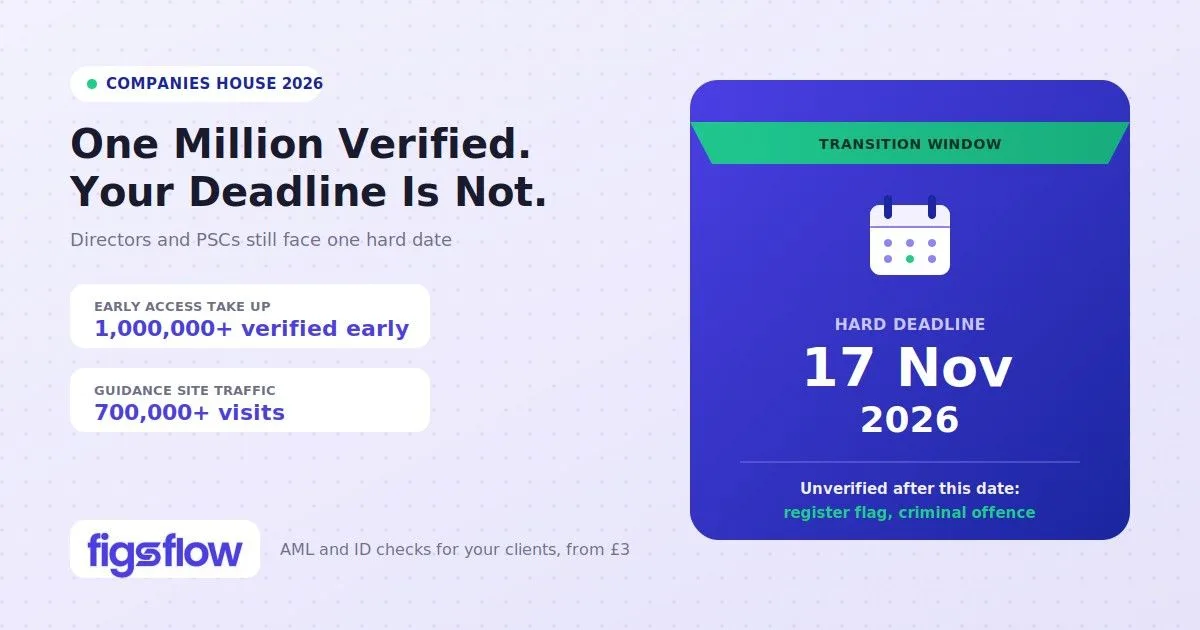
Image: best pricing model for accountancy firms feature image

3/10/2026

What Is the Best Pricing Model for Accountancy Firms?

What Is the Best Pricing Model for Accountancy Firms? What Is the Best Pricing Model for Accountancy Firms? The 4 Pricing Models Accountancy Firms Use Breaking Down Each Pricing Model Hourly / Time-Based Pricing Fixed Fee Pricing Value-Based Pricing Retainer / Subscription Pricing Why Do Most Accountancy Firms Stay Stuck on Hourly Billing? Your Pricing Model Is Holding Your Firm Back So, What Is the Best Pricing Model for Accountancy Firms? The Real Barrier Is Not the Model. It Is the Execution. Helpful Resources Conclusion Your Pricing Model Is Only as Good as the Process Behind It Frequently Asked Questions (FAQs) What is the pricing strategy of accounting firms? What are the 4 types of pricing? What are the 7 pricing strategies? What are the pricing methods in accounting? How should I price my bookkeeping services? How do I charge clients as a bookkeeper? Most accountancy firms are exceptional at managing numbers for their clients. Yet when it comes to pricing and client management , many are winging it. Charging by the hour out of habit, underquoting fixed fees out of caution, and watching profitable work quietly drain into scope creep. This is not a talent problem. It is a model problem. This guide breaks down the four main pricing approaches used by accountancy, tax advisory, and bookkeeping firms. When each one works, where each one fails, and what the most profitable firms are actually doing. By the end, you will have a clear answer to take back to your team. Most firms do not consciously choose a pricing model. They inherit one. The default tends to be hourly billing, simply because it is what everyone else was doing when the firm was set up. But there are four distinct models available, and each produces very different outcomes for your revenue, your client relationships, and your team. Hourly / Time-Based Pricing Fixed Fee Pricing Value-Based Pricing Retainer / Subscription Pricing There is no single right answer that works for every firm. But understanding how each model actually behaves in practice is the first step to making a deliberate choice. Here is what you need to know about each one. Hourly billing is the model most firms start with, and for good reason. It is familiar, easy to justify, and straightforward to administer. For genuinely unpredictable work such as a one-off investigation, a complex dispute, or a bespoke transaction, it remains a reasonable choice. But as a default model for an entire practice, it has a fundamental problem. It ties your revenue to time rather than expertise. As your team gets faster and better, hourly billing actually penalises that efficiency. And from the client’s perspective, the clock ticking in the background creates anxiety around every question and every email. The faster a team works, the less money it makes. — Ron Baker With fixed fee pricing, clients know exactly what they will pay before the work begins. No surprises on the invoice, no anxiety about asking questions. For clients, it feels clean and professional. For firms, it can drive margins up significantly if the work is scoped correctly. Fixed fee works best when all three of these conditions are true: The service is repeatable, such as tax returns, annual accounts, or payroll processing The firm has a structured onboarding process and a tight engagement letter Without those foundations, a fixed fee becomes a trap. Undefined scope leads to extra work that the firm absorbs silently, which is why so many firms try fixed fees, struggle with scope creep, and retreat back to hourly. The model itself is not the issue. The infrastructure behind it usually is. Value-based pricing shifts the question entirely. Instead of asking how long something will take, you ask what it is worth to the client. A tax restructure that saves a client £15,000 is worth far more than the six hours it took, and value-based pricing reflects that. Hourly Thinking Value-Based Thinking This took 3 hours This saved them £8,000 Revenue capped by time Revenue tied to outcomes Client watches the clock Client focuses on results Faster work = lower invoice Better work = higher fee Value-based pricing has the highest earning potential of any model. But it demands something most firms have not yet built: a clear understanding of the value they deliver and the confidence to charge for it. For advisory engagements where outcomes are tangible, it is the right fit. For commodity compliance work, a fixed fee remains the more practical vehicle. A retainer model packages services into a recurring monthly fee. Clients get consistent access to your team. Your firm gets predictable revenue. Done well, it transforms the client relationship from transactional to genuinely advisory. Essential — Compliance only Growth — Compliance & advisory Advisory — Full strategic support Annual accounts, tax returns, and standard filings, packaged at a clear fixed monthly fee. Everything in Essential, plus tax planning, quarterly reviews, and proactive guidance. CFO style partnership, cashflow forecasting, KPI monitoring, business structuring advice. The retainer model works best when services are tiered clearly, clients understand what each level includes, and the firm has clean systems for onboarding clients into the right tier. Without that structure, retainers are difficult to price, easy to undercharge, and hard to upgrade. Hourly billing persists not because firms have not heard of the alternatives. Most have. It persists because it feels safe. There is an intuitive logic to it: the client pays for the time the firm spends, no more, no less. For accountants trained to be precise and transparent, hourly feels like the honest option. The hidden cost of that comfort is significant. Hourly billing caps practice revenue at the number of chargeable hours in the week. It creates a culture where speed is unconsciously discouraged. It puts clients in a position where every phone call feels like a risk. And it makes services nearly impossible to package, market, or scale, because every engagement is priced from scratch, every time. Most firms do not realise how much revenue they are leaving on the table until they start tracking it. If your team is getting faster and your invoices are staying flat, that is not efficiency. That is your pricing model working against you. The short answer: value-based pricing is the goal, and a fixed fee or retainer is the vehicle. Most firms will not attempt a full switch overnight, and they should not. But a structured hybrid approach is both achievable and sustainable, and it is what the most profitable practices are already running. The Hybrid Pricing Framework Service Type Recommended Model Why It Works Compliance work (tax returns, payroll, bookkeeping) Fixed fee Scope is predictable; clients value certainty Tax advisory & strategic planning Value-based Outcomes can be quantified; you share in the value created Ongoing client support Retainer / Subscription Recurring revenue, deeper relationships; easier forecasting One-off queries Hourly (Limited) Scope is genuinely unclear; use sparingly with clear caps Hourly billing does not disappear entirely in this model. It moves to the margins, reserved for work where scope genuinely cannot be defined in advance. For everything else, fixed fees, retainers, and value-based positioning give your firm cleaner revenue, stronger client relationships, and real room to grow. Choosing value-based or fixed fee is the easy part. Delivering it consistently across every client, every service, every engagement, every time is where most firms stall. The most common execution gaps are predictable: Proposals written from scratch for each client, with inconsistent scope definitions and no standard pricing structure Engagement letters that are vague on deliverables, leaving the firm exposed when clients push for more No standardised onboarding process for new service tiers, meaning pricing decisions cannot be replicated or delegated Solving these gaps is not about willpower. It is about infrastructure. When proposals are templated and professional, when engagement letters are watertight and sent automatically, when AML checks do not require chasing documents by email, that is when a pricing model actually holds. The model becomes something the whole team can deliver, not just the partners who built it. Solving these gaps is not about willpower. It is about infrastructure. When proposals are templated and professional, when engagement letters are watertight and sent automatically, when AML checks do not require chasing documents by email, that is when a pricing model actually holds. The model becomes something the whole team can deliver, not just the partners who built it. How to Price Bookkeeping Services Without the Guesswork: Bookkeeping Pricing Made Easy for UK Accountants | FigsFlow Price Catch-up Work With Ease: How to Price Catch-Up Work for New Clients | FigsFlow How to Talk About Fees Without Losing Clients: Nail Your Price Communication or Keep Losing Clients! How to Price MTD for ITSA Services: Charge Your Worth: Guide to Pricing MTD ITSA Services Here’s the Missing Piece In Your Pricing Strategy: What Top CPA Firms Know About Pricing (That You Don’t) The best pricing model for an accountancy firm is a hybrid: fixed fees for compliance work, retainers for ongoing advisory, and value-based thinking threaded through every client conversation. The firms winning on pricing are not necessarily smarter or more experienced. They are more consistent. They have built systems that hold their pricing even when they are busy, even when clients push back, even when a new team member sends the proposal. If your pricing model is sound but your execution is still catching up, that is the gap worth closing. The firms that win on pricing are not just thinking differently. They are operating differently. FigsFlow gives you the infrastructure to turn your pricing decisions into a repeatable, professional client experience. See FigsFlow in Action → Most accounting firms rely on one of four core pricing strategies: hourly billing, fixed fees, value-based pricing, or a retainer model. Each suits a different type of work and client relationship. The most successful firms today do not stick to just one. They combine models depending on the service, charging fixed fees for compliance and value-based rates for advisory work. The four most widely recognised pricing approaches are cost-plus pricing, value-based pricing, competitive pricing, and dynamic pricing. Cost-plus adds a margin on top of your costs. Value-based prices around client outcomes. Competitive pricing looks at what others charge. Dynamic pricing adjusts based on demand or timing. For accountancy firms, value-based and fixed fee tend to deliver the strongest results. The seven key pricing strategies are value-based pricing, competitive pricing, price skimming, cost-plus pricing, penetration pricing, economy pricing, and dynamic pricing. For professional services like accountancy, value-based and cost-plus are the most relevant starting points, with competitive pricing useful when entering a new market or service area. Accounting firms typically use cost-based pricing, demand-based pricing, competition-based pricing, or value pricing. Cost-based sets fees around internal costs and margins. Demand-based responds to client needs and market conditions. Competition-based benchmarks against rival firms. Value pricing focuses on the outcome delivered to the client, and is increasingly seen as the most sustainable long-term approach. Start by understanding your costs, then decide whether hourly, fixed, or retainer pricing fits your client base. Fixed fee works well for predictable, recurring tasks like monthly bookkeeping. If you bill hourly, make sure your rate reflects your expertise, not just your time. Packaging your services into clear tiers often makes pricing easier to communicate and easier for clients to say yes to. The most straightforward approach is to set a clear hourly rate that covers your costs and a healthy margin. A more scalable option is to move towards fixed monthly packages based on transaction volume or service scope. This gives clients predictability and gives you a steadier income. Whichever method you choose, always confirm the scope in writing before work begins. best-pricing-model-for-accountancy-firms best pricing model for accountancy firms page Page

Image: Client Onboarding Checklist to Help Accountants Win Clients

2/27/2026

Client Onboarding Checklist to Help Accountants Win Clients

Client Onboarding Checklist to Help Accountants Win Clients Client Onboarding Checklist to Help Accountants Win Clients Download Client Onboarding Checklist for Accountants What Does the Client Onboarding Checklist Cover? How to Use the Client Onboarding Checklist Common Client Onboarding Mistakes Accountants Make Client Onboarding Checklist Process Helpful Resources Conclusion You already know what the problem is. A new client comes in, things move fast, and somewhere between sending the engagement letter and running AML checks, a step gets missed. Not because you’re careless. Because there’s no system. A client onboarding checklist fixes that, here it is. Download it, use it on your next client, and never miss a step again. Download the Client Onboarding Checklist (PDF) ↓ This checklist covers every stage of client onboarding from the initial proposal through to ongoing monitoring. It is built around six stages: proposal and engagement, KYC and identity verification , AML checks, risk assessment, enhanced due diligence, and ongoing monitoring. It works for any new client regardless of service type, and is ready to use as-is. Print it, save it to your client file, or use it digitally. No setup required. The checklist is organised into six stages, each representing a distinct phase of the onboarding process. Stage 1: Proposals & Engagement. Before any work begins, make sure your Client Onboarding Checklist is followed, ensuring all the right paperwork is completed. This means the correct engagement letter has been sent, the schedule of services reflects what was actually discussed, and all required signatories have e-signed. Stage 2: KYC & Identity. The Client Onboarding Checklist will guide you in gathering the required KYC and identity documents to ensure compliance. Identity documents, proof of address , UTR verification, and source of funds are all captured here before anything else moves forward. Stage 3: AML checks. Follow your Client Onboarding Checklist to complete the AML check, confirming the client’s identity and ensuring regulatory compliance. The result of the check and the rationale for the due diligence level applied are both recorded here. Stage 4: Risk Assessment. Based on everything gathered in the previous stages, this is where you make the compliance decision. The risk assessment is completed, reviewed by senior management where required, a Customer Risk Rating is assigned, and a conflict of interest check is completed. Stage 5: Enhanced Due Diligence. If the risk assessment flags a high-risk client, EDD is required. This stage confirms whether EDD applies and whether it has been completed using the appropriate template. Stage 6: Ongoing Monitoring. Onboarding does not end at sign-off. This final stage ensures a review date or trigger condition has been set for the client so their risk profile is revisited when circumstances change. Here is how you can make the most out of this checklist. Assign it to a designated person in your firm and make it a rule that no client is marked as fully onboarded until every stage is signed off. No exceptions, regardless of how simple or familiar a client seems. Beyond that: Work through it in order. Each stage builds on the previous one, and the sequence is intentional. Keep a completed copy of every client file. It confirms everything has been done and nothing has been missed. Review it once a year. Your firm evolves, regulations shift, and the checklist should keep pace with both. This checklist works best when used alongside a practice management system or onboarding system. It has been designed with FigsFlow’s onboarding workflow in mind, but it can be adapted to fit whatever system your firm uses. Adjust the stages, add firm-specific steps, and make it yours. Even experienced firms make the same onboarding mistakes repeatedly. Most of them are not about knowledge. They are about process. Here are the ones that come up most often. Generic engagement letter Sending a standard letter without checking whether it reflects the specific services agreed with the client creates problems later, particularly if a dispute arises over scope. Skipping the source of funds It feels like an awkward question, especially with referred or established clients. But it is a regulatory requirement, and its absence is exactly what a compliance review will look for. Incomplete risk assessment sign-off Completing the assessment is not enough. Senior management sign-off needs to be recorded with a name and a date, otherwise there is no confirmation of who reviewed and approved it. No ongoing monitoring in place Treating onboarding as finished once the client file is set up leaves risk profiles outdated without anyone noticing. A review date needs to be set before onboarding is closed. Each of these mistakes is avoidable. A consistent checklist, followed without exception, is what prevents them. How to Onboard MTD Clients Faster: Streamline Your MTD Client Onboarding Journey | FigsFlow 7 Client Onboarding Mistakes You Must Avoid: 5 Client Onboarding Mistakes Costing You Clients 25+ Engagement Letter Template (It’s Free): 25+ Free Engagement Letter Templates Collection | UK Compliant Your Only Guide to Crafting Client-Winning Accounting Proposal: Make Your Accounting Proposal Count | FigsFlow Anti‑money laundering guidance for the accountancy sector: Accountancy sector guidance for money laundering supervision – GOV.UK Client onboarding does not have to be chaotic. With the right process in place, every client gets the same consistent, thorough experience from day one. Six stages, every step covered, ready to use today. Put it on the next client that comes through the door and work through it from top to bottom. A consistent process is the difference between a practice that scales and one that stays stuck in the same onboarding chaos year after year. Image: Client Onboarding Checklist Process client-onboarding-checklist-for-accountants client onboarding checklist for accountants page Page
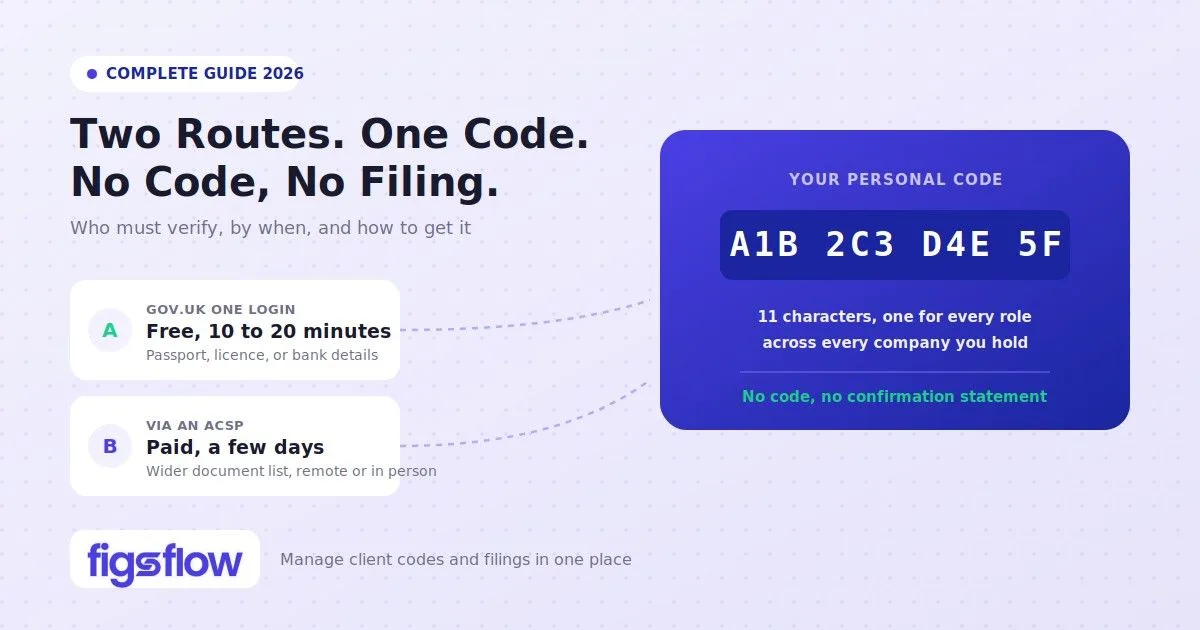
Image: Weekly News Updates for UK Accountants 27 Feb 2026

2/27/2026

Weekly News and Updates for UK Accountants (27 Feb 2026)

Weekly News and Updates for UK Accountants (27 Feb 2026) Weekly News and Updates for UK Accountants (27 Feb 2026) Digital Identity Checks: Only Certified Providers Count Sports Image Rights: Significant Cost Exposure from April 2027 Penalty Suspension: One-Off Error Doesn't Guarantee Relief IHT Receipts: £7.1 Billion and Rising Looking Ahead This week covers updated Treasury guidance on digital identity checks for AML compliance, significant changes to the tax treatment of sports image rights, an Upper Tribunal ruling on penalty suspension, and the latest inheritance tax receipt figures with a look at what’s coming. Catch up on last week's roundup here: Weekly News & Updates for UK Accountants (16-20 Feb 2026) . Treasury has published guidance clarifying which digital identity tools qualify under the Money Laundering Regulations, and the bar is specific. Only providers listed on the DVS register and certified under the UK digital verification services trust framework meet the standard. If your firm is using a digital ID solution that isn’t on that register, it doesn’t satisfy your MLR obligations regardless of how robust the tool appears. The guidance also draws a clear line on what digital identity actually covers. It handles identification and verification, but it doesn’t fulfil every aspect of customer due diligence. Assessing the purpose and nature of a business relationship, transaction monitoring, and record retention under Regulation 40 of the MLRs remain the firm’s responsibility. Using a certified DVS provider doesn’t transfer that liability anywhere. From 6 April 2027, image rights payments connected to employment will be treated as employment income, subject to income tax and national insurance contributions from both employer and employee. The traditional structure where clubs contract separately with a player’s image rights company, sitting outside PAYE and NIC, will no longer hold where an employment connection exists. The financial exposure is substantial. Clubs will face a 15% employer NIC charge on payments that have until now sat entirely outside that calculation. Players will see the same income taxed at 45% plus 2% employee NIC rather than at corporate rates. A large proportion of existing contracts are structured on a net basis, which means clubs may need to increase the gross payment to maintain the player’s net position. The combined effect on contract costs will be considerable for top-tier clubs. What remains unresolved is the treatment of genuinely independent commercial arrangements. Sponsorship deals with no employment connection should, in principle, remain outside employment income, but where a club sponsor and a player sponsor overlap, the boundary is unclear. HMRC has not yet provided guidance on how this distinction will be drawn in practice. The Upper Tribunal has upheld HMRC’s decision not to suspend a careless penalty in a case where the error was an isolated one. In Cox v HMRC, the taxpayers had claimed business asset disposal relief on a share sale but didn’t meet the 5% ordinary share capital condition. HMRC charged a careless error penalty and refused suspension. The First-tier Tribunal sided with HMRC, and the Upper Tribunal has now confirmed that decision. The central issue was HMRC’s requirement for a SMART suspension condition, meaning something specific, measurable, achievable, realistic, and time-bound that would reduce the risk of future inaccuracies. Where no such condition can be constructed, HMRC can refuse suspension. An otherwise strong compliance record doesn’t in itself provide a basis for suspension if there’s no credible forward-looking condition to attach. The practical implication for advisers is that suspension needs to be actively argued, with a proposed condition that HMRC can work with. It shouldn’t be treated as a default outcome in straightforward cases. HMRC collected £7.1 billion in inheritance tax in the first ten months of 2025/26, up £130 million on the same period last year. That puts the full year on course to exceed last year’s total of £8.2 billion and register a fifth consecutive annual record. The OBR has forecast £9.1 billion for the full financial year. The pattern driving this is consistent: frozen thresholds combined with rising asset values continue to pull more estates into charge. Two upcoming changes will significantly affect estate planning from here. From April 2026, the business and agricultural property relief threshold rises to £2.5 million, with assets above that level taxed at an effective rate of 20%. AIM ISA holdings will also face the 20% rate above that threshold from the same date. From April 2027, pensions will form part of an individual’s estate for IHT purposes, which will require a fundamental rethink of how many clients have structured their retirement and succession planning. The core reliefs still apply in the meantime. Spousal transfers remain exempt, charitable giving reduces the taxable estate, and the seven-year gifting rule continues to offer planning scope. Clients who haven’t reviewed their position in light of the April 2027 pension change, in particular, will benefit from that conversation sooner rather than later. The April 2026 changes to business and agricultural property relief are now weeks away, and the April 2027 pension and image rights changes are moving from “future planning” to “active preparation” territory. If client reviews around IHT exposure and sports contracts aren’t already in progress, now is the time to start. Next weekly news and updates will cover any further HMRC guidance as it lands. If there are specific topics you want covered in more depth, get in touch. weekly-news-and-updates-for-uk-accountants-27-feb-2026 weekly news and updates for uk accountants 27 feb 2026 page Page

A person looking stressed while holding a document at a desk.

2/25/2026

Bookkeeping Pricing Made Easy for UK Accountants (2026)

Bookkeeping Pricing Made Easy for UK Accountants (2026) Bookkeeping Pricing Made Easy for UK Accountants (2026) Why Bookkeeping Pricing Feels So Uncomfortable What Actually Drives the Cost of Bookkeeping Work How FigsFlow Prices Bookkeeping Services (and Helps You Send Proposals Faster) What Happens on the Discovery Call Now Consistency Across Your Team From Signed Proposal to Recurring Payment Conclusion Frequently Asked Questions How do you price bookkeeping services? What is the average hourly rate for a bookkeeper in the UK? Should catch up fees be charged separately from ongoing bookkeeping fees? How do I price bookkeeping services on a discovery call? Why is bookkeeping pricing inconsistent across accounting firms? Bookkeeping pricing presents genuine difficulty. No two clients share identical needs, and their requirements diverge substantially. This reality alone causes experienced practitioners to dread pricing conversations. During a FigsFlow demonstration, one bookkeeper captured the challenge perfectly: “every time a prospect asked about pricing on a discovery call, it made them sweat.” The article suggests this experience is widespread. Most bookkeepers possess deep technical expertise, yet pricing discussions remain uniquely uncomfortable. When prospects ask “what would you charge for this?” seasoned professionals struggle to respond confidently. Multiple variables interact simultaneously during pricing assessment: Transaction volume fundamentally changes the engagement scope Catch up work introduces a separate complexity layer entirely Software setup represents one-off costs requiring separation from recurring fees Multiple income sources compound complexity beyond standard bookkeeping Existing record quality alters the entire engagement before work begins Most bookkeepers handle this through three approaches: quoting ranges to gain time, offering inaccurate ballpark figures, or promising written follow-up (which loses conversational momentum). None projects the confidence that converts prospects into signed clients. The core problem: “bookkeeping pricing was never designed to be figured out on the spot.” Practitioners understand the work itself thoroughly but lack systematized pricing that delivers accurate figures instantly during conversations. Accurate pricing requires understanding every variable feeding into the final number: Transaction Volume: The obvious starting point but “rarily the whole story.” A client with 200 monthly transactions differs fundamentally from one with 40, despite identical service descriptions on paper. Beyond transaction volume, several other variables are easy to overlook when quoting on the spot. Catch Up Work: An entirely separate cost that should never bundle into ongoing monthly fees—though it almost always does, silently absorbed because initial relationship conversations feel awkward. This “should be priced separately, presented clearly, and agreed before anything is signed.” See our guide on how to price catch-up work for new clients for a step-by-step approach. Multiple Income Sources: Property income, dividends, capital gains—each layer adds complexity the standard fee never covered. These require individual accounting. Quality of Existing Records: The state of handed-over materials changes engagement scope before work starts. “Clean records and a complete mess are not the same engagement, even if the ongoing service looks the same from the outside.” A pricing approach omitting these variables constitutes “not really a pricing system. It is a starting point that gets adjusted by feel every single time, differently, by whoever is doing the quoting that day.” FigsFlow enables building pricing structure once using an advanced pricing calculator. Practitioners define parameters actually driving work costs: Transaction volume as numerical input Quarters behind as separate numerical input Software setup as options selection Income sources as additions feeding into the formula automatically Each parameter connects to a visual formula built once. The calculator produces final fees in real time based on those inputs, every single time thereafter. Catch-up fees deserve specific mention as “the part of bookkeeping pricing that causes the most friction and the most lost margin.” FigsFlow pre-configures catch-up fees within the service. Indicating catch-up work applies and inputting quarters behind adjusts fees automatically. This appears in proposals as “a clearly labelled, separately calculated figure. Not a surprise on the invoice. Not a conversation you have to have after the work is done.” Once configured, every bookkeeping proposal the team generates uses identical pricing logic. “The system prices it. You present it.” This is also what lets firms send bookkeeping proposals faster without re-keying figures for every new client. The discovery call remains the same—prospect asks what you charge—but FigsFlow changes the dynamic. Practitioners ask: Transaction volume Any backlog Software in use Additional income sources As prospects answer, practitioners input information. The pricing calculator updates in real time. Waiting until call completion becomes unnecessary. Practitioners can then state: “based on what you have told me, you are looking at somewhere between this and that. Once you send over the exact figures, we will get you a formal proposal with the precise breakdown. And if you are ready to move forward today, we can look at what we can do on the fees.” This moment transforms the interaction. Practitioners avoid guessing or stalling while giving genuine numbers in real time, keeping prospects engaged with reason to return quickly. Once details confirm, proposals and engagement letters dispatch the same day. Clients sign from phones. No friction, no chasing, no momentum loss. A quieter benefit matters increasingly as practices expand. When pricing lives within individual practitioners’ knowledge, it departs with them. Standardising bookkeeping pricing protects margins every time proposals go out. A senior bookkeeper pricing by instinct for ten years carries knowledge personally. When they take leave or move on, junior staff guess. Inconsistency emerges. Clients comparing quotes start recognizing discrepancies. Margin disappears through hard-to-trace mechanisms. FigsFlow “puts the pricing logic in the platform, not in a person. Every team member generates proposals using the same formula. New staff do not need to learn a spreadsheet built by someone who no longer works there.” Pricing remains consistent, documented, and accessible with appropriate permissions. This represents “not just an operational improvement. It is a risk reduction.” Bookkeeping constitutes recurring service, making post-signature events particularly important. Once bookkeeping proposals gain acceptance and engagement letters receive signatures, FigsFlow continues the client journey within the same platform. AML checks, KYC verification, and risk assessment follow automatically. Invoicing connects through QuickBooks, Xero, GoCardless, or Adafin. Recurring payment schedules for monthly bookkeeping fees establish without manual intervention. The pricing wasn’t just a quote—it was “the start of a complete, connected client relationship.” The same logic applies from the very first touchpoint; see our client onboarding checklist for accountants for how to structure that journey. “Bookkeeping pricing does not have to be the part of the job that makes you uncomfortable.” When variables receive proper capture and formulas perform calculations, proposal numbers become accurate, consistent, and instantly available. If you are still deciding between pricing structures, our guide on the best pricing model for accountancy firms and our accountants quotes tool comparison are useful next reads. Discovery calls transition from uncertainty moments to deal-closing opportunities. “That bookkeeper who used to sweat every time a prospect asked about pricing? They do not anymore.” Bookkeeping pricing depends on transaction volume, catch up work, software setup, and income sources. Common methods include hourly billing, fixed monthly fees, or hybrids. FigsFlow’s advanced pricing calculator accounts for all variables automatically and produces an accurate fee in seconds. Hourly rates for bookkeepers in the UK typically range from £25 to £60 per hour depending on experience, location, and the complexity of the work involved. Yes, always. Catch up work sits entirely outside the ongoing service scope and represents real additional hours. Bundling it into the monthly fee means you absorb the cost silently. Pricing separately with clear presentation in proposals before signing remains essential. With FigsFlow, inputting client details during the call in real time allows the calculator to produce instant figures. This enables giving ballpark estimates on the spot with formal proposals following the same day. Every firm maintains different overheads, team costs, and pricing methods. Some charge hourly, others use fixed fees, others use hybrids. There is no industry standard, which means two firms doing identical work can quote very different numbers. That is normal. The goal is consistency within your own practice. how-to-price-bookkeeping-services how to price bookkeeping services page Page

Image: Thumbnail How to Price Catch Up Work for New Clients UK Accountants Guide FigsFlow

2/23/2026

How to Price Catch-Up Work for New Clients (UK Accountants Guide) | FigsFlow

How to Price Catch-Up Work for New Clients (UK Accountants Guide) | FigsFlow How to Price Catch-Up Work for New Clients (UK Accountants Guide) | FigsFlow What Is Catch-Up Work & Why Is It Always Underpriced? What Should You Actually Charge for Catch-Up Work? Why the Proposal Is the Right Place for Catch-Up Fees How FigsFlow Handles Catch-Up Fees in Proposals What the Client Sees Letter of Engagement Signing Page Conclusion See FigsFlow in Action Frequently Asked Questions (FAQs) What is a catch-up fee in accounting? Why should catch-up fees be included in the proposal? How do you calculate catch-up fees for a new client? Should catch-up fees be charged separately from ongoing service fees? How does FigsFlow handle catch-up fees in proposals? A new client walks in for a £200-a-quarter bookkeeping service. But their books are two quarters behind and an absolute mess. Their previous accountant left things half-finished, and the records are all over the place. The question every accountant dread at this point is simple. How much do you charge to catch up on all that work before the real engagement even begins? Most UK accountants either avoid the question completely, bundle the catch-up into the first few months of fees, or pull a number out of thin air. All three approaches cost you money and start the relationship on shaky ground. But here’s what doesn’t. Pricing catch-up work consistently, with a system that accounts for actual complexity, and presenting it professionally before anyone signs anything. In this guide, that’s exactly what we’ll cover. Catch-up work is everything you need to do to bring a new client’s records up to date before your actual ongoing service can begin. Whatever the specifics, it represents real hours of work that sit entirely outside your standard service scope. It typically includes: Backlog reconciliation from previous periods Missed quarterly updates or incomplete filings Records left in a mess by a previous adviser Clients who simply never kept proper records in the first place The reason it gets underpriced is straightforward. There is no standard formula, so most accountants estimate. The estimate tends to be cautious because the conversation feels risky at the start of a new relationship. Nobody wants to lead with a number that sends a prospect straight to a competitor. So, the fee gets softened, absorbed, or skipped altogether, and you end up writing off hours that should have been billed from the beginning. The result is always the same. You do the work, you absorb the cost, and the relationship quietly starts with you already behind. There is no single flat number that works across the board. It depends on the type of service you are providing and the nature of the catch-up work itself. With that being said, here are a few things to consider before settling on a fee. Quarters behind. One missed quarter is a contained piece of work. Three-quarters with overlapping transactions and incomplete documentation is a different engagement entirely. The further behind they are, the higher the catch-up fee should be. Transaction volume. A sole trader with forty transactions a quarter is not the same job as a landlord with two hundred. Volume drives time, and time drives cost. Quality of existing records. Clean records that need importing are manageable. No categorisation, missing bank statements, and no audit trail are significantly more work. Price what you actually see, not what you hope it will be. Associated income sources. Capital gains, dividend income, property income, and partnership income — each one adds complexity. A client with multiple income sources, similar to those covered in our MTD for Income Tax guide , is a more involved engagement than a straightforward single-income self-assessment. Once you factor all of this in, apply whatever pricing strategy works for your practice, whether that is value-based , hourly, or a hybrid of both. If you are unsure where to start, FigsFlow’s advanced pricing calculator does the heavy lifting automatically based on the inputs you provide. The worst time to tell a client what something costs is after you have already done the work. By that point, the fee is a surprise rather than an agreement, and even a reasonable number can land badly if the client was not expecting it. When catch-up fees are included in the proposal upfront, three things happen naturally: The client knows exactly what they are agreeing to before they sign anything You have a documented record of what was agreed upon if questions arise later The relationship begins with transparency rather than a billing conversation nobody was prepared for If the catch-up scope is not defined in the engagement letter , you have no protection when the work runs long or the client questions the invoice. If the catch-up scope is not defined in the engagement letter , you have no protection when the work runs long or the client questions the invoice. Knowing what to charge is one challenge. Building it into a professional proposal quickly and accurately is another. This is where FigsFlow removes the friction entirely. For every service in FigsFlow, catch-up fees are pre-configured. The factors that drive the work are already built in — transaction volume, quarters behind, complexity of the engagement, and associated income sources. You simply configure the service around your client, indicate that catch-up work applies, and FigsFlow calculates the fee automatically based on those inputs. The pricing panel updates in real time as you go. By the time you proceed to preview, the proposal and engagement letter are both ready. Everything is accounted for, clearly priced, and presented professionally. No separate documents to prepare, no manual calculations, no mental arithmetic mid-conversation. You do it all while building the proposal. That is all there is to it. Once you send the proposal, the client receives a clean professional email from your firm. It includes their name, proposal ID, and a clear breakdown of what they are receiving — a proposal and a Letter of Engagement. A single button takes them straight to their documents. From there, they land on the LOE signing page. They can preview the proposal and the engagement letter before committing to anything. The fee breakdown is laid out clearly inside the document. Every service is named, associated services are listed, and the net total, VAT, and gross total are all visible in plain figures. Nothing is ambiguous. To sign, they can draw, type, or upload their signature. They confirm acceptance of the terms, select their preferred contact methods, and hit confirm. No printing. No scanning. No chasing from yours. The catch-up fee is part of the breakdown, not a conversation you need to have later. Catch-up work is a normal part of the accountancy world. Books get behind, accountants change, records get missed, and something always needs sorting before the real work can begin, whether you're pricing bookkeeping services or a full compliance engagement. As an accountant, you will always have to do it. The question that matters is how you price it, when you present it, and how you systematise it across every new client. Most practices still treat it as an afterthought. It should not be. Our advice is simple. Price it upfront, include it in the proposal, and find a system that makes it consistent every single time. FigsFlow does exactly that. Catch-up fees are pre-configured, automatically calculated, and built into your proposal before anything goes out to the client. Systematising how you price catch-up work is one of the simplest changes you can make for your practice. And that should start today. Words cannot describe how easy pricing catch-up work becomes once you see it for yourself. Book a demo today and watch it all come together in minutes. Book a Demo → A catch-up fee is a one-time charge for bringing a new client’s records up to date before ongoing services begin. It covers backlog reconciliation, missed filings, incomplete records, and any other work that falls outside your standard service scope. Including catch-up fees in the proposal ensures the client knows exactly what they are agreeing to before signing. It protects you if questions arise later and starts the relationship on transparent, professional terms. Catch-up fees depend on how many periods are behind, transaction volume, quality of existing records, and complexity of associated income sources. There is no flat rate. Each client needs to be assessed individually before a fee is agreed. Yes. Catch-up work sits entirely outside your standard service scope and should always be a separate, clearly named line item in your proposal rather than bundled quietly into the first few months of ongoing fees. FigsFlow has catch-up fees pre-configured for every service. Based on the inputs you provide during proposal generation, it calculates the catch-up fee automatically and includes it in the proposal and engagement letter before anything goes out to the client. A digital interface for signing a letter of engagement. price-catch-up-work-for-new-clients price catch up work for new clients page Page
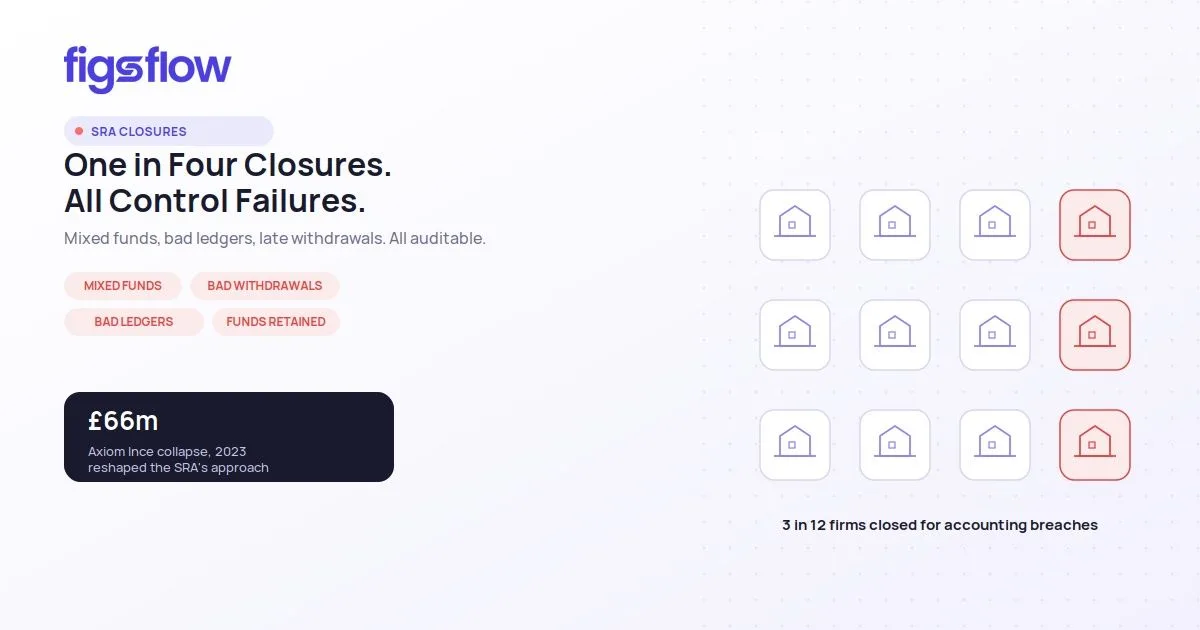
Image: A Reliable AML KYC Solution That Saves Time for UK Firms

2/23/2026

A Reliable AML & KYC Solution That Saves Time for UK Firms

A Reliable AML & KYC Solution That Saves Time for UK Firms A Reliable AML & KYC Solution That Saves Time for UK Firms What Makes FigsFlow a Reliable AML & KYC Solution Beyond a Reliable AML & KYC Solution: What Else FigsFlow Does for Your Practice What It Costs & Why It Makes Financial Sense Conclusion See It for Yourself Frequently Asked Questions (FAQs) What is the KYC and AML process? What are the AML and KYC requirements for UK accountants? What happens if a UK firm fails an AML audit? How long does an AML check take with FigsFlow? Who provides AML solutions in the UK? You’ve been through the demos. Signed up for the trials. Trained your team. And more than once, ended up back at square one. It’s not that you’re hard to please. Most AML and KYC solutions are built to impress in a presentation, not hold up in practice. What you need is a reliable AML & KYC solution that actually works when things get busy. So you moved on. Tried another one. Same story, different interface. You’re not asking for extraordinary. Just a solution that runs client due diligence without the gaps, keeps your audit trail clean without the chasing, and doesn’t fall apart when things get busy. FigsFlow is built for exactly that. A reliable AML & KYC solution for UK accounting firms that does what it promises, every time. Let’s look at what makes it the right fit for your practice. FigsFlow runs on a structured compliance workflow. Everything from client onboarding to final risk rating happens in one connected flow, one audit trail, nothing scattered across tools or inboxes. Here’s what that looks like in practice. Secure Client Onboarding Your client receives a secure link, clicks through to a clean portal, and uploads their ID, proof of address , and a selfie. The system checks document quality in real time and flags issues before submission, not after. Five minutes on their end. Nothing chased over email. Custom KYC Questionnaires Your client receives a form built specifically for their engagement. A sole trader gets a different form to a non-UK resident corporate. A standard check asks different questions to an EDD case. You build what the engagement needs using a drag-and-drop builder and activate it with a single toggle. Automated AML Checks Once your client submits their documents, FigsFlow runs the checks automatically. PEP screening , UK and international sanctions, Amberhill, MRZ and checksum validation, address verification. The system completes all of it within minutes and drops a timestamped report straight into the client profile. When HMRC asks, you pull it instantly . Risk Assessment and Rating Built-in templates let you evaluate each client by business type, transaction patterns, and geographic exposure. You assign a Customer Risk Rating and move forward with a clear, documented rationale behind every decision. Enhanced Due Diligence For high-risk clients, FigsFlow gives you EDD templates that cover both individuals and organisations. Every question answered. Every step recorded. Nothing left to memory or manual notes. That’s what makes FigsFlow a reliable AML & KYC solution – it was built by practising accountants who lived the same compliance headaches you’re dealing with now. They knew exactly where the gaps were, which is why there aren’t any. Most compliance tools stop at a sanctions check and a report. FigsFlow doesn’t. It’s built around the complete client journey, from the moment you send a proposal to the moment you assign a final risk rating. Everything happens in one connected workflow, one audit trail, one place. Here’s what that looks like in practice. Proposals and Engagement Letters Your client receives a professional proposal with a fully compliant engagement letter , accurate pricing included. They review it, sign it digitally, and you’re done. No printing, no chasing, no back and forth over email. Service Pricing FigsFlow calculates the right price based on the services you configure for each client. A sole trader on MTD gets a different package to a corporate with multiple income streams. You tailor it, the system handles the numbers. AML Checks and KYC Once your client submits their documents, FigsFlow runs everything automatically. PEP screening, UK and international sanctions, Amberhill, MRZ validation, address verification. The report lands in their profile with a timestamp, ready to pull the moment HMRC asks. Risk Assessment Built-in templates let you evaluate each client by business type, transaction patterns, and geographic exposure. You fill in what you know, the system structures it, and a senior can review before the final status is assigned. Customer Risk Rating Your AML report and risk assessment sit side by side. Based on both, you assign the CRR level and risk rating. Every decision is recorded. The history table builds itself as you go. Enhanced Due Diligence For high-risk clients, EDD templates cover both individuals and organisations. Every question answered, every step documented, nothing left to memory or manual notes. That’s what separates FigsFlow as a reliable AML & KYC solution. It protects your practice from the first touchpoint to the final compliance decision, and it was built by accountants who knew exactly where the gaps were. FigsFlow offers two plans for AML and ID verification, both excluding VAT. The pay-as-you-go plan is £3.00 per ID check with no monthly fee. It covers client ID verification, Companies House identity verification, face match and liveness checks, PEP and sanctions screening, Amberhill checks, address verification, and compliance record-keeping. The second plan is £2.10 per ID check plus £8 per month. It includes everything in the first plan, plus client due diligence, client risk assessments, enhanced due diligence, and firm-wide risk assessments. Now put that against the alternative. One manual AML check takes two to three hours. At £100 per hour, that’s £200 to £300 per client in staff time, before you factor in the risk of an audit trail that doesn’t hold up. At £2.10 per check plus £8 per month, the comparison isn’t complicated. The cost of a reliable AML & KYC solution is not the concern. The cost of not having one is. You’ve tried enough solutions to know the difference between software that looks good in a demo and one that actually holds up in practice. FigsFlow doesn’t promise extraordinary. It promises a structured compliance workflow that runs from client onboarding to final risk rating, every time, without the gaps. You’re not looking for the next big thing. You’re looking for something that does what it says, keeps your audit trail clean, and doesn’t fall apart when things get busy. That’s exactly what FigsFlow is built for – a reliable AML & KYC solution that holds up, every time. Words only go so far. The best way to understand what FigsFlow does for your practice is to see it running live, with your workflow, your client types, and your compliance requirements in mind. Book a Demo → KYC confirms who your client is using identity documents like passports and utility bills. AML goes further, monitoring transaction behaviour and screening clients against sanctions lists and PEP databases to detect and prevent financial crime. Together, they form the foundation of client due diligence for UK accounting firms. Under the Money Laundering Regulations 2017, UK accountants must verify client identities, assess risk, conduct ongoing monitoring, and maintain accurate records. Firms must also screen clients against sanctions and PEP lists and apply enhanced due diligence for high-risk clients. HMRC can issue fines, sanctions, or in serious cases, prosecution. Beyond the financial penalties, a failed audit damages your firm’s reputation and client trust. A documented, consistent compliance process is your best protection. Once your client submits their documents, FigsFlow completes the full AML check within minutes. The timestamped report lands directly in their profile, ready to retrieve the moment HMRC asks. Several providers offer AML solutions in the UK, but not all are built the same way. FigsFlow stands out because it goes beyond standalone checks, combining AML verification, KYC, risk assessments, EDD, and client onboarding into one connected workflow, built specifically for UK accounting firms. reliable-aml-kyc-solution-for-uk-firms reliable aml kyc solution for uk firms page Page
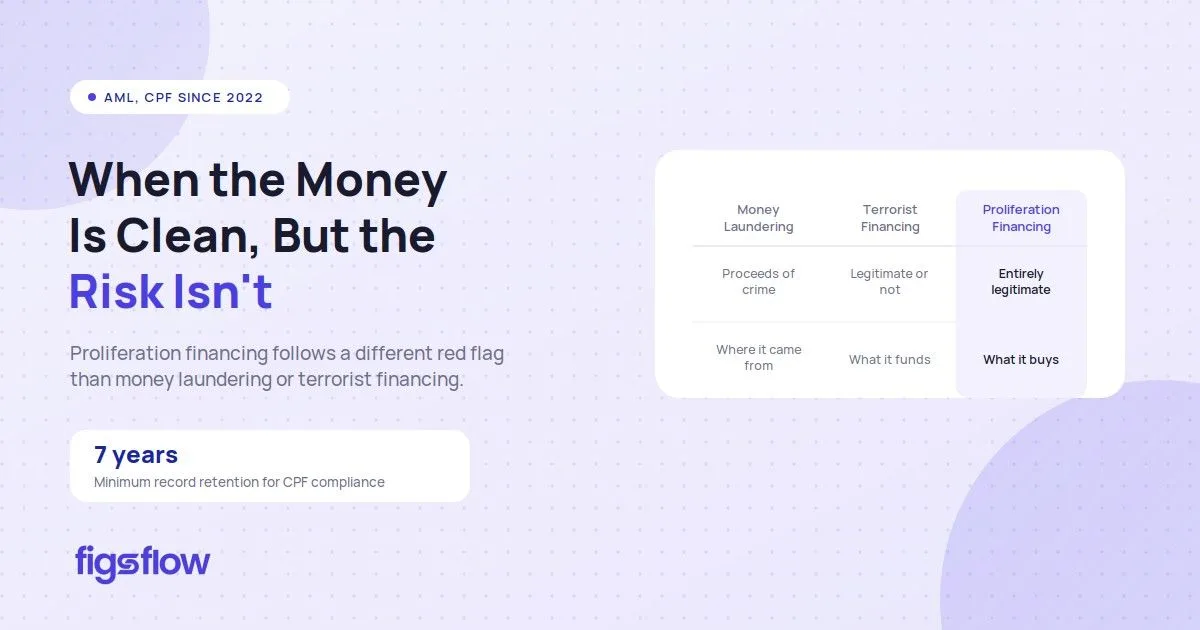
Image: Enhanced Due Diligence Checklist Free Download UK 2026

2/23/2026

Enhanced Due Diligence Checklist (Free Download) | UK 2026

Enhanced Due Diligence Checklist (Free Download) | UK 2026 Enhanced Due Diligence Checklist (Free Download) | UK 2026 Download the Free UK Enhanced Due Diligence Checklist 2026 What Is in the Free EDD Checklist? When Does EDD Apply in the UK? The EDD Checklist: 8 Key Areas Common EDD Mistakes UK Accounting Firms Make Helpful Resources Conclusion Frequently Asked Questions (FAQs) What are the steps of EDD? What are the 4 pillars of customer due diligence? What is a CDD checklist? What is an EDD checklist? What documents are required for enhanced due diligence? Surgeons needed a checklist. So do you. In 2008, the WHO rolled out a simple 19-item surgical checklist. Not for junior doctors. For experienced surgeons in well-resourced hospitals. The result: deaths fell by 47%, complications by 36%. Atul Gawande, the surgeon who championed it, made the point clearly — the problem was never competence. Complexity and pressure cause even skilled professionals to skip steps they know by heart. EDD has the same failure mode. Your firm understands the requirements. But consistent, documented, scrutiny-ready EDD does not happen through intent alone. It happens through the process. That is exactly why we built this free Enhanced Due Diligence checklist. Scroll down, download it, and start using it today. The checklist is available as a formatted PDF, structured across 8 areas that cover the full EDD lifecycle from client identification through to final sign-off and Suspicious Activity Reporting (SAR) obligations. It is built specifically for UK accounting firms and compliance teams operating under MLR 2017 . Download the EDD Checklist (PDF) ↓ The first half covers the foundational layers of any EDD review: Confirming who the client actually is Categorising the level of risk they represent Establishing where their money comes from Assessing whether their transaction behaviour is consistent with what you would expect from someone in their position The second half moves into the areas that firms most often treat as optional but are not. That means verifying ultimate beneficial ownership through the full ownership chain rather than just the named director, setting up a monitoring process that continues after onboarding, understanding when and how to escalate to a Suspicious Activity Report, and closing the file in a way that satisfies a regulatory audit. This checklist is designed for accountants, compliance officers, and practice managers at firms subject to MLR 2017 supervision. If your firm handles client work that touches property, high-value transactions, corporate structures, or international payments, this is the document you want in your compliance toolkit. EDD is not applied to every client. MLR 2017 defines specific circumstances where it becomes mandatory, and missing those triggers is a compliance breach regardless of whether anything goes wrong. Politically Exposed Person (PEP) match: Any client who is a PEP, or a close associate or family member of one, requires EDD. This applies even if the engagement appears low risk. The PEP status is what triggers the obligation, not the nature of the work. High-risk third countries: If a client is based in, operates from, or is sending or receiving funds through a country on the FATF grey or black list, EDD is required under Regulation 33 of MLR 2017. The list is updated periodically, which means your firm needs a live checking process rather than relying on an outdated reference. Complex or opaque ownership structures: Trusts, nominee arrangements, and multi-layered corporate structures where the ultimate beneficial owner is not immediately identifiable all require enhanced scrutiny. If you cannot clearly map ownership to a named individual holding 25% or more, EDD applies. Unexplained inconsistencies in client behaviour: If something about the engagement does not sit right, whether that is unusual instructions, payment patterns that do not match the client's stated profile, or information that raises more questions than it answers, EDD applies. The threshold is suspicion, not proof. You do not need a confirmed flag to be obligated. If any of these apply to a client relationship and EDD has not been completed and documented, your firm has a compliance gap regardless of how long the relationship has been in place. Got a PEP Match? Here's Exactly What to Do Next A PEP flag during onboarding doesn’t mean decline. It means dig deeper. Learn the step-by-step process for conducting Enhanced Due Diligence on PEPs the right way, from risk assessment to senior management sign-off. The checklist below mirrors the downloadable PDF. Work through each section in order. They are sequenced to follow the logical flow of an EDD review, so skipping ahead tends to create documentation gaps that are difficult to fill retrospectively. Customer Identification and Verification Full legal name confirmed for the individual or business Registered address and contact details verified Date of birth or incorporation date confirmed Official ID obtained and checked Companies House search completed for UK-registered entities Certificate of incorporation reviewed where applicable Certified or notarised copies obtained where the client is based outside the UK Risk Categorisation and Assessment Client type identified — individual, limited company, trust, partnership, or NGO Industry checked for risk exposure, including property, cryptocurrency, cash-intensive businesses, and regulated financial services Jurisdictional risk checked against the FATF grey and black lists Politically Exposed Person status confirmed Sanctions and watchlist screening carried out across OFAC, UN, EU, FCA, and HM Treasury lists Adverse media search completed Reputational risk reviewed, including any history of regulatory fines, legal proceedings, or fraud allegations Source of Funds and Wealth Verification Source of funds identified and documented Source of wealth established separately Both recorded as separate obligations with separate evidence on file Third-party validation completed where the client's own documentation is not sufficient High-value transactions reviewed against your firm's risk threshold Cross-border transactions assessed for country risk at both the sending and receiving end Transaction Monitoring and Behaviour Analysis Normal transaction behaviour documented at the point of onboarding Unusual payment instructions noted and followed up Third-party payments identified — if someone other than the client is sending funds, that needs to be escalated Significant changes in invoice frequency, transaction volume, or payment routing flagged for review Repeated transactions just below a reporting threshold are investigated for structuring Ultimate Beneficial Ownership Verification PSC Register checked via Companies House for all UK-registered entities UBOs identified at the 25% ownership or control threshold as required under MLR 2017 Full ownership chain documented, not just the named director or primary contact Nominee arrangements and trust structures traced through to the natural person in ultimate control UBO identity verified through company registers, notarised documents, or third-party validation Supporting evidence retained on file at each step of the ownership chain Continuous Monitoring and Periodic Review Annual review scheduled for high-risk clients Review the cycle of two to three years applied for standard risk clients in line with your firm's AML policy Event-triggered reviews built into the process, covering ownership changes, new jurisdictions, adverse media, and material changes to the engagement Document expiry tracked for passports, driving licences, and proof of address Sanctions and PEP re-screening carried out at each review and at key trigger events Monitoring outcomes documented and kept in the client file Suspicious Activity Reporting Suspicious transactions identified, whether flagged by your system or spotted manually Internal SAR completed and submitted to your firm's MLRO without delay MLRO review completed and decision recorded External SAR submitted to the National Crime Agency via SAR Online where required Tipping off restrictions observed — the client must not be made aware of the SAR at any point SAR patterns are reviewed periodically across the client base Final Review and Sign-Off All checklist sections completed with supporting documents on file Risk decision documented with a clear written rationale — not just what was decided, but why MLRO sign-off obtained for high-risk cases EDD file stored securely and available for regulatory audit Retention period confirmed — MLR 2017 Regulation 40 requires a minimum of five years from the end of the business relationship Any outstanding actions noted with a follow-up date assigned Where Did the Money Come From? SOF and SOW Explained for Accountants Source of Funds and Source of Wealth sound similar but they are not the same thing. Confusing the two is one of the most common EDD mistakes firms make. Find out exactly what each one requires and how to evidence both correctly. Most EDD failures are not dramatic. There are process gaps that go unnoticed until a supervisor asks a question that the file cannot answer. Here is where firms consistently get it wrong. Treating EDD as a one-time exercise: EDD completed at onboarding does not stay valid indefinitely. MLR 2017 requires ongoing monitoring as a continuing obligation. A client who passed EDD in 2022 may present a materially different risk profile today if their ownership structure has changed, they have expanded into a higher-risk jurisdiction, or adverse media has emerged since the last review. Conflating Source of Funds with Source of Wealth: These are separate obligations requiring separate evidence. Source of funds answers where the specific money in a transaction has come from. The source of wealth answers how the client accumulated their assets overall. Submitting a bank statement in response to both does not satisfy either, and supervisors know the difference. Incomplete UBO mapping: Many firms identify the named director and treat that as sufficient. MLR 2017 requires tracing ownership through every layer of a structure until you reach the natural person who ultimately holds 25% or more. In a multi-tiered corporate structure that can require several steps, every step needs to be evidenced. Completing the checklist without recording the reasoning: Regulators do not only want to see that you ran through the process. They want to understand why you reached the conclusions you did. If you classified a client as lower risk despite an indirect PEP connection, the rationale for that decision needs to be on file. Without it, a completed checklist still leaves your firm exposed. A pattern runs through all four of these. The work was done, but the documentation does not demonstrate it. That is the gap this checklist is designed to close. CDD and EDD for Bookkeepers – Not sure where standard checks end and enhanced diligence begins? This breaks it down specifically for bookkeepers. Enhanced Due Diligence Explained – A clear walkthrough of what EDD actually involves, when it applies, and what firms are expected to do. EDD vs CDD vs SDD – Three levels, one framework. Understand how each tier differs and when your firm needs to move beyond standard checks. How FigsFlow Simplifies EDD for Accountants – See how FigsFlow takes the manual work out of enhanced due diligence so your firm stays compliant without the admin burden. The firms that get EDD right are not the ones with the most complex processes. They are the ones with consistent, documented procedures that hold up when a supervisor asks to see them. That is a lower bar than most firms think. But it still requires structure. The checklist above covers every stage of the EDD lifecycle, reflects the specific obligations under MLR 2017, and is built for practical use rather than theoretical completeness. Not something to file away. Something to open on the next high-risk client review. One more thing worth noting. The checklist itself needs reviewing, not just the clients on it. FATF grey list updates, shifting FCA supervisory expectations, and increasing scrutiny of the accounting sector mean your EDD process needs to move with the regulatory environment. An annual review of the checklist is a reasonable minimum. Five steps: identifying high-risk clients, gathering verified documentation, assessing the overall risk picture, recording the rationale behind decisions, and maintaining ongoing monitoring throughout the relationship. EDD is a continuous obligation, not a one-time exercise completed at onboarding. Customer identification, beneficial ownership verification, risk assessment, and ongoing monitoring. These four pillars ensure firms know who they are dealing with, understand the nature of the relationship, and can detect meaningful changes in behaviour or risk profile over time. A structured tool that guides firms through verifying client identities, confirming beneficial ownership, and assessing risk. It creates a consistent, repeatable process and provides an audit trail that demonstrates regulatory compliance during a supervisory review. A detailed checklist applied to high-risk clients that goes beyond standard CDD. It covers the source of funds, ownership structures, transaction patterns, and ongoing monitoring obligations under MLR 2017 for elevated risk relationships. Government-issued photo ID, proof of address, bank statements, tax returns, and source of wealth evidence such as inheritance records or business sale proceeds. For corporate clients, also incorporation certificates, PSC register extracts, and UBO verification documents depending on ownership complexity. enhanced-due-diligence-checklist-free-download enhanced due diligence checklist free download page Page
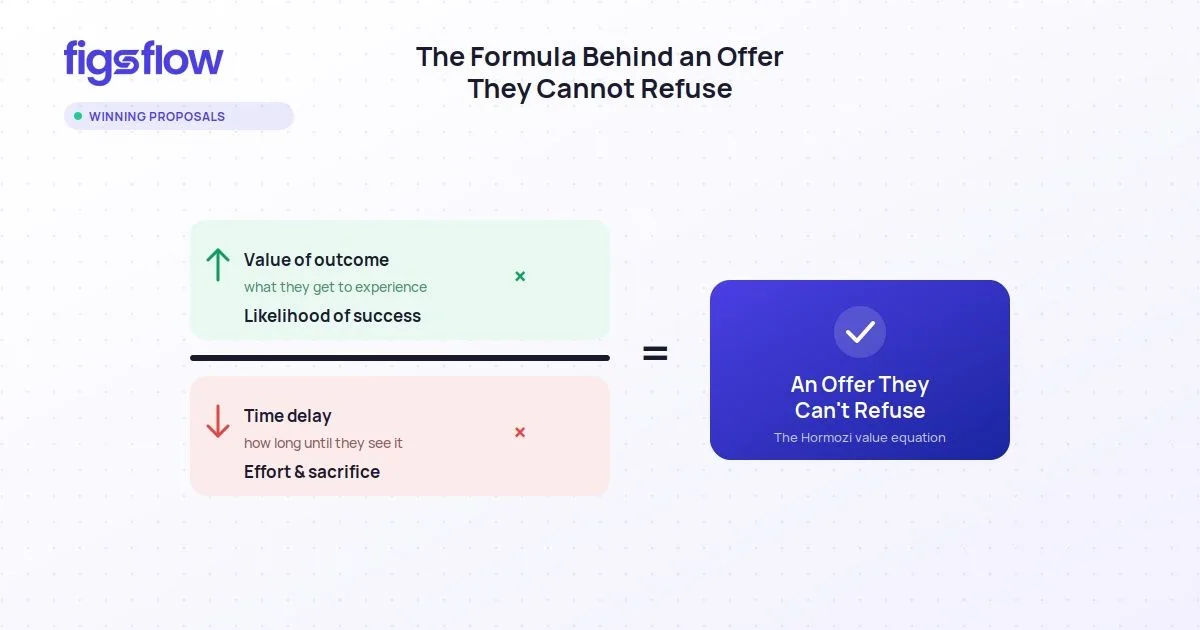
Image: Companies House WebFiling Flaw Left Five Million Companies Open to Fraud

2/18/2026

Companies House WebFiling Flaw Exposed 5 Million Companies

Companies House WebFiling Flaw Exposed 5 Million Companies Companies House WebFiling Flaw Exposed 5 Million Companies What Happened & How Serious Was It? How Did the Flaw Actually Work? What Could Someone Have Accessed or Changed? When Was It Discovered & How Was It Fixed? Where Do Things Stand Right Now? What Do Accountants Need to Do Right Now? If you tried to file through Companies House WebFiling on Friday 13 March or over the weekend that followed, you will already know the service went down. Deadlines moved, clients asked questions, and the explanation from Companies House was thin on detail. For most practices it looked like an outage. It was not. Behind the shutdown was a security flaw that had been sitting inside the WebFiling system since October 2025. For nearly five months, every company on the UK register was exposed. All five million of them. The service is back online now, but what the flaw allowed, and for how long, demands a clear look. The Companies House WebFiling flaw left logged-in users able to access the private dashboards of other companies without authorisation. Confidential director data was visible. While existing filed documents could not be altered, users could change current registration details or upload new fraudulent accounts. The exposure ran across the entire register, from small owner-managed businesses to major listed firms including Shell and AstraZeneca. Nothing about the structure of the flaw limited who was affected. The seriousness here is not just in what was accessible. It is in how long it was accessible, and how little stood between a logged-in user and someone else’s private company data. No technical skill was required. No specialist knowledge. Any WebFiling user with a login could have done this. The method was straightforward. A user logged into their own account and selected the option to file on behalf of another company. They entered any company number. When the system prompted them for an authentication code they did not hold, they pressed the browser’s back button several times. The security check was bypassed. They were in. A browser back button. Five million companies. The gap between cause and consequence is what makes this incident sit apart from routine data failures. The barrier to exploitation was effectively zero. Two categories of exposure, both with real consequences. On the data side, anyone exploiting the flaw could view information held off the public register. Directors’ home addresses. Personal email addresses. Full dates of birth. Precisely the kind of information that enables identity fraud. Experts warned that access to this data in combination was sufficient to attempt identity theft or to impersonate a company for further criminal purposes. On the filing side, an unauthorised user could have uploaded false company accounts, changed a registered address, or amended director details on the official record. Two things were not affected. Passwords were not compromised. Identity verification data, including passport information, was not accessible. Companies House also noted that the flaw required records to be accessed one by one, making large-scale automated extraction unlikely. That limits the realistic scope of any exploitation. It does not eliminate it. The vulnerability entered the system during a routine update in October 2025. It was not caught internally. It remained live and undetected for just under five months. The flaw was originally discovered by John Hewitt of Ghost Mail; after his initial attempts to alert Companies House received no response, he contacted tax campaigner Dan Neidle, who then reported it to the agency on Friday 13 March 2026. The same afternoon, at 1:30pm, the WebFiling service was suspended. Independent testing ran across the weekend. By 9:00am on Monday 16 March, the service was restored and secured. Once the flaw was flagged, the response was fast. But the exposure window ran from October 2025 to March 2026. The speed of the fix and the duration of the vulnerability sit in the same sentence whether Companies House would prefer it that way or not. WebFiling is back online and the flaw is resolved. The incident is not closed. Companies House has self-reported to the Information Commissioner’s Office and the National Cyber Security Centre. That is not a routine notification. It reflects the organisation’s own assessment that the breach carried GDPR significance and warranted regulatory attention from both bodies. Every company on the register is being contacted by email with guidance on checking their details and what to do if they have concerns. Internally, Companies House is actively reviewing filing data across the exposure window, looking for anomalies or unauthorised changes. The investigation is running. The service is back online but the work is not finished. Three things warrant immediate attention. File Without Further Delay. If your practice missed a filing window during the shutdown, you should file as soon as possible and retain evidence of the disruption, such as screenshots of error messages and notes of the dates and times of your attempted filings. Companies House has confirmed it will take this evidence into account when assessing late penalties caused by the service being unavailable. Check Your Client Records. The exposure window ran from October 2025 to March 2026. Registered addresses, director details and recent filing history across your client base all warrant a check. If anything looks altered, report it to Companies House and advise the client. Do not wait for them to notice first. Watch How This Develops. A flaw undetected for five months in infrastructure that sits at the centre of daily practice will not pass without consequences for how government portals are built and maintained. Practices that understand what happened here, and can explain it clearly, will be better placed to guide clients through whatever changes follow. That is what good advisers do. They stay ahead of the questions. companies-house-webfiling-flaw companies house webfiling flaw page Page
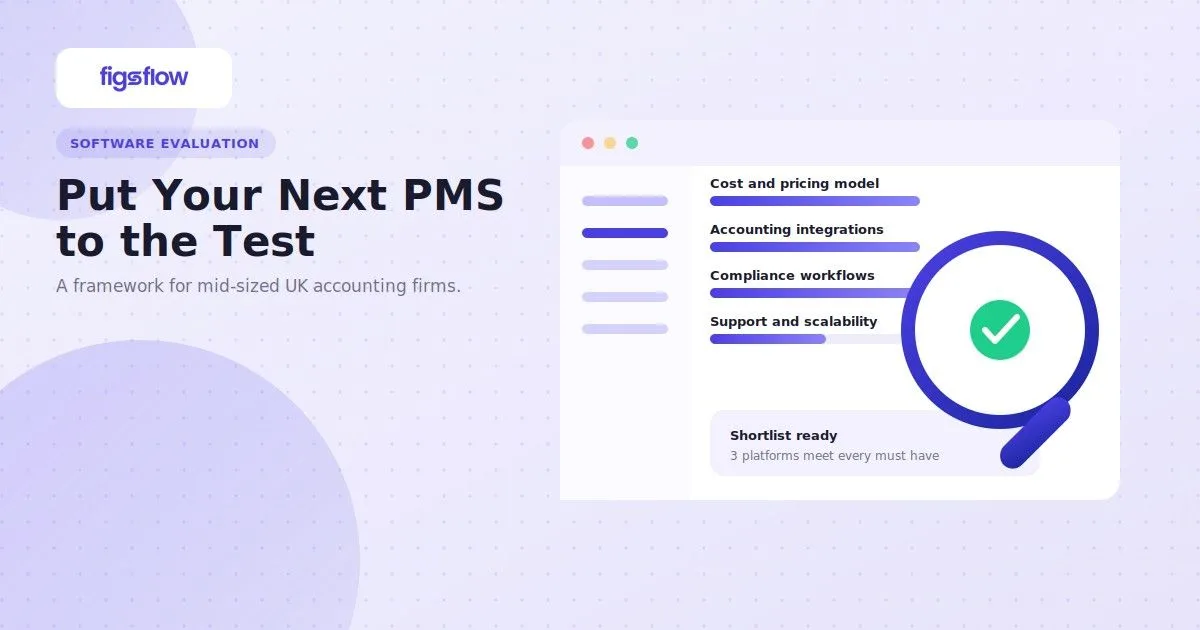
Two people shaking hands at a table in a business setting.

2/16/2026

Streamline Your MTD Client Onboarding Journey | FigsFlow

Streamline Your MTD Client Onboarding Journey | FigsFlow Streamline Your MTD Client Onboarding Journey | FigsFlow Stage 1: How to Send Proposals & Engagement Letters to MTD Clients Contact Management Interface Service Library Import Interface Income Tax Self-Assessment Proposal Tax Self-Assessment Guide Letter of Engagement Signing Page Proposal Management Dashboard Stage 2: How to Run AML Checks for MTD Clients? AML Risk Assessment Interface Onboarding Email Template Interface Onboarding Service Overview AML & Risk Assessment Overview AML Check Interface Stage 3: How to Conduct Risk Assessment for MTD Clients? Risk Assessment Interface Customer Due Diligence Interface Stage 4: How to Automate Invoicing & Payment Collection for MTD Clients? Invoice Overview Adfin Integration Interface Complete MTD Client Onboarding at a Glance Why MTD Client Onboarding Journey Matters for Your Practice Additional Resources So, What Should You Do Next? Conclusion Ready to Onboard MTD Clients? Frequently Asked Questions (FAQs) How to generate proposals and engagement letters for MTD clients? Do I need to run AML checks for MTD clients? How do I onboard MTD clients fast? How to price MTD services? How to deal with high-risk MTD clients? When does MTD for ITSA start? I bet you’re stuck in one of two situations right now. One: Absolute chaos. Every client’s ringing off the hook asking what MTD means for them, how to prepare, which software to use, whether they even need to comply. Your inbox is drowning. Or two: Absolute silence. Your MTD strategy fell flat and clients are quietly slipping away to competitors who actually seemed prepared. Both roads lead to the same place: you’re losing ground while other firms are locking in clients for the long term. But there’s a way out. FigsFlow. With FigsFlow, you can complete entire MTD client onboarding journey from initial proposal and engagement letter through service pricing, KYC, EDD, CDD, invoicing and payment collection in one seamless workflow. But don’t believe me yet. Imagine your most recent client and we’ll take you on a very short journey to onboarding them. Let the journey begin. Your MTD Client Onboarding Journey at a Glance You import MTD client contacts and send professional proposals with engagement letters in under a minute- pricing included. Your client gets an email, clicks through to their secure portal, and signs digitally. Once you win the proposal, it triggers the KYC process. Client uploads documents through their dashboard. You run in-house risk assessments, combine software AML checks with compliance data to form their complete risk profile, and run EDD when needed. Payment and invoicing? FigsFlow integrations with QuickBooks, Xero, GoCardless, and Adafin handle everything automatically. Simple as that. In this step, we’ll import your client, configure their MTD service package, generate a professional proposal with accurate pricing, and send them everything they need to sign digitally. Import Client Start by getting your client into FigsFlow. You can import contact details directly from your existing database, add them manually if it’s a single prospect, or bulk upload via CSV if you’re bringing over multiple clients at once. Import MTD Service Search the service library for “MTD for Income Tax Self Assessment” and import it. If you’re going through this link to try FigsFlow for free , skip this step entirely. We’ve already done it for you and you can jump straight to proposal generation. The template includes standard scope elements, compliance requirements, quarterly update deliverables, and all the foundational structure that defines MTD work. Generate Proposal & Configure Pricing Select the imported MTD service and start configuring it for this specific client. Here’s what you can tailor to their specific needs: Add the entity name for proper personalisation Specify how many quarterly updates they require Input their typical quarterly transaction volume Indicate whether they need MTD software setup and training Select their applicable tax standard rate And more. If the standard MTD service doesn’t cover everything, include associated services like property income, dividend income, pension income, employment income, partnership income, or capital gains by checking the relevant boxes. Based on all your inputs, FigsFlow automatically calculates the appropriate pricing. Change it if it doesn’t match your business model or this client’s specific circumstances. And, proceed to preview. Review & Send Review your proposal and engagement letter in the preview panel. Something feels off? You don’t have to go back. Edit it right here. Add custom reminders for proposals which stop automatically once the client responds. Attach any supporting documents like fee schedules or MTD compliance guides that clients need to review alongside the proposal. Once everything is perfect, continue as and then send live or save as draft. Let’s do it before your competitors. Send it live. A Peek at Your Client POV The client gets a clean, professional email. Click through the link and they get the dashboard. They can preview the engagement letter with all terms and conditions laid out clearly. They can review the proposal outlining your services, fees, and what happens next. Everything displays properly on any device: desktop, tablet, mobile phone, because clients rarely review proposals while sitting at their desk anymore. No need to download and sign it manually. Just sign it digitally, either via text, signature, their unique font, or upload their digital signature. And done. Your client just did all the paperwork between coffee sips. Beyond the Basics This is the foundation, but FigsFlow does considerably more. Let’s not bog you down with all the minor features like status tracking, proposal retrieval, signatory status, and all other stuffs. Let us just share a single feature we find so much cool. Click on the small initials icon (it’s the signatory’s initials: SS for Sandeep Subedi, SM for Sarah Malik, and so on) and you can see which signatories have viewed and signed the document. This provides insights into who’s holding things up and who’s already done their part. Once the agreement is signed, the actual onboarding work begins: AML, KYC, sanctions and PEP screening. The compliance-heavy part that typically consumes hours of manual checking and verification. But with FigsFlow handling the workflows, what used to be your bottleneck becomes your competitive advantage. Let’s move to step 2. In this step, we’ll collect all necessary client details, verify identity documents, and run comprehensive AML checks to ensure full regulatory compliance. Your AML Dashboard Overview The AML & Risk Assessment dashboard shows every client’s status at a glance. Individual clients appear separately from organisational clients. Each column displays their onboarding status, AML check status, and risk assessment status. Yellow warning icons flag clients who need attention. Green “Conduct AML” buttons indicate clients ready for verification. Collecting Client Information All the information regarding your client appears on their separate profile. You can access it by clicking on any client. The Information Overview includes contact details, address details, and identity details in organised sections. So, how do you fill in or get this information from your client? Well, you’ve got two options here: either onboard via email template or onboard via Trust ID. Both are equally easy and accurate. Select your preferred method, choose whether you need ID verification or KYC information (or both), and send. What Your Client Experiences Your client receives a professional onboarding email with a secure link. Clicking through brings them to a clean wizard showing exactly what’s required: passport or driving license, proof of address, selfie, and KYC form. They upload documents by dragging and dropping or clicking to browse. The system checks image quality in real time, flagging issues like poor lighting, unclear faces, or missing corners. They complete the same process for proof of address and selfie, then fill out the KYC form. The entire process takes about five minutes. Back on Your End Once your client submits everything, their profile updates automatically. The Information Overview tab now contains complete contact details, full address information, and verified identity documents. Data from the KYC form autopopulates. Other fields you input manually based on the documents provided. But who’s to say the identity documents aren’t fake or stolen? Or that the person isn’t sanctioned in the UK or politically exposed? Running AML Checks & Getting Your Report Click on the “AML Check” tab and then “Start AML Verification.” Within minutes, you get a comprehensive AML report. The cost is £2.10 or £3.00 per check depending on your FigsFlow package. Here’s what happens in the background: Document verification checks authenticity and validity PEP screening searches political exposure databases Sanctions screening checks UK and international sanctions lists Amberhill verification cross-references multiple compliance databases MRZ/checksum validation confirms technical document integrity Address verification validates residential details, and document details extraction pulls forename, surname, sex, document type, document number, expiry date, issuing country, and issuing authority The report stays in your client profile with clear timestamp and audit trail. You can retrieve it instantly when HMRC asks questions during an audit. What used to be your bottleneck just became a two-minute process. In this step, we’ll assess client risk based on firm’s risk appetite, assign appropriate risk ratings, and determine whether enhanced due diligence is required. Conducting Risk Assessment The Risk Assessment tab shows your RA report status, completion date, and reviewer. You can select an appropriate RA template based on client type or business category. Fill in information based on what you know about the client: business type, transaction patterns, geographic connections, and other relevant risk factors. Once completed, proceed directly or send it for senior management review to assign the final RA status. Customer Risk Rating The Customer Risk Rating tab displays your AML report and RA report side by side. Based on both reports, you assign the CRR level (simplified, standard, or enhanced) and risk level (high, low, or normal). This combined view lets you make informed decisions using complete compliance data. If a client requires enhanced due diligence, FigsFlow includes EDD templates for both individual and organisational clients. The CRR History table records every risk rating decision with full audit trail for regulatory review. This marks the end of client onboarding. You’ve completed everything from proposal and engagement letter to risk assessment, AML checks, customer risk rating, and EDD when required. Now, you do your work. And once it’s done, it’s time for payment and invoicing. FigsFlow can help with that as well. In this section, we’ll handle invoicing and payment collection through seamless integrations with your existing systems. Invoicing Integration FigsFlow integrates with QuickBooks and Xero for automatic invoice generation. Once you win a proposal in FigsFlow, the invoice autogenerates within your accounting software. It appears as a draft, ready for you to review and approve. Once approved, the invoice goes live and your client receives it. Payment Integration FigsFlow integrates with Adafin and GoCardless, making payment seamless for your clients. You can configure recurring payment schedules for quarterly MTD services based on the service package the client selected. Your clients get the convenience of automated payments without having to think about it each quarter. You get cash flow predictability and eliminate the admin burden of manual invoice chasing. Here’s what you’ve done so far: Sent professional proposals and engagement letters within minutes Collected KYC information with minimal back and forth Run comprehensive AML checks with automated verification Conducted PEP and sanctions screening across multiple databases Received e-signatures without the chasing game Completed risk assessments with structured templates Assigned customer risk ratings based on compliance data Generated invoices automatically in your accounting software Set up recurring payment schedules All this, when accounted for the client’s whole journey, takes less than 10 minutes of your actual time. The rest happens automatically while you focus on serving clients or closing new ones. And here’s a little secret: we’re launching a practice management system very soon into the same workflow. In a month or two, you’ll be able to time track, assign work, monitor team productivity, manage deadlines, and handle everything else from FigsFlow. One platform for your entire practice operations. Features and processes matter, but the business outcomes matter more. When you step back from the mechanics of automated proposals and integrated compliance workflows, three fundamental benefits emerge that shape your practice’s future. Client Experience Transformation First impressions matter. Professional, efficient onboarding signals competence and builds confidence. Clients see that you have your systems together and respect their time. When you make things easy for clients, they remember. Good onboarding experiences predict long-term relationships and natural referrals. Compliance Confidence AML requirements carry real penalties. HMRC audits happen. Systematic compliance eliminates uncertainty. You know checks were completed because the system doesn’t let you skip them. Documentation generates automatically. Junior staff can onboard clients properly with system guidance rather than relying entirely on experience. Practice Scalability Manual onboarding scales linearly with headcount. Automated onboarding scales exponentially. Three waves of MTD clients need onboarding between April 2026 and April 2028. Can your current process handle that volume? Time saved on administrative work redirects to advisory services. You’re positioning yourself to capitalise on MTD rather than just surviving it. The practices that streamline onboarding now will dominate the MTD era while competitors struggle with processes that can’t scale. Struggling with MTD pricing? Here’s exactly how you can price MTD for ITSA services: Guide to Pricing and Updating Your MTD Engagement Letter Worried about penalties? Understand the new penalties system under MTD and protect your practice: MTD for Income Tax: Guide for Accountants and Agents New to MTD compliance? Your step-by-step guide to understanding MTD for ITSA: MTD ITSA Guide for Accountants and Agents Confused about where to start? Here’s how to onboard MTD clients efficiently: Onboard, Price and Engage MTD Clients Efficiently Not sure how many clients still need to register? See where UK taxpayers stand on MTD for Income Tax registration: Many Taxpayers Yet to Register for MTD for Income Tax By the time you read this, MTD deadlines are either approaching fast or already here. And you’re likely stuck in onboarding chaos. Don’t waste any time. Book a demo , see how FigsFlow addresses the bottlenecks you’re facing, and once you’re satisfied, pick a plan that suits your firm and get started. MTD isn’t coming. It’s here. April 2026 marks the first wave, with thresholds dropping to £30,000 in 2027 and £20,000 in 2028. Thousands of clients need proper onboarding, and your manual processes won’t scale. FigsFlow transforms what used to take hours into minutes. Professional proposals generate automatically E-signatures eliminate the chasing game AML checks, PEP screening, and risk assessments happen with a single click Invoicing and payment collection integrate seamlessly with QuickBooks, Xero, GoCardless, and Adafin The entire client journey, from first contact to active service, completes in under 10 minutes of your actual time. The practices that automate onboarding now will dominate the MTD era. The ones that don’t will drown in administrative chaos while clients quietly move to competitors who seemed prepared. See how FigsFlow eliminates your onboarding bottlenecks. Book a demo, explore the platform, and pick a plan that suits your firm before your competitors do. Try FigsFlow for Free → You can use software like FigsFlow that lets you generate proposals and engagement letters (regulatory compliant) within minutes. The process is simple: import clients, select services, and done. The software handles everything including pricing and formatting. Yes. MLR 2017 requires accountants to conduct AML checks on all clients, including MTD clients. This includes identity verification, PEP screening, sanctions checks, and risk assessments for regulatory compliance. The key to onboarding clients faster is fast engagement, fast proposals, fast KYC and AML checks, and fast document collection. And that’s possible with software custom built for accountants such as FigsFlow. You need to consider factors like quarterly updates, transaction volume, entity complexity, and additional income sources, then decide price accordingly. Or use FigsFlow that has a pricing calculator configured with all these variables. Just input and you get your service pricing. You conduct enhanced due diligence, implement additional monitoring, document all risk factors thoroughly, obtain senior management approval, and maintain detailed records for regulatory compliance and future audit trails when needed. April 2026 for self-employed and landlords earning over £50,000. The threshold drops to £30,000 in April 2027 and £20,000 in April 2028, expanding compliance requirements significantly across thousands of clients. A user interface for managing individual contacts. A user interface for importing services from a service library. A digital form for generating a proposal related to income tax self-assessment services. Preview of a document related to tax self-assessment services. A digital interface for signing a letter of engagement. A screenshot of a proposal management interface displaying various proposals and their statuses. Screenshot of an AML risk assessment interface showing client information and statuses. A user interface for sending onboarding emails with KYC information. An onboarding service page displaying British passports. An overview of AML and risk assessment details for a company. User interface for conducting an AML check. A user interface displaying a risk assessment template selection. Screenshot of a customer due diligence interface with reports and risk assessment options. A digital invoice showing amounts due and itemized descriptions. An interface design showcasing payment integration options. mtd-client-onboarding-with-figsflow mtd client onboarding with figsflow page Page
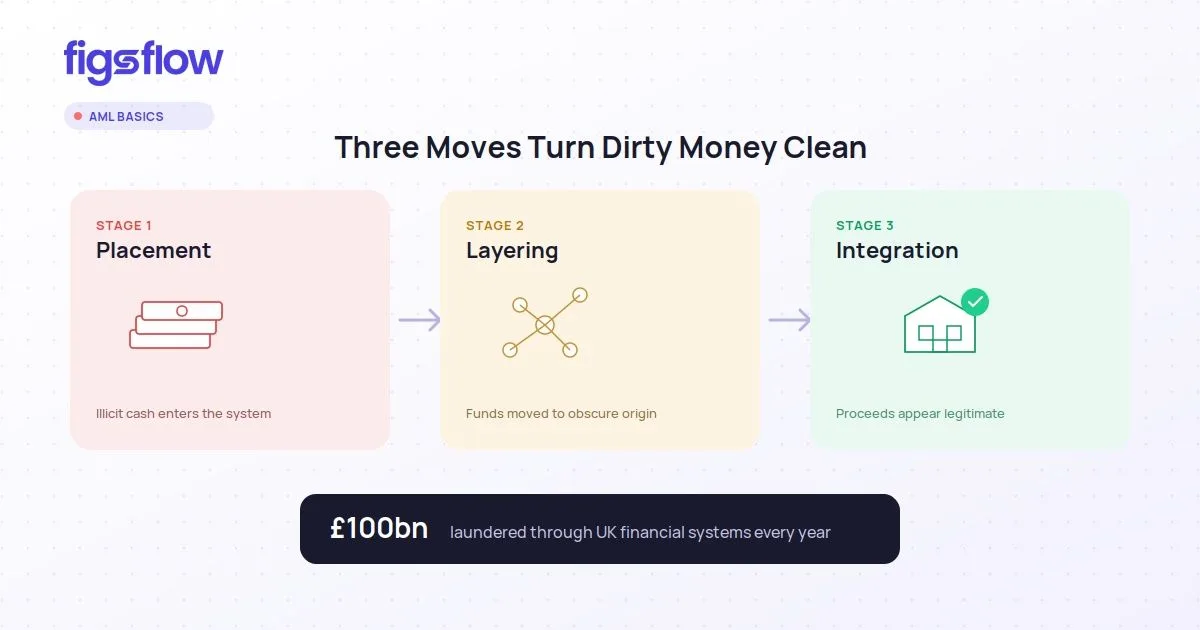
Image: Weekly News Updates for UK Accountants 9 13 Feb 2026

2/13/2026

Weekly News & Updates for UK Accountants (9-13 Feb 2026)

Weekly News & Updates for UK Accountants (9-13 Feb 2026) Weekly News & Updates for UK Accountants (9-13 Feb 2026) Weekly News & Updates in 30 Seconds HMRC Begins Loan Charge Settlement Process with Named Contacts Government Gateway Replaced for New HMRC Users Inheritance Tax Planning Opportunities After BPR Allowance Increase Government Reassures Tax Agents on New Registration Rules Plan Ahead Get This Delivered to Your Inbox This week brought significant developments for UK tax professionals, from HMRC’s loan charge settlement rollout to major system changes affecting how practitioners access online services. See our Weekly News & Updates for UK Accountants (16-20 Feb 2026) for the following week's roundup. Here’s what you need to know. HMRC Loan Charge Settlement Begins – HMRC is sending letters with named contacts to affected taxpayers. Settlement offers reduced tax calculations, promoter fee deductions, and £5,000 automatic reductions, capped at £70,000 total. Government Gateway Phased Out for New Users – New HMRC service users must create GOV.UK One Login accounts. Existing Government Gateway users are unaffected until contacted. Full migration expected by the end of 2027. BPR Allowance Increase Opens Planning Opportunities – Business property relief raised to £2.5m from £1m. Splitting shareholdings can maximise relief but creates minority shareholder risks requiring careful governance planning. Government Reassures Agents on Registration Rules – Ministers confirm new agent registration targets harmful advisers only. HMRC won't suspend for minor breaches and will work with advisers acting in good faith. HMRC started sending letters in January 2026 to taxpayers who used disguised remuneration loan schemes and now face the loan charge. The loan charge is a tax bill on loans received through certain tax avoidance arrangements, calculated based on income from 2019. Following the McCann Review accepted at Budget 2025, HMRC is now offering reduced settlement terms. Each letter includes a named HMRC contact who explains how the individual’s position is affected. The settlement scheme offers substantial reductions for those with outstanding loan charge liabilities: Tax calculated at the rates from the years when loans were made, not the 2019 rate Deduction for historic promoter fees up to £10,000 per year of scheme use Automatic £5,000 reduction per taxpayer Late payment interest written off, potentially reducing amounts by around 20% Maximum total reduction capped at £70,000 per taxpayer Payment arrangements can be spread over five years without affordability discussions with HMRC. Inheritance tax from covered loan schemes will be written off, and penalties won’t be charged as standard. However, the Loan Charge Action Group has criticised the settlement as too restrictive, particularly the £70,000 cap and exclusion of those who already settled under previous terms. From now on, anyone new to HMRC’s online services must create a GOV.UK One Login account instead of a Government Gateway ID. This marks the start of a gradual transition that won’t be completed until the end of 2027. Existing Government Gateway users don’t need to take any action yet. They’ll continue using their current credentials and will be contacted when it’s time to switch. HMRC is taking a cautious, monitored approach to the rollout given the scale of change for practitioners and clients. GOV.UK One Login uses an email and password instead of the familiar 10-12 digit Government Gateway ID. New users must prove their identity through the One Login app using face scans and photo ID. When fully implemented, GOV.UK One Login will be the single access point for over 200 government services, from Making Tax Digital submissions to passport renewals and Companies House filings. The government increased the business property relief allowance from £1m to £2.5m in December 2025, opening new restructuring opportunities for business owners planning inheritance tax mitigation. Since the allowance applies to both individuals and trustees, there’s renewed interest in splitting shareholdings among multiple holders to maximise the £2.5m relief. However, tax savings must be balanced against business stability. The key risk lies in minority shareholder rights. Under section 994 of the Companies Act 2006, minority shareholders can claim “unfair prejudice” if they’re treated improperly. Courts commonly order shares be purchased at fair value as a remedy, which could force unexpected liquidity demands on the business. Issues that can trigger unfair prejudice claims include: Decisions not to declare dividends Excessive management remuneration Inadequate information sharing with shareholders Diversion of business to other group entities Litigation can be highly disruptive, with proceedings held in public courts requiring disclosure of internal documents and potentially damaging reputation. Legal costs and forced buyout prices could create significant financial strain. The government provided reassurances to tax professionals about new Finance Bill measures requiring agent registration and expanding sanctioning powers. Speaking in the House of Commons on 3 February, Exchequer Secretary Dam Tomlinson confirmed agent registration targets “harmful tax advisers who do not meet basic minimum standards” and doesn’t give HMRC new investigative powers. HMRC will only suspend an agent’s registration after due process, including opportunities to comply and explain circumstances. The powers won’t be used for minor breaches, and HMRC will work with advisers genuinely trying to comply. On sanctionable conduct, ministers confirmed the measures won’t affect advisers acting in good faith or taking credible views on tax law, including those using HMRC guidance or extra-statutory concessions. The powers don’t target advisers who make genuine mistakes while trying to comply. ICAEW welcomed these commitments but continues pushing for changes to legislation it considers too broadly drafted. Now Onwards: New HMRC users must create GOV.UK One Login accounts (existing Government Gateway users can continue for now) End of 2027: Full migration from Government Gateway to GOV.UK One Login expected to be complete Ongoing: HMRC is sending loan charge settlement letters with named contacts to affected taxpayers Information compiled from news media, ICAEW and GOV.UK announcements published during the week ending 14 February 2026. We send a weekly newsletter covering the most important changes in UK accountancy. Subscribe and get these updates delivered to your inbox every Friday—no need to search for them. Subscribe to Weekly Updates → weekly-news-updates-for-uk-accountants-13-feb-2026 weekly news updates for uk accountants 13 feb 2026 page Page
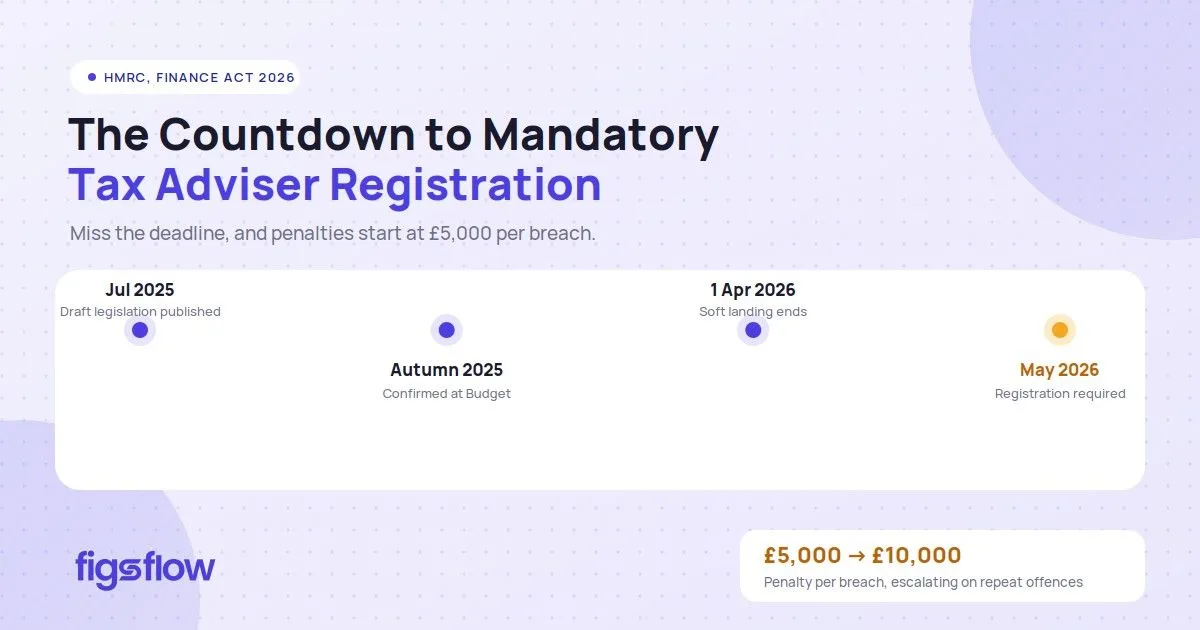
Image: Why Annual AML Reviews Are Setting UK Accounting Firms Up for Failure

2/13/2026

Why Annual AML Reviews Are Setting UK Accounting Firms Up for Failure

Why Annual AML Reviews Are Setting UK Accounting Firms Up for Failure Why Annual AML Reviews Are Setting UK Accounting Firms Up for Failure Moving Beyond Annual Reviews The Integration Imperative Governance Foundations Matter More Than Software New Regulatory Pressures on the Horizon The Proportionality Debate What This Means for Your Firm If your firm’s anti-money laundering compliance only gets serious attention once a year, you’ve got a problem. According to compliance experts, treating AML as an annual tick-box exercise rather than an ongoing process has become one of the clearest warning signs that a firm is heading for regulatory trouble. The shift from periodic checks to continuous monitoring represents perhaps the most significant change in how regulators expect firms to approach AML compliance. Automated systems that check daily against global databases for Politically Exposed Persons and sanctions lists are no longer a luxury reserved for large practices. They’re rapidly becoming the baseline expectation. Email reminders and calendar alerts for annual client reviews simply don’t cut it anymore. When a client’s status changes, whether through a new PEP designation or a sanctions listing, firms need to know immediately, not months later during an annual refresh. Effective automation cannot exist without proper system integration. Too many firms still manage client data across fragmented spreadsheets, creating inconsistent records and chaotic version control. The result is manual data entry errors that undermine the entire compliance process. Modern AML systems should draw client information directly from existing tax or practice management software . Dates of birth, passport details, and other verification data need to flow seamlessly into compliance tools without manual intervention. This isn’t just about saving time; it’s about eliminating the human error that creates compliance gaps and exposes firms to regulatory action. Technology alone won’t solve weak compliance foundations. Firms investing in sophisticated AML software whilst relying on generic, off-the-shelf Policies, Controls, and Procedures documents are building on sand. These frameworks must reflect the specific risks, client base, and service offerings of your particular practice. The role of the Money Laundering Reporting Officer demands specific attention. MLROs require additional training beyond what the general staff receive because they need to spot compliance gaps that others might miss. Regulators increasingly scrutinise whether MLROs have the knowledge and authority to fulfil their statutory responsibilities effectively. A well-intentioned appointment without proper training and empowerment creates liability rather than protection. The Economic Crime and Corporate Transparency Act has introduced mandatory identity verification requirements for company directors and persons with significant control. Starting 18 November 2025, firms will need to verify these individuals’ identities, and regulators are pushing practitioners toward biometric technology rather than accepting easily falsified documentary evidence. This represents a material shift in what constitutes adequate verification. Traditional approaches relying on checking passport copies and utility bills face growing scrutiny. Biometric validation provides a higher degree of certainty and aligns with regulatory expectations around robust identity confirmation in an era of sophisticated fraud. Not everyone in the profession accepts these escalating requirements without question. Some practitioners point to striking economic data: AML compliance costs the UK economy an estimated £34 billion to £38.3 billion annually, whilst the amount of criminal assets actually denied or recovered sits at a fraction of that figure. The compliance burden exceeds recoveries by a factor of over sixty. This proportionality concern reflects genuine frustration within the profession. Firms see mounting costs, expanding obligations, and limited evidence that the current approach delivers value commensurate with its expense. However, regardless of these debates about policy effectiveness, the legal obligations remain firmly in place, and enforcement continues to intensify. Firms cannot afford to wait for perfect regulatory clarity before addressing these gaps. The shift from annual reviews to ongoing monitoring needs to happen now, not when enforcement action forces the issue. System integration projects require prioritisation, and generic compliance templates need to be replaced with frameworks tailored to your actual practice risks. The MLRO role demands proper investment in training and authority, not just a title assigned by default. Meanwhile, current identity verification processes need to be evaluated against emerging biometric expectations. The economic burden is real, and proportionality concerns are legitimate. But compliance failures carry consequences beyond financial penalties, extending to reputational damage and operational disruption that can fundamentally threaten a practice’s viability. annual-aml-reviews-setting-uk-firms-for-failure annual aml reviews setting uk firms for failure page Page

2/6/2026

Weekly News & Updates for UK Accountants (2-6 February 2026)

Weekly News & Updates for UK Accountants (2-6 February 2026) Weekly News & Updates for UK Accountants (2-6 February 2026) MTD Trial Users Hit by Payment on Account System Failure HMRC Warns Agents of AML Registration Scam Final Batches of MTD Mandation Letters Being Sent MTD Launch: Key Details Plan Ahead UK accountants received four critical updates this week, with HMRC confirming a major system failure affecting MTD trial users just two months before mandatory rollout, while fraudulent emails targeting agents’ AML registrations showed a significant increase. Here are the details. Weekly News & Updates in 30 Seconds MTD System Failure: 4,500 trial users face payment on account problems due to split HMRC systems, raising concerns ahead of April rollout AML Scam Alert: Fraudulent emails targeting agents’ registration details increase; only trust emails ending in gov.uk Mandation Letters: Final MTD letters arriving late March/early April; agents not copied, taxpayers responsible for signing up April Deadline: 864,000 sole traders and landlords must use digital reporting from 6 April; no penalties first year HMRC confirmed that 4,500 taxpayers enrolled in the Making Tax Digital for Income Tax trial face problems settling their payment on account for 2025-26 due to financial information being split between two separate HMRC systems. The issue affects both the 2024-25 balancing payment and some credits. Taxpayers’ statements are showing payments on account marked as “transferred to digital” or “nil”, requiring users to access both their MTD Income Tax account and self assessment account simultaneously through their personal or business tax account to view complete payment information. HMRC wrote to affected taxpayers before the 31 January deadline explaining the problem and providing instructions. The tax authority confirmed it will not charge late payment penalties to trial users, but interest will still accrue on late payments on account. Around 4,500 trial participants received letters informing them where to find their payment on account information and advising them to contact the specialist MTD trial support team (0300 322 9619, Monday to Friday 8am-6pm) if they need help. HMRC reported an increase in fraudulent emails asking agents to update their anti-money laundering supervision registration details. The tax authority is advising agents to access HMRC online services by going directly to GOV.UK rather than clicking links in emails. Genuine HMRC emails are sent from addresses ending in gov.uk, specifically: @hmrc.gov.uk, @tax.service.gov.uk, @advice.hmrc.gov.uk, and @updates.hmrc.gov.uk. Agents should report any suspicious contact to HMRC immediately. These scam emails are separate from genuine letters HMRC sends periodically asking agents to confirm who supervises them for AML regulation purposes. Agents must respond to genuine AML correspondence from HMRC as failure to do so could result in losing access to HMRC services. HMRC will send the final batches of mandation letters informing taxpayers they must comply with MTD for Income Tax from April 2026 based on information in their 2024-25 self assessment tax return. Letters will be sent in two waves: This week: taxpayers who submitted returns between 1 September and 30 November 2025 From mid-March 2026: taxpayers who submitted returns from 1 December 2025 onwards Each mailing takes two weeks to complete, meaning some taxpayers may not receive letters until late March or early April. Agents will not receive copies of the letters. Total income from sole trades and property businesses exceeding £50,000 in 2024-25 triggers MTD requirements from April 2026, subject to available exemptions. Each taxpayer must confirm their eligibility status and complete the sign-up process themselves. The letter has been updated since the first mailing in November 2025 to reflect the Autumn Budget 2025 announcement that no penalties will be charged where any of the first four quarterly updates are submitted late. From 6 April 2026, 864,000 sole traders and landlords earning over £50,000 from self-employment and property must use recognised software for digital records and quarterly updates. Customers joining MTD in April 2026 will not receive penalty points for late quarterly updates during the first 12 months. After this period, penalty points are given for each late submission, with a £200 penalty applied once four points are reached. Free software options are available that generate simple summaries to send to HMRC once income and expenses are recorded. Use the FigsFlow Making Tax Digital Calculator to check if your clients fall within scope from April 2026. 6 April 2026: MTD for Income Tax mandatory start date for qualifying income over £50,000 7 August 2026: Q1 quarterly update deadline for those joining MTD in April 2026 7 November 2026: Q2 quarterly update deadline Information compiled from ICAEW tax news and HMRC press releases published during the week ending 5 February 2026. weekly-news-updates-6-feb-2026 weekly news updates 6 feb 2026 page Page

Image: Find Complete UK Company Data with Companies House Advanced Search

1/30/2026

Find Complete UK Company Data with Companies House Advanced Search

Find Complete UK Company Data with Companies House Advanced Search Find Complete UK Company Data with Companies House Advanced Search What Is Companies House Advanced Search? Companies House Advanced Search When to Use Companies House Advanced Search Vs Simple Search When to Use Companies House Advanced Search Vs Simple Search 1 Complete Your Identity Verification How Companies House Advanced Search Works (Live Example) How Companies House Advanced Search Works Live Example Why UK Accountants Need Advanced Search Companies House Advanced Search Filters Explained Practical Applications for Accountancy Practices Limitations of Companies House Advanced Search Everyone Must Know Additional Resources Conclusion Verify Directors Instantly Frequently Asked Questions (FAQs) How to check if someone is a company director? Can a person be a director without holding shares? Can I search for UK companies for free? How do I check the list of directors of a company? How to find the owner of a company in the UK? How to check if a company is legit in the UK? You’re vetting a potential client. Three browser tabs open. LinkedIn shows one director name. Companies House basic search shows another. The company’s own website lists a third. Thirty minutes later, you’re still building a picture from fragments. And you’re still not confident in the accuracy. Complete, verified company data can be accessed quickly through Companies House Advanced Search. This is the full guide to using it effectively. Companies House Advanced Search offers eight precision filters unavailable in basic search Filter by SIC code, incorporation date, company status, location, and more The tool is free, requires no registration, and updates in real time Accountants use it for client verification, conflict checks, and competitive intelligence Advanced search is a starting point for research, not a replacement for due diligence Defining Companies House Advanced Search Companies House Advanced Search is a free filtering tool that lets you search the UK company register using eight specific criteria simultaneously. The tool lives at find-and-update.company-information.service.gov.uk/advanced-search . No registration required. No cost. No search limits. Think of basic search as asking, “Does this company exist?” Advanced search answers, “Show me all active insurance companies in Manchester incorporated after 2020.” Companies House updates the register in real time as companies file documents. You’re searching the same data that solicitors, banks, and regulators use. The interface accepts partial matches, date ranges, SIC code filters, and status selections. Combined, these filters narrow millions of records to exactly what you need. The basic search box works perfectly when you know exactly what you’re looking for. Type the company name or number, click search, and you’re done. When it comes to filtering results, Companies House Advanced Search is the tool you need. It lets you define exactly what you’re looking for across multiple dimensions. The decision point is simple. If you’re verifying information you already have, use basic search. If you’re researching, filtering, or discovering, use advanced search. Read our Complete Guide → Let’s find all active assurance companies in London incorporated after 2020. The Results: No results found. There are no companies that match these exact criteria. This is valuable information. If a prospective client claims to operate an active assurance company in London incorporated after 2020, the register contradicts that claim. That’s due diligence working exactly as intended. Companies House Advanced search solves three problems that basic searches can’t address: verification depth, pattern discovery, and competitive intelligence. Basic search tells you a company exists. Advanced search tells you whether you should take them on as a client. Advanced search has nine filters , and they combine — which is where the power is. Note first what is not there: there is no company number field . If you have a company number, put it straight into the ordinary search box on the Find and update service; advanced search is built for finding companies you cannot yet name, not for looking up one you can. Company names that contain. Free text, matched anywhere in the name rather than just the start. “dental” returns every company with the word buried in it. Exclude company names that contain. The most underused field on the form. Strip out the noise before you look at results — excluding “HOLDINGS”, “TRUSTEE” or “NOMINEE” removes most of the structural shells from a sector list in one pass. Registered office address. Takes a full or partial address, so a postcode district on its own works. Two things worth knowing: it searches the registered office, which for a great many small companies is their accountant’s address rather than their trading premises — so a local search by postcode returns fewer genuinely local businesses than you would expect. The flip side is the useful one: searching your own firm’s address returns your own client book, and searching a competing firm’s address returns theirs. Incorporation date, from and to. Entered as day, month, year. This is the prospecting filter — a narrow recent window gives you companies formed in the last few weeks, before anyone has appointed an accountant. Company status. Active, Dissolved, Open, Closed, Converted closed, Removed, Receivership, Liquidation, Administration, Insolvency proceedings and Voluntary arrangement. Leaving this blank is the most common reason a list comes back cluttered — set it to Active unless you specifically want the others. Nature of business (SIC code). Takes the code, not the description — 01120, not “growing of rice”. Look the code up first; guessing the description gets you nothing. Company type. Twenty-odd options covering private limited company, public limited company, limited liability partnership, charitable incorporated organisation, overseas company and the rest. Useful for stripping out entity types you do not act for. Company subtype. Only two: community interest company, and private fund limited partnership. Narrow, but the only way to isolate CICs. Dissolved date, from and to. One hard limitation to remember: the register only shows companies dissolved since 1 January 2010 . Anything struck off before that will not appear however you filter. Three filter combinations worth saving Newly incorporated local companies. Incorporation date set to the last 30 to 90 days, registered office address set to your postcode district, status Active, company type Private limited company. This is the closest thing the register offers to a prospect list. A sector list you can actually work. SIC code for the trade, status Active, company type Private limited company, and “HOLDINGS” in the exclude field. The exclusion is what turns an unusable dump into a list. An audit of your own client book. Registered office address set to your firm’s address, status left blank. You will see every company still registered at your address — including ones you resigned from and former clients who never updated the register. That is a compliance risk sitting in plain sight, and most firms have never looked. If you are searching for a person rather than a company, advanced search is the wrong tool — officer and PSC searching works differently, and our guide to Companies House director search covers it properly. Advanced search prevents onboarding mistakes that basic searches miss. A prospective client claims three years of trading history. Advanced search confirms the company was only incorporated eight months ago. That gap matters for risk assessment. Conflict checks become systematic. Your client manufactures automotive parts. A potential new client operates in the same SIC code and postcode district. Advanced search reveals the overlap before you create a conflict. Competitive intelligence gets precise. Track new accounting firm formations in your area. Monitor dissolution rates in your clients’ sectors. Identify growth trends before they become obvious. Companies House shows you what’s been filed, not what’s necessarily true. Understanding these limitations protects your practice from over-reliance on register data. Use advanced search as your starting point for research, not your endpoint. Combine register data with other verification methods for complete due diligence. The Most Affordable Way Small Firms Can Stay Compliant: Read here Companies House Identity Verification Complete Guide: Read here Enhanced Due Diligence on Politically Exposed Persons: Read here Source of Funds and Wealth for High-Risk Customers: Read here Companies House Advanced Search turns hours of research into minutes of focused filtering. Basic search answers “Does this company exist?” Advanced search answers “Show me everything that matches these specific criteria.” Advanced search isn’t a replacement for due diligence. It’s the foundation that makes due diligence faster, more accurate, and more comprehensive. Complete UK Accountant Guide → Use the Companies House search service at find-and-update.company-information.service.gov.uk. Enter the person’s name in the search box and select the “Officers” tab. You’ll see all their current and previous directorships. Yes. Directors and shareholders are separate roles. A director manages the company but doesn’t need to own shares. Similarly, shareholders own the company but don’t need to be directors. Yes. Companies House provides free, unlimited searches with no registration required. You can access basic company information, registered office addresses, nature of business (SIC codes), company status, filing history, and officer details. Search for the company name or number on Companies House. Click the company from the results, then select the “People” tab. This shows all current and resigned directors with their appointment dates. Company owners are shareholders, not directors. Access the Companies House search service, find the company, and review the “Filing history” tab. Download the latest confirmation statement (form CS01) which lists persons with significant control (PSCs). Check Companies House to confirm the company is registered and active. Verify the registered office address matches what the company claims. Review filing history for overdue accounts or confirmation statements. Image: Companies House Advanced Search Image: When to Use Companies House Advanced Search Vs Simple Search 1 Image: How Companies House Advanced Search Works Live Example companies-house-advanced-search-complete-guide companies house advanced search complete guide page Page
Image: Weekly News Updates for UK Accountants 26 30 January 2026

1/30/2026

Weekly News & Updates for UK Accountants (26-30 January 2026)

Weekly News & Updates for UK Accountants (26-30 January 2026) Weekly News & Updates for UK Accountants (26-30 January 2026) Companies House Fees Rise on 1 February View Complete Fee Changes Small Company P&L Filing Delayed Beyond 2027 HMRC Opens SA Helplines for Deadline Day Ground Rents Capped at £250 from 2028 Plan Ahead A busy week for UK accounting professionals. Companies House announced fee increases effective Saturday, HMRC prepared for deadline day chaos and the government finally proposed capping ground rents at £250 annually. Here are the details. Companies House is implementing its second fee increase in two years to fund expanded regulatory powers under the Economic Crime and Corporate Transparency Act 2023. Key increases from 1 February 2026 include: Digital incorporation rises from £50 to £100 (100% increase) Paper incorporation increases from £71 to £124 (75% increase) Digital confirmation statement goes up from £34 to £50 (47% increase) Paper confirmation statement jumps from £34 to £110 (224% increase) ACSP registration rises from £55 to £63 (15% increase) Same-day name change increases from £83 to £85 Standard document inspection rises from £3 to £4 This marks the second increase since May 2024, when digital incorporation jumped from £12 to £50 – the first change in nearly a decade. Companies House now operates as a more proactive regulator with powers to challenge and remove false information from its registers. Review client incorporation schedules and update your fee structures before Saturday. The full 2026-27 fee schedule is available in statutory instrument SI 2012/1907 on the Companies House website. Access the full free schedule → The government has shelved mandatory accounts filing reforms after stakeholder concerns. The changes will not proceed in April 2027 as planned. The reforms being delayed include mandatory digital-only accounts filing, small company P&L disclosure requirements, micro-entity balance sheet and P&L publication, and the abolition of abridged accounts. Businesses are guaranteed a minimum of 21 months’ notice before any future implementation. Current filing options remain available, providing planning certainty for small and micro-entity clients through 2027 and beyond. The government statement references the wider growth agenda, suggesting the reforms may face extended delay or permanent shelving. Monitor GOV.UK’s changes to UK company law page for updates. HMRC has reversed its closure decision following pressure, making self-assessment support available on Saturday, 31 January, despite the weekend deadline. The public helpline operates 9 am to 4pm on 31 January, though the agent dedicated line remains closed over the weekend and reopens 8 am Monday, 2 February. Webchat is running at 10x normal Saturday capacity from 8 am to 4 pm for agents, while technical IT support is available via the HMRC Online Services Helpdesk for submission issues. Over 9m returns have been filed, but approximately 2m taxpayers are leaving filing to the final days. The deadline is 23:59 Saturday, 31 January 2026. Share helpline details with clients filing on Friday or Saturday. The agent line is unavailable over the weekend, so webchat is your alternative for deadline day HMRC contact. The government has proposed a £250 annual ground rent cap for new leasehold properties from 2028. The consultation runs until 24 April 2026. The reforms affect 3.8 million leasehold properties across England and Wales, where ground rent payments currently exceed £600 million annually. New leases will face a £250 annual cap, reducing to peppercorn rent after 40 years. New leasehold flats will be banned for new builds and conversions, though existing leaseholds remain unaffected, as the changes apply prospectively only. Additional reforms include reducing the commonhold conversion threshold from 100% to 50% leaseholder consent and abolishing forfeiture so leaseholders cannot lose their homes over minor debts. Build-to-rent and social housing blocks are exempt from the proposals. Property investment portfolios holding ground rent income streams will be affected by valuation changes. Clients with leasehold property interests should review their positions before the consultation closes on 24 April 2026. Property investors who hold ground rent income, particularly, need a portfolio reassessment. Here’s your action list for the days ahead: Review client Companies House filing schedules and update your fee structures before Saturday’s increases take effect. Share SA helpline details with any last-minute filers still completing their returns. Flag the ground rent consultation to property clients with leasehold interests. And most importantly, ensure portfolio reviews are scheduled before the 24 April deadline. This week’s updates are based on news published by various media outlets and official announcements from GOV.UK Changes to UK Company Law between 27 to 31 January 2026. weekly-news-updates-26-30-jan-2026 weekly news updates 26 30 jan 2026 page Page
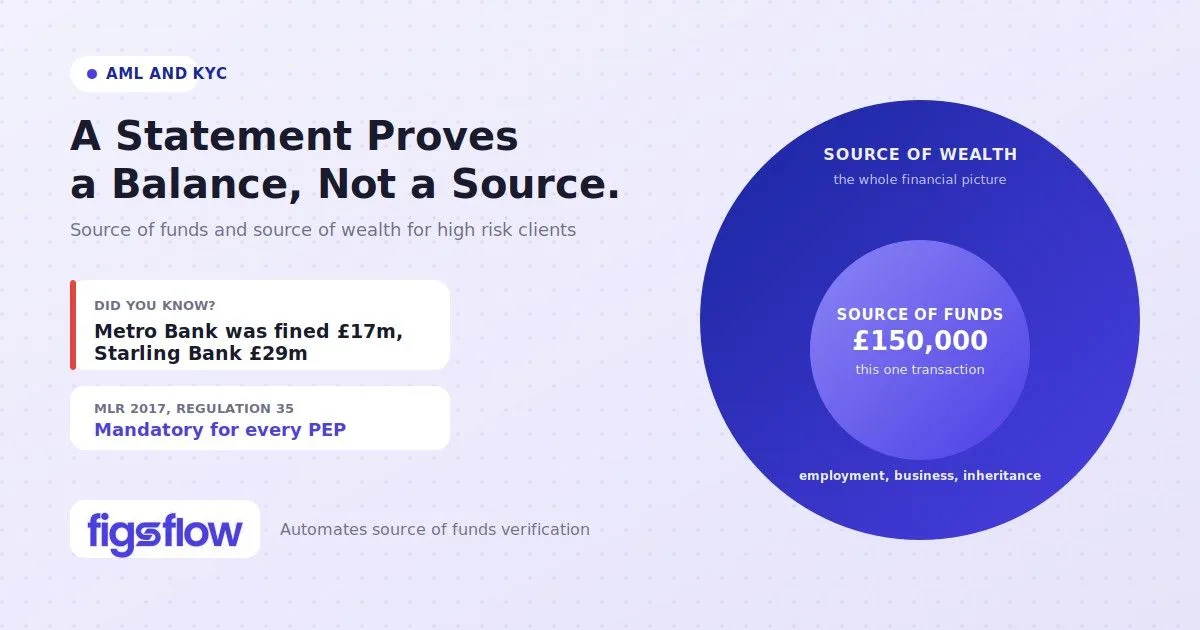
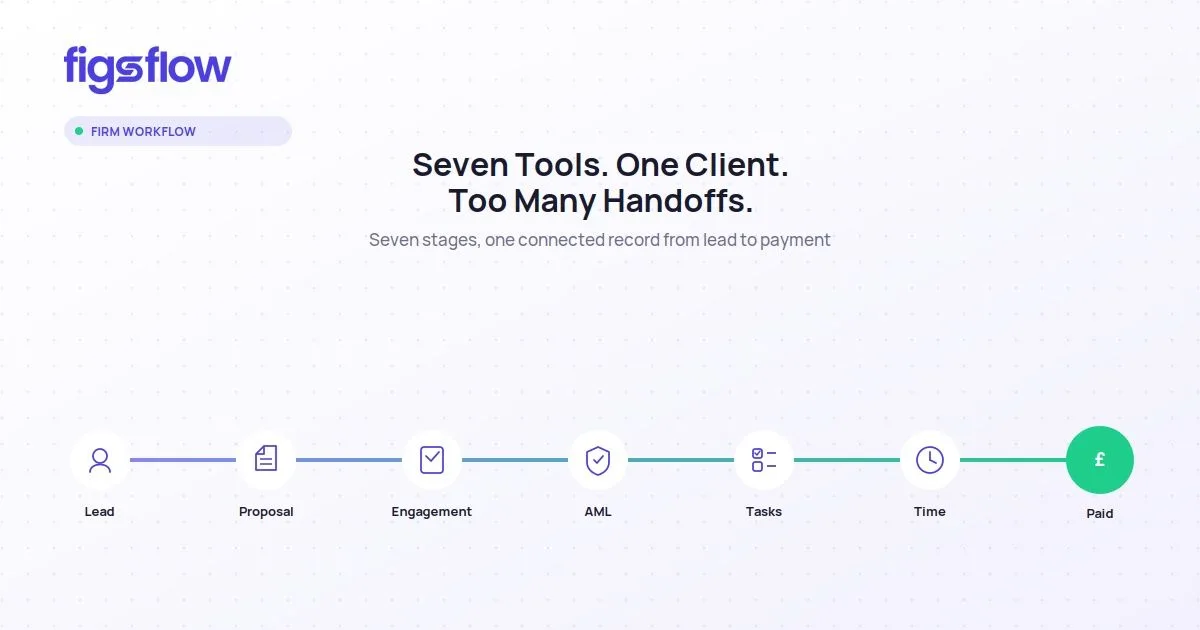
An image featuring tax documents with the UK flag in the background.

1/23/2026

UK Finance Bill 2025-26 measures affecting tax advisers

UK Finance Bill 2025-26 measures affecting tax advisers UK Finance Bill 2025-26 measures affecting tax advisers The Three New Regulatory Threats Mandatory Agent Registration (May 2026) Lowered Threshold for Sanctionable Conduct (April 2026) New Criminal Offence (Two Months After Royal Assent) Why ICAEW Is Alarmed? ICAEW's Specific Demands Historical Context Helpful Resources Conclusion The UK Finance Bill 2025-26 introduces a package of measures that will significantly reshape the regulatory landscape for tax advisers. From mandatory registration requirements to expanded grounds for sanctions and a new strict liability criminal offence, these provisions represent a fundamental shift in how HMRC oversees and enforces standards within the profession. The Institute of Chartered Accountants in England and Wales (ICAEW) has raised substantial concerns about the breadth of these measures and their potential to penalise legitimate professional judgement rather than genuine misconduct. For practitioners, understanding these changes is essential. The consequences of non-compliance range from financial penalties and suspension of practice rights through to criminal prosecution under the UK Finance Bill. This briefing examines each of the three key measures in turn, sets out the practical implications for advisory firms, and summarises the profession’s response to what many consider the most significant regulatory intervention in a generation concerning the UK Finance Bill. Overview of the UK Finance Bill From May 2026, all UK tax advisers communicating with HMRC must register and can face up to 12 months suspension if their behaviour falls below expected standards. The threshold for sanctions drops from “dishonest conduct” to “sanctionable conduct,” meaning advisers can be penalised simply for intending to reduce tax liability, even in good faith disputes. A new strict liability criminal offence will prosecute advisers for promoting arrangements with no realistic prospect of success, regardless of intent or honest belief. ICAEW warns these measures could force mainstream advisers out of complex tax work, paradoxically weakening compliance as clients turn to unqualified advisers or proceed without professional guidance. A single mistake could trigger all three consequences simultaneously: criminal prosecution, financial penalties up to £1 million, and loss of registration that destroys client relationships and threatens firm survival. The UK Finance Bill 2025-26 introduces three interconnected measures that ICAEW warns could fundamentally damage the tax advisory profession and harm compliant taxpayers. As we approach the UK Finance Bill implementation date, it is crucial for all tax advisers to be fully aware of these changes. Starting May 2026, every tax adviser who communicates with HMRC on behalf of clients must register. To register, advisers must meet strict minimum standards. Their firm and key staff must be up to date with their own tax affairs and cannot have received an anti-avoidance penalty in the past 12 months. The critical problem is what happens next. HMRC can suspend registration for up to 12 months if it believes the adviser’s behaviour “falls below the standards that might reasonably be expected.” For many firms, losing registration is an existential threat. They cannot act for any clients during suspension, which could destroy thousands of client relationships and put firms out of business entirely. ICAEW’s concerns are specific and serious. First, there is no explicit test requiring HMRC to act proportionately or reasonably before imposing suspension. Second, HMRC officers are not bound by HMRC’s own standards when judging advisers. Third, the regime has retrospective effect. A historic mistake that cannot be fixed could disqualify a firm permanently. For example, if a firm missed a disclosure requirement under the DOTAS regime years ago and received a penalty, that penalty could still prevent registration today, even if the firm has been fully compliant since. Additionally, ICAEW notes the real wrongdoers will not be caught. Only advisers who interact directly with HMRC must register . Rogue operators who work entirely outside the HMRC system face no registration requirement at all. The UK Finance Bill mandates that tax advisers adhere strictly to new registration protocols to maintain compliance. Currently, HMRC can only penalise tax advisers for dishonest conduct. The new law changes “dishonest conduct” to “sanctionable conduct,” defined as acting “with the intention of bringing about a loss of tax revenue.” This is a dramatic lowering of the bar. The current test requires dishonesty. The new test only requires intention to cause revenue loss. This distinction is crucial. ICAEW’s objection is forceful and well-founded. The new definition could catch legitimate professional disagreements. Imagine a tax adviser and HMRC both interpret complex legislation differently, both acting in good faith. If HMRC believes the adviser intended (even indirectly) to help the client save tax, sanctions could follow. Every tax return entry and every piece of advice would theoretically need to be assessed against future HMRC challenge risk. Consider a technical dispute over how anti-avoidance rules apply to a complex transaction. The adviser gives advice based on their interpretation of the law. HMRC disagrees. Under the old law, the adviser would not be penalised unless they acted dishonestly. Under the new law, if HMRC can argue the adviser intended to bring about tax loss, penalties apply. The intention element is broadly interpreted. Penalties are capped at £1 million for the first breach, calculated by reference to potential lost revenue. This is significant financial exposure. ICAEW warns this will drive mainstream advisers out of complex or higher-risk work entirely. Paradoxically, this weakens tax compliance rather than strengthens it. When experienced advisers retreat, clients either get no advice, rely on unqualified advisers, or take aggressive positions without professional input. The implications of the UK Finance Bill will be felt across the industry, as advisers navigate the new standards set forth. With the UK Finance Bill in place, the landscape of tax advisory work is set to change dramatically. The Bill creates a strict liability criminal offence for promoting arrangements with “no realistic prospect” of delivering a tax advantage. Strict liability means intent is irrelevant. You can be prosecuted even if you genuinely believed the arrangement would work. This is extraordinarily broad. Tax advice is complex and fact sensitive. Mistakes happen routinely from overlooking anti-avoidance provisions, receiving incomplete client information, or misunderstanding developing case law. Currently, these issues are addressed through professional standards, civil penalties and negligence claims. The profession has existing accountability mechanisms. Criminalising honest mistakes is disproportionate, ICAEW argues. And the criminal penalties compound the registration problem. A criminal conviction (or even prosecution) could trigger loss of registration simultaneously, creating cascading professional destruction. The three measures in the UK Finance Bil work together to create a pincer movement against the profession. Registration suspension threatens business continuity. Sanctionable conduct penalties are almost impossible to avoid in complex cases. Criminal liability makes honest mistakes potentially criminal. A single mistake could trigger all three consequences. The unspoken concern is that this creates a chilling effect. Advisers become so afraid of crossing undefined lines that they withdraw from legitimate advisory work. Clients either pay more for excessive caution or make tax decisions without proper professional guidance. The three measures encapsulated in the UK Finance Bill create a challenging environment for advisers. ICAEW’s demands reflect the urgent need for clarity within the framework of the UK Finance Bill. ICAEW has asked for three things: First, limit sanctions to genuinely unethical or unreasonable conduct. Restore a reasonableness requirement. Second, ensure criminal offences target actual wrongdoing, not honest mistakes. Third, protect legitimate professional judgement from triggering sanctions. Additionally, ICAEW wants implementation delayed until 2027 at the earliest, with proper consultation and impact assessment. In July 2025, the government published draft legislation requiring all partners in a firm to register, regardless of whether they worked in tax. ICAEW successfully campaigned against this. The current version requires only relevant individuals (roughly five per firm with six or more partners) to register. This is a partial victory, but the core problems remain. At the Autumn Budget 2025, the government said it would not regulate advisers. Yet this Bill does precisely that. ICAEW’s frustration is understandable. Historical context surrounding the UK Finance Bill reveals the evolution of regulatory practices in tax advisory. UK Tax Advisers Face Mandatory HMRC Registration from May 2026: Tax Advisers Face Mandatory HMRC Registration I FigsFlow List of AML Regulations & Regulators in the UK: List of UK AML Regulations for Accountants 2025 | FigsFlow Discover the Best AML Tools for Tax Advisers: Anti-Money Laundering Compliance Tools for Tax Advisers | FigsFlow HMRC is Targeting “Unethical” Tax Advisers: Rogue Tax Advisers Beware: HMRC is coming for you! Everything You Need to Know About Form-8 Formal Authorisation to Act as a Tax Agent: Form 64-8: Tax Agent Authorisation Guide for Accountants | FigsFlow Complete AML Guidance for Tax Advisers: Anti-Money Laundering Guidance for Tax Advisers: A Complete Guide These measures in the UK Finance Bill 2025-26 are genuinely threatening to the UK tax advisory profession. They shift enforcement toward the profession rather than toward tax avoidance schemes themselves. They create incentives for advisers to over-comply at the expense of legitimate tax planning. They may inadvertently strengthen the market position of unscrupulous operators who operate entirely off HMRC’s radar. The core problem is that all three measures are broadly drafted with insufficient safeguards for ordinary professional practice. They conflate genuine wrongdoing with technical disagreement. This is why ICAEW has described them as posing existential risk to mainstream firms. uk-finance-bill-2025-26-measures-affecting-tax-advisers uk finance bill 2025 26 measures affecting tax advisers page Page

Image: suspicious activity report aml feature image

1/20/2026

Suspicious Activity Report (SAR) in Anti- Money Laundering (AML)

Suspicious Activity Report (SAR) in Anti- Money Laundering (AML) Suspicious Activity Report (SAR) in Anti- Money Laundering (AML) The Nominated Officer and the MLRO: Governance and Statutory Responsibility The specific duties of the MLRO are extensive and statutory in nature Who Has a Duty to Report? SAR Triggers: Defining Suspicion and Knowledge in AML The AML Reporting Process: From Internal Disclosure to External Filing Importance of Timeliness in SAR Filing Post-Filing AML Rules: Moratoriums, DAML, and Tipping Off Extending the Moratorium Period The “Threshold Amount” in SAR Filing The Risk of “Tipping Off” After Filing a SAR Enforcement, Sanctions, and the Cost of Non-Compliance Conclusion In the sophisticated architecture of the United Kingdom’s anti-money laundering (AML) and counter-terrorist financing (CTF) regime, the Suspicious Activity Report (SAR) serves as the principal tool for the private sector to bridge the gap between commercial activity and state security. Far from a mere regulatory tick-box exercise, the SAR regime represents a high-stakes strategic partnership between “relevant persons” and the National Crime Agency (NCA). This association is a legal necessity, designed to protect the integrity of the global financial system by guaranteeing that the frontline of commerce acts as the eyes and ears of law enforcement. The integrity of this system is anchored in two primary legislative pillars: the Proceeds of Crime Act 2002 (POCA 2002) and the Money Laundering, Terrorist Financing and Transfer of Funds (Information on the Payer) Regulations 2017 (MLR 2017). From the perspective of a Chief Regulatory Compliance Officer, the SAR serves a critical dual purpose. Functionally, it is a defensive mechanism. By making an appropriate disclosure under Section 338 of POCA 2002, a firm or individual secures a “safe harbor” that provides a statutory defense against the primary money laundering offenses. Without this protection, the mere act of processing a transaction involving “criminal property”-defined broadly under Section 340 of POCA 2002-could result in severe criminal liability. Strategically, however, the SAR is a potent intelligence tool. Each report feeds into a national repository of data that enables the NCA to map transnational criminal networks, identify emerging threats, and intervene in the layering and integration of illicit capital. The transition from identifying a suspicion to filing a report is fraught with legal peril. It necessitates a thorough comprehension of when a business relationship moves from standard monitoring to active investigation. KEY TAKEAWAYS SARs are vital in the UK’s AML/CTF framework, acting as a tool for firms to report suspicious activities to the NCA. The MLRO, a senior figure in a company, is legally required to manage AML compliance, assess suspicions, and file SARs. Various sectors, including financial, legal, and real estate, are mandated to report suspicions under AML regulations. Key SAR triggers include failures in CDD, dealings with PEPs, and unusual transaction patterns. Non-compliance with AML obligations can lead to severe civil and criminal penalties, including imprisonment for officers. The appointment of a compliance focal point is not a matter of administrative preference; it is an uncompromising legal requirement under Regulation 21 of MLR 2017. For any organisation operating within the regulated sector, the governance structure must be designed to ensure that AML obligations are not diluted across the workforce. Instead, responsibility must be centralised in an individual with the seniority, authority, and resources to serve as the organisation’s legal filter. This high-stakes obligation guarantees that the state has a clear, accountable point of contact for escalating Suspicious Activity Reports (SARs). Under Regulation 21(1)(a) of MLR 2017, a relevant person (unless they are a sole practitioner) is mandated to appoint an individual who is a member of the board of directors, or of its senior management, as the officer responsible for the firm’s compliance. This individual, commonly referred to as the Money Laundering Reporting Officer (MLRO) or Nominated Officer, carries a rare burden of personal accountability in corporate law. his role is complemented by Regulation 21(1)(c) of MLR 2017, which requires firms to establish an independent audit function to evaluate the adequacy of AML policies, and Regulation 21(1)(b) of MLR 2017, which necessitates the rigorous screening of relevant employees both before and during their appointment. The MLRO or Nominated Officer is responsible for receiving internal disclosures and ensuring that Suspicious Activity Reports (SARs) are filed in compliance with the law. Receipt of Disclosures – Under Section 331 of POCA 2002, the MLRO is the authorized recipient of all internal reports made by employees. These disclosures may involve suspicious activity that could warrant the filing of a Suspicious Activity Report (SAR). Evaluation of Suspicion – The MLRO must evaluate each internal report against the firm’s full body of knowledge, including customer records and transaction history, to determine if the legal threshold for an external SAR has been met. The MLRO must assess whether the suspicion is based on objective facts and whether it meets the legal criteria for reporting to the National Crime Agency (NCA). External Reporting – Where the threshold is met, the MLRO must file a Suspicious Activity Report (SAR) with the NCA as soon as is practicable. This ensures that the firm complies with its legal obligations to report suspicious activities and protect against money laundering. The MLRO acts as the final arbiter between internal suspicion and external legal action. They must possess the independence to refuse a transaction or freeze a relationship, even at the cost of commercial gain. A failure by the MLRO to disclose suspicion to the NCA, when they have reasonable grounds to do so, is a criminal offense under Section 331 of POCA 2002. This role is an essential bridge in the SAR reporting chain, ensuring that suspicions are communicated effectively to the authorities. The “Regulated Sector” is a legal construct defined in Schedule 9 of POCA 2002 and refined by Regulation 8 of MLR 2017. This sector is given priority for AML oversight because it contains the gateways through which illicit funds enter the legitimate economy. To provide exhaustive coverage, the law casts a wide net over financial, legal, and professional services. Under Regulation 9 of MLR 2017, any person carrying on business in the UK, including those with a UK head office exercising single market directive rights, is caught by this system. Specific categories of “relevant persons” defined in Regulation 11 to Regulation 17 of MLR 2017 include: Credit and Financial Institutions – Banks, credit unions, and payment service providers. Legal Professionals and Auditors – External accountants, tax advisers, and legal professionals participating in transactions such as the management of client money or the creation of companies. Schedule 1 Professional Bodies – This includes bodies like the Association of Chartered Certified Accountants, the Chartered Institute of Taxation, the General Council of the Bar, and the Insolvency Practitioners Association, among others. High-Value Dealers – Those dealing in goods and receiving cash payments of 10,000 euros or more. Estate Agents and Letting Agents – Estate agents and letting agents involved in property rentals of 10,000 euros or more per month must be vigilant and file Suspicious Activity Reports (SARs) when necessary, under Schedule 9 Paragraph 1(6B) of POCA 2002. Casinos – A unique category with specific transaction-based triggers. The reporting obligations between these sectors are sharply contrasted to account for varying risk profiles. For instance, Regulation 27(5) of MLR 2017 establishes a strict threshold for casinos, requiring customer due diligence (CDD) for any transaction (or linked transactions) amounting to 2,000 euros or more. This is significantly lower than the standard “occasional transaction” threshold of 15,000 euros that applies to many other sectors under Regulation 27 of MLR 2017. Furthermore, Schedule 9 Paragraph 3 of POCA 2002 provides a narrow exemption for small-scale financial activity where the person’s total annual turnover does not exceed £100,000, and the activity is limited to transactions under 1,000 euros. Even in these cases, vigilance is required to detect potential money laundering and file the necessary Suspicious Activity Report (SAR). Crucially, the duty to report constitutes more than a corporate burden; it is a personal liability. Under Section 330 of POCA 2002, any employee in the regulated sector who fails to disclose a suspicion that arises during business commits a criminal offense. This creates a powerful incentive for attentiveness at every level of the organisation. This creates a powerful incentive for attentiveness at every level of the organization, as failing to file a Suspicious Activity Report (SAR) could result in severe legal consequences. The fundamental catalyst for a Suspicious Activity Report (SAR)is the formation of “suspicion.” In a legal context, suspicion is a subjective state of mind, but it must be based on objective “reasonable grounds.” It is a lower threshold than “knowledge,” requiring only an “inkling” or a “slight opinion” that money laundering is occurring, provided that opinion has some factual basis. Under Part 7 of POCA 2002, the duty to report is activated the moment a professional knows, suspects, or has reasonable grounds to suspect that another person is engaged in money laundering. Fundamental to this analysis is the concept of “benefit” under Section 340(3) of POCA 2002. A person benefits from conduct if they obtain property because of, or in connection with, that conduct. If a transaction comprises the proceeds of such conduct, it constitutes “criminal property.” The triggers that move a transaction from standard monitoring to active SAR investigation include: Failures in Customer Due Diligence (CDD) – Under Regulation 31 of MLR 2017, if a firm cannot apply the CDD measures required by Regulation 28, including the identification of the customer and verification of their identity, they must not carry out the transaction. The firm must terminate the relationship and evaluate whether a Suspicious Activity Report (SAR) is required under POCA 2002. Politically Exposed Persons (PEPs) – Under Regulation 35 of MLR 2017, interactions with PEPs, their family members, or close associates require enhanced due diligence (EDD). Any unusual wealth accumulation or complex transactions in this category serve as a primary SAR trigger. Beneficial Ownership Ambiguity – Under Regulation 5 and Regulation 6 of MLR 2017, the inability to identify the individual who ultimately owns or controls an entity is a substantial red flag. Complex corporate structures designed to obfuscate control commonly lack an apparent economic purpose. Unusual Transaction Trends – Transactions that are unusually large, complex, or inconsistent with the customer’s known profile require immediate analysis. If the economic purpose is not apparent, suspicion is legally formed, and a SAR should be filed. These triggers shift the burden from the firm to the state. Once suspicion is formed, the firm’s primary duty is no longer to the client’s commercial interests but to its statutory obligations. This pivot initiates the reporting chain and requires firms to file Suspicious Activity Reports (SARs) with the National Crime Agency (NCA) . The internal reporting chain is designed to provide a “safe harbor” for employees while making certain that only evaluated, high-quality intelligence reaches the NCA. This procedure starts with the employee submitting an internal disclosure to the Nominated Officer. Under Section 337 of POCA 2002, this internal disclosure does not breach any confidentiality restrictions and provides the employee with protection against the underlying money laundering offenses. Once the MLRO receives the report, they must evaluate it “as soon as is practicable,” as mandated by Section 330(4) of POCA 2002. The MLRO’s evaluation is a critical filtering step. If they concur with the suspicion, they must file an external SAR with the NCA. To ensure the intelligence is actionable, a high-quality SAR must include several mandatory components: Subject and Entity Details: Full names, dates of birth, and current/previous addresses. Identification evidence obtained under Regulation 28 of MLR 2017. For corporate entities, registration numbers and details of “Beneficial Owners” as defined under Regulation 5 of MLR 2017. Financial Information: The origin and destination of the funds. Detailed transaction data, including dates, amounts, and currencies. The Narrative of Suspicion: A clear explanation of the triggers identified. A description of why the activity is considered inconsistent with the customer’s legitimate profile. The requirement for speed under Section 330(4) of POCA 2002 is absolute. Delaying a report to conclude a profitable deal or to wait for further evidence can result in criminal prosecution for the MLRO. Therefore, it is crucial that the MLRO files the Suspicious Activity Report (SAR) as soon as is practicable once the suspicion has been validated. Once the report is filed, the firm enters a period of major legal and operational constraint. This is the start of a process that could involve the freezing of assets or further investigation by law enforcement. The filing of a Suspicious Activity Report (SAR) , particularly when seeking a “Disclosure Against Money Laundering” (DAML) or “consent,” triggers a strategic “pause” in activity. This is governed by the Notice Period and the Moratorium Period under Section 335 and Section 336 of POCA 2002. The Notice Period lasts for seven working days. If the NCA does not refuse consent within this window, the firm is deemed to have a defense. However, if consent is refused, a Moratorium Period of 31 calendar days begins. Under Section 336A of POCA 2002, a senior officer may apply to the court to extend this moratorium in 31-day increments, up to a maximum of 186 days. The court will only grant such an extension if it is satisfied that the investigation is being conducted “diligently and expeditiously” and that further time is needed. For the MLRO, this period is filled with risk. Furthermore, Section 339A of POCA 2002 introduces the concept of the “threshold amount”. This allows the Secretary of State to specify an amount under which acts done by those in the regulated sector do not require a specific DAML, facilitating the processing of small, low-risk transactions without overburdening the NCA. The most dangerous post-filing obligation is the avoidance of “Tipping Off” under Section 333A of POCA 2002. It is a criminal offense for an employee in the regulated sector to disclose that a SAR has been filed if that disclosure is likely to prejudice an investigation. This creates the “constructive tipping off” trap. If a bank refuses to process a transaction during a 31-day Moratorium Period, and the customer asks why, the professional must provide a neutral, non-prejudicial response. Telling the customer their account is “under review for AML” could be interpreted as a tip-off, with the risk of a prison sentence. Managing this silence is perhaps the most sensitive responsibility for senior legal counsel. The firm must ensure that no indication is given to the customer that a Suspicious Activity Report (SAR) has been filed, as doing so could lead to severe legal consequences. The AML regime is enforced through a dual-threat model of civil and criminal penalties. Civil penalties, administered by authorities like the Financial Conduct Authority (FCA) or HMRC under Part 9 of MLR 2017 (Regulations 76–85), include unlimited fines and public censure. Under Regulation 78 of MLR 2017, individuals can also be prohibited from holding management roles in the regulated sector. Criminal sanctions are even more severe. Under Regulations 86 to 92 of MLR 2017, failing to report suspicion can lead to up to two years’ imprisonment under Regulation 89. The most critical provision is Regulation 92 of MLR 2017. This regulation mandates that if an offense committed by a body corporate is shown to have been committed with the “consent or connivance” of an officer, or is attributable to their “neglect,” that officer is personally liable. As a Senior Counsel, it is vital to distinguish between these: Consent – Active agreement to the non-compliance. Connivance – Willful blindness; knowing about the failure and taking no action to rectify it. Neglect – A failure to exercise the duty of care required by the role, such as failing to provide the MLRO with sufficient resources or ignoring audit red flags. Under Regulation 92, “officers” include directors, secretaries, and chief executives. This ensures that AML compliance is not confined to the compliance department but is a core responsibility of the board. The cost of non-compliance is far more than a fine on the balance sheet; it is the possibility of individual incarceration and the permanent destruction of a professional career. Filing a Suspicious Activity Report (SAR) The Suspicious Activity Report (SAR)framework is the frontline of the UK’s national security infrastructure. It is the point where the commercial world fulfills its duty to the state. The intersection of POCA 2002 and MLR 2017 provides a comprehensive legal framework that demands ongoing attention. Fundamental to this system is the MLRO, who is required to handle the risky waters between “reasonable grounds for suspicion” and the risk of “tipping off.” For the UK professional, compliance with this regime is a fundamental standard of practice. It calls for an obligation to market transparency and a recognition that the “proceeds of conduct” must never find a safe harbor in the UK financial system. To champion compliance is to protect both the firm and the state from the corrosive influence of illicit capital. suspicious-activity-report-in-anti-money-laundering suspicious activity report in anti money laundering page Page

Image: Risks common to accountancy service providers

1/14/2026

What Are the Common Risks for Accountancy Service Providers

What Are the Common Risks for Accountancy Service Providers What Are the Common Risks for Accountancy Service Providers Understanding the Primary Risks for Accountancy Service Providers Money Laundering & Financial Crime Risks Cybersecurity & Data Protection Risks Professional Liability & Negligence Risks Your Safety Net Regulatory Compliance Risks Reputational & Operational Risks Service-Specific Risks: Where Your Work Creates Exposure Risks in Core Accountancy Services Incomplete Records Financial References Unusual Pattern Blindness Risks in Bookkeeping Services Building on Quicksand Cash Business Verification Round Sum Red Flags Pressure to Process Without Evidence Risks in Tax Advisory & Compliance The Planning vs Evasion Boundary Criminal Liability for Tax Evasion Advice Grant Fraud Facilitation Risks in Payroll Services Falsified Payroll Instructions Modern Slavery Indicators Umbrella Company Fraud Direct Payment Requests Risks in Audit Services Validating Your Own Work Commercial Pressure vs Professional Scepticism Legitimising Questionable Transactions 10 Client Situations That Should Trigger Enhanced Due Diligence High Risk Third Countries No Face-to-Face Contact Frequent Beneficial Ownership Changes Financial Distress Cash Intensive Operations Without Economic Logic Services Requested Through Supply Chains Secretive Clients Resisting Transparency Dormant Companies Suddenly Needing Services Multiple Accountancy Service Providers Without a Clear Reason Unusual Transaction Patterns Your Risk Assessment Obligations: What HMRC Actually Expects Business-Wide Risk Assessment Services You Provide Your Client Base Geographic Factors Your Delivery Model Client-Level Risk Assessment Standard Due Diligence Baseline Enhanced Due Diligence Triggers Mandatory Enhanced Due Diligence Four Risk Assessment Factors Ongoing Monitoring Pro Tip: Document Your Decisions Practical Risk Management: Building Protection Without Bureaucracy Technology & Systems Client Onboarding Platforms AML Software Secure Document Management Cybersecurity Essentials Policies & Procedures That Actually Work Client Acceptance Procedures Ongoing Review Processes Suspicious Activity Reporting Staff Training Insurance: What Coverage You Actually Need Claims Made Policies Cyber Liability Insurance Coverage Gaps When Things Go Wrong: Response Protocols Identifying Suspicious Activity Know Your Client's Baseline Reasonable Grounds for Suspicion When to File a SAR Managing Regulatory Investigations Client Crisis Communication Common Mistakes That Increase Your Risk Exposure Assuming Other Professionals Are Compliant Accepting Client Records Without Verification The "Too Small to Be Targeted" Fallacy Failing to Update Risk Assessments Not Documenting Why You Accepted Higher Risk Clients Additional Resources Conclusion Frequently Asked Questions (FAQs) What are the main risks facing accountancy service providers? What are the risks of making mistakes in accounting work? What is the biggest challenge facing UK accountants in 2026? What are the four main types of risk for accountancy practices? What challenges do accountants face during busy periods? How many suspicious activity reports did you file last year? How quickly could you identify a shell company in your client portfolio? What would happen to your practice if HMRC knocked on your door tomorrow, asking about your AML procedures? If you hesitated on any of these questions, you’re not alone. Most accountancy service providers know they face risks but struggle to identify exactly where their exposure lies. The problem isn’t a lack of awareness. It’s risks that keep multiplying while your time to manage them stays the same. HMRC’s 2025 National Risk Assessment classified accountancy services as high risk for money laundering. That means increased scrutiny, more compliance visits, and higher expectations. This is your guide to identifying the risks that actually threaten UK accountancy practices in 2026. Not theoretical compliance exercises. Real vulnerabilities that cost firms their reputations, their licenses, and sometimes their existence. KEY TAKEAWAYS UK accountancy practices face five critical risk categories: money laundering, cybersecurity, professional liability, regulatory compliance, and reputational damage HMRC’s 2025 National Risk Assessment classified accountancy services as high risk for money laundering, triggering increased scrutiny and compliance visits Common vulnerabilities include shell companies, cash-intensive businesses, incomplete client records, and inadequate due diligence procedures MLR 2017 requires business-wide and client-level risk assessments, enhanced due diligence for high-risk situations, and comprehensive documentation Consequences of poor risk management include criminal prosecution, HMRC deregistration, negligence claims, data breaches, and permanent reputational damage Protection requires proper client onboarding systems, AML monitoring software, cybersecurity controls, staff training, and adequate insurance coverage Every accountancy service provider faces five interconnected risk categories. Understanding how these risks overlap and amplify each other is crucial because a problem in one area rapidly cascades into others. Criminals need accountants. Not because accountants are corrupt, but because legitimate accounting services provide exactly what money launderers need: credible financial records, regulatory filings, and professional endorsement of questionable transactions. UK companies enjoy an international reputation for legitimate business. That reputation makes them perfect vehicles for disguising criminal proceeds. When you prepare accounts or complete tax returns, you create documents that banks, HMRC, and investors trust without further verification. This trust creates your vulnerability. Most practitioners who enable money laundering do so unwittingly. They accept client explanations at face value, skip verification steps when clients apply pressure, or convince themselves that concerns about a lucrative engagement are just paranoia. Here’s where money laundering actually hides in your client portfolio: Shell Companies – Entities existing only on paper with no physical presence or genuine trading. Your services legitimise their existence and facilitate whatever they're actually doing. Cash Intensive Businesses – Restaurants, car washes, and nail salons mix legitimate takings with criminal proceeds. Your accounts create the legitimate trading history that disguises the true source of funds. Sophisticated Multi-Provider Schemes – Criminals split services across multiple accountants so no single practitioner sees the complete picture. This fragmentation is deliberate, avoiding the scrutiny that comes from understanding their entire financial situation. Your client database contains everything criminals need to commit identity fraud on an industrial scale. National Insurance numbers, Dates of birth, Bank account details, Home addresses, Tax reference numbers, Director information, and The complete financial profile of businesses and individuals Data breaches in accountancy practices don’t just expose information. They provide criminals with verified, current data from a trusted source. When fraudsters use information stolen from an accountancy practice, their scams carry more credibility because the data is accurate and comprehensive. Ransomware attacks spike during tax season for obvious reasons. Criminals know accountants will pay almost anything to regain access to client files when statutory deadlines loom. A practice locked out of its systems in mid-January faces an impossible choice: pay the ransom or breach professional obligations to hundreds of clients. The weakest link in most practices is human behaviour. Sophisticated hackers don’t need to break your encryption. They send a convincing email that tricks someone into clicking a malicious link or sharing their password. These phishing attacks succeed because they exploit trust and urgency rather than technical vulnerabilities. Professional mistakes happen to everyone. A misread deadline. A miscalculated tax liability. Advice based on incomplete information. The difference between a minor error and a catastrophic claim lies in the consequences for your client. When your error costs a client money, they expect compensation. IRS penalties. Missed tax reliefs. Late filing fines. Incorrect VAT calculations. Each one represents a potential professional negligence claim against your practice. Tax Advice Liability – Clients rely on your expertise to structure their affairs efficiently within legal boundaries. When HMRC challenges arrangements you recommended, clients look to you for reimbursement if the strategy fails. The line between acceptable tax planning and unacceptable avoidance isn't always clear, but you carry the risk when HMRC draws it differently than you expected. Missed Deadlines – Companies House strikes companies off. HMRC charges late filing penalties. Self-assessment submissions past the deadline incur fixed penalties regardless of whether tax is owed. These penalties fall on your clients, who then pursue you for reimbursement plus their additional costs. Miscalculated Liabilities – Incorrect VAT calculations, missed tax reliefs, or computation errors cost clients money. Each one represents a potential professional negligence claim against your practice. Professional indemnity insurance covers most negligence claims, though policy terms matter enormously. Claims-made policies only respond to claims notified during the policy period. Clients generally have six years from when they discovered the negligence to bring a claim. MLR 2017 creates extensive obligations for all accountancy service providers. These include: Client risk assessments, Customer due diligence, Enhanced due diligence for high-risk situations, Suspicious activity reporting, Record keeping, Staff training, and more These are legal requirements backed by criminal penalties. Professional body standards layer additional requirements on top of statutory obligations. ACCa, ICAEW, CIOT, and other bodies maintain their own ethical codes and practice regulations. Breaching these standards triggers disciplinary procedures separate from any HMRC enforcement. You can face professional sanctions even when criminal prosecution doesn’t follow. Reputation takes decades to build and days to destroy. One data breach. One money laundering scandal. One high-profile client lawsuit. Any of these can permanently damage how potential clients, referrers, and peers perceive your practice. These vulnerabilities threaten your practice beyond regulatory compliance: Risky Client Dilemmas – When do you stop working with a client whose activities attract negative attention? Cannabis businesses, cryptocurrency clients, and property developers with aggressive tax planning. Taking these clients generates fees but creates reputational exposure if their activities later prove problematic. Social Media Amplification – An unhappy client's complaint reaches thousands of potential clients instantly. Online reviews and social media turn isolated incidents into public reputation crises. Defending yourself publicly often makes things worse. Staff Turnover – Experienced team members take client relationships, technical knowledge, and institutional memory with them. When key staff leave, clients question whether they should follow. The disruption impacts service quality exactly when you need to demonstrate competence. Technology Failures – Server crashes during tax season. Cloud provider outages are preventing file access. Accounting software failures are corrupting data. Each incident delays work, forces deadline extensions, and damages client confidence in your operational competence. Client Concentration – Practices with a few large clients generating most revenue face existential risk if any relationship ends. The loss of one major client can immediately make the practice unviable. This vulnerability increases when larger clients use that leverage to negotiate fees or service terms. Different services create distinct risk profiles. Understanding where your specific work generates exposure helps target protection efforts effectively. Your routine work creates the most exposure: Clients provide partial information, rough numbers, or estimates that can’t be verified. They pressure you to file returns based on inadequate data because deadlines loom. When HMRC questions the figures years later, you have no documentation proving the numbers reflected reality. The client blames you for accepting their information without verification. Clients request letters confirming their financial position to support loan applications or business relationships. These references carry weight because they come from a professional source. But what if the client needs the loan to repay gambling debts or launder money? Your reference facilitates criminal activity even though you had no idea about the true purpose. Trading figures that don’t match industry norms. Expenses disproportionate to turnover. Transactions with parties whose business connection makes no sense. Asset purchases that don’t fit the business model. Your familiarity with the client’s business should make these anomalies visible, but only if you actually look for them rather than processing numbers mechanically. Primary records form the foundation for everything that follows. Accounts, tax returns, and management information all depend on accurate bookkeeping. Get these wrong, and the errors multiply through every tax return and financial statement that follows. Clients want transactions recorded quickly without providing supporting documentation. Missing invoices, approximated amounts, and described rather than documented transactions become normalised. You build the entire financial edifice on records that can’t withstand scrutiny. How do you verify daily takings when no independent record exists? The till reading says one amount, the bank lodgement shows another. The difference could be legitimate expenses, personal drawings, or income suppression. Your records make tax evasion look legitimate. The same supplier is receiving regular payments despite no obvious business need. Round sum transfers between accounts with no clear purpose. Regular payments to individuals not on payroll. Unusual foreign transactions that don’t match trading activity. These patterns only emerge when you look holistically rather than processing transactions in isolation. Clients resist providing documentation for every entry because they want to stay current. This casual approach to evidence creates records that collapse under HMRC scrutiny. You normalised the shortcuts that later became your liability. Clients want aggressive planning that maximises deductions and minimises liabilities. They dismiss your warnings about HMRC challenges. They threaten to find another advisor willing to be more “creative” if you won’t help them enough. This pressure pushes you toward dangerous territory: The distinction between acceptable tax planning and unacceptable evasion isn’t always clear. HMRC challenges arrangements regularly, and courts decide whether they work. But you provide the advice before that clarity exists, accepting the risk that future decisions might categorise arrangements you recommended as unacceptable. When you knowingly help clients hide income, inflate expenses, or misrepresent their tax position, you commit an offence. The defence that the client insisted on, or that everyone in their industry does it, doesn’t work. Professional advisors face higher standards and harsher penalties than taxpayers themselves. Clients apply for government grants or support schemes they don’t qualify for. They ask you to prepare applications or accounts that make them appear eligible. Your professional involvement lends credibility to fraudulent claims. When the scheme collapses, you face accusations of facilitating fraud even if you believed the client’s representations. Payroll records make illegitimate payments look legitimate. Employees who don’t exist. Inflated salaries with the excess returned to owners. Fabricated bonuses justifying large payments. Your services provide the documentation that makes these schemes work. Watch for these warning signs in your payroll work: Employees who don’t exist, inflated salaries for genuine employees, with the excess paid to the business owner, and fabricated bonuses that justify large payments from business accounts. Each scheme needs payroll records to appear legitimate, and your services provide exactly that documentation. Identical salaries for all workers regardless of hours or experience. Round sum payments suggesting estimation rather than calculation. Missing National Insurance numbers or tax codes. Employees whose payroll records show full-time minimum wage employment, while their living expenses would require a far higher income. Workers believe they’re legitimately employed through umbrella companies handling their tax and National Insurance. The umbrella company pockets the tax deductions rather than paying HMRC. Workers discover years later they owe thousands because the company stole rather than remitted their contributions. Your payroll services potentially facilitate this theft. Clients ask you to pay employees directly from their business account rather than through normal payroll processes. This makes suspect payments look like legitimate payroll when they’re actually something else entirely. The separation between processing and payment provides protection by limiting your involvement in questionable transactions. An audit provides credibility that money launderers desperately need. Financial statements audited by a professional firm carry weight that unaudited accounts don’t achieve. Banks, investors, and regulators trust audited figures. This trust makes audit services attractive for criminals seeking to legitimise questionable transactions. Your audit function creates these specific exposures: When you audit accounts you also prepared, or audit companies you provide tax advice to, you validate your own work. The independence that makes audit valuable erodes when commercial relationships create pressure to overlook problems. Clients know you don’t want to lose the more lucrative advisory work by raising concerns in your audit report. Audit standards require professional scepticism, but clients pay your fees. You want to retain them. Raising difficult questions damages relationships and risks losing work. The pressure to give clients what they want conflicts with your obligation to report what you actually find. This tension intensifies when clients’ businesses involve higher money laundering risks. Your audit signature turns unreliable figures into trusted financial statements. Banks accept them. Investors rely on them. Regulators use them. When those figures disguise criminal activity, your professional credibility becomes the tool that makes the fraud work. Certain situations automatically increase risk and require enhanced due diligence before you proceed. Missing these triggers exposes you to regulatory criticism and potential sanctions. These red flags demand immediate attention: Clients from jurisdictions with weak anti-money laundering controls, high corruption, or inadequate regulatory supervision. FATF and EU publish lists of countries with strategic deficiencies. Business relationships involving these countries require enhanced due diligence regardless of other factors. Remote-only relationships make it easier for criminals to use false identities and fabricated documents. Meeting clients in person and examining original documents helps confirm identity and assess legitimacy. Video calls help, but don’t match the assurance from physical meetings. Legitimate businesses have stable ownership structures. Companies that repeatedly change beneficial owners serve no genuine business purpose. They exist to obscure true ownership and facilitate transactions that the real controllers want to hide. Struggling companies become desperate. Owners accept questionable investments, sell to buyers who don’t make commercial sense, or agree to arrangements that seem too good to be true. Criminals exploit this by offering financial lifelines that turn the business into a money laundering vehicle. When trading patterns, customer base, or business model suggest mostly card or electronic payments, high cash volumes make no sense. The cash likely comes from somewhere other than the business supposedly generating it. Intermediaries might deliberately obscure the ultimate client’s identity and activities. Long supply chains involving multiple parties should trigger questions about why the structure exists and what it achieves. Legitimate businesses answer reasonable questions about operations, ownership, and transactions. Clients who evade questions, refuse supporting documents, or become defensive when you probe are hiding something. Why does a company declared dormant at Companies House need accounting services? What trading activity occurred that contradicts its dormant status? These questions often reveal fraudulent arrangements. Criminals deliberately split services between different providers so nobody sees the complete picture. One firm for bookkeeping, another for accounts, a third for tax advice, with no logical explanation, suggests they’re hiding activities. Requests for financial references to support borrowing that the business doesn’t need. Early loan repayments suggest proceeds from undisclosed sources. Large cash deposits are inconsistent with reported trading. Payments to unrelated parties serving no clear business purpose. MLR 2017 requires two types of risk assessment: business-wide assessments covering your entire practice, and client-specific assessments for each business relationship. Your business-wide risk assessment identifies and evaluates the money laundering and terrorist financing risks your practice faces. This isn’t a theoretical exercise. HMRC expects a practical analysis of your specific circumstances that you can demonstrate during compliance visits. Assess these core risk factors: Payroll and bookkeeping create different risks than audit or tax compliance. Services involving handling client money increase exposure. Work requiring you to form companies or act as a nominee director generates even higher risk. Your assessment must honestly evaluate which services create the most vulnerability. Serving mostly local owner-managed businesses presents different risks than working with international corporate groups. Clients in cash-intensive industries create specific concerns. Businesses in sectors associated with money laundering, like property development, import-export, or money service businesses, require particular attention. Clients with overseas operations, particularly in high-risk jurisdictions, increase your exposure. Cross-border transactions and complex international structures make it harder to understand beneficial ownership and verify the legitimate business purpose of arrangements. Practices meeting clients face to face can verify identities more reliably than those working entirely remotely. Firms operating through referral networks and supply chains have less direct knowledge of end users than those developing direct client relationships. Every client requires an individual risk assessment before you form a business relationship. This assessment determines whether standard customer due diligence suffices or whether enhanced due diligence is mandatory. Apply this framework to every new client: Identify the client and beneficial owner, understand the purpose and intended nature of the relationship, and conduct ongoing monitoring. This baseline applies to every engagement regardless of risk level. When risk factors exist, you must obtain additional information about the client, beneficial ownership, source of funds, and reasons for transactions. The level of ongoing monitoring increases, requiring more frequent reviews and closer scrutiny of activity. Clients from high-risk third countries. Politically exposed persons and their family members or close associates. Complex corporate structures that obscure beneficial ownership. Circumstances where normal due diligence can’t be completed, such as remote relationships with limited documentation. Client characteristics (location, ownership structure, business activities). Service factors (type of work, value, duration, complexity). Geographic factors (where the client operates and where transactions flow). Delivery factors (how you’ll interact and verify information). Client circumstances change. Business activities evolve. New beneficial owners appear. Regular reviews catch these changes and prompt reassessment when risk profiles shift. Documentation protects you when HMRC questions your judgments. Without contemporaneous written records, you’re relying on memory to justify decisions made months or years ago. That doesn’t work. Record these essentials: What information did you obtained, and what checks did you perform Any concerns that arose and how you resolved them Your assessment of the client’s risk level and why Enhanced due diligence measures you applied and why they were sufficient Your reasoning if you decided not to file a suspicious activity report despite concerns Courts give significant weight to decisions documented at the time compared to after-the-fact explanations. Risk management shouldn’t paralyse your practice with paperwork. Focus on controls that actually reduce exposure rather than creating compliance theatre. The right technology reduces your manual workload while improving compliance: Automate identity verification and sanctions screening. Check identification documents, verify addresses, screen against PEP and sanctions lists, and create audit trails proving you completed proper checks. The upfront cost is quickly recovered through time saved and reduced error rates. Monitors client transactions and flags suspicious patterns. Set parameters that trigger alerts when activity falls outside expected norms. This scalable approach lets smaller practices maintain effective monitoring without dedicated compliance staff. Cloud platforms with proper security controls, multi-factor authentication, and encryption provide better protection than filing cabinets or local servers. They enable remote working without creating security gaps. Firewall protection, antivirus software, regular backups stored separately from primary systems, multi-factor authentication for all systems, and encrypted communication channels. These baseline controls stop most attacks. Add cyber insurance for financial protection when prevention fails. Written policies mean nothing unless staff follow them consistently. Your procedures need to be simple enough that people actually use them rather than finding workarounds. Include clear criteria for declining engagements. Red lines that trigger automatic rejection save time and prevent pressure in uncomfortable situations. Document why you declined potential clients. This record demonstrates your standards to regulators and protects against discrimination claims. Low-risk clients warrant annual reviews. Medium-risk clients need quarterly attention. High-risk clients demand monthly monitoring or more frequent scrutiny. Match the effort to the actual risk rather than treating everyone identically. You need to recognise and report concerns without tipping off clients under investigation. Clear internal processes help staff escalate concerns to decision makers who determine whether SAR filing is required. Tipping off is a criminal offence. Annual anti-money laundering training covering regulatory requirements, red flag recognition, and reporting procedures. New starter induction ensures people understand responsibilities from day one. Ongoing refreshers reinforce key messages and address emerging risks. Professional indemnity insurance remains mandatory for most accountancy work. Policy limits should reflect your largest potential claim, not just regulatory minimums. Consider if your advice costs a major client hundreds of thousands in unnecessary tax. Can your current policy limit absorb that claim plus defence costs? Any circumstance that might give rise to a claim must be notified to your current insurer before the policy ends. Otherwise, coverage disappears even though you had insurance when the error occurred. Run-off cover protects retired practitioners against claims for past work. First-party coverage for your own losses (breach notification, forensic investigation, legal fees, business interruption). Third-party coverage for client claims whose data was exposed. The average breach costs small practices £65,000 before any client claims. Fines and penalties typically aren’t covered. Criminal acts by staff might be excluded. Cyber policies might not cover social engineering fraud. Read your policies carefully and understand exactly what protection you actually have versus what you assumed you had. Despite your best efforts, problems will occur. How you respond determines whether a manageable incident becomes a disaster. Suspicious activity isn’t the same as proven crime. You’re not expected to investigate or determine whether criminal activity actually occurred. Your obligation is to recognise when client activity or circumstances give reasonable grounds for suspicion. Knowledge of your client’s normal activities provides the baseline for recognising abnormal patterns. Unusual transactions, changes in business direction, new parties appearing in the relationship, or a source of funds that don’t match expected income. Any deviation from the established pattern warrants closer attention. Would another professional with similar knowledge and experience share your concerns? This standard is lower than proof but higher than mere possibility. You need genuine reasons for worry based on objective facts rather than vague unease. The decision point arrives when suspicions crystallise into reasonable grounds. At this stage, further work for the client might constitute facilitation of money laundering. You need legal advice about whether to file a SAR and whether you can continue the engagement. HMRC compliance visits test whether your systems actually work as documented. Officers review client files, examine risk assessments, and check procedures. Professional body investigations follow complaints and apply different standards – you can face sanctions even without criminal charges. Cooperation helps, but doesn’t eliminate consequences. Arguing or refusing information makes things worse. Take prompt remedial action when weaknesses are identified. Get legal advice to protect your position while meeting obligations. Exiting client relationships mid-engagement creates professional challenges. You can’t simply walk away without notice, but continuing to act for clients you suspect of criminal activity potentially makes you an accessory. The tipping-off offence prevents you from explaining your real reasons for resignation. Telling the client you filed a SAR or suspect money laundering is criminal. Find alternative explanations that don’t reveal the true reason. Reputation protection during public incidents requires careful communication. Clients, referrers, and the professional community want assurance that problems are isolated rather than systemic. Professional PR support helps craft honest messages without creating additional exposure. Learning from others’ mistakes is cheaper than making them yourself. These common errors appear repeatedly in regulatory enforcement cases. When you work with solicitors, estate agents, or other accountants, you might assume they’ve completed proper due diligence. But some professionals deliberately ignore obligations or simply don’t understand them. Their failures become your problems when you rely on their work without verification. The accounts you prepare, the tax returns you file, and the advice you give all depend on the underlying data being accurate. When clients provide incomplete information or unverified figures, you’re processing garbage and producing garbage output that carries your professional endorsement. Cybercriminals use automated tools that scan for vulnerabilities without caring about the practice size. Money launderers deliberately target smaller firms expecting weaker controls. Your size doesn’t protect you; it increases your vulnerability by limiting resources available for protection. Risk assessments must be living documents that evolve as circumstances change. New beneficial owners, different trading activities, and expansion into new markets. Each change potentially alters the risk profile and requires reassessment. When HMRC questions why you acted for a client with obvious red flags, explaining that it seemed fine at the time doesn’t work. Contemporary written records showing you identified the risks, applied enhanced due diligence, and concluded you could manage the exposure demonstrate professional judgment. Everything You Need to Know About Enhanced Due Diligence on Politically Exposed Persons (PEP): Enhanced Due Diligence on Politically Exposed Persons No Photo ID? Don’t Worry! Here’s What You Can Use in the UK: No Photo ID? What You Can Use in the UK (2026 Guide) Discover the Best Engagement Letter Software for Accountants: 10 Best Engagement Letter Software for Accountants in 2026 | FigsFlow AML Verification Explained Like Never Before: UK AML Verification Guide 2026: MLR Amendments & Sanction Updates Master Source of Funds (SOF) & Source of Wealth (SOW) in 18 Minutes: Source of Funds(SOF) & Source of Wealth(SOW) | FigsFlow Risk management feels like a regulatory burden. Forms, procedures, training. Time taken from fee-earning work. But what happens without it? Criminal prosecution for facilitating money laundering. Data breaches are destroying client trust. Negligence claims. HMRC deregistration. Reputational damage is driving clients away. Your next steps depend on where you are now. Lack basic systems? Start with client onboarding. Have policies but don’t follow them? Embed procedures into daily practice. Compliance solid? Upgrade technology to reduce manual effort. The question is whether you’ve built protection before you need it, or whether you’re scrambling after something goes wrong. Choose to be proactive. UK accountancy practices face seven primary risk categories: money laundering and financial crime, cybersecurity and data protection, professional liability and negligence, regulatory compliance, reputational damage, operational disruption, and service-specific exposures. Each category creates distinct threats requiring targeted protection strategies. Errors in accounts preparation, tax calculations, or filing deadlines create immediate financial consequences for clients. Miscalculated tax liabilities trigger HMRC penalties. Missed deadlines incur automatic fines. Incorrect advice leads to lost reliefs or failed tax strategies. Clients pursue professional negligence claims for reimbursement, and serious errors damage your reputation permanently. Multiplying regulatory obligations while managing the same resources. Making Tax Digital implementation, enhanced AML requirements, evolving cyber threats, and professional body standards all demand increased attention. The challenge isn’t any single regulation but the cumulative burden of staying compliant across multiple frameworks simultaneously. Compliance risk from failing to meet MLR 2017, MTD, or professional body standards. Operational risk from staff turnover, technology failures, or client concentration. Financial risk from professional negligence claims, cyber incidents, or client payment defaults. Reputational risk from association with problematic clients, data breaches, or public complaints. Tax season creates compressed deadlines with multiple clients needing work simultaneously. This pressure increases error risk exactly when accuracy matters most. Ransomware attacks spike during these periods because criminals know practices will pay to regain file access. Managing workload while maintaining due diligence standards becomes critical when time pressure is highest. common-risks-for-uk-accountancy-service-providers common risks for uk accountancy service providers page Page
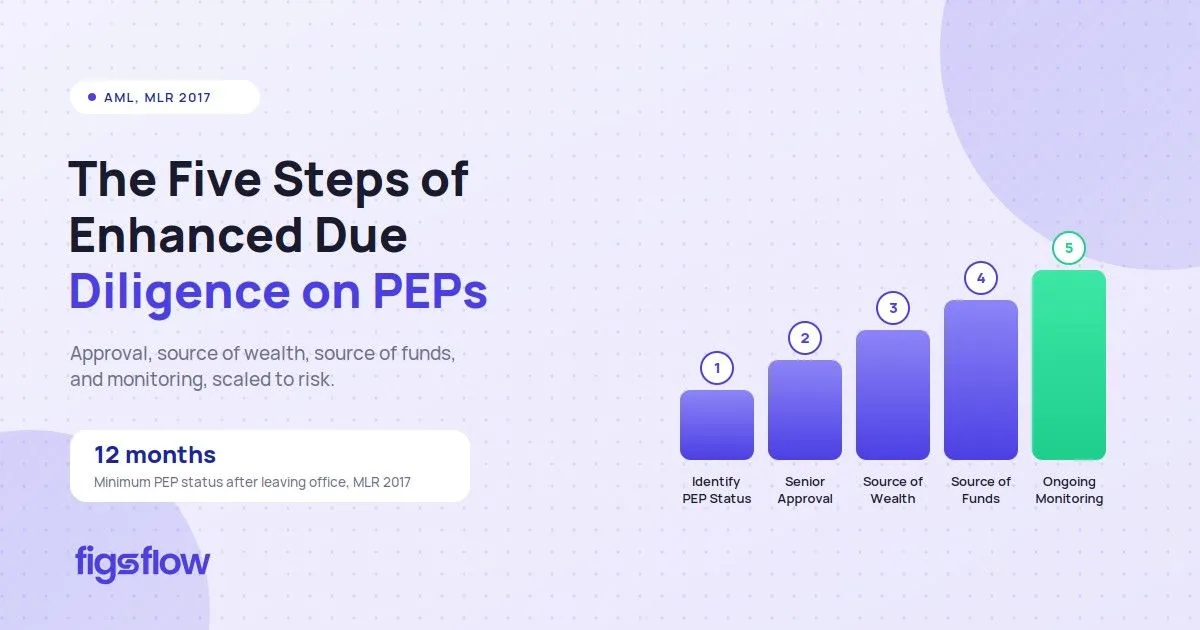
Image: No Photo ID What You Can Use in the UK

1/12/2026

No Photo ID? What You Can Use in the UK

No Photo ID? What You Can Use in the UK No Photo ID? What You Can Use in the UK What counts as photo ID in the UK? If you have no photo ID in the UK, you can use these instead How to get photo ID fast, and how to get it free Your three best alternatives to photo ID in the UK PASS-accredited card (around £15 to £18) Provisional driving licence (£34 online, £43 by post) Voter Authority Certificate (free) Can you open a bank account without photo ID in the UK? Do banks legally need to see photo ID? Basic bank accounts: what they are and who can get one Can you open a basic bank account online without ID? What documents to take to the bank Opening a bank account with no fixed address Can you use a birth certificate as ID in the UK? Can you use a photo or photocopy of your ID? Is there a UK national identity card? What ID can you use to vote without photo ID? How to prove your identity for work without photo ID The ID1 form: solicitor-certified identity What if you're homeless or have no fixed address? For employment For registering to vote Documents that don't count as ID in the UK Why you are being asked for ID at all Conclusion Frequently Asked Questions (FAQs) What can I use as ID if I don't have a passport or driving licence in the UK? Can I open a bank account without photo ID? Can I open a basic bank account online without ID? How do I get photo ID quickly if I need it immediately? How do I get free photo ID in the UK? Can you use a birth certificate as ID? Can I use a photo or photocopy of my passport as ID? What ID can I use to vote if I have no photo ID? Is there a UK national identity card? No photo ID? This guide sets out every document you can use instead in the UK — for opening a bank account, starting a job, voting, and official identity checks — with what each one costs and how long it takes to get. A form asks for photo ID. You run through the options: no passport, you don’t drive, and no provisional licence either. What now? Millions of UK adults have neither a passport nor a driving licence, so if that is you, you are not unusual and you are not stuck. There is a free route, a £34 route, and a set of two-document combinations that banks and employers accept every day. This guide covers all of them: what counts as photo ID in the UK, how to get one quickly, what to do when you need a bank account today, and which documents will not work no matter who is asking. KEY TAKEAWAYS Cheapest photo ID: a PASS-accredited card, around £15 to £18. Cheapest government-issued photo ID: a provisional driving licence, £34 online or £43 by post. Free photo ID: a Voter Authority Certificate costs nothing — but it is only valid for voting, not for banks, employers or age checks. No photo ID at all? Apply for a provisional licence by post on form D1, which does not require you to already hold photo ID. Banks are not legally required to see a passport or driving licence. They must verify your identity from reliable sources, and the documents that count are broader than most branch staff volunteer. Two-document strategy: a birth certificate plus a document showing your National Insurance number covers most banking and employment checks. For voting, expired ID is still accepted, and so are older person's and disabled person's bus passes, a Blue Badge and an HM Armed Forces Veteran Card. No fixed address: letters from a hostel, support worker or registered charity replace utility bills for a basic bank account. Last resort: a solicitor-certified ID1 form, typically £20 to £100. There is no single national list. Each organisation sets its own, which is why a document your bank refuses can be perfectly acceptable at a polling station. But almost every list in the UK is built from the same pool: UK passport — the document most lists treat as the gold standard UK photocard driving licence , full or provisional PASS-accredited proof-of-age card , such as a CitizenCard Biometric residence permit National identity card issued by an EU or EEA country Defence Identity Card (MOD Form 90) or HM Armed Forces Veteran Card (MOD Form 100) Voter Authority Certificate or Anonymous Elector’s Document — for voting only Older person’s or disabled person’s bus pass, Blue Badge, Oyster 60+ card, Freedom Pass, Scottish National Entitlement Card — accepted for voting, rarely elsewhere Two things trip people up. First, a document can be photo ID for one purpose and worthless for another — a bus pass will get you a ballot paper but will not open a bank account. Second, a document does not have to carry your photograph to prove who you are. Banks and employers routinely accept combinations of non-photo documents, which is the route most people without a passport actually end up taking. Here is every realistic option side by side, with what it costs, how long it takes, and — the part most guides leave out — what it is actually accepted for. Option Cost How long Accepted for Do you need photo ID to apply? Voter Authority Certificate Free About 2 weeks Voting in person only No PASS-accredited card (e.g. CitizenCard) Around £15–£18 Around 3 weeks Age checks, voting, many everyday identity checks No — a countersignature from someone who has known you 2 years is used instead Provisional driving licence £34 online, £43 by post About 1 week online Banking, employment, voting, age checks — the most widely accepted of the cheap options Online route may ask for a passport. Use the postal D1 form if you have none UK passport £102 online, £115.50 by paper form Weeks; urgent services cost more Everything, including travel No, but you need a countersignatory and supporting documents Birth certificate + National Insurance document About £12.50 for a replacement certificate Days to weeks Banking and right-to-work checks. Not age checks No Solicitor-certified ID1 form Typically £20–£100 One appointment Property and Land Registry matters, and organisations that insist on certified identity No — the solicitor verifies you in person There is no same-day photo ID in the UK. Nothing is issued over a counter while you wait, so if a deadline is coming, the order you apply in matters more than which document you pick. Fastest: a provisional driving licence. GOV.UK says the licence should arrive within a week of applying online, which makes it the quickest route to a government-issued photo ID that banks and employers will accept without argument. Free: a Voter Authority Certificate. It costs nothing, you apply on GOV.UK or through your council, and it takes roughly two weeks. Be clear about its limits, though — it exists so that people without photo ID can still vote. It is not a general-purpose identity card and most banks and employers will not take it. If you hold no photo ID whatsoever , this is the detail that matters: the online provisional licence application can ask for a passport to verify who you are. If you do not have one, apply on form D1 instead, which you can pick up at a Post Office and post to DVLA with a passport-style photograph. The postal route costs £43 rather than £34 and takes longer, but it does not assume you already own the thing you are trying to obtain. If the deadline is a job start date , do not wait for a card at all. A UK birth certificate plus a document showing your National Insurance number can satisfy a right-to-work check now, and you can apply for photo ID in parallel. If the deadline is an election , check the accepted list before spending anything. Expired ID still counts for voting, as do several travel passes — there is a good chance you already hold something that works. What if you need to verify your identity for Companies House? If you are a company director or a person with significant control, you have a separate obligation that none of the documents above will settle on their own. Under the Economic Crime and Corporate Transparency Act, Companies House now requires directors and registrable PSCs to verify their identity, with the deadline for directors tied to the company’s next confirmation statement date. This is a different regime from the checks a bank or an employer runs. Those are risk-based — a bank can weigh up a combination of documents and decide it is satisfied. Companies House verification is fixed: the same standard applies to everyone, and it is met or it is not. There are two routes. You can verify yourself directly through GOV.UK One Login, which works by scanning a photo ID document with your phone — so it is the route that fails if you have none. Or an Authorised Corporate Service Provider can verify you and confirm it to Companies House on your behalf. An ACSP examines your documents rather than relying on an app reading a chip that isn’t there, which makes it the more practical route if you have no photocard. Either way the check is done once: the personal code you receive covers every directorship and PSC role you hold, across every company. If that applies to you, two guides go further: who has to verify, when each deadline falls and how the personal code works , and what verification through an ACSP involves . PASS is not a card. It is the national Proof of Age Standards Scheme , and the PASS hologram is an accreditation carried by cards from approved issuers — CitizenCard being the best known. That distinction matters when you are searching, because there is no single “PASS card” to buy; you apply to an issuer and the card arrives carrying the hologram. Expect to pay around £15 to £18 and to wait roughly three weeks. You will need a digital photograph, your details, and someone who has known you for at least two years to countersign your application — a family member, a friend, or a professional. That countersignature is the point: it is how the scheme verifies people who have no photo ID to begin with. A PASS card is on the accepted list for voting in person and is widely taken for age checks. Beyond that, acceptance varies by organisation, so if you need it for a specific bank or employer, ask them first rather than assuming. Even if you never intend to drive, this is the cheapest government-issued photo ID in the UK, and it is the one that causes the fewest arguments. A photocard provisional licence does everything a full licence does for identity purposes: banking, employment checks, voting, age-restricted purchases. Apply on GOV.UK with your National Insurance number, your addresses for the last three years and a digital photograph. You must be at least 15 years and 9 months old and have the right to live in Great Britain for at least 185 days. GOV.UK states the licence should arrive within a week of an online application, though DVLA may take longer if it needs extra checks. The catch, again: the online route may ask for a passport so DVLA can verify your identity electronically. With no passport, use form D1 by post. A Voter Authority Certificate is a free paper document showing your photograph, name and date of birth. It was created for one purpose: so that voter ID rules do not stop people without a passport or driving licence from voting. Apply on GOV.UK or through your local council with a recent digital photo and your electoral registration details. Allow about two weeks. Be realistic about what it does. It is on the accepted list at polling stations and it is genuinely free, which makes it worth having. It is not a substitute for a bank’s or an employer’s photo ID requirement, and you should not plan a bank application around it. If you need identity proof for anything other than voting, the provisional licence or a PASS card is the document to pursue. If you have no fixed address, you can still get one. Register to vote using the address where you sleep most nights, or make a declaration of local connection, and apply for the certificate using those registration details. Yes. It is harder than walking in with a passport, and some branches will tell you it is impossible, but it is done every day and the rules are on your side more than the conversation at the counter suggests. No. This is the most useful thing to understand before you apply. Under the Money Laundering Regulations 2017, a bank must verify your identity using information from a reliable source independent of you . It does not say passport. It does not say driving licence. Those two documents are simply the fastest way for a bank to satisfy the rule, so they became the default request — and then the default assumption. Banks are also expected not to shut people out of banking because they lack the standard documents. That is why every major UK bank has a documented process for customers with non-standard identification, even where front-line staff are not familiar with it. If the first person you speak to says no, the phrase that opens the door is: “I don’t have photo ID — can I speak to someone about opening a basic bank account, and can you tell me what alternative documents you accept?” A basic bank account is a stripped-back current account: it takes payments in, pays bills by direct debit, gives you a debit card, and does not offer an overdraft. Every major UK bank and building society offers one, and they are designed for exactly the situations that make a standard account difficult — no credit history, a poor credit record, past bankruptcy, no fixed address, or no standard identification. They are the right product to ask for by name. A basic bank account application is assessed differently from a standard current account, and the identification requirements are usually applied with more flexibility. Usually not in one sitting. App-based banks onboard entirely online, but the flow is built around photographing a photo ID document and matching your live face to it — so with no photocard at all it fails at the identity step. High-street banks let you start online and finish in a branch or by post, where a person can review a combination of non-photo documents instead. If you want the fully online route, get a provisional licence first. A bank needs two things: proof of who you are, and proof of where you live. Take as much as you can from each column — more documents make a manual check easier to approve. Proof of identity (no photo needed) Proof of address (dated within 3 months) Birth certificate — original, not a photocopy Utility bill: gas, electricity or water Adoption certificate or marriage certificate Council tax bill Document showing your National Insurance number: NI card, P45, P60, or a letter from HMRC Bank or building society statement from another provider Benefit award letter from DWP or HMRC — State Pension, Universal Credit, Child Benefit, tax credits Tenancy agreement or housing association letter Letter from a hostel, support worker or registered charity confirming who you are Letter from your GP surgery showing your registered address NHS medical card showing your NHS number Letter from a school, college or university if you are a student Solicitor-certified ID1 form Letter from your local council, including its homelessness service Having no permanent address does not disqualify you. What replaces a utility bill is a letter on letterhead from an organisation that knows you — a hostel or night shelter, a support worker or case worker, or a homelessness charity such as Shelter, Crisis or The Salvation Army. Some banks will accept that organisation’s address for correspondence. If you are refused, ask for the reason in writing and try another provider: document policies genuinely differ between banks. On its own, no. As one half of a pair, very often yes. The reason is simple once you see it. A birth certificate proves that a person with that name was born on that date. It carries no photograph and no signature, so it cannot prove that you are that person. That is why almost no organisation accepts it alone, and why it is powerful the moment you pair it with something that links the name to you. What a birth certificate can do: Paired with a document showing your National Insurance number, satisfy a right-to-work check Paired with proof of address, open a basic bank account Support an application for a passport or a provisional driving licence What it cannot do: Prove your age to buy alcohol or enter an age-restricted venue — no photo, no match Get you through an airport Stand as sole identity proof where a witnessed signature is required The three-document version. If a bank or employer is hesitating, add a third document. A birth certificate, plus National Insurance evidence, plus a recent utility bill or council tax bill is a strong combination that clears most manual checks. An NHS medical card and government correspondence strengthen it further. Recency matters — anything within the last three months carries the most weight. One practical note: bring the original. Lost yours? A replacement from the General Register Office costs about £12.50 and is worth ordering early, because it is the document most of the alternatives in this guide are built on. Almost never, and it is one of the most common reasons an application gets rejected. A photograph of your passport on your phone, a scan, a screenshot, or a photocopy you made yourself all fail for the same reason: none of them can be examined for the security features that prove the document is real. Holograms, machine-readable zones and the feel of the material are what a checker is looking at, and a copy destroys all of it. There are two exceptions worth knowing: A certified copy. A solicitor, notary or other designated official can examine your original, take a copy, and certify in writing that it is a true likeness. That certified copy is accepted in many situations where the original cannot be sent. Certifying usually costs a small fee. A regulated digital identity check. Where an organisation uses a certified identity service provider, you may be asked to upload a photograph of your document and record a short video selfie. That looks like “sending a photo of my ID” but it is not — the software is checking the document’s embedded chip or security features and matching your live face to it. It only works through that provider’s own app or portal, never by emailing a picture to someone. So: never email or hand over a photo of your ID and expect it to be accepted, and be wary of anyone who asks you to. Send a certified copy, or complete the check through the organisation’s own verification process. No. The UK has no compulsory national identity card and no general-purpose personal ID card that every citizen holds. Wartime identity cards were abolished in 1952, and the ID card scheme introduced under the Identity Cards Act 2006 was cancelled in 2010, with the cards issued under it withdrawn from use. That absence is precisely why this question is so common. In most European countries the answer to “I have no passport” is “use your national ID card”. In the UK there is no such fallback, so identity is proved with a patchwork of documents issued for other purposes — a driving licence for driving, a bus pass for travel, a proof-of-age card for buying alcohol. The closest things to a general personal ID card available today are the ones in this guide: a PASS-accredited card, or a provisional driving licence if you want something government-issued. Proposals for a national or digital ID scheme surface regularly in political debate, but nothing has replaced the patchwork, so plan around the documents that exist now. Voting has the most generous accepted list of any UK identity check, and two features of it save people money. Expired ID is still accepted , and several travel and concession passes count — so check what you already hold before paying for anything. Alongside a passport or photocard driving licence, the list includes a PASS card, Blue Badge, biometric residence permit, Defence Identity Card, HM Armed Forces Veteran Card, EU or EEA national identity card, Northern Ireland Electoral Identity Card, an older person’s or disabled person’s bus pass, Oyster 60+ card, Freedom Pass, Scottish National Entitlement Card, Welsh concessionary travel card, and the Voter Authority Certificate or Anonymous Elector’s Document. If none applies, apply for the free certificate before the deadline, which falls several days before polling day — or use a postal vote, which needs no photo ID at all. A right-to-work check has to establish who you are and that you are allowed to work in the UK. For a British or Irish citizen with no passport, the standard route is a two-document combination, and an employer is expected to accept it — refusing to consider anything but a passport is not what the Home Office guidance requires. The pairing is a UK birth or adoption certificate together with an official document showing your National Insurance number . The certificate must have been issued in the UK, the Channel Islands or the Isle of Man, and there are conditions attached to older certificates, so confirm the current position with your employer or on GOV.UK before relying on it. What counts as National Insurance evidence: Your plastic National Insurance card, if you still have one — they were discontinued but existing cards remain valid A P45 from a previous employer showing your NI number A P60 end-of-year certificate from any past employer A letter from HMRC or DWP showing your National Insurance number Payslips showing your NI number — accepted at some employers’ discretion, though not formally listed If a role is starting soon, this is the fastest route available to you. It needs no application, no fee and no waiting for a card in the post. An ID1 is a certificate of identity completed and signed by a solicitor after they have verified you in person. It records your name, date of birth, address and physical description, and it carries the solicitor’s stamp and signature. It exists mainly for HM Land Registry, which needs identity confirmed for property transactions, but it is useful anywhere an organisation insists on certified identity and you have nothing photographic to offer. What you need to take: Two proofs of residency dated within the last three months — utility bills, bank statements or council tax bills One passport-sized photograph taken within the last six months The solicitor interviews you, examines the documents, and completes the form. Cost varies considerably by firm, typically £20 to £100 . Before you pay, ask your local Citizens Advice and your council — some offer certification free or at reduced cost to people on benefits, and it is worth ten minutes to check. Treat this as the route you take when the cheaper options have not worked, rather than the first thing you try. For most people a £34 provisional licence solves more problems for less money. Proving who you are is harder without stable housing, but every one of the three main routes — banking, employment and voting — has a specific provision for it. A letter on official letterhead from a hostel manager confirming your residency, documentation from an organisation supporting you — probation services, social services, a housing charity — or correspondence from your local council’s homelessness department all help establish address. Your birth certificate plus National Insurance documentation still works for the identity half regardless of your housing situation. Register using the address where you sleep most nights — a hostel, a shelter, a friend’s sofa — or make a declaration of local connection if you have no address at all. Once registered, you can apply for a free Voter Authority Certificate using those details. Knowing what will be refused saves a wasted trip. These are the documents people most often bring in good faith and get turned away for. Student ID cards. A university or college card proves you are enrolled, not who you are. No government body stands behind it and it is easy to forge. Fine for a student bar, never for banking, employment or legal identification. Work ID badges. An employee card from a private company has no standardised security features and no official backing. It carries weight only inside the company that issued it. Old paper provisional licences. Paper licences without a photograph stopped working as identification years ago. If that is what you hold, apply for a photocard provisional licence instead. Mobile phone bills. Most organisations refuse these as proof of address because they are easy to fabricate, and pay-as-you-go bills prove nothing about where you live. Where a contract bill is accepted it is only ever as address evidence, never as proof of identity. Expired documents — with one big exception. An expired photocard licence, passport or biometric residence permit is not current proof of identity for a bank or an employer, though some will accept one that expired recently alongside other documents. Voting is the exception: expired ID is explicitly accepted at polling stations, so do not throw away an old passport before an election. Foreign documents. A foreign birth certificate, foreign driving licence or overseas ID card works only in specific circumstances, usually with certified translation. For everyday UK identity checks, UK-issued documents carry the most weight. The pattern behind all of it: identity checks want documents that are recent, original, and either government-issued or professionally certified. Personal documents, company-issued cards and copies do not meet that bar. It helps to know what is happening on the other side of the counter, because it explains why document combinations work when a single document does not. Banks, accountants, solicitors, estate agents and letting agents are all regulated for anti-money laundering purposes. Before they can act for you, the Money Laundering Regulations 2017 require them to carry out Customer Due Diligence — to identify you, and to verify that identity using information from a reliable source independent of you. That is the whole obligation, and it is why the rule is satisfied by a birth certificate plus HMRC correspondence just as it can be by a passport. Nothing in the regulations names a document. Two practical consequences follow. First, when a firm insists on a passport, that is their internal policy rather than the law, and it is reasonable to ask what alternative evidence they accept. Second, a firm cannot simply waive the check to be helpful — the obligation is on them, with real penalties attached, which is why they will keep asking until they have something they can evidence and retain. If you are the firm doing the checking , that is a different problem from this one: you need to accept a wide range of documents, judge risk, and keep an auditable record of every decision. Start with the acceptable documents list for CDD , then how AML verification works in practice , and how FigsFlow handles identity verification, screening and the audit trail in one workflow. Useful links Apply for your first provisional driving licence, including the postal D1 route: GOV.UK — Apply for your first provisional driving licence The full accepted photo ID list for voting: GOV.UK — Photo ID you’ll need to vote Apply for the free Voter Authority Certificate: GOV.UK — Apply for photo ID to vote Current passport fees and urgent services: GOV.UK — Passport fees Order a replacement birth certificate: GOV.UK — Order a copy of a birth certificate If you have no photo ID in the UK, pick your route by what the deadline actually is. Photo ID that works everywhere: a provisional driving licence, £34 online and about a week in the post, or £43 by post on form D1 if you hold nothing photographic to apply with. Cheaper: a PASS-accredited card, around £15 to £18. Voting only: the Voter Authority Certificate is free — and check the accepted list first, because an expired passport or a bus pass may already be enough. Need a bank account or a job now? Don’t wait for a card. A birth certificate paired with a document showing your National Insurance number, plus recent proof of address, is what banks and employers actually work from — and a basic bank account is the product to ask for by name. Millions of UK adults manage without a passport or a driving licence. There is a route through for every one of these situations — pick the one that fits your timeline and your budget. A PASS-accredited proof-of-age card such as a CitizenCard costs around £15 to £18 and needs no existing photo ID to apply for. A provisional driving licence costs £34 online or £43 by post and is the most widely accepted cheap option. A Voter Authority Certificate is free but valid only for voting. For banking and employment, a birth certificate combined with a document showing your National Insurance number — a P45, P60, NI card or HMRC letter — is usually what gets accepted. Yes. Banks are not legally required to see a passport or driving licence; the Money Laundering Regulations 2017 require them to verify your identity from a reliable source independent of you, which a combination of non-photo documents can do. Ask specifically for a basic bank account and ask what alternative documents that bank accepts. Take a birth certificate, proof of your National Insurance number or a DWP or HMRC benefit letter, and proof of address dated within three months. Usually not in one sitting. App-based banks open accounts entirely online, but their process requires photographing a photo ID document and recording a selfie video to match your face to it, so it fails if you hold no photocard. High-street banks let you start a basic bank account application online, then complete the identity step in a branch or by post where staff can review non-photo documents manually. If you want a fully online application, the quickest path is to get a £34 provisional licence first. Nothing in the UK is issued the same day. The fastest route is a provisional driving licence, which GOV.UK says should arrive within a week of an online application. If you have no photo ID to apply online with, use the postal D1 form from a Post Office instead. If your deadline is a job start date, use a birth certificate plus National Insurance documentation now and apply for photo ID in parallel. The Voter Authority Certificate is the only free photo ID available, issued through GOV.UK or your local council, and it takes about two weeks. It is valid for voting in person only — banks, employers and age checks will not accept it. There is no free general-purpose photo ID card in the UK, so for anything other than voting expect to pay from around £15. Not on its own. A birth certificate has no photograph or signature, so it proves someone was born with that name but cannot prove you are that person. Paired with a document showing your National Insurance number it satisfies right-to-work checks, and paired with proof of address it opens a basic bank account. It will never work for age verification or travel. A replacement certificate costs about £12.50. No. A photograph, scan, screenshot or self-made photocopy cannot be checked for the security features that prove a document is genuine, so it will be refused. The two exceptions are a copy certified by a solicitor or notary who has seen the original, and a regulated digital identity check completed through an organisation's own app, which verifies the document's security features and matches your live face to it. Never email a picture of your ID and expect it to be accepted. Expired ID is accepted for voting, so check what you already hold before spending anything. The accepted list also includes an older person's or disabled person's bus pass, a Blue Badge, an Oyster 60+ card, a Freedom Pass, a Scottish National Entitlement Card, a PASS card and an HM Armed Forces Veteran Card. If none applies, apply for the free Voter Authority Certificate before the deadline, which falls several days before polling day. A postal vote requires no photo ID at all. No. The UK has no compulsory national identity card. Wartime cards were abolished in 1952 and the scheme created by the Identity Cards Act 2006 was cancelled in 2010. Identity in the UK is proved with documents issued for other purposes, which is why there is no single fallback when you have no passport. The nearest equivalents you can obtain are a PASS-accredited card or a provisional driving licence. no-photo-id-what-you-can-use-in-the-uk no photo id what you can use in the uk page Page
Illustration of a client review dashboard showing AML risk indicators, high risk flag and EDD required status with identity verified check

1/9/2026

Weekly News & Updates for UK Accountants (5-9 January 2026)

Weekly News & Updates for UK Accountants (5-9 January 2026) Weekly News & Updates for UK Accountants (5-9 January 2026) Charity Accounting: Higher Thresholds from September 2026 FRC Confirms 2026 Consultation Windows ICAEW Regulation Strategy Through 2030 Making Tax Digital: April 2026 Deadline Approaching Plan Ahead Accountants across the UK got four big regulatory announcements this week. Charity accounting thresholds increased dramatically. FRC confirmed 2026 consultation windows. ICAEW published 2030 strategy. And Making Tax Digital deadlines are coming ever closer for sole traders and landlords. Here are the details. The Charity Commission announced significant threshold increases taking effect on 30 September 2026. Independent Examination Requirement: Rises from £25,000 to £40,000 income. Thousands of smaller charities exist with mandatory examination requirements. Qualified Examiner Requirement: Increases from £250,000 to £500,000. Mid-sized charities can use non-qualified examiners, reducing costs substantially. Audit Requirement: Jumps from £1,000,000 to £1,500,000 income (or assets from £3,260,000 to £5,000,000). Major relief for charities just above the previous threshold. Receipts & Payments Accounts: Now available for charities under £500,000 income (previously £250,000). Simpler accounting for more organisations. The changes aim to reduce administrative burden while maintaining appropriate oversight. Practices with charity clients should review client rosters now. Identify which charities move between categories. Plan transition communications before September. The Financial Reporting Council set a consultation schedule : March, June, September and December. Predictable timing helps practices allocate resources for consultation responses. Two active consultations require immediate attention: The Audit Enforcement Procedure consultation closes on 9 January, proposing explicit public interest considerations, graduated interventions, and faster case completion The Draft Plan and Budget 2026-27 consultation closes 6 February with a £74.4m budget representing a 2.9% increase and flat headcount The ICAEW Regulatory Board published a strategic framework with five pillars: public interest, improving regulation, regulating well, our people, and continuous improvement. The strategy includes: enhanced disciplinary frameworks with periodic reviews of Bye-laws and Sanctions Guidance, data-driven member support through new digital communication channels, internal quality reviews with prompt implementation of oversight recommendations, AI and technology leverage for operational efficiency, and proactive engagement with government departments and oversight regulators The framework positions ICAEW as an improvement regulator helping members maintain standards while ensuring accountability when they fall short. Sole traders and landlords with income over £50,000 must join MTD for Income Tax Self Assessment from April 2026. Self-employed individuals and landlords meeting the threshold all enter scope. Here’s what’s required: Digital record keeping: Maintain records using MTD-compatible software Quarterly updates: Submit to HMRC within one month of each quarter end End of Period Statement: File after tax year end Final declaration: Submit by 31 January deadline The threshold drops to £30,000 in April 2027, bringing more clients into scope. 9 January 2026: FRC Audit Enforcement Procedure consultation closes. 6 February 2026: FRC Draft Plan and Budget 2026-27 consultation closes. April 2026: MTD for Income Tax begins for businesses over £50,000. 30 September 2026: New charity accounting thresholds take effect. Review your charity client portfolio now. Identify threshold changes. Audit client lists for MTD requirements. Begin software onboarding immediately. Weekly News & Updates for UK Accountants (27-31 January 2026) weekly-news-updates-for-uk-accountants-5-9-jan-2026 weekly news updates for uk accountants 5 9 jan 2026 page Page
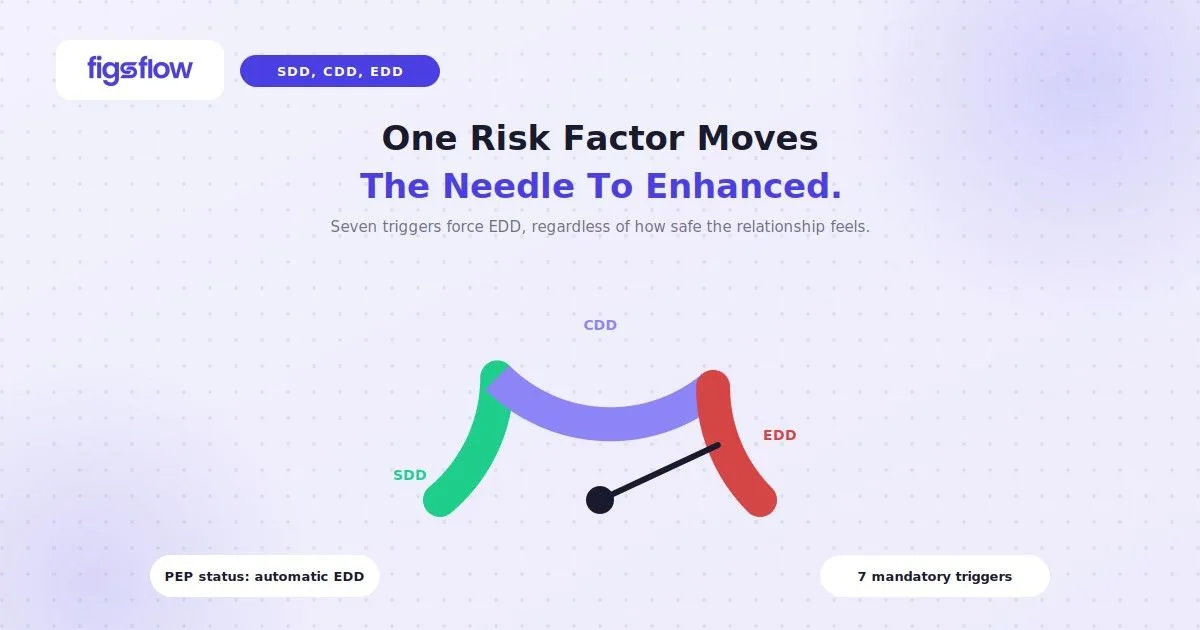
Image: 10 Best Engagement Letter Software for Accountants in 2026

1/8/2026

10 Best Engagement Letter Software for Accountants in 2026

10 Best Engagement Letter Software for Accountants in 2026 10 Best Engagement Letter Software for Accountants in 2026 What is the Best Engagement Letter Software for Accountants? How We Selected the 10 Best Engagement Letter Software for Accountants 10 Best Engagement Letter Software for Accountants: Complete Reviews Conclusion Frequently Asked Questions (FAQs) What is the best engagement letter software for accountants, bookkeepers, and tax advisers? What is the best engagement letter software for freelance accountants, bookkeepers, and tax advisers? What is the best engagement letter software for accounting, tax advisory, and bookkeeping firms? Which engagement letter software generates letters the fastest? Which engagement letter software generates regulatory-compliant engagement letters? Engagement letter software for accountants automatically generates ACCA and ICAEW-compliant letters of engagement in under 60 seconds – eliminating scope creep, missed signatures, and compliance risk in one workflow. This comprehensive guide reviews the 10 best engagement letter software for accountants in 2026, covering pricing, compliance coverage, automation depth, and integration capabilities to help you choose the right platform for your practice. Whether you’re a sole practitioner or managing a multi-partner firm, you’ll find the right solution for your practice’s specific needs. FigsFlow stands out as the best engagement letter software for accountants in 2026. It is the only platform that covers the full lifecycle from proposals and pricing through engagement letters, AML verification, and disengagement in a single workflow. However, the “best” solution depends on your specific practice requirements: The 10 best engagement letter software for accountants reviewed below cater to different practice sizes, budgets, and compliance needs. Our group of accountants tried and tested 37 engagement letter software platforms against these criteria: regulatory compliance coverage, generation speed, template quality, integration capabilities, pricing transparency, and user experience. Regardless of which of these 10 best engagement letter software for accountants you choose, each offers a genuine improvement over manual letter creation. Here are the 10 best engagement letter software for accountants in 2026. Each platform has been tested and reviewed by practising UK accountants. 1. FigsFlow — Winner of SME500 UK’s Proposal Software of the Year 2026 and AML/KYC Solution of the Year 2025. The only platform that covers proposals, pricing, engagement letters, AML checks, and disengagement in a single workflow. Templates are compliant with ACCA, ICAEW, CIOT, CIMA, AAT, and ATT standards. Pricing starts from £8/month for sole practitioners. 2. GoProposal by Sage — Industry-leading automation for engagement letters with deep Sage integration. Best for firms already using Sage products. Templates cover ACCA and ICAEW standards. Pricing is per-user with annual commitment. 3. Ignition (formerly Practice Ignition) — Industry-leading automation for engagement letters with built-in payment collection. Strong for firms wanting to combine engagement and billing in one flow. Pricing from US$99/month. 4. TaxCalc Client Hub — Only platform specifically designed to handle complex multi-service engagements for tax practices. Integrated with TaxCalc’s tax compliance software. Pricing bundled with TaxCalc subscription. 5. Iris Elements — Only engagement letter platform with automatic quarterly compliance reviews built in. Best for firms wanting compliance monitoring alongside engagement management. Enterprise pricing. Small Firms (4 users or fewer): Growing Firms (5+ users): 6. AccountancyManager (AM) — Only platform offering AI-powered automatic workflow layout for engagement management. Covers the full practice management lifecycle including engagement letters. Pricing from £20/month. 7. Senta — Most sophisticated automated renewal system specifically designed for UK accounting practices. Engagement letters with automatic annual renewals. Pricing from £24/month. 8. EngagementHQ (SWAT UK) — Unbeatable value with unlimited clients and proposals starting from £29/month. Specialist engagement letter platform with ACCA, ICAEW, and ATT templates. 9. Better Proposals — Proven 2x industry average close rates with 43% of proposals signed within 15 minutes. Beautiful proposal and engagement letter templates. Pricing from US$19/month. 10. PandaDoc — Most comprehensive enterprise document automation platform. Handles engagement letters alongside contracts, quotes, and forms. Pricing from US$35/month. FigsFlow is the best engagement letter software for accountants in 2026. It is the only platform that covers the full onboarding lifecycle from proposals and pricing through compliant engagement letters to AML verification and disengagement. It also holds two SME500 UK awards: Proposal Software of the Year 2026 and AML/KYC Solution of the Year 2025. Each of the 10 platforms reviewed above offers genuine value for different practice sizes and requirements. The right choice depends on your firm’s specific needs, existing software ecosystem, and compliance obligations. FigsFlow is the strongest all-round choice for UK practices. It generates ACCA, ICAEW, CIOT, CIMA, AAT, and ATT-compliant engagement letters in under 60 seconds, covers the full onboarding lifecycle including AML verification, and starts from £8 per month. FigsFlow is the best engagement letter software for freelance practitioners. Starting at £8 per month, it offers compliant engagement letters, an advanced pricing calculator, and built-in AML verification without needing multiple subscriptions. FigsFlow is the best engagement letter software for accounting, tax advisory, and bookkeeping firms of all sizes. It covers proposals, pricing, engagement letters, AML checks, and disengagement in a single workflow. FigsFlow generates regulatory-compliant engagement letters faster than any other platform. You select your services, fill in the variables based on the client scenario, and the letter is generated automatically in under 60 seconds. FigsFlow is the most trusted regulatory-compliant engagement letter software for UK practices. Every template meets ACCA, ICAEW, CIOT, CIMA, AAT, and ATT standards. Recognised as Proposal Software of the Year by SME500 UK. 10-best-engagement-letter-software-for-accountants-in-2026 10 best engagement letter software for accountants in 2026 page Page

Illustration of a person with a magnifying glass over an ID card and fingerprint icon, symbolising AML identity verification checks

1/6/2026

3 Forms of ID in the UK: 2026 Acceptable Documents List

3 Forms of ID in the UK: 2026 Acceptable Documents List 3 Forms of ID in the UK: 2026 Acceptable Documents List What Are the 3 Forms of ID in the UK for Client Verification? Passport Practical Consideration Photocard Driving Licence Biometric Residence Permit or National Identity Card Other Acceptable Forms of ID PASS Cards (CitizenCard) Birth Certificates & Adoption Certificates DWP Benefit Books & Letters Unusual Situations Requirements for Valid ID Documents Current & Unexpired Clear & Legible Photo Matches the Person Officially Issued by Recognised Authorities Common Situations Requiring ID Verification New Client Onboarding Existing Client Reviews Enhanced Due Diligence Situations Right to Work Checks Suspicious Activity Reports When Secondary ID Combinations Work Low-Risk Client Document Combinations Proof of Address Requirements Strategic Document Combinations Unusual Client Circumstances Here's the Key Principle What Makes ID Invalid for Compliance Purposes Expired Documents Physical Damage Missing Signatures Photographs That Don't Match Photocopies Versus Originals Special Documentation for International Clients Foreign Passports & National Identity Cards Enhanced Due Diligence for International Business Notarised & Certified Copies Translation Requirements Additional Resources Conclusion Frequently Asked Questions (FAQs) Can I accept a provisional driving licence for identity verification? What if my client's passport expired last week, but they're waiting for renewal? Are old paper driving licences without photos still acceptable? Can I accept foreign passports and national identity cards? Can I begin preliminary work while waiting for ID documents from my client? Do EU national identity cards still work for UK compliance after Brexit? My client's Biometric Residence Permit shows an expiry date before November 2024. Can I still accept it? Ever had a client insist their gym membership should count as valid ID? It sounds absurd, but it points to a genuine problem: most clients don’t know what counts, and the regulations don’t always make it obvious. Under MLR 2017, you need proper identification before providing services. For most regulated firms, understanding the 3 forms of ID in the UK is where compliant client identification starts. The rules seem straightforward until you’re dealing with expired passports, foreign documents, or clients who “don’t have any of those.” Here’s what actually counts as acceptable ID for client verification under MLR 2017, and what to do when clients present something creative – or have no photo ID at all. KEY TAKEAWAYS The 3 forms of ID accepted in the UK are: UK/international passports, photocard driving licences (full or provisional), and biometric residence permits or national identity cards Valid ID must be current, undamaged, clearly legible, and photo-matched to the client All BRPs issued before 31 October 2024 have expired. Clients must provide a passport instead Never start work before ID is verified. Doing so breaches MLR 2017 When accepting alternative ID combinations, document your risk reasoning In practice, confusion around acceptable identification causes unnecessary delays and compliance risk. Knowing the 3 forms of ID in the UK allows accountants and bookkeepers to verify clients quickly, consistently, and in line with HMRC expectations. For Customer Due Diligence under MLR 2017, three documents form the backbone of identity verification across UK accounting practices. These are: passports, photocard driving licences, and biometric residence permits or national identity cards Together, these 3 forms of ID in the UK satisfy the core identity requirements for standard Customer Due Diligence under MLR 2017. HMRC’s supervision guidance specifically references these documents as meeting the standard for identity verification. When you accept one of these three forms, you’re on solid ground with your AML compliance. They contain sufficient information to confirm your client’s name, date of birth, and photograph, which are the minimum requirements for standard Customer Due Diligence. A valid passport is one of the 3 forms of ID in the UK most commonly relied upon for customer due diligence. A current UK or international passport represents your safest option for client identification. Every passport contains: standardised information, security features you can verify, and a machine-readable zone that helps confirm authenticity When examining a client’s passport, check the expiry date first. An expired passport holds zero value for your CDD obligations. Some clients hand over expired passports, assuming they still work because the photograph looks recent. They don’t. Your CDD must use current, valid documentation. If the passport expired yesterday, you need to see the renewed version before proceeding. The signature page catches many clients off guard. The passport must be signed on the observations page. An unsigned passport fails your identity checks even when everything else appears perfect. When you receive passport copies from clients, verify that the signature is present. This simple detail derails more onboarding processes than you’d expect. International passports work identically to UK passports for your purposes. A valid French, Indian, American, or Nigerian passport meets your MLR 2017 obligations just as well as a British one. The key is validity and legibility. When clients email passport copies, request colour scans rather than black-and-white. Many passport security features only appear in colour, and you may need to verify these features if anything seems questionable. Photocard driving licences remain one of the 3 forms of ID in the UK accepted across low and medium-risk engagements. The photocard driving licence serves as your most common form of ID document. Clients carry them daily, they’re easy to copy, and they contain both identity and address information in one document. Both full and provisional photocard licences meet your CDD obligations. The provisional version works perfectly for identity verification. Some practices mistakenly reject provisional licences. Don’t. They satisfy your regulatory requirements identically to full licences. The critical word is photocard. Old-style paper driving licences without photographs do not meet modern CDD standards. When clients present paper licences, explain that these no longer satisfy your verification obligations and request alternative ID. Paper licences lack the photograph and security features you need. Check the expiry date every time. Photocard licences expire every ten years and require renewal. An expired licence provides zero compliance value, regardless of how recently it expired. When you spot an expired licence during onboarding, flag it immediately rather than completing intake only to discover the issue later. Driving licences show the client’s current address. This means one document can potentially satisfy both identity and address verification. However, apply this carefully based on your risk assessment. Higher-risk engagements typically require separate address verification through utility bills or bank statements. For clients who are not UK nationals, biometric residence permits and national identity cards from EU, EEA, and Swiss countries serve as their primary identification documents. For non-UK nationals, biometric residence permits and national identity cards complete the 3 forms of ID in the UK accepted for CDD. National identity cards from European countries work identically to UK passports for your CDD purposes. These government-issued photographic IDs contain all the information you need: full name, date of birth, photograph, and Typically, an address They satisfy your anti-money laundering obligations under MLR 2017 completely. Post-Brexit, EU national identity cards remain acceptable for UK identification purposes. A valid German, French, or Polish national identity card still meets your verification requirements. Some practitioners mistakenly think these cards lost validity after Brexit for UK compliance purposes. They didn’t. Biometric residence permits require careful attention. All BRPs issued on or before 31 October 2024 have now expired and been replaced by eVisas. When clients present expired BRPs, these no longer serve as valid identification for your CDD obligations. The physical card holds zero compliance value after expiry. Clients with expired BRPs must provide alternative documentation. Request their passport instead. The eVisa confirms their right to live and work in the UK, but doesn’t replace the need for physical photographic ID for your CDD process. BRPs issued after 31 October 2024 remain valid until their stated expiry dates. Check the card’s expiry date rather than assuming all BRPs are now invalid. Beyond the three primary forms of ID, several secondary documents gain limited acceptance in specific circumstances. Understanding when these work and when they don’t prevents compliance gaps. Proof of Age Standards Scheme cards carry photographs and basic identity information. These work for low-risk scenarios but rarely satisfy AML obligations for accounting services. Most practices appropriately reject PASS cards for CDD because they lack the government authority and verification rigour of primary documents. Reserve these for extremely limited situations where you’ve assessed the engagement as genuinely low-risk and your internal policies permit alternative ID. These documents prove name and date of birth but contain no photographs. They work as supporting documentation alongside other IDs rather than standalone verification. When clients cannot provide primary photographic ID, a birth certificate combined with a recent utility bill showing their name might satisfy your obligations for lower-risk engagements. Document your reasoning carefully in these cases. Department for Work and Pensions documents show names and National Insurance numbers. These serve as supporting evidence but rarely work as primary identification for accounting services. Your AML obligations typically require photographic ID regardless of what other documentation clients can provide. For clients in exceptional circumstances, such as homeless individuals or those recently arrived in the UK, you may need to exercise professional judgment about alternative identification combinations. Document your risk assessment thoroughly and consider whether Enhanced Due Diligence applies. HMRC expects reasonable efforts to verify identity, not perfect documentation in every scenario. HMRC guidance on customer due diligence. The practical reality for most accounting practices is straightforward: stick to the three primary forms of ID whenever possible. Accept alternatives only after careful risk assessment and clear documentation of why the primary ID isn’t available. Ensure your AML verification process is seamless and compliant with FigsFlow – explore our reliable AML & KYC solution for UK firms . Start Free Trial Explore AML Features · See Pricing Your CDD records must demonstrate you’ve seen valid identification. Four core requirements determine validity and protect you from compliance issues. Proof of Age Standards Scheme cards carry photographs and basic identity information. These work for low-risk scenarios but rarely satisfy AML obligations for accounting services. Most practices appropriately reject PASS cards for CDD because they lack the government authority and verification rigour of primary documents. Reserve these for extremely limited situations where you’ve assessed the engagement as genuinely low-risk and your internal policies permit alternative ID. The ID must be clear enough that you can read all details and verify that the photograph matches the client. Heavily worn documents, faded photographs, or damaged lamination create problems because you cannot adequately confirm authenticity. When clients email scanned copies, poor scan quality creates identical issues. Request higher-resolution scans or photographs when the initial images are too dark, too light, or too blurry to read clearly. Your compliance records should show ID details clearly enough that a supervisor or HMRC inspector could review them years later and confirm adequate verification occurred. The person presenting the ID must reasonably resemble their photograph. Reasonable changes from ageing, hair colour changes, or weight fluctuations are acceptable. Dramatic differences that make photo matching impossible indicate either that the ID belongs to someone else or that the ID is too old to provide adequate current identification. When meeting clients remotely, photo matching becomes harder. Video calls help, but don’t replace in-person verification for higher-risk engagements. Consider your risk assessment carefully when conducting remote CDD and document your verification process thoroughly. Passports from national governments, driving licences from the DVLA, BRPs from the Home Office, and national identity cards from EU governments all qualify. Documents must originate from legitimate issuing authorities, not be homemade or issued by organisations without legal standing. This requirement eliminates international driving permits, workplace ID badges, and various photo ID cards that lack official government backing. When clients present unusual forms of ID, verify the issuing authority before accepting them for CDD purposes – a Companies House advanced search can help confirm corporate details where relevant. Build extra time into your client intake process to accommodate these verification requirements. Understanding when you must verify client identity helps you build compliant intake processes. Several scenarios trigger your CDD obligations under MLR 2017. In all of these scenarios, firms should prioritise the 3 forms of ID in the UK before considering alternative document combinations. Before providing any regulated services, you must verify the client’s identity. This applies whether they’re engaging you for tax returns, bookkeeping, payroll, or advisory work. The service type doesn’t change the identity verification requirement. Timing matters. You must verify identity before establishing the business relationship. Practically, this means obtaining and verifying ID before sending your engagement letter or beginning any substantive work. Build your intake process around verification-first principles, following a proper client onboarding checklist : client fills out the intake form, client provides ID documents, you verify and record ID details, then you proceed with engagement letters and service delivery. Never reverse this order. When clients haven’t engaged your services for several years and return, many practices sensibly reverify identity as part of reactivation. MLR 2017 doesn’t explicitly require this for returning clients, but your internal policies might mandate periodic reverification based on risk. More importantly, monitor for changes that suggest identity fraud risk. When existing clients suddenly change their address, bank details, or contact information significantly, consider re-verifying identity even mid-engagement, in the same way you would during MTD client onboarding . This protects both you and the genuine client from fraud. When clients present a higher money laundering risk, such as politically exposed persons , clients from high-risk jurisdictions, or unusually complex ownership structures, verify their ID more carefully. Consider requesting multiple forms of ID rather than accepting a single document, and work through our enhanced due diligence checklist so nothing gets missed. Document your enhanced verification steps thoroughly. These run parallel to but separate from your AML obligations. When hiring staff or engaging contractors, you must verify their right to work in the UK under separate legislation, distinct from the sanctions screening you run on clients. This requires specific document combinations, often including passports or BRPs plus proof of National Insurance number. Don’t confuse these requirements with your CDD obligations for clients. When filing SARs with the National Crime Agency, you may need to reverify client identity. Our guide to Suspicious Activity Reports in AML covers this process in full. If your suspicions relate to potential identity fraud, confirming you have adequate ID verification on file becomes critical before filing. Some practices try to streamline onboarding by starting preliminary work before CDD completes. This violates MLR 2017 and puts you at regulatory risk. Never proceed with substantive work until identity verification is complete. Further Reading: Companies House Identity Verification: Who, When, How & Personal Code | FigsFlow MLR 2017 permits alternative approaches to identity verification for lower-risk engagements. Understanding when you can accept document combinations instead of primary ID prevents unnecessarily rigid processes. The regulations require adequate evidence of identity but don’t mandate specific documents. For genuinely low-risk clients, combinations like a birth certificate plus a recent utility bill might satisfy your obligations. However, exercise this flexibility cautiously. What feels low-risk initially can expose you to compliance issues if your judgment proves wrong. Document your risk assessment whenever you accept alternative ID combinations, in line with the wider industry-related AML risks your firm faces. Record why you assessed the client as low-risk, which documents you accepted instead of the primary ID, and why you believe these documents adequately verify identity. Most engagements require you to verify both identity and address. A passport proves identity but says nothing about where the client lives. Utility bills, bank statements, council tax bills, and mortgage statements dated within three months prove the address. The specific address documents you accept should reflect your risk assessment. Higher-risk clients might require multiple address proofs from different sources. Lower-risk clients might satisfy requirements with a single recent utility bill. Combining documents strategically can streamline your process while maintaining compliance. A photocard driving licence showing the current address satisfies both identity and address verification for lower-risk clients. A passport plus bank statement dated within three months satisfies both requirements with clear separation between identity and address evidence. Students living in university accommodation, clients without utility bills in their name, or recently arrived immigrants might lack standard address proof. Consider accepting tenancy agreements, letters from educational institutions, or HMRC correspondence showing their address alongside primary photographic ID. Document why you’re using alternative approaches and why these alternatives adequately satisfy your obligations. If your client is right at the borderline, double check how they have classified their income across different sources. Misclassification of dividends or PAYE income as business income could wrongly push them over the threshold. Knowing why documents fail verification prevents you from accepting inadequate ID that exposes your practice to regulatory risk. Several common issues invalidate otherwise legitimate documents. Expiry dates eliminate all compliance value immediately. An expired passport or driving licence cannot satisfy your CDD obligations, regardless of how recently it expired. Some practitioners think documents that have expired within a few months still provide adequate verification. They don’t. Expired means invalid for regulatory purposes. Build verification of ID expiry dates into your initial intake questionnaire. Ask clients to confirm their ID expiry dates before scheduling onboarding meetings. This prevents wasted appointments when clients arrive with expired documents. Torn pages, water damage, faded photographs, or illegible text prevent you from adequately confirming identity. When clients present damaged ID, you’re within your rights and obligations to request replacement documents before proceeding. Explain that a damaged ID doesn’t meet regulatory standards for accounting services. You’re not being difficult; you’re protecting both parties from compliance issues. Passports must be signed on the observations page. Some clients forget to sign new passports immediately upon receipt. Others leave them unsigned, thinking the signature requirement doesn’t matter. When you receive unsigned passport copies, request signed versions before proceeding. When you cannot reasonably match the client to their photograph, you cannot adequately verify identity. Reasonable changes from ageing, hair colour changes, or weight fluctuations are acceptable. Request updated ID when documents show clients as significantly younger or with dramatically different appearances. Remote verification complicates photo matching. Video calls help, but introduce uncertainty compared to in-person verification. Consider whether your risk assessment supports remote verification or whether higher-risk engagements require in-person ID checks. MLR 2017 requires you to verify identity, but doesn’t explicitly mandate seeing original documents. However, seeing originals provides stronger verification and better protects you from accusations of inadequate CDD. Many practices operate a see-originals-once policy: verify original documents at initial onboarding in person or via video call, retain clear copies for your records, then rely on your original verification for subsequent matters unless circumstances suggest reverification is warranted. When clients insist on email-only document provision, assess whether this approach satisfies your risk-based obligations. Lower-risk clients might support copies-only verification. Higher-risk clients should trigger requirements to see originals. Certified copies from solicitors or notaries bridge the gap between originals and simple photocopies. Consider accepting certified copies for moderate-risk clients where seeing originals proves genuinely difficult. Clients with complex international situations require careful navigation of identification requirements. Your obligations don’t change, but the documentation landscape becomes more nuanced. Clients living abroad but engaging UK accounting services may possess identification from their current residence country rather than UK documents. Foreign passports work perfectly for your identity verification. National identity cards from their country may also satisfy requirements depending on the issuing country’s standards. The key question is whether you can adequately verify the document’s authenticity. Passports from any country include security features you can cross-reference online through resources like PRADO, which shows genuine document images from most countries. Unusual identity documents from countries with limited information available require extra caution and potentially enhanced verification steps. For clients conducting international business or holding assets abroad, Enhanced Due Diligence often applies. This triggers requirements for source of wealth and source of funds verification beyond basic identity checks. Document your enhanced verification approach thoroughly, including why you assessed the client as higher-risk and what additional steps you took. Notarised ID copies serve specific purposes when clients need certified identification for overseas use. When clients provide notary-certified copies instead of simple photocopies, these offer stronger evidence for your CDD files. Consider whether your risk assessment supports accepting notarised copies without seeing originals, particularly for clients in distant locations. Apostille certification through the Foreign, Commonwealth & Development Office adds another layer of authentication for documents used internationally. For clients in non-Hague Convention countries like the UAE, Saudi Arabia, and Nigeria, consular legalisation provides final authentication. You cannot adequately verify identity from documents you cannot read. Request certified translations alongside original foreign-language documents. The translator should be appropriately qualified and provide a signed statement confirming accuracy. Some practices maintain relationships with translation services for this purpose. Others require clients to obtain certified translations independently before verification proceeds. Either translation approach works, provided you end up with clear English translations of all relevant identity information alongside the original foreign-language documents. Understanding international document authentication processes helps you assist clients comprehensively while maintaining compliance with your CDD obligations. Learn How ID Verification is Fighting Fraud-as-a-Service in 2026: Fraud‑as‑Service & AML ID Verification Fights Back | FigsFlow The Future of Digital ID Verification & How FigsFlow is Leading: Future of Digital ID Verification in AML | FigsFlow Grab the ID Verification Checklist for AML: AML ID Verification Checklist: Essential Steps | FigsFlow Learn the Common ID Verification Mistakes in AML: Common ID Verification Mistakes in AML | FigsFlow Master ID Verification in 3 Easy Steps: 3 Easy Steps to Client ID Verification | FigsFlow The 3 forms of ID in the UK that consistently meet MLR 2017 requirements are passports, photocard driving licences, and biometric residence permits or national identity cards These government-issued photographic documents satisfy your MLR 2017 requirements across virtually all client risk categories. Your verification process is straightforward: accept current, undamaged documents with clear photographs matching your clients. Check expiry dates immediately, verify passport signatures, and confirm driving licences show photocard versions. Document your verification process thoroughly in every client file. When clients present alternative identification, assess risk carefully and document why these alternatives provide adequate verification. Build verification-first processes that prevent you from beginning work before completing CDD. The 3 forms of ID in the UK you can rely on for compliant client verification are passports, photocard driving licences, and biometric residence permits or national identity cards. Proper client identification protects your practice from regulatory penalties, reduces fraud risk, and demonstrates professionalism that clients respect – the same standard covered in our CRM software for accountants roundup for firms managing this at scale. Yes, absolutely. Both full and provisional photocard driving licences meet your Customer Due Diligence obligations under MLR 2017. The provisional status doesn’t affect validity – it contains the same identity information and security features as a full licence. The only requirement is that it’s a photocard format and hasn’t expired. An expired passport holds zero compliance value regardless of how recently it expired. You cannot proceed with onboarding until your client provides a current, valid ID. Ask them to provide their renewed passport or an alternative current ID like a photocard driving licence. Never start delivering regulated services before completing proper CDD. No. Paper driving licences without photographs don’t meet modern CDD standards under MLR 2017. They lack the photograph and security features you need for adequate identity verification. When clients present paper licences, request alternative ID such as their passport or suggest they renew to obtain the photocard version. Yes, foreign passports and national identity cards from EU, EEA, and Swiss countries work identically to UK documents for CDD purposes. Any valid international passport meets your MLR 2017 obligations. For documents in foreign languages, request certified translations alongside the originals. No. You must verify identity before establishing a business relationship or providing any regulated services. Build your intake process around verification-first: client completes intake, provides ID, you verify and record details, then proceed with engagement letters and service delivery. Starting work before completing CDD violates MLR 2017. Yes. Post-Brexit, EU national identity cards remain perfectly acceptable for UK identification purposes under MLR 2017. A valid German, French, Polish, or any other EU member state national identity card still meets your verification requirements and serves identical purposes to UK passports for CDD obligations. No. If the BRP shows an expiry date before November 2024, it’s already expired and cannot be accepted for CDD purposes. Most BRPs were set to expire on 31 December 2024, and all such BRPs are now expired. BRPs with expiry dates after 31 December 2024 remain valid until their stated expiry dates – check the card’s expiry date carefully. When clients present expired BRPs, request their passport instead. The eVisa confirms their right to live and work in the UK but doesn’t replace the need for physical photographic ID for your CDD process. 3-forms-of-id-in-the-uk 3 forms of id in the uk page Page
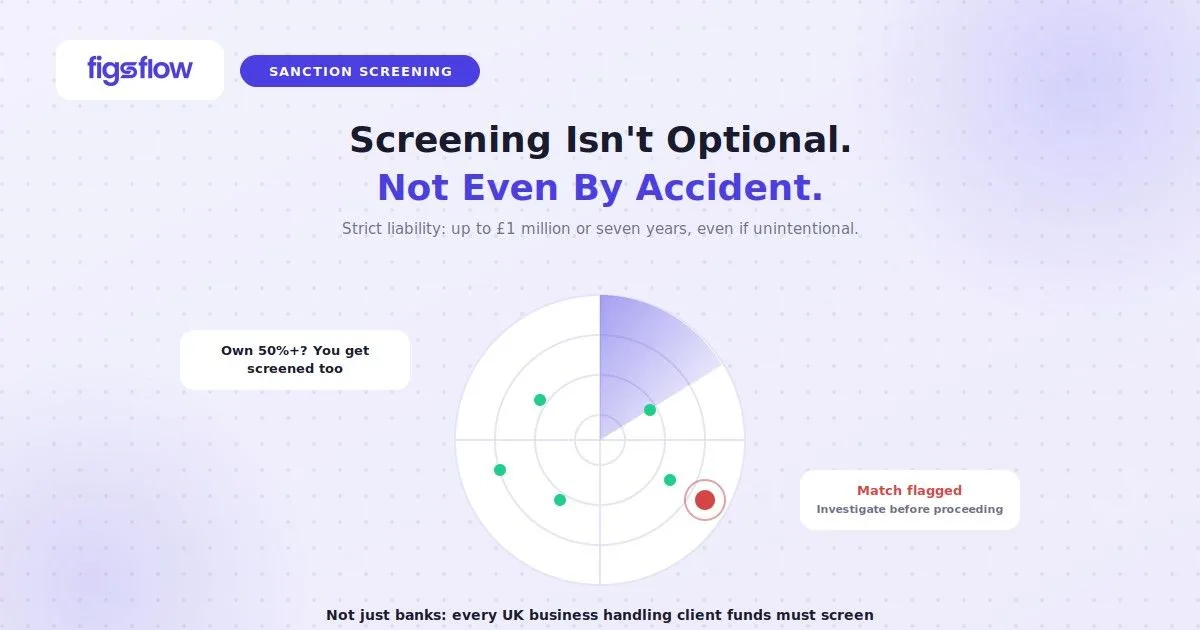
An illustration depicting a guide for enhanced due diligence for accountants.

1/2/2026

How to Perform Enhanced Due Diligence on PEPs

How to Perform Enhanced Due Diligence on PEPs How to Perform Enhanced Due Diligence on PEPs Key Takeaways What is Enhanced Due Diligence and Why PEPs Require It Who Qualifies As a Politically Exposed Person Under MLR 2017 For UK domestic PEPs, this translates to: The Risk-Based Approach: Not All PEPs Are Equal Lower risk indicators include: Higher risk indicators include: Five Essential Steps to Conduct EDD on PEPs Step 1: Determine PEP Status Step 2: Obtain Senior Management Approval Defining the term "Senior Management" Step 3: Establish Source of Wealth Step 4: Establish Source of Funds Source of Funds vs Source of Wealth Step 5: Conduct Enhanced Ongoing Monitoring Common Mistakes in PEP Due Diligence Mistake 1: Over-Classifying Junior Officials Mistake 2: Identical Treatment for All PEPs Mistake 3: Inadequate Documentation Mistake 4: Static PEP Status Mistake 5: Ignoring Family Members & Close Associates Additional Resources Conclusion Frequently Asked Questions (FAQs) What is a PEP in enhanced due diligence? What due diligence checks are required for PEPs? What are the three categories of PEPs? What does the PEP classification mean? What is a PEP in anti-money laundering compliance? Does PEP status last forever? Your new client sits across from you. Former MP. Consultancy income. Property portfolio. Straightforward engagement letter, right? Then you remember: they held ministerial office until two years ago. That's when the questions start. Do you need enhanced due diligence? What exactly does that involve? How much documentation is reasonable to request without losing the client? Under the Money Laundering Regulations , UK accountants and tax advisers must apply enhanced customer due diligence when dealing with politically exposed persons. Get it wrong, and you're facing potential penalties from HMRC, regulatory action, and the uncomfortable position of having inadvertently facilitated financial crime. This guide walks you through exactly how to perform enhanced due diligence on PEPs without over-complicating your compliance process or damaging client relationships. If you need the practical checklist alongside this guide, our enhanced due diligence checklist (free download) covers the same steps in a one-page format. Enhanced due diligence on PEPs requires senior approval, source of wealth verification, and ongoing monitoring beyond standard client checks UK domestic PEPs start as lower risk than foreign PEPs under MLR 2017, but you still need proportionate enhanced measures Source of wealth means total accumulated assets, while source of funds refers to specific money in the current transaction Family members and close associates of PEPs require the same enhanced approach, even if they don't hold public office themselves Risk assessment drives everything: document why you've classified a PEP as lower or higher risk based on their specific circumstances Common mistakes include over-classifying junior officials, treating all PEPs identically, and failing to update status when they leave office Enhanced due diligence is an intensified level of customer verification and monitoring applied to higher-risk clients, requiring firms to collect additional information about the customer's wealth origins, fund sources, and business activities beyond standard identity checks, with ongoing scrutiny throughout the relationship to detect potential money laundering or financial crime. PEPs attract this attention because of their position, not their character. Someone controlling public procurement decisions, awarding licenses, or managing state funds sits in a position vulnerable to corruption. They might be completely honest. But the potential for abuse exists, and that's what the regulations address. The Financial Action Task Force, which sets global anti-money laundering standards, makes this clear: these requirements are preventive, not accusatory . You're not suggesting every PEP is corrupt. You're acknowledging that prominent public positions create opportunities for financial crime that standard due diligence might miss, which is why understanding common risks for UK accountancy service providers matters before you even meet the client. For UK practices, this matters because you're the first line of defence. When corrupt officials move proceeds through the financial system, they often use professional intermediaries like accountants, lawyers, and tax advisers. Your enhanced due diligence helps detect and prevent this abuse before it embeds itself in legitimate business structures. The regulations define PEPs as individuals entrusted with prominent public functions. That covers heads of state, government ministers, MPs, senior judges, ambassadors, high-ranking military officers, and members of state-owned enterprise boards. The word prominent matters most. MLR 2017 explicitly excludes middle-ranking and junior officials. In practice, this means you shouldn't treat every civil servant or local councillor as a PEP. The function needs genuine authority over significant public resources or decisions. National and devolved Parliament members: Westminster MPs, Scottish Parliament MSPs, Welsh Senedd members, Northern Ireland Assembly MLAs Executive government: Cabinet ministers, junior ministers, devolved government ministers at equivalent levels Top judiciary: UK Supreme Court justices only Senior diplomatic posts: Ambassadors, High Commissioners representing the UK abroad Highest military command: Three-star ranks and above (Vice Admiral, Lieutenant General, Air Marshal) Civil service leadership: Permanent Secretaries and their deputies heading government departments Political party leadership: National governing body members with authority over candidate selection or major fund allocation in parties holding parliamentary seats Foreign PEPs follow similar logic, but you're assessing prominence in their home jurisdiction. A deputy minister in a small country might control more resources than a junior minister in a larger state. Context matters. Family members and close associates create another layer. Immediate family includes spouses, civil partners, children and their partners, parents, and siblings. Family members can be exploited to move illicit funds or conduct transactions that obscure the PEP's involvement. When a PEP leaves office, they remain subject to enhanced due diligence for at least 12 months. You can extend this period if your risk assessment justifies it, but the regulations prohibit treating someone as a PEP indefinitely without documented risk-based reasoning. Family members and close associates stop being classified as such immediately when the PEP leaves office, unless other risk factors apply. Here's where many practices go wrong: treating every PEP as high risk by default. MLR 2017 explicitly requires that UK domestic PEPs start as lower risk compared to foreign PEPs. That doesn't mean no enhanced due diligence. It means proportionate enhanced due diligence scaled to actual risk factors rather than blanket intensive measures. A backbench MP from a safe seat with transparent expenses, published register of interests, and income from a family business poses fundamentally different risks than a former minister from a jurisdiction with weak anti-corruption enforcement who's now consulting for extractive industries in high-risk countries. Your risk assessment should consider the specific public function. Does this PEP control procurement budgets, award licenses, or manage public funds? Or do they hold representative positions without executive authority? A minister overseeing multi-billion-pound infrastructure contracts carries a different risk than an opposition MP, and these distinctions form part of the broader industry-related AML risks your firm should map by sector. Geographic factors matter enormously. The UK has strong institutions, a free press, an independent judiciary, asset disclosure requirements, and credible anti-money laundering defences. Compare that to countries with widespread corruption, weak rule of law, or political systems concentrating power without accountability. Where the PEP holds or held their function shapes risk assessment. Subject to rigorous disclosure requirements through registers of interests or independent expenses oversight Published asset declarations that show consistency between official income and lifestyle No executive decision-making responsibilities, such as opposition MPs or backbenchers Countries with low corruption indices, political stability, a free press, and a track record of prosecuting official misconduct Jurisdiction associated with high corruption, weak institutions, or non-democratic governance Personal wealth or lifestyle inconsistent with known legitimate income sources Credible allegations of financial misconduct, including bribery or misappropriation Responsibility for large procurement exercises, especially those lacking competitive tender or transparency Authority to award scarce government licenses for mineral extraction, construction projects, or monopoly service provision Countries that prohibit certain officials from holding foreign bank accounts unless specifically authorised The product or service you're providing also affects risk. Basic tax return preparation for employment income presents minimal money laundering opportunity. Complex offshore structures, large property transactions, or cash-intensive businesses increase vulnerability to proceeds of corruption entering the financial system. Document everything! Your risk assessment needs clear reasoning: why you've classified this PEP as lower or higher risk, which factors influenced the decision, and what enhanced measures you're applying as a result. When HMRC reviews your compliance, they'll look for evidence of thoughtful risk-based decision-making, not box-ticking. Before you can apply enhanced due diligence, you need to identify whether your client qualifies as a PEP, family member, or close associate. Start with your standard customer due diligence information. Occupation is the most obvious indicator. If your client declares current or former employment as an MP, minister, or ambassador, classification is straightforward — the same cannot always be said at the identity verification stage, where our electronic signatures, KYC and AML guide is a useful reference. For beneficial owners of corporate clients , you need to identify whether a PEP holds ownership or control. This gets complex with layered structures, but Companies House registers of people with significant control provide a starting point for UK entities — our Companies House advanced search guide covers how to pull this data efficiently. Public domain searches supplement direct information: Government websites list MPs, ministers, and senior officials The Electoral Commission maintains party registers News archives reveal previous positions held For foreign PEPs, embassy websites, international organisation listings, and credible news sources help confirm status Commercial databases exist, but aren't required under MLR 2017 — see our overview of the complete list of AML regulations and regulators in the UK for how MLR 2017 fits alongside other obligations. If you use them, understand their limitations. They draw from public information, may use different PEP definitions than UK regulations, quickly become outdated as political positions change, and can generate false positives requiring manual review. Treat database results as one information source among several, not a definitive classification. MLR 2017 requires senior management approval before establishing or continuing a business relationship with a PEP, family member, or close associate. Senior management means someone with sufficient knowledge of money laundering, terrorist financing, and proliferation financing risks and sufficient authority to make decisions affecting your firm's risk exposure. In a sole practitioner firm, that's you. In larger practices, it might be a compliance partner, practice manager, or designated Money Laundering Reporting Officer. Document who in your firm meets this definition and train relevant staff on seeking approval. For lower-risk PEPs, approval can sit at a relatively junior level, provided that the person has appropriate knowledge and authority. Higher risk situations demand more senior sign-off. The MLRO doesn't need involvement in every individual decision, provided they maintain oversight of how your PEP controls operate overall, monitor compliance with policies and procedures, and ensure the approach aligns with regulatory requirements. What is Source of Wealth? Source of wealth means the origin of a PEP's entire body of assets. This gives you the big picture of whether their overall financial position makes sense given their background. For lower-risk UK PEPs , this might involve straightforward verification. An MP with a published salary, declared property investments purchased before entering office, and transparent spousal income from a professional career presents minimal complexity. You can often rely on publicly available information like asset declaration registers, property records, and published financial disclosures. Ask the client to explain their source of wealth. Employment history, business ownership, inheritance, property sales, and long-term investments are typical legitimate sources. Cross-reference their explanation against public records where available. Higher risk situations demand more detailed investigation. If a former minister from a jurisdiction with weak transparency has wealth far exceeding official salaries, you need substantive evidence of how that wealth was legitimately accumulated. Vague references to "consultancy income" or "business investments" without supporting documentation should raise concerns. You're not expected to verify every asset a PEP owns or trace their entire net worth. Focus on sources that generated the major proportion of wealth. If employment income, family business, and inheritance explain 90% of assets, a detailed investigation of the remaining 10% is disproportionate unless red flags suggest those funds are problematic. What is the Source of Funds? The source of funds is narrower: the origin of the specific money involved in your current business relationship. If you're advising on a property purchase, what's the source of the deposit and mortgage funds? If managing tax affairs for business income, what's the source of that income? If establishing offshore structures, where did the assets being placed in those structures originate? For lower-risk relationships , verification can be straightforward. Funds transferred from a UK bank account, salary payments from a transparent employer, or proceeds from a documented property sale usually need minimal additional verification unless transaction patterns seem unusual. Higher risk situations require more detailed evidence. Bank statements showing fund origins, sale contracts for assets being liquidated, loan agreements for borrowed funds, or business financial statements demonstrating trading income all help verify the source of funds. The key difference from the source of wealth: source of funds is transaction-specific, while the source of wealth is about the overall financial position. You need both to properly understand whether the business relationship makes sense. Enhanced due diligence doesn't stop at onboarding. You need ongoing monitoring throughout the client relationship, with frequency and intensity scaled to assessed risk. For lower-risk PEPs, monitoring might involve annual reviews when updating customer due diligence information, checking for adverse media when the client requests new services, and basic transaction pattern awareness for anything unexpected, given your knowledge of the client. Firms that treat this as a box-ticking exercise often run into the pitfalls covered in annual AML reviews: setting UK firms up for failure . Higher risk PEPs need more intensive monitoring: Regular reviews every six to twelve months, regardless of trigger events Systematic media and sanctions screening to identify adverse information Detailed scrutiny of transactions and activities that seem unusual compared to the expected relationship pattern Immediate investigation of anything inconsistent with your understanding of their source of wealth and funds Set up trigger events that prompt immediate review: significant changes in the PEP's public role, adverse media coverage, sanctions listings, unusual transaction patterns, and changes in beneficial ownership structures. If a sanctions match does surface, our guide on how to perform sanction screening in the UK sets out the next steps. Document your monitoring activity. When did you last review the relationship? What checks did you perform? What was the outcome? Any concerns identified, and how were they resolved? This audit trail demonstrates active ongoing due diligence rather than set-and-forget client management — and any genuine concern should be assessed against your firm's suspicious activity report obligations. Local councillors, Grade 7 civil servants, police inspectors, and junior military officers don't meet the prominent public function threshold. Treating everyone in public service as a PEP wastes resources on low-risk relationships while potentially diluting focus on genuinely high-risk clients. Stick to the guidance: MPs and equivalents, ministers, Supreme Court justices, Permanent Secretaries and deputies, ambassadors, and very senior military officers for UK domestic PEPs. Anyone below these levels gets standard customer due diligence unless specific risk factors justify enhanced measures. A backbench opposition MP from the UK and a former defence minister from a jurisdiction with systematic corruption aren't comparable risks. Your enhanced due diligence should reflect this through proportionate measures scaled to actual risk. Lower risk PEPs need less intrusive source of wealth verification, less frequent monitoring, and simpler approval processes. Higher risk PEPs demand detailed investigation, frequent reviews, and senior sign-off. Document your risk assessment driving these decisions. "PEP - enhanced checks done" doesn't cut it. You need clear records of: Who approved the relationship and when What information you collected about the source of wealth and funds Why you assessed the PEP as lower or higher risk What enhanced monitoring you're applying and how frequently Any red flags identified and how they were resolved Ongoing review dates and outcomes When HMRC reviews your compliance, they're looking for evidence of thoughtful risk-based decision-making. Sparse documentation suggests box-ticking rather than genuine due diligence. PEPs change. An MP loses their seat. A minister leaves office. A former official takes a position that makes them a PEP again. Family relationships end through divorce. Close business relationships dissolve. Your monitoring needs to catch these changes. After UK elections, review whether any clients were MPs who lost seats and need declassification 12 months later. When conducting annual reviews, verify the current status rather than assuming nothing has changed since onboarding. MLR 2017 requires declassifying former PEPs after 12 months unless risk factors justify longer treatment. Continuing to apply PEP measures indefinitely without documented risk reasoning is non-compliant. A former minister's spouse setting up a consultancy, their adult child purchasing expensive property, or their business partner establishing offshore structures all trigger the same enhanced due diligence requirements as the PEP themselves. These relationships can be harder to identify because public information is scarcer. Commercial databases may not flag them. You're relying on customer due diligence questions about family relationships and beneficial ownership, public domain searches revealing connections, and ongoing monitoring that spots family or associate involvement in client affairs. Don't assume family members or associates automatically present a lower risk than the PEP. In many corruption cases, relatives and associates play active roles in moving proceeds precisely because they're less visible than the PEP themselves. Understand the real difference between CDD, EDD & SDD: Difference Between CDD, EDD & SDD [Complete UK Guide] | FigsFlowMake PEP Screening Easy & Efficient with the Best Yet Cheapest AML Check in the UK: Cheapest Anti-Money Laundering Check in the UK | FigsFlow Discover the best AML Compliance Practices for Small Accounting Firms: Best AML Compliance Practices for Small Accounting Firms | FigsFlow Master the art of Companies House Director Search with our Complete UK Accountant Guide: Companies House Director Search: 2026 Guide to Verified Officers Learn why PEP Screening Matters for Accountants & Bookkeepers: Why PEP Screening Matters for Accountants & Bookkeepers | FigsFlow FCA Guidance: FG25/3: The treatment of politically exposed persons for anti-money laundering purposes Enhanced due diligence on PEPs protects your practice while keeping client relationships intact, and it works best as one part of a properly structured client onboarding checklist rather than a bolt-on step. The risk-based approach is everything. A UK backbench MP with published expenses needs proportionate checks, not a forensic investigation. A former minister from a high-corruption jurisdiction with unexplained wealth needs detailed scrutiny before you proceed. Get three things right: Accurate PEP classification using MLR 2017 definitions without over-classifying junior officials Documented risk assessment explaining your lower or higher risk decision Ongoing monitoring scaled to actual risk rather than generic annual reviews When you're unsure whether someone qualifies as a PEP or risk factors seem ambiguous, apply enhanced measures. Three hours of proper due diligence at onboarding beats months of HMRC investigation later. A reliable AML/KYC solution makes that three hours far more manageable across an entire client book. A politically exposed person is someone who holds or has held a prominent public function like a government minister, MP, ambassador, or senior official. These positions create opportunities for corruption and bribery that don't exist for ordinary clients, which is why they trigger enhanced due diligence requirements under the Money Laundering Regulations 2017. You need three mandatory elements: senior management approval before establishing the relationship, adequate measures to establish a source of wealth and a source of funds, and enhanced ongoing monitoring throughout the relationship. The extent of these checks should be proportionate to your risk assessment rather than applying identical measures to every PEP. Domestic PEPs hold prominent positions in the UK, like MPs or government ministers. Foreign PEPs hold similar positions in other countries. International organisation PEPs are directors, deputy directors, or board members of bodies like the UN or NATO. UK domestic PEPs start as lower risk under MLR 2017 compared to foreign PEPs unless other risk factors apply. PEP classification means the individual's prominent public position creates a higher potential risk for money laundering or corruption. It doesn't mean they're criminals. It means their role requires you to apply enhanced customer due diligence beyond standard identity checks and verification procedures. In AML compliance, a PEP is a customer who requires enhanced scrutiny because their prominent public function creates vulnerability to corruption. This includes not just the PEPs themselves but also their immediate family members, like spouses, children, parents, and siblings, plus known close associates who have significant business relationships with them. No. Once a PEP leaves their prominent public function, they must be treated as a PEP for at least 12 months under MLR 2017. After that period, you can declassify them unless specific risk factors justify continuing enhanced measures. Family members and close associates lose PEP classification immediately when the PEP leaves office. how-to-perform-enhanced-due-diligence-on-politically-exposed-persons-peps how to perform enhanced due diligence on politically exposed persons peps page Page
Client Onboarding Mistakes

12/30/2025

7 Client Onboarding Mistakes Hurting Your Business Growth & How FigsFlow Can Help

7 Client Onboarding Mistakes Hurting Your Business Growth & How FigsFlow Can Help 7 Client Onboarding Mistakes Hurting Your Business Growth & How FigsFlow Can Help What Are Client Onboarding Mistakes & Why Do They Happen? Mistake #1: Onboarding the "Wrong" Type of Client (The Filter) Mistake #2: Manual Document Chasing That Loses Clients (The Friction) Mistake #3: Slow Verification Triggering Buyer’s Remorse (The Speed) Mistake #4: Mismanaging Cleanup Expectations (The First Impression) Mistake #5: Scattered Systems Creating Compliance Gaps (The Compliance) Mistake #6: Over-Automation Without the "Human Touch" (The Relationship) Mistake #7: The "Set and Forget" Compliance Trap (The Longevity) How FigsFlow Brings It All Together Conclusion Transform Onboarding from Bottleneck to Competitive Advantage Frequently Asked Questions (FAQs) What are the biggest onboarding mistakes accounting practices make? How long should client onboarding take for accounting practices? What compliance documentation does HMRC expect during supervision visits? Can generic automation tools handle accounting practice onboarding? How does automated onboarding help practices scale? What should be included in an accounting practice onboarding checklist? Why do clients experience buyer’s remorse after signing with accounting firms? How much does manual onboarding actually cost accounting practices? How long does it take you to onboard a new client? A week? Two weeks? Longer? How many emails go back and forth before you have all the documents you need? Ten? Fifteen? How confident are you that every client file contains all required AML documentation, properly timestamped, ready for an HMRC supervision visit? And here’s the big one: how many prospects have you lost because competitors simply moved faster? If you hesitated on any of these questions, your onboarding process has a problem. And it’s costing you more than you think. Client onboarding mistakes are the most preventable reason accounting practices lose business. Client onboarding mistakes are systematic failures in how accounting practices bring new clients into their workflow. They happen at the intersection of urgency and compliance. When you close a new client, momentum matters. But compliance pulls the opposite direction. MLR 2017 requires proper verification before you can act. Identity checks, beneficial owner identification, PEP screening, sanctions checks, risk assessments — all of this must be documented with timestamped audit trails. That tension creates the mistakes. Accepting the wrong-fit client is one of the most damaging client onboarding mistakes. Not every prospect is a good client. Some businesses are unprofitable from day one. Accounts so messy that cleanup takes 40 hours before you can start regular work Revenue too low to justify the engagement cost at your rates Industries with compliance requirements your team isn’t equipped to handle Most practices discover these problems after signing the engagement letter . By then, you’re committed. Here’s what accepting wrong-fit clients costs: Unprofitable work: Hours spent on cleanup that clients won’t pay for Team frustration: Staff dealing with difficult clients lose motivation Reputation risk: Wrong-fit clients are more likely to leave negative reviews Opportunity cost: Time spent on bad clients could serve profitable ones FigsFlow’s risk assessment tools help you identify red flags during the proposal stage, before you commit to an engagement. Nothing kills new client excitement faster than document chaos. Three days to send the engagement letter. A long email listing 12 required documents. No clear instructions. No portal. No progress tracking. Here’s what it costs you: Professional reputation: Clumsy onboarding signals clumsy service Lost referrals: Clients who struggle during onboarding don’t recommend you Staff time: Hours spent chasing documents that could be collected automatically Compliance risk: Manual collection creates gaps in your audit trail FigsFlow eliminates document chasing with an intelligent portal that tells clients exactly what to submit and tracks everything automatically. Your client signs the engagement letter. They’re excited. Then… silence for two weeks while you verify documents manually. That gap kills momentum. Clients make decisions emotionally, then justify them rationally. Their emotional commitment peaks at signing. Every day of silence after that erodes it. Worse: disappointed clients rarely complain directly. They just don’t refer others. FigsFlow eliminates the gap. The AML workflow triggers automatically when clients submit documents. Electronic verification runs in seconds, not days. “Your Books are a disaster. This will take three months to sort out.” That’s what your client hears on day one. Even when you’re right, the delivery creates problems. Here’s what poor cleanup expectation management costs: Client dissatisfaction: They feel criticised rather than supported Fee disputes: Unexpected cleanup costs create billing disagreements Scope creep: Undefined cleanup work bleeds into regular engagement Relationship damage: Starting negatively colours all future interactions FigsFlow’s engagement letter templates let you separate cleanup from ongoing engagement, setting clear expectations from the start. Four different tools. Five different logins. Zero integration. Most practices cobble together proposals, engagement letters, document storage, and AML verification from different providers. Passport copy: Google Drive Proof of address: email attachment PEP screening: separate AML tool Risk assessment: spreadsheet You completed the work but can’t prove compliance. The inspector sees failures, not effort. Missing audit trails expose you to penalties. HMRC expects timestamped records. FigsFlow eliminates fragmentation. One platform. One login. One audit trail. Automation improves efficiency. But removing every human interaction creates a different problem. Clients feel processed, not welcomed. Here’s what over-automation costs: Weak relationships: Clients see you as a service provider, not a trusted adviser Lower referral rates: Impersonal experiences don’t generate word-of-mouth Higher churn: Clients with weak relationships are first to leave Missed upsell opportunities: Personal conversations reveal needs automation can’t detect FigsFlow automates admin work while preserving relationship moments. Document collection happens automatically; the welcome call stays personal. You verify the client once during onboarding. Risk assessment: low. Sanctions screen: clear. Then circumstances change. Your client becomes a PEP. Their company expands into a high-risk jurisdiction. MLR 2017 requires ongoing monitoring appropriate to client risk. “We verified them three years ago” is not a compliance defence. Here’s what set-and-forget compliance costs: Regulatory penalties: HMRC supervision identifies clients whose risk profiles have changed without corresponding review updates Professional liability: Facilitating transactions for high-risk clients without adequate due diligence creates personal exposure Reputation damage: Enforcement actions are increasingly publicised Financial loss: Penalties plus remediation costs plus lost clients FigsFlow builds ongoing monitoring into your compliance workflow. Automatic review reminders, sanctions screening updates, and risk reassessment triggers. FigsFlow isn’t just another tool to add to your stack. It replaces the fragmented approach that creates client onboarding mistakes in the first place. See how FigsFlow Automates Client Onboarding: Read here Three easy steps to complete Identity Verification: Read here FigsFlow & HubSpot Integration: Read here Win Clients with Automated Proposals: Read here Professional & Compliant LOE in Seconds: Read here Most firms don’t lose clients because of poor technical work. They lose them because of poor first impressions. Client onboarding mistakes compound over time. The gap between what clients expect and what manual processes deliver is widening. Purpose-built automation transforms onboarding from a bottleneck into a competitive advantage. Explore Features → The most common mistakes include manual document chasing that frustrates clients, using scattered systems that create compliance gaps, slow verification processes that trigger buyer’s remorse, and treating compliance as a one-off onboarding task rather than an ongoing obligation. With manual processes, onboarding typically takes 2-3 weeks. Automated platforms like FigsFlow reduce this to under 3 hours of total time, with most steps happening in parallel. HMRC expects complete AML documentation, including identity verification records, proof of address, beneficial owner identification, PEP and sanctions screening results, risk assessments, and timestamped audit trails. Generic tools lack understanding of Money Laundering Regulations 2017, beneficial owner requirements, Enhanced Due Diligence triggers, and UK accounting professional standards. Manual onboarding capacity scales linearly with headcount. Automated platforms handle repetitive tasks, freeing staff to focus on client relationships and advisory work. A complete checklist includes proposal creation and acceptance, engagement letter generation and e-signature, identity document collection, electronic verification, PEP and sanctions screening, beneficial owner identification, risk assessment, source of funds documentation where required, and ongoing monitoring setup. Clients make decisions emotionally and justify them rationally. Emotional commitment peaks at signing. Delays between signing and starting work create space for doubt. Manual processes require approximately 50 minutes of staff time per client. For practices onboarding 10 clients monthly, that represents over 8 hours of administrative work that could be automated. 5-client-onboarding-mistakes-hurting-your-business 5 client onboarding mistakes hurting your business page Page
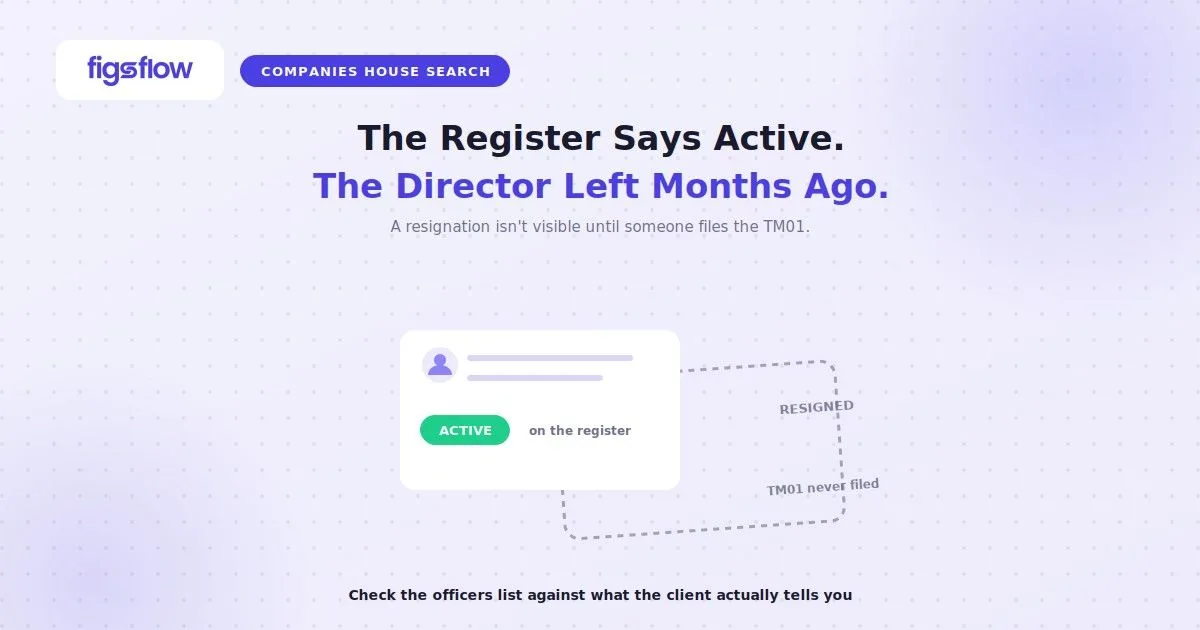
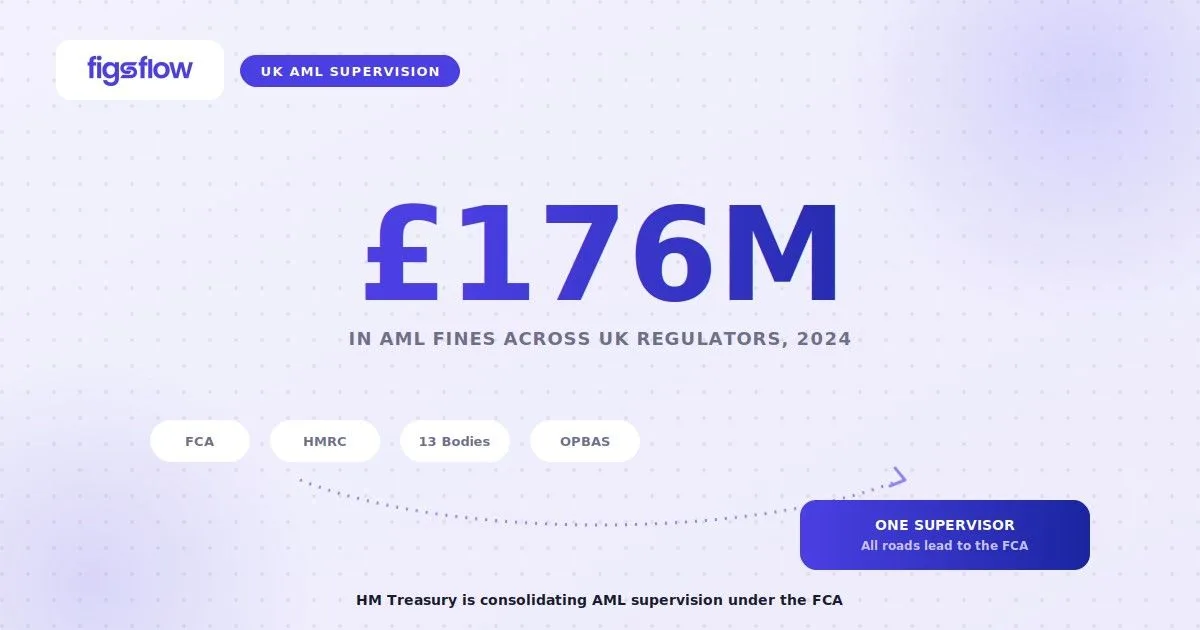

Image: Cheapest Anti Money Laundering Check in the UK 2026 Cost Comparison

12/29/2025

Cheapest Anti-Money Laundering Check in the UK (2026 Cost Comparison)

Cheapest Anti-Money Laundering Check in the UK (2026 Cost Comparison) Cheapest Anti-Money Laundering Check in the UK (2026 Cost Comparison) What is the cheapest AML check software in the UK? AML check cost comparison: UK providers in 2026 Why does AML check pricing vary so much? Why AML Checks in the UK Are Getting More Expensive HMRC Supervision Fee Increases Multiple Subscriptions & Add-On Costs Pay-Per-Check Inflation Why FigsFlow is the cheapest AML check software in the UK What's Included in FigsFlow's £2.10 AML Check (Full Coverage) FigsFlow vs the industry average: 100 AML checks per year Beyond AML checks: what else FigsFlow does How to choose AML check software: 6 questions to ask What is an AML check? What does an AML check include? Identity verification PEP and sanctions screening Ongoing monitoring Is an AML check mandatory for UK accountants? What happens if you do not carry out AML checks? Who is responsible for AML checks in a practice? When should an AML check be carried out? Additional Resources Conclusion See How Much You Can Save on AML Compliance Frequently Asked Questions (FAQs) What is the cheapest AML software in the UK? What is the best AML software for UK accountants? How much does AML compliance cost for UK accounting practices? Do I need separate software for AML checks and client onboarding? What's included in a £2.10 AML check? How much does an AML certificate cost? How long does an AML check take? Can I recharge AML check fees to my clients? The cheapest AML check software in the UK is FigsFlow at £2.10 plus VAT per check, on a platform fee that starts at £8 plus VAT a month. Most UK providers sit between £2.00 and £6.00 per check, with annual licences, monthly minimums, and separate charges for PEP screening and ongoing monitoring layered on top. This guide breaks down what an AML check must include, the current price across seven UK providers, why prices vary so much, and how to pick a provider without overpaying for features you will never use. FigsFlow is the cheapest AML check software in the UK at £2.10 plus VAT per check. It pairs that rate with a platform fee starting at £8 plus VAT a month, and bundles PEP screening, sanctions screening, ongoing monitoring, CDD, EDD workflows, and a Firm-Wide Risk Assessment into the same price. Here is the short version at the two volumes most practices run: Provider Per check cost Monthly / annual fees Total cost 50 checks / year Total cost 100 checks / year FigsFlow Best value £2.10 £8–£10 / month £201–£225 £306–£330 IRIS Elements £4.00 £250–£4,578 / year by client count £660 £922 AML Search £4.00 sub / £5.00 PAYG £20 / month on subscription £440 £640 Veriphy from £6.00 None £300 £600 Provider Per check (+ VAT) Platform fee What that rate actually covers What costs extra Total at 100 checks/year FigsFlow Best value £2.10 £8 to £10 / mo Electronic identity verification — document, biometric liveness and address — returning a pass, refer or fail with an evidenced report. PEP, sanctions and adverse-media screening. Beneficial ownership to the 25% test with PSCs modelled separately from directors. Client risk-assessment questionnaire and a Customer Risk Rating that synthesises the identity and risk reports. Firm-Wide Risk Assessment across the Regulation 18 factors with signatory sign-off. EDD gated behind a completed risk assessment. Re-assessment with recorded review history, and dated, attributable records against every decision Nothing. Every component of a compliant check sits inside the £2.10 — there is no screening add-on, no monitoring-per-client line and no premium tier for risk assessments. Proposals, engagement letters, e-signature and payment collection are covered by the same platform fee, and checks are credit-metered so you can see the balance before you start one £306 to £330 IRIS Elements £4.00 ID check with PEPs and sanctions monitoring £5.00 biometric · £3.75 international £250 to £4,578 / year by client count (£522 at 100 clients), 12-month contract ID verification with PEP and sanctions monitoring at the £4.00 tier Biometric check £5.00. UK company report £8.50, non-UK £25.00. Credit screen £3.75. Licence steps up with client count, not check volume £922 at the 100-client licence tier Creditserve £2.50 to £5.00 Bundle packages of 25, 100 or 250 checks Per-check rate falls as the bundle size rises The bundle is bought upfront. A practice running 30 checks against a 100-check bundle has paid for 70 it will not use £250 to £500 AML Search £4.00 on subscription £5.00 pay-as-you-go £20 / mo on subscription, or none on PAYG Individual AML check Business and entity checks £8.00 to £10.00 £640 Thirdfort Included in plan From £83 / mo AML check plus source of funds verification through Open Banking Check allowance is capped per plan and set in your agreement; volume above it is billed on top £996 Veriphy From £6.00 AML and anti-fraud check £3.50 biometric, one document None on pay-per-check AML and anti-fraud check, with biometric and PEP/sanctions monitoring available as options rather than inclusions Biometric £3.50 (one document) or £5.00 (two). PEP and sanctions with monitoring £1.50. Source of funds £15.00. International from £4.00 £600 SmartSearch Quote only From approx. £399 / mo Enterprise screening, built for high volume No published rate card, so the all-in cost is only knowable after a sales conversation £4,788+ How to read this table. The column that decides the winner is not “per check”, it is “what costs extra”. A £2.50 headline that bills PEP and sanctions screening at £1.50 and then charges ongoing monitoring per client per month is a £6 check wearing a £2.50 label. Read across, not down. Three traps the totals expose. Licences priced by client count rather than by check volume mean a practice with 100 clients and 30 checks still pays the 100-client rate — that is what puts IRIS Elements at £922 rather than £400. Upfront bundles turn unused checks into sunk cost, which is why Creditserve’s range is so wide at the same volume. And a plan with checks “included” has an allowance written into the agreement rather than on the pricing page, so the real number only surfaces once you exceed it. Why FigsFlow lands at £2.10 with nothing in the “costs extra” column. AML sits as one module inside a client onboarding platform rather than as a standalone product. The screening data, the monitoring, the risk assessments and the audit trail are already carried by a platform fee that also covers proposals, engagement letters and e-signature, so none of it has to be recovered through the check. A standalone provider has no other line to put those costs on, which is why unbundling is the norm at the rest of the table. All prices exclude VAT and are taken from each provider’s own published rate card, checked on 4 September 2026. Some providers publish ranges, tie their lowest rate to a volume commitment, or quote only on request — the table says which. Totals at 100 checks a year assume UK individual checks with no company reports or international documents. Verify directly with the provider before committing; where a provider does not publish a rate card, the all-in cost can only be established in writing. Wide pricing ranges are not arbitrary. They reflect four structural differences across providers. Volume tier discounts and minimum commitments. Some providers offer the lowest per-check rate only after the firm commits to a bundle of 100 or 250 checks. A practice running 30 checks a year still pays for the bundle. Bundled versus unbundled features. The headline per-check rate may exclude PEP screening, ongoing monitoring, or EDD workflows. Once these are added, total cost per client can double. International coverage premium. UK-only checks are cheaper than checks that cover non-UK identity documents, foreign PEP databases, or cross-border sanctions screening. A firm with mostly UK clients pays for capability it never uses. Per-user versus per-check pricing. Some platforms scale by user seat. Adding a junior accountant increases the AML cost even if check volume stays flat. Per-check pricing keeps cost tied to actual usage. A useful test before signing: ask the provider for the all-in annual cost for the firm’s expected check volume, including every module needed to meet MLR 2017 obligations. If they cannot quote it, the headline rate is not the real rate. Pay-as-you-go or subscription: which AML check pricing suits your firm? The break-even point sits lower than most practices expect. Pay-as-you-go means buying credits and drawing them down with no monthly commitment, which suits a firm running fewer than about 30 AML checks a year, a practice with seasonal onboarding, or anyone testing a provider before committing. The trade-off is a higher headline rate per AML check and, at most providers, credits that expire after twelve months. A subscription means a monthly or annual platform fee with a lower rate per AML check, and usually the inclusions that pay-as-you-go leaves out: risk assessments, EDD workflows, ongoing monitoring and the audit trail. At 30 AML checks a year an £8 monthly fee costs £96 and saves £27 on check fees, so the arithmetic alone favours pay-as-you-go. At 100 AML checks it breaks even. Above that, the subscription wins outright. Which is why the arithmetic is the wrong test. The reason to sit on a subscription at 30 AML checks a year is not the per-check saving; it is that the Firm-Wide Risk Assessment, the client risk assessments and the EDD workflow come with it, and buying those separately costs more than the subscription does. Three things to confirm in any quote: whether unused AML checks roll over, whether the fee is per user or per firm, and whether annual billing is genuinely cheaper than monthly. On more than one rate card in the comparison above, it is not. What is an AML fee, and what does it actually cover? An AML fee is the charge for running an AML check on a client. It travels under several names — AML search fee, AML verification fee, ID check fee, compliance fee — and the wording tells you nothing about what you are buying. What matters is which components of a compliant AML check sit inside the fee, and which are billed on top. Three different things get called an AML fee, and they cost very different amounts. The first is the software cost per AML check: what a provider charges your firm to run one, which the table above puts between £2.10 and £6.00 per AML check among UK providers that publish rates. The second is the fee a firm charges its own client — some practices absorb the AML check as an overhead, others recharge it at cost or with a handling margin. That is a commercial decision rather than a regulatory one, and it belongs in the engagement letter rather than appearing as a surprise on the first invoice. The third is HMRC’s supervision fees, payable whether you run one AML check or a thousand. If an estate agent, conveyancer or letting agent has charged you an AML fee on a property transaction, that is the second category, and the amount is set by that firm rather than by any regulation. This guide is written for the practices running the AML checks. Is there a free AML check in the UK? No — not one that discharges your customer due diligence obligations. Free tools exist and they are useful as far as they go. Companies House gives you registered details, officers and PSC data at no cost. The UK sanctions list is published by OFSI and searchable free. Several providers bundle a block of checks into a trial: 50 free AML checks over 14 days at one, 50 free sessions over 15 days at another, 30 days at FigsFlow. What none of them produces is the thing a supervisor asks to see: a verified identity document checked against the issuing authority, screened against maintained PEP and sanctions data, monitored for change, and recorded with a timestamp and a risk decision you can still produce five years later. Free sources are inputs to an AML check. They are not the AML check. There is a second reason free searching does not hold up. PEP and sanctions data has to be licensed and maintained, and designations change weekly. A free list is a snapshot, and a snapshot cannot support ongoing monitoring — if your process depends on someone remembering to re-search, it is not a process. The realistic floor for a compliant online AML check in the UK is around £2 plus a platform fee. Below that, something is missing. How to reduce your AML compliance costs Six changes that cut the bill without cutting the standard. Stop paying for international coverage you never use. If your client base is domestic, a rate card built around non-UK documents and foreign PEP databases is charging you for capability you never draw on. UK-only AML checks are materially cheaper at most providers. Consolidate the stack. A typical practice pays for an AML check tool, a proposal tool, an engagement letter tool and an e-signature tool. Four subscriptions, four renewal dates, and client data retyped between them. Where those sit in one platform, the saving is not only the licence fees — it is the rekeying, and the records that stop disagreeing with each other. Re-tier on last year’s actual volume. Licences priced by client count are usually sized on a projection that never arrived. Count the AML checks you genuinely ran and renegotiate at renewal. Check whether ongoing monitoring is billed per client per month. This is where an annual bill grows quietly: 100 monitored clients at £1 a month is £1,200 a year, often more than every initial AML check combined. Apply EDD on a risk basis, not as standard. Enhanced due diligence is required for high-risk clients, not for all of them. Running it by default is not caution, it is spend. Claim the small business refund. Firms with turnover below £5,000 can recover £500 once an application or annual declaration has been accepted, on submitting evidence of turnover. It is not automatic — you have to ask. Three factors are pushing compliance costs higher in 2026: The Money Laundering Regulations allow HMRC to recover supervision costs through annual fees. In 2025, those fees jumped significantly: Premises Fee – £300 to £400 (33% increase). This affects 94% of supervised firms and represents HMRC’s first increase since 2019. If fees had tracked CPI inflation since then, they’d already be £387 to £390, so HMRC argues this is overdue. Fit & Proper Test Fee – £150 to £500 for money service businesses and trust/company service providers. HMRC cites an 80% surge in retesting between 2020-2021 and 2024-2025. Application Fee – £300 fee reintroduced for new registrations (though small businesses may reclaim it under the Small Business Fee scheme). These baseline costs hit before you verify a single client. Finding the cheapest AML checks in the UK becomes harder when providers split costs across multiple charges: Per Check Pricing – Veriphy’s AML and anti-fraud check starts at £6.00. IRIS Elements charges £4.00 for an ID check with PEPs and sanctions monitoring, £5.00 for a biometric check, and £8.50 for a UK company report. Monthly Minimums – Veriff requires $49/month (about £39) minimum on its essential plan, plus $0.80 per verification. Higher tiers cost $99/month or more. Enterprise Tiers – ComplyAdvantage publishes $119 to $383 per month for 100 to 2,000 monitored entities, SEON starts at $699 per month, and Sanction Scanner starts at €990 per month. LSEG World-Check publishes no rate card at all — pricing is points-based and visible only after registering. Extra Modules – Ongoing monitoring, risk assessment templates, and integrations with practice management software often carry separate fees. The result? A patchwork of tools costing £50 to £500+ per month, plus you still need proposal software (£30 to £70/month) and engagement letter tools. Anti-money laundering checks in the UK keep getting more expensive. IRIS Elements charges £4.00 for a UK ID check with PEPs and sanctions monitoring, and £5.00 for a biometric check. Veriphy’s standalone biometric check starts at £3.50 on a single document, rising to £5.00 on two. Many providers charge separately for PEP/sanctions screening or ongoing monitoring, pushing the total cost per client verification to £6 to £10. Multiply across dozens of clients, and your annual compliance bill rivals other major overheads like rent or software subscriptions. Rising fees are exactly why many firms now reassess providers to secure the cheapest anti-money laundering check possible. FigsFlow prices AML as one module inside a complete client onboarding platform, not as a standalone product. The result is full MLR 2017 coverage at a per-check rate most providers charge for identity verification alone. There are three structural reasons that price holds, and none of them is a discount. 1. The check is not carrying the whole platform. A standalone AML provider has exactly one line on which to recover its screening data, its risk-assessment templates, its monitoring infrastructure and its audit trail: the check. So the check gets loaded, and the loading is disguised as “modules” — PEP screening at £1.50, monitoring per client per month, an EDD template in the premium tier. At FigsFlow the same costs sit against a platform fee that is already earning its keep on proposals, engagement letters, e-signature and payment collection. The AML check only has to cover the AML check. 2. The identity and screening data is rented, not married. Every identity check, biometric match, PEP and sanctions feed and registry lookup in FigsFlow sits behind a provider-neutral interface. Nothing downstream reads a supplier’s own field names or status codes — they map into one canonical result: verified, referred or not verified, at a stated level of confidence, screened against named sources on a named date. That sounds like an engineering detail. It is the reason the price is defensible. FigsFlow can route the same capability across more than one supplier by cost, quality or coverage, run a candidate in shadow mode against live traffic before switching, and fall back automatically on an outage. A supplier price rise becomes a routing change rather than a re-integration — and a firm negotiating with a second integration already warm gets a better number than a firm with one supplier welded into its product. Own the decision; rent the sensing; keep the sensing swappable. 3. One capture, two regimes. This is the part no other provider in the table does. Companies House identity verification under ECCTA 2023 is a separate legal regime from MLR customer due diligence — fixed for everyone, where CDD is risk-based — but it uses the same identity capture. Because FigsFlow already operates Companies House filing software and is used by AML-supervised firms that meet the ACSP prerequisite, a single verification of a director or PSC can satisfy the Companies House requirement and the CDD identity limb at once, with the two kept as distinct statuses so neither is ever passed off as the other. Verify once, use twice. Elsewhere that is two checks, two suppliers and, at one provider in the table above, £8.50 a company report on top. What that means at the invoice. The cheapest AML check is not the lowest number on a rate card. It is the number you actually pay once screening, monitoring, risk assessment, company data and the audit trail are all in the price — and once you stop paying twice for the same identity. The credentials behind the platform: Proposal Software of the Year 2026, SME 500 UK Awards AML/KYC Solution of the Year 2026, SME 500 UK Awards G2 rating: 5.0 out of 5.0 Trustindex rating: 4.9 out of 5.0 (35 reviews) Biometric ID Verification Matches a client's photo against their passport or driving license to confirm the person presenting the ID is the real owner. PEP & Sanctions Screening Real-time searches across UK and global watchlists to flag politically exposed persons, sanctioned individuals, or high-risk entities. This is the check that many providers charge separately for, often £1.50 to £2+ per search. Ongoing Monitoring Automated alerts notify you if a client's status changes (new sanctions designation, PEP status update, adverse media). You stay compliant without manually rerunning checks. Most providers charge this as an extra module. CDD & EDD Workflows Guided customer due diligence and enhanced due diligence processes help you document evidence, assess risk levels, and maintain a complete audit trail. These templates are frequently sold separately or offered only in premium tiers. Audit Ready Records All checks generate exportable reports with timestamps and risk scores. When HMRC comes knocking, you hand over documentation in minutes instead of scrambling through scattered files. Component FigsFlow Average of the other six providers Platform / licence fee £96 to £120 £352 Check fees (100 checks) £210 £355 Annual total £306 to £330 £707 Annual saving with FigsFlow: £377 to £401 on an AML check budget of 100 checks a year. The average is the mean annual total of the six other providers in the comparison table, excluding SmartSearch, whose enterprise pricing would pull the figure well past £4,000 and tell you nothing useful about a small practice. Individually those six run from £250 to £996 a year for the same 100 checks — a spread of almost four times for what is, on paper, the same AML check. The gap widens once the firm stops paying separately for proposal and engagement letter software, which is already inside the FigsFlow platform fee. And it widens again at low volume: because the FigsFlow fee is £8 a month rather than an annual licence sized to your client list, a practice running 20 or 30 AML checks a year pays roughly £140 to £160 all-in, where a client-count licence charges the same whether you run one check or a hundred. FigsFlow is a complete client onboarding platform handling every stage of the client journey from initial proposal through ongoing compliance. Proposals & Engagement Letters in 9 Clicks Generate professional proposals and engagement letters with customisable templates, consistent pricing structures, and built-in e-signature workflows. Your signature automatically populates letters before they are sent to clients. Automated Payment Collection GoCardless integration: Configure direct debit so clients can add bank details when signing engagement letters. Payments are deducted automatically from then on unless the client disengages. AdFin integration: Streamlined payment collection across all client services. Disengagement Management Generate disengagement letters automatically for services clients want to end. Edit before sending and maintain complete audit trails of service changes. Company Data Import Companies House and Irish CRO integration: Import organisation contact details and associated contacts directly into FigsFlow without manual data entry. Team Collaboration & Integrations Role-based access and permissions, HubSpot, Xero, QuickBooks, and Stripe integrations. Honestly, it’s too much to list here. Try FigsFlow free for 30 days and see for yourself. Before committing to any AML provider, get a written answer to each of these: Is PEP and sanctions screening included in the per-check fee, or charged separately? If separately, what is the all-in cost. Is ongoing monitoring included, or is it priced as a monthly add-on per client? This is where annual cost balloons quietly. Is there a monthly minimum, a volume commitment, or a bundle that has to be purchased upfront? Pay-as-you-go protects low-volume practices. Are CDD and EDD workflows built into the platform, or do these have to be built manually? EDD under Regulation 33 is not optional for high-risk clients. Does the platform produce an audit-ready record for every check, retained for the required period and exportable on demand? Supervisors expect this. Does the AML module integrate with the proposal and engagement letter workflow, or does it sit in a separate platform? Integration removes manual data entry and prevents records falling out of sync. A provider that cannot answer all six in writing is not the right provider. That is the pricing settled. The rest of this guide is the compliance ground underneath it — what an AML check actually is, what a compliant check has to contain, who carries the obligation, and when it has to be done. If you are registering for the first time, or sense-checking a process you inherited, start here. An AML (anti-money laundering) check is the process a regulated firm uses to verify a client’s identity and screen them for financial crime risk before providing services. For UK accountants, tax advisers, and bookkeepers, this forms the core of Customer Due Diligence under the Money Laundering Regulations 2017. Every AML check answers the same question: can you lawfully act for this person, and what risk does taking them on create for the firm. A compliant AML check covers three components. Some providers bundle all three. Others charge separately for each. The client’s identity document, typically a passport or driving licence, is validated against the issuing authority’s records. Biometric checks add a liveness step that matches a live selfie to the document photo to confirm the person presenting the ID is the genuine holder. The client is screened against politically exposed persons databases and UK and global sanctions lists. A match does not automatically disqualify the client, but it triggers Enhanced Due Diligence under Regulation 35 of the MLR 2017 and senior management sign-off before the engagement can proceed. A check at onboarding is not enough on its own. Client circumstances change, new sanctions designations appear, and PEP status can shift. Ongoing monitoring runs automated rechecks and flags any change so the firm acts on it without rerunning checks manually. Several providers price this as a separate module. Yes. Any firm providing accountancy, tax, audit, or bookkeeping services in the UK falls under the Money Laundering Regulations 2017 and must conduct Customer Due Diligence on every client before regulated work begins. This applies equally to sole practitioners and large firms. Size and turnover are not relevant. The obligation is the same. Supervisory bodies (HMRC, ICAEW, ACCA, AAT, CIOT, IFA) expect documented AML procedures and evidence that checks have been carried out and reviewed. The consequences fall into two categories: regulatory and reputational. HMRC and the FCA have issued substantial fines to firms that failed AML obligations. Penalties run into the tens of thousands. In serious cases firms have lost their AML registration entirely, which removes their right to provide regulated services. A failed inspection or supervisory review also creates a reportable event that follows the firm. The reputational hit is harder to measure but often costs more in the long run. If a client onboarded without proper diligence is later linked to financial crime, the firm’s name attaches to the case. In a sole trader practice, the principal is personally responsible. In any firm with staff, responsibility sits with the nominated officer, commonly the Money Laundering Reporting Officer (MLRO). The MLRO oversees compliance across the practice, reviews flagged cases, and reports suspicious activity to the National Crime Agency where required. Software handles execution. The named officer holds oversight, sign-off, and escalation decisions. Before any regulated work begins. Not after the first meeting. Not once the engagement letter is signed. Before. Re-verification is required when: The scope or nature of services changes materially There is a change in beneficial ownership or control A transaction appears unusual given what the firm knows about the client The client has not been reviewed for a defined period under the firm’s own policy (typically annually) The six AML tools accountants shortlist most often, and what separates them: Best 6 AML Software Every Accountant Needs The five features that matter most when comparing AML software: 5 Must-Have AML Software Features for Accountants A wider round-up of AML software for UK firms, by budget: Best AML Software: Leading AML Solutions for UK Firms Why accountancy practices pick FigsFlow for AML compliance: Best Anti-Money Laundering Software for Accountants HMRC’s current supervision fees, in force from 1 December 2025: Fees you’ll pay for money laundering supervision AML compliance is not the cost centre most practices think it is. The right software puts every check, every PEP screen, every monitoring alert, and every EDD review into one auditable trail at a per-check cost lower than a coffee. The wrong software stacks subscriptions, hides screening behind add-ons, and leaves the firm scrambling at inspection. At £2.10 plus VAT per check, FigsFlow is the cheapest AML check software in the UK, and the included Firm-Wide Risk Assessment, EDD workflow, and audit trail mean the cheapest is also the most complete. Start a 30-day free trial at figsflow.com. No card required. Book Your Free 30-Minute Demo → FigsFlow is the cheapest AML software in the UK at £2.10 per check with an £8-£10 monthly subscription. Unlike other providers charging £50-£500 monthly plus separate per-check fees, FigsFlow includes biometric verification, PEP screening, ongoing monitoring, and risk assessments in one flat price with no hidden costs. FigsFlow is the best AML software for UK accountants because it combines compliance with client onboarding in one platform. It handles AML checks, proposals, engagement letters, and payment collection at £2.10 per check, eliminating the need for multiple subscriptions that typically cost practices hundreds of pounds monthly. AML compliance typically costs UK accounting practices £1,680-£2,280 annually when using traditional providers with separate software for proposals, engagement letters, and verification. FigsFlow reduces this to £234-£426 annually by bundling everything in one platform at £2.10 per check with no hidden fees or monthly minimums. No. FigsFlow integrates AML checks with proposals, engagement letters, e-signatures, and payment collection into a single workflow. This eliminates the need to pay for multiple platforms (typically £95-£320 monthly combined) and simplifies compliance by keeping all client documentation in one place. FigsFlow’s £2.10 AML check includes biometric ID verification, PEP and sanctions screening, ongoing monitoring with automated alerts, CDD/EDD workflows, and audit-ready reports. Most competitors charge these features separately, with PEP screening alone costing £1.50-£2+ per check as an add-on. There is no AML certificate for a firm or an individual in the UK. What exists is the record of a completed AML check — the verified identity, the screening result, the risk decision and the timestamp — which your software generates and which you retain for five years under Regulation 40 of the MLR 2017. If a third party has asked you for an “AML certificate”, they usually mean either that record or your HMRC or professional body AML registration reference. An automated electronic AML check on a UK individual with a valid passport or driving licence completes in minutes, usually while the client is still in the onboarding flow. Delays come from three places: a document that fails validation and has to be resubmitted, a PEP or sanctions match that triggers enhanced due diligence and senior sign-off, and corporate clients where beneficial ownership has to be established across several layers of structure. Yes. Recharging is a commercial decision rather than a regulatory one, and many practices do it at cost. If you intend to, state it in the engagement letter with the amount or the basis for it, so it is agreed rather than discovered on the first invoice. The recharge does not move the obligation: the duty to complete and evidence the AML check stays with the firm regardless of who pays for it. cheapest-anti-money-laundering-check-in-the-uk cheapest anti money laundering check in the uk page Page

Image: Difference Between CDD EDD SDD UK Accountants Guide

12/24/2025

What Is Enhanced Due Diligence? Difference Between EDD, CDD & SDD

What Is Enhanced Due Diligence? Difference Between EDD, CDD & SDD What Is Enhanced Due Diligence? Difference Between EDD, CDD & SDD What is Customer Due Diligence (CDD)? What is Simplified Due Diligence (SDD)? What is Enhanced Due Diligence (EDD)? Key 2026 EDD Triggers: Crypto, UBOs, and High-Risk Jurisdictions Why is Enhanced Due Diligence Crucial for High-Risk Clients? 1. Compliance with 2026 Regulatory Updates 2. Identifying “Layering” Techniques 3. Mitigating Corruption Risks (PEPs) 4. Avoiding Severe Penalties 5. Protecting Banking Relationships When to Apply CDD, SDD or EDD The Impact of AI and Automation on Modern EDD(2026) Difference Between SDD, CDD & EDD Key Components: What Each Level Involves Standard Due Diligence (CDD) Requirements Simplified Due Diligence (SDD) Measures Enhanced Due Diligence (EDD) Measures Risk Monitoring: Static vs. Continuous (2026) Common Mistakes When Applying Due Diligence Levels Additional Resources Conclusion Streamline Your AML Compliance with FigsFlow Frequently Asked Questions (FAQs) What are SDD, CDD, and EDD? What is CDD in the KYC process? What do CDD and EDD stand for? What is simplified due diligence? Are CDD and EDD part of KYC? What is a red flag during due diligence? Do you know when to apply standard checks versus enhanced scrutiny for your clients? Could you confidently explain to HMRC why you chose one level of due diligence over another? A single “No” to any of these questions could create serious problems and leave your firm exposed to money laundering risks, regulatory penalties, and even criminal prosecution in severe cases. But subject every client to enhanced checks, and you’re wasting resources, slowing onboarding, and frustrating legitimate customers with unnecessary bureaucracy. This guide helps you understand what level of due diligence is required for each of your clients and gives you the practical knowledge to apply simplified, standard, and enhanced due diligence appropriately. Sounds good! Let’s dive in. KEY TAKEAWAYS Three distinct levels exist under MLR 2017: Simplified Due Diligence for low-risk clients, Customer Due Diligence as the standard baseline, and Enhanced Due Diligence for high-risk situations Standard customer due diligence is your default position unless specific conditions trigger simplified or enhanced measures You cannot simply decide a client is low-risk for simplified due diligence—they must meet specific criteria in MLR 2017 Regulation 37 Seven situations require enhanced measures, whether you think the risk is manageable or not Your initial risk assessment before controls are applied dictates requirements, not the residual risk after your procedures You must record why you applied to each level and what specific measures you took Choosing the wrong level typically also breaches risk assessment, policies and procedures, and training requirements Customer Due Diligence represents the standard baseline of checks that UK accounting firms, bookkeepers, and tax advisers must conduct for most clients under the Money Laundering, Terrorist Financing and Transfer of Funds (Information on the Payer) Regulations 2017. CDD forms the foundation of your AML compliance framework. It ensures you: know who your client is, understand what they do, and can spot when their activity doesn’t match their profile For regulated sectors like accountancy services, tax advice, and bookkeeping, CDD isn’t optional discretion but a legal requirement before establishing any business relationship. The process involves four core elements. First, you identify your customer by obtaining their name, address, and date of birth Second, you verify this identity through reliable, independent sources such as passports, driving licences, or electronic verification services Third, you assess and understand the purpose and intended nature of the business relationship by understanding what services they need and why Fourth, you conduct ongoing monitoring throughout the relationship to ensure transactions remain consistent with what you know about the client CDD applies to the vast majority of your clients. Unless they meet the specific low-risk criteria for simplified due diligence or trigger one of the seven high-risk factors requiring enhanced due diligence, standard CDD is what you must perform. This makes CDD your default position, the measures you apply when no special circumstances push you toward simpler or more rigorous checks. Simplified Due Diligence allows you to apply reduced measures for clients who present lower money laundering and terrorist financing risks. The emphasis here is on regulatory permission, not firm discretion. You cannot simply decide that a client seems low-risk and apply lighter checks. They must meet specific criteria set out in Regulation 37 of MLR 2017. SDD recognises that certain customers, products, and transactions carry inherently lower risks due to their nature, transparency, or existing regulatory oversight. Rather than requiring firms to conduct full CDD on demonstrably low-risk relationships, the regulations permit streamlined verification and monitoring where appropriate. The regulations specify particular categories of clients who meet the criteria. Credit or financial institutions authorised in the UK or EEA states qualify because they’re already subject to rigorous AML supervision Companies whose securities are listed on regulated markets meet the requirements due to transparency and disclosure requirements UK public authorities and certain pension schemes fall within scope, as do regulated persons supervised for compliance with money laundering regulations When simplified measures apply, you have flexibility in how you conduct due diligence. You may verify identity and ownership through fewer documents or sources. You might reduce the frequency or intensity of ongoing monitoring. You could delay verification until after establishing the relationship in specific low-risk circumstances. The key principle is that you’re taking a lighter touch because the regulatory framework judges these situations as presenting minimal risk. Enhanced Due Diligence represents the most rigorous level of client scrutiny, applied when higher money laundering or terrorist financing risks are present. Where CDD provides a baseline, and SDD offers a lighter touch for low-risk cases, EDD demands significantly deeper investigation into your client’s background, funding sources, and transaction purposes. Simply put, what is Enhanced Due Diligence? It’s a rigorous process that firms apply when higher risks are identified in a client relationship. EDD isn’t about doing “a bit more” than standard checks. It’s a qualitatively different process requiring additional measures specifically designed to mitigate elevated risks. You must go beyond accepting information at face value to actively verify details from multiple independent sources, understand complex ownership structures, and scrutinise transaction patterns with heightened attention. The distinction centres on depth and intensity. While standard due diligence might accept a bank statement showing available funds, enhanced measures require you to trace where those funds originated. Where CDD confirms a company’s registered address, EDD investigates the entire corporate structure, including ultimate beneficial owners across multiple jurisdictions. Standard monitoring reviews transactions periodically; enhanced monitoring examines them continuously with lower thresholds for investigation. Two categories of EDD measures exist under MLR 2017: Flexible Measures – It gives you discretion to choose appropriate additional steps from a non-exhaustive list, such as seeking extra verification from independent sources, obtaining a deeper understanding of the client's background and ownership, or increasing monitoring frequency and intensity. Prescribed Measures – Prescribed measures are mandatory requirements you must complete for specific high-risk scenarios, particularly clients in high-risk third countries and politically exposed persons. The trigger for moving from standard to enhanced due diligence is initial risk, not residual risk. If a client meets one of the seven EDD triggers under Regulation 33 , you must apply enhanced measures regardless of whether you believe your general procedures adequately manage the risk. To understand what is Enhanced Due Diligence, consider how regulators are focusing on key areas like crypto transactions and UBO transparency in 2026. To meet Anti-Money Laundering (AML) compliance in 2026, strict adherence to Enhanced Due Diligence (EDD) is essential. Regulators are tightening loopholes, focusing on three key areas: virtual assets, Ultimate Beneficial Ownership (UBO) transparency, and high-risk jurisdictions flagged by bodies like the Financial Action Task Force (FATF). Crypto & Virtual Asset Service Providers (VASPs): By 2026, the FATF’s “Travel Rule” is fully in force. Any transaction involving VASPs, mixers, or large unhosted wallet transfers triggers mandatory EDD. Financial institutions must verify the source of crypto funds (SoF) and the origin of wealth (SoW) for these high-risk clients. UBO Transparency: Identifying the true owner behind corporate structures is vital. Shell companies and complex ownership chains are immediate red flags. In 2026, firms must cross-check UBO details with global registries, moving beyond self-certification. FATF High-Risk Jurisdictions: Transactions linked to FATF-listed high-risk countries (e.g., North Korea, Iran) require automatic EDD. Even indirect links to these nations face heightened scrutiny and may result in blocked transactions. So, what is Enhanced Due Diligence ? It’s an essential tool for managing high-risk clients and transactions to ensure compliance with ever-evolving regulations. In the UK, Enhanced Due Diligence (EDD) is a legal requirement under the Money Laundering, Terrorist Financing and Transfer of Funds Regulations 2017 (MLRs) for high-risk situations. As of early 2026, EDD is even more crucial for high-risk clients for the following reasons: Narrowed Triggers: EDD is mandatory for clients or transactions linked to countries on the FATF blacklist (e.g., North Korea, Iran). Proportionality: EDD now applies to transactions that are “unusually complex or large” within a specific sector. Source of Wealth (SoW) : Verifying the origin of a client’s wealth. Source of Funds (SoF): Tracing where the money for transactions came from. Ultimate Beneficial Ownership (UBO): Identifying who controls corporate entities or trusts. PEPs and their close associates are automatically high-risk. EDD requires senior management approval before continuing relationships with PEPs. Failing to apply EDD can lead to hefty fines, licence revocation, and even prison sentences, especially under the scrutiny of the FCA and HMRC. In high-risk sectors (e.g., cryptocurrency, gambling), maintaining strong EDD procedures is crucial to avoid preemptive account closures by banks. Determining which level of due diligence to apply requires a systematic risk assessment before you establish the business relationship. You can start with the presumption of standard CDD for all clients. Move to simplified due diligence when the client meets specific criteria in Regulation 37 (UK or EEA regulated financial institution, company listed on a regulated market, UK public authority or another explicitly qualifying category). Escalate to enhanced due diligence when any of the seven mandatory triggers apply, including clients in high-risk third countries, politically exposed persons, complex ownership structures, or unusually large transactions. A common question firms ask is, what is Enhanced Due Diligence, and when should it be applied to clients? The decision to apply CDD, SDD or EDD follows clear regulatory triggers and risk indicators. Most of your client relationships will fall into standard CDD territory, particularly straightforward accountancy services, bookkeeping for established businesses, or tax advice for individuals with transparent UK income sources. This remains your default position unless specific conditions push you toward simplified or enhanced measures. For simplified due diligence, the client must meet the regulatory criteria, and you must have no suspicions of money laundering or terrorist financing. If they don’t meet the specific categories in Regulation 37, simplified due diligence is not available regardless of how low-risk the client appears. For enhanced due diligence, the seven mandatory triggers are: The customer is established in a high-risk third country on the FATF lists The customer is a politically exposed person , family member, or known close associate of a PEP The situation involves risks you identified in your firm’s business-wide risk assessment Your sector guidance identifies the scenario as high-risk The customer provided false or stolen identification, but you’re continuing the relationship The transaction is complex, unusually large, follows unusual patterns, or has no apparent economic or legal purpose Any other situation that, by its nature, presents a higher money laundering or terrorist financing risk The presence of even one trigger makes EDD mandatory. You cannot argue that your standard procedures adequately manage the risk. The regulations require enhanced measures based on initial risk factors, not your confidence in existing controls. This risk-based approach demands documentation. You must record why you applied to each level, what specific factors influenced your decision, and what measures you completed as a result. HMRC expects to see a clear audit trail showing your risk assessment led logically to your chosen due diligence level. In modern compliance systems, what is Enhanced Due Diligence ? It includes leveraging AI tools to analyze complex data more effectively. In 2026, manual reviews are obsolete for high-risk profiles. Artificial intelligence (AI) and automation are essential for scalable, accurate, and defensible EDD processes. These technologies drastically reduce human error and provide real-time insights that traditional methods simply miss. AI-Powered Adverse Media Screening: Instead of analysts manually sifting through thousands of articles, AI tools perform real-time sentiment analysis and natural language processing (NLP). They filter noise and immediately flag relevant sanctions, criminal history, or political exposure (PEPs), making the screening faster and more efficient. Transaction Monitoring (TM): Machine learning models in 2026 TM systems don’t just look for simple thresholds; they learn a customer’s normal behaviour baseline. Anomalies that suggest money laundering “layering” or terrorist financing are identified instantly, drastically reducing false positives compared to legacy systems. Graph Analytics: Visualizing complex ownership data has been revolutionized. Graph analytics software maps tangled networks of companies, individuals, and transactions in seconds, exposing hidden connections and potential control points that would take a human analyst weeks to uncover. Understanding the distinctions between simplified, standard, and enhanced due diligence requires examining how they differ across multiple dimensions. This comparison shows when and how to apply each level effectively. Feature Simplified Due Diligence (SDD) Customer Due Diligence (CDD) Enhanced Due Diligence (EDD) Risk Level Low risk with regulatory qualification Standard risk profile High risk with specific triggers Application Specific qualifying categories only (Reg 37) Default for most clients Seven mandatory trigger scenarios (Reg 33) Identity Verification Reduced documentation from fewer sources Standard government ID and supporting documents Multiple independent sources and cross-verification Customer Information Basic identification details Name, address, DOB, business purpose Comprehensive background, ownership structure, source of wealth and funds Beneficial Ownership May be reduced or delayed Standard identification required Detailed investigation across jurisdictions Purpose Understanding General nature of the relationship Clear understanding of intended services Deep investigation of the transaction purpose and economic rationale Monitoring Frequency Reduced intensity and frequency Regular periodic reviews Continuous detailed monitoring with lower investigation thresholds Senior Management Not required Not required for standard cases Approval is mandatory for high-risk countries and PEPs Documentation Lighter record keeping Standard records of checks performed Comprehensive records proving each enhanced measure Examples UK-regulated bank, listed plc, public authority, regulated pension scheme Local sole trader, established UK company, individual tax client Client in Iran, MP or family member, £500k cash transaction, complex offshore structure When Unavailable If any suspicion exists, if unusual circumstances arise If the client qualifies for SDD or triggers EDD Not applicable (EDD is the maximum level) The table demonstrates progression from reduced scrutiny through baseline measures to heightened investigation. Each level serves a distinct regulatory purpose within the risk-based framework. Moving between levels isn’t unusual during client relationships. You might begin with standard CDD, then escalate to EDD when the client enters a transaction that triggers enhanced requirements. Conversely, a client who initially required EDD due to PEP status might no longer need enhanced monitoring after they leave public office and sufficient time has passed, though you must carefully document this decision. The key is matching your approach to the actual risks present. Applying SDD to a high-risk client creates serious compliance gaps and exposure. Subjecting every client to EDD wastes resources and creates unnecessary friction. Getting the level right requires understanding these distinctions and applying them consistently across your practice. Each due diligence level comprises specific measures designed to address the risks present in that category. Standard CDD forms your baseline compliance approach and includes four mandatory elements you must complete before establishing any business relationship: identity verification, risk assessment, understanding the business relationship purpose, and ongoing monitoring. Identity Verification – Obtain the customer's full name, residential address, and date of birth, then confirm this information through reliable, independent sources. For UK residents, this typically means examining a current passport or photocard driving licence, supplemented by a recent utility bill or bank statement confirming their address. Risk Assessment – Evaluate the money laundering and terrorist financing risks this specific client presents by considering their business activities, whether they operate in cash-intensive sectors, their geographic locations, the complexity of their ownership structure, and the services they're requesting. This assessment determines whether standard measures suffice or whether you need to escalate to enhanced procedures. Understanding the Business Relationship Purpose – Know what services the client needs and why they need them, including their business model, typical transaction volumes, and what they expect from your services. This context allows you to spot unusual activity later because you know what normal looks like for this client. Ongoing Monitoring – Ensure transactions are consistent with what you know about the client, their business, and their risk profile throughout the relationship. You must be alert to significant changes, unusual patterns, or activities that don't fit the client's profile, and investigate further when something doesn't look right. Simplified due diligence reduces the intensity of standard measures where clients meet specific low-risk qualifying criteria under Regulation 37. This includes flexibility in verification timing, reduced documentation requirements, and lighter ongoing monitoring. Verification Timing – Complete identity verification after establishing the relationship rather than before, provided the transaction risks are small and verification occurs as soon as reasonably practicable. This recognises that certain low-risk customers shouldn't face unnecessary delays for legitimate transactions Reduced Documentation – Accept fewer identity documents or rely on the customer's existing verification by another regulated entity. If you're providing services to another UK accountancy firm, you might simply confirm their FCA or HMRC registration rather than requesting passports and utility bills. Lighter Monitoring – Conduct less frequent reviews of the relationship, such as annually rather than quarterly, or only when significant changes occur. The lower risk profile means intensive scrutiny isn't necessary to detect potential money laundering activity. Critical Exclusions – You cannot use SDD if you suspect money laundering or terrorist financing, regardless of whether the client technically qualifies. If unusual or suspicious circumstances arise during the relationship, you must immediately escalate to standard or enhanced measures. SDD never means abandoning due diligence entirely. You must still identify the customer, understand the business relationship, and conduct sufficient monitoring to detect suspicious transactions. Enhanced due diligence demands significantly deeper investigation designed to mitigate specific high-risk factors that standard procedures cannot adequately address. This includes additional information gathering, source of wealth and funds verification, senior management approval, transaction purpose investigation, and enhanced monitoring. Additional Information Gathering – Investigate the customer's complete background beyond standard CDD. For individuals, this includes employment history, public profile, business interests, and connections to other entities or individuals. For companies, you must understand the full ownership structure, including beneficial owners across multiple layers and jurisdictions, verified through independent sources such as corporate registries, financial disclosures, or background checking services. Source of Wealth & Funds Verification – Establish how the client accumulated their total assets over time (source of wealth) and where the specific money for this transaction comes from (source of funds). You need both pieces of information and must verify them through documentation such as tax returns, audited accounts, sale agreements, or inheritance records. This is mandatory for high-risk third countries and PEPs. Senior Management Approval – Obtain approval from someone with sufficient authority and risk understanding before establishing or continuing the business relationship. This is mandatory for high-risk third countries and PEPs. The approving manager must review the risk factors, understand the enhanced measures being applied, and make an informed decision rather than rubber-stamping every case. Transaction Purpose Investigation – Understand not just what service the client needs but why they need it, why now, and why from your firm. Accepting vague explanations like "investment opportunity" or "privacy preference" doesn't meet EDD requirements. You must establish legitimate business or personal reasons. Enhanced Monitoring – Conduct continuous scrutiny with lower thresholds for investigation, examining transactions monthly or more frequently rather than quarterly. Unusual patterns that might not trigger investigation in standard CDD relationships require immediate inquiry under EDD, with intensity proportionate to the specific risks identified. LOW RISK MEDIUM RISK HIGH RISK Manual/Static (Old Way) Yearly Reviews Continuous Monitoring (2026) Risk Trigger Event Automated Escalation Immediate EDD Review This chart contrasts outdated static monitoring (manual yearly reviews) with the 2026 standard of continuous monitoring , where systems dynamically recalculate risk and trigger immediate Enhanced Due Diligence based on real-time events. HMRC inspections and enforcement actions reveal patterns of failure that accounting firms should actively avoid when determining and implementing due diligence levels. Applying SDD When CDD is Required – Some firms treat simplified due diligence as available whenever they judge a client to be low-risk, without checking whether the client actually meets the qualifying criteria in Regulation 37. A long-standing client who seems trustworthy doesn't automatically qualify for reduced measures unless they're a regulated financial institution, listed company, or other specified category. Your subjective assessment of low risk doesn't create regulatory permission to apply SDD. Missing EDD Triggers – Firms don't understand the seven mandatory scenarios or fail to implement proper screening. A firm provided accountancy services to a client with beneficial owners in Iran without conducting enhanced measures because they thought "high-risk countries" meant active conflict zones. When clients self-declare they're not politically exposed persons without independent verification, actual PEPs slip through undetected. Treating All Clients as High-Risk – Some firms react to regulatory pressure by applying enhanced measures to every client regardless of actual risk factors. This wastes significant resources on unnecessary checks, slows legitimate client onboarding, frustrates low-risk customers with intrusive questioning, and often means truly high-risk clients don't receive the focused attention they need. The risk-based approach demands proportionality in both directions. Not Documenting Risk Assessment Decisions – Without contemporaneous written records, you cannot prove you conducted a proper risk assessment and chose the appropriate due diligence level. HMRC expects to see clear documentation showing what risk factors you identified, why you concluded SDD, CDD, or EDD was appropriate, and what specific measures you applied. Memory and verbal explanations don't satisfy regulatory requirements. Having Procedures But Not Following Them – One firm had written EDD procedures requiring nominated officer approval for third-party payments, but HMRC found multiple cases where only standard CDD was conducted and none of the documented procedures were followed. Staff either didn't understand the procedures, didn't recognise when they applied, or chose to ignore them for convenience. Discover the best AML software for accountants in 2025/26: Cheapest Anti-Money Laundering Check in the UK (2026 Cost Comparison) Most accountancy firms assume they’re compliant, but scratch beneath the surface and the picture changes. Here’s your complete guide to compliance: Complete Guide to AML Compliance & Financial Crime Prevention | FigsFlow Learn how FigsFlow supports Digital ID Verification: Identity Verification through ACSP A simple explanation of AML for accountants: What is Anti-Money Laundering in the UK Financial Action Task Force High-Risk Jurisdictions: “Black and grey” lists HMRC Guidance: Your responsibilities under money laundering supervision – GOV.UK The three-tier approach to due diligence reflects a fundamental regulatory principle: your compliance measures should be proportionate to actual risks. Getting this right protects your firm while allowing efficient service delivery. Review your recent client intake against this guide. Identify whether you correctly applied SDD, CDD, or EDD in each case. Check your FATF lists are current and verify your procedures clearly specify when each level applies. The difference between compliant firms and those facing penalties comes down to understanding these distinctions and implementing them consistently. Automate risk assessments, client verification, and due diligence workflows in one platform. From CDD to EDD, FigsFlow handles the complexity so you can focus on your clients. Start Your Free Trial Simplified Due Diligence (SDD) applies reduced checks to low-risk clients who meet specific regulatory criteria. Customer Due Diligence (CDD) is the standard baseline for most clients. Enhanced Due Diligence (EDD) requires deeper investigation for high-risk situations like politically exposed persons or clients in high-risk countries. Customer Due Diligence (CDD) is the process of verifying client identity, assessing money laundering risks, and understanding the business relationship purpose. It forms part of the Know Your Customer (KYC) requirements and helps prevent financial crime while protecting your firm from regulatory penalties. CDD stands for Customer Due Diligence, the standard level of client checks required under MLR 2017. EDD stands for Enhanced Due Diligence, a more rigorous investigation process applied when clients present higher money laundering or terrorist financing risks. Simplified due diligence is the lowest level of client checks, applied only when customers meet specific low-risk criteria in Regulation 37. It allows reduced verification requirements and lighter monitoring for clients like UK-regulated financial institutions or companies listed on regulated markets. Yes, Customer Due Diligence (CDD) and Enhanced Due Diligence (EDD) are core components of Know Your Customer (KYC) processes. They work alongside identity verification and ongoing monitoring to ensure you understand your clients and comply with anti-money laundering regulations. Red flags are warning signs that indicate potential money laundering or compliance risks, such as unusual transaction patterns, complex ownership structures with no clear purpose, clients providing false documents, or reluctance to provide source of funds information. what-is-enhanced-due-diligence what is enhanced due diligence page Page

Visual checklist of AML compliance best practices for small accounting firms.

12/22/2025

Best AML Compliance Practices for Small Accounting Firms

Best AML Compliance Practices for Small Accounting Firms Best AML Compliance Practices for Small Accounting Firms What is AML Compliance? What Are the Main AML Regulations in the UK? Who Regulates AML in the UK? Who is Subject to AML Regulations in the UK? Best AML Compliance Practices for Accounting Firms Customer Due Diligence Risk Assessment Framework Enhanced Due Diligence Requirements Record Keeping Standards Appointing a Nominated Officer Ongoing Monitoring Procedures Written Policy Statement Staff Training Requirements Helpful Resources Conclusion Understanding AML Requirements When Buying or Selling Property Frequently Asked Questions (FAQs) What are the 4 pillars of AML? What is the AML risk framework? What is the FCA's role in AML? What is the current anti-money laundering legislation in the UK? Who regulates AML in the UK? What are the new AML regulations for letting agents in 2025? In November 2024, Metro Bank was fined nearly £17 million by the Financial Conduct Authority for failing to properly monitor potential money laundering activities. Just a month earlier, Starling Bank faced a £29 million penalty for similar compliance failures. These aren’t isolated incidents. They represent a growing trend of UK regulators taking AML compliance seriously and imposing significant financial penalties on businesses that fall short. You might be thinking that your small accounting practice bears little resemblance to a major banking institution. You would be right. But the Money Laundering Regulations 2017 apply to accounting firms just as strictly as they do to banks. This guide breaks down your actual obligations and shows you practical implementation steps that work for small firms. KEY TAKEAWAYS Small accounting firms must conduct customer due diligence when establishing new client relationships, when existing client circumstances change significantly, and for occasional transactions exceeding £15,000 A risk-based approach allows you to tailor compliance procedures to actual threats your practice faces, with different measures for standard clients versus high-risk situations like politically exposed persons or non-face-to-face relationships Every firm must appoint a nominated officer to receive internal suspicion reports and file Suspicious Activity Reports with the National Crime Agency, regardless of practice size Proper record keeping of all due diligence measures, risk assessments, and client documentation must be maintained for five years after the business relationship ends A written policy statement documenting your AML procedures, staff training requirements, and internal reporting processes is mandatory even for sole practitioners and small practices By following these AML compliance practices, you can ensure your firm is protected from financial penalties. Anti-Money Laundering compliance refers to the legal framework designed to prevent criminals from disguising illegally obtained funds as legitimate income. As part of AML compliance, your firm should actively monitor transactions to detect any suspicious activity. What are the stages of money laundering? Money laundering typically occurs in three stages. During placement, criminals introduce illicit money into the financial system. The layering stage involves moving that money through various transactions to obscure its origin. Finally, integration sees the money reintroduced into the legitimate economy, appearing to come from lawful sources. For accounting firms, AML compliance means implementing systems and controls that prevent your services from being used in any of these three stages. This includes: verifying client identities, understanding the source of funds you handle, monitoring for suspicious transactions, and reporting concerns to the appropriate authorities The goal is not to turn you into a law enforcement officer. Rather, it is to ensure that professional service providers maintain vigilance and create barriers that make money laundering more difficult. The risk-based approach at the heart of UK AML regulations acknowledges that not every client presents the same level of risk. A long-standing client who is a residential landlord with straightforward rental income presents different risks than a new client operating a cash-intensive business with complex ownership structures and international transactions. Your compliance measures should reflect these different risk profiles while meeting minimum regulatory requirements across your entire client base. Three primary pieces of legislation govern AML compliance for UK accounting firms. The Money Laundering, Terrorist Financing and Transfer of Funds Regulations 2017 form the backbone of your obligations. This regulation, commonly referred to as MLR 2017, was amended in 2019 to incorporate the EU’s 5th Anti-Money Laundering Directive into UK law. It sets out specific requirements for customer due diligence, record keeping, internal controls, and reporting obligations. The Proceeds of Crime Act 2002 establishes the criminal offences associated with money laundering and outlines the framework for confiscating criminal proceeds. This Act is particularly important because it creates a legal obligation to report suspicious activity. Under POCA 2002 , failing to report knowledge or suspicion of money laundering when you work in the regulated sector constitutes a criminal offence. The Act also protects you from breach of confidentiality claims when you make a report in good faith. The Financial Services and Markets Act 2000 provides the regulatory framework for financial services in the UK and establishes the Financial Conduct Authority as a supervisory body. While most small accounting practices fall under HMRC supervision rather than FCA oversight, understanding the broader regulatory landscape helps contextualise your specific obligations. These regulations are fundamental for AML compliance and apply to all accounting practices in the UK. Multiple supervisory authorities oversee AML compliance across different sectors in the UK. HM Revenue and Customs serves as your primary supervisor for most small accounting practices. HMRC supervises accountancy service providers, tax advisers, and trust or company service providers. This supervision includes the power to conduct compliance visits, request documentation, impose penalties for breaches, and, in serious cases, pursue criminal prosecutions. The Financial Conduct Authority regulates firms providing financial services, including some larger accounting practices that offer regulated investment advice or other FCA-authorised activities. If your practice holds FCA authorisation for any services, you fall under dual supervision with different requirements and reporting obligations. The National Crime Agency receives Suspicious Activity Reports from all regulated sectors and coordinates the law enforcement response to financial crime. The Serious Fraud Office investigates major fraud and corruption cases, which may occasionally involve accounting firms either as victims or unwitting facilitators. Understanding which regulator supervises your firm helps you determine where you submit notifications, who might conduct compliance visits, and which guidance documents apply most directly to your situation. These regulatory bodies ensure that all accounting firms follow the AML compliance guidelines set forth by UK law. The Money Laundering Regulations cast a wide net across professional service providers. Accounting firms fall squarely within the regulated sector, and the regulations don’t distinguish between large practices and sole practitioners. A sole practitioner offering tax advice faces the same fundamental obligations as a multinational accounting network. Your accounting firm is subject to AML regulations if you provide: accounts preparation, bookkeeping, tax advice, audit services, insolvency work, or act as a trust or company service provider. Beyond traditional accounting services, you’re also regulated if you form companies for clients, act as a director or company secretary, provide registered office services, or act as a trustee. Estate agency work, high-value dealing in goods, and operating as a money service business trigger obligations too. The obligations extend to everyone in your firm. You must ensure employees receive appropriate AML training, understand their responsibilities to report suspicions internally, and follow your documented procedures. The concept of a “relevant person“ under the regulations means anyone who encounters clients or handles transactions must be included in your compliance framework. Even your receptionist taking initial client calls should understand basic red flags and know how to escalate concerns. Here are the core practices that keep your firm compliant with UK AML regulations. You must conduct Customer Due Diligence (CDD) when establishing any new client relationship, regardless of whether it’s ongoing accountancy work or a one-off transaction. CDD is also required when you suspect money laundering, when you doubt previously obtained client information, or when a client’s circumstances change significantly. The CDD process has three parts. First, identify your client by collecting their full name, residential address, and date of birth. For individuals, use passports, driving licenses, or government-issued photo ID. Verify addresses through utility bills, bank statements, or council tax bills. For corporate clients, check the company structure through Companies House, verify the entity exists, and identify beneficial owners controlling more than 25%. Second, verify information through independent sources. Don't just accept documents at face value. Check against credit reference databases, the electoral register, or other authoritative sources. Third, understand why this client needs your services, where their funds come from, and what activity levels you expect from the relationship. To meet AML compliance standards, always verify client identities and ensure you understand the source of their funds. The regulations adopt a risk-based approach explicitly, meaning you tailor procedures to actual threats rather than treating every client identically. When assessing customer risk, consider client type first. A long-standing UK resident with straightforward rental income presents different risks than a newly arrived individual with complex international business structures. Services you provide matter too. Basic bookkeeping carries different risk profiles than corporate restructuring or trust administration. Geography plays a role, as clients operating solely in the UK present lower risk than those with interests in high-risk jurisdictions. Document your risk assessment for each client. A simple file note explaining why you consider them standard, low, or high risk satisfies the requirement. The AML compliance risk-based approach helps your firm focus resources where they are needed most. Enhanced Due Diligence (EDD) becomes mandatory in specific situations. When clients aren’t physically present during identification, you must take additional steps. Require the first payment from a bank account in the client's name, obtain extra documentation, or use video verification technology Politically exposed persons require enhanced measures regardless of other factors. PEPs include individuals in prominent public positions, their immediate family, and known close associates. UK domestic PEPs need lighter-touch measures compared to non-UK PEPs, but both require senior approval for new relationships and enhanced ongoing monitoring. Clients from high-risk third countries identified by the EU also trigger enhanced due diligence. You must obtain source of wealth and source of funds information, apply additional verification measures, and conduct more frequent monitoring throughout the relationship. For higher-risk clients, applying AML compliance measures such as Enhanced Due Diligence is critical. Retain copies of all documents used in customer due diligence. This includes identification documents, verification checks, beneficial ownership information, risk assessments, and decision-making notes. Keep transaction records showing services provided, amounts charged, and payments received. If you file a Suspicious Activity Report, retain a copy with supporting information. The standard retention period is five years from the end of the business relationship or completion of an occasional transaction. Records can be kept as original paper documents, photocopies, scanned digital images, or computerised records. The requirement is accessibility and readability throughout the retention period, not specific format. Proper record-keeping is a cornerstone of AML compliance, and it ensures your firm can quickly respond to audits. Every accounting firm must appoint a nominated officer who receives internal suspicious activity reports and decides whether to file SARs with the National Crime Agency. In small practices, this is typically the principal or owner. Larger firms might designate a senior manager. The position requires sound judgment, understanding of money laundering risks, and sufficient seniority to make independent decisions without fee-earning pressures influencing reports. If your firm is FCA-regulated, you must also appoint a Money Laundering Reporting Officer with broader compliance management responsibilities. In small firms, one person often serves both roles. The nominated officer plays a key role in maintaining AML compliance and ensuring your practice meets regulatory requirements. Compliance doesn’t end after initial onboarding. You must maintain awareness of client affairs throughout the relationship through appropriate vigilance during normal interactions. When preparing annual accounts, consider whether the financial position changed dramatically or unexpectedly. Have new directors been appointed? Has ownership structure changed? Are transactions inconsistent with the stated business model? Your annual engagement letter renewal provides a natural checkpoint to review client information and refresh risk assessments. If circumstances change in ways that increase risk, apply additional due diligence measures proportionate to the new risk level. Continuous monitoring is a key part of AML compliance, ensuring your practice remains up-to-date with any changes in regulations. Every accounting firm must maintain a written AML policy statement, even sole practitioners. Your policy must name your nominated officer and define their responsibilities. It should explain how you conduct customer due diligence, including: how you identify and verify clients, how you assess risk levels, and what enhanced measures you apply in higher-risk situations Additionally, it should explain your ongoing monitoring approach, internal reporting procedures, staff training requirements and how you ensure everyone stays aware of their AML obligations. A documented AML compliance policy is essential for every firm, detailing procedures and staff responsibilities. Read More: List of UK AML Regulations for Accountants 2025 | FigsFlow Everyone in your firm needs training appropriate to their role. Client-facing staff must understand how to conduct due diligence, recognise red flags, and report concerns internally. Support staff need enough knowledge to identify unusual situations and escalate them appropriately. Training doesn’t need to be elaborate or expensive. Annual sessions work for most small practices. These sessions should cover basic money laundering awareness, your firm’s specific procedures, and examples of suspicious activity. Keep records of all training delivered, including dates, attendees, and topics covered. HMRC will request these records during supervision visits to verify you’re meeting training obligations. Implementing AML compliance practices such as robust risk assessments ensures that your firm is prepared for any regulatory checks. Complete Guide to AML Compliance & Financial Crime for UK Accountants: Complete Guide to AML Compliance & Financial Crime Prevention | FigsFlow List of AML Regulations & Regulators in the UK: List of UK AML Regulations for Accountants 2025 | FigsFlow How to Verify Client Identity for AML Compliance: What is Anti-Money Laundering in the UK | FigsFlow UK Sanction Screening Guide for Professionals & Businesses: Sanction Screening UK Guide 2025/26 | FigsFlow Common Identity Verification Mistakes in AML: Companies House Identity Verification Complete Guide | FigsFlow AML compliance for small accounting firms doesn’t need to be overwhelming. The risk-based approach allows you to implement proportionate measures focused on knowing your clients, understanding their money sources, keeping proper records, and reporting genuine suspicions. Start with the essentials: appoint a nominated officer, create a written policy, develop systematic customer due diligence procedures, and build record-keeping into your existing file management. Small practices have natural advantages. You know your clients well, can spot unusual behaviour easily, and can implement changes quickly without bureaucratic hurdles. By adopting best practices for AML compliance, your firm can mitigate risks and maintain regulatory adherence. Learn how Anti-Money Laundering checks affect property transactions and what documentation you'll need as a buyer or seller Read the Property AML Guide The four pillars are: Risk Assessment (identifying money laundering risks in your business), Customer Due Diligence (verifying client identities and understanding their activities), Transaction Monitoring (detecting unusual or suspicious activity), and Compliance Programs (implementing policies, procedures, and staff training). An AML risk framework is the structured system of policies and procedures that businesses use to prevent money laundering and terrorist financing. It includes customer verification (KYC), ongoing transaction monitoring, sanctions screening against regulatory watchlists, and risk-based controls tailored to your business activities. The Financial Conduct Authority (FCA) regulates and supervises firms’ compliance with anti-money laundering requirements. It ensures businesses have effective systems to prevent money laundering, terrorist financing, bribery, corruption, and sanctions breaches, conducting reviews and taking enforcement action when firms fail to meet standards. The Money Laundering, Terrorist Financing and Transfer of Funds (Information on the Payer) Regulations 2017 (MLR 2017) is the primary legislation, as amended by the 2019 and 2022 regulations. These implement EU directives and set out requirements for customer due diligence, record-keeping, and suspicious activity reporting. Multiple supervisory bodies oversee AML compliance depending on your sector. The Financial Conduct Authority supervises financial services firms, while professional bodies like HMRC, the Solicitors Regulation Authority, and professional accounting bodies supervise their respective sectors under a shared regulatory framework. From May 2025, all letting agents must conduct financial sanctions checks on every tenancy agreement, regardless of rental value. Previously, checks were only required for tenancies exceeding £10,000 monthly rent. The new rules remove this threshold, requiring sanctions screening for all landlords and tenants without exception. best-aml-compliance-practices-for-small-accounting-firms best aml compliance practices for small accounting firms page Page

A man expressing frustration at his laptop while sitting at a desk.

12/19/2025

How to Perform Sanction Screening for Clients in the UK

How to Perform Sanction Screening for Clients in the UK How to Perform Sanction Screening for Clients in the UK What Is Sanction Screening? Who Needs to Perform Sanction Screening (And When) When to Perform Sanction Screening? How to Conduct Effective Sanction Screening Sanction Screening Process Step 1: Gather Client Information Step 2: Check Against the UK Sanctions List Step 3: Assess Potential Matches Step 4: Investigate Ownership Structures Step 5: Document Your Findings Step 6: Set Up Ongoing Monitoring Red Flags That Should Trigger Enhanced Screening Choosing and Using Screening Technology Effectively Introducing FigsFlow: Your All-in-One Technology Solution Additional Resources Conclusion Frequently Asked Questions (FAQs) What is sanction screening in the UK? Who is required to comply with UK sanctions? When should sanction checks take place? What happens if I fail to conduct sanction screening? Where can I check the UK sanctions list? Do I need to check beneficial owners as well as clients? Before accepting any new client, UK law requires you to verify that they are not subject to financial sanctions. Missing this check can cost your firm thousands, if not millions, in fines and penalties. There are even cases where individuals have received up to seven years of imprisonment. It is not a question of whether you do sanction screening or not. The real question is, how do you do it effectively? This guide walks you through the practical steps for effective sanctions screening. You’ll learn who needs to screen, when to screen, and exactly how to perform checks that keep your business compliant. KEY TAKEAWAYS Sanction screening is mandatory for all UK businesses, not just those in financial services, and applies to clients, counterparties, beneficial owners, and third parties involved in transactions The UK sanctions regime carries strict liability, with penalties up to £1 million or seven years’ imprisonment for breaches, even if unintentional Effective screening requires checking ownership structures beyond 50% shareholding, as control can be exercised through board appointments or influence over company affairs Screening must happen at client onboarding and through ongoing monitoring, as the UK sanctions list updates frequently with new designations added regularly Red flags include complex ownership structures, resistance to due diligence, involvement of high-risk jurisdictions, and transactions without clear business rationale If you identify a designated person, you must immediately freeze assets, stop work, report to OFSI, and apply for a licence before continuing any services Sanction screening is the process of checking whether individuals, entities, ships, or aircraft appear on official sanctions lists before you do business with them. What is Sanction Lists? A sanctions list is a government-maintained register of individuals and organisations subject to legal restrictions. In the UK, the Office of Financial Sanctions Implementation (OFSI) administers the consolidated sanctions list. This list includes people and entities involved in terrorism, human rights abuses, weapons proliferation, and other activities threatening international peace and security. Sanctions are not just names on a list. They represent legal restrictions that can include asset freezes, travel bans, and prohibitions on providing specific services. When you screen clients, you are verifying they are not subject to these measures. The UK sanctions regime operates independently from the EU since Brexit. While there is overlap with UN, EU, and US sanctions lists, UK businesses must primarily comply with UK designations. However, if your firm has international exposure or deals with cross-border transactions, you may need to screen against multiple jurisdictions’ lists. Screening goes beyond checking a client’s name against a database. You need to understand who owns and controls the entities you are dealing with. Sanctions often apply to companies owned or controlled by designated persons, even if the company itself is not directly listed. This means identifying beneficial owners and understanding corporate structures forms a critical part of effective sanction screening. Every UK business must comply with sanctions regulations. This isn’t limited to banks or financial institutions. Law firms, accounting practices, real estate agents, import/export companies, charities, and even tech startups all fall under the sanctions regime. If you handle client money, facilitate transactions, or provide professional services, you need to screen. The obligation extends across all business sectors. OFSI has published specific guidance for charities and non-governmental organisations, signalling that enforcement isn’t just focused on financial services anymore. It depends on the natural of your business activity. Typically, you must screen sanction list at the start of new client relationship, before accepting funds, and whenever your client’s circumstances change materially. Sanction list changes constantly. So, ongoing monitoring is essential, and firms should rescreen clients at list annually, or when significant list changes occur. With the 28 January 2026 transition approaching, businesses should prioritize sanction screening before this date to ensure compliance with the latest regulations. Time-sensitive situations require immediate screening. If you’re about to release funds, complete a property transaction, or finalise any deal, current sanctions status must be verified. Some firms only discover sanctions issues when a counterparty in a transaction turns out to be designated. This is why screening can’t focus solely on your direct client but must extend to beneficial owners, third parties providing funds, and transaction counterparties. Effective sanctions screening follows a systematic process. Each step builds on the previous one to create a comprehensive compliance framework. Start by collecting complete identification details for everyone involved in the matter. For individuals, you need full names, dates of birth, nationalities, and addresses. For companies and other legal entities, gather the registered business name, registration number, business address, and jurisdiction of incorporation. Don’t stop at the surface level. You also need information about who owns and controls the entity. This means identifying all individuals with more than 50% shareholding or those who can appoint or remove a majority of the board. It also includes anyone who can ensure the entity’s affairs are conducted according to their wishes. The 50% ownership threshold for sanctions differs from the 25% threshold in anti-money laundering regulations . This distinction matters when determining who you need to screen. Collect details about counterparties and third parties too. Anyone providing funds for the transaction, receiving funds, or materially involved in the deal needs to be identified and screened. Don’t accept client funds before completing this information gathering. Once money enters your client account, you face significant complications if you later discover sanctions issues. With client information gathered, check names against the UK consolidated sanctions list. You have two main options for conducting these searches. The UK government provides a free online search tool at search-uk-sanctions-list.service.gov.uk . This platform searches across all UK sanctions regimes and includes fuzzy matching to catch alternative spellings and name variations. Enter the individual’s or entity’s name in the search field. The tool searches all parts of sanctions designations, including statements of reasons. You can refine searches by regime, date designated, or type of sanctions imposed. Commercial screening software offers automation for firms handling high volumes. These platforms integrate with your client management systems and automatically screen against multiple sanctions lists simultaneously, including UK, UN, EU, and OFAC lists. Technology solutions typically update their databases daily as sanctions lists change. Some updates in real-time as new designations are published. The screening process must cover everyone you’ve identified in Step 1. This includes the client, all beneficial owners, anyone with control, counterparties, and third parties. Search results will likely produce matches that need investigation. Not every match indicates genuine sanctions hit. False positives are common. Someone named John Smith in Manchester probably isn’t the same John Smith designated under a Middle Eastern sanctions regime, but you need to verify this. Use additional identifiers to distinguish between matches. Date of birth is particularly valuable for differentiating individuals with common names Nationality, known addresses, and associated entities help narrow down whether a match is genuine For entities, registration numbers and business addresses help confirm identity. Check whether the registered jurisdiction aligns with the sanctions designation. Document why you’ve concluded a match is or isn’t your client. This creates an audit trail showing you’ve applied due diligence . Simply dismissing matches without investigation exposes you to regulatory criticism if later challenged. Designated persons often hide behind complex legal structures. Your screening can’t stop at checking the immediate client’s name. Look through corporate structures to identify ultimate beneficial owners. This means following ownership chains through multiple layers of companies, potentially across different jurisdictions. Control isn’t always about shareholding. Someone might control an entity through board appointments, contractual arrangements, or informal influence. The UK sanctions regime defines control broadly to include situations where it’s reasonable to expect someone can ensure the entity’s affairs are conducted according to their wishes. State-owned entities in jurisdictions where senior politicians are designated need particular scrutiny. If a sanctioned premier or minister could influence a state-owned company’s decisions, that company may effectively be under sanctions too. Trusts add another layer of complexity. You need to identify and screen settlors, trustees, and beneficiaries. Any of these parties being designated could trigger sanctions obligations. Shell companies registered in offshore jurisdictions often serve to obscure ownership. When you encounter these structures, dig deeper to understand who genuinely controls and benefits from the entity. Third parties providing funds deserve equal attention. Even if your client isn’t designated, receiving money from or paying money to a designated person creates sanctions issues. Create comprehensive records of your entire screening process. This documentation serves multiple purposes. First, it demonstrates to regulators that you’ve undertaken appropriate due diligence. OFSI considers whether adequate due diligence was conducted when determining penalties for breaches. Record what searches you performed, which databases you checked, when you conducted the searches, and what results you found. Include details of how you assessed potential matches and why you concluded they were or weren’t genuine hits. Document your risk assessment for each client and matter. Note any red flags identified and how you addressed them. This shows you’ve applied professional judgment, not just followed a checkbox exercise. Keep records of all information sources used to verify client identity and ownership structures. If you relied on corporate registry searches, bank references, or other documents, retain copies with your file. For matches you’ve dismissed as false positives, clearly record your reasoning. Include the specific additional information that allowed you to distinguish your client from the designated person. These records must be readily accessible. You might need to demonstrate your compliance to regulators, and the quick retrieval of documentation becomes essential. Sanctions screening isn’t a one-time compliance exercise. The UK sanctions list changes regularly as new persons are designated, existing designations are updated, and some sanctions are lifted. Establish a system for monitoring these changes. OFSI sends email alerts when the sanctions list updates. Subscribe to these alerts to stay informed in real-time. Set a schedule for rescreening existing clients. Many firms rescreen annually at a minimum, but higher-risk clients may warrant more frequent checks. Some firms rescreen quarterly or even monthly for particularly sensitive relationships. Rescreen immediately when major geopolitical events occur. When Russia invaded Ukraine, hundreds of new designations were added rapidly. Firms needed to check all existing Russian connections urgently. Monitor not just your clients but also ongoing matters. A counterparty in a pending transaction might become designated before completion, creating complications. Automated screening tools can facilitate ongoing monitoring by continuously checking your client database against updated sanctions lists. These systems flag potential issues automatically rather than requiring manual periodic rescreens. When you identify a client who has become designated after onboarding, act immediately. Freeze any funds held, cease providing services (unless covered by a general licence), and report to OFSI. Certain characteristics indicate heightened sanctions risk. When these red flags appear, standard screening is not enough. You need to dig deeper, ask more questions, and apply enhanced due diligence before proceeding. Complex Ownership Structures – Multiple layers of entities across different jurisdictions deserve extra scrutiny. These arrangements can hide designated persons behind seemingly legitimate corporate facades. Resistance to Providing Information – Clients who resist disclosing beneficial ownership or control should raise concerns. Legitimate businesses typically understand compliance requirements and cooperate with reasonable due diligence requests. High-Risk Jurisdictions – Transactions involving countries with UK sanctions regimes, like Russia, Belarus, Myanmar, or North Korea, warrant enhanced checks. This includes jurisdictions with significant numbers of designated persons, even without a country-specific regime. Newly Established Companies – Companies with limited operating history present challenges. There is less information available to verify ownership and business purpose, and shell companies are often newly created. Unclear Business Rationale – Transactions without clear business logic need investigation. If you cannot understand why a particular jurisdiction is involved, why certain intermediaries are necessary, or why the transaction is structured as it is, dig deeper. Luxury Goods Transactions – Large transactions involving yachts, private aircraft, high-end property, or expensive art carry elevated risk. These assets are common targets for sanctions evasion. Unusual Educational Payments – Large payments for educational expenses at exclusive schools or universities can indicate wealth that might attract sanctions interest, particularly if combined with other risk factors. Aggressive Timelines – Pressure to bypass normal checks should raise alarms. Legitimate clients understand compliance requirements and allow appropriate time for due diligence. Frequent Structural Changes – Frequent changes in entity names, restructuring without a clear business purpose, or changes in ownership structures can signal attempts to evade detection. Unknown Counterparties – Third parties who are previously unknown to your client or whose involvement does not fit the transaction type warrant additional investigation. When you spot these red flags, do not rush through your screening process. Take the time to gather additional information, consult with compliance specialists if needed, and document your enhanced due diligence thoroughly. Missing a sanctions risk because you did not investigate warning signs leaves your firm exposed to significant penalties. You have two options for sanctions screening: manual checks, or technology solutions Each comes with trade-offs you need to understand. Manual screening using the free OFSI search tool costs nothing upfront. You visit the government website, enter client details, review matches, and document your findings. For occasional checks, this works fine. The problem is time. Each client requires multiple searches covering individuals, entities, beneficial owners, and counterparties. You need to check alternative name spellings, investigate ownership structures, and document everything properly. What starts as a quick check becomes hours of work per client. Then there is the regulatory risk. Manual processes depend on human memory and consistency. Miss a step when you are busy, and you have a compliance gap. Forget to rescreen an existing client, and you could be providing services to someone who became designated months ago. The penalties for these mistakes run into hundreds of thousands of pounds. Technology solutions solve the time problem, but create a different headache. You need one tool for sanctions screening, another for anti-money laundering checks, a separate system for engagement letters and proposals, other software for pricing, and yet another platform for invoicing. Managing multiple subscriptions gets expensive. Training staff across different interfaces slows onboarding. Data entry becomes repetitive as you input the same client information into each system. Integration between platforms rarely works smoothly. FigsFlow is a comprehensive practice management platform that handles everything related to client onboarding from initial contact to full compliance checks. It offers: Proposal and engagement letters generated in less than 30 seconds Regulatory-compliant engagement letter templates Industry standard service pricing built in Compliant e-signature functionality AML checks (KYC, CDD, EDD) Sanction screening with real-time updates Complete audit trail for regulatory requirements Integration with QuickBooks and Xero And this is actually free for the next month. Claim your spot and streamline your entire client onboarding process. Complete Guide to UK Sanction Screening (2025/26) : Sanction Screening UK Guide 2025/26 | FigsFlow 2025/26 Guide to AML Compliance & Financial Crime: [[aml-compliance-financial-crime-prevention-a-guide-for-uk-accountants|Complete Guide to AML Compliance & Financial Crime Prevention | FigsFlow]] PEP Screening for Accountants & Bookkeepers: Why PEP Screening Matters for Accountants & Bookkeepers | FigsFlow Checklists for ID Verification: AML ID Verification Checklist: Essential Steps | FigsFlow AML Check Explained: AML ID Verification Checklist: Essential Steps | FigsFlow Sanction screening is not just a compliance checkbox. It protects your firm from criminal prosecution, million-pound fines, and reputational damage while contributing to international security efforts. The process requires systematic attention. Gather complete information, screen thoroughly against current lists, investigate ownership structures, document everything, and monitor continuously. Technology helps manage the workload, but human judgment remains essential for assessing genuine risks. Start building your sanctions compliance framework today. Set up email alerts from OFSI, establish clear procedures for client onboarding checks, and train your staff on their obligations. With systematic processes and the right tools like FigsFlow, sanctions screening becomes a manageable part of your compliance framework rather than an overwhelming burden. Sanction screening is the process of checking individuals, entities, ships, or aircraft against official sanctions lists before doing business with them. These checks verify that your clients are not subject to UK government restrictions such as asset freezes, travel bans, or prohibitions on receiving services. UK citizens and companies worldwide must comply with UK sanctions regardless of where they operate. This includes foreign entities trading within UK borders and subsidiaries of UK companies, even if incorporated abroad. If you are a UK-based accountant, solicitor, or business handling client funds, you must screen clients against the UK sanctions list. Sanction checks must take place before onboarding new clients and accepting any funds. You should also rescreen existing clients regularly, typically at least annually or more frequently for higher-risk relationships. Immediate rescreening is necessary when major geopolitical events occur or when the OFSI sanctions list updates significantly. Failing to screen clients can result in fines up to £1 million or criminal prosecution with up to seven years imprisonment. UK sanctions operate under strict liability rules, meaning you can be penalised even if the breach was unintentional or you were unaware of your obligations. The UK government provides a free online search tool at search-uk-sanctions-list.service.gov.uk. This platform searches across all UK sanctions regimes maintained by the Office of Financial Sanctions Implementation (OFSI). Alternatively, you can use commercial screening software that integrates with your practice management systems. Yes. Sanctions often apply to companies owned or controlled by designated persons, even if the company itself is not directly listed. You must identify and screen all individuals with more than 50% ownership or those who can control the entity’s affairs. This includes checking counterparties and third parties involved in transactions. A guide detailing the steps for accountants to ensure compliance with sanction regulations. how-to-perform-sanction-screening-in-the-uk how to perform sanction screening in the uk page Page

Image: uk tax advisers hmrc registration feature image

12/18/2025

UK Tax Advisers Face Mandatory HMRC Registration from May 2026

UK Tax Advisers Face Mandatory HMRC Registration from May 2026 UK Tax Advisers Face Mandatory HMRC Registration from May 2026 Who Must Register Eligibility Conditions Enforcement & Penalties Additional Resources Conclusion From 18 May 2026, HMRC will require all tax advisers operating in the UK to be registered before they can interact with HMRC on behalf of clients. The new mandatory registration regime marks a significant shift in how the tax advice profession is regulated, and it will affect anyone who communicates with HMRC about someone else's tax affairs in exchange for payment. This is one of the biggest regulatory changes to hit the profession in years, and firms that fail to register on time risk being locked out of HMRC's systems entirely. Here is what accountants and tax advisers need to know. Key Takeaways Mandatory registration opens on 18 May 2026 for all paid tax advisers. Registration applies at the firm or sole practitioner level, with relevant individuals named separately. Non-compliance can lead to registration suspension of up to 12 months, preventing advisers from filing returns for clients. Financial penalties for non-compliance range from £5,000 to £10,000. The registration requirement applies to any individual or firm that interacts with HMRC on behalf of another person in exchange for payment. HMRC's definition of "interact" is broad, covering phone calls, correspondence, email, digital messages, filing returns, and making claims. If you communicate with HMRC about a client's tax affairs and are paid for that service, you fall within scope, regardless of your job title or how your firm describes the work. A small number of categories are exempt from the regime. In-house tax and payroll teams advising only their own employer are not caught, and neither are firms whose HMRC interactions are limited to VAT and customs matters, tax software providers, or insolvency practitioners. To register, firms and individuals must meet a set of baseline conditions set by HMRC. A satisfactory record of tax compliance, with no serious or repeated failures to meet personal or business tax obligations. No unspent convictions for offences involving dishonesty, such as fraud or tax evasion. HMRC will carry out checks against these conditions as part of the registration process, and firms should expect a degree of scrutiny that goes beyond a simple sign-up form. Registration sits at the entity level rather than the individual level. The firm or sole practitioner registers, and must then designate relevant individuals, typically directors or partners, who become subject to HMRC's compliance checks. Firms that already hold an Agent Services Account may not need to start from scratch, though HMRC has indicated it will make contact directly where additional information is needed to meet the new conditions. HMRC has been given a meaningful set of enforcement powers to back up the new regime, and the consequences of falling short are more significant than a straightforward fine. The most serious sanction is suspension. HMRC can suspend a firm's registration for up to 12 months where its conduct falls below the required standard. A suspended firm loses the ability to file tax returns on behalf of clients, which for most practices is not a position they can simply work around. Financial penalties for non-compliance range from £5,000 to £10,000, depending on the nature and severity of the breach. HMRC also has the power to publish details of advisers who receive financial penalties on GOV.UK , and that published record can remain in place for up to a year. For firms operating without registration entirely once the regime is in force, HMRC will simply be unable to deal with them on a client's behalf, which in practice makes continuing to trade as a tax adviser unworkable. Given the scale of these consequences, practices should treat registration as a priority compliance task rather than routine administration. Everything You Need to Know About Tax Adviser Mandatory Registration Requirement with HMRC: Tax Advisers Must Register with HMRC: Deadlines & Penalties How the Finance Bill Could Reshape Tax Compliance for Accountants: UK Finance Bill 2025-26 measures affecting tax advisers The Full List of UK AML Regulations and Regulators: List of UK AML Regulations for Accountants 2025 What's Changing Under the UK Money Laundering Regulations in 2026: UK Money Laundering Regulation (MLR) Amendment: What is Changing in 2026? Tax Adviser Registration with HMRC: What Has Changed: Tax Adviser Registration with HMRC: What Has Changed & What You Need to Do The introduction of mandatory tax adviser registration is a fundamental change to how the profession operates in the UK. With the regime opening on 18 May 2026, firms have a limited window to confirm their scope, identify their relevant individuals, and put registration in place. The penalties for getting this wrong are not trivial. Suspension of registration effectively stops a firm from acting for clients, and published penalty notices carry a reputational cost on top of the financial one. Practices should treat this as a near-term priority, and where there is uncertainty about scope or eligibility, professional advice should be sought before the registration window opens. uk-tax-advisers-face-mandatory-hmrc-registration-from-may-2026 uk tax advisers face mandatory hmrc registration from may 2026 page Page

A man in a suit gestures towards a laptop showing a director search tool.

12/16/2025

Companies House Director Search: Complete UK Accountant Guide

Companies House Director Search: Complete UK Accountant Guide Companies House Director Search: Complete UK Accountant Guide Why UK Accountants Need to Perform Director Searches for AML Compliance Where and How to Access Company Director Information in the UK Step-by-Step Guide for Using Companies House Director Search Step 1: Access the Companies House Search Service Company Registration Search Page Step 2: Enter Your Search Terms Company Search Interface Step 3: Select the Company from the Results Company Search Results Step 4: Review the Company Overview Review the Company Overview Step 5: Access Director Information Access Director Information Step 6: Use Advanced Search Options Use Advanced Search Options Key Advanced Features of the Companies House Director Search Tool for Accountants Advanced Search Filters Search Companies House Director Search by Officer Name Across all Companies Important Limitations & Disclaimers Helpful Resources Important Deadlines for Director Identity Verification: What You Need to Know The November 2026 Deadline: Your Final Reminder Updated Filing Fees: Effective from 1 February 2026 The “Verified” Status & Personal Codes Who Can File for You? (Changes from Spring 2026) Conclusion Search Company Directors in Seconds Frequently Asked Questions (FAQs) How do I find a company director in the UK? Who is the director of a company? How can I find out if someone is a company director? How do I find the owner of a company in the UK? Are the company director's details public in the UK? In 9 minutes, you’ll learn exactly where to find information about Companies directors for for AML checks, client onboarding, and due diligence. How long did your last director verification take? Ten minutes? Thirty minutes? Longer? How many browser tabs did you have open? Company website, LinkedIn, Google, maybe a few “people finder” sites that wanted £20 for partial information? What if the complete, verified information you needed was free and accessible with a simple Companies House Director Search? It is. And in the next 9 minutes, you’ll learn exactly where to find it and how to use it for AML checks, client onboarding, and due diligence. KEY TAKEAWAYS Companies House offers free, unlimited searches with no registration required to view company information Companies House does not verify the accuracy of filed information, which makes independent due diligence critical for accountants Director records display appointment dates, resignations, correspondence addresses, and nationality information Identity verification due dates are now visible on director profiles following the new Economic Crime Act requirements The “Follow company” feature automatically sends email alerts whenever new filings are accepted You can search by company name, number, or officer name across all registered UK companies Advanced filters let you narrow results by incorporation dates, company status, and business type Before accountants take on new clients, they’re required to know their customers and perform due diligence based on their risk levels. This involves Customer Due Diligence (CDD), Enhanced Due Diligence (EDD) , PEP screening, and identifying and verifying beneficial ownership and Persons with Significant Control. Director searches matter for three reasons: You need verified identity information for AML compliance You need to prevent conflicts of interest across your client base You need accurate director details for filing tax returns and preparing statutory accounts. Without verified director information, you’re building client relationships on assumptions rather than facts. Director checks also prevent conflicts of interest that damage client relationships. That new client director might sit on the board of your existing client’s competitor. Or they might be a director of three dissolved companies in the past two years. You’ll catch these patterns immediately when you search by officer name. Companies House provides a free, public register where you can search for director information across all UK companies. The official service is called “Find and update company information”, and it’s available at find-and-update.company-information.service.gov.uk . This is the only authoritative source for UK company director records. No registration is required to view information. The service is maintained by Companies House, which means you’re accessing the same database that companies file their information to, updated in real time as new filings are accepted. When you search for company directors through this portal, you’ll find current and resigned officers, their appointment dates, correspondence addresses, and whether they’ve verified their identity with Companies House. If that identity verification deadline has passed without action, you’ve spotted your first compliance issue before you’ve even sent the engagement letter. You can search by company name or number to see complete officer lists, or search by officer name to find every directorship that person holds across the UK register. The Follow feature helps you monitor filing deadlines so you can spot overdue markers before they become crisis calls. When your client asks about a potential business partner or acquisition target, the director’s search history shows the patterns that matter for informed advice. Navigate to find-and-update.company-information.service.gov.uk . You’ll see a simple search box with no login required. This is your gateway to over 5 million company records. Type “ FigsFlow ” into the search box. You can search by company name, company number, or officer name. The search accepts partial matches and isn’t case-sensitive. The search returns “FIGS FLOW LIMITED” with company number 15655148, incorporated on 17 April 2024. Click the company name to view full details. The overview tab shows company type (Private Limited Company), nature of business (62012 – Business and domestic software development), and critical compliance dates. For FigsFlow, first accounts are due 30 April 2025, with a filing deadline of 17 January 2026. Overdue markers appear here if filings are late. This tells you immediately whether a company is compliant. Click the “ People ” tab to see all current and resigned officers. For FigsFlow, you’ll find one director: Raju Gajurel, appointed 17 April 2024. The director’s record shows role, date of birth, nationality, country of residence and correspondence address. The identity verification date is new under the Economic Crime and Corporate Transparency Act 2023. Click “ Advanced company search ” from the main search page to access detailed filters. Search by registered office address, incorporation date range, company status, nature of business, company type, or dissolved date. You can also find all the companies where a person serves as a director. For this, just enter his name in the main search box. Companies House returns all his current and resigned directorships across the UK register. Companies House director search offers advanced features like automatic company monitoring , advanced search filters , cross-company officer searches , and API access for practice management integration. Follow companies for automatic monitoring The “Follow this company” button appears on every company record. Click it once, and you’ll receive email alerts whenever that company files anything. Set up follows for all your clients and key business partners. The alerts link directly to filed documents, letting you review submissions without additional searches. Advanced Search Filters Companies House offers advanced search filters where you can combine eight different categories to answer specific questions. Filter by registered office address to find all companies at a location. Filter by incorporation date to see recently formed companies. Combine status and nature of business filters to find dissolved companies in specific industries. Each filter accepts partial matches and date ranges, making complex queries manageable. You can search for all private limited companies with specific words in their name by combining company type and name filters. Search by Officer Name Across All Companies Reading the officers list: what each field actually tells you First, a terminology note that trips people up. Companies House calls them officers , not directors. An officers list mixes directors and company secretaries, and it shows people who have left alongside people still in post. Searching “director” and reading “officer” is the source of most confusion here. Searching an officer name returns a list of people rather than companies, and each result carries four things worth understanding: Name — as filed, which is why the same person can appear several times with different middle names or spellings. Names are not deduplicated. Total number of appointments — across every company, current and former. A high number is not suspicious on its own; accountants, company secretaries and serial founders all rack them up. Address — the service address, not a home address. Residential addresses are not published. Month and year of birth — shown as “Born February 1947”. The full date of birth is not public, which matters: you can use it to tell two people of the same name apart, but not as an identity check. Be realistic about scale. A search for a common name like “John Smith” returns hundreds of thousands of matches, so name alone is rarely enough — you narrow it with the month and year of birth, the address, or by working back from a company you already know they are attached to. All of it is free. The register charges nothing to search companies, officers, appointment history or filing history. Appointment dates and how long a director has served Each appointment carries an appointed on date, and where the person has left, a resigned on date. That pairing is more useful than it looks. Working out tenure. There is no “length of service” field — you calculate it from the appointment date to either today or the resignation date. To find the longest-serving director of a company, open the company’s officers list and sort by the earliest appointment date; the oldest date still without a resignation is your answer. Bear in mind the register only holds what was filed, so a director whose appointment predates the company’s digitised records may show a later date than their actual start. What the dates reveal in practice. A cluster of resignations on the same date usually means a sale, a restructure or a fallout. A director appointed days before a company took on a charge is worth a second look. Repeated short appointments across unrelated companies is a pattern worth noting in a risk assessment. And an officers list that has not changed in fifteen years tells you something about succession planning, which is a conversation rather than a red flag. The gap that catches practices out. Resignations are only on the register once someone files them. A director who left months ago but whose TM01 was never submitted is still shown as active, and still being counted as a director for filing purposes. If you are taking on a new client, check the officers list against what the client tells you — the discrepancy is common, and correcting it is usually the first piece of work. When you need to find every company where someone serves as a director, enter their name in the main search box and select the “Officers” tab. Companies House returns all their current and resigned appointments, showing company names, appointment dates, and current status. This cross-company view reveals whether someone simultaneously directs competing businesses, holds directorships in dissolved companies, or maintains appointments in companies your client plans to partner with. API access for practice management integration Companies House offers a free API for automated data access. If your practice management software supports it, you can pull company and director data directly into your systems without manual searches. FigsFlow , the complete client onboarding platform, integrates with Companies House to automate director verification and company lookups. This lets FigsFlow users verify client details instantly during onboarding, automatically check company status and director appointments, and pull filing history without leaving the platform For practices handling high volumes of new client onboarding or ongoing compliance monitoring, this integration eliminates repetitive manual searches. Companies House Does Not Verify Information Accuracy – Documents are accepted if properly completed and signed. Directors can file false information. Companies House records are your starting point, not proof. Always conduct independent verification for AML compliance. 20-Year Retention Creates Historical Complexity – Dissolved company records are now retained for 20 years. Director searches return old appointments. A dissolved company from 2010 carries less weight than one from last month. Context matters. Data Protection Affects What’s Shown – Directors can restrict home address disclosure for safety reasons. You might see service addresses instead of residential addresses. Collect actual addresses directly from clients for AML verification. Identity Verification Is Self-Certified – Directors verify their own identity through GOV.UK One Login or Companies House. This confirms someone can prove their identity, not that they’re the legitimate director. Your due diligence must verify that the person you’re dealing with matches the verified director. Filing Delays Mean Records Aren’t Real-Time – Companies House shows what’s been filed, not what’s current. A director might have resigned yesterday, but still appears active until the form TM01 is filed. For time-sensitive matters, get current confirmation directly from the company. Companies House Advanced Search Function : Using the Companies House advanced search function – Companies House Getting Started with Companies House API: Get started with the Companies House API Guidance on Searching the Companies House Register: Searching the Companies House register – GOV.UK UK Sanctions Screening Guide: How to Perform Sanction Screening for Clients in the UK | FigsFlow Guide to AML Risk: What Is Money Laundering? Definition, Process & Examples | FigsFlow If you’re using the Companies House director search today, you may have already noticed important changes in how officer information is displayed and managed. As we progress through 2026, the UK government is finalising the rollout of the Economic Crime and Corporate Transparency Act, which introduces stringent new requirements for all company officers across the country. The most important date to remember is 18 November 2026 – the end of the 12-month transition period for the UK’s 7 million existing directors. By this deadline, all directors must verify their identity and link it to their company appointments. What this means for you: Failure to verify your identity by this date will result in severe consequences. Acting as an unverified director after 18 November 2026 will become a criminal offence. Penalties include: A fine of up to £5,000, Director disqualification, or Potential company strike-off from the register. In order to fund these new security measures, the cost of maintaining a company is set to rise. Expect the following digital fee updates: Confirmation Statement: £50 (up from £34), New Incorporations: £100 (up from £50), Voluntary Strike-off: A price reduction to £13, making it more affordable to close dormant companies. When performing a director search, you will soon see a “Verified” status next to officer names. This verification occurs once a director uses their unique 11-character Companies House personal code – which acts as a digital passport. After verification, the same code will link all directorships across the UK company register, providing protection against identity theft and fraud. From Spring 2026 , the rules around who can file documents on your behalf are changing. No longer will an unverified third party, including accountants, be able to submit your paperwork. Anyone filing on your behalf must be identity-verified and registered as an Authorised Corporate Service Provider (ACSP) . Companies House director searches are free, comprehensive, and essential for AML compliance. The interface is straightforward if you know what you’re looking for. Start with the “Follow” feature for existing clients. Build director searches into every new client onboarding. The 5 minutes you spend now prevent compliance failures later. Free access to 5+ million company records. Verify directors, check appointments, and monitor filings instantly. Search Companies House Now → Visit the Companies House search service at find-and-update.company-information.service.gov.uk. You can search by entering either the company name, company number, or the director’s name directly in the search box. Click the search icon, and you’ll see results showing all matching companies or directors. No registration is required to access this information. A director is someone appointed to manage a company’s business and affairs. Every registered UK company must have at least one director. Directors are legally responsible for running the company, ensuring it meets its statutory obligations, and making key business decisions on behalf of the company. Search for the person’s name on the Companies House register. The search results will show every current and historical directorship that person holds or has held across all UK companies. You’ll see their appointment dates, resignation dates if applicable, and which companies they‘re associated with. Company ownership information is publicly available through Companies House. Search for the company and look at its latest confirmation statement, which lists all shareholders. If no confirmation statement has been filed yet, shareholder information appears in the original incorporation documents. You can also find People with Significant Control (PSCs) who own more than 25% of the company or exercise significant influence. Yes. Director information is publicly available on the Companies House register. This includes their name, appointment date, correspondence address, date of birth (month and year only), nationality, country of residence, and identity verification status. Anyone can access this information for free without needing to register or pay. A webpage for searching company information A search interface for entering a company name or number. Search results showing company details including name and address Image: Review the Company Overview Image: Access Director Information Image: Use Advanced Search Options Image: Advanced Search Filters Image: Search Companies House Director Search by Officer Name Across all Companies companies-house-director-search-complete-uk-accountant-guide companies house director search complete uk accountant guide page Page

A stack of binders labeled 'Rules' and 'Regulations' with a focus on AML.

12/11/2025

List of UK AML Regulations for Accountants 2025

List of UK AML Regulations for Accountants 2025 List of UK AML Regulations for Accountants 2025 Primary Legislative Framework Money Laundering, Terrorist Financing and Transfer of Funds Regulations 2017 Proceeds of Crime Act 2002 Sanctions and Counter-Proliferation Frameworks Primary Supervisory Authorities Financial Conduct Authority HM Revenue and Customs Professional Body Supervisors Office for Professional Body AML Supervision National Crime Agency Office of Financial Sanctions Implementation Compliance Obligations for Professional Service Providers Risk Assessment Enhanced Due Diligence Money Laundering Reporting Officer Suspicious Activity Reporting Training and Awareness Professional Body Supervisors for Accountancy Firms Recent Regulatory Developments and Future Changes Consolidation of Professional Services Supervision Accountancy Service Provider Registration Economic Crime AML Levy Practical Compliance Considerations for Professional Practitioners Documentation and Record Keeping Policies, Procedures and Controls High-Risk Clients and Transactions Sanctions Screening Conclusion The Anti-money laundering and counter-terrorism financing regulatory framework in the United Kingdom represents one of the most rigorous compliance regimes globally. For accountants, bookkeepers, and tax advisers, understanding the regulatory landscape is essential to maintaining compliance and avoiding significant financial and reputational consequences. This article provides a comprehensive overview of the key regulations, supervisory authorities, and compliance obligations that apply to professional accountancy service providers. The regulatory burden has intensified substantially in recent years. The Financial Conduct Authority has imposed over £176 million in fines for AML breaches in 2024 alone, many of which were imposed on firms for failing to meet fundamental compliance requirements rather than for involvement in actual money laundering activity. This underscores the critical importance of robust compliance frameworks across the profession. The Money Laundering, Terrorist Financing and Transfer of Funds (Information on the Payer) Regulations 2017 (MLR 2017) forms the base of UK AML legislation. These regulations came into force on 26 June 2017 and replaced the previous Money Laundering Regulations 2007. The MLR 2017 establishes comprehensive requirements for relevant persons and is regularly updated through amending instruments and government guidance. Key amendments include the Money Laundering and Terrorist Financing (Amendment) Regulations 2019, which came into effect on 10 January 2020, introducing tighter customer due diligence requirements and additional reporting obligations. Further amendments have refined provisions relating to high-risk jurisdictions and politically exposed persons. The Proceeds of Crime Act 2002 (POCA) establishes the criminal sanctions underpinning the money laundering regime. POCA creates specific offences for failure to report suspicions of money laundering. The regulated sector, which includes accountants providing relevant services, faces criminal liability for knowingly or recklessly failing to make a report. The maximum penalty is imprisonment for up to 14 years and unlimited fines. POCA also introduces the concept of the tipping off offence, which prohibits informing a client or third party of the making of a suspicious activity report or an ongoing investigation by law enforcement in a manner likely to interfere with that investigation. Beyond the core AML framework, professional service providers must comply with UK sanctions legislation and counter-terrorism financing provisions. All UK resident entities, UK citizens, and legal entities incorporated under UK law must comply with sanctions issued by the UK government and United Nations Security Council resolutions. The Office of Financial Sanctions Implementation (OFSI) enforces these requirements and has imposed penalties on firms for failures in sanctions screening. AML supervision in the UK is distributed across multiple statutory authorities. The supervisory body responsible for your business depends on the nature of the services provided and whether you are a member of a professional body. Understanding which authority supervises your firm is fundamental to compliance. The Financial Conduct Authority (FCA) is the primary regulator for financial services in the UK and derives substantial AML supervisory powers from the Financial Services and Markets Act 2000 (FSMA) and MLR 2017. The FCA supervises banks, credit institutions, financial institutions, and crypto asset businesses (including cryptocurrency exchanges and custodian wallet providers). The FCA has demonstrated an increasingly rigorous approach to AML enforcement. In 2024, the FCA issued over £87 million in fines for AML breaches. The FCA’s approach emphasises risk-based customer due diligence, transaction monitoring, and rigorous compliance with sanctions screening requirements. Firms should note that the FCA has specifically targeted failures in sanctions compliance, with major penalties imposed for inadequate screening systems. From an organisational perspective, significant changes are underway. HM Treasury has announced its intention to consolidate AML supervision for professional services firms under a Single Professional Services Supervisor, with the FCA designated to assume this role. This represents a substantial shift from the current fragmented model where multiple professional body supervisors have previously overseen accountancy firms. HM Revenue and Customs (HMRC) functions as the supervisory authority for a broad spectrum of business sectors and individuals who are not supervised by the FCA or professional body supervisors. HMRC’s AML supervisory functions are carried out by the Fraud Investigation Service (FIS). HMRC supervises the following categories of relevant persons: money service businesses not supervised by the FCA, high value dealers, art market participants, estate agents and letting agents, trust and company service providers, external auditors, accountancy service providers not supervised by professional bodies, and real estate and letting agents. HMRC also supervises bill payment service providers, telecommunications, digital and IT payment service providers not supervised by the FCA. HMRC adopts a risk-based supervisory approach and conducts regular AML inspections. The authority has published detailed sector-specific guidance to assist businesses in complying with their obligations. Registration with HMRC is compulsory for businesses falling within HMRC’s remit, and failure to register carries significant penalties. Professional body supervisors (PBS) currently provide AML supervision to thousands of accountancies and legal practitioners. There are thirteen professional body supervisors providing AML supervision to accountancy firms and related professionals. These bodies are delegated supervisory authority by virtue of regulating their members under relevant professional legislation and professional codes. If you are a member of one of these professional bodies, your firm may be automatically supervised for AML purposes, if you are a member firm in good standing and have registered with your professional body. If you are not a member of a professional body supervisory authority, you will be required to register directly with HMRC or potentially with another supervisory body. The Office for Professional Body Anti-Money Laundering Supervision (OPBAS), housed within the FCA, was established to oversee the effectiveness of professional body supervisors and ensure consistency across the profession. OPBAS conducts periodic reviews of professional body supervisors’ AML supervision programmes and has published thematic assessments highlighting areas of concern across the sector. OPBAS’s most recent assessments have indicated that professional body supervisors have not demonstrably improved their effectiveness in core supervision areas despite previous recommendations. This has contributed to the government’s decision to reform the supervisory structure. The National Crime Agency (NCA) is the primary recipient of suspicious activity reports (SARs) from regulated firms. The NCA operates the UK Financial Intelligence Unit and manages the Suspicious Activity Report Portal. The NCA does not directly supervise accountants and tax advisers for compliance purposes but plays a critical role in investigating money laundering and terrorist financing offences. Firms must submit SARs to the NCA where their Money Laundering Reporting Officer (MLRO) forms a suspicion that another person is engaged in money laundering or terrorist financing. The NCA provides ongoing defences against money laundering (DAML) when firms wish to proceed with transactions that they suspect may involve criminal property. The Office of Financial Sanctions Implementation (OFSI) operates within HM Treasury and is responsible for enforcing UK sanctions legislation. OFSI has powers to investigate breaches of sanctions legislation and impose civil penalties. Accountants and tax advisers must screen clients against current sanctions lists and maintain records of their compliance activity. OFSI has recently demonstrated an increased willingness to pursue enforcement action against professional service providers for sanctions compliance failures. Firms must maintain rigorous sanctions screening procedures. Regulation 18 of MLR 2017 requires all relevant persons to undertake and document a written risk assessment identifying the risk of money laundering and terrorist financing to which their business is subject. This assessment must be kept up to date and reviewed regularly. The risk assessment forms the foundation upon which a firm’s policies, procedures and controls are built. The assessment must consider information made available by the supervisory authority, the nature of the business, the structure of the firm, the product and services provided, the clients type served, the geographic locations in which the firm operates, and transactional risk factors. The assessment must be documented and made available to the supervisory authority upon request. Many supervisory authorities have identified defective risk assessments as a common area of non-compliance. Regulation 33 of MLR 2017 establishes mandatory due diligence requirements. At a minimum, firms must identify and verify the identity of customers and beneficial owners. Due diligence must be undertaken at the point of engagement and on an ongoing basis throughout the business relationship. Where firms assess a customer relationship as presenting low risk, simplified due diligence measures may be applied. Conversely, where a higher risk is identified, enhanced due diligence must be applied. Enhanced due diligence is mandatory in specified high-risk situations, including where customers are established in high-risk jurisdictions, are politically exposed persons or family members of politically exposed persons, or other circumstances presenting elevated risk. Supervisory authorities have identified inadequate customer due diligence as a frequent source of non-compliance. Concerns include failure to update customer due diligence throughout the client relationship, inadequate beneficial ownership verification, and insufficient scrutiny of high-risk customers. Regulation 21(1)(a) of MLR 2017 requires relevant persons to appoint a Money Laundering Reporting Officer (MLRO) responsible for receiving internal suspicious activity reports from staff and determining whether to make a report to the NCA. The MLRO must have sufficient knowledge and authority to discharge these responsibilities. In addition to the MLRO role, firms must also appoint a Money Laundering Compliance Principal (MLCP) at the level of senior management with overall responsibility for compliance with MLR 2017. In practice, many firms combine these roles with a single senior individual functioning as both MLRO and MLCP where this person is sufficiently senior. The MLRO’s responsibilities are substantial and carry significant personal liability. The MLRO is responsible for completing firm-wide risk assessments, overseeing customer due diligence procedures, managing the reporting of suspicious activities, maintaining relevant training, and ensuring that the firm complies with MLR 2017 on an ongoing basis. Regulation 20 of MLR 2017 requires relevant persons to make a report to the NCA where they know or suspect that another person is engaged in money laundering or terrorist financing. There is no threshold of certainty required. A suspicion, being subjective and falling short of knowledge or reasonable belief, is sufficient to trigger a reporting obligation. Reports should be made to the NCA through the Suspicious Activity Report Portal. A defence against money laundering may be requested from the NCA when a firm wishes to proceed with a transaction notwithstanding a suspicion. The NCA must respond to such a request within seven working days, and silence from the NCA is deemed consent to proceed with the transaction. Practitioners must be alert to potential money laundering red flags in their client bases. The National Risk Assessment identifies specific areas where accountants face elevated risks, including company formation services, the creation of complex corporate structures, accounting services supporting incomplete records, high-value financial transactions with no clear business purpose, and involvement in facilitating tax evasion. Regulation 24 of MLR 2017 requires relevant persons to ensure that their employees receive appropriate training in relation to money laundering and terrorist financing. The training must be proportionate to the role and must be kept up to date. All staff must receive awareness training, and role-specific training must be provided to personnel involved in identifying, mitigating, preventing or detecting money laundering. Training records must be maintained and should be capable of demonstrating completion. Many supervisory authorities assess firm-wide compliance through examination of staff training records and comprehension testing. The following professional bodies function as AML supervisors for accountancy firms and related professionals. If you are a member of one of these bodies, you may be automatically supervised by that body, if you have registered with them and are in good standing. Professional Body Primary Sector ICAEW (Institute of Chartered Accountants in England and Wales) Chartered accountants and accounting firms ACCA (Association of Chartered Certified Accountants) Certified accountants and accounting firms Institute of Accountants and Bookkeepers Accountants and bookkeepers CIPFA (Chartered Institute of Public Finance and Accountancy) Public sector accountants and finance professionals In addition to these bodies, there are other professional body supervisors serving the legal sector and other professional practitioners. If you operate as a solo accountant or bookkeeper not affiliated with any professional body supervisor, you must register directly with HMRC for AML supervision. HM Treasury has concluded its consultation on reforming AML and counter-terrorism financing supervision for professional services firms. The government has announced its intention to consolidate supervision under a Single Professional Services Supervisor (SPSS), with the Financial Conduct Authority designated to assume this role. This represents a significant shift from the current fragmented model and is expected to result in more standardised and rigorous supervision across the accountancy sector. The transition to FCA supervision will introduce a new regulatory relationship for many accountancy firms currently supervised by professional body supervisors. The FCA has indicated that it will adopt a risk-based approach to supervision, with particular focus on high-risk accountancy service providers and emerging risks within the sector. Accountancy service providers must register with Companies House as Account Service Providers (ACSPs). This registration requirement provides Companies House with information regarding the persons providing services in the formation and management of companies. The ACSP register forms part of the UK’s broader efforts to improve transparency and prevent misuse of corporate structures for financial crime purposes. The Economic Crime (Anti-Money Laundering) Levy came into force, requiring AML-regulated entities to contribute to the costs of supervising compliance. The levy is calculated based on firm size, determined by UK revenue. Small entities are exempt, medium entities pay £10,000, large entities pay £36,000, and very large entities pay £250,000 per financial year. The levy is collected by HMRC, the FCA, or the Gambling Commission depending on which body supervises the firm. Firms must maintain records demonstrating compliance with all aspects of MLR 2017. Documentation should include completed risk assessments, client due diligence records, training records, internal policies and procedures, SARs and supporting correspondence, and records of defences against money laundering obtained from the NCA. These records must generally be retained for at least five years following the conclusion of a business relationship or the completion of a transaction. Supervisory authorities regularly review record-keeping practices during monitoring visits and investigations. Defective or incomplete records constitute evidence of non-compliance with MLR 2017 and can result in significant penalties. Regulation 19 requires firms must establish and maintain policies, procedures and controls appropriate to their size and risk profile to manage identified money laundering and terrorist financing risks. These policies should cover all aspects of MLR 2017 compliance, including customer due diligence, ongoing monitoring, SAR procedures, training, record keeping, and compliance responsibilities. Policies must be kept up to date and reviewed regularly. Many supervisory authorities conduct thematic reviews of firms’ compliance policies and have identified deficiencies in policy documentation and implementation as an area requiring improvement across the sector. Firms should exercise caution in respect of clients and transactions presenting elevated money laundering risks. Red flags include clients seeking to establish complex corporate structures without clear business purpose, cash-based transactions of substantial value, clients in high-risk jurisdictions, company formation services combined with the provision of accounting or tax advisory services, clients seeking to conceal beneficial ownership, and transactions with no clear commercial rationale. Enhanced due diligence must be applied in higher-risk situations, including examination of the background and purpose of the transaction, increased monitoring of the business relationship, and, where appropriate, refusal to proceed with the engagement or transaction. Practitioners must screen clients against current sanctions lists maintained by OFSI. Screening should be undertaken when clients are first engaged and on an ongoing basis during the relationship. The FCA and OFSI have emphasized the importance of rigorous sanctions screening, and failures in this area have resulted in substantial penalties. Firms should maintain records of sanctions screening activities and demonstrate that screening systems can identify persons appearing on current sanctions lists, including those added following the firm’s initial screening of a client. The Anti-money laundering and counter-terrorism financing regulatory framework applicable to UK accountants, bookkeepers, and tax advisers is comprehensive, detailed, and subject to ongoing refinement. Compliance requires a proactive and risk-based approach, robust governance structures, appropriate training and awareness, and diligent record keeping. The regulatory emphasis has shifted markedly towards enforcement, with supervisory authorities imposing substantial penalties for failures to meet compliance obligations. Practitioners must maintain awareness of developments in the regulatory landscape. The proposed consolidation of professional services supervision under the FCA represents a significant change that will require careful attention as implementation progresses. Professional service providers are well advised to conduct a comprehensive review of their AML compliance frameworks to ensure they meet the expectations of their supervisory authority and are prepared for future regulatory changes. For current detailed guidance, firms should refer to guidance materials published by their supervisory authority, regulatory updates from their professional body, and the CCAB AML Guidance for the Accountancy Sector. Regular engagement with supervisory communications and participation in professional development activities are essential elements of an effective compliance strategy. complete-list-of-aml-regulations-and-regulators-in-uk complete list of aml regulations and regulators in uk page Page

An illustration showing a house for sale with people discussing a compliance issue.

10/28/2025

AML Checks When Buying or Selling a House (UK Guide)

AML Checks When Buying or Selling a House (UK Guide) AML Checks When Buying or Selling a House (UK Guide) What Are AML Checks in Property Transactions? Who Must Carry Out AML Checks? AML Checks When Buying a House Identity Verification Source of Funds Source of Wealth PEP and Sanctions Screening AML Checks When Selling a House Enhanced Due Diligence in Property Transactions What Documents Are Required for AML Property Checks? For Individuals For Companies For Trusts How Long Do AML Checks Take? What Happens If AML Checks Are Not Completed? How FigsFlow Helps with Property AML Checks Frequently Asked Questions Do AML checks apply to all property transactions in the UK? Can a buyer refuse to provide AML documents? How long are AML records kept? What is the difference between source of funds and source of wealth? Are cash property purchases subject to additional AML checks? AML checks when buying or selling a house in the UK are a legal requirement under the Money Laundering, Terrorist Financing and Transfer of Funds (Information on the Payer) Regulations 2017. These checks apply to all property transactions and must be carried out by regulated professionals involved in the deal. This guide explains what AML checks involve, who must carry them out, the documents required, and what happens if checks are not completed properly. AML checks in property transactions are the verification procedures that solicitors, estate agents, and other regulated professionals must carry out to confirm the identity of buyers and sellers, and to verify the legitimacy of funds being used in the transaction. These checks are designed to prevent money laundering through the UK property market, which remains one of the highest-risk sectors for financial crime. The checks typically include: Identity verification (passport, driving licence) Proof of address (utility bill, bank statement) Source of funds verification Source of wealth verification (where applicable) PEP and sanctions screening Beneficial ownership identification Under the MLRs 2017, the following professionals are required to carry out AML checks in property transactions: Solicitors and conveyancers Estate agents and letting agents Accountants involved in property transactions Mortgage brokers Tax advisers advising on property matters Each professional involved in the transaction must carry out their own checks. A solicitor cannot rely on checks carried out by the estate agent, and vice versa. Buyers must provide government-issued photographic identification (passport or driving licence) and a separate proof of current address dated within the last three months. The buyer must demonstrate where the money for the purchase is coming from. This includes: Mortgage offer letter Bank statements showing savings Evidence of property sale proceeds Gift letters and donor identification where funds are gifted Investment portfolio statements Documentation of inheritance In higher-risk cases, the professional may also need to verify the source of the client’s overall wealth, not just the specific funds for this transaction. This applies particularly to high-value purchases, cash buyers, or clients connected to high-risk jurisdictions. All buyers must be screened against PEP lists and international sanctions lists . This applies to the buyer, any beneficial owners, and any persons with significant control. Sellers are also subject to AML checks, though the focus differs from buyer checks. The seller must provide: Photographic identification Proof of current address Proof of ownership (title deeds or Land Registry documentation) PEP and sanctions screening The key difference is that sellers do not typically need to demonstrate source of funds, since they are receiving money rather than providing it. However, if the property was acquired in circumstances that raise concerns, additional checks may be warranted. Regulation 33 of the MLRs 2017 requires enhanced due diligence in certain higher-risk situations. In property transactions, enhanced checks are triggered by: The client is a PEP or a family member or close associate of a PEP The client is connected to a high-risk third country The transaction involves unusually large amounts or complex arrangements The transaction has no apparent economic or legal purpose The client is a cash buyer with no clear source of funds Beneficial ownership is difficult to establish Enhanced due diligence requires more detailed verification of identity, source of funds, and source of wealth. It may also require senior management approval before the transaction can proceed. Valid passport or UK driving licence (photographic ID) Utility bill or bank statement dated within 3 months (proof of address) Mortgage offer letter or bank statements (source of funds) Gift letter with donor ID and source of gift funds (if applicable) Evidence of inheritance (grant of probate, solicitor confirmation) Certificate of incorporation Companies House filings showing directors and shareholders Identification of all beneficial owners holding 25% or more Photographic ID and proof of address for each beneficial owner Evidence of the company’s source of funds for the transaction Trust deed Identification of all trustees Identification of settlors and beneficiaries Source of trust funds Electronic identity verification can be completed in minutes. Source of funds verification depends on how quickly the client provides supporting documentation. In straightforward cases, complete AML checks can be finished within 24 to 48 hours. Delays typically occur when clients are slow to provide documentation, when source of funds is complex (multiple sources, overseas funds, gifts from multiple donors), or when enhanced due diligence is required. If AML checks cannot be satisfactorily completed, the regulated professional must not proceed with the transaction. Under Regulation 31 of the MLRs 2017, and per guidance covered in our Suspicious Activity Report guide , the firm must: Refuse to establish the business relationship Terminate any existing relationship where checks cannot be completed Consider whether to file a Suspicious Activity Report (SAR) with the National Crime Agency Failure to carry out adequate AML checks is a criminal offence. Penalties include unlimited fines and, in serious cases, imprisonment. FigsFlow provides automated AML and identity verification tools designed for UK accounting and legal professionals handling property transactions, building on the same Companies House identity verification checks used for company clients. Electronic identity verification against government databases PEP and sanctions screening Secure document collection portal for source of funds evidence Timestamped audit trails for regulatory compliance 7-year secure storage of all verification records Yes. AML checks apply to all property transactions where a regulated professional is involved. This includes purchases, sales, lettings, and lease transactions. There is no minimum transaction value below which checks are not required. A buyer can refuse, but the regulated professional must then decline to act. Under Regulation 31 of the MLRs 2017, if customer due diligence cannot be completed, the business relationship must not be established or must be terminated. Regulation 40 of the MLRs 2017 requires that all customer due diligence records be retained for a minimum of five years from the end of the business relationship or the date of the transaction, whichever is later. Source of funds refers specifically to where the money for this particular transaction is coming from (savings, mortgage, sale proceeds, gift). Source of wealth refers to how the client accumulated their overall wealth over time (employment income, business profits, inheritance, investments). Yes. Cash purchases are considered higher risk and typically trigger enhanced due diligence requirements. The buyer must provide detailed evidence of the source of funds, and the professional must apply additional scrutiny to the transaction. aml-checks-when-buying-or-selling-a-house-uk-guide aml checks when buying or selling a house uk guide page Page

Image: Authorising your agent

3/10/2025

Form 64-8 Formal Authorisation to Act as a Tax Agent: An In-Depth Overview

Form 64-8 Formal Authorisation to Act as a Tax Agent: An In-Depth Overview Form 64-8 Formal Authorisation to Act as a Tax Agent: An In-Depth Overview What Is Form 64-8? What Tax Matters Does Form 64-8 Cover? How to Complete Form 64-8 Section 1: Client Details Section 2: Agent Details Section 3: Tax Matters Section 4: Declaration How to Submit Form 64-8 to HMRC Online Agent Authorisation Common Mistakes When Completing Form 64-8 Revoking Agent Authorisation Security and Confidentiality Form 64-8 for Companies Best Practices for Managing 64-8 Authorisations FigsFlow and Agent Authorisation Additional Resources Frequently Asked Questions How long does HMRC take to process a 64-8? Can HMRC accept electronic signatures on a 64-8? Can you submit a 64-8 online? What happens if a 64-8 is rejected? Form 64-8 is the formal authorisation document that allows tax agents to deal directly with HMRC on behalf of their clients. Without this, even the most experienced accountant cannot access a client’s tax records, correspond with HMRC, or manage their affairs. This comprehensive guide explains what Form 64-8 is, the types of tax matters it covers, and the correct process for completing and submitting it to HMRC. Form 64-8 is a formal document that authorises an accountant or tax agent to act on behalf of a client in dealings with HMRC. It establishes a legal relationship between the taxpayer and the agent, giving the agent permission to access certain tax records, make enquiries, and correspond with HMRC. The form is completed and signed by the taxpayer (or an authorised signatory in the case of a company), and then submitted to HMRC by the agent. HMRC uses this form to confirm that the client has given explicit consent for the agent to act on their behalf. Without it, HMRC will not deal with the agent regarding that client’s affairs. Form 64-8 can authorise an agent to act on a client’s behalf for a range of tax matters, including: Self Assessment (individuals and partnerships) PAYE for employers Corporation Tax VAT Tax Credits National Insurance Contributions CIS (Construction Industry Scheme) The form allows the client to specify which tax matters the agent is authorised to deal with. A single form can cover multiple tax types. This section requires the taxpayer’s full name, address, date of birth (for individuals), and relevant tax reference numbers (UTR, NINO, employer PAYE reference, VAT registration number, etc.). The agent’s full name, firm name, address, telephone number, and HMRC agent code must be provided. HMRC uses the agent code to identify the firm within its systems. This section specifies which taxes the agent is authorised to deal with. The client ticks the relevant boxes and provides the corresponding reference numbers. The client (or an authorised signatory) signs and dates the form. For companies, the signatory must be a director or company secretary. HMRC will not accept forms signed by the agent on behalf of the client. The completed form should be sent to the relevant HMRC office, depending on the tax type. For Self Assessment, it goes to the SA section. For VAT, it goes to the VAT registration office. For PAYE, it is sent to the employer’s HMRC office. Agents can also set up authorisation online through HMRC’s agent services account for certain tax types. Online authorisation is typically processed faster than paper submissions. For Self Assessment, agents can request authorisation online through the agent services account. HMRC sends a code to the client by post, and the client provides this code to the agent to complete the process. Online authorisation is generally approved within 24 to 72 hours, compared to several weeks for paper submissions. The most frequent errors include: Missing or incorrect tax reference numbers Form not signed by the client (or signed by the agent instead) Incorrect agent code Not specifying which tax matters the authorisation covers Sending the form to the wrong HMRC office Any of these errors will result in the form being rejected, causing delays in setting up the agent relationship. Either the client or the agent can revoke the authorisation at any time. The client can do so by writing to HMRC directly. The agent can remove the authorisation through their agent services account online. If a client changes accountants, the new agent’s authorisation automatically replaces the previous one for the same tax type. There is no need to formally revoke the old authorisation first. Form 64-8 contains sensitive personal and tax information. Agents must handle the form in accordance with GDPR requirements and their professional body’s confidentiality rules. Paper forms should be stored securely. Where digital copies are retained, they must be protected by appropriate encryption and access controls. When acting for a company, the form must be signed by a director or company secretary. The company’s UTR and, where applicable, employer PAYE reference and VAT registration number must be provided. For Corporation Tax authorisation, agents should also be aware that HMRC may require additional verification before granting access. Firms should maintain a register of all client authorisations, including the date the form was submitted, the tax types covered, and confirmation of acceptance by HMRC. Regular reviews should check that authorisations remain current and that no gaps exist where clients have been taken on without a valid 64-8 in place. Using practice management software with built-in 64-8 tracking helps ensure nothing falls through the gaps. FigsFlow integrates the 64-8 process into your client onboarding workflow. When a new client accepts their engagement letter, FigsFlow automatically generates the 64-8 for the relevant tax types and collects the client’s electronic signature. This eliminates the manual steps of printing, posting, and chasing forms, reducing the time between engagement and active representation. HMRC Agent Registration Guide for Tax Advisers Download Form 64-8 from GOV.UK Online agent authorisation is usually approved within 24 to 72 hours. Paper 64-8 forms typically take 2 to 4 weeks to be processed, depending on the HMRC office and current workload. Yes. HMRC accepts digital or electronic signatures on 64-8 forms, including typed or touchscreen signatures, provided they meet the requirements of the Electronic Communications Act 2000. You cannot directly upload a standalone 64-8 form online. HMRC requires the form to be completed, signed, and either posted to the relevant HMRC office or set up through the agent services account online process. If HMRC rejects a 64-8, the agent will be notified of the reason. Common reasons include missing signatures, incorrect reference numbers, or incomplete sections. A corrected form must be resubmitted. form-64-8-tax-agent-authorization-guide form 64 8 tax agent authorization guide page Page