
Contact usGet Started
Snehaja Rajyalaxmi Thapa

Snehaja Rajyalaxmi Thapa

Legal & Policy Writer, FigsFlow

Snehaja spends her time doing the slightly unusual job of turning policy documents, legal drafts, and compliance jargon into something people can actually understand. She focuses on regulatory and compliance-driven content for accounting practices. Qualifications: Bachelor of Law (BBM LLB), Bachelor of Business Management. Core expertise: practice documentation, client onboarding (AML/CDD), internal compliance procedures, legal drafting, and translation of regulatory updates into actionable firm materials.

Published entries

Image: Industry Related AML Risks A Guide for Compliance Teams with Insights from FigsFlow

5/19/2026

Industry-Related AML Risks: A Guide for Compliance Teams with Insights from FigsFlow

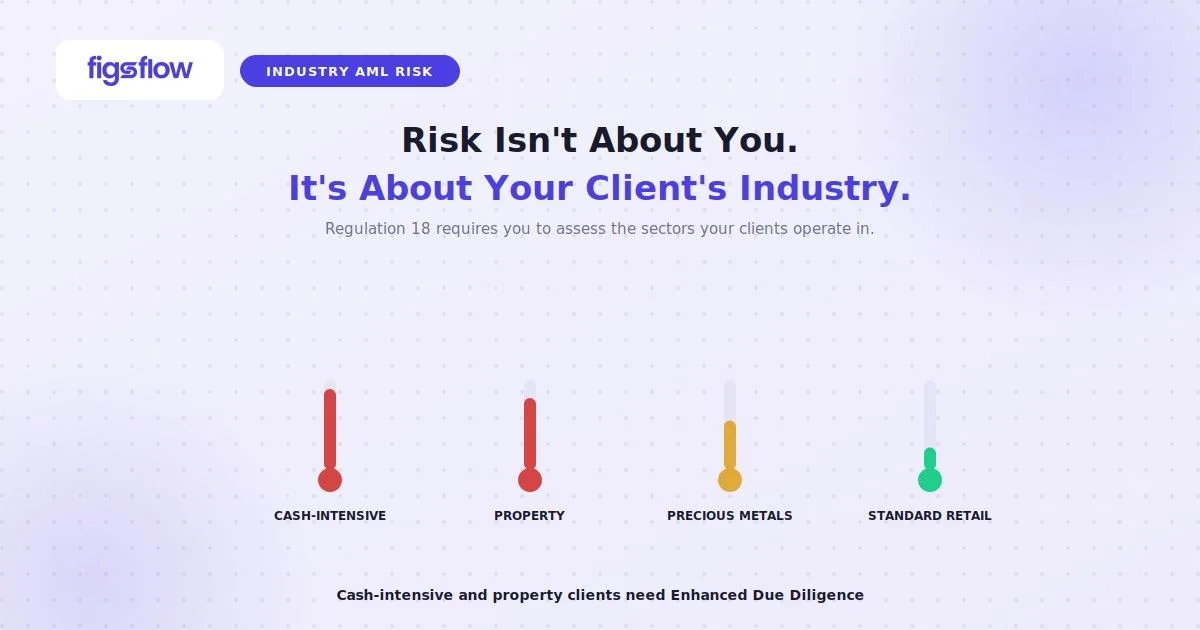
Industry-Related AML Risks: A Guide for Compliance Teams with Insights from FigsFlow Industry-Related AML Risks: A Guide for Compliance Teams with Insights from FigsFlow The Role of Accounting Firms in AML Compliance Understanding Industry-Related AML Risks Factors Identifying the Risk Profile of Clients in Accounting Firms Geographical Factors Affecting AML Risks AML Risks in Different Service Types and Transactions Using Technology to Address Industry-Related AML Risks Client Onboarding and AML Risk Assessment Procedures Ensuring Proper Documentation and Verification for AML Compliance Enhanced Due Diligence for High-Risk Clients and Transactions Ongoing Monitoring and Transaction Analysis for AML Compliance Recognizing Red Flags and Suspicious Activities in AML Compliance Establishing Effective Governance and AML Compliance Structures Training Staff to Recognize and Respond to AML Risks Best Practices for Implementing AML Compliance Frameworks Conclusion: Managing Industry-Related AML Risks with Effective Compliance Frequently Asked Questions (FAQs) What industries present the highest AML risk for accounting firms? When does enhanced due diligence apply under the MLRs 2017? How long must AML records be retained? What should a firm do if it suspects money laundering mid-engagement? Industry-related AML risks are the money laundering and terrorist financing threats specific to particular business sectors. In accounting and professional services, these risks shape how firms must structure their compliance processes under the Money Laundering, Terrorist Financing and Transfer of Funds (Information on the Payer) Regulations 2017 (MLRs 2017). For accounting firms, tax advisers, and bookkeeping practitioners, the regulatory framework demands a targeted approach. Firms must assess the risks that arise from the industries their clients operate in, not just their own internal operations. HMRC fines for AML breaches across all supervised sectors rose significantly in 2024-25 Accounting firms are designated as “relevant persons” under the MLRs 2017 Firms must assess risks from their clients’ industries, not just their own operations Enhanced due diligence applies to clients in high-risk sectors Technology platforms help manage industry-specific compliance requirements The Economic Crime and Corporate Transparency Act adds new verification obligations The regulatory authorities in the United Kingdom have designated accounting professionals as gatekeepers in the fight against financial crime. This designation reflects the unique position that accountants, tax advisers, and bookkeepers occupy within the financial system. The basis for this gatekeeper role stems from the reality that accounting firms routinely handle sensitive financial information, facilitate business transactions, and provide advisory services that could potentially be exploited for laundering purposes. Under the MLRs 2017, accounting firms are “relevant persons” when providing specified services including external accountancy services, tax advisory, trust or company service provider activities, and insolvency practitioner services. These designations appear in the Proceeds of Crime Act 2002 and the Terrorism Act 2000, creating obligations that carry criminal sanctions for non-compliance. The breadth of these triggering activities means that many accounting practices fall within scope even where they might not immediately recognise themselves as subject to anti-money laundering requirements . A firm providing basic bookkeeping services is as much a relevant person as a large firm offering complex tax structuring. Different sectors present various industry-related AML risks that accounting firms must evaluate as part of their compliance obligations. Regulation 18 of the MLRs 2017 requires all relevant persons to carry out a firm-wide risk assessment that includes the risks associated with the sectors in which their clients operate. This obligation requires firms to identify and evaluate the specific money laundering and terrorist financing threats presented by their client base, taking into account the nature of the businesses served. Industry specific risks arise from the characteristics of the sector in which a client operates. Cash-intensive businesses, property transactions involving large sums, online gaming platforms, and precious metals dealers all carry distinct risk profiles that the supervising firm must address in its compliance procedures. Accounting firms frequently serve clients whose business models or ownership structures present elevated money laundering risk. These include clients with complex corporate structures involving multiple jurisdictions, beneficial owners who are difficult to identify or verify, and businesses with revenue patterns that do not align with their stated activities. The professional nature of accountancy means that firms often serve clients before any red flags become apparent. Unlike financial institutions, which may see the proceeds of crime passing through accounts, accounting firms may facilitate the creation of structures used for laundering without direct visibility of the underlying transactions. Additionally, firms should recognise that certain client sectors present elevated risks regardless of the individual client’s apparent legitimacy. Real estate transactions, for example, remain one of the highest-risk areas for money laundering in the UK. Client risk profiles must consider industry-related AML risks, helping firms determine the appropriate level of due diligence and ongoing monitoring required. Geographical factors influence the industry-related AML risks accounting firms face. The Financial Action Task Force (FATF) maintains lists of jurisdictions with strategic deficiencies in their anti-money laundering regimes, and client connections to these areas trigger enhanced requirements. The geographical locations where clients operate or where beneficial owners reside create additional layers of compliance obligation. Regulation 33 of the MLRs 2017 specifically requires enhanced due diligence for clients connected to high-risk third countries identified by the European Commission. For accounting firms, clients operating in or connected to high-risk jurisdictions require proportionately more intensive verification, monitoring, and documentation. Each service type and transaction has its own industry-related AML risks, with varying levels of vulnerability to exploitation for money laundering or terrorist financing purposes. The services offered by an accounting firm create distinct compliance risks. Firms providing trust and company formation services carry particularly high risk given the potential for these structures to obscure beneficial ownership. Similarly, firms facilitating transactions concerning real property or business acquisitions must apply heightened scrutiny. These transaction types feature prominently in documented money laundering typologies. Transactions that are unusually large relative to the client’s stated business profile, that lack apparent economic rationale, or that involve complex arrangements with no clear commercial purpose should prompt additional inquiry. Recognizing these industry-related AML risks helps firms stay compliant and reduces the chance of facilitating financial crime. Technology plays a vital role in managing industry-related AML risks, providing tools that can automate aspects of due diligence, monitoring, and reporting. Modern compliance platforms such as Figs Flow address industry-specific risks through automated workflows that standardise the compliance process. Electronic verification tools check identities against government databases and sanctions lists. By leveraging technology, firms can better mitigate industry-related AML risks and maintain compliance with regulatory requirements. Client onboarding processes must account for industry-related AML risks, ensuring that appropriate due diligence is conducted from the outset of each engagement. The engagement process creates the natural starting point for AML/KYC compliance. Every new client relationship requires identification and verification of the client and any beneficial owners. Client onboarding functionality should enable firms to gather essential identity documents, verify information electronically, assess risk factors including industry-related considerations, and document the due diligence steps taken. The platform should guide practitioners through a risk classification process that considers the client’s sector, geographical connections, ownership structure, and the nature of services being provided. Effective AML risk assessments during onboarding help identify industry-related AML risks early and ensure firms take the right compliance steps. Proper documentation and verification processes are essential for addressing industry-related AML risks and demonstrating compliance during regulatory inspections. Effective compliance requires proper documentation of due diligence steps taken. Regulation 28 of the MLRs 2017 sets out the requirements for customer due diligence, including identification, verification, and assessment of the purpose and intended nature of the business relationship. Technology platforms should facilitate the collection, storage and organisation of compliance documentation. Digital document management creates audit trails that demonstrate regulatory compliance. The verification process creates a crucial compliance control point. Firms must be able to demonstrate that they have taken reasonable steps to verify client identities and assess risk. This documentation must reflect industry-related AML risks to ensure firms meet regulatory expectations. Enhanced due diligence (EDD) is crucial for managing industry-related AML risks when dealing with high-risk clients or transactions. For clients identified as presenting elevated risk, the platform should facilitate enhanced due diligence measures including additional identity verification steps, source of funds and source of wealth checks, and more intensive ongoing monitoring. The platform should create workflow triggers that identify when enhanced due diligence is required based on the risk assessment outcomes, ensuring nothing falls through the gaps. By applying EDD procedures, firms can mitigate industry-related AML risks and ensure compliance with regulatory requirements. Ongoing monitoring of transactions is key to detecting industry-related AML risks over the lifetime of a client relationship. Compliance extends beyond the initial client onboarding stage. Regulation 28 of the MLRs 2017 requires ongoing monitoring of the business relationship, including scrutiny of transactions undertaken throughout the relationship to ensure they are consistent with the firm’s knowledge of the client. Technology platforms should enable monitoring workflows that flag transactions or changes in client circumstances that may indicate increased risk. Regular transaction analysis helps firms address industry-related AML risks and maintain compliance. Recognizing industry-related AML risks involves spotting red flags and suspicious activities linked to specific sectors. Effective compliance depends upon staff ability to recognise activities presenting potential money laundering indicators within their clients’ sectors. Cash-intensive clients presenting unusual patterns of cash handling, particularly where the volumes or patterns are inconsistent with the stated business model, warrant closer examination. Clients providing incomplete or inconsistent information on the identity of beneficial owners or the source of their wealth may indicate attempts to conceal the true nature of the business relationship. Critically, Regulation 333A of the MLRs 2017 prohibits “tipping off” clients regarding any suspicious activity reports that have been or may be filed. By identifying industry-related AML risks, firms can act promptly to prevent illicit activities. Establishing governance structures is crucial for managing industry-related AML risks effectively. Regulation 19 of the MLRs 2017 requires all regulated entities to implement compliance policies, controls, and procedures to manage and mitigate the risks of money laundering and terrorist financing. Regulation 21 imposes a specific requirement that firms appoint a Money Laundering Reporting Officer at management board level or equivalent. The MLRO, working with senior management, bears responsibility for establishing, maintaining, and operating the firm’s compliance framework. These include: A firm-wide risk assessment reflecting the actual risks faced by the practice Written policies, controls, and procedures tailored to those risks Staff screening procedures for those in relevant positions Regular training programmes covering applicable legal obligations An independent audit function to assess the adequacy and effectiveness of internal controls Record-keeping systems that meet Regulation 40 retention requirements Strong governance systems help firms effectively address industry-related AML risks by ensuring all compliance activities are properly structured and documented. Training staff to recognize industry-related AML risks ensures that firms can effectively implement their compliance procedures. Regulation 24 of the MLRs 2017 mandates that firms ensure relevant employees receive training on the law relating to money laundering and terrorist financing, recognising and dealing with transactions and other activities connected with money laundering. The training programme must explain the law within the context of the firm’s own procedures and the specific risks identified in the firm-wide risk assessment. A key consideration is that someone accused of a Failure to Report offence has a statutory defence if they can demonstrate they did not receive adequate training. This makes training not just a compliance exercise but a legal protection for both the individual and the firm. Beyond formal training, firms should aim to foster a compliance culture where all staff understand the importance of AML procedures and feel comfortable raising concerns. By educating staff about industry-related AML risks, firms can empower their teams to detect and respond to suspicious activities. Implementing best practices in AML compliance involves addressing industry-related AML risks through comprehensive frameworks. Effective AML compliance depends upon ongoing commitment to maintaining current and effective procedures. The regulatory landscape evolves continuously, and firms must adapt their approach accordingly. Firms should maintain up to date understanding of regulatory changes and ensure compliance frameworks reflect current requirements. Clear written procedures should guide staff actions in specified situations. The procedures must address industry-related considerations specific to the firm’s client base. Firms should address industry-specific requirements applicable within their sector and the sectors served by their clients. Most fundamentally, firms should foster strong compliance culture where compliance is viewed as an integral part of professional practice rather than an administrative burden. Following these best practices ensures firms effectively manage industry-related AML risks and maintain regulatory compliance. Complete Guide to AML Compliance & Financial Crime for UK Professionals: Read here List of AML Regulations & Regulators in the UK: Read here How to Verify Client Identity for AML Compliance: Read here UK Sanction Screening Guide for Professionals & Businesses: Read here Common Identity Verification Mistakes in AML: Read here Enhanced Due Diligence on Politically Exposed Persons: Read here To effectively manage industry-related AML risks , accounting firms must implement robust compliance frameworks that address the specific vulnerabilities present within their client base and the sectors they serve. Industry-specific AML risks require proportionate compliance responses reflecting the particular threats that different sectors present. Technology platforms including Figs Flow provide important practical tools enabling firms to manage compliance processes more effectively. Ultimately, effective AML compliance depends upon clear governance structures, well-trained staff, and systematic processes underpinned by appropriate technology. In conclusion, managing industry-related AML risks with effective compliance frameworks is essential for the ongoing integrity and success of accounting firms. Cash-intensive sectors such as hospitality, retail, online gaming, and precious metals dealing carry the greatest risk. Property transactions involving large sums or cross-border elements also require heightened scrutiny. Trust and company formation services present elevated risk due to their potential to obscure beneficial ownership. Regulation 33 triggers enhanced due diligence where a higher-risk profile is identified. This applies to clients connected to high-risk third countries, politically exposed persons, and relationships presenting characteristics that increase money laundering risk. The firm-wide risk assessment should define the specific triggers applicable to the firm’s client base. Regulation 40 of the MLRs 2017 requires firms to retain all customer due diligence records for a minimum of five years from the end of the business relationship. This covers identity documents, risk assessments, transaction records, and any documentation relating to suspicious activity. The firm must file a Suspicious Activity Report with the National Crime Agency. Under Regulation 333A, the client must not be informed that a report has been made. Where the matter falls within the controlled activities of the Proceeds of Crime Act 2002, it is a criminal offence to proceed with the relevant transaction without appropriate consent from the NCA. industry-related-aml-risks industry related aml risks page Page
KYC compliance process under UK financial regulations

12/26/2025

UK KYC Compliance: Practical Advice on Pitfalls & Penalties

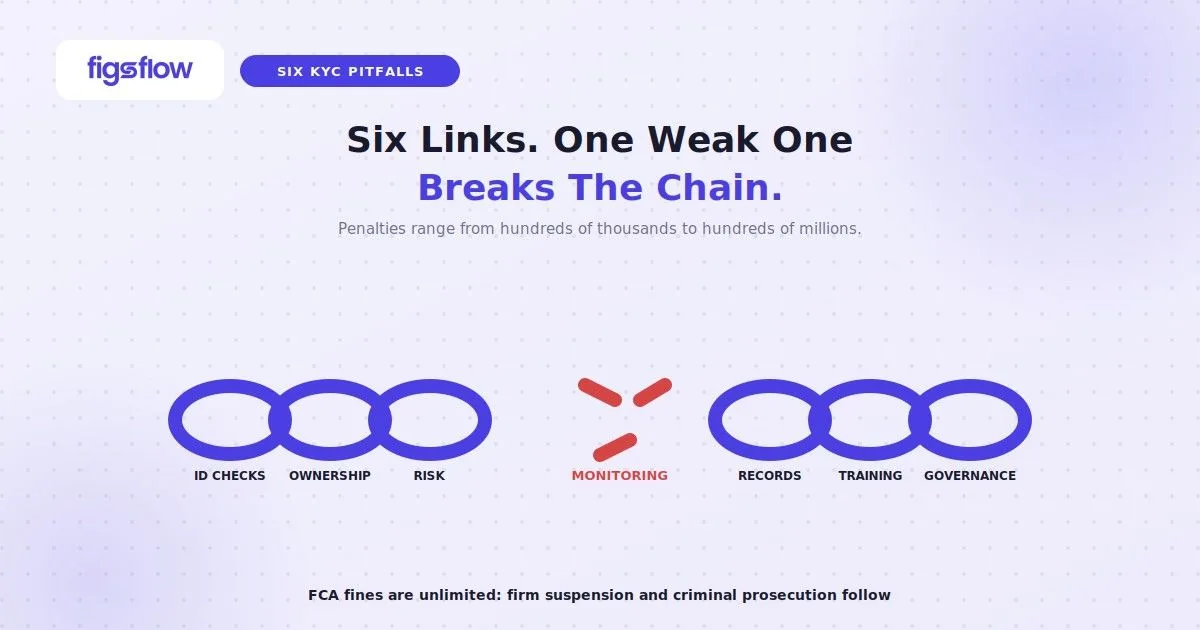
UK KYC Compliance: Practical Advice on Pitfalls & Penalties UK KYC Compliance: Practical Advice on Pitfalls & Penalties What is KYC Compliance? The Legal Framework Common Pitfall One: Inadequate Identity Verification Common Pitfall Two: Failing to Identify Beneficial Ownership Common Pitfall Three: Insufficient Client Risk Assessment Common Pitfall Four: Inadequate Ongoing Monitoring Common Pitfall Five: Poor Record Keeping and Documentation Common Pitfall Six: Inadequate Training and Governance The Regulatory Approach to Enforcement Designing an Effective KYC Framework Practical Implementation Tips Conclusion Discover the six most common KYC compliance mistakes that lead to regulatory penalties and learn practical strategies to implement robust client verification procedures. Know Your Client, or commonly known as KYC, has become a foundation of financial regulation in the United Kingdom. Whether you work in banking, professional services, property, gaming or any number of other regulated sectors, understanding and implementing robust KYC procedures is no longer optional. It is a legal requirement. Yet despite its importance, many organisations struggle to get KYC right. Some face significant penalties because they have not taken it seriously enough. Others incur unnecessary costs by over-complicating their processes. The challenge, then, is to strike the right balance: implementing controls that are genuinely effective whilst remaining practical and proportionate to your business. This article explains what KYC compliance means, why it matters, and most importantly, how to avoid the mistakes that lead to regulatory action and financial penalties. At its core, KYC compliance means that you must verify the identity of your clients and understand the nature of their business and the purpose of your relationship with them. You need to understand who you are dealing with before you enter a transaction or an establish any business relationship. This sounds straightforward. In practice, it involves several interconnected steps. First, you must identify your client. This means obtaining government-issues documentation such as a passport or driving licence to verify their name, address and date of birth. For businesses, you need identify the Directors, Beneficial owners, Senior management and Authorised person if there is any who is working on behalf of the organisation and to establish the legal structure, ownership, and who controls the company. This gets more complex when clients are complex corporate structures or when beneficial ownership is unclear. Second, you must understand the client’s background and activities. Where does their money come from? What is their occupation or business? Are they politically exposed? Do they have any criminal history? This information helps you assess the risks associated with the relationship. Third, you must monitor the client’s activity on an ongoing basis. You need to watch for transactions that seem unusual or inconsistent with what you know about the client. If someone who claims to be a retired pensioner suddenly begins receiving large international transfers, you need to investigate why. In the United Kingdom, KYC requirements are primarily set out in the Money Laundering, Terrorist Financing and Transfer of Funds (Information on the Payer) Regulations 2017, commonly referred to as the MLR 2017. These Regulations give effect to the Fifth Money Laundering Directive and set the standard for the entire regulated sector. The Financial Conduct Authority, or FCA, supervises most of the financial services industry and has issued detailed guidance on KYC expectations. In some sectors, such as banking, the Prudential Regulation Authority also has a role. Other regulators, including the Gambling Commission, the Law Society, and the Solicitors Regulation Authority, have adapted these principles for their own sectors. The key principle underlying all this regulation is straightforward: you must not knowingly or suspiciously facilitate money laundering, terrorist financing, or other financial crime. Failing to apply adequate KYC controls puts your organisation at legal risk and can result in serious consequences. One of the most frequently cited failings in regulatory enforcement action is that organisations have not properly verified client identity at the outset. This often arises in scenarios where businesses have taken a shortcut. For example, a firm might accept a scan of a passport that is not clear or that contains obvious signs of tampering. Alternatively, they might verify identity but fail to confirm the client’s current address. Or they might accept a client’s verbal confirmation of details without obtaining supporting documentation. The problem is that these shortcuts defeat the purpose of the exercise. If you cannot be confident that you know who your client genuinely is, then all your subsequent monitoring and assessment is built on an unstable foundation. How to avoid this: Implement a clear identity verification policy. Require certified copies of official documentation. For high-risk clients, consider using a professional identity verification service that carries out checks against multiple databases. Make sure that the address information you hold is current and that you regularly update it. Document everything you do. If you are later questioned by a regulator, the audit trail matters enormously. When your client is a company rather than an individual, the stakes get higher. You must identify not just the company itself but also the natural persons who ultimately own or control it. These are known as beneficial owners. Many organisations make the mistake of stopping their enquiries at the company level. They get the company registration details and assume their work is done. This is where the real investigation often needs to begin. The issue arises when clients use layers of corporate structure to obscure their identity. Sometimes this is entirely innocent. Sometimes it is designed to conceal involvement in financial crime or sanctions evasion. Your job is to penetrate these layers and identify the real people behind the corporate facade. Under the MLR 2017 , you must identify beneficial owners who hold more than 25 per cent of the shares or voting rights in a company, and those who exercise control through other means, such as contractual rights or influence. You must also identify directors and senior management. How to avoid this: Ask questions and verify the answers. When a company first becomes your client, insist on a complete shareholding structure. If there are any intermediate companies, keep digging until you reach natural persons. Use company search tools, such as Companies House records, to verify what you are being told. For higher-risk clients, consider instructing a professional due diligence provider to carry out beneficial ownership verification. Maintain a file record that clearly shows who you have identified as beneficial owners and how you verified that information. Not all clients present the same level of risk. A long-established British company operated by a single individual with no criminal history presents a much lower risk profile than a newly formed shell company owned by a politically exposed person from a jurisdiction with known corruption issues. Yet many organisations apply a one-size-fits-all approach to KYC. They apply the same level of scrutiny to all clients regardless of risk. This is not efficient, and it is not required by regulation. The regulations explicitly require a risk-based approach. Conversely, some organisations apply insufficient scrutiny to clients they perceive as low risk. They might apply minimal checks to established clients or to those sectors they deem safe. This can be dangerous. An established company can become a vehicle for financial crime. A client’s risk profile can change. How to avoid this: Develop a written risk assessment framework. Document the factors that increase or reduce risk, such as the nature of the client’s business, their location, the size and nature of transactions, and their beneficial ownership structure. Apply this framework consistently to all new clients. Assign clients to risk categories such as low, medium or high. Adjust the intensity of your due diligence accordingly. For high-risk clients, gather more comprehensive information and consider using professional verification services. For low-risk clients, simpler checks may be proportionate. Crucially, do not assume that risk remains static. Periodically reassess your clients, particularly if their transaction profile changes. Many organisations invest significantly in verification and assessment when a client first joins. They then assume that their work is complete and move on. This is a serious mistake. The regulations require ongoing monitoring throughout the client relationship. You must keep their information up to date and look for transactions or patterns that seem unusual or inconsistent with what you know about them. The Financial Conduct Authority (FCA) has found that many firms have weak ongoing monitoring procedures. Some do not monitor at all. Others maintain monitoring systems but do not actively review the outputs. Warning flags are raised by automated systems but then ignored. A real-world example illustrates the danger. A property management company accepted a landlord who appeared legitimate on the surface. The company did not closely monitor the transactions. It later emerged that the landlord was using the company’s systems to launder the proceeds of investment fraud. Regulators questioned why the company had not noticed that the landlord was receiving large sums from multiple sources and then transferring them overseas within hours of receipt. How to avoid this: Build monitoring into your regular business processes. Define what transactions or activities would be considered unusual for each client based on their profile and the nature of your relationship. Use technology to flag transactions that fall outside expected patterns. Establish a clear process for reviewing these alerts and deciding whether further investigation is needed. Do not allow alerts to pile up without review. Maintain records of decisions made and the reasons for them. Periodically meet with clients to confirm their contact details, understand any changes in their business, and reassess their risk profile. Regulatory action often reveals that organisations have failed to maintain adequate records of their KYC processes. They have carried out checks but have not documented them. They have made decisions but have not recorded the reasoning. From a regulatory perspective, if something is not documented, it is almost as though it never happened. If you cannot show the regulator a clear record of what you did, when you did it, and why you did it, you will struggle to defend yourself if your procedures are questioned. This is especially problematic when staff members leave or when time passes. Two years after verifying a client, if you are asked to explain what checks you carried out, you will not remember the details. Your documentation must provide that information. How to avoid this: Create a document retention policy and stick to it. Keep copies of all identity verification documents you obtain. Record the dates on which you obtained them, and any manual checks you carried out. Document your risk assessment and the factors that influenced it. Maintain a file of any correspondence with the client relating to their business and profile. Record the dates and nature of any monitoring reviews you undertake. If you decide not to proceed with a client or to terminate a relationship because of concerns, document that decision and your reasons for it clearly. Use a client management system that maintains an audit trail of all documents and dates. Regulation requires that organisations put in place adequate governance and that all staff involved in client acquisition or monitoring understand their obligations. Yet many organisations neglect to invest in training. Staff who do not understand the purpose of KYC procedures or the risks associated with inadequate controls are less likely to apply them rigorously. They may take shortcuts or fail to escalate concerns they should have escalated. Regulators have also noted instances where senior management has not been sufficiently engaged with KYC compliance. It becomes seen as a compliance tick box rather than a core business responsibility. How to avoid this: Implement a mandatory training programme for all staff involved in client acquisition, account management, and transaction processing. Training should explain the legal obligations, the risks of non-compliance, real-world examples of failures, and the specific procedures expected within your organisation. Deliver training on induction and refresh it annually. Keep records of who has completed training and when. Ensure that senior management and the board understand the KYC obligations and the organisation’s KYC framework. Designate a Compliance Officer with clear responsibility for KYC compliance. When the Financial Conduct Authority or other regulators identify KYC failures, they pursue enforcement action. The consequences can be severe. The FCA has the power to issue unlimited fines. Recent years have seen substantial penalties imposed for KYC failures. These have ranged from hundreds of thousands of pounds for small firms to hundreds of millions for large institutions. Beyond financial penalties, regulators may require firms to remediate past client relationships, re-verify clients who were not adequately checked, and implement enhanced controls going forward. These remediation exercises can be expensive and disruptive. In serious cases, regulators can suspend a firm’s authorisation or even revoke it entirely, which effectively ends the business. There are also criminal consequences. Directors and Money Laundering Reporting Officer s can face prosecution under the Money Laundering Regulations if they have failed to exercise reasonable care. Criminal convictions carry prison sentences and personal fines. Finally, there are consequences for your business reputation and relationships. A regulatory finding often attracts media attention. Clients and partners may lose confidence. Banks and insurers may be less willing to work with you. So, what does good KYC compliance look like? Start by creating a written policy document that sets out your KYC obligations, your approach to risk assessment, and the specific procedures staff must follow. This policy should reference the relevant legislation and be tailored to your business sector and the types of clients you work with. Establish clear processes for client identification and verification. Define what documentation you will accept, how you will verify it, and how you will confirm the client’s address. Be specific. Generic procedures are easier to bypass. Create a client risk assessment framework that reflects the genuine risks in your business. What factors would genuinely increase the risk of a client being involved in financial crime? For a solicitor handling property transaction, would you care more about the source of funds or the client’s nationality? For a betting shop, would you care more about large round-sum transactions or transactions to countries associated with money laundering? Your framework should be based on real risk, not on a generic template. Implement a client due diligence process that is proportionate to risk. This does not mean applying minimal checks to all clients. It means that a client assessed as very high risk should undergo significantly more thorough checks than a client assessed as low risk. Build ongoing monitoring into your normal business operations. Do not treat it as a separate exercise. If you use a client management system, make sure it contains all the information needed to assess whether a client’s transactions are unusual. Establish clear escalation procedures. Staff should know when to raise a concern and who to raise it with. You should have a designated Money Laundering Reporting Officer responsible for reporting suspicious activity to the Financial Conduct Authority or National Crime Agency as required by law. Train your staff so that they understand not just the rules but the reasons for them. Finally, review your procedures annually. Look at the results of any regulatory audits or inspections. Consider whether your risk assessment framework remains appropriate or whether the business has changed in ways that affect it. Consider the following practical steps to strengthen your KYC compliance. If you are small or lack internal expertise, consider engaging a compliance consultancy to help you design your framework. It is far better to invest in preventive measures now than to face regulatory action later. Use technology appropriately. Client management systems can help you maintain records and track due diligence completion. Automated monitoring tools can help you identify unusual transactions. However, technology is not a substitute for human judgment. You still need experienced staff to interpret alerts and make decisions about what they mean. Maintain strong relationships with compliance and legal advisers who understand your business and your regulatory obligations. When you encounter complex client situations or unusual circumstances, get advice. Do not make exemptions or exceptions for clients unless there is a clear policy-based reason for doing so. Staff will often find reasons why a particular client should not have to complete all the usual steps. Resist these pressures unless there is a legitimate exemption under the regulations. Build a compliance culture. Make clear that KYC compliance is not the responsibility of the compliance team alone. It is part of normal business practice, and everyone has a role to play. Related Compliance Guidance How to Perform Sanction Screening for Clients in the UK Best AML Compliance Practices for Small Accounting Firms KYC compliance is not bureaucratic box ticking. It is a genuine obligation designed to protect the financial system and to prevent money laundering and terrorist financing. Organisations that take it seriously invest appropriately in staff, systems and procedures. Over time, this investment pays dividends through reduced regulatory risk, enhanced reputation, and cleaner client relationships. By contrast, organisations that treat KYC as a nuisance or that cut corners to save costs risk substantial regulatory penalties and reputational damage. The approach you take should be conscious and deliberate. Start with a clear, written framework tailored to your business. Apply it consistently. Invest in staff training. Maintain good records. Monitor your clients throughout your relationship with them. And when you are unsure, seek professional advice. This approach will not guarantee you will never face a regulatory question. However, it will mean that if you are questioned, you can demonstrate that you have acted reasonably and in accordance with your legal obligations. That is as good as it gets in compliance. kyc-compliance-how-to-avoid-pitfalls-and-penalties kyc compliance how to avoid pitfalls and penalties page Page