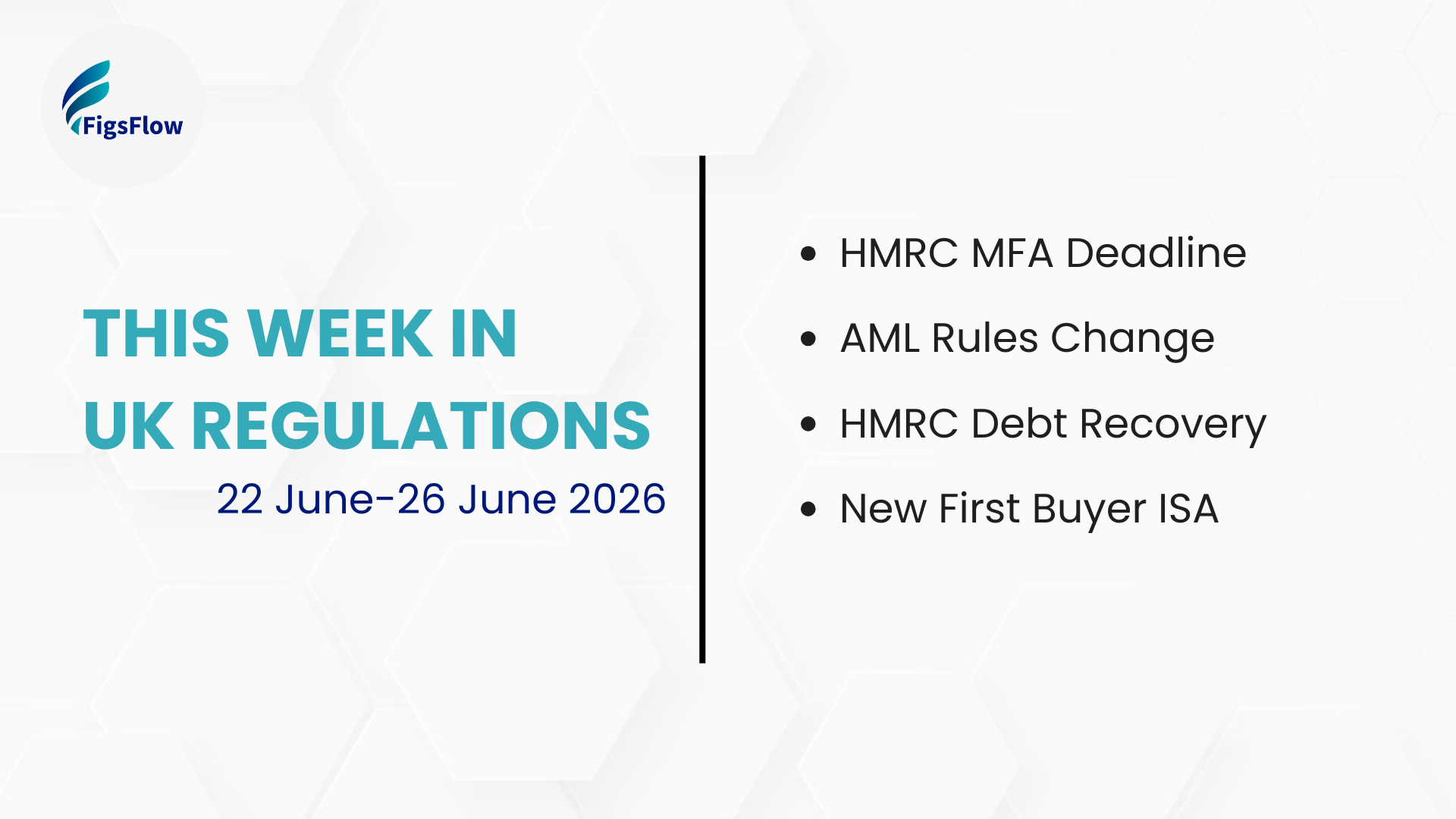

This week brings a mix of upcoming compliance changes, regulatory updates, and consultations that UK accounting firms need to keep on their radar. The first MFA opt-in deadline for Agent Services Accounts is approaching, with firms needing to complete the process by midnight on 30 June 2026 if they want to choose their activation date. Meanwhile, changes to the Money Laundering Regulations are set to come into force on 30 June 2026.
Alongside these immediate actions, HMRC is consulting on two major proposals: new powers for direct recovery of tax debts from bank accounts and replacing the Lifetime ISA with a new First Time Buyer ISA.
Here is what practitioners need to know and the key actions to consider.
MFA becomes mandatory for all Agent Services Accounts by mid-October 2026
The first opt-in window closes at midnight, 30 June 2026. Firms that submit the online form before that deadline activate MFA (Multi-factor authentication) on 15 July and retain control over their transition timing. Those that miss it will be migrated automatically between 28 September and 15 October, with no say in when it happens.
HMRC recommends authenticator apps as the most reliable method. They work offline, require no mobile signal, and avoid the switchboard routing failures that affect voice-based verification. Before the activation date, firms should also confirm with their software providers that any automated sign-in processes will remain compatible under the new requirements.
Key facts:
- Submit the online form by midnight tonight (30 June 2026) to activate MFA on 15 July
- Second opt-in window: submit by 31 July 2026 for activation on 19 August
- Automatic migration for all remaining accounts: 28 September to 15 October 2026
Before the activation date, establish at least two administrators on the account, set up individual credentials for each member of staff, and remove anyone who has left the firm. A shared login across multiple users becomes a liability once MFA is in place.
Money Laundering Regulations Tighten From 30 June as EDD Scope Narrows
The Money Laundering and Terrorist Financing (Amendment) Regulations 2026 take effect from 30 June 2026. Two of the three substantive changes relax existing obligations. The third expands them.
Enhanced Due Diligence is now only mandatory for transactions that are “unusually complex”, narrowing the previous “complex” threshold. The automatic EDD trigger for high-risk countries contracts to the FATF “Call for Action” list only, removing the broader set of countries that previously applied. Grey list countries no longer trigger automatic EDD.
The expansion sits with Trust Registration Service obligations. Non-UK trusts holding UK land acquired before 6 October 2020 must now register, though a de minimis exemption covers certain low-risk and low-value trusts.
Key facts:
- EDD mandatory threshold raised from “complex” to “unusually complex” transactions
- Automatic EDD now restricted to FATF “Call for Action” countries only; grey list countries removed
- Non-UK trusts holding UK land acquired before 6 October 2020 must register with the TRS
Firms applying EDD to all complex transactions or to grey list countries have been over-reporting. Update your AML procedures today. For any practice with non-UK trust clients holding older UK land, check whether TRS registration is now required.
HMRC Consults on Taking Tax Debts Directly From Bank Accounts
HMRC is consulting on powers to recover tax debts of up to £10,000 directly from taxpayer bank accounts in monthly installments. The measure targets persistent non-engagers who have the means to pay but are not responding to standard recovery routes.
Before acting, HMRC must issue a formal Pre-Deduction Notice. Affordability will be assessed using internal VAT, PAYE, and Self Assessment records alongside, potentially, Credit Reference Agency data from providers such as Experian or Equifax.
The detail drawing most scrutiny from professional bodies including CIOT and LITRG is the absence of a mandated minimum balance. The 2015 version of these powers included a £5,000 floor. That safeguard is not in the current proposal, leaving open the possibility of vulnerable taxpayers being left without funds for essential costs.
Key facts:
- Debts up to £10,000 recoverable via direct monthly instalments from bank accounts
- No mandated minimum balance proposed, unlike the £5,000 floor in the 2015 powers
- Consultation closes 28 August 2026
Identify any clients who have been persistently avoiding HMRC contact and carry debts within this range. Where the proposal raises concern, a consultation response before 28 August is the route to put that on record.
Lifetime ISA Scrapped in Favour of a First Time Buyer ISA
HMRC has launched a consultation to replace the Lifetime ISA with a new First Time Buyer ISA. The case for change is clear in the data: in 2024-25, unauthorised withdrawal charges applied to 8% of all LISA accounts, meaning more holders lost money than used the product to buy a home.
The current 25% withdrawal charge does not simply claw back the government bonus. It takes 6.25% of the saver’s own contributions on top, penalising savers who needed access to their own money.
Under the proposed FTB ISA, the 25% government bonus is deferred and paid only at the point of a first home purchase. The withdrawal penalty disappears as a result. Savers can retrieve their own funds without charge if circumstances change, and the property price caps remain unchanged at £450,000 for London and £250,000 elsewhere.
Key facts:
- Government bonus paid at completion only, not during the saving period
- Withdrawal of own contributions permitted without penalty under the new model
- Property price caps unchanged; consultation closes 17 August 2026
For clients currently holding a LISA or considering one, the consultation outcome will determine whether they stay the course or wait for the new product. The 17 August deadline gives practitioners a short window to submit views on the cap levels or the bonus mechanics if they have clients directly affected.
Conclusion
This week’s key actions focus on preparation and upcoming deadlines. The first MFA opt-in window closes at midnight on 30 June 2026, while the updated Money Laundering Regulations also come into force on the same date. Firms should complete MFA setup where needed and review AML procedures before the changes take effect.
The two HMRC consultations on direct tax debt recovery and the proposed First Time Buyer ISA remain open until August, giving practitioners time to review the impact on affected clients and submit responses where relevant.
We publish these updates every week. Follow us to get next week’s round-up as soon as it lands.