
Weekly News & Updates for UK Accountants (11 – 15 May 2026)
Key updates for UK accountants on HMRC debt, P11D changes, tax register and fraud risks with urgent deadlines.

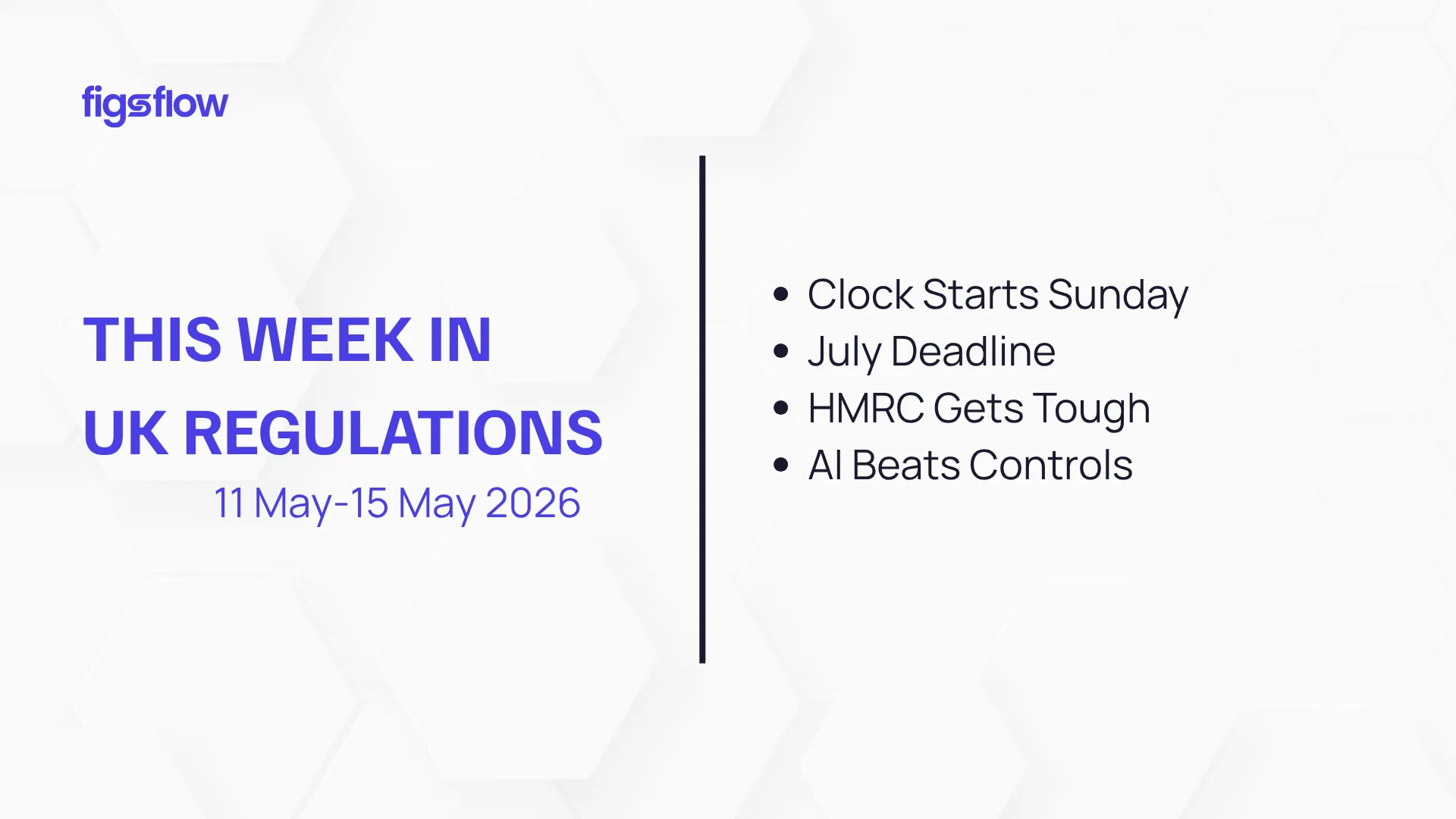
The tax adviser register opens in three days. HMRC is pursuing £43.8 billion in outstanding debt with tools it did not have two years ago. The final traditional P11D cycle is almost over. And within your clients’ finance teams, a fraud threat is growing that most professionals admit they would not spot.
Four stories. All require action before the end of the month or the end of the summer.
HMRC's "Interact" Tool Goes Live as Tax Adviser Register Opens in Three Days
HMRC has released a six-question checker tool, named “Interact,” to help firms determine whether they need to enrol in the mandatory tax adviser register. The tool is a useful starting point, but HMRC has been clear that its results are non-binding. Firms cannot complete the checker, receive a green light, and treat the matter as closed. The obligation itself remains, and the penalties for missing the appropriate deadline can reach £5,000, alongside the potential publication of the firm’s name.
The register covers anyone who provides tax services for payment and interacts with HMRC on a client’s behalf. That includes conveyancers submitting SDLT returns and payroll agencies. In-house tax teams and insolvency practitioners are generally exempt.
Deadlines by firm type:
- 18 May 2026 – General opening for most advisers
- August 2026 – Firms with existing Self Assessment or Corporation Tax agent accounts
- November 2026 – Third-party payroll providers
- 31 December 2026 – Financial services organisations
Use the Interact tool today to check eligibility. If there is any doubt, treat registration as required and act accordingly.
Further reading: Tax Advisers Must Register with HMRC from May 2026
6 July Is the Final P11D Deadline Before Payrolling Becomes Mandatory
Monday 6 July 2026 is the deadline for submitting P11D expenses and benefits in kind, and for paying Class 1A National Insurance contributions, for the 2025-26 tax year.
This is one of the final traditional P11D cycles. From 6 April 2027, reporting and paying income tax and Class 1A NICs on benefits through payroll software becomes mandatory for most employers.
Two benefit types will initially sit outside the mandatory payrolling system: beneficial loans and living accommodation. Both can be reported voluntarily through a new registration service that HMRC is currently developing. HMRC has published interim guidance and technical specifications ahead of the 2027 change, giving employers time to prepare.
Key facts:
- P11D Filing Deadline – 6 July 2026
- Class 1A NICs Payment Deadline – 19 July 2026 (22 July if paying electronically)
- Mandatory Payrolling Start Date – 6 April 2027
- Initial Exclusions – Beneficial loans and living accommodation
Employer clients who have not yet started reviewing their payroll software and processes for the 2027 shift should do so now. This P11D cycle is a natural prompt for that conversation.
HMRC Drops the Light-Touch Approach as Winding Up Petitions Soar
HMRC is owed approximately £43.8 billion in outstanding tax receipts. It now has the tools and the appetite to pursue that debt in ways it did not during the pandemic years.
Since gaining secondary preferential creditor status, HMRC has taken a markedly harder line on recovery. Winding up petitions have risen sharply. Time to Pay agreements, once relatively straightforward to negotiate, have become significantly more difficult to obtain. HMRC is also taking an active role in court-led restructuring processes, including Part 26A plans, which are forcing businesses and their advisers to reassess whether restructuring remains viable when HMRC is at the table with enhanced leverage.
The shift matters most for clients already carrying tax debt. The tolerance that characterised HMRC’s approach through Covid and its immediate aftermath has gone. Clients who assumed a Time to Pay arrangement would be available if needed should not rely on that assumption now.
Key figures:
- Outstanding Tax Debt – £43.8 billion
- HMRC Status – Secondary preferential creditor
- Direction of Travel – More winding up petitions, harder TTP negotiations, active restructuring involvement
Any client with outstanding HMRC debt needs that conversation now, not when a petition arrives.
AI-Generated Receipts Are Reaching Finance Teams at Scale
Manual expense controls were built for a world where faking a receipt required effort. That world no longer exists.
Since major upgrades to image-generation technology in early 2025, AI-produced receipts have become realistic enough to defeat most manual review processes. According to AppZen, AI-generated receipts accounted for 14% of all fraudulent documents by September 2025, up from near zero the year before. Thirty-two percent of finance professionals admit they would not recognise a fake.
The financial exposure compounds quickly. Fraud schemes of this type go undetected for an average of 12 months. Every month of delay costs businesses an average of £7,300 in additional losses.
The practical response is a shift away from receipt-anchored expense management toward card-anchored processes, which validate transactions at the point of purchase rather than relying on documentation submitted afterwards.
Key figures:
- AI-Generated Receipts As Share of Fraudulent Documents (Sept 2025) – 14%
- Finance Professionals Who Could Not Identify a Fake – 32%
- Average Detection Lag – 12 months
- Average Monthly Cost of Undetected Fraud – £7,300
Clients running manual expense programmes are carrying a risk most of them have not yet quantified. Raising it now is straightforward. Explaining it after a scheme has run for a year is harder.
Also In News & Updates
- Law Firm Accounting Breaches and SRA Closures | FigsFlow – Accounting failures account for a disproportionate share of SRA-mandated firm closures, new data shows.
- HMRC’s New Sanctionable Conduct Powers Explained – What the new conduct framework means for registered and unregistered advisers.
- Companies House WebFiling Flaw Exposed 5 Million Companies – A security vulnerability in the WebFiling system exposed the majority of registered UK companies to fraudulent filings.
- Tax Adviser Registration for Financial Firms Delayed to 2027 – Financial services organisations receive a later deadline as HMRC refines the registration framework.
- Weekly News & Updates for UK Accountants (8 May 2026) | FigsFlow – Last week’s round-up covering the stories that shaped the week for UK practitioners.
Conclusion
Three of this week’s four stories trace back to the same pressure point: HMRC is tightening, and the margin for delay is shrinking. The register opens on Sunday. Debt recovery is harder than it has been in years. The P11D window closes in seven weeks. The AI fraud story sits slightly apart, but the underlying message is the same.
The clients who need to act are not waiting for a nudge. They are waiting for you to give them one.