
Weekly News & Updates for UK Accountants (29 June – 3 July 2026)
This week for UK accountants: real-time ITSA, Direct Debit, MTD £20,000 and the ISA overhaul, with actions and dates.
 Swikriti ThakuriJul 3, 2026Updated Sep 28, 2026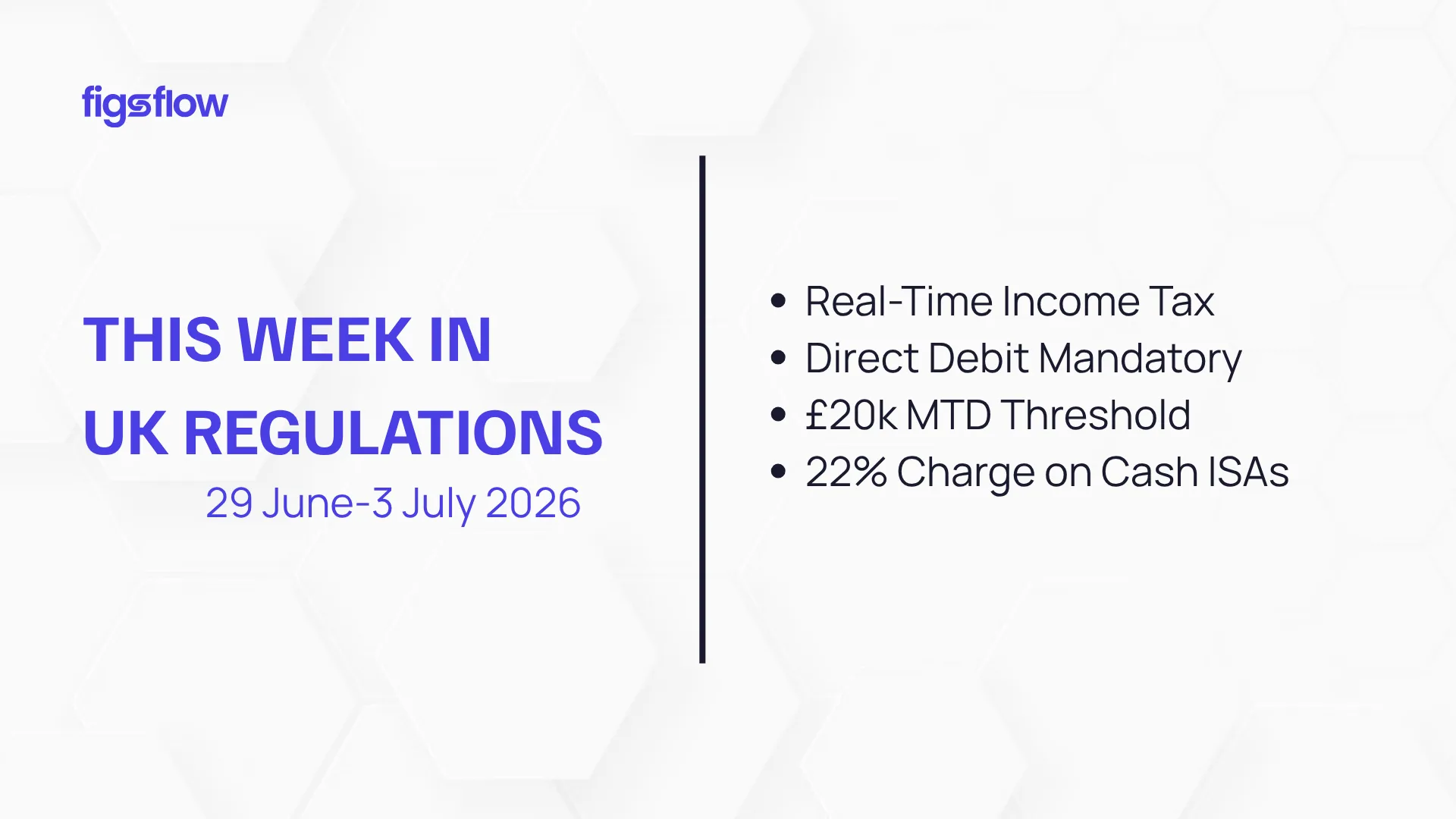
Two consultations are open this summer. The Income Tax Self Assessment real time payment consultation closes on 4 August 2026 and could bring more taxpayers with smaller Self Assessment liabilities into earlier payment. The Direct Debit consultation closes on 16 August 2026 and could introduce penalties where VAT or PAYE is paid by another method, even if paid in full and on time.
The other two updates are planning points. MTD for Income Tax will fall to a £20,000 threshold from April 2028, while the April 2027 ISA overhaul introduces a 22% charge on interest earned on cash held inside non Cash ISAs, including Stocks and Shares ISAs and Innovative Finance ISAs.
HMRC Proposes Real Time Income Tax & Floats Lowering the £1,000 Payment Threshold
The government wants to collect Income Tax closer to the point income is earned. For the roughly 2.1 million Self-Assessment taxpayers who also have employment or pension income, HMRC is proposing to gather estimated tax across 12 monthly instalments through the PAYE code from April 2029, based on the prior year’s figures.
The detail that matters more for advisers sits underneath the headline. For taxpayers without a PAYE source, the government is exploring monthly or quarterly payments on account, and it is considering lowering the current £1,000 threshold. That change alone would bring a large group of lower earners into a payment rhythm they have never faced.
There is also a balancing payment to follow the PAYE instalments, and a transition risk worth noting. In 2029/30, some clients could pay their 2028/29 balancing payment while starting the new in-year instalments at the same time, a genuine cash-flow squeeze in a single year.
Key facts:
- Around 2.1 million ITSA taxpayers with PAYE income potentially collected via 12 monthly instalments from April 2029
- Proposal to lower the £1,000 payments on account threshold, widening the net
- Consultation closes 4 August 2026
This is directional rather than final, but the response window is open now. Identify clients who would feel a monthly payment cycle most, the self-employed with lumpy income and those near the £1,000 threshold, and consider whether a consultation response is worth making before 4 August.
Direct Debit Set to Become Compulsory for VAT & PAYE, With a Penalty for Paying Any Other Way
HMRC is consulting on making Direct Debit the compulsory payment method for most VAT and PAYE liabilities. Only 13% of registered businesses, around 330,000, use it today, so the shift would reach roughly 2.4 million businesses and sole traders.
The proposal has a sting that is easy to miss. HMRC is considering a penalty for failing to pay by Direct Debit even where the tax is paid in full and on time by another electronic method. Paying correctly would no longer be enough on its own.
There is also an unresolved problem for businesses without a UK bank account, including many overseas entities. They cannot use the scheme as drafted and would need to continue with existing electronic arrangements, leaving a gap the consultation has yet to close.
Key facts:
- Mandate would affect around 2.4 million businesses, up from the 330,000 using Direct Debit now
- Payments above £20 million exempt due to BACS system limits
- Consultation closes 16 August 2026
Check which clients currently pay VAT or PAYE by bank transfer or card rather than Direct Debit, as they are the ones exposed to the proposed penalty. Flag any overseas clients without a UK bank account early, since the scheme as drafted does not accommodate them.
MTD for Income Tax Confirmed to Drop to £20,000 From April 2028
This one is confirmed, not consultation. From April 2028, the Making Tax Digital for Income Tax threshold falls to £20,000, bringing an estimated 970,000 more sole traders and landlords into quarterly digital reporting and an end-of-year return.
The character of this cohort is the part worth planning around. HMRC’s own reading is that taxpayers earning between £20,000 and £30,000 have lower software adoption and lean less on professional agents than higher earners.
That combination cuts two ways. It is a compliance burden for the taxpayers, who are expected to need more targeted support to make the move, and a client-acquisition opportunity for firms ready to meet it.
Key facts:
- £20,000 threshold effective from April 2028, drawing in around 970,000 more taxpayers
- Estimated £380 million in transitional costs for the £20k to £30k group, plus £101 million a year in ongoing compliance costs
- Digital records and quarterly summaries required, alongside an end-of-year return
The firms that win here will be the ones that make onboarding simple for people who have never used accounting software. There is time to build that offer before April 2028, and the practices that start now will be positioned when the deadline arrives.
The ISA Overhaul Brings a 22% Charge on Cash Interest From April 2027
The government is redrawing the ISA regime to push savers towards investing rather than holding cash. From 6 April 2027, the annual Cash ISA allowance falls from £20,000 to £12,000 for most savers, while the £20,000 allowance for Stocks and Shares and Innovative Finance ISAs stays put.
Savers aged 65 and over keep the full £20,000 cash allowance from their 65th birthday. The change that will surprise clients, though, sits inside investment accounts rather than in the allowance cut itself.
To stop savers sidestepping the lower cash limit, interest and alternative finance returns on cash held within non-cash ISAs will attract a flat 22% tax charge. Money market funds are treated as non-qualifying where they make up 100% of a Stocks and Shares portfolio, and the over 65s are caught by both the 22% charge and the ban on wholly cash-like holdings despite their higher allowance.
Key facts:
- Cash ISA allowance cut from £20,000 to £12,000 from 6 April 2027, with the full £20,000 retained for those aged 65 and over
- Flat 22% tax on cash interest earned within non-cash ISAs
- Transfers from investment ISAs back to cash ISAs prohibited for the under 65s; draft legislation expected Autumn 2026
The transfer ban is the detail with a timing edge. Because the under 65s will lose the ability to move investments back into cash, some clients may feel pushed to de-risk prematurely before the drawbridge rules take effect. A preliminary factsheet landed on 23 June, with draft legislation due in Autumn 2026, so flag affected clients now and hold firm advice until the detail is confirmed.
Also In The News
- Last week’s round-up covering the stories that shaped the week for UK practioners
- FigsFlow & RentalBux – Save 190+ Hours on MTD Compliance
- Law Firm Accounting Breaches and SRA Closures | FigsFlow
- Charge Your Worth: Guide to Pricing MTD ITSA Services
Conclusion
The pattern this week is HMRC pulling tax forward and steering behaviour. Real-time ITSA, compulsory Direct Debit, and the widening MTD net all push towards sooner payment and less discretion over method, while the ISA overhaul uses a 22% charge and a transfer ban to nudge savers out of cash. The through-line is the same: more of what taxpayers do is being shaped by the collection system rather than left to them.
The immediate work is narrow. Respond to the two consultations if they affect your client base, 4 August for real-time ITSA and 16 August for Direct Debit. MTD to £20,000 and the ISA changes are planning rather than panic, but the ISA transfer ban is worth raising with clients now, before the Autumn draft legislation firms up the detail.