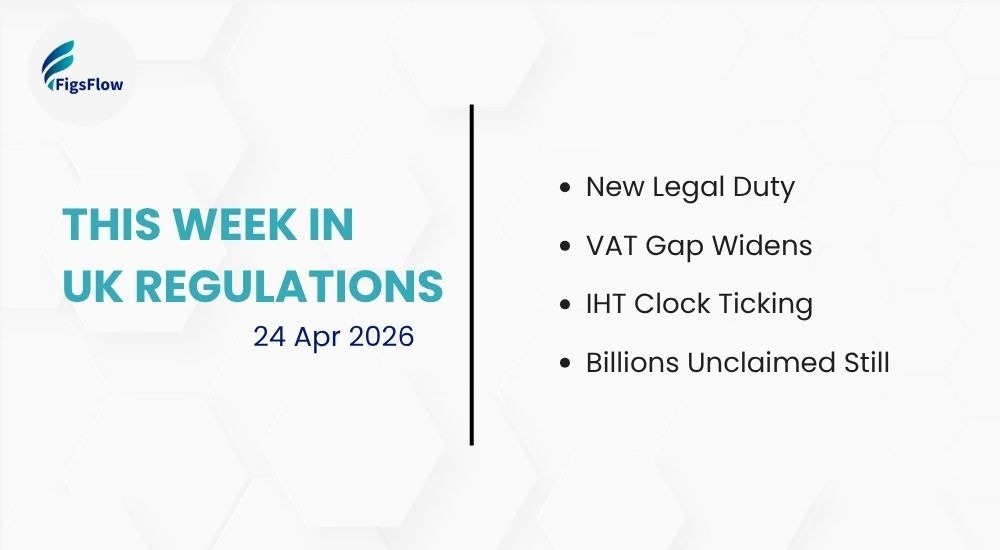

From 18 May, anyone paid to interact with HMRC on a client’s behalf must hold a registered agent services account. The requirement is broader than most practitioners expect, and the deadlines are already running.
VAT enforcement is hardening, pension inheritance tax reform is creating new estate planning urgency, and £1.65 billion in Child Trust Fund assets sits unclaimed. Clients need to hear about all of it.
There is no shortage of material for client conversations this week.
HMRC Makes Agent Services Account Registration a Legal Requirement
From 18 May, paid tax advisers must register or lose the ability to act for clients.
HMRC defines a tax adviser as anyone paid to interact with it on another person’s tax affairs. That covers communication by any channel, submitting returns and claims, and applies regardless of job title, business size, or whether the firm is based outside the UK. Registration is for the legal entity, not individual employees, though HMRC will check certain individuals within the business.
Non-registration ends your ability to act for clients. Continued interaction without a registered account can result in a formal notice to stop, a financial penalty, or a temporary or permanent ban from future registration. Each deadline carries a three-month application window, but that window runs concurrently with client obligations.
- 18 May 2026: Registration opens
- 18 August 2026: Deadline for existing Self Assessment or Corporation Tax account holders
- 18 November 2026: Deadline for third-party payroll only businesses
- 31 December 2026: Deadline for financial services organisations
Exemptions cover employers managing their own payroll, in-house group company tax teams, those advising without charge, and practitioners dealing solely with customs, import VAT, or tribunal matters.
HMRC Issues £302 Million in Late VAT Penalties in a Single Year
1 in 4 registered VAT traders missed payment deadlines as the VAT gap climbs to £11.9 billion.
HMRC issued 582,000 late VAT payment penalties during 2024/25, up from 569,000 the prior year, across a registered base of 2.3 million VAT traders. Unpaid VAT grew by £500 million to £11.9 billion, representing 5% of the total UK tax gap. Under rules in place since 2023, businesses face a 3% charge on outstanding VAT after 16 days, with a further 3% if the debt reaches 31 days.
Total overdue tax debt sits at £42.8 billion, with only £5.7 billion covered by formal Time to Pay arrangements. That leaves roughly 87% of outstanding debt outside any structured recovery plan. HMRC is deploying £629 million to strengthen its debt recovery operations, and the direction of travel is clear.
- 582,000 penalties issued in 2024/25
- £11.9 billion in unpaid VAT, up £500 million year on year
- 3% penalty after 16 days, plus 3% at 31 days
- £5.7 billion under Time to Pay agreements
Pension Pots Enter the IHT Regime from April 2027
Executors face a six-month payment window, double taxation risk, and provider delays.
From 6 April 2027, unused money-purchase pension assets will be included in estate valuations and taxed at 40% on death. Where the deceased was 75 or older, beneficiaries may also owe income tax on inherited funds at their marginal rate. Executors must pay any IHT due within six months of death. Miss that window and interest accrues at 7.75%, which is 4% above the current bank rate.
The practical difficulty is that executors must identify and contact every pension provider individually. Older providers consolidated into larger firms can be slow to respond, which risks missed payment deadlines and the interest that follows. A possible government concession under discussion would allow providers to withhold up to 50% of pension funds for up to 15 months to ensure tax is covered, though interest would still accrue from the sixth month. That concession is not yet confirmed, and estates should not be planned around it.
Key figures:
- 6 April 2027: Effective date
- 40% IHT rate on unused money-purchase pension assets
- Double taxation possible where deceased was aged 75 or over
- Six-month IHT payment window from date of death
- 7.75% interest on late payments (4% above current bank rate)
- Possible 50% provider withholding for up to 15 months under discussion
750,000 Young Adults Have Not Claimed £1.65 Billion in Child Trust Funds
Around 750,000 young adults are sitting on unclaimed Child Trust Fund accounts they may not know exist.
Child Trust Funds were established for children born between 1 September 2002 and 2 January 2011. An estimated 750,000 accounts remain unclaimed, holding a combined £1.65 billion. HMRC has begun writing directly to 21-year-olds whose address data is considered current, typically through recent Student Finance or PAYE interactions.
The average unclaimed balance is £2,200. For practitioners with clients who have adult children or who work with younger clients unfamiliar with the scheme, this is a straightforward piece of value to deliver. The GOV.UK “Find My Child Trust Fund” tool is free and identifies account providers quickly.
Key facts:
- 750,000 accounts unclaimed
- £1.65 billion in total unclaimed assets
- Average balance of £2,200 per account
- Accounts cover those born between 1 September 2002 and 2 January 2011
- GOV.UK tool: “Find My Child Trust Fund.“
Conclusion
HMRC is tightening registration, enforcement, and compliance across multiple fronts at once.
The agent services account deadline is the most operationally urgent; missing it means losing the ability to act on behalf of clients. The VAT penalty figures confirm enforcement is intensifying, backed by £629 million in additional resource. Pension IHT reform becomes a live problem for estates in under twelve months. And £1.65 billion in Child Trust Fund assets sits waiting for 750,000 young adults.
Also In The News & Updates
- Law Firm Accounting Breaches and SRA Closures | FigsFlow – Accounting failures account for a disproportionate share of SRA-mandated firm closures, new data shows.
- HMRC’s New Sanctionable Conduct Powers Explained – What the new conduct framework means for registered and unregistered advisers.
- Companies House WebFiling Flaw Exposed 5 Million Companies – A security vulnerability in the WebFiling system exposed the majority of registered UK companies to fraudulent filings.
- Tax Adviser Registration for Financial Firms Delayed to 2027 – Financial services organisations receive a later deadline as HMRC refines the registration framework.
- UK News and Updates for Accountants (17 April 2026) | FigsFlow – Last week’s round-up covering the stories that shaped the week for UK practitioners.