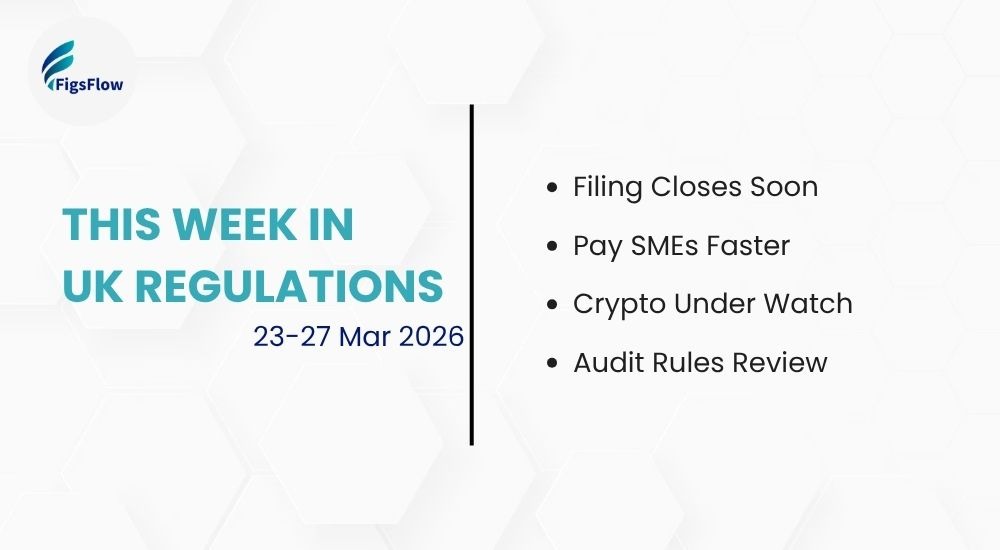

This weekly news and updates arrive at an unusually pressured moment for practitioners. Four days from now, a filing service that thousands of firms have relied upon for years will close permanently, with no extension and no fallback. The profession is not being given much runway.
Beyond the immediate deadline, this weekly news and updates carry a longer thread: enforcement sharpening, regulation tightening, and structural change moving faster than many practices had anticipated.
Here is what matters and what it means for your clients.
Free HMRC Filing Closes in Four Days
HMRC and Companies House will permanently decommission their joint online filing service on 31 March 2026. From 1 April, all companies must file corporation tax returns through commercial software. The system is being retired on the grounds that it is outdated and no longer meets the standards set out under the Economic Crime and Corporate Transparency Act.
The closure carries a practical risk that is easy to overlook. All records currently held within the system will be deleted upon shutdown. Firms that have used the service to store historical filings need to act now. HMRC has advised downloading at least three years of previous filings in HTML format before the deadline passes. The closure also follows a reported security breach at Companies House in March 2026, where logged-in users could potentially access other companies’ account details.
- Service closes: 31 March 2026
- Mandatory commercial software required from: 1 April 2026
- Minimum filing history to download: three years, in HTML format
Amendments or corrections to previous filings after the deadline can still be submitted via a paper return sent to the Corporation Tax Services office, for those not using software.
If clients have not been contacted yet, today is the day.
More about this on GOV.UK.
Large Businesses Face Mandatory Payment Deadline
From as early as the 2027-28 financial year, large businesses will be legally required to pay SME invoices within 60 days. The legislation targets companies meeting at least two of the three following thresholds:
- Turnover above £54 million
- Balance sheet exceeding £27 million
- Workforce of 250 or more
Late payment will not simply be a reputational issue. Interest will accrue at 8% above the Bank of England base rate, which at current rates produces a combined charge of 11.75%.
The financial exposure is concrete. A £20,000 invoice paid 60 days late generates £386.30 in interest plus £100 in statutory compensation. Boards and audit committees will also be required to publish commentary in their annual reports explaining poor payment performance and their remediation plans. The Small Business Commissioner is gaining new investigation and enforcement powers, with fines potentially reaching tens of millions.
- Interest on late payments: 8% above Bank of England base rate, currently 11.75% in total
- Example: a £20,000 invoice paid 60 days late generates £386.30 interest plus £100 compensation
- Exemptions apply for contracts between two large entities where the purchaser is the smaller party, and for international trade
For practitioners advising large business clients, payment process reviews and annual report disclosures are going to become part of the conversation well before 2027.
HMRC Steps Up Crypto Enforcement
Under OECD requirements now in force, crypto platforms are required to pass granular transaction data directly to HMRC. The agency no longer needs to ask. It receives detailed records of holdings and disposals automatically, which means compliance gaps that previously went undetected are now visible before a return is even filed. The nudge letter programme targeting crypto holders reached close to 65,000 in the 2024-25 tax year alone, a figure that reflects how seriously HMRC is treating the asset class.
For tax advisers, the enforcement picture changes the planning conversation. The annual CGT exemption now stands at £3,000. Clients holding crypto at a loss have a narrow but usable window: realised losses can be offset against gains from other assets, including property and shares, and where losses exceed gains, they can often be carried forward. For tokens that have lost all practical value, a negligible value claim allows a loss to be crystallised without a disposal event.
- CGT annual exemption: £3,000
- Nudge letters sent in 2024-25: nearly 65,000
- Negligible value claims available for tokens with no remaining market value
Clients who have not had this conversation are increasingly likely to hear from HMRC first.
FRC Opens Review of Small Company Audit Standards
The FRC has launched a formal review into whether the UK should adopt a version of the International Standard on Auditing for Less Complex Entities. The move responds to longstanding criticism from small company auditors that the current framework places the same burden on non-listed companies as it does on large public interest entities. The FRC had previously resisted this direction on the grounds that it risked creating a two-tier audit market, but that position has now shifted.
The review is structured around an international project being led by the IAASB, expected to conclude in June 2027. The FRC has been explicit that it is not evaluating the current version of the LCE standard, but a revised version that may emerge from that process. The aim is to establish whether simpler audits can still deliver the same level of reasonable assurance without the disproportionate cost burden that smaller practices currently absorb.
- IAASB international project conclusion: June 2027
- FRC position: not evaluating the current LCE standard, but a future revised version
- Objective: proportionate audits that continue to meet reasonable assurance requirements
This is an early-stage review, not an imminent change. But for practitioners in small company audits, it is worth tracking closely.
Also In The News and Updates
Conclusion
That is this weekly news and updates for accountants. The thread running through all four stories is the same: the margin is compressing. A filing service closes in four days. Enforcement data arrives at HMRC automatically. Payment obligations are being codified with financial teeth. Even audit standards, the slowest-moving piece of the four, are under active review. The profession is not being given the luxury of watching from a distance.