
Weekly News & Updates for UK Accountants (18 – 22 May 2026)
Your weekly news and updates: a backdated mileage rise, a new salary sacrifice cap, and HMRC tightening its grip on tax uncertainty.

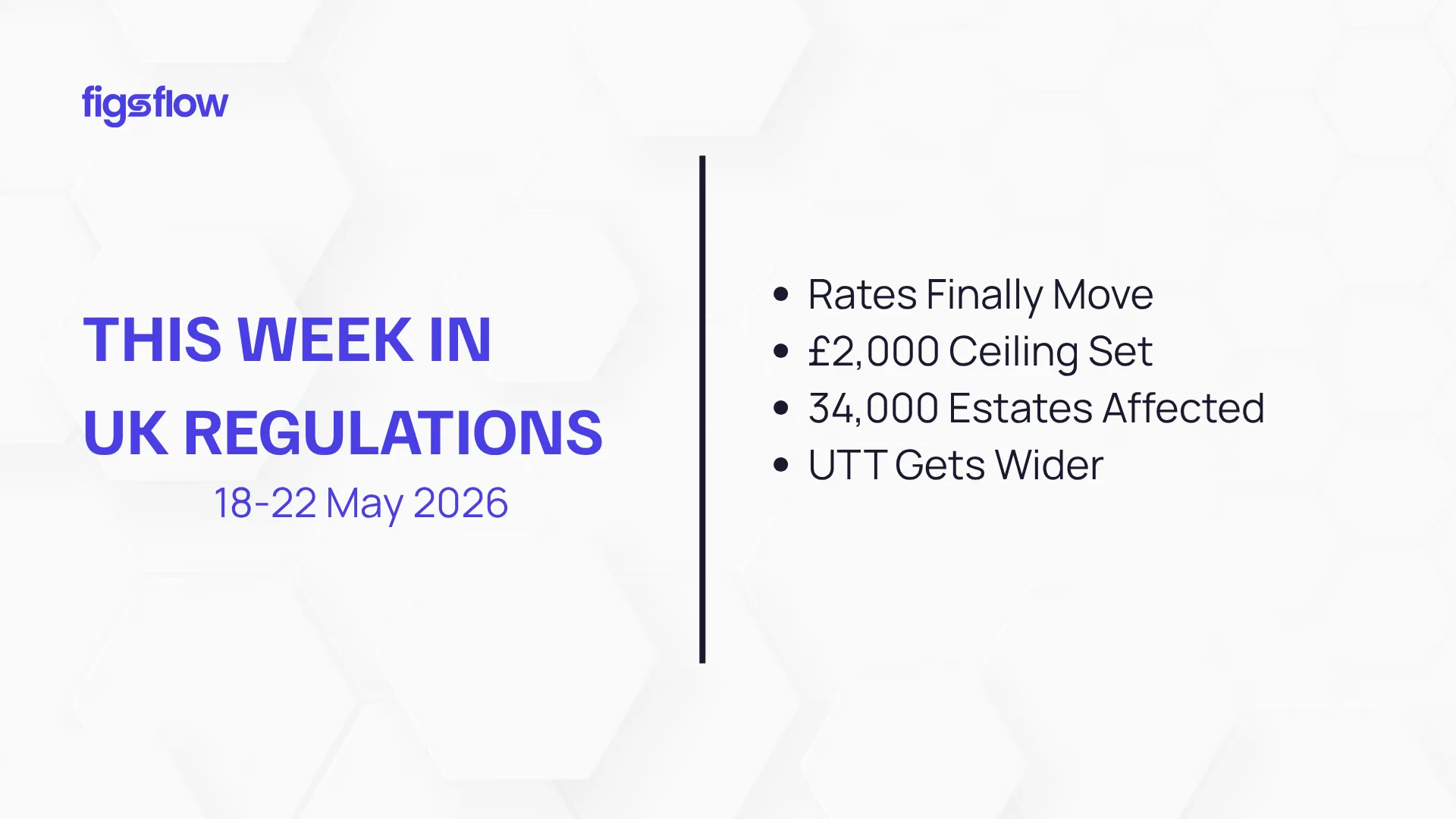
The approved mileage rate has increased for the first time in fifteen years, backdated to 6 April. Any employer still reimbursing at 45p is already underpaying. Alongside that, a new cap on salary sacrifice pension contributions changes the NI picture for a wide range of clients, NS&I has confirmed a remediation plan affecting 34,000 estates, and HMRC is consulting on extending the Uncertain Tax Treatment regime to wealthy individuals and trusts.
Here is the detail.
Approved Mileage Rate Rises to 55p for the First Time Since 2011
The approved mileage allowance payment rate for the first 10,000 business miles has increased from 45p to 55p per mile. The rate for mileage above 10,000 miles remains at 25p. No change has been made to motorcycle rates.
The increase is backdated to 6 April 2026. That means employers who have been reimbursing at the old rate since the start of the tax year owe the difference. For employees driving significant business mileage, that gap adds up quickly.
Employers paying at or below the approved rate carry no benefit-in-kind exposure. Those paying above it do. Now that the approved rate has moved, any employer with a fixed reimbursement policy set above 55p needs to review it.
Payroll and expenses systems need updating. Clients who have not been contacted yet should be, this week.
Key figures:
- New rate for first 10,000 miles: 55p per mile
- Rate above 10,000 miles: unchanged at 25p
- Effective from: 6 April 2026 (backdated)
- Motorcycle rates: unchanged
- Rates last changed: 2011
Salary Sacrifice Pension Contributions Capped at £2,000 as NI Costs Bite
A new cap limits NI-free salary sacrifice pension contributions to £2,000 per year. Contributions above that threshold will be subject to employer and employee National Insurance in the normal way.
The measure was framed as targeting high earners. In practice, it lands harder on middle-income employees and the SMEs employing them. Businesses already absorbing higher employer NICs, increased statutory sick pay obligations, and new employment rights are facing another layer of cost. Critics have described the combined effect as a perfect storm for smaller employers.
Salary sacrifice schemes remain worthwhile where contributions stay below the £2,000 threshold. The planning question is whether that applies uniformly across a workforce or whether some employees are contributing at levels that now attract liability.
Employers who have not modelled their workforce contribution patterns against the new cap should do so before the cost lands rather than after.
Key figures:
- NI-free salary sacrifice pension cap: £2,000
- Contributions above cap: subject to standard employer and employee NICs
- Sectors most exposed: SMEs with higher-paid workforces
NS&I Tracing Error Affects 34,000 Estates & Triggers a Full IHT Exemption
National Savings and Investments has confirmed a remediation plan following a tracing error that resulted in customer savings being misplaced. Revised estimates put the number of affected estates at 34,000, down from an initial figure of 37,500, with £367 million in funds involved.
The government has confirmed a full inheritance tax exemption on any holdings returned to estates as part of the remediation process. NS&I will also reimburse executors for reasonable legal costs incurred as a result of the error.
For practitioners managing estates, the immediate step is checking whether any client estate falls within scope. The IHT exemption removes a liability that would otherwise have applied to returned funds, but executors need to be aware it exists before making assumptions about the taxable value of the estate.
Key figures:
- Estates affected: 34,000 (revised from 37,500)
- Total funds misplaced: £367 million
- IHT treatment: full exemption on returned holdings
- Legal costs: NS&I to reimburse reasonable executor expenses
Uncertain Tax Treatment Rules Extended to Wealthy Individuals & All Trusts
HMRC is consulting on extending the Uncertain Tax Treatment regime to wealthy individuals and all trusts for the first time. Currently, the UTT rules apply to large businesses. The proposed expansion brings in individuals with annual income above £200,000 or assets exceeding £2 million, and all trusts, where a tax treatment provides an advantage of more than £5 million.
The scope of taxes covered is also widening. SDLT, CGT, IHT, NICs, and the Construction Industry Scheme will all fall within the regime under the proposals. The stated aim is to close a £5.4 billion tax gap caused by misinterpretation of legislation.
A new disclosure trigger is being introduced for situations where a novel product or process is used that is not covered by existing HMRC guidance. That is a significant addition. It means uncertainty is no longer defined solely by known disputed positions. Arrangements that simply lack HMRC commentary may now require disclosure.
Advisers working with HNW clients and trust structures should review current positions against the proposed thresholds and consider whether any existing arrangements would trigger disclosure under the new rules.
Key figures:
- New entities in scope: wealthy individuals (income above £200k or assets above £2m) and all trusts
- Disclosure threshold: tax advantage exceeding £5 million
- New taxes covered: SDLT, CGT, IHT, NICs, CIS
- Tax gap being targeted: £5.4 billion
- New trigger: novel product or process not covered by existing HMRC guidance
Here’s the official news: Opportunities to Extend Uncertain Tax Treatment – GOV.UK
Also In The News
- Law Firm Accounting Breaches and SRA Closures | FigsFlow – Accounting failures account for a disproportionate share of SRA-mandated firm closures, new data shows.
- HMRC’s New Sanctionable Conduct Powers Explained – What the new conduct framework means for registered and unregistered advisers.
- Companies House WebFiling Flaw Exposed 5 Million Companies – A security vulnerability in the WebFiling system exposed the majority of registered UK companies to fraudulent filings.
- Tax Adviser Registration for Financial Firms Delayed to 2027 – Financial services organisations receive a later deadline as HMRC refines the registration framework.
- Weekly News & Updates for UK Accountants (15 May 2026) | FigsFlow – Last week’s round-up covering the stories that shaped the week for UK practitioners.
Conclusion
The approved mileage rate rises to 55p for the first 10,000 miles, backdated to 6 April. Employers still running at 45p owe the difference from the start of the tax year.
The salary sacrifice NI-free cap lands at £2,000. Contributions above that attract standard employer and employee NICs. SME clients with higher-paid workforces are the ones most exposed.
NS&I’s tracing error affected 34,000 estates and £367 million in misplaced funds. The government has confirmed a full IHT exemption on anything returned under the remediation.
The UTT expansion targets a £5.4 billion tax gap. Wealthy individuals and all trusts fall within scope where a tax advantage exceeds £5 million. A novel product or process now triggers disclosure even without a known disputed position.