How UK Property Accountants Cut Proposal-to-Signature Flow from 11 Days to 4 with FigsFlow
FigsFlow changed that for us by moving the commercial decisions into a single workflow. With the software, we’re able to select services from a defined library, calculate fees intuitively based on a set of pre-entered parameters and generate proposals from the agreed scope. The result was a reduction in average proposa
 Swikriti ThakuriSep 30, 2026Updated Sep 30, 2026
A referral for a complex property engagement should be the start of revenue, not the start of a two-week pricing exercise. Yet, that was what was happening with us at UK Property Accountants. A partner would scope the obvious compliance work, estimate the fee from experience, and leave the less obvious work like offshore correspondence, ROE remediation, trust-related advice and de-enveloping to be worked out later. The proposal could take 11 days to reach the client, and even when it was accepted, some of the work that followed was never separately billed.
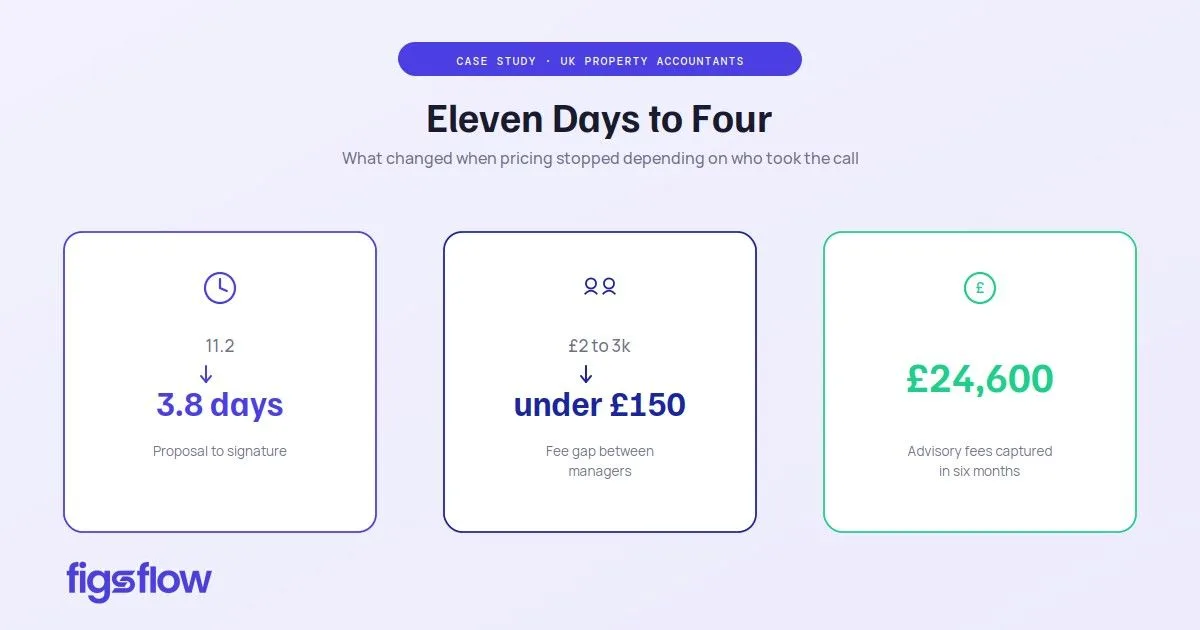
FigsFlow changed that for us by moving the commercial decisions into a single workflow. With the software, we’re able to select services from a defined library, calculate fees intuitively based on a set of pre-entered parameters and generate proposals from the agreed scope. The result was a reduction in average proposal-to-signature time from 11.2 to 3.8 working days, fee differences between managers falling from £2,000 to £3,000 to under £150, and £24,600 in additional advisory fees captured over six months.
The Pain That Generic Proposal Tools Do Not Solve
A referral lands. UK-resident non-domiciled principal. Seven UK residential properties held through a company under a discretionary trust. Two properties above the £500,000 ATED threshold. A lapsed Register of Overseas Entities filing. An unspoken de-enveloping question the referring wealth manager has mentioned in passing.
The old way we priced this work was by memory. A partner took the call, wrote an estimate on the standard pieces (i.e., accounts, ATED, non-resident SA), and left the advisory and correspondence overhead loose.
That led to the predictable outcome: offshore correspondence was underpriced, ROE remediation was also underpriced, de-enveloping was scoped as “just a memo,” and by August, the manager was 40% over budget with nobody billing for the extras. Nobody had that conversation with the referring wealth manager either.
How FigsFlow Changed the Situation
- CRM and Pipeline - Every enquiry captured with its source (referral, search, existing client) so we can see months later which channel actually pays. The referring wealth manager is a named contact on the record, not a name in an email chain.
- Service Library - Every service we sell is a scoped item with a defined deliverable. Two managers scoping the same shape of engagement land within £150 of each other because they are choosing from the same library.
- Pricing Engine - Our own rate card, turnover bands, entity multipliers, offshore correspondence surcharge and complexity factors for trust structures all apply automatically. The fee is computed, not negotiated back and forth by email.
- Proposals - Generated from the scoped services already on the record. Nothing retyped. Sent same day, not next week.
- Engagement Letters - Assembled clause by clause from the accepted services, with clauses that vary correctly by entity type. Signed digitally.
- Onboarding Suite - The moment the engagement letter is signed, the engagement locks, jobs are created from our workflow templates, and statutory deadlines load onto the client calendar.
The Frozen Price Snapshot is the Feature That Converts Hours Into Fees
The most commercially important single feature in the software, for a firm doing property advisory work, is what FigsFlow calls the frozen price snapshot. The accepted price locks on engagement letter signature. Any work outside the scoped services on the record triggers a variation prompt before the work begins. We send a short variation letter generated from the same service library, the client accepts it in the portal, and the work is billed as an agreed extra rather than absorbed as goodwill.
Conclusion
If your proposals go out days after the client call, if two of your managers would quote the same job £2,000 apart, if you routinely absorb scope creep, and if you cannot tell your best referring introducers apart from your worst ones, FigsFlow is what you need.