
Weekly News & Updates for UK Accountants (26-30 October 2026)
This was the week of the Autumn Budget. Find out what changed, what stayed the same and what you need to start preparing for!

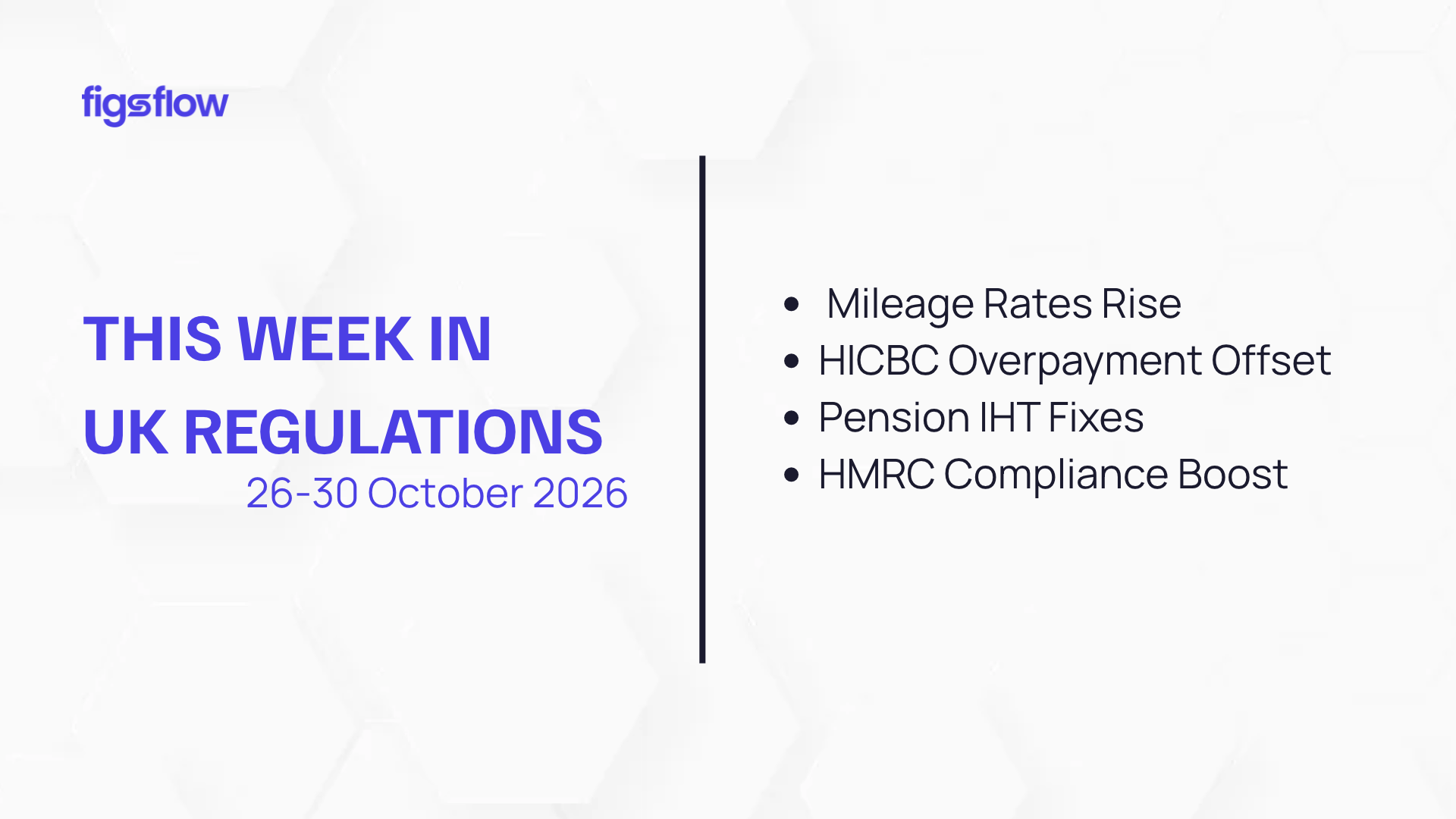
From 6 April 2027, the tax-free mileage rate above 10,000 business miles rises for the first time in 15 years, on the same day car and fuel benefits move into mandatory payrolling. That is the story to act on first. Close behind it, HMRC is gaining retrospective powers to offset Child Benefit overpayments against High Income Child Benefit Charge (HICBC) already paid.
The other two pull in opposite directions. The 28 October Budget fixed two pension IHT traps before they bite, while funding 670 more HMRC compliance officers to collect what is owed.
Here is the detail.
AMAP Rates Rise to 55p & 35p From April 2027, Landing Alongside Mandatory Car Benefit Payrolling
Employers will be able to pay more for business mileage free of tax and NICs from 6 April 2027. The higher-tier rate rises by 10p, its first change in 15 years, and the interim 55p rate for the first 10,000 miles becomes permanent.
The timing matters as much as the pence. The same date brings mandatory payrolling of company cars, vans and fuel benefits, so payroll teams will change mileage rates and benefit reporting in one cycle.
Key figures:
- First 10,000 business miles: 55p per mile, now permanent
- Above 10,000 business miles: 35p per mile, up from 25p
- At 15,000 business miles, the maximum tax-free payment becomes £7,250, £1,500 more than under the old 45p and 25p rates
Richard Travis-Nash of RSM UK notes that employers must either absorb the extra 10p a mile or risk unhappy staff, though higher mileage payments are one of the few ways to raise pay without employer NICs.
Where an employer keeps paying below the statutory rate, the employee can claim Mileage Allowance Relief on the gap. At 10,000 miles paid at 45p, the £1,000 shortfall is worth £200 a year to a basic rate taxpayer and £400 to a higher rate taxpayer. Review client mileage policies now so 2027/28 budgets reflect the decision.
HMRC Gains Retrospective Powers to Offset Child Benefit Overpayments Against HICBC
Since the charge began in 2013, anyone with both a Child Benefit overpayment and a HICBC liability for the same period has faced two processes: HMRC recovers the overpaid benefit, and the taxpayer separately reclaims the charge paid.
Forthcoming legislation replaces that with a single offset, covering open and historic cases back to 2013 once Royal Assent is given. Where the HICBC paid falls short of the overpayment, HMRC will set up a payment arrangement for the balance.
Key facts:
- The charge starts at adjusted net income of £60,000, clawing back 1% of Child Benefit for every £200 above that
- At £80,000 or more, the full benefit is clawed back
The cliff itself is untouched. Robert Salter of Blick Rothenberg argues the £60,000 threshold still discourages extra work or promotion. Flag clients with historic overpayments, and keep reviewing adjusted net income, where pension contributions and Gift Aid can bring a client back below the taper.
Pension IHT Fixes Protect the 36% Charity Rate & Allow Tax to Be Paid Before Probate
Two traps created by bringing unused pension funds into IHT from April 2027 have been closed before they could catch anyone.
The first hits charitable legacies. Under Schedule 1A to IHTA 1984, an estate pays 36% rather than 40% where at least 10% of the relevant net estate goes to charity. A pension pot enlarges the figure the 10% is measured against, so a gift that met the test in the will could fail after death. Following CIOT and STEP representations, personal representatives can now treat pension property as part of the general component or as a separate one.
The second is cash flow. IHT is due within six months of the end of the month of death, but pension funds could not be released before probate, and probate needed the IHT paid first. Personal representatives will be able to instruct scheme administrators to pay IHT direct to HMRC, if specified conditions are met.
Key facts:
- A £1m estate leaving £100,000 to charity meets the 10% test, but adding a £500,000 pension cuts the gift to 8.33% and loses the 36% rate
- Personal representatives choose how pension property is treated for the charity test
- Scheme administrators can pay IHT to HMRC before probate is granted
Review wills with charitable legacies for clients with significant pension wealth, and identify estates that will depend on pension funds to pay IHT. HMRC will publish an updated technical guide, and the CIOT wants workable operational guidance before the end of 2026.
HMRC Funds 670 New Compliance Officers to Pursue Unpaid Tax
The Budget funds 670 more compliance officers, aimed at individuals and businesses that can pay but persistently ignore HMRC.
The Red Book does not say where they will be deployed. There is no breakdown by tax head, such as SME compliance, wealthy individuals or off-payroll working, and nothing on training time or location.
Key figures:
- 670 new compliance officers, within £1.6bn of funding over this Parliament
- Forecast yield of £50m in 2026-27, rising to £260m a year by 2029-30
- Almost 8,000 new HMRC staff by 2029-30: 5,500 in compliance and 2,400 in debt management
The target is non-engagement rather than error. Make sure clients answer HMRC letters promptly and clear overdue returns before they become a case.
Conclusion
The pattern this week is the Budget closing old gaps while HMRC builds the capacity to collect. Mileage rates move towards real motoring costs, HICBC overpayments will be netted off rather than handled twice, and two pension IHT traps are fixed before April 2027. Against that, 670 more officers will pursue those who ignore HMRC.
The immediate work is narrow: review wills with charitable legacies for clients with large pensions, and settle mileage policies before 2027/28 payroll budgets. The rest is watching for HMRC's pension IHT guidance before the end of 2026.
We publish these updates every week. Follow us to get next week's round-up as soon as it lands.