

Is accounting a dying field?No, accounting is not a dying field. The U.S. Bureau of Labor Statistics projects employment of accountants and auditors to grow 5% from 2024 to 2034, faster than the average for all occupations, with about 124,200 openings every year. The confusion comes from mixing up two different things. One is the routine work that is shrinking. The other is the career built on top of it, which isn’t. If your idea of accounting is manual data entry, that part is genuinely fading. The profession itself is short-staffed and paying more than ever.
This article covers what the numbers actually show, which roles are at risk, and whether accounting is a good career for the future. It does not cover how to pass the CPA exam or pick a degree, which are separate questions.
Is Accounting a Dying Field? No, and Here's Why
When a field is dying, two things happen. Jobs disappear, and demand drops. Accounting is doing neither. The Bureau of Labor Statistics expects the number of accountants and auditors to keep growing through 2034, and firms already struggle to fill the roles they have. There aren’t too many accountants. There are too few.
You can see it in the pay. The median wage for accountants and auditors was $81,680 in May 2024, and the top 10% earned more than $141,420. The median across all U.S. jobs was $49,500. In a dying field, pay tends to sit still. Here it keeps rising, because firms are competing for people who are in short supply.
What Is Actually Shrinking
Some accounting work really is going away. Computers now do the routine jobs, like entering transactions, matching numbers, and simple bookkeeping. These tasks used to take a junior a full week. The BLS says the number of bookkeeping and accounting clerks will drop 6% from 2024 to 2034. So, if your job is mostly typing in numbers, that job is at risk. In 2020, the World Economic Forum even put accounting on its list of jobs most likely to be automated. But it meant these routine tasks, not the whole job.
An accountant does much more than enter data. They read the numbers, explain what they mean, warn the client about problems, and give advice. Software can’t do this, and firms need more people who can. That is why the number of accountants is going up while the number of clerks goes down. The two sound alike, but they are not the same job.
Why There's a Shortage of Accountants
If accounting were dying, firms would be laying people off. Instead they can’t hire fast enough.
People Are Leaving & Fewer Are Joining
More than 300,000 accountants have quit the profession in the last few years, according to figures from the AICPA. At the same time, fewer people are joining. The number of people taking the CPA exam for the first time fell about 33% between 2016 and 2021, based on AICPA data reported by The CPA Journal. More people leaving than joining is what a shortage looks like, and a shortage is the opposite of a dying field. The good news is that this is starting to turn around. The AICPA says more people began joining again in 2025.
Why Accountants Get Paid More Now
Scarcity raises price. With open roles staying unfilled for months, firms are lifting starting salaries, offering signing bonuses, and matching outside offers to keep people. A candidate who would have been a mid-tier hire a few years ago now has leverage. That is not what a declining career looks like.
Is Accounting a Good Career for the Future?
Two things matter most from here. The first is where the work is heading, and the second is the part of the job that computers still can’t do.
Moving Up the Value Chain
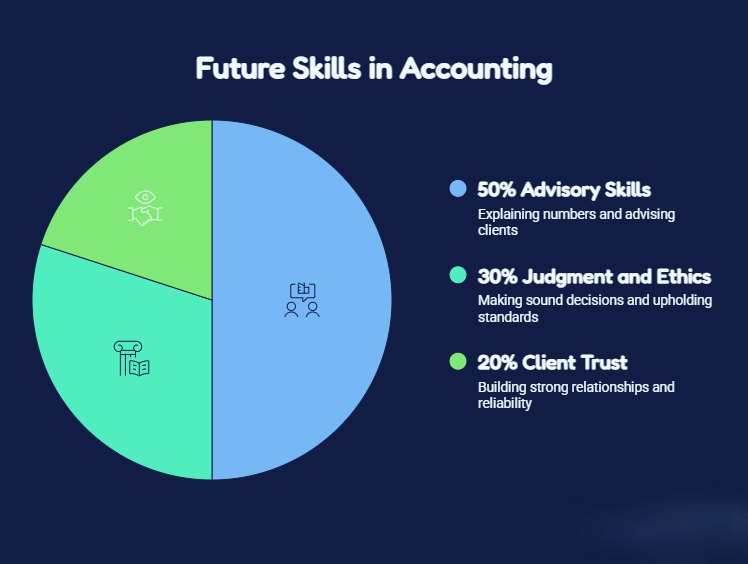
The future of accounting is advisory-led. The value is no longer in producing the numbers, because software does that. It is in explaining what they mean and what to do next. Accountants who position themselves as advisors rather than processors are the ones firms fight to keep. Tools like FigsFlow, which handle proposals, pricing, and engagement admin, exist precisely to free practitioners from the low-value work so they can spend time on that advisory layer.
What AI Still Can't Do
AI can categorize a transaction. It cannot sit across from a business owner, understand their goals, weigh the trade-offs, and take professional responsibility for the advice. Judgment, ethics, client trust, and accountability for a signed opinion remain human. As routine work automates, these are exactly the skills that grow in value.
Conclusion
If you are deciding whether accounting has a future, separate the two questions the headlines blur together. The routine tasks are being automated. That part is real, and it is why “accounting is dying” sounds plausible. But the profession itself is short hundreds of thousands of people, paying above the national median, and projected to keep growing through 2034. Accounting is not a dying field. It is a shifting one, and the accountants who move toward analysis and advisory are the ones the shift rewards.
FAQs
No. The Bureau of Labor Statistics expects the number of accountants and auditors to grow 5% from 2024 to 2034, with about 124,200 job openings a year. There aren’t too many accountants, there are too few. What is going away is routine clerical work, not the career itself.
Yes. Demand is growing, and the pay is well above average, $81,680 a year versus $49,500 for all jobs in 2024. Because there are too few accountants, those who qualify have plenty of choice. The best jobs go to people who can advise and analyze, not just process data.
No. AI is taking over specific tasks like data entry, matching numbers, and basic bookkeeping, not the whole job. It handles the routine work, which makes the thinking part, judgment, analysis, and advice, more valuable. Accountants who do that kind of work become harder to replace, not easier.
Yes. Because there are too few accountants, there is less competition for jobs and pay is rising. If you start now and build skills in analysis and advice rather than just data entry, you’ll be in a strong spot as the work keeps moving toward higher-value tasks.